Boarding Arm Cylinder for Wind Farm SOVs
Engineered with flawlessly polished marine-grade stainless steel and specialized offshore sealing technology to permanently eradicate surface pitting, guaranteeing absolutely safe, continuous personnel transfer in intensely humid marine environments.
Product Overview: The Core of Offshore Transfer Safety
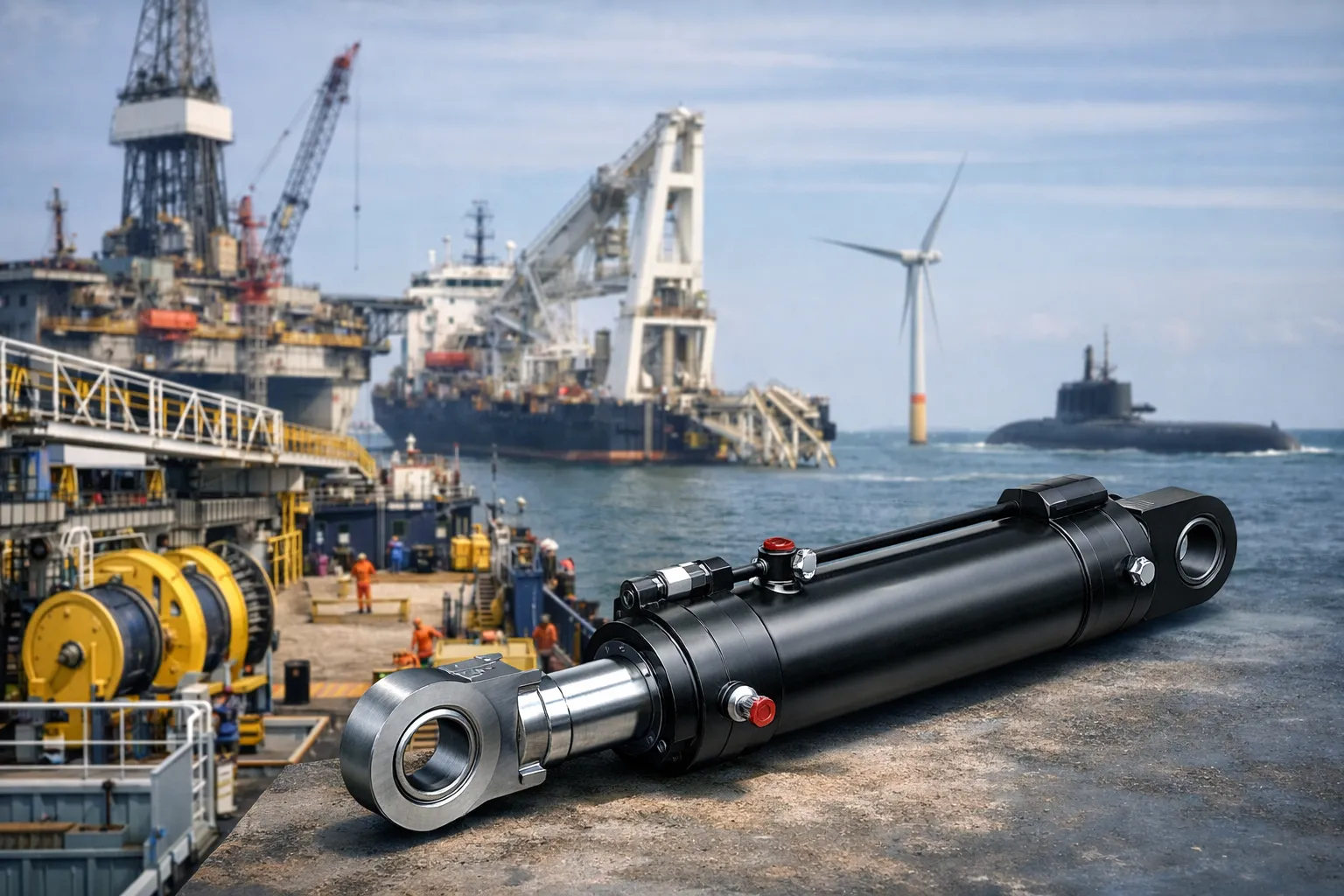
The rapid acceleration of offshore renewable energy projects across South Korea, Japan, Taiwan, and the broader East Asian maritime sector has created an immense logistical demand. Operating and maintaining massive offshore wind turbines requires highly specialized Service Operation Vessels (SOVs). These advanced vessels function as floating hotels and technical workshops for maintenance personnel deployed miles from the coast. The absolute most hazardous operational phase for any SOV is the Walk-to-Work (W2W) transfer—the precarious act of moving technicians from a constantly heaving ship deck onto the rigid, stationary foundation of a wind turbine. The mechanical bridge facilitating this critical transfer is the motion-compensated gangway system. At the absolute mechanical heart of this complex articulation operates the boarding arm cylinder. This highly specialized linear actuator is tasked with deploying, extending, and constantly micro-adjusting the heavy boarding ladder to perfectly counteract the chaotic kinetic motion of the ocean swells.
Operating any sensitive fluid power equipment on the exposed weather deck of an SOV presents extreme metallurgical challenges. The atmosphere is perpetually saturated with highly corrosive, chloride-rich ocean mist and unrelenting extreme humidity. Through decades of performing forensic engineering analysis on failed marine deck equipment, we have definitively determined that standard commercial actuators suffer predictably and rapidly in this environment. The predominant and most catastrophic failure mode is severe rod pitting. When a standard carbon steel rod, even one fortified with thick hard-chrome plating, is exposed to this humid, salty air, microscopic chlorides penetrate the invisible micro-cracks inherent in the chrome layer. This causes the underlying carbon steel to violently rust and expand, flaking off the chrome and creating sharp, jagged craters on the rod’s surface. When the hydraulic cylinder retracts under load, these sharp pits act like coarse sandpaper, violently shredding the internal polymer seals. This initiates immediate hydraulic fluid leakage, a total loss of holding pressure, and a potentially fatal collapse of the boarding arm while human personnel are crossing over the churning sea.
To permanently eradicate this profound safety vulnerability, we function as a dedicated, elite hydraulic cylinder manufacturer strictly focused on uncompromising maritime excellence. We completely discarded standard carbon steel architectures and engineered our boarding arm hydraulic cylinder utilizing premium-grade solid stainless steel. By coupling this inherently corrosion-resistant material with a rigorous, multi-stage diamond-polishing process and a proprietary offshore sealing matrix, we provide a linear actuator that is virtually immune to pitting. Our mission is to supply global fleet operators and naval architects with robust hydraulic parts that guarantee continuous, safe personnel transfers, while simultaneously offering a highly optimized hydraulic cylinder price that drastically reduces long-term vessel dry-docking and maintenance budgets.
Comprehensive Technical Parameters
Precision engineering for life-safety offshore systems leaves absolutely no room for estimation or generic catalogue selections. Every cylinder we fabricate strictly complies with rigorous international maritime classification standards. The detailed table below outlines our highly customizable manufacturing parameters and the robust baseline performance metrics of our SOV gangway actuators.
| Parameter Category | Engineering Specification | Operational Significance |
|---|---|---|
| Target Industry | Marine & Offshore Wind Energy | Strictly certified for continuous exposure to high-salinity marine atmospheres. |
| Equipment Category | Wind Farm Service Operation Vessel (SOV) | Specifically engineered for the critical deck machinery of logistics vessels. |
| Subsystem / Application | Boarding Stairs / Gangway System | Provides the essential kinetic energy to maneuver the heavy personnel bridge. |
| Cylinder Designation | Boarding Arm Cylinder | The primary linear actuator responsible for continuous, precise boarding arm action. |
| Action Mode | double acting hydraulic cylingder | Delivers active, highly pressurized fluid force for both rapid extension and retraction. |
| Structure Type | High-Fidelity Piston Cylinder | Generates massive, stable linear thrust with exceptionally low internal friction. |
| Manufacturing Structure | Deep-Penetration Welded Body | Totally eliminates the structural weakness and hazardous stretching of tie-rod designs. |
| Material System | High-Grade Stainless Steel | Provides an exceptional, full-depth metallurgical resistance to severe chloride attacks. |
| Surface Treatment | Precision Polished Rod (Ra ≤ 0.2 µm) | Creates a flawless, mirror-smooth surface that prevents microscopic water pooling. |
| Environmental Rating | Severely Humid & High Moisture | Engineered exclusively to survive on unshielded offshore vessel weather decks. |
| Working Condition Feature | Continuous Boarding Arm Action | Endures high-frequency dithering to maintain absolute ladder stability. |
| Typical Failure Mode Prevented | Severe Pitting Corrosion & Seal Laceration | The stainless architecture guarantees the rod will never rust and shred internal seals. |
| Recommended Configuration | Advanced Offshore Marine Sealing | Multi-lip polymer matrices specifically designed to physically block humid air intrusion. |
Fluid Dynamics: Mastering Active Heave Compensation
To fully comprehend the critical necessity of high-end offshore engineering, one must examine the highly complex fluid dynamics orchestrating this system’s movement. The physical environment between a floating SOV and a fixed wind turbine is constantly in violent motion. The boarding arm cylinder does not simply push a load in a static environment like a standard lift cylinder loading cargo; it operates as the primary muscular component of an advanced Active Heave Compensation (AHC) system. When the bridge operator commands the gangway to deploy, high-pressure hydraulic oil from the ship’s main power unit is directed through highly sophisticated, computerized proportional servo-valves into the cylinder.
This highly pressurized fluid exerts immense force against the massive surface area of the internal hydraulic cylinder piston. As the piston is driven forward, the polished stainless steel rod extends, physically pushing the heavy articulated boarding ladder out over the churning ocean. Crucially, because the ocean is constantly lifting and dropping the vessel, the cylinder must continuously and instantaneously adjust its stroke length to keep the tip of the ladder perfectly stable against the turbine structure. This is precisely why relying on a single acting hydraulic cylingder is entirely physically impossible in this application; the system must utilize a rigid, highly responsive double acting hydraulic cylingder configuration. It utilizes pressurized fluid to forcefully push and pull the arm in milliseconds to actively counteract the unpredictable wave heave.
This continuous, high-frequency micro-stepping generates immense internal friction and heat. Standard rubber seals would quickly melt or suffer from severe “stick-slip” stiction, causing the gangway to judder violently—a terrifying and highly dangerous scenario for personnel suspended mid-transfer. To combat this, our internal hydraulic cylinder components utilize advanced bronze-filled PTFE guide bands and specialized low-friction offshore seals. Furthermore, during retraction, our proprietary marine-grade wiper seals perform a critical task. They aggressively scrape away the thick layers of salt and highly humid condensation that have settled on the extended rod. Because our rod is fabricated from flawlessly polished stainless steel, there are absolutely no microscopic rust pits for the salt to hide in. The rod slides smoothly, completely preventing saltwater from bypassing the seals and contaminating the internal hydraulic oil, ensuring the heavy-duty hydraulic rams function flawlessly during every critical personnel transfer.
Seamless Global OEM Integration and Rapid Retrofitting
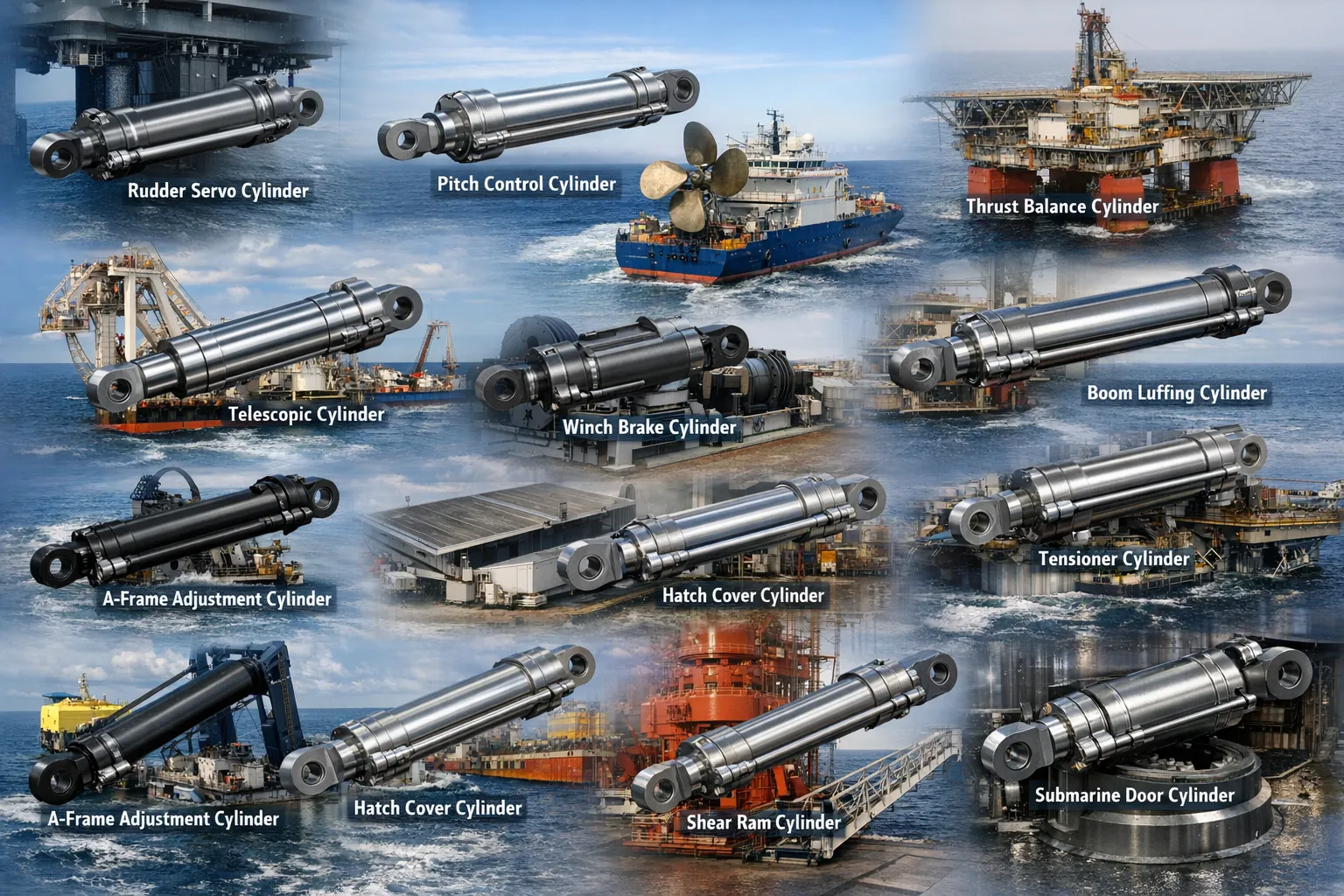
When a specialized SOV suffers a breakdown of its personnel transfer system, the financial penalties for offshore downtime are astronomically high. Waiting over 20 weeks for an original European OEM replacement part is commercially unacceptable, potentially ruining an entire installation season. Our advanced marine engineering department excels in rapid dimensional reverse-engineering to provide completely upgraded, exact-fit drop-in replacement units for global wind farm fleets.
We routinely design and manufacture heavy-duty stainless steel boarding arm cylinder assemblies that seamlessly integrate with motion-compensated gangway systems originally engineered by global offshore leaders such as Ampelmann, Uptime International, SMST Designers & Constructors, MacGregor, and Safeway. By precisely matching the spherical bearing clevis dimensions, stroke lengths, and high-pressure manifold bolt patterns, we ensure that integrating our upgraded parts requires absolutely no hot-work, welding, or structural modifications to your existing gangway. This drastically simplifies the complex process of fixing hydraulic cylinders for your onboard engineering team, getting your vessel safely back to work with minimal delay.
(Disclaimer: The maritime brand names mentioned above are the registered trademarks of their respective corporate entities. They are referenced herein strictly for technical sizing, dimensional cross-referencing, and operational compatibility purposes to aid naval procurement officers. We operate entirely as an independent hydraulic cylinder manufacturer, and our provision of high-performance aftermarket upgrades does not imply official affiliation, sponsorship, or endorsement by these original equipment manufacturers.)
8 Core Technical Engineering Advantages
Ensuring the absolute physical safety of wind farm technicians suspended over violent seas requires metallurgy and tribology that significantly surpass standard industrial specifications. Our dedicated gangway actuators are structurally optimized to deliver flawless reliability through eight critical design pillars:
1. Absolute Pitting Elimination via Stainless Steel
Standard carbon steel rods equipped with hard chrome plating inevitably fail when bombarded by humid ocean air, as the chromium micro-cracks allow severe pitting. We utilize premium solid stainless steel alloys. Its inherent chromium oxide layer naturally heals itself, providing an impenetrable, lifelong defense against aggressive galvanic corrosion.
2. Ultra-Polished Surface Tribology
We do not just use stainless steel; we refine it perfectly. Through an advanced multi-stage diamond polishing process, we achieve a mirror-like surface roughness (Ra ≤ 0.2 µm). This extreme smoothness prevents microscopic pockets of humid condensation from pooling on the rod, completely depriving pitting corrosion of a starting point.
3. Specialized Offshore Sealing Matrix
To combat the humid, aggressive atmosphere, we install a highly specialized multi-lip PTFE and polyurethane sealing system. The heavy-duty external wiper seals act as aggressive salt scrapers, while the internal pressure seals maintain an absolute zero-leakage hydraulic lock, ensuring the boarding bridge never drifts downwards under load.
4. Deep-Penetration Welded Integrity
Heavy marine vessels transmit intense, high-frequency vibrations directly into deck machinery. Traditional tie-rod cylinders stretch and vibrate loose under these extreme forces. Our monolithic, deep-penetration welded construction guarantees that the structural pressure vessel remains permanently rigid, perfectly handling the kinetic shock of wave impacts.
5. Servo-Grade Friction Control
Active Heave Compensation requires instant, smooth reversals of direction. By utilizing highly specialized, self-lubricating internal wear bands and precision honed bores, we entirely eliminate start-up friction (stiction). This guarantees the gangway responds flawlessly to electronic control inputs without terrifying mechanical juddering.
6. Optimized Thermal Stability
Continuous rapid cycling during heavy sea states rapidly heats internal hydraulic fluid. Our engineers optimize the fluid porting geometries to dramatically reduce flow restriction, vastly improving heat dissipation. This actively protects the polymer seals from thermal degradation, vastly extending the maintenance lifecycle of the equipment.
7. Heavy-Duty Self-Lubricating Bearings
As the vessel pitches and rolls, violent lateral side-loading forces are transferred from the boarding ladder directly onto the extended piston rod. We counteract this by integrating massive, marine-grade spherical plain bearings in the mounting clevises. These bearings actively absorb mechanical misalignment, completely preventing internal side-loading and severe rod galling.
8. Integrated LVDT Position Sensing Integration
To close the control loop for the ship’s computerized AHC system, we manufacture specialized hollow stainless steel piston rods capable of safely housing Linear Variable Differential Transformers (LVDT). We hermetically seal these sensors, providing absolute real-time stroke tracking while protecting the electronics from the violent saltwater environment.
Autonomous Manufacturing Control & Certified Traceability
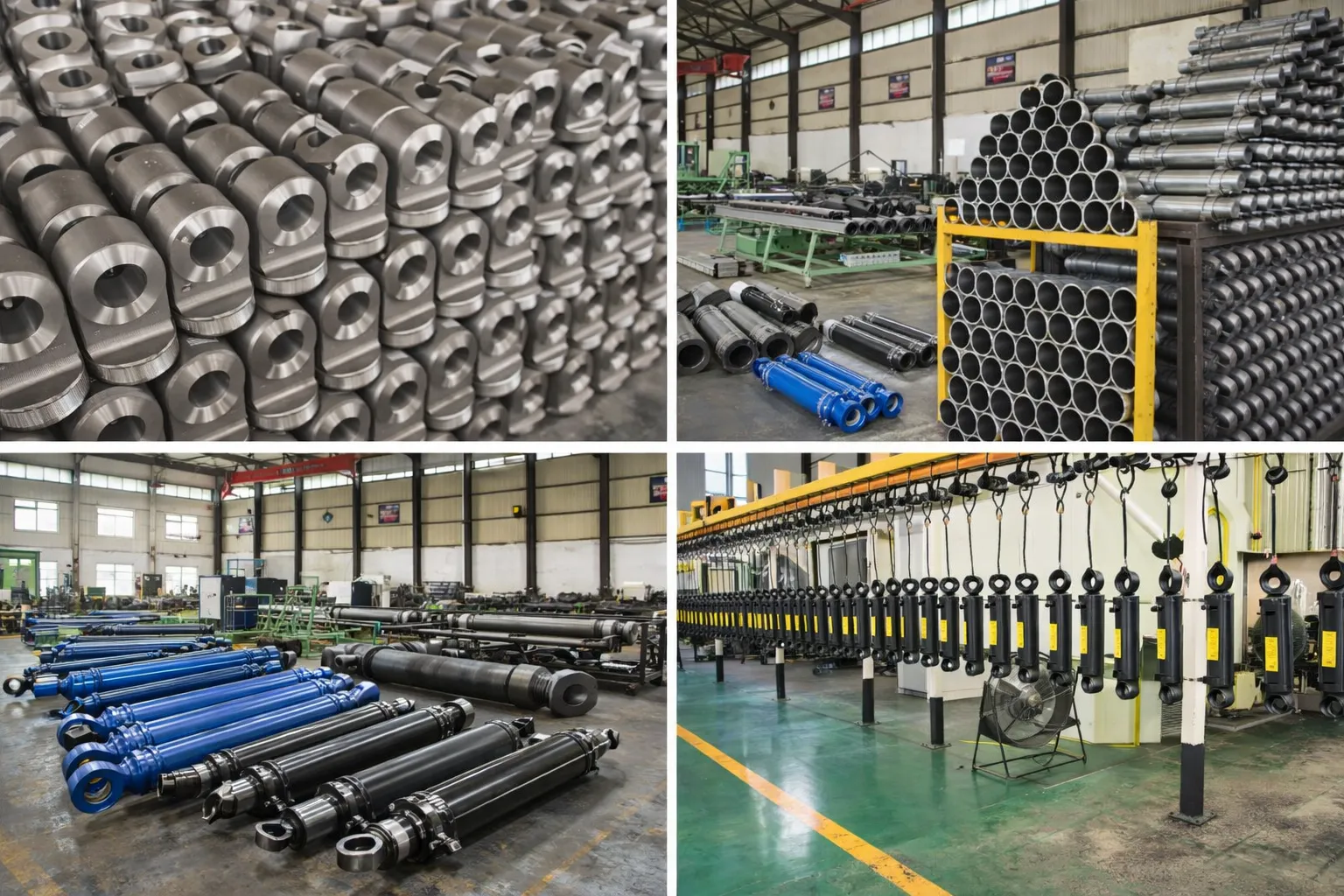
When the safety of offshore personnel depends entirely on the structural integrity of a single linear actuator, the fabrication process cannot be fragmented across an unverified, multi-tiered supply chain. To aggressively maintain our reputation as a premier globally trusted hydraulic cylinder manufacturer, we operate a fully vertically integrated, state-of-the-art production facility. We maintain absolute metallurgical and mechanical control from raw material ingestion to the final hydrostatic testing sequence.
The manufacturing protocol initiates with strict alloy verification. Every incoming billet of stainless steel undergoes rigorous Optical Emission Spectrometry (OES) to definitively confirm its high chromium and nickel content, ensuring it perfectly meets demanding marine classification standards. Following this validation, our multi-axis CNC lathes machine the internal barrels and hydraulic cylinder components to exacting, micron-level H7 diametrical tolerances. The critical structural welds joining the stainless steel flanges to the cylinder body are executed by automated robotic systems utilizing Tungsten Inert Gas (TIG) welding with continuous argon shielding. Crucially, 100% of these structural welds are subjected to thorough Non-Destructive Testing (NDT)—including Ultrasonic Testing (UT) and Penetrant Testing (PT)—to verify the absolute absence of sub-surface micro-cracks or hazardous voids.
Before any boarding arm cylinder is packaged for a shipyard or fleet operator, it undergoes an exhausting Factory Acceptance Test (FAT). The assembled units are pressurized hydrostatically to 1.5 times their maximum rated operating pressure. During these intense holding periods, highly sensitive digital transducers confirm absolute zero internal and external fluid bypass. Every cylinder is permanently serialized. We provide our B2B clients with comprehensive documentation, including full Material Test Reports (MTRs), and we frequently coordinate directly with major international marine classification societies (such as DNV, ABS, or KR) to formally certify the cylinders for specific offshore wind deployments.
Broad Industrial Heavy-Duty Applications
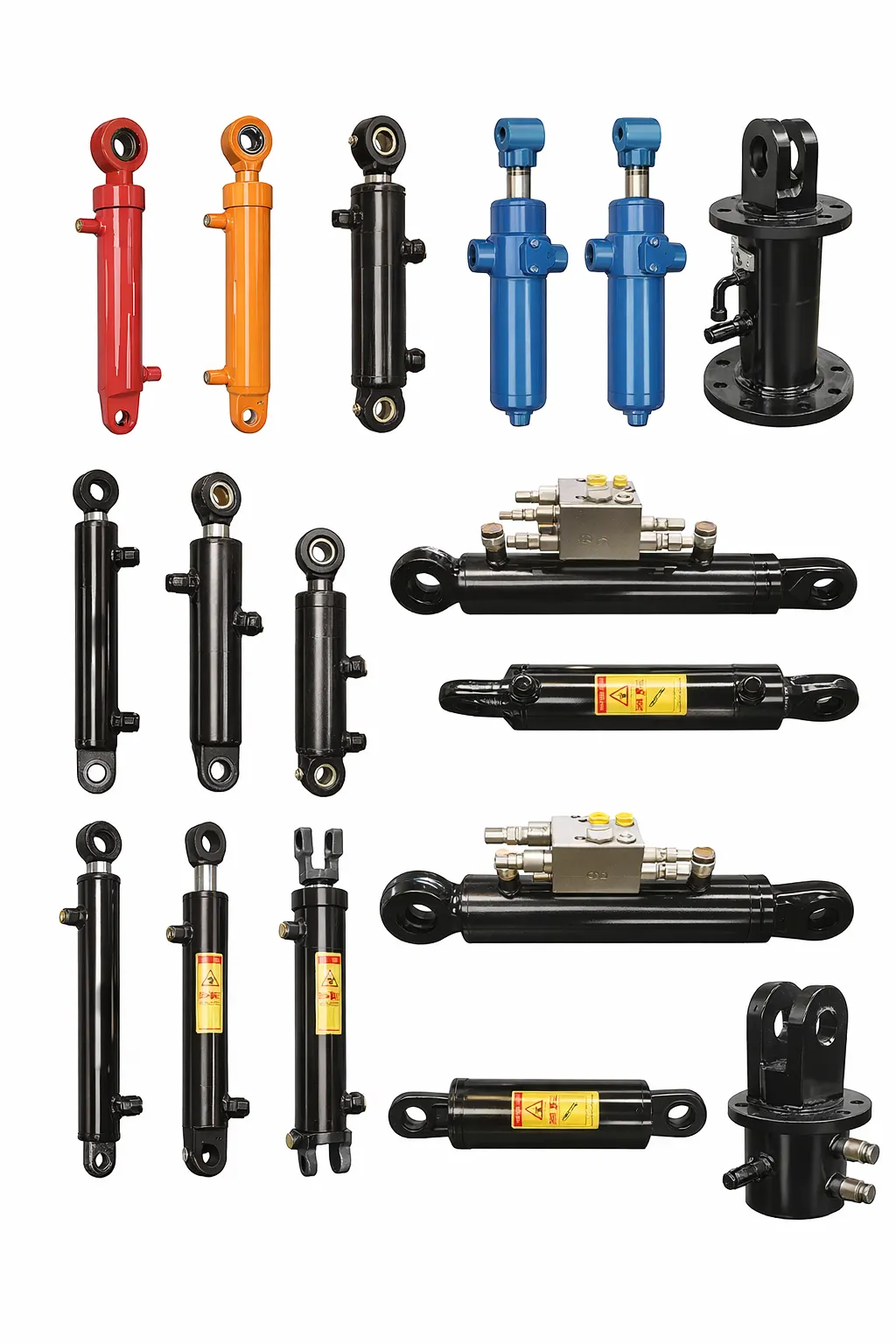
The severe-duty engineering required to precisely actuate a boarding ladder over the churning ocean—specifically the total mastery of anti-pitting stainless steel and ultra-low friction sealing—translates into unparalleled reliability for other brutal industrial sectors. The robust design principles embedded in our massive hydraulic rams are actively deployed across multiple highly demanding terrestrial environments globally.
Heavy Metallurgy & Steel Manufacturing
In environments dominated by extreme radiant heat and abrasive flying slag, our robust, heat-resistant actuators operate furnace doors reliably. Explore our highly specialized solutions tailored for the metallurgical and iron industry.
Subterranean Mining & Excavation
Underground operations expose machinery to massive rock falls and heavy lateral vibration. Our heavy-walled welded cylinders power rock crushers safely. Discover our heavy-duty applications in the mining industry.
Earthmoving & Heavy Construction
Construction equipment requires absolute reliability. Our double-acting designs provide the massive breakout force needed for large excavator booms. Review our rugged parts built for the construction machinery industry.
Port Logistics & Material Handling
Heavy-duty ship-to-shore gantry cranes, automated straddle carriers, and massive container lifters utilize our highly responsive, pressure-tested cylinders for safe, reliable, and highly efficient global cargo movement.
Plastics & Rubber Injection Molding
Ultra-large industrial injection molding machines demand rapid, highly accurate clamping strokes to maintain strict production tolerances. Our low-friction internal designs provide the necessary micro-precision while holding thousands of tons of pressure.
Specialized Environmental Equipment
In aggressive, chemically corrosive environments like municipal waste treatment plants or desalination facilities, our stainless steel actuators ensure long-term functionality without the constant threat of rust-induced seal failure.
Comparative Analysis: Standard Hydraulics vs. High-Performance SOV Actuators
When outfitting a multi-million-dollar offshore wind service vessel, prioritizing a lower initial hydraulic cylinder price by choosing standard commercial equipment is a catastrophic operational miscalculation. The comparative matrix below explicitly outlines why investing in our polished stainless steel architecture is a strict engineering necessity for safe personnel transfer.
| Critical Performance Feature | Ordinary Commercial Cylinders | Our Boarding Arm Hydraulic Cylinder |
|---|---|---|
| Rod Material & Surface Defense | Hard Chrome Plated Carbon Steel (Highly vulnerable to salt air pitting) | Premium Polished Stainless Steel (Immune to galvanic corrosion and rust pits) |
| Seal Lifespan in Humid Environments | Extremely short; seals are rapidly shredded by rust craters forming on the rod | Significantly extended; the permanently smooth rod preserves the seal matrix |
| Dynamic Friction (AHC Capability) | High friction NBR seals (Causes incredibly dangerous stick-slip juddering) | Ultra-low friction PTFE (Guarantees instantly smooth, millimeter-precise compensation) |
| Structural Rigidity under Wave Impact | Tie-rod assembly (Vibrates loose and stretches under severe wave loads) | Monolithic Welded Construction (Permanently rigid, easily absorbs kinetic shock) |
| Maintenance & Dry-Docking Frequency | Very High (Constant resealing required to mitigate fluid leaks onto the deck) | Minimal (Designed for continuous, uninterrupted multi-year offshore deployment) |
Proven Success in the Field: East Asian Offshore Case Studies
Theoretical safety margins must be empirically proven in the brutal operational realities of the world’s most demanding oceans. Our highly engineered stainless steel actuators are extensively trusted by leading offshore wind contractors and massive shipbuilding conglomerates across East Asia. The documented field cases below demonstrate our unique capacity to solve critical operational challenges rapidly.
Case Study 1: Eradicating Pitting for a South Korean SOV Fleet
Location & Client: Mokpo, South Korea – A premier offshore wind farm logistics operator.
The Challenge: Operating in the highly humid and stormy Yellow Sea, the operator’s new 80-meter SOVs were experiencing catastrophic failures of their gangway actuation systems. The original OEM carbon steel cylinders were heavily pitted by rust within just 14 months of deployment. This pitting shredded the internal seals, leading to massive fluid leaks and a complete loss of Active Heave Compensation, which halted turbine maintenance and required constant hydraulic cylinder repair in port.
The Solution: The fleet technical director found us via our specialized marine portal. We swiftly reverse-engineered the failing units and supplied fully customized boarding arm cylinder replacements fabricated entirely from 316L stainless steel. We featured ultra-polished rods and marine-grade PTFE wiper seals to permanently and physically block the humid air.
Result & Client Feedback: The retrofit was completed across two vessels in November 2024. The fleet has logged thousands of transfer hours with zero pitting or leakage.
Case Study 2: Solving “Stick-Slip” Judder for Japanese Maintenance Teams
Location & Client: Kitakyushu, Japan – Coastal Wind Power Maintenance Contractor.
The Challenge: The contractor was using a converted offshore supply vessel for turbine maintenance. The older boarding ladder suffered from severe stick-slip juddering because the aging hydraulic seals were dragging heavily against a corroded rod. This sudden, jerky movement of the heavy gangway was creating extremely dangerous situations for the technicians walking across it during wave swells.
The Solution: We supplied completely modernized double acting hydraulic cylingder upgrades. We integrated highly specialized, low-friction bronze-filled PTFE guide bands internally, paired with our heavily polished stainless rod (Ra ≤ 0.2 µm) to totally eliminate the mechanical stiction that was causing the hesitation.
Result & Client Feedback: The new actuators provided flawlessly smooth, linear movement, instantly restoring the technicians’ confidence in the boarding equipment.
Case Study 3: Overcoming Severe Lead Times in the Taiwan Strait
Location & Client: Taichung Port, Taiwan Region – Major Offshore Wind Support Fleet.
The Challenge: A vessel suffered a catastrophic cylinder failure right at the peak of the highly profitable summer installation season. The original European manufacturer quoted a devastating 22-week lead time for a replacement part, which would have cost the operator millions in contract penalties. The local engineering crew was attempting unsafe methods of fixing hydraulic cylinders just to keep the vessel minimally operational.
The Solution: The operator urgently requested a reverse-engineered solution. Utilizing our agile, vertically integrated production facility, we engineered, manufactured, tested, and shipped a heavy-duty, exact-fit stainless steel replacement unit in just 6 weeks.
Result & Client Feedback: The vessel resumed operations rapidly, easily meeting its contractual obligations for the busy summer season.
Frequently Asked Questions (FAQ)
Acquiring critical life-safety components for offshore wind vessels demands absolute technical clarity. Below, our specialized engineering team rigorously addresses the most common and complex inquiries from marine architects and fleet procurement teams.
Guarantee the Safety of Your Offshore Wind Technicians
The physical safety of your maintenance crew transferring over churning ocean waters is completely non-negotiable. Do not risk sudden fluid leaks or dangerous ladder drifting by utilizing standard carbon steel actuators. Upgrade your Wind Farm SOV with a premium boarding arm hydraulic cylinder specifically engineered from polished stainless steel to permanently conquer pitting and flawlessly execute active heave compensation.
Provide our expert engineering department with your specific dimensional constraints, operational challenges, or OEM replacement part numbers today. We will deliver a highly detailed technical CAD proposal and an exceptionally competitive manufacturing quote tailored to secure your fleet’s operations for decades to come.
Editor: Cxm