Tipping Cylinder for Vulcanizing Machine
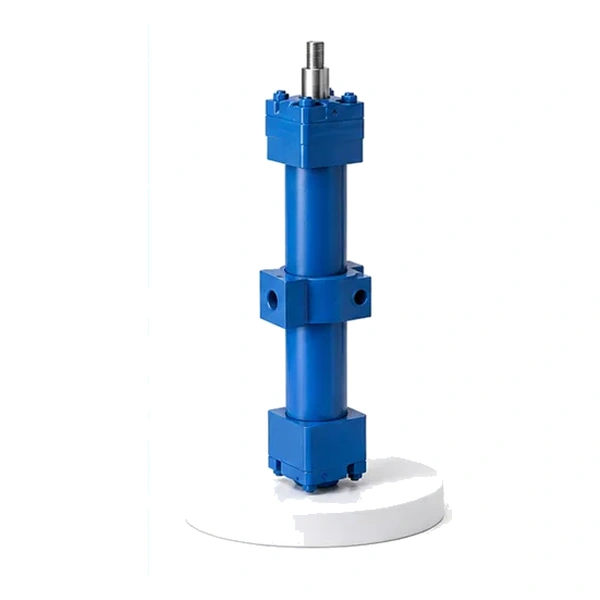
Tipping Cylinder · 1st of 7
A New Industry.
Seven Cylinders.
One Tire.
From forging presses to electric furnaces, from cement mills to injection moulding machines — now tire manufacturing. A vulcanizing machine (tire curing press) uses seven hydraulic cylinder types to clamp the mold, shape the rubber, cure it under heat and pressure, open the mold, remove the finished tire, and flip it for the next stage. The tipping cylinder handles the last step: rotating the freshly cured tire 180° so it lands in the correct orientation on the post-cure conveyor.
What Happens Inside a Vulcanizing Machine — And Where the Tipping Cylinder Fits
A tire starts as a "green tire" — an uncured assembly of rubber compounds, steel belts, and fabric plies built on a tire building machine. The green tire is soft, tacky, and has no tread pattern. The vulcanizing machine transforms it into a finished tire by curing it under heat (150–180 °C) and pressure (15–25 bar) for 10–30 minutes inside a precision mold that imprints the tread pattern, sidewall markings, and final shape.
After curing, the mold opens, the tire is lifted out (by the loading/unloading cylinder), and then it must be flipped — rotated 180° — before it is placed on the post-cure conveyor or post-cure inflator. The tipping cylinder performs this flip. It is the final motion in the vulcanizing cycle before the tire moves to inspection and storage. Korea Ever-Power manufactures the tipping cylinder as the first of seven vulcanizing machine hydraulic cylinders.
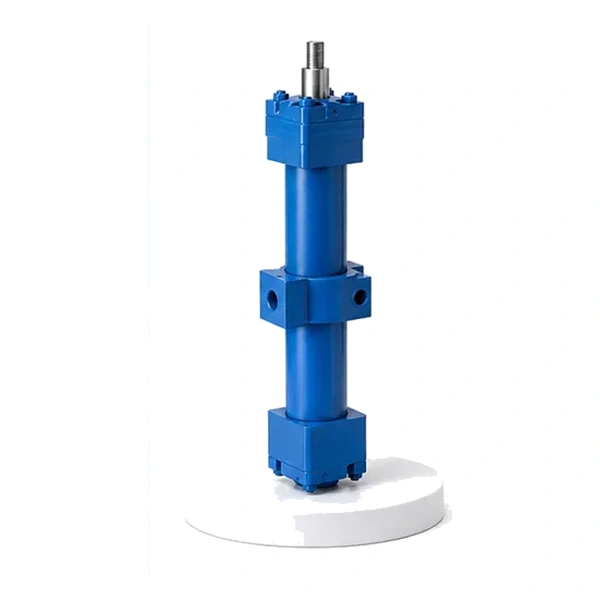
Technical Specifications
| Parameter | Value |
|---|---|
| Product | Tipping Cylinder for Vulcanizing Machine |
| Function | Flip the cured tire 180° for post-cure handling |
| Bore Diameter | 50 mm (fixed specification) |
| Rod Diameter | 28 mm (fixed specification) |
| Stroke | 310 mm (fixed specification) |
| Working Pressure | Up to 25 MPa |
| Application | Tire Vulcanizing Machine (Curing Press) |
| Certification | ISO 9001 · 100% hydrostatic tested |
Fixed Specification — Why This Cylinder Has No Range
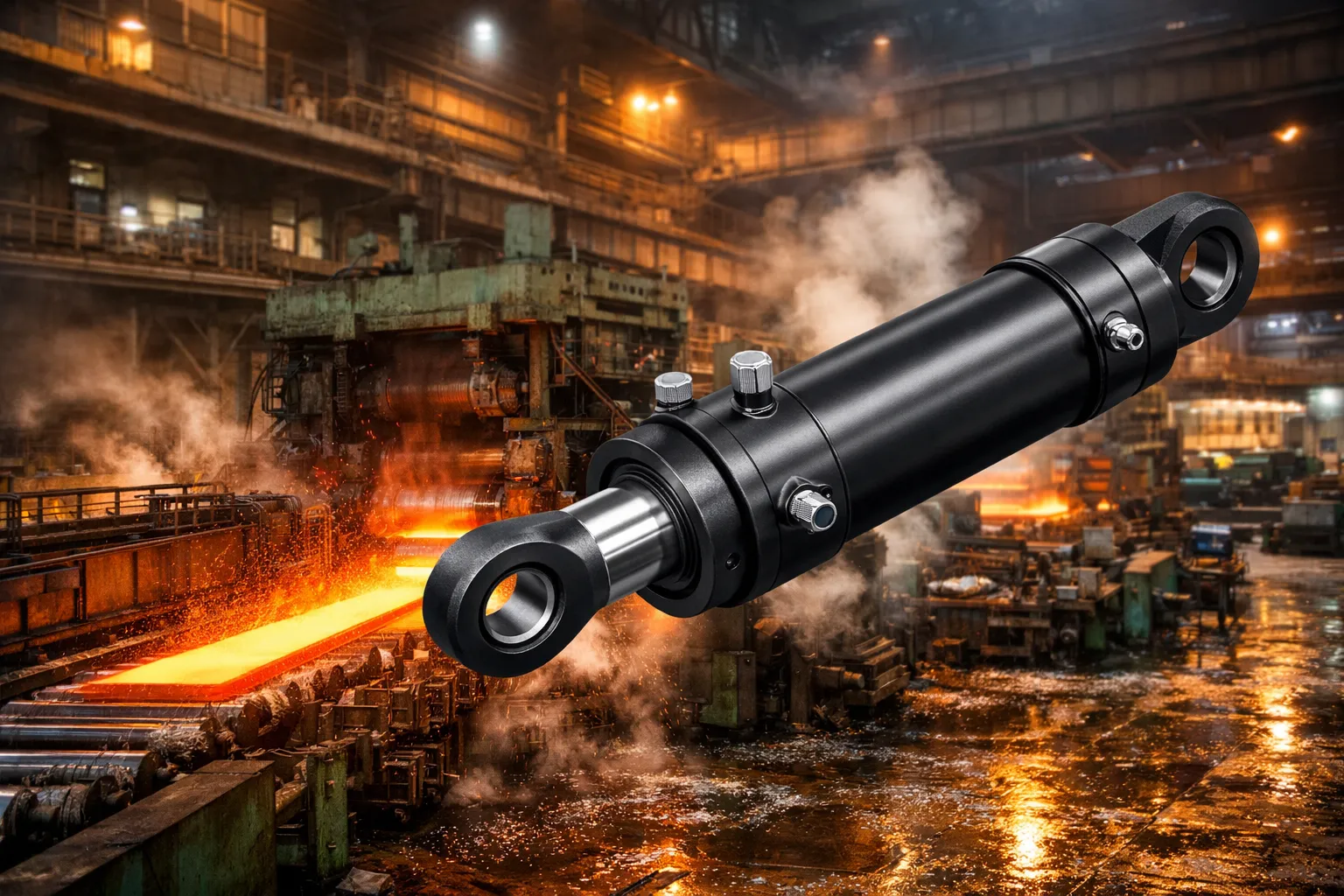
Most cylinders in this catalogue are specified as ranges — bore 200–700 mm, stroke ≤4,000 mm — because they serve machines of varying sizes. The tipping cylinder is different: bore 50 mm, rod 28 mm, stroke 310 mm. Fixed. One size.
The reason is the flipping mechanism geometry. The tipping mechanism on a standard tire curing press is a standardized linkage — a hinged arm that grips the tire at two points and rotates it 180°. The cylinder's connection to this linkage is at a fixed distance from the pivot, and the required arc (180° of tire rotation) translates to exactly 310 mm of linear cylinder stroke. The force to flip a passenger car tire (8–15 kg at 150–180 °C) through this linkage requires a 50 mm bore at the press's system pressure.
This standardization is an advantage for tire manufacturers: the tipping cylinder is a drop-in replacement part — no engineering review, no custom drawing, no lead time for bore/stroke selection. Korea Ever-Power manufactures the tipping cylinder as a stock item for immediate delivery to vulcanizing machine builders and tire plant maintenance departments.
Why a Freshly Cured Tire Needs to Be Flipped
The tire exits the mold in a specific orientation — typically with the upper sidewall facing up. But the next process step may require a different orientation:
Many curing presses feed the tire directly to a post-cure inflator — a device that holds the tire inflated at controlled pressure while it cools, preventing it from deforming as the rubber contracts during cooling. The PCI may require the tire in a specific orientation (lower bead down) that is opposite to the mold exit orientation. The tipping cylinder flips the tire to match the PCI loading orientation.
The post-cure conveyor transports the tire to the inspection station, where automated cameras and laser scanners check the tread surface, sidewall markings, and overall shape. The inspection equipment may require the serial-number sidewall facing a specific direction. The tipping cylinder ensures every tire arrives at inspection in the standard orientation — regardless of which mold cavity it came from.
Finished tires are stacked in specific orientations for warehouse storage and shipping. Some stacking patterns require alternating tire orientations (one tread-up, one tread-down) to create stable stacks. The tipping cylinder flips every other tire to create the alternating pattern automatically — without manual handling of hot, heavy tires.
150–180 °C and Still Pliable — Why the Flip Must Be Gentle
The tire exits the mold at vulcanizing temperature — 150–180 °C. At this temperature, the rubber is fully cured chemically but still mechanically softer than at room temperature. A hard impact or an abrupt stop during flipping can distort the tire — creating a flat spot, a bead deformation, or a sidewall crease that becomes a permanent defect once the rubber cools and stiffens.
The cylinder must lift the tire off its resting surface and begin the rotation without jerking. A sudden start snaps the tire's weight against the gripper — potentially slipping the tire in the gripper or deforming the bead area. The flow control valve ramps the cylinder speed from zero to operating speed over 0.2–0.5 seconds.
At the end of the 180° rotation, the cylinder must decelerate the tire smoothly onto the receiving surface — not slam it down. The end-of-stroke cushion absorbs the kinetic energy of the tire's mass and the linkage inertia, bringing the assembly to a controlled stop. This cushion is critical for every cycle — a hard landing every 10–30 minutes (one cure cycle) accumulates into thousands of impacts per month. Contact the hydraulic cylinder engineering team for vulcanizing cylinder specifications.
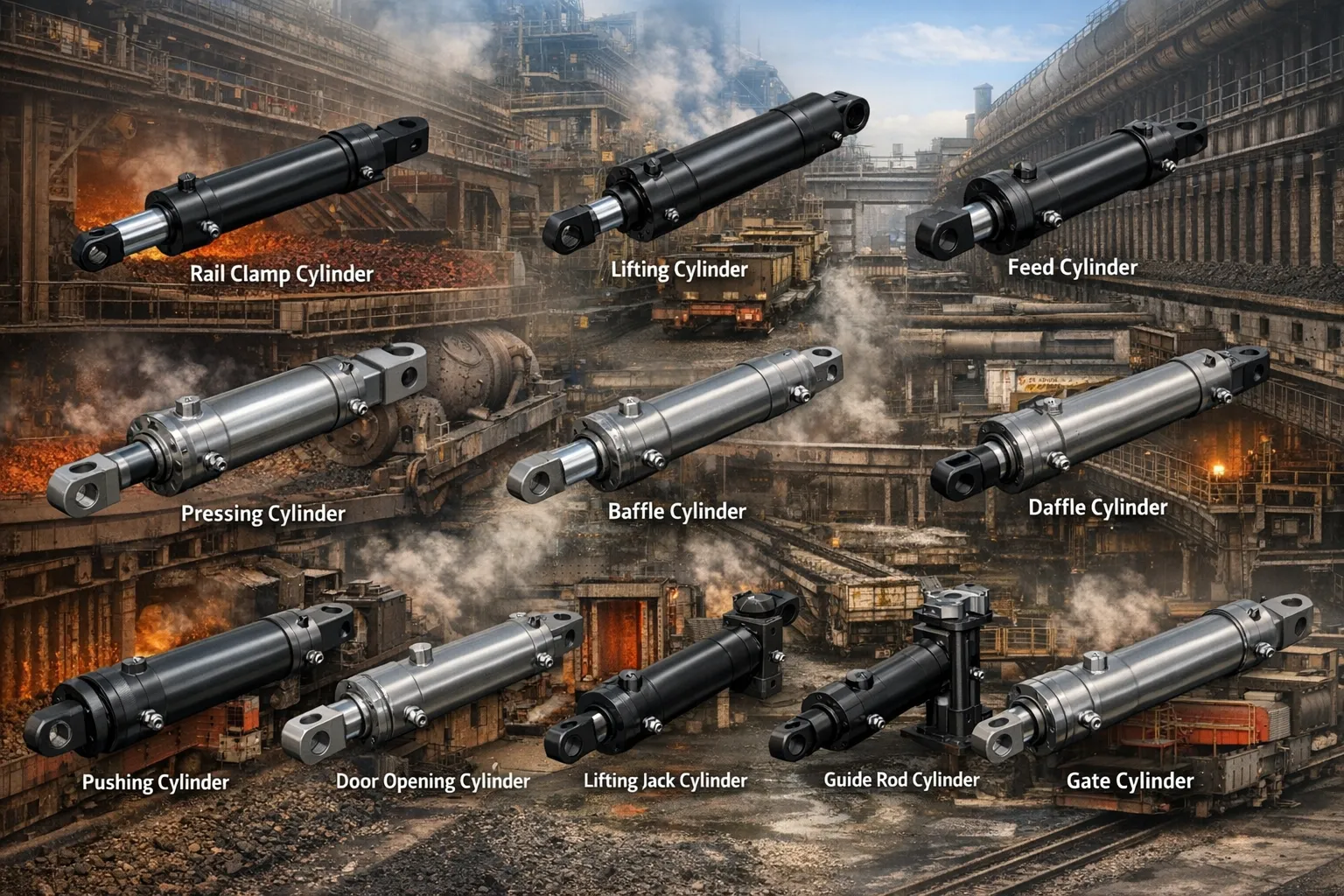
Seven Cylinders, One Tire — The Complete Vulcanizing Press System
The tipping cylinder is the first of seven hydraulic cylinder types that Korea Ever-Power manufactures for tire vulcanizing machines. Each cylinder handles a different step in the curing cycle:
| # | Cylinder | What It Does | When |
|---|---|---|---|
| 28 | Tipping | Flips the cured tire 180° | After removal |
| 29 | Pressurised | Clamps upper/lower mold halves | During cure |
| 30 | Mold Open/Close | Opens and closes the mold halves | Before/after cure |
| 31 | Upper Ring | Drives upper chuck of centre mechanism | During shaping |
| 32 | Lower Ring | Positions lower bead ring | During shaping |
| 33 | Loading/Unloading | Transfers tire in/out of mold | Before/after cure |
| 34 | Live Molds | Drives segmented mold sections together | During cure |
Korea Ever-Power supplies all seven cylinder types for vulcanizing machine builders — from the 50 mm bore tipping cylinder to the 220 mm bore pressurised cylinder — as a coordinated set engineered for the same press's hydraulic system, temperature environment, and cycle time.
Manufacturing — Standardised for Stock Availability
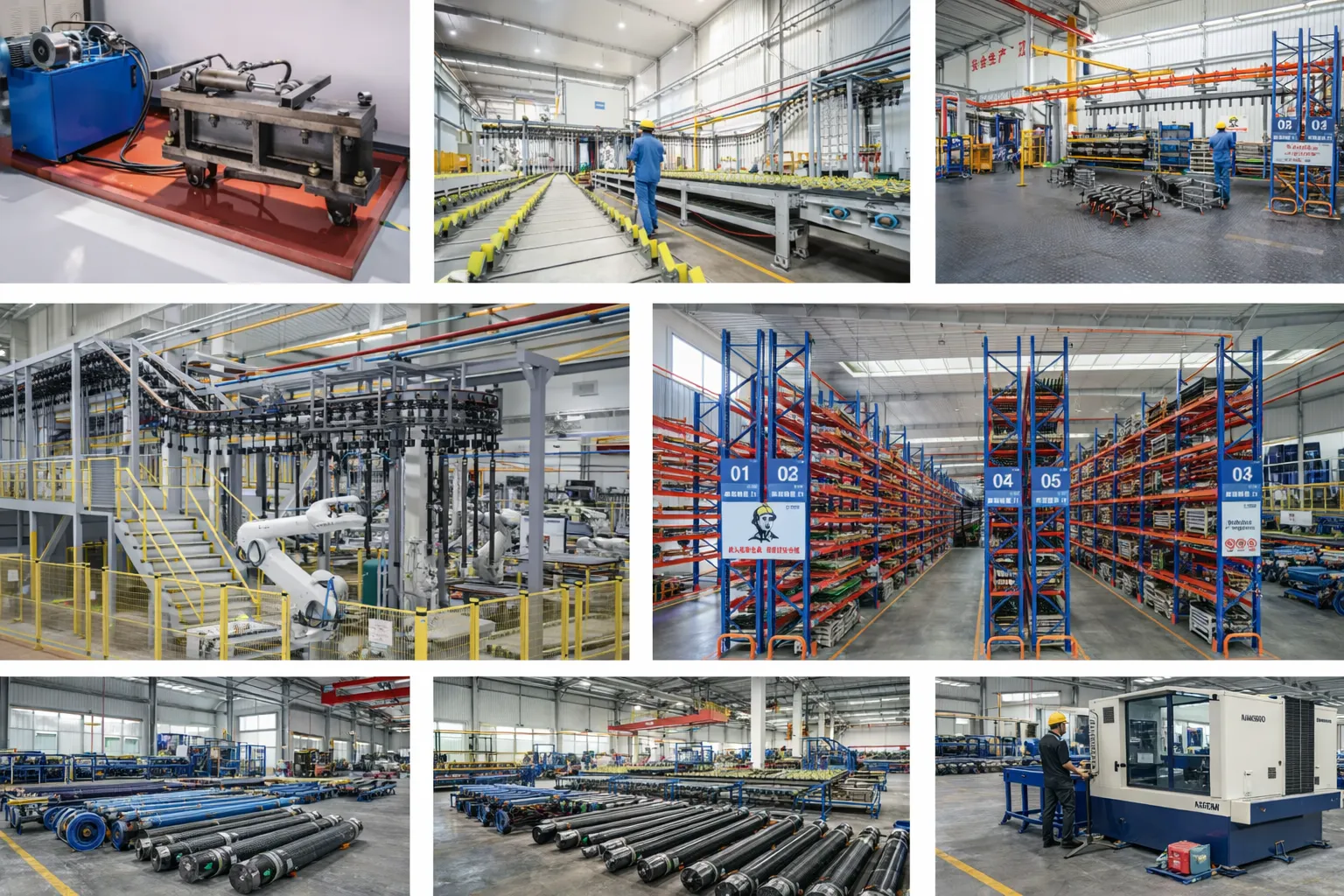
The fixed specification (50 mm bore, 28 mm rod, 310 mm stroke) allows Korea Ever-Power to manufacture the tipping cylinder in batches for stock rather than as custom orders. Batch production ensures dimensional consistency across units — every tipping cylinder is interchangeable with every other, which is critical for tire plants that operate dozens of identical vulcanizing presses and need identical replacement parts across all machines.
The bore is honed to Ra 0.2–0.4 µm. The rod is chrome plated at 30–50 µm. Seals are FKM (Viton) rather than standard NBR — because the cylinder operates near the vulcanizing mold, where ambient temperatures reach 60–100 °C from the mold's radiant heat. Standard NBR seals would age prematurely at these temperatures; FKM provides the required heat resistance for the cylinder's operating life.
Every tipping cylinder is hydrostatic tested at 1.5× working pressure and functionally tested for full extend-retract with cushion verification. The standardised test protocol matches the standardised specification — ensuring every unit performs identically out of the box.
OEM & ODM
FAQ
Related Categories
其他信息
| Editor |
|---|
相关产品
-
Injection Molding Machine Reciprocating Cylinder (Mold Shifting Cylinder)
-
Pressurized Hydraulic Cylinder for Vulcanizing Machine
-
Injection Molding Machine Mold Opening and Closing Cylinder
-
Hydraulic Press Mobile Workbench Cylinder
-
Injection Molding Machine Ejection Cylinder
-
Hydraulic Press Centering Cylinder
-
Cement Equipment Roller Press Cylinder
-
Hydraulic Press Master Cylinder