Turnover Cylinder for Bogie Turnover Machine
Engineered specifically for locomotive depot equipment, utilizing a thick-walled 42CrMo alloy body and advanced cushioning structures to absolutely eradicate fatigue cracks during heavy-duty rotational operations.
Product Overview: The Core of Locomotive Depot Safety and Efficiency
The continuous, safe operation of any metropolitan rail transit network relies heavily on the rigorous maintenance schedules executed within specialized locomotive depot facilities. During comprehensive structural inspections, wheel profiling, and critical weld repairs, technicians must gain unimpeded, safe access to the undercarriage of the train cars. The most massive and structurally complex component they manage is the rail bogie—the heavy steel framework housing the wheelsets, traction motors, suspension systems, and braking rigging. A fully assembled bogie can weigh anywhere from 10 to 25 metric tons. To service these enormous structures safely, technicians utilize a bogie turnover machine to physically lift and rotate the entire bogie 180 or 360 degrees. The fundamental mechanical heart responsible for generating and controlling this immense rotational torque is the heavy-duty turnover cylinder.
Operating a bogie turnover machine is categorized as an extreme heavy-duty turnover application. It is a widespread and costly engineering oversight to equip these machines with generic commercial fluid power actuators. Standard units are designed for linear pushing against a predictable, stable load. They are fundamentally unprepared to handle the aggressive, eccentric shock loads inherent in a heavy rotational application. As the massive 20-ton bogie is pushed past its top-dead-center pivot point, the center of gravity violently shifts. The physical force acting upon the turnover hydraulic cylinder instantly reverses from a heavy pushing compression to a massive pulling tension. This sudden kinematic shockwave creates intense bending moments and pressure spikes within the cylinder barrel. In standard actuators, this continuous dynamic stress inevitably leads to the most dangerous typical failure mode in the rail industry: fatigue cracks. These microscopic fractures originate at the welded trunnion mounts and rapidly propagate through the standard carbon steel barrel, leading to catastrophic structural failure, dropped loads, and severe safety hazards.
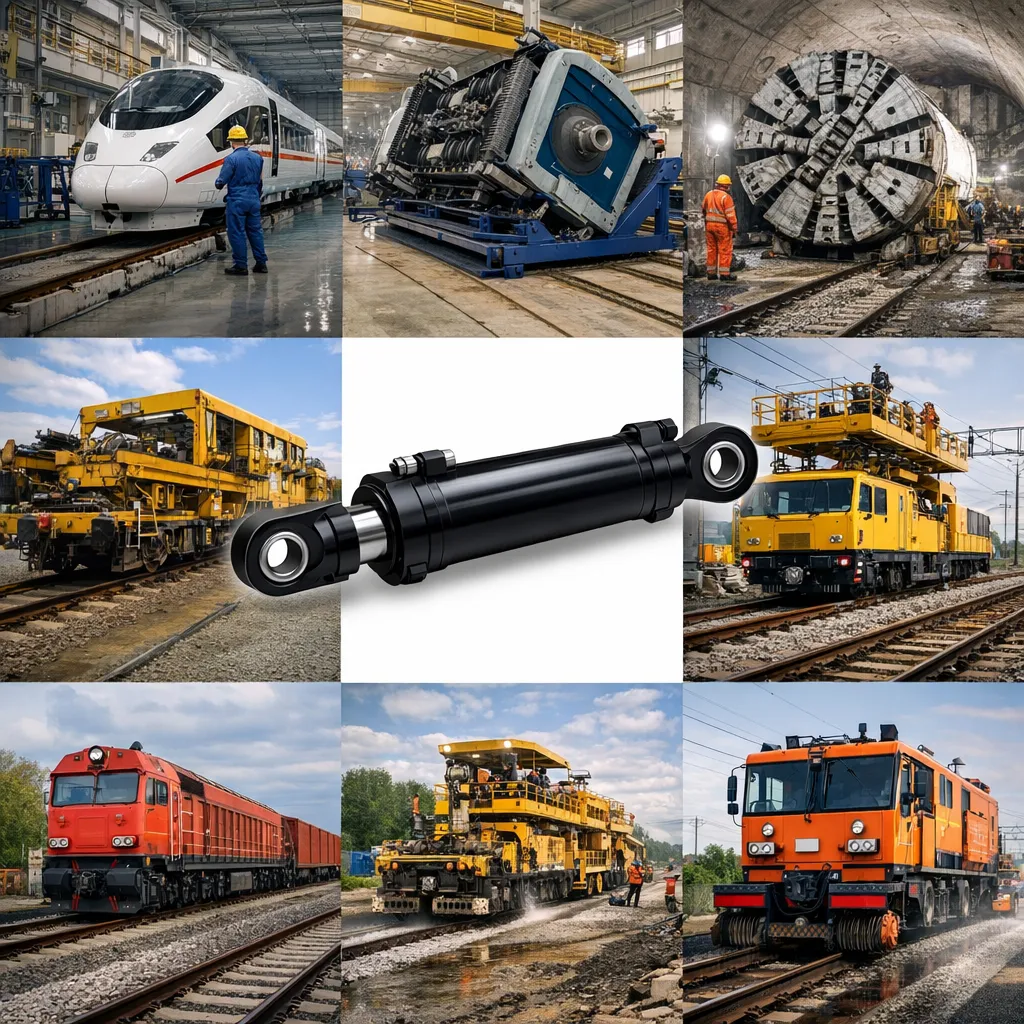
Our proprietary turnover cylinder is scientifically engineered to conquer the exact physics of eccentric load rotation. We have completely abandoned standard carbon steel in favor of a specialized 42CrMo alloy material system. By forging a significantly thick-walled cylinder body and integrating a highly advanced internal cushioning structure, we safely absorb the violent kinetic shockwaves and completely eliminate the threat of fatigue cracks. As a premier hydraulic cylinder manufacturer, our singular focus is delivering uncompromised structural integrity. By installing proper, purpose-built heavy-duty equipment, procurement directors drastically optimize the total lifetime hydraulic cylinder price by definitively ending the expensive cycle of emergency fixing hydraulic cylinders and halting crippling depot downtime.
Technical Parameters & Baseline Configurations
Precision in heavy-duty engineering leaves absolutely no room for generic specifications. The dimensional and metallurgical parameters of our turnover hydraulic cylinder are strictly dictated by the aggressive realities of locomotive depot maintenance. The matrix below outlines the baseline configuration for our bogie turnover machine actuators. Every metric, from the 42CrMo structural core to the heavy-duty environmental sealing matrix, is fully customizable to integrate seamlessly with your specific machinery schematics.
| Critical Engineering Parameter | Definitive Specification Details & Customization |
|---|---|
| Target Industry Sector | Rail Transit |
| Equipment Category | Locomotive Depot Equipment / Bogie Turnover Machine |
| Specific Subsystem / Action | Heavy Load Rotational Positioning |
| Component Nomenclature | Turnover cylinder |
| Kinematic Action Method | Double acting hydraulic cylinder |
| Internal Structure Type | Piston cylinder |
| Manufacturing Architecture | Precision Welded Assembly |
| Core Material System | 42CrMo Alloy Steel |
| Rod Surface Treatment | Hard Chrome Plated |
| Environmental Load Grade | Heavy-duty turnover |
| Typical Prevented Failure Mode | Fatigue cracks in barrel or trunnion mounts |
| Recommended Core Configuration | Thick-walled cylinder body + Advanced cushioning structure |
Advanced Kinematic Working Principle
Analyzing the fluid dynamics within this specific turnover cylinder clarifies why an ordinary single acting hydraulic cylingder is entirely incapable of managing a bogie rotation. Flipping a multi-ton frame is fundamentally an “over-center” kinematic process. It requires the active, dual-sided fluid control that only a robust double acting hydraulic cylingder can provide. When the depot technician initiates the rotation, high-pressure fluid is pumped into the cap end of the thick-walled 42CrMo barrel. This immense hydrostatic force pushes against the vast surface area of the hydraulic cylinder piston, driving the chrome-plated rod outward and forcing the heavy bogie upwards against gravity. During this primary lifting phase, the load is highly resistant.
The critical engineering challenge occurs precisely as the bogie passes the 90-degree perfectly vertical apex. At this exact millisecond, the physics invert. Gravity takes control, and the massive 20-ton load abruptly accelerates downward, violently attempting to pull the cylinder rod out of the barrel. If the actuator lacked internal resistance, the bogie would free-fall, causing the internal piston to smash destructively into the front gland cap. This massive mechanical shockwave is exactly what induces fatigue cracks in standard hydraulic rams.
Our turnover hydraulic cylinder actively neutralizes this runaway effect. Advanced counterbalance valves actively meter the fluid exiting the rod end. Furthermore, as the cylinder nears the end of its stroke, our proprietary internal cushioning structure engages. A specifically tapered deceleration spear enters a tight-tolerance cavity in the end cap, aggressively restricting the fluid exit path. This creates a massive, localized hydraulic brake. The kinetic energy of the falling bogie is safely absorbed and converted into heat, allowing the load to decelerate to a perfectly smooth, silent stop. This flawless kinetic management completely preserves the structural integrity of your depot equipment and virtually eliminates the need to engage in dangerous, impromptu hydraulic cylinder repair on the shop floor.
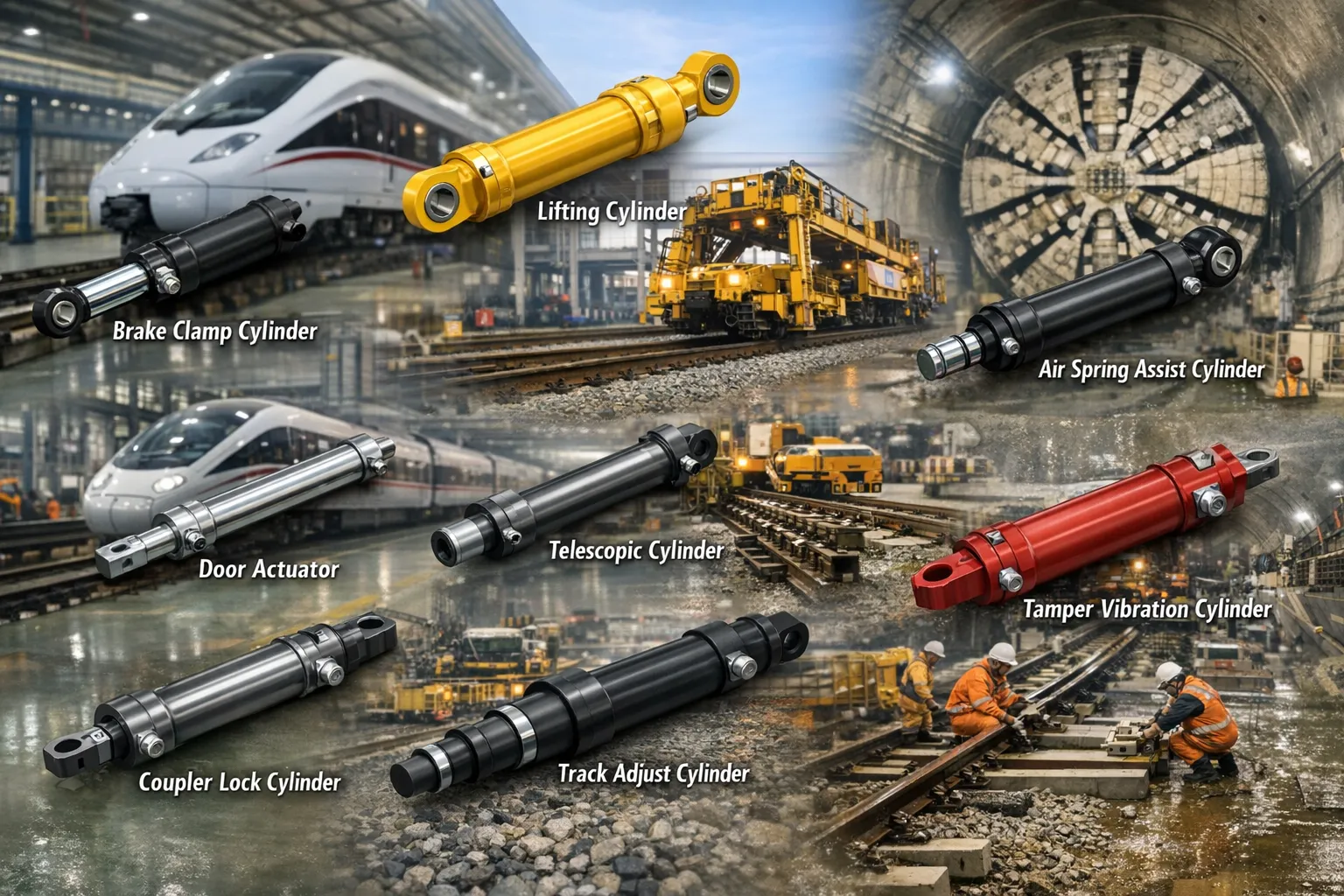
Direct Form-Fit Brand Replacement Capability
Locomotive depot managers facing urgent equipment downtime cannot afford the luxury of waiting six months for overseas OEM replacement parts, nor should they be forced to torch and re-weld the thick steel chassis of their bogie turnover machines to accommodate different actuators. Your equipment upgrades must be highly efficient and mechanically precise. Our engineering data center has meticulously mapped the dimensional envelopes, trunnion pin diameters, and high-pressure fluid port geometries of the legacy equipment utilized across global rail networks.
Our heavy-duty turnover cylinder is explicitly manufactured to serve as a structurally superior, 100% mechanical drop-in replacement for equivalent heavy-rotation models originally supplied by international brands such as Parker Hannifin, Bosch Rexroth, Enerpac, Eaton Vickers, HYDAC, and Palfinger. (Regulatory Clarification: The mention of these specific corporate trademarks is solely for the purpose of technical compatibility verification and dimensional cross-referencing for maintenance engineers. We operate as an independent manufacturing firm and possess no formal affiliation with these respective trademark holders.)
By utilizing our exact-fit replacement hydraulic components, rail infrastructure procurement teams can completely bypass extended global supply chain bottlenecks. You receive a mathematically matched component featuring vastly superior metallurgy, while simultaneously securing a highly aggressive hydraulic cylinder price that maximizes your annual maintenance ROI.
Core Technological Advancements & Structural Superiority
The immense gap in reliability between a generic industrial actuator and our dedicated turnover cylinder is rooted entirely in uncompromising material science and advanced structural geometry. Here are the core technical pillars that guarantee our components will survive decades of rotational abuse:
-
1. 42CrMo High-Yield Alloy Formulation
Standard commercial cylinders typically utilize 1045 or Q345 carbon steel. Under the violent torsional torque of a reversing bogie load, these basic materials flex microscopically, eventually initiating metal fatigue. We exclusively forge our cylinders from 42CrMo (Chromium-Molybdenum) alloy steel. This aerospace-grade metallurgical formulation offers astronomically higher tensile and yield strength, ensuring the cylinder geometry remains absolutely rigid even when subjected to extreme eccentric loads.
-
2. Thick-Walled Cylinder Barrel Architecture
To defeat the definitive failure mode of this application—fatigue cracks—we significantly increase the radial wall thickness of the 42CrMo steel barrel. This deliberate over-engineering provides massive structural mass to absorb kinetic shockwaves. It entirely prevents the barrel from “ballooning” under extreme pressure spikes and eliminates the risk of longitudinal cracking along the welded trunnion mounts.
-
3. Advanced Hydro-Mechanical Cushioning Structure
The integration of a specialized cushioning structure at both ends of the stroke is what protects the entire machine chassis during the center-of-gravity shift. By utilizing tapered spear designs and hardened deceleration cavities, the fluid is throttled perfectly in the final milliseconds of movement. This prevents metal-on-metal slamming, protects the delicate internal hydraulic cylinder components, and guarantees a butter-smooth transition.
-
4. Deep Penetration Submerged Arc Welded Trunnions
The trunnion mounts act as the primary rotational pivot points, bearing the entire weight and sheer stress of the bogie. Superficial manual welding will quickly shear under these conditions. We utilize automated, robotic submerged arc welding to fuse the trunnions directly into the thick-walled 42CrMo barrel. This process achieves massive weld penetration depth and perfect molecular fusion, guaranteeing total resistance against vibration-induced weld fatigue.
-
5. Advanced High-Pressure Dynamic Sealing Matrix
The extreme pressure spikes generated during load shifts can easily blow out standard rubber seals. Our turnover cylinder incorporates a heavy-duty, multi-stage step-seal configuration utilizing proprietary ultra-low-friction composites. This sealing matrix maintains absolute fluid containment even under transient pressure spikes exceeding 350 bar, ensuring perfectly smooth rotation without dangerous stick-slip stuttering.
-
6. Multi-Layer Hard Chrome Plating Protection
Locomotive depots are harsh environments saturated with abrasive metallic brake dust and aggressive cleaning solvents. The operational rod is shielded by an incredibly dense, multi-layered hard chrome plating process. Yielding a surface hardness above HRC 65, this chrome barrier resists impact pitting from flying debris and drastically extends the lifecycle of the critical rod wiper seals.
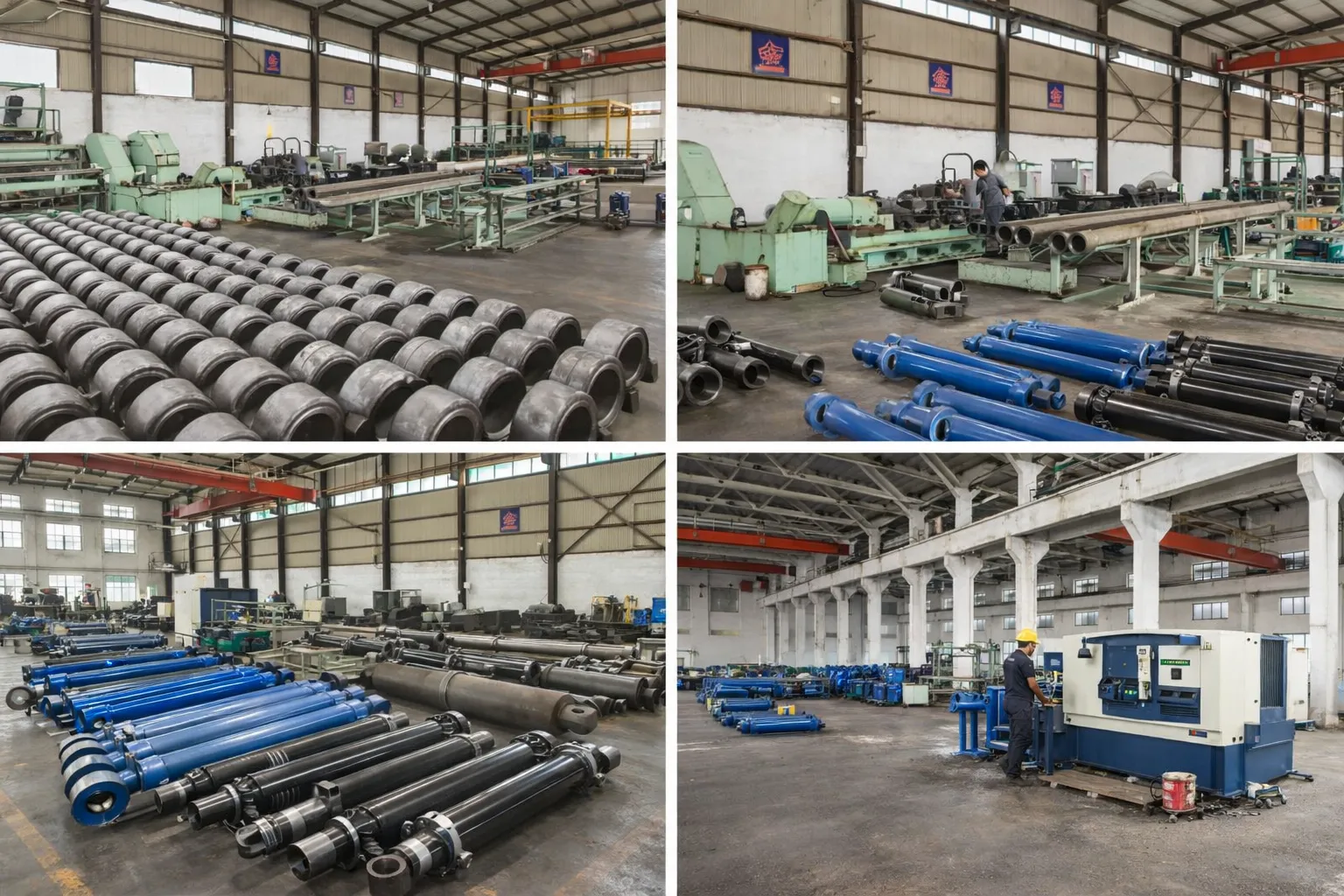
Autonomous Manufacturing Excellence & Quality Verification
Producing a component capable of safely manipulating a 20-ton railway bogie allows absolutely zero margin for manufacturing error. True operational safety cannot be achieved through the mere assembly of outsourced parts; it strictly requires absolute, uncompromising control over the entire metallurgical and machining ecosystem. We do not outsource the production of critical pressure-bearing components. Our globally recognized reputation as an elite heavy-industry supplier is built upon a fully vertically integrated manufacturing facility, strictly governed by rigorous ISO 9001:2015 quality management protocols.
Because fatigue cracks are the primary enemy of the turnover hydraulic cylinder, our quality control protocols focus intensely on structural integrity. Every single load-bearing weld undergoes comprehensive Ultrasonic Non-Destructive Testing (NDT) to verify absolute, void-free metal fusion. If a weld shows even microscopic porosity, the component is immediately rejected and recycled. The interior bore of the thick-walled barrel undergoes rigorous deep-hole boring, followed immediately by skiving and roller burnishing to achieve a mirror-like finish, which entirely prevents internal fluid bypass.
Before any unit is cleared for global export, it is subjected to a brutal, 100% computerized factory acceptance test. The actuator is mounted on a heavy-duty hydraulic test bench and intentionally pressurized to 150% of its rated operational maximum. This sustained hydrostatic hold guarantees absolute zero internal bypass across the piston seals and definitively verifies the ultimate bursting strength of the 42CrMo thick-walled barrel. Full metallurgical certificates and dynamic test logs are permanently tied to the serial number, ensuring absolute traceability for your depot’s safety records.
Cross-Industry Deployment of Heavy-Duty Turnover Technology
The immense structural resilience and dynamic load-shifting capabilities engineered into this turnover cylinder make it highly sought after beyond the rail sector. Heavy industries facing similar massive, eccentric rotational loads actively deploy our specialized fluid power technology to secure their infrastructure.
For example, in the extreme, high-temperature environment of the metallurgical and iron industry, our thick-walled cylinders are utilized to safely tilt massive crucibles filled with hundreds of tons of molten steel, where structural failure is catastrophic. Similarly, the mining industry heavily relies on this exact cushioned technology for rotary railcar dumpers and massive articulation joints on subterranean haul trucks, environments where equipment is subjected to continuous, violent shock loading. We also supply customized lifting rams to the construction machinery industry for severe operational loads.
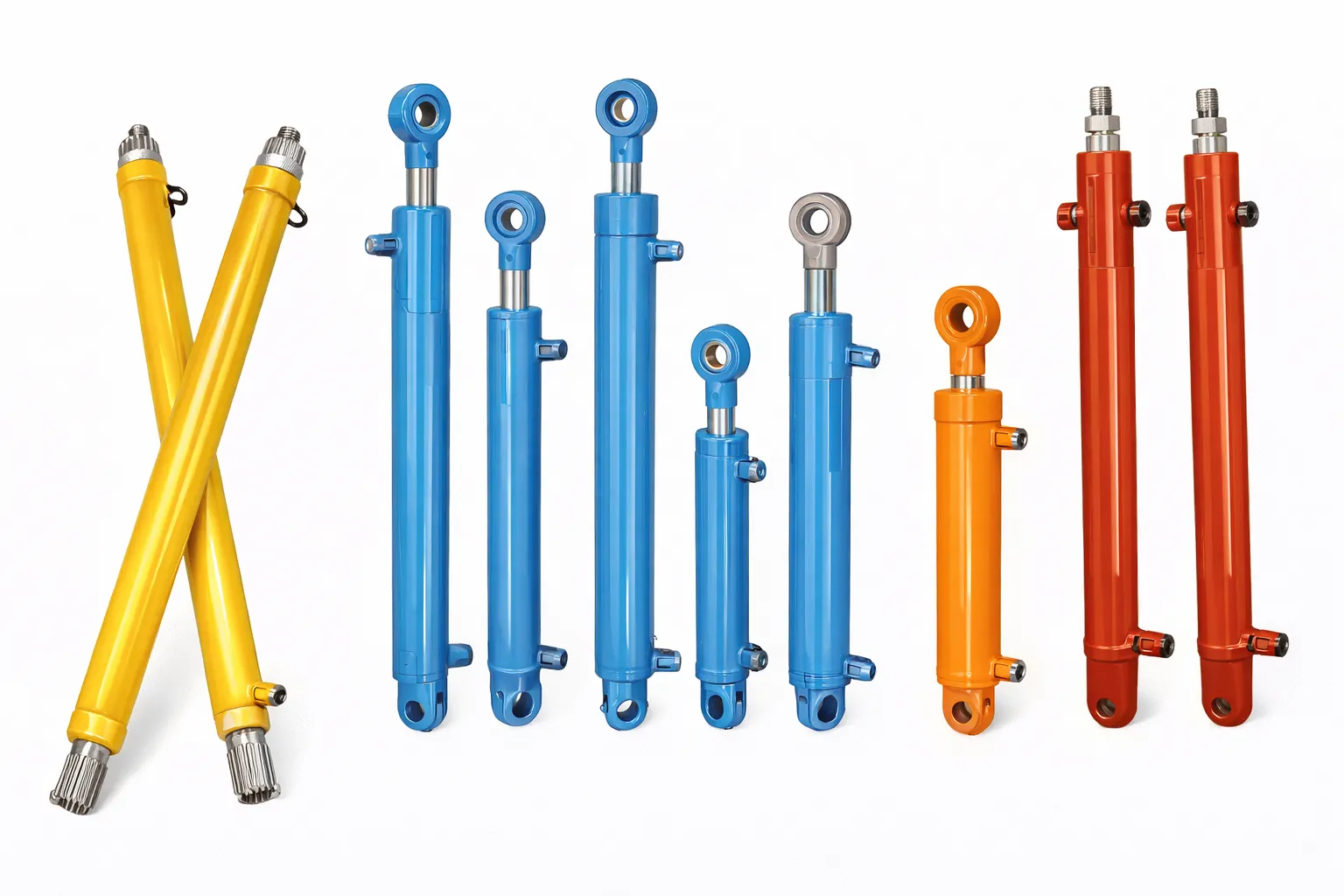
Comparative Analysis: Standard Commercial Actuators vs. Our Heavy-Duty Turnover Solution
Attempting to save initial capital by specifying standard industrial cylinders for a bogie turnover machine is a highly dangerous engineering false economy. The following matrix clearly illustrates the vast technological disparities and explains why upgrading to our specialized solution yields a massive return on investment by entirely eliminating downtime.
| Critical Engineering Feature | Standard Industrial Actuator | Our Heavy-Duty Turnover Cylinder |
|---|---|---|
| Barrel Metallurgy & Structure | Standard 45-grade carbon steel, thin-walled (Highly susceptible to pressure ballooning) | High-yield 42CrMo Alloy Steel, thick-walled (Entirely prevents structural deformation) |
| Kinetic Energy Management | No internal shock absorption; prone to violent mechanical slamming at stroke end | Integrated progressive cushioning structure (Absorbs kinetic energy smoothly) |
| Trunnion Weld Integrity | Standard MIG welding (High risk of shear and severe fatigue cracks) | Deep-penetration Submerged Arc Welding + 100% NDT Verification |
| Dynamic Sealing Profile | Basic NBR lip seals (Easily blows out during rotational pressure spikes) | Multi-stage PTFE composite step-seals (Flawless high-pressure containment) |
| Lifecycle Economics | Frequent downtime, constant need for fixing hydraulic cylinders | Multi-year operational lifespan under heavy continuous rotation |
Authentic Global Field Success: East Asian Deployments
Theoretical physics and advanced metallurgy must be validated by relentless, continuous field performance. Across the high-density rail networks of East Asia, our specialized fluid power components are actively preventing machinery failure and securing vital maintenance schedules.
Deployment Case 1: Seoul Metropolitan Transit Authority Hub (South Korea)
Client Identity: Principal Rail Infrastructure & Rolling Stock Contractor
The Engineering Crisis: The depot’s primary bogie turnover machines were suffering from chronic, dangerously recurrent fatigue cracks along the cylinder trunnion welds. The immense shock of rotating 18-ton passenger bogies was literally tearing their standard commercial hydraulic actuators apart, causing massive oil spills and forcing weekly shutdowns for emergency welding repairs.
Our Targeted Solution: In March 2024, our engineers conducted a rapid site analysis and supplied custom-dimensioned turnover hydraulic cylinders. These units featured our ultra-robust 42CrMo thick-walled construction and deep-penetration submerged arc welded mounts.
The Tangible Result: After 24 months of relentless daily operation, absolutely zero structural failures or fatigue cracks have been reported. The chief depot engineer formally stated: “Upgrading to these specialized thick-walled units was the best engineering decision we made all year. The structural stability is phenomenal, and we have permanently slashed our monthly budget for fixing hydraulic cylinders.”
Deployment Case 2: Busan High-Speed Rail Locomotive Hub (South Korea)
Client Identity: National High-Speed Rail Heavy Maintenance Division
The Engineering Crisis: The client’s massive turnover machines lacked proper internal deceleration. When rotating 22-ton high-speed power bogies, the gravitational runaway at the apex caused the machine to violently slam at the 180-degree mark. This shock not only destroyed the cylinder seals but repeatedly knocked the sensitive wheelset alignments out of tolerance.
Our Targeted Solution: We comprehensively engineered a flawless drop-in replacement lift cylinder heavily equipped with our proprietary progressive cushioning structure on both the rod and cap ends to handle the rotation safely.
The Tangible Result: The rotation kinematics completely transformed. The heavy bogies now decelerate silently and smoothly into position. The facility director noted: “The hydraulic braking effect of the cushioning structure is incredible. By partnering directly with the manufacturer, the hydraulic cylinder price we secured allowed us to retrofit all four depot bays simultaneously.”
Deployment Case 3: Tokyo Heavy Freight Train Depot (Japan)
Client Identity: Specialized Freight Locomotive Maintenance Subcontractor
The Engineering Crisis: Facing a major facility overhaul, the depot needed to replace eight failing legacy European-brand actuators on their turnover rigs. The original OEM was quoting an unacceptable 30-week lead time and exorbitant pricing, threatening to delay their entire maintenance season.
Our Targeted Solution: Working from provided CAD measurements, we produced and delivered eight dimensionally identical turnover cylinders within just four weeks, utilizing vastly superior 42CrMo steel.
The Tangible Result: The installation was a seamless drop-in fit. The procurement manager enthusiastically remarked: “Not only did we avoid a catastrophic scheduling delay, but the performance and build quality actually exceed the original units. They delivered premium hydraulic parts that outperform everything else we’ve tested.”
Critical Engineering FAQ for B2B Procurement
When retrofitting heavy machinery responsible for lifting multi-ton rail assets, absolute technical transparency is required. These frequent questions address the core structural and logistical concerns of depot engineers and supply chain directors.
1. Why is 42CrMo strictly necessary for the turnover cylinder instead of standard carbon steel?
Standard carbon steel simply lacks the molecular rigidity to handle the extreme torsional forces generated when a multi-ton bogie flips past its center of gravity. 42CrMo is a high-strength alloy steel that provides an immensely higher yield threshold. It prevents the cylinder barrel from microscopically ovalizing under extreme pressure, which is the primary cause of internal seal failure and subsequent fatigue cracking.
2. How specifically does the cushioning structure prevent structural failure?
Without a cushioning structure, the massive weight of the falling bogie would pull the hydraulic cylinder piston into the end cap with devastating kinetic energy, shattering the mounts. Our internal hydro-mechanical cushion acts like an aggressive, fluid-based shock absorber. It forces the escaping hydraulic oil through a mathematically restricted orifice in the final segment of the stroke, safely bleeding off the kinetic energy and allowing the heavy load to settle softly.
3. Can you manufacture these units to directly replace my existing OEM cylinders without chassis modifications?
Yes, absolutely. By providing us with the original dimensional schematics, pin-to-pin lengths, and mounting trunnion specifics, our engineers will machine the exact spatial footprint required. It will bolt directly onto your bogie turnover machine, saving your depot from highly expensive and time-consuming metalwork alterations.
4. What is the expected manufacturing and logistics lead time to South Korea or Japan?
Because we manage our entire manufacturing process internally and maintain a robust inventory of raw 42CrMo billets, standard customized production cycles require approximately 3 to 4 weeks. Heavy sea freight transit to primary hubs like Busan, Incheon, or Yokohama is exceptionally fast, ensuring you avoid the crippling multi-month delays typical of European or North American OEMs.
5. Do you guarantee the long-term supply of internal replacement seals?
Yes. We recognize that heavy infrastructure machinery operates for decades. We permanently archive the exact engineering blueprints and seal profiles linked to your specific order. We supply comprehensive, exact-match OEM repair kits containing all necessary heavy-duty PTFE seals, bronze guide rings, and scrapers, ensuring your local crew can easily execute routine hydraulic cylinder repair years in the future.
6. How thick is the chrome plating, and why does it matter in a depot environment?
We apply a heavy-duty, multi-layer hard chrome plating up to 50 microns thick. Locomotive depots are saturated with abrasive iron dust from grinding train wheels. If this dust pits a standard thin chrome layer, the jagged rod surface will immediately tear the primary seals to shreds, causing massive fluid loss. Our thick, ultra-hard plating physically resists this pitting, protecting the internal components.
Ready to Permanently Eliminate Depot Machinery Failure?
The physical safety of your rail technicians and the strict adherence to transit overhaul schedules depend entirely on the structural integrity of your lifting equipment. Do not allow generic, under-specified fluid power components to induce fatigue cracks and cause catastrophic equipment collapse.
Editor: Cxm