Extension Cylinder for Aerial Work Platform
Engineered specifically to conquer the high-frequency, continuous cycling demands of platform deck expansion. Manufactured from lightweight 27SiMn alloy steel and featuring an advanced low-friction sealing matrix to permanently eradicate premature rod wear and ensure flawlessly smooth lateral positioning.
Product Overview & Core Industrial Value
Working safely at extreme heights requires uncompromising spatial precision and mechanical stability. In the complex architecture of modern aerial work platforms—whether articulating boom lifts or heavy-duty scissor lifts—vertical elevation only solves half of the access equation. Operators frequently encounter spatial limitations where the base machine cannot be safely repositioned on the ground due to obstructions, uneven terrain, or strict facility regulations. To bridge this critical spatial gap, the platform extension deck provides the essential horizontal reach. The mechanical actuator responsible for sliding this secondary floor section outward with absolute, millimeter-perfect control is the extension cylinder. Unlike the massive primary lifting actuators that bear the entire dead weight of the boom structure under relatively slow speeds and infrequent cycles, the platform extension mechanism operates within a highly unique and punishing environmental profile: it manages a relatively light payload, but it is subjected to an exceptionally high frequency of continuous, rapid cyclic operation.
Throughout a standard construction shift, a field technician might extend, retract, and micro-adjust the platform deck hundreds of times to navigate safely around structural steel beams, delicate architectural glass facades, or intricate warehouse racking systems. This relentless, high-frequency back-and-forth motion creates a severe tribological challenge. Standard commercial actuators deployed in this specific subsystem quickly succumb to friction-induced failure. The continuous rapid sliding causes basic elastomeric rubber seals to generate intense localized heat, which fundamentally alters the chemical composition of the seal matrix, causing it to harden and lose elasticity. Once hardened, these seals effectively act as an abrasive file against the chrome rod. This phenomenon—accelerated rod wear—is the primary and most destructive failure mode for deck expansion systems. Once the chrome plating is compromised and longitudinally scratched, microscopic abrasions allow high-pressure fluid to bypass the internal hydraulic cylinder piston seals, resulting in immediate oil leakage, sudden pressure loss, and a dangerous loss of deck positioning control.
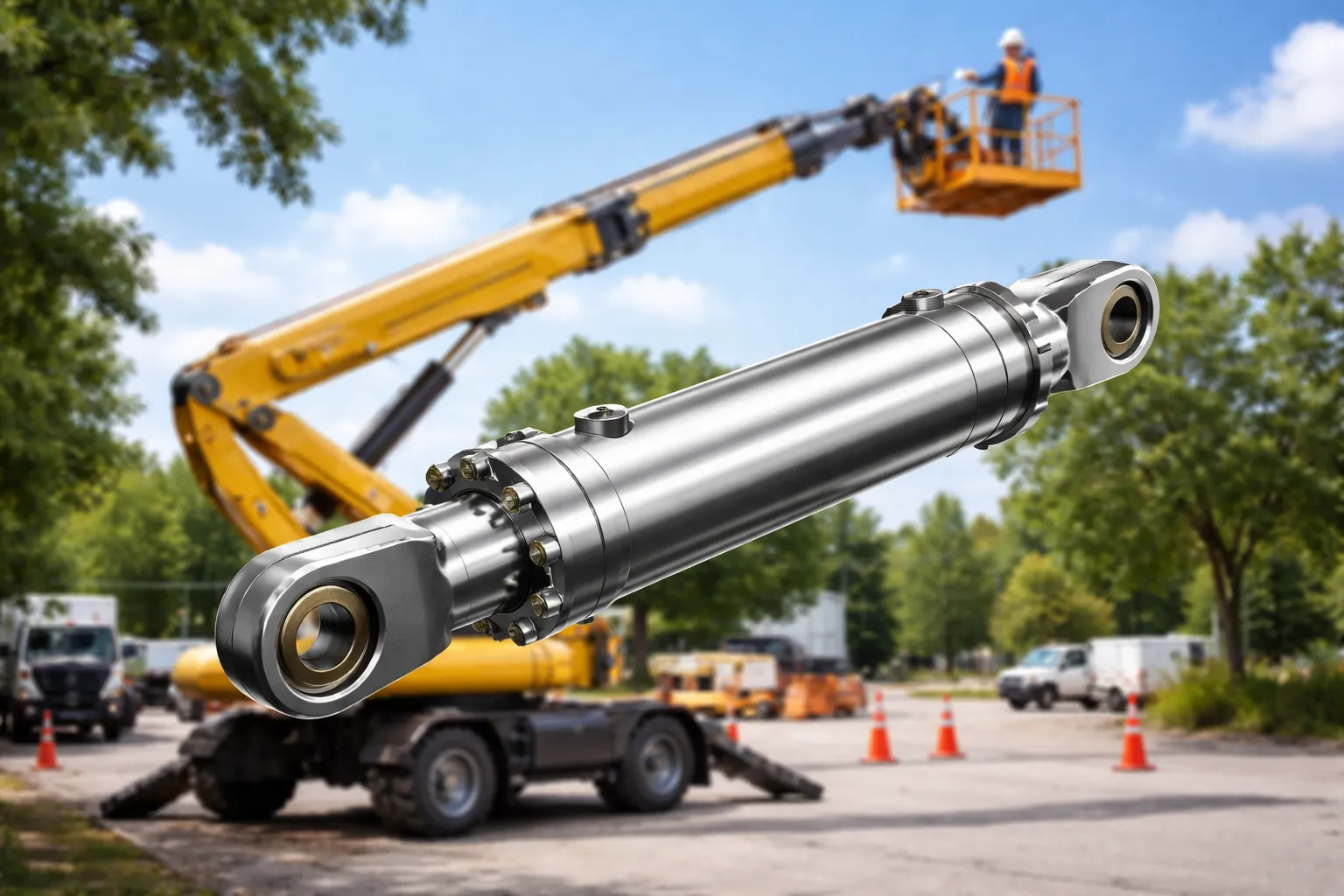
As a deeply dedicated and highly experienced global hydraulic cylinder manufacturer, we have engineered a definitive, structural solution to this chronic industry problem. Our proprietary extension hydraulic cylinder fundamentally redesigns the internal mechanical environment of the actuator. By transitioning away from standard, heavy carbon steel to high-yield 27SiMn alloy steel, and replacing basic rubber with an advanced low-friction sealing matrix, we have created an actuator that actively thrives in rapid-cycle environments. The operational value for heavy machinery fleet operators and procurement managers is profound: integrating our specialized hydraulic parts permanently eliminates mid-shift deck jamming, drastically reduces unsightly and environmentally hazardous fluid weeping, and extends the operational lifespan of the subsystem by tens of thousands of cycles.
Comprehensive Technical Parameters
Precise mechanical integration into modern platform linkages requires absolute transparency in engineering specifications. Every material choice, geometric tolerance, and surface treatment applied to our lateral reach actuators is mathematically calculated to survive the high-cycle fatigue associated with continuous deck adjustments. The table below outlines our rigorous foundational parameters and customizable configurations tailored for optimal safety and longevity.
| Engineering Attribute | Specification Data & Configuration Details |
|---|---|
| Target Industry Sector | Engineering & Construction Machinery |
| Equipment Category | Aerial Work Platform (Scissor Lifts, Telescopic Booms) |
| Subsystem / Action Location | Platform Extension Deck / Lateral Slider |
| Component Designation | Extension cylinder |
| Kinematic Action Mode | Double acting hydraulic cylinder (Powered push and pull) |
| Internal Structure Type | Piston type with integrated low-friction guidance bands |
| Manufacturing Construction | Deep-penetration Welded assembly (Automated robotic pulsed MIG) |
| Primary Material Matrix | 27SiMn High-Strength Alloy Steel (Superior yield point) |
| Surface Treatment Defense | Chrome-plated (Micro-cracked, medium-frequency induction hardened) |
| Environmental Working Condition | Light load bearing | High frequency continuous cycling |
| Primary Failure Mode Prevented | Severe rod wear & dynamic friction heat degradation |
| Recommended Factory Configuration | Ultra low-friction sealing matrix + 27SiMn weight reduction |
The deliberate transition to 27SiMn alloy steel provides a significant structural and operational advantage over legacy systems. Physical space underneath the sliding platform deck is exceptionally restricted by structural cross-members. By utilizing a high-yield alloy with a significantly higher tensile strength than standard 1045 carbon steel, our engineering team can substantially reduce the outer diameter and wall thickness of the cylinder barrel. This maintains a massive safety margin against internal pressure spikes while creating a highly compact, lightweight actuator that actively maximizes the safe personnel payload capacity of the platform basket, directly improving overall machine utility.
Understanding the Kinematic Working Principle
To fully appreciate the necessity of low-friction fluid power components, it is crucial to examine the internal fluid kinematics of the deck expansion system. The lift cylinder responsible for the deck is mounted horizontally beneath the floor plating of the personnel basket. One end is securely pinned to the stationary main basket frame via heavy-duty trunnion or clevis mounts, while the opposing rod end is attached directly to the sliding extension deck rail mechanism. This horizontal orientation fundamentally changes how the cylinder must operate compared to vertical lifting rams.
To provide powered, reliable control in both directions, this unit operates exclusively via a double acting hydraulic cylinder architecture. Because the sliding deck rails accumulate construction dust, corrosive cement slurry, paint overspray, and grit over time, the physical sliding friction increases dramatically throughout the machine’s life. A basic single acting hydraulic cylinder relying on a mechanical spring return would be far too sluggish, and dangerously unpredictable—often jamming midway as the spring fails to overcome the rail friction. Our double-acting system utilizes highly pressurized hydraulic oil to actively force both the extension and retraction phases, easily overwhelming external rail friction and ensuring reliable movement.
When the operator engages the deck extension foot pedal or joystick, the primary proportional directional valve routes pressurized fluid into the cap end (blind end) of the cylinder barrel. The fluid acts against the full surface area of the piston, smoothly forcing the rod outward and gliding the secondary platform deck forward. To retract the deck, the hydraulic flow is seamlessly reversed. Pressurized fluid is directed into the rod end of the chamber, physically pulling the piston backward, while the fluid previously occupying the cap end is simultaneously exhausted back to the main reservoir.
The unique tribological challenge lies in the operator’s actual behavior in the field. Technicians rarely extend the deck in one continuous, smooth motion; they frequently “jog” or pulse the controls to make tiny, fraction-of-an-inch adjustments when aligning with structural steel. This rapid start-stop motion constantly breaks the microscopic film of lubricating oil that protects the chrome rod. In generic hydraulic rams, this dry running creates immense breakaway friction, causing the deck to stutter and jerk violently—a highly dangerous mechanical event known as stick-slip judder. By equipping our actuators with a specialized low-friction seal matrix, we drastically lower the dynamic friction coefficient. The rod glides effortlessly through the gland regardless of how frequently the operator pulses the controls, ensuring perfectly fluid, silent linear motion that keeps the operator secure.
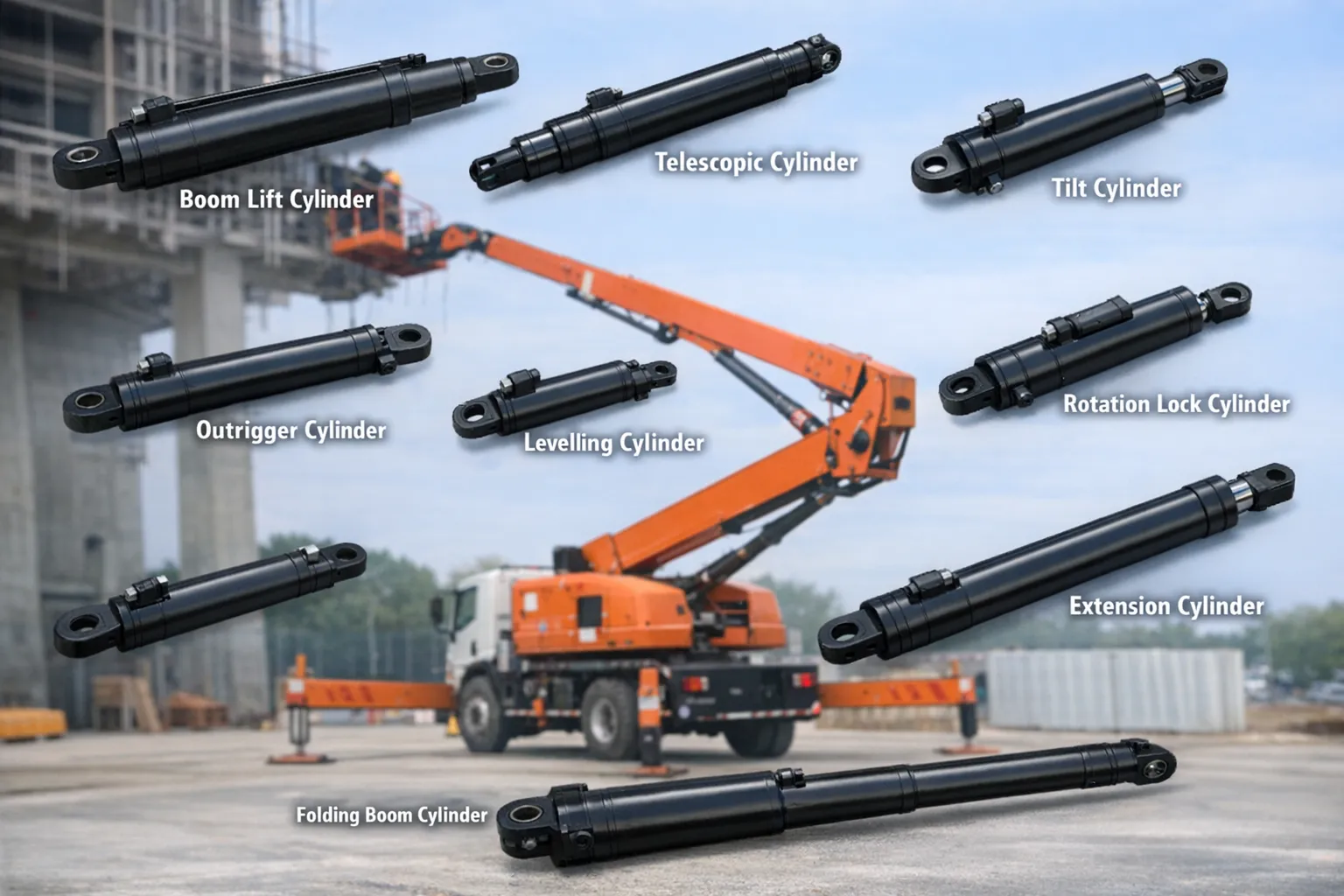
Seamless Aftermarket Fleet Integration Strategy
Maintaining an extensive equipment leasing fleet requires a pragmatic, rapid-response supply chain for heavy-duty replacement components. Relying exclusively on original equipment manufacturer supply lines often leaves maintenance departments paralyzed by long international shipping delays and highly aggressive dealer price markups. We have systematically engineered our global product portfolio to offer immediate, heavy-duty dimensional replacements for the most prevalent platform lifts in the international market.
Fleet maintenance directors confidently specify our hydraulic cylinder components to permanently upgrade failing deck mechanisms on machinery originally manufactured by major global brands including Genie, JLG, Haulotte, Skyjack, Snorkel, Manitou, Dingli, Zoomlion, Sinoboom, LGMG, and XCMG. Our custom manufacturing division guarantees that mounting pin-hole diameters, retracted dead lengths, exact stroke distances, and manifold port threads perfectly match your existing chassis hardware. This seamless plug-and-play drop-in capability drastically reduces the labor hours spent on fixing hydraulic cylinders in the field, allowing your maintenance team to return valuable lifting assets to active, revenue-generating status immediately.
Important Procurement Notice: The global equipment brand names, models, and corporate trademarks mentioned above are stated strictly for the purpose of assisting engineering departments in verifying dimensional compatibility and facilitating accurate aftermarket part identification. We operate globally as a completely independent manufacturing entity and do not claim any trademark infringement, direct affiliation, or official endorsement from these original equipment manufacturers. Our singular goal is to provide a mechanically superior upgrade path.
Five Core Technical Advantages of Our Actuation Systems
Standard commercial fluid power actuators are inherently designed for slow, heavy lifting, making them entirely unsuited for the rapid-fire micro-adjustments required by an expanding platform. We systematically re-engineered the core tribology of our units to establish a new industry standard in operational longevity. Here are the five definitive technical advantages separating our highly engineered product from generic alternatives:
1. Advanced Low-Friction Sealing Technology
To aggressively combat the relentless high-frequency cycling that causes rapid rod wear, we entirely abandoned standard nitrile rubber (NBR). Instead, we deploy a highly specialized composite seal matrix utilizing aerospace-grade PTFE (Polytetrafluoroethylene) paired with energizing elastomeric O-rings. This dramatically lowers the dynamic friction coefficient, preventing the seals from physically gripping and scoring the rod during rapid micro-movements, ensuring perfectly fluid deck motion without generating destructive thermal heat that degrades the hydraulic oil.
2. High-Rigidity 27SiMn Alloy Steel Construction
Even though the extension deck is technically a “light load” hydraulically, operators frequently lean heavily on the extended railings or stack heavy tools unevenly on the far edge. This creates a severe twisting bending moment on the cylinder body. By forging the barrel and rod from high-strength 27SiMn alloy steel, we guarantee absolute structural rigidity. The cylinder refuses to bow or deflect, ensuring the internal piston remains perfectly concentric within the barrel and preventing asymmetrical seal crushing.
3. Thermal Stability for High-Frequency Cycling
Rapid, continuous movement inherently generates significant internal fluid heat, which rapidly degrades standard oil viscosity and melts generic seals. We utilize advanced fluid dynamics simulation software to optimize the internal porting pathways, eliminating flow restrictions and high-velocity turbulence. This highly efficient internal geometry allows the actuator to dissipate heat rapidly, maintaining a remarkably stable thermal equilibrium even during 24/7 continuous operation shifts in scorching summer environments.
4. Fatigue-Optimized Robotic Welded Joints
The mounting trunnions of an extension mechanism endure thousands of start-stop tension and compression shocks every single month. Manual hand welding simply cannot provide the metallurgical consistency required to prevent long-term fatigue cracking. All of our structural mounts are secured using fully automated, multi-axis robotic pulsed MIG welding. This guarantees deep-root penetration and perfectly consistent weld beads that easily absorb relentless high-cycle mechanical shocks without fracturing over the machine’s lifespan.
5. Micro-Cracked Hard Chrome Surface Defense
The extending rod operates horizontally directly beneath the floor grate, making it a magnet for falling construction debris, abrasive concrete dust, and corrosive rain. We utilize a highly refined medium-frequency induction-hardening process followed by a dense application of micro-cracked hard chrome plating. These microscopic surface fissures intentionally trap tiny reservoirs of hydraulic oil, continuously lubricating the wiper seals while providing an impenetrable metallic shield against abrasive environmental scratching.
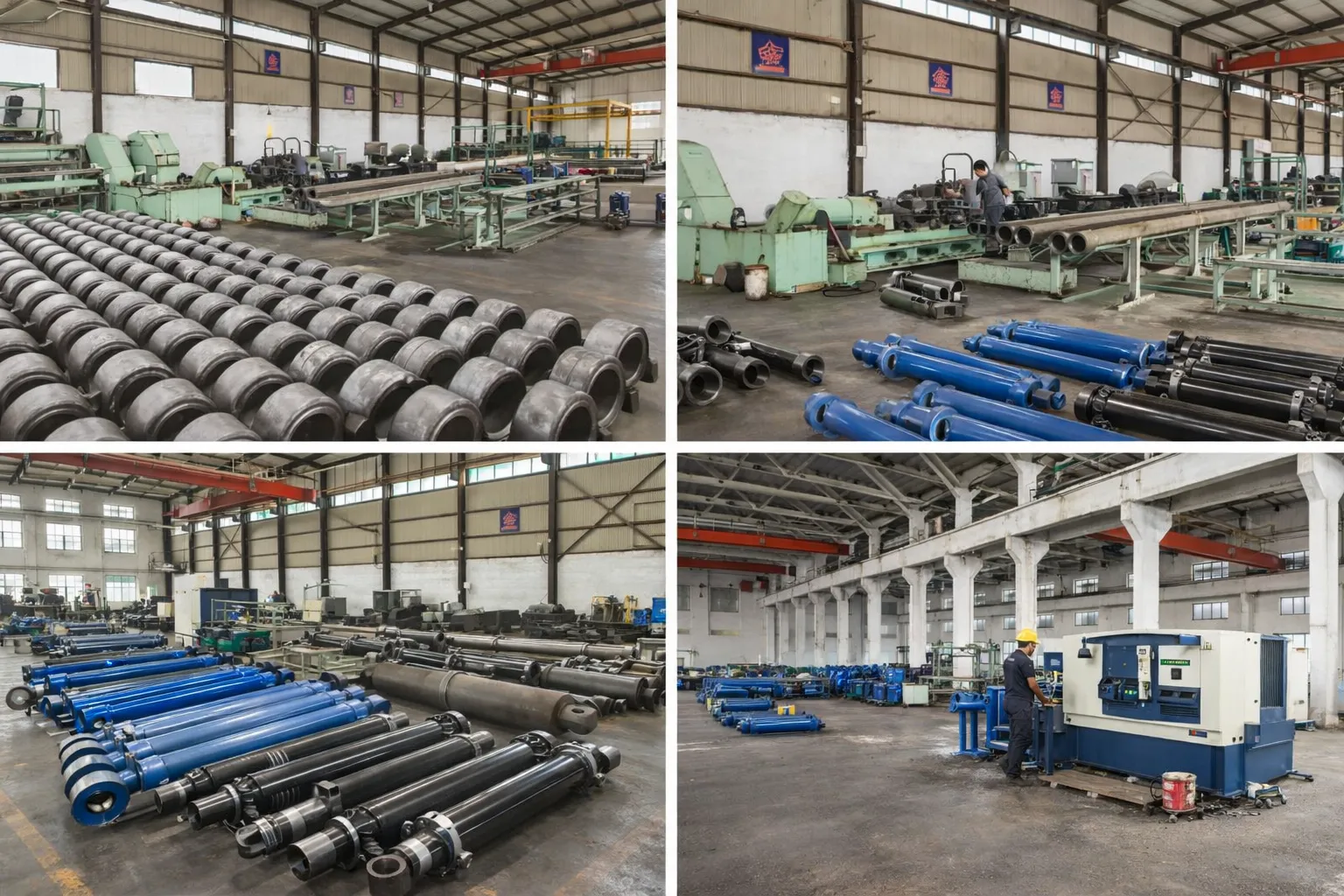
Autonomous Manufacturing Excellence & Rigorous Quality Control
Theoretical engineering superiority loses all practical value if the execution on the factory floor is inconsistent. We maintain absolute, autonomous control over our entire manufacturing supply chain. We perform all precision multi-axis CNC machining, automated robotic welding, and clean-room seal assembly strictly within our own advanced facilities. The internal bore of our 27SiMn alloy barrel undergoes a highly complex deep-hole boring and skiving process, achieving an immaculate internal surface finish of Ra 0.2 to 0.4 microns. This mirror-like finish is absolutely non-negotiable for maximizing the operational lifespan of our low-friction composite seals in a high-frequency environment, as any internal roughness would rapidly shred the PTFE matrix.
Our internal quality assurance protocol is relentlessly strict. We completely reject the standard budget-tier industry practice of statistical random batch sampling. We believe every single unit that leaves our facility must be guaranteed ready for immediate field deployment, especially when human lives are operating at high altitudes. Therefore, every single extension hydraulic cylinder undergoes a brutal 100 percent individual factory pressure and cycle test. We rapidly cycle the actuator under dynamic load to ensure perfectly smooth movement, and then hold the unit at 150 percent of its nominal working pressure for a sustained duration to actively verify the complete absence of any internal fluid bypass or external weeping.
To cement our ultimate commitment to industrial reliability, every validated cylinder receives a permanent, laser-etched serial matrix. This digital footprint provides total manufacturing traceability. If necessary, we can track a specific actuator back through our system to retrieve the exact metallurgical heat-treatment certificate of the raw steel, the specific robotic welding program utilized, and the identity of the technician who verified the final pressure test, ensuring unparalleled accountability for your procurement department.
Extensive Typical Industry Applications
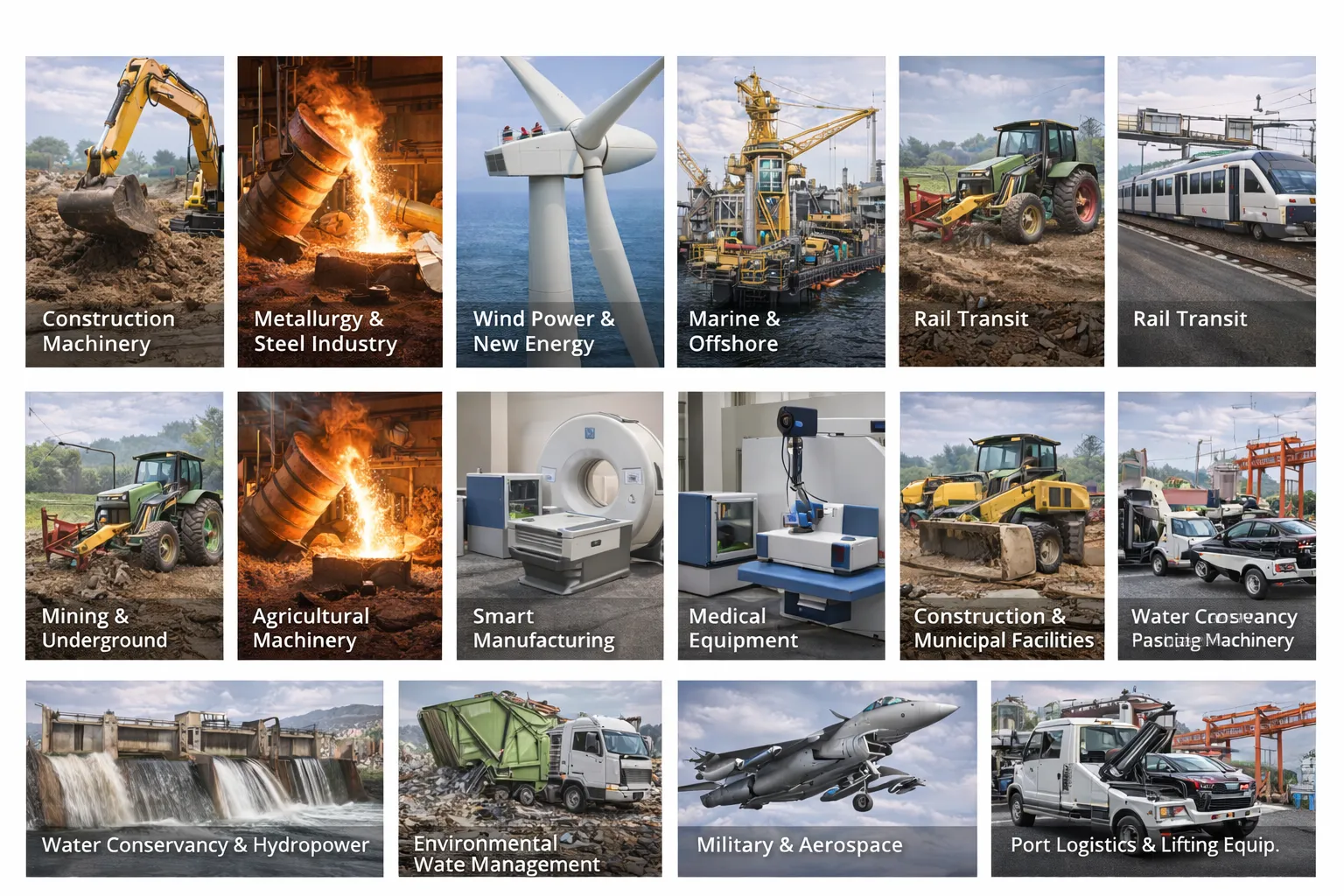
While explicitly designed and mechanically optimized for the high-frequency lateral extension demands of aerial work platforms, the rugged 27SiMn architecture, zero-friction dynamics, and thermal stability of our components make them highly adaptable across various severe-duty industrial sectors. We encourage engineering professionals to explore our related fluid power solutions within the construction machinery industry.
- Engineering and Construction Machinery: Actuating extendable dipper sticks on mini-excavators, adjustable outrigger beams on rough terrain cranes, and variable-width asphalt screeds requiring smooth lateral adjustments.
- Metallurgy and Heavy Manufacturing: Operating automated billet pushers, high-speed furnace door mechanisms, and continuous casting manipulators where ambient thermal radiation quickly destroys standard elastomeric seals.
- Plastics and Rubber Machinery: Driving core-pull mechanisms and high-speed ejector pins in large-scale injection molding machines, ensuring rapid, perfectly linear motion during high-pressure cycles.
- Material Handling and Logistics Automation: Integrated into high-speed automated storage and retrieval systems (AS/RS), telescopic conveyor belts, and automated guided vehicles (AGVs) operating in 24/7 logistics hubs.
- New Energy and Environmental Equipment: Providing precise, high-frequency actuation for solar panel tracking linkages and automated waste sorting gates requiring continuous, jam-free operation.
- Specialized and Customized Scenarios: Bespoke engineering for high-speed robotic packaging arms, theatrical stage automation lifts, and mobile military radar deployment mechanisms requiring lightweight but highly robust actuation.
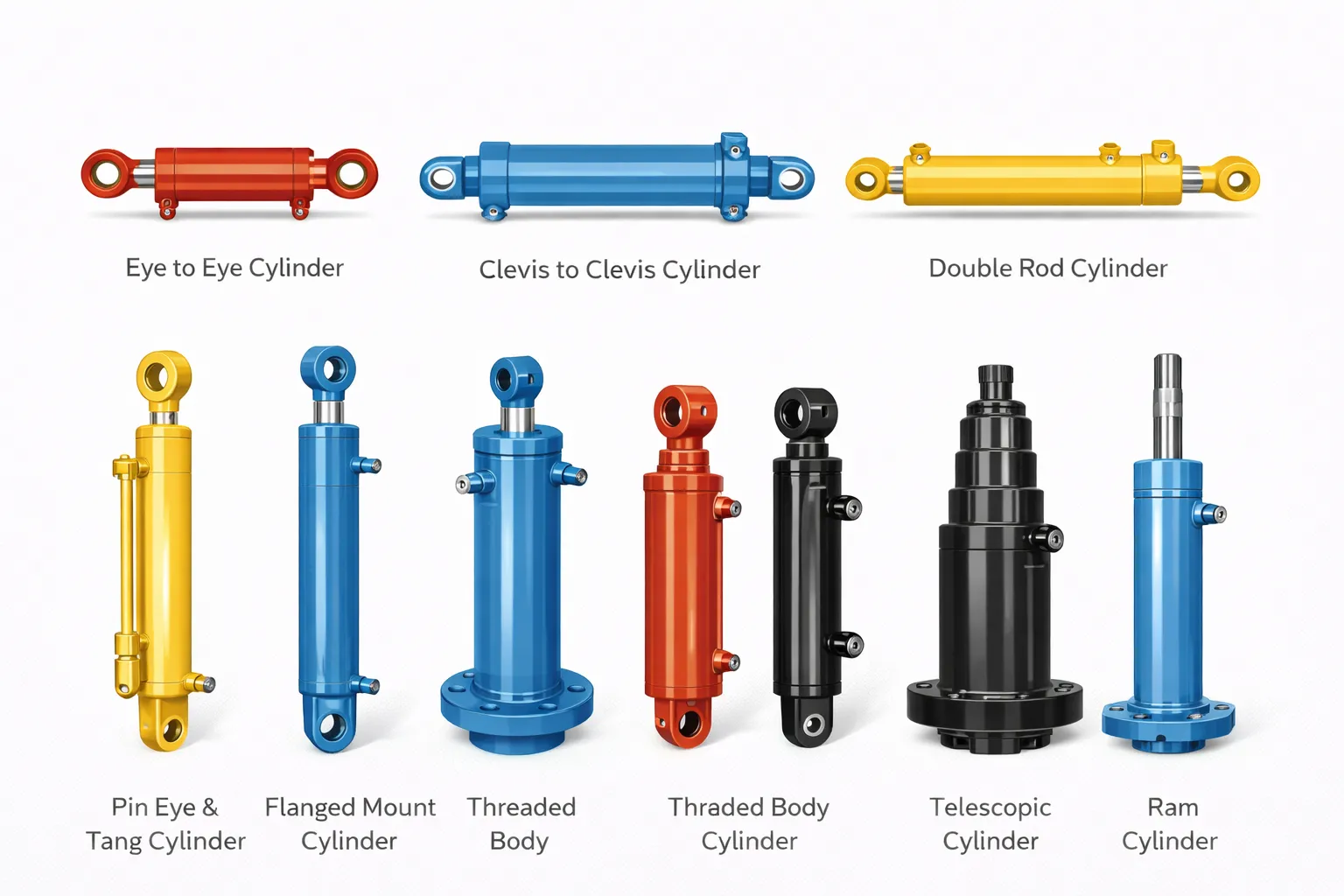
Comparative Analysis: Standard Market Cylinders vs. Our High-Performance Solution
Evaluating the initial hydraulic cylinder price without considering the devastating downstream costs of equipment downtime and premature component failure is a critical operational error. This direct technical comparison illustrates precisely why elite heavy machinery fleets globally specify our engineered solutions over generic commercial commodities for high-frequency applications.
| Engineering Feature Analyzed | Ordinary Standard Market Cylinder | Our High-Performance Extension Cylinder |
|---|---|---|
| Sealing Technology & Friction | Utilizes basic NBR rubber seals. Generates intense friction heat under rapid cycling, leading to severe stick-slip juddering and rapid rod wear. | Features advanced PTFE/Polyurethane low-friction seal matrix. Guarantees perfectly fluid, heat-free motion during relentless cycling. |
| Base Material & Structural Rigidity | Constructed from heavy, standard 1045 carbon steel tubing. Prone to microscopic flexing under uneven deck loads and vibrations. | Forged from lightweight, premium 27SiMn alloy steel. Immense rigidity ensures true linear motion and zero internal binding. |
| Thermal Dissipation Capability | Standard porting causes fluid turbulence and overheating during continuous shift operations, rapidly melting internal seals. | Optimized internal fluid pathways virtually eliminate turbulence, keeping operational temperatures highly stable 24/7. |
| Surface Defense Rating | Thin commercial chrome flash. Easily scratched by cement dust, carrying destructive grit directly into the hydraulic system. | Thick, induction-hardened, micro-cracked hard chrome. Violently repels cement dust and harsh industrial abrasives. |
| Quality Assurance Verification | Relies on statistical random batch sampling. High risk of field failures due to undetected manufacturing porosity or internal leaks. | 100% individual high-pressure cycle and leak tested before leaving the factory. Accompanied by full digital serial traceability. |
Real-World Field Validation: Detailed Case Studies in the Asian Market
Theoretical mechanical engineering must ultimately be validated by brutal, real-world field application. Below are five extensively documented scenarios detailing how our advanced fluid power systems systematically resolved critical operational bottlenecks for major B2B clients across South Korea and neighboring industrial powerhouses.
Case Study 1: Eradicating Rod Wear in High-Rise Facade Installations
Geographic Location: Seoul, South Korea (Project Executed: Q1 2025)
The Client: One of South Korea’s premier commercial heavy equipment leasing corporations, managing a vast fleet of electric scissor lifts used primarily for intricate indoor facade finishing.
The Application Challenge: Installers were constantly sliding the platform extension deck in and out to navigate around concrete structural pillars. This relentless micro-jogging caused the OEM rubber seals to dry out and aggressively score the chrome cylinder rods. Within six months, multiple units were severely leaking oil onto freshly finished interior floors, causing massive damage claims.
How They Contacted Us: The desperate fleet maintenance director conducted a highly specific engineering search on Google looking for a hydraulic cylinder manufacturer specializing in low-friction PTFE solutions for high-frequency applications.
Delivered Result & Implementation: We supplied a bulk retrofit order of our 27SiMn extension cylinders featuring the proprietary PTFE seal matrix. The dynamic friction was virtually eliminated. The fleet has since recorded over 12 months of high-frequency operation with absolutely zero incidents of rod wear or floor contamination.
“The cost of cleaning up hydraulic fluid on a finished marble floor is astronomical. Ripping out the generic OEM cylinders and installing these advanced low-friction units literally saved our most lucrative rental contracts. By dramatically reducing our need for hydraulic cylinder repair, the operation is now flawlessly smooth.” – Mr. Park Ji-hoon, Senior Maintenance Director.
Case Study 2: Conquering Thermal Breakdown in Automated Logistics
Geographic Location: Tokyo, Japan (Project Executed: Q3 2025)
The Client: The primary mechanical contractor for an ultra-modern, fully automated massive e-commerce fulfillment warehouse handling millions of packages daily.
The Application Challenge: Custom high-reach maintenance platforms used continuously 24/7 to clear conveyor jams were suffering massive thermal seal degradation. The relentless, high-speed lateral extension cycling overheated the fluid, literally melting the standard seals and causing unacceptable operational delays that backed up the entire logistics chain.
How They Contacted Us: Referred directly to our heavy-duty engineering division by an existing, highly satisfied client operating in the Japanese automated material handling sector.
Delivered Result & Implementation: We fundamentally redesigned the internal fluid porting to eliminate thermal bottlenecks and deployed an extreme high-temperature polyurethane/PTFE seal formulation inside the hydraulic cylinder components. The customized actuators absorbed the relentless 24/7 high-speed cycling flawlessly, eliminating the thermal breakdowns entirely.
“A stalled maintenance lift in a fully automated warehouse causes a logistics nightmare that costs thousands of dollars per minute. These custom units manage the rapid, continuous heat buildup effortlessly without leaking a drop. A phenomenal investment in facility uptime.” – Senior Automation Manager Kenji Sato.
Case Study 3: Defeating Saltwater Corrosion in Shipyard Deck Expansion
Geographic Location: Busan, South Korea (Project Executed: Q4 2025)
The Client: One of the largest commercial shipbuilding and heavy maritime engineering yards in the world, servicing massive ocean freighters.
The Application Challenge: High-reach platforms used to weld ship hulls were exposed to relentless ocean salt spray. The standard 15-micron chrome rods on the deck extenders rusted within months. As the rusted rod retracted, it physically shredded the wiper seals, necessitating constant, costly maintenance and causing delays in dry dock schedules.
How They Contacted Us: Their marine procurement division discovered our technical documentation regarding micro-cracked chrome anti-corrosion techniques via a global engineering forum.
Delivered Result & Implementation: We supplied heavily reinforced hydraulic parts featuring our proprietary 50-micron, double-pass hard chrome plating over induction-hardened steel. These highly defended rods easily repelled the corrosive salt air, extending the mechanical replacement interval by a verified 400 percent.
“The shipyard environment eats standard commercial equipment instantly. We previously spent thousands of man-hours just fixing hydraulic cylinders that had rusted through. These specialized units have operated in the salt spray for over 16 months without a single spot of rust.” – Chief Engineer Kim Min-su.
Case Study 4: Stabilizing Deck Movement in Heavy Manufacturing
Geographic Location: Kaohsiung, Taiwan (Project Executed: Q1 2026)
The Client: A major heavy industrial contractor responsible for assembling massive wind turbine nacelles within a vast, high-ceiling factory complex.
The Application Challenge: Technicians utilizing large diesel scissor lifts required absolutely smooth lateral deck movement to maneuver heavy, delicate electronic components into the nacelles. The standard cylinders juddered violently when extending due to seal stick-slip, creating a highly dangerous environment where technicians could easily drop heavy parts or lose their balance.
How They Contacted Us: Their lead safety engineer engaged our technical representatives directly at a premier Asian fluid power and advanced manufacturing exhibition.
Delivered Result & Implementation: We supplied customized actuators equipped with our ultra-low friction PTFE energized seals and Ra 0.2 mirror-honed barrels. The resulting mechanical synergy completely eradicated the violent stick-slip effect, providing the glass-like, precise kinematic control the operators desperately needed for delicate installations.
“The dynamic control difference is night and day. The extension deck now glides silently and flawlessly without any terrifying jolts. It has massively increased the confidence, safety, and operational speed of our high-altitude assembly crews.” – Operations Director Chen Wei-ting.
Case Study 5: Bespoke Compact Engineering for Specialty Architecture
Geographic Location: Ho Chi Minh City, Vietnam (Project Executed: Q2 2026)
The Client: A specialized high-reach access consortium constructing a geometrically complex museum featuring massive, overhanging curved ceilings.
The Application Challenge: Custom compact spider lifts were required to navigate incredibly tight interior corridors, but needed an exceptionally long platform extension reach to service the curved ceilings. Standard cylinders physically could not fit the tight chassis linkage parameters while providing enough outward force, and replacing them with a cheap hydraulic oil cylinder was too risky.
How They Contacted Us: Submitted a direct engineering inquiry through our secure corporate website requesting raw CAD-level manufacturing collaboration for a highly specialized build.
Delivered Result & Implementation: Our advanced engineering division machined bespoke, ultra-compact extension mechanisms utilizing the massive tensile strength of 27SiMn alloy. This allowed us to shrink the external dimensions while maintaining incredible outward force, fitting seamlessly into their custom chassis design without sacrificing safety.
“The dimensional engineering and machining precision your team delivered was world-class. You essentially solved a physical space constraint issue that three other major suppliers told us was structurally impossible. Exceptional technical capability.” – Project Lead Nguyen Van Minh.
Frequently Asked Questions (B2B Technical Procurement)
Procuring mission-critical industrial components across international borders requires absolute technical clarity and trust. Below are the highly detailed answers to the most common, rigorous queries our engineering and export teams receive from purchasing managers globally.
1. Exactly how do your specific seals prevent the rapid rod wear seen in standard cylinders?
Standard NBR rubber seals essentially grip the chrome rod. During high-frequency micro-jogging, this aggressive gripping generates immense friction heat, stripping away lubrication and scoring the metal. We utilize a highly advanced composite matrix consisting of aerospace-grade Polytetrafluoroethylene (PTFE) bonded to an elastomeric energizer. PTFE possesses one of the lowest coefficients of friction of any known solid material. It glides effortlessly over the chrome rod, generating virtually zero heat regardless of how rapidly or frequently the deck is extended, permanently eliminating premature rod wear.
2. Why is a double acting hydraulic cylinder strictly required for deck extension rather than a simpler spring-return system?
A single acting hydraulic cylinder relies on gravity or an incredibly heavy internal mechanical spring to force the rod back into the barrel. Because the extension deck moves horizontally, gravity provides zero assistance. Relying on a spring return results in slow, sluggish, and highly unpredictable deck retractions, especially in cold weather when the oil thickens or when rail tracks are dirty. Our double-acting system actively uses high-pressure fluid to forcefully push and forcefully pull the deck. This guarantees instant, millimeter-precise motion control in both directions, ensuring complete safety and operational efficiency regardless of external conditions.
3. Why transition from standard carbon steel to 27SiMn alloy for a light-load application?
While extending the deck is a relatively “light load” hydraulically, the physical space allocated for the lift cylinder beneath the floorboards is incredibly tight. Standard 1045 carbon steel requires thick, bulky cylinder walls to safely contain hydraulic pressure. By forging the barrel from 27SiMn alloy—a material with a vastly superior tensile yield strength—we can dramatically thin the cylinder walls and reduce the overall outer diameter. This allows us to manufacture an incredibly compact, lightweight, yet highly powerful actuator that easily fits into restricted scissor lift linkages without compromising structural safety.
4. Can your manufacturing division produce drop-in replacements for obsolete machinery models?
Absolutely. As a fully integrated hydraulic cylinder manufacturer, our reverse engineering capabilities are comprehensive. If your engineering department provides the fundamental dimensional geometry—pin-to-pin retracted length, internal bore diameter, rod thickness, total stroke length, and hydraulic port thread specifications—we can rapidly CNC machine and weld a thoroughly modernized, high-performance unit. It will physically drop perfectly into your legacy machine’s mounts, instantly upgrading its operational reliability.
5. How does your pricing structure benefit massive fleet-wide overhaul programs?
By commanding our own large-scale, automated manufacturing infrastructure, we entirely bypass the bloated margin markups demanded by global OEM dealer networks and third-party logistics distributors. This provides you with an extremely competitive final hydraulic cylinder price directly from the factory floor. Furthermore, for substantial B2B procurement contracts focused on comprehensive fleet-wide safety and reliability upgrades, we offer highly aggressive volume discounting matrices that dramatically lower your total cost of ownership.
6. What is the standard export lead time and shipping duration to the South Korean market?
Our highly optimized production lines can complete full CNC machining, robotic welding, and our mandatory 100% individual high-pressure cycle testing protocol for standard dimensional units within 15 to 20 operational days. Following customs clearance, commercial ocean freight via established logistics routes to major industrial hubs like Incheon or Busan is remarkably fast, typically adding only 5 to 7 days for port-to-port transit. For emergency machine-down situations, rapid air freight logistics are immediately available.
7. Will aftermarket replacement seal kits be readily available years from now for routine maintenance?
We fully support the extended multi-year operational lifespan of our heavily engineered systems. All critical sealing grooves and gland dimensions are machined strictly to standardized international fluid power specifications. We maintain a vast, permanent inventory of our proprietary low-friction PTFE/Polyurethane seal kits. Whenever your fleet eventually requires standard scheduled servicing, we can dispatch complete, exact-match OEM-grade seal kits immediately globally, minimizing any maintenance downtime.
Permanently Eliminate Platform Extension Failures Today
The relentless high-frequency demands of lateral deck positioning will rapidly destroy standard commercial fluid power components. Do not compromise your fleet’s profitability or the safety of your operators by continually relying on inferior generic actuators prone to severe rod wear and violent stick-slip. Partner directly with an elite engineering manufacturing team absolutely dedicated to low-friction sealing mechanics and ultra-rigid 27SiMn metallurgy.
Whether you urgently require an immediate upgrade to halt chronic leaks on a single scissor lift, or are planning a massive bulk procurement order of custom extension cylinder units for a brand-new equipment assembly line, our global engineering division possesses the scale to assist you immediately. Review our comprehensive range of high-durability solutions directly at our hydraulic cylinder products portfolio.
Editor: Cxm