Roof Moving Cylinder for Electric Arc Furnace
Engineered with advanced ceramic coatings to endure extreme high radiation temperatures and structural alloy steel to completely eliminate rod bending during rapid left and right movements.
Product Overview: The Backbone of EAF Charging Operations
The environment immediately surrounding an Electric Arc Furnace (EAF) is unforgiving. During a standard melting cycle, ambient temperatures spike dramatically, the air fills with highly abrasive slag dust, and mechanical systems are subjected to immense structural shock. When it is time to charge the furnace with raw scrap steel, the massive refractory-lined furnace roof must be lifted and swung entirely out of the way. The mechanical component responsible for this massive lateral displacement is the roof moving cylinder, frequently referred to in heavy industry as the roof moving hydraulic cylinder. This specialized fluid power actuator bears the extreme cantilevered load of the furnace roof, ensuring it transitions smoothly and rapidly to minimize the open-furnace time and conserve vital thermal energy.
Standard industrial hydraulic equipment inevitably fails in this specific application. The sheer inertia generated by the heavy roof shifting from a static position to a rapid left and right movement places catastrophic lateral stress on the cylinder rod. In standard units, this results in severe rod bending, destroyed gland seals, and immediate fluid leakage. As a dedicated hydraulic cylinder manufacturer heavily invested in metallurgical engineering, we have spent decades analyzing these precise failure modes in steel mills across South Korea, Japan, and East Asia. Our engineering mandate is simple: eliminate unscheduled downtime and secure the continuity of your production line.
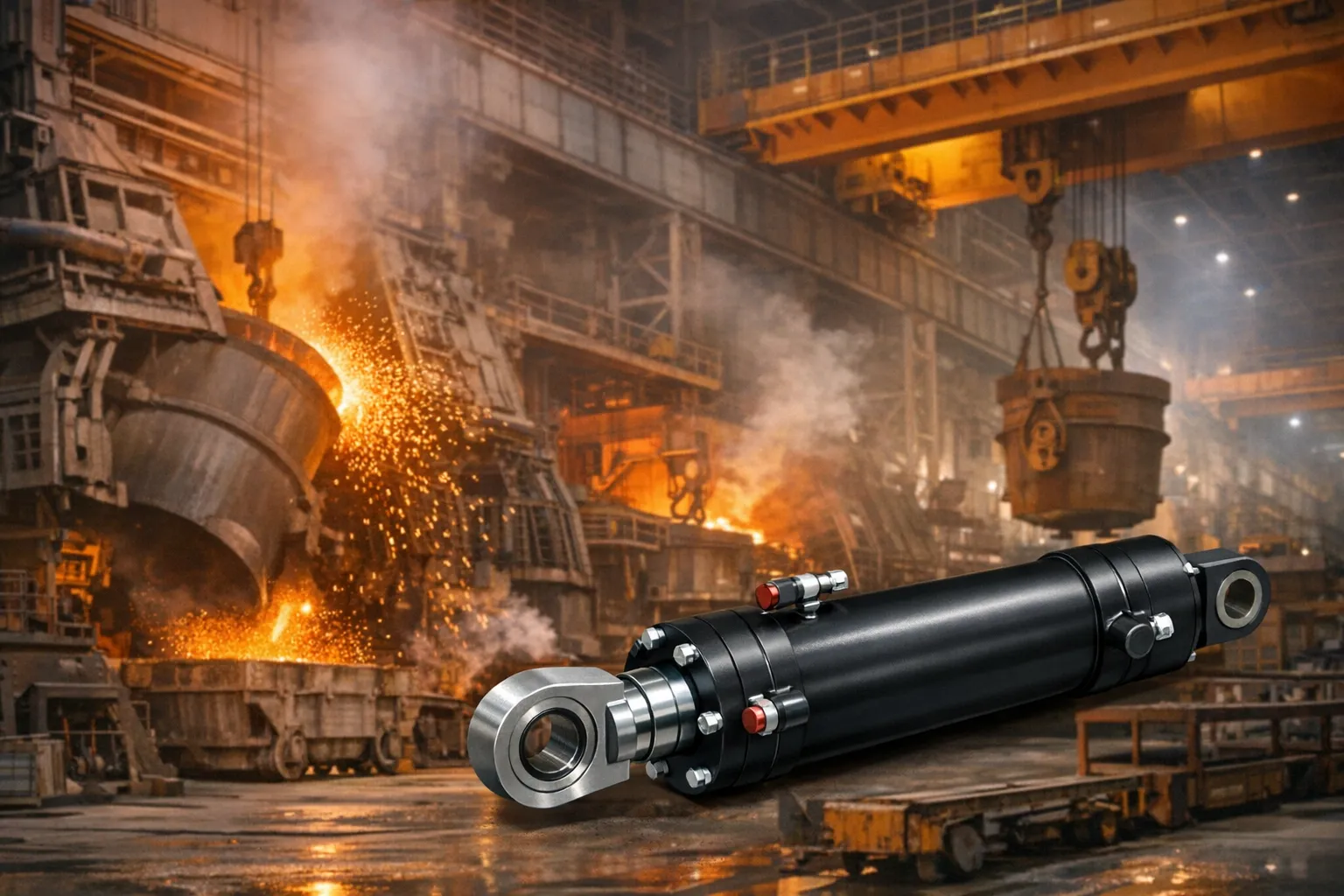
To achieve absolute reliability, we have engineered a specialized heavy-duty actuator that discards traditional construction methods. By utilizing high-yield alloy steel for the rod and heavy-wall welded construction for the barrel, we effectively neutralize the threat of bending. Furthermore, we replace conventional chrome plating with a state-of-the-art ceramic layer, creating an impenetrable thermal barrier against the high radiation temperature radiating from the molten bath.
Technical Parameters & Customization Capabilities
Every EAF platform features a unique structural layout based on its heat capacity and structural gantry design. Therefore, exact mechanical alignment and load matching are mandatory. The table below details the strict engineering parameters, structural types, and primary material systems we deploy to guarantee our hydraulic rams survive the brutal environment of primary steelmaking.
| Technical Attribute | Specification Details & Engineering Range |
|---|---|
| Target Industry | Metallurgy / Heavy Steelmaking |
| Equipment Category | Electric Arc Furnace (EAF) |
| Subsystem / Action | EAF Roof Swing Mechanism |
| Cylinder Name | Roof moving cylinder / Roof moving hydraulic cylinder |
| Action Type | Double acting hydraulic cylinder (Powered push and pull) |
| Structure Type | Piston type (With advanced internal deceleration cushioning) |
| Manufacturing Structure | Heavy-duty Welded (Maximized radial stiffness and port strength) |
| Material System | Premium Alloy Steel (Specially heat-treated for high yield strength) |
| Surface Treatment | Ceramic Coating (Plasma sprayed, diamond-ground finish) |
| Environment Rating | Extreme High Radiation Temperature + Highly Abrasive Slag |
| Working Condition | Rapid Left and Right Movement (High inertia swing) |
| Typical Failure Mode | Rod Bending & Thermal Seal Melting |
| Recommended Configuration | Oversized Alloy Rod + Ceramic Coating + FKM High-Temp Seals |
Operational Principle: Controlling Massive Inertia
The fluid mechanics governing a roof moving cylinder must account for the severe pendulum effect created by a 50-to-100-ton furnace roof swinging on a pivot. This is not a simple linear push; it involves precise acceleration and critical deceleration. The entire assembly operates as a heavy-duty double acting hydraulic cylinder. When the plant operator initiates the charging sequence, pressurized fire-resistant fluid is pumped into the cap end of the welded barrel.
As the pressurized fluid forces the internal hydraulic cylinder piston forward, the thick alloy steel rod extends, initiating the left and right movement to swing the roof off the crucible. The most dangerous phase of this operation is the stopping sequence. If the heavy roof is stopped abruptly, the kinetic energy transfers directly into the rod, acting as a massive lateral force that causes immediate rod bending. To prevent this, our design incorporates long-stroke progressive internal cushioning. As the piston approaches the end of its stroke, a specialized spear engages the cylinder head, forcing the exiting fluid through a highly restricted metering orifice.
This restricted fluid flow creates an immense hydraulic backpressure—a fluid brake—that smoothly and predictably decelerates the massive roof before it hits the mechanical end stops. This seamless integration of fluid control and rigid alloy steel structural integrity prevents the dangerous rod bending that typically plagues commercial units, ensuring your charging cycles remain fast, safe, and entirely reliable. Such innovations significantly reduce the frequency of hydraulic cylinder repair, letting your maintenance team focus on other critical plant areas.
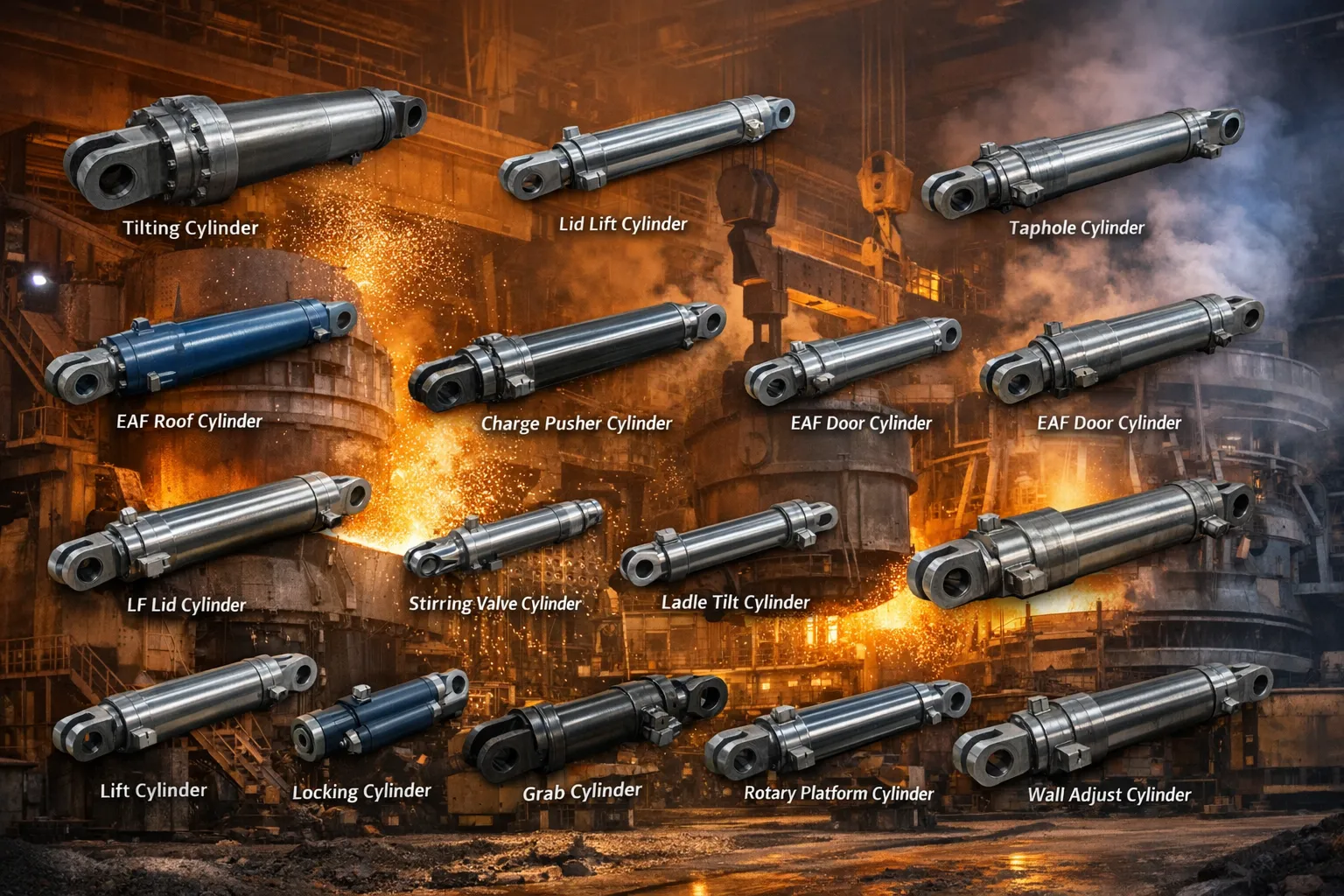
Direct Replacement Capability for Global OEM Steel Plant Builders
When an EAF roof mechanism fails, steel plants lose thousands of dollars per hour in delayed melting cycles. Waiting half a year for an imported OEM part is unacceptable. For maintenance departments tasked with urgently fixing hydraulic cylinders, we provide exact dimensional replacements that guarantee a rapid return to full capacity. This is especially true in critical markets like South Korea, where heavy industry demands immediate solutions.
Please note: The equipment manufacturer names mentioned below are registered trademarks of their respective owners. We reference these brands solely to assist maintenance engineers in confirming dimensional compatibility and functional interchangeability for sourcing purposes. We claim no direct affiliation or trademark rights to these brands.
Our engineering teams routinely manufacture exact drop-in units that perfectly replace cylinders originally installed by major metallurgical equipment builders such as SMS Group, Danieli, Tenova, Primetals, Fuchs, as well as fluid power components from Rexroth and Parker. By mapping the exact pin center distances, heavy-duty clevis dimensions, and fluid port specifications, our cylinders bolt directly into your existing EAF gantry. Not only do you receive a faster delivery time, but our units are upgraded with our signature ceramic coating and anti-bending alloy steel architecture.
5 Core Engineering Advantages
A standard commercial lift cylinder or generic actuator will warp and leak within weeks if mounted on an EAF roof. The intense heat and dynamic shock require a completely different approach to fluid power design. We build the following five technical advantages into every roof moving hydraulic cylinder we dispatch:
1. Advanced Ceramic Coating Technology
The high radiation temperature generated when the EAF roof swings open easily micro-cracks traditional hard chrome plating. Once cracked, the rod surface degrades rapidly, tearing the internal gland seals. We utilize a plasma-sprayed ceramic layer that is completely immune to thermal shock and presents a microscopic hardness that prevents molten slag spatter from adhering to the rod surface. This singular upgrade radically extends the life of the hydraulic cylinder components.
2. Complete Elimination of Rod Bending
To combat the massive lateral inertia generated during the rapid left and right movement of the gantry, we abandon standard carbon steel rods. Instead, we machine the piston rods from high-yield alloy steel billets that have undergone strict quench and temper heat treatments. This creates an incredibly rigid structural member that absorbs the pendulum swing forces without permanent deflection or rod bending.
3. Ultra-Low Friction & Thermal Resilient Sealing
Radiant heat baking the cylinder head will melt standard polyurethane seals into a useless paste. We specify aerospace-grade Fluorocarbon (FKM) and PTFE composite sealing profiles. Furthermore, these high-temp seals possess an inherently ultra-low coefficient of friction. This eliminates the stick-slip judder common in massive cylinders, ensuring the roof glides open and closed with perfect, predictable smoothness.
4. Heavy-Duty Welded Barrel Architecture
The base cap and heavy trunnion mounts are deeply welded to the thick-walled steel barrel using automated submerged arc welding techniques. This heavy-duty welded structure is then thermally stress-relieved in a massive oven. This guarantees that the continuous mechanical vibration and hydraulic pressure spikes do not cause micro-fractures around the mounting points or fluid ports over years of continuous service.
5. Optimized Cushioning for Fatigue Reduction
The massive kinetic energy of the moving EAF roof must be absorbed smoothly to protect the gantry framework. The internal piston incorporates heavily customized spear and sleeve cushioning. By fine-tuning the fluid metering profile, we guarantee a soft, vibration-free deceleration at both ends of the stroke, drastically reducing fatigue stress on both the cylinder and the furnace superstructure.
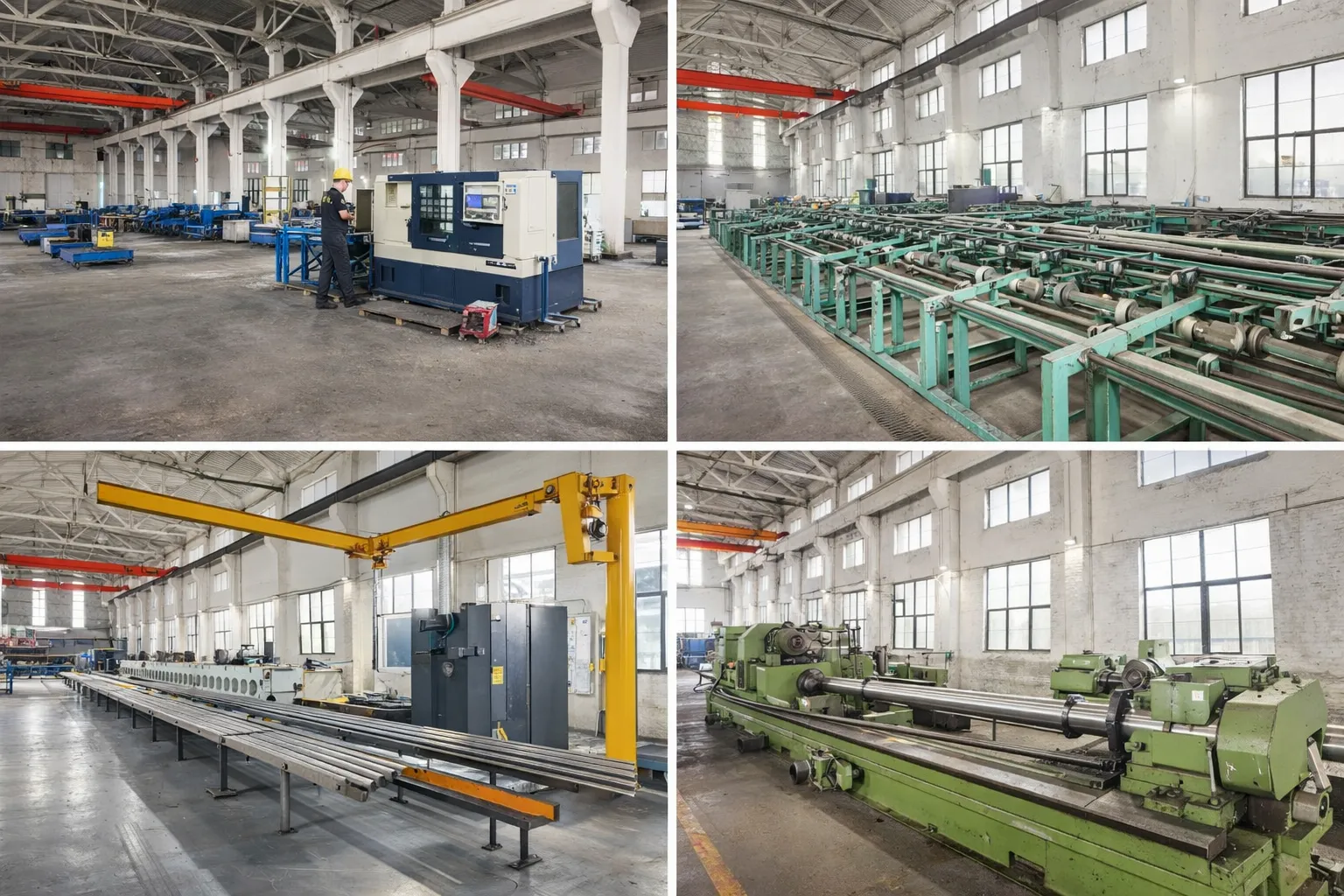
Manufacturing Discipline & Rigorous Quality Assurance
When a steel plant relies on a component to safely move a molten-hot furnace roof overhead, manufacturing shortcuts are unacceptable. As a fully integrated hydraulic cylinder manufacturer, we maintain total control over the production lifecycle. It begins with the metallurgical verification of our raw alloy steel forgings via ultrasonic testing (UT) and chemical spectroscopy to ensure zero internal voids or inclusions that could lead to rod bending under load. Our entire catalog of hydraulic parts is processed with this exact discipline.
The application of the ceramic coating is a highly controlled precision process. Using robotic plasma spray technology, the ceramic powder is bonded to the alloy rod at supersonic speeds, creating an extremely dense, heat-deflecting layer. The rod is then diamond-ground and polished to an exacting surface finish, ensuring the high-temp FKM seals glide flawlessly without microscopic abrasion. Our internal machining of the hydraulic cylinder components, such as the bronze guiding sleeves and the piston heads, is executed on large-format multi-axis CNC centers holding tolerances to within hundredths of a millimeter.
Final validation takes place in our high-pressure testing facility. Every single assembled cylinder undergoes a punishing 150% static pressure holding test to guarantee absolute seal integrity under extreme conditions. We also conduct dynamic friction profiling to ensure the cushioning valves perform the deceleration perfectly. Each unit is permanently serialized and dispatched with a complete digital quality dossier, ensuring 100% traceability for our B2B clients and EPC contractors.
Cross-Industry Engineering Applications
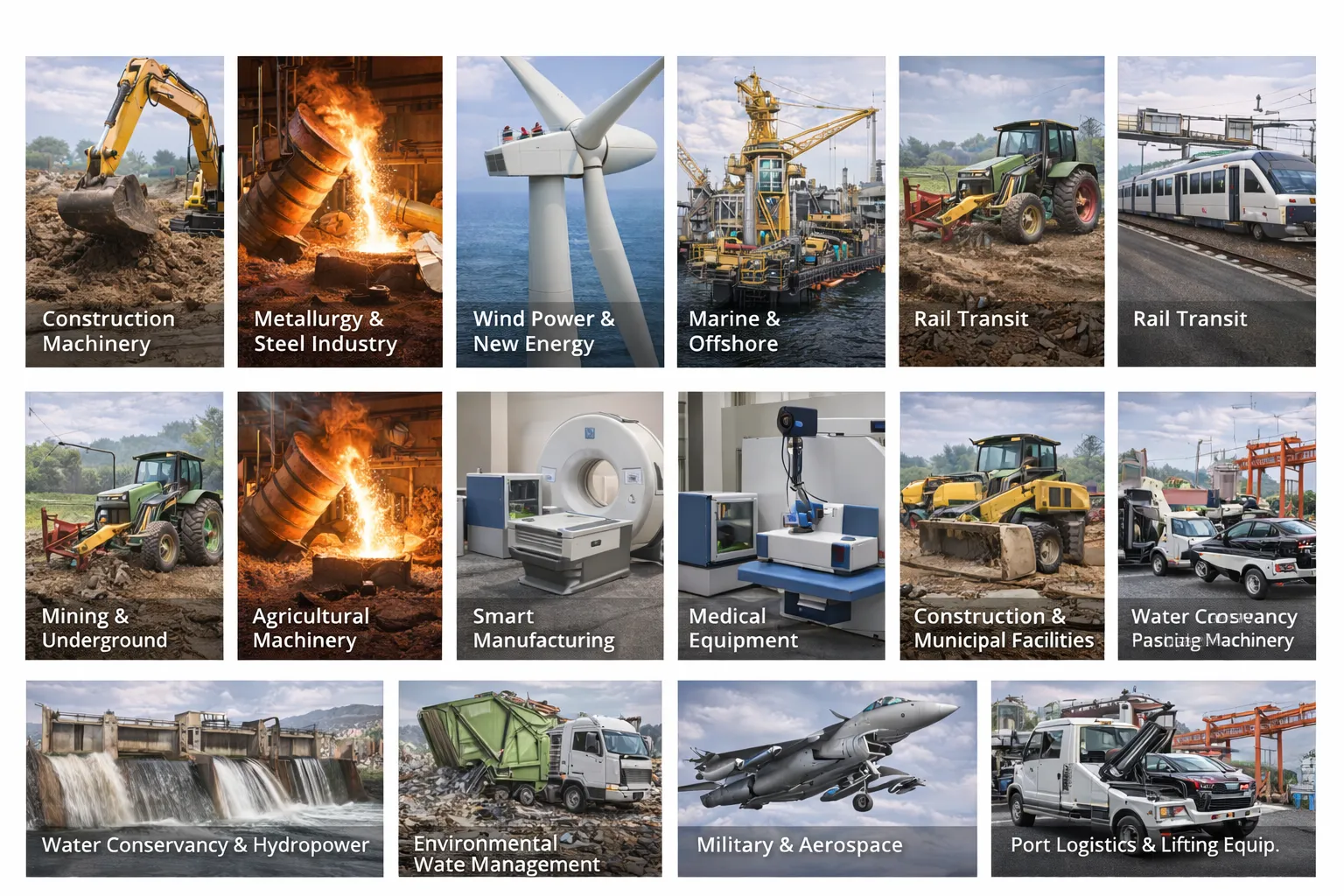
While the extreme ceramic-coated units detailed above are designed specifically to survive the hellish high radiation temperature of an EAF, our foundational engineering principles—anti-bending alloy structures and low-friction sealing—are highly sought after across multiple brutal industrial sectors.
- Metallurgy & Iron Industry: Beyond the EAF roof, we provide massive lifting cylinders for Ladle Refining Furnaces (LRF), heavy slab continuous casting machines, and walking beam reheating furnaces. Explore our dedicated metallurgical and iron industry solutions.
- Mining & Heavy Extraction: The dirt, rock impacts, and heavy shock loads in open-pit mining demand highly robust fluid power. We supply suspension and massive boom cylinders for giant excavators and haul trucks. See our mining industry capabilities.
- Construction Machinery: Heavy infrastructure requires cylinders that will not bend under maximum bucket breakout forces. We manufacture heavy-duty actuation for rotary drilling rigs and heavy crawlers. Learn more in our construction machinery industry section.
- Specialized & Custom Setups: From high-tonnage marine offshore platforms to customized automated heavy forging presses, we engineer fluid power systems tailored to extreme client specifications.
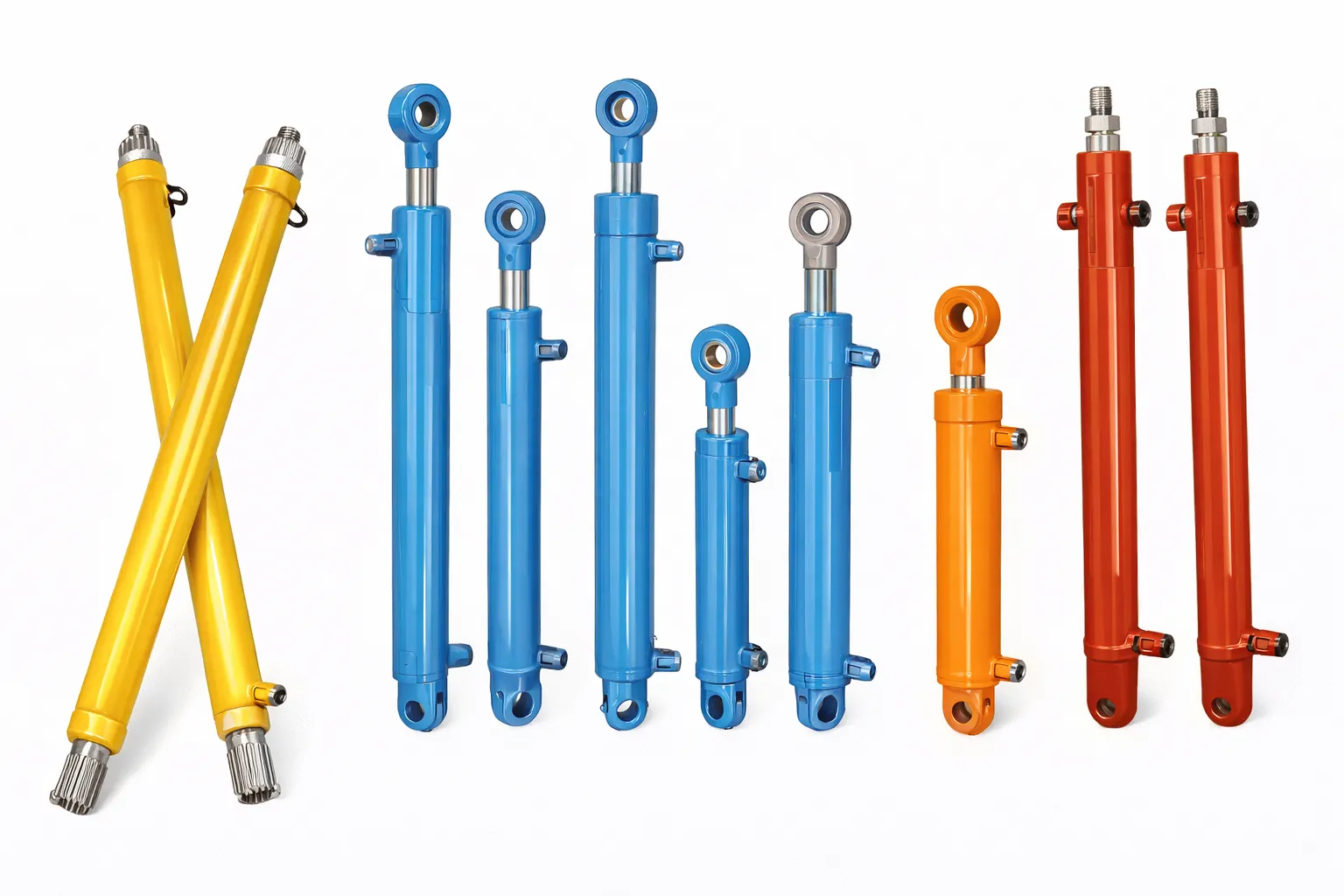
Value Comparison: Commercial vs. Metallurgical Grade
For procurement professionals in heavy industry, analyzing the Total Cost of Ownership (TCO) is critical. Installing a cheap, standard industrial cylinder on an EAF roof guarantees catastrophic downtime. The comparison below clearly demonstrates the immense operational value of upgrading to our specialized metallurgical designs.
| Engineering Feature | Standard Industrial Cylinder | Our Roof Moving Cylinder |
|---|---|---|
| Rod Core Material | Standard 1045 Carbon Steel (Highly susceptible to rod bending) | High-Yield Alloy Steel (Completely rigid against severe lateral inertia) |
| Surface Defenses | Basic Hard Chrome (Cracks under heat; slag adheres easily) | Plasma Sprayed Ceramic Coating (Immune to thermal shock & slag spatter) |
| Sealing Architecture | Standard NBR/PU (Melts quickly near the open high radiation temperature) | High-Temp FKM/PTFE composite (Ultra-low friction, continuous heat resistance) |
| Deceleration System | Basic or no cushioning (Causes heavy impact on gantry stops) | Deep progressive internal fluid cushioning (Perfectly smooth stop) |
| Maintenance Interval | High failure rate requiring constant hydraulic cylinder repair | Multi-year operational lifecycle; drastically reduced TCO |
Proven Metallurgical Field Deployments
Theoretical engineering only matters when it survives on the steel plant floor. We have proudly secured the continuous operations of major EAF facilities across South Korea, Japan, Taiwan, and the greater East Asian manufacturing corridor. Here are five documented examples of our heavy-duty units solving chronic production issues.
Case 1: Eradicating Rod Bending in Pohang, South Korea
Client & Issue: A major EAF special steel producer was experiencing catastrophic rod bending every 8 months. The lateral inertia of their heavy roof swinging sideways was simply snapping the standard carbon steel rods of their OEM cylinders.
Connection: Their reliability engineers found our technical documentation online detailing alloy steel rod upgrades and requested an immediate engineering consultation.
Implementation: We supplied a structurally reinforced roof moving hydraulic cylinder featuring a custom-forged alloy rod with deeply upgraded internal guide rings. The unit bolted directly into their existing gantry.
“The lateral rigidity of this alloy structure is remarkable. We installed the unit in late 2024, and despite thousands of rapid charging cycles, there is zero measurable deflection or rod bending. It completely solved our most expensive bottleneck.” — Mr. Choi, Plant Maintenance Director (Dec 2025)
Case 2: Defeating High Radiation Temperature in Kobe, Japan
Client & Issue: A heavy foundry operating twin 60-ton EAFs. The immense radiant heat escaping during the charging phase was melting the cylinder wiper seals, causing fire-resistant fluid leaks directly over the hot zone.
Connection: Met our technical sales team during an industrial fluid power exhibition focused on metallurgical equipment upgrades in Tokyo.
Implementation: We retrofitted their system with our advanced Ceramic Coating technology and high-temperature FKM sealing matrix. The ceramic layer perfectly reflected the heat and prevented slag sticking.
“Standard chrome just blisters and peels here. Your ceramic coating is practically indestructible. We haven’t had a single fluid leak since commissioning in January 2025. An exceptional piece of engineering.” — Kenji Y., Reliability Lead (Feb 2026)
Case 3: Urgent Breakdown Replacement in Kaohsiung, Taiwan
Client & Issue: A specialty stainless steel producer suffered a catastrophic failure when their European OEM roof cylinder tore its mounting clevis. They faced a 6-month wait for a factory replacement.
Connection: Referred to us by a heavy machinery contractor specializing in emergency hydraulic cylinder repair and rapid plant turnaround.
Implementation: We utilized our extensive stock of heavy alloy tubing to manufacture a dimensionally identical double acting hydraulic cylinder, delivering it via air freight in just 4 weeks, minimizing their production loss.
“The speed of manufacturing combined with the heavy-duty welded build quality was exactly what we needed. It dropped perfectly onto the gantry pins and has been running smoothly ever since. Highly reliable partner.” — Chen S., Engineering Manager (Nov 2025)
Case 4: Eliminating Vibration in Incheon, South Korea
Client & Issue: An aging steel plant where the massive roof would shudder violently during the left and right movement, causing structural fatigue across the entire furnace support structure and breaking graphite electrodes.
Connection: They submitted a technical blueprint through our website requesting a fluid dynamics analysis to solve the shuddering.
Implementation: We designed a custom hydraulic cylinder piston with progressive fluid metering and ultra-low friction guide rings. This provided immense braking force right before the end of the stroke, ensuring a soft mechanical landing.
“The difference is night and day. The roof used to bang into the stops, shaking the whole platform. Now, the deceleration is perfectly smooth. It has saved our structural gantry from tearing itself apart.” — Lee W., Structural Engineer (Aug 2025)
Case 5: Outfitting a New EAF Line in Rayong, Thailand
Client & Issue: A major coastal steel expansion project requiring a complete suite of robust, high-pressure actuation systems for their newly constructed 100-ton EAF and LRF lines.
Connection: The international EPC contractor sourced our heavy-duty hydraulic parts catalog online to secure competitive pricing for the total plant package.
Implementation: We successfully executed a large batch manufacturing contract, delivering fully certified, ceramic-coated units precisely on schedule, backed by complete 150% pressure test documentation.
“Managing a large-scale EPC procurement requires reliable vendors. Their heavy industry knowledge is evident in the build quality. The hydraulic cylinder price was excellent considering the premium ceramic and alloy materials provided.” — Tran V., Procurement Director (Jan 2026)
Expert B2B FAQ: Sourcing & Technical Insights
Procuring critical metallurgical actuation requires deep technical clarity. We have compiled the most frequent questions from plant managers and maintenance directors to assist your evaluation process.
1. Why is a Ceramic Coating strictly necessary for EAF applications?
Standard hard chrome plating performs poorly under the extreme high radiation temperature of an open EAF. The heat causes the chrome to expand and micro-crack. Furthermore, molten slag spatter easily welds itself to steel or chrome, creating a jagged surface that immediately destroys internal wiper seals. Our plasma-sprayed ceramic coating is highly heat-reflective, impervious to thermal cracking, and prevents slag adhesion, radically extending the rod’s lifespan. Should you need to execute fixing hydraulic cylinders on older chrome models, we highly suggest retrofitting with ceramic.
2. How does your design completely prevent rod bending during rapid roof swings?
Rod bending occurs when the lateral inertia of the heavy roof swinging right or left overwhelms the structural yield point of the cylinder rod. We prevent this by substituting standard carbon steel with high-yield alloy steel that undergoes specific quench and temper heat treatments. Additionally, we utilize oversized guide rings inside the gland and highly calibrated internal fluid cushioning to smoothly decelerate the roof, eliminating the violent kinetic shocks that snap standard rods.
3. Can you manufacture an exact dimensional replacement for our European OEM cylinder?
Yes, perfectly. Supplying upgraded drop-in replacements for SMS Group, Danieli, Tenova, and Rexroth equipment is a core part of our business. If you supply the basic general arrangement drawings or the pin-to-pin retracted length, stroke, and clevis dimensions, our engineering team will match the mechanical interface exactly. You get a massively upgraded metallurgical unit without modifying your plant’s gantry.
4. Are your high-temperature seals compatible with water-glycol fire-resistant fluids?
Yes. Because an EAF environment presents a massive fire hazard if a hydraulic line bursts, most plants utilize water-glycol (HFC) fire-resistant fluids. We specifically engineer the hydraulic cylinder piston and gland sealing matrices using specialized FKM/Viton and PTFE blends that are chemically compatible with water-glycol, preventing seal swell and degradation while maintaining high thermal resilience.
5. Does your facility produce a single acting hydraulic cylinder for other plant areas?
Absolutely. While the massive roof swing requires a heavily cushioned double acting hydraulic cylinder for precise two-way active control, we regularly manufacture heavy-duty single acting hydraulic cylinder units for other mill applications. These are typically deployed for vertical gravity-return operations, such as heavy scrap baling presses or massive locking clamps, maintaining the same rigorous welded alloy steel standards.
6. What is the expected delivery time for a custom metallurgical cylinder to South Korea?
For custom heavy-duty welded cylinders incorporating alloy steel forging and custom ceramic coating, our standard production cycle is 7 to 10 weeks. Because South Korea is a primary logistical route for us, sea freight to major ports like Busan or Incheon is highly efficient, usually taking less than a week. For critical plant shutdowns, we can often expedite production by utilizing pre-machined internal stock.
7. Do you supply replacement seal kits and components for routine shutdowns?
Yes, comprehensive aftermarket support is guaranteed. We supply precise high-temp replacement seal kits, custom PTFE guide rings, and heavy-duty spherical bearings specifically matched to your unit’s serial number. We highly advise keeping a set of these hydraulic cylinder components in your onsite inventory to ensure maximum efficiency during your scheduled annual maintenance turnarounds.
8. Is fixing hydraulic cylinders internally possible for these heavy-duty models?
Standard maintenance, such as repacking the front gland with new high-temp wiper seals, is easily handled by your onsite mechanical team without removing the entire barrel from the gantry. However, if the unit has suffered extreme external trauma requiring a complete rod replacement or deep internal barrel honing, comprehensive hydraulic cylinder repair is best executed in a fully equipped fluid power workshop. Our robust ceramic and alloy designs ensure these major overhauls are extremely rare.
9. Do you provide factory test reports and material traceability?
Absolutely. We operate with total transparency. Every large-bore metallurgical cylinder dispatched includes a complete digital dossier. This includes the raw material chemical certificates for the alloy steel, ultrasonic testing (UT) reports for all critical load-bearing welds, and the final 150% static pressure test graphs verifying complete seal integrity.
10. How does your pricing structure compare to Western OEM replacements?
Because we operate as a fully integrated heavy machining facility, we eliminate the immense supply chain markups associated with legacy European or American OEM brands. Our clients routinely experience a highly optimized hydraulic cylinder price—often 20% to 30% more competitive—while receiving direct structural upgrades like ceramic coatings and customized high-yield alloy components.
Upgrade Your EAF Reliability with Precision Metallurgical Actuation
Do not let rod bending, rapid seal degradation, or extreme OEM lead times dictate your steel plant’s production schedule. Partner with a specialized hydraulic cylinder manufacturer engineered entirely around resolving heavy industry failure modes. Whether you urgently need an exact dimensional replacement or are specifying components for a new primary melting line, our specialized metallurgical designs deliver unbreakable performance.
Send your general arrangement drawings, operating load parameters, or specific OEM part numbers to our engineering division today. We guarantee a thorough CAD compatibility assessment and a highly competitive commercial quotation within 24 hours.
Editor: Cxm