Tension Roll Hydraulic Cylinder for Pickling Line
Engineered exclusively for continuous acidic environments. Featuring a 100% fully welded 316L stainless steel architecture and an ultra-polished rod to permanently eradicate pitting corrosion and maintain absolute strip tension without seal degradation.
Product Overview: Conquering the Acidic Pickling Environment
In the highly aggressive and meticulously synchronized sequence of flat-rolled steel production, the continuous pickling line (CPL) represents an absolutely critical, yet chemically hostile, processing phase. After hot-rolled steel coils exit the cooling stage, their surfaces are heavily oxidized and coated in a thick, abrasive layer of iron oxide scale. Before this steel can be subjected to the immense pressures of cold reduction, this hardened scale must be completely removed. This is achieved by uncoiling the steel strip and driving it continuously through a series of long, shallow tanks filled with heated, highly concentrated hydrochloric (HCl) or sulfuric (H2SO4) acid. However, merely pulling the steel through the acid is insufficient. To ensure uniform chemical reaction and to prevent the heavy steel web from sagging and aggressively scraping against the bottom of the acid tanks—which would cause catastrophic surface gouging and material rejection—the strip must be held under immense, highly regulated mechanical tension. This delicate web handling is executed by bridle roll assemblies located at the entry, accumulator, and exit sections of the pickling line. The central fluid power component responsible for applying the exact clamping force to these bridle rolls is the tension roll cylinder.
For facility maintenance directors and reliability engineers, the environment surrounding these acid tanks is notoriously destructive. The ambient atmosphere is permanently saturated with caustic acid vapors, dense steam, and aggressive chloride ions. When standard commercial actuators, constructed from conventional carbon steel and utilizing standard hard chrome plating, are installed in this zone, their failure is rapid and entirely predictable. Acidic vapors easily permeate the microscopic stress cracks inherently present in standard chrome plating. Once the chlorides reach the base carbon steel, they initiate severe pitting corrosion. Within a matter of weeks, the once-smooth rod becomes covered in sharp, jagged rust blisters and deep craters. As this severely pitted rod retracts into the cylinder barrel, it acts as a coarse rasp, violently shredding the primary polyurethane wiper and pressure seals. The inevitable result is massive hydraulic fluid leakage directly into the chemical baths, a total loss of clamping pressure on the bridle rolls, and a catastrophic line stoppage. When clamping pressure drops, the wet steel strip slips against the rubber-coated tension rolls, causing deep surface scratches and ruining the prime steel product.
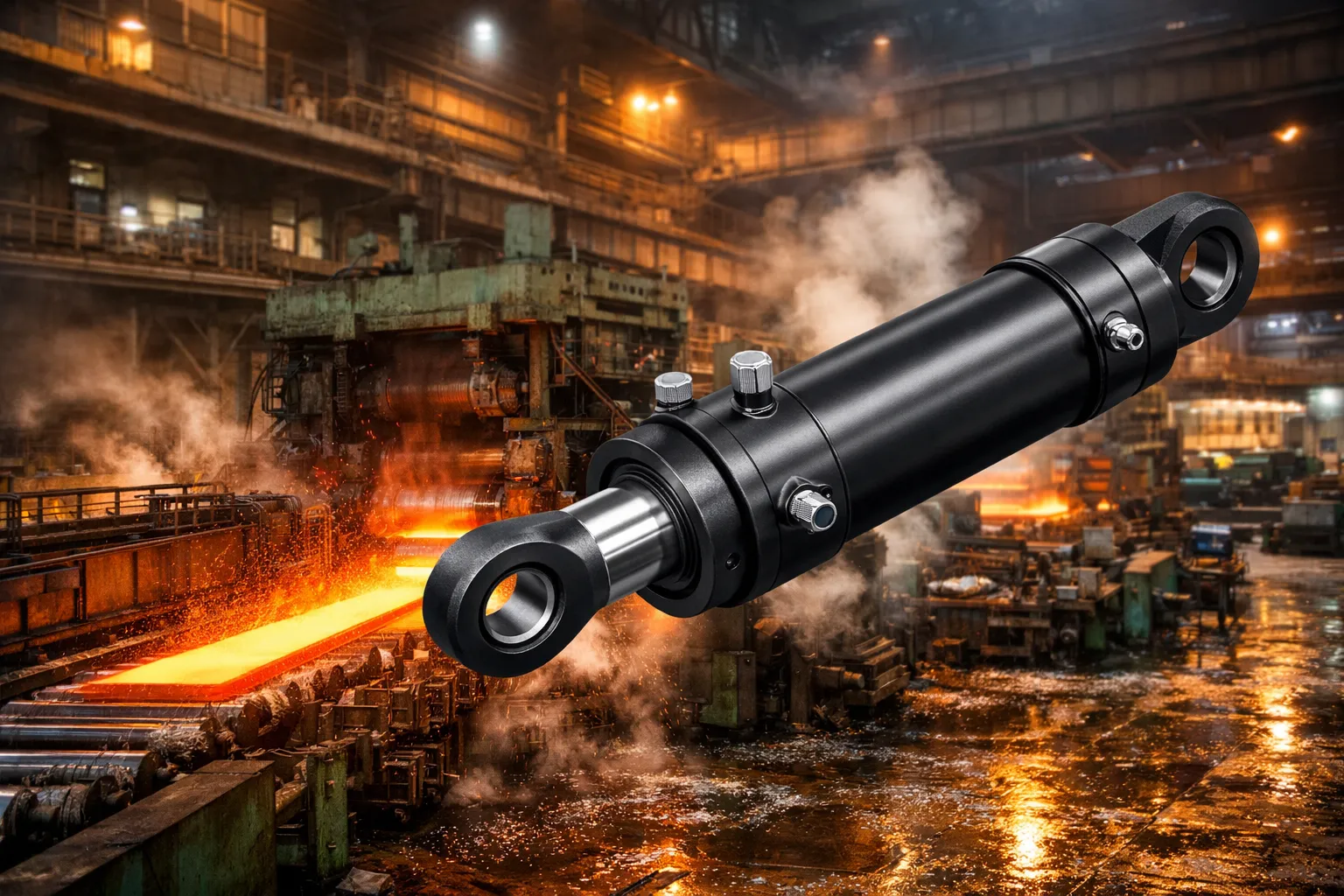
As an elite, highly specialized hydraulic cylinder manufacturer, we have fundamentally re-engineered the fluid power architecture required for this specific metallurgical zone. We have entirely abandoned the flawed concept of applying protective paints or thin coatings over vulnerable carbon steel. Instead, our high-performance tension roll hydraulic cylinder is manufactured completely from solid, marine-grade 316L stainless steel. By utilizing a full stainless steel cylinder body, thick stainless end caps, and a mechanically polished 316L rod, we mathematically eliminate the possibility of underlying pitting. The material itself is intrinsically immune to chloride-induced acidic attack throughout its entire cross-section. This fundamental metallurgical shift transforms an unreliable, high-maintenance component into a permanent, highly resilient structural asset, guaranteeing that your bridle rolls maintain perfect strip tension shift after shift, year after year.
Customizable Technical Parameters and Material Specifications
Continuous pickling lines vary significantly depending on the gauge, width, and tensile strength of the steel being processed. A line processing ultra-thin electrical steels requires vastly different tensioning dynamics than a line running thick, high-strength automotive structural coils. We provide a highly adaptable engineering platform, customizing stroke lengths, bore diameters, and mounting geometries to match your specific bridle roll configurations perfectly. The comprehensive table below outlines the core technical data and material philosophy driving our specialized acid-resistant actuators.
| System Attribute | Parameter Specification | Engineering Significance |
|---|---|---|
| Target Industry Segment | Metallurgy | Engineered exclusively to survive the most chemically aggressive zones in primary steel processing. |
| Equipment Category | Rolling Mill (Pickling Line) | Integrates flawlessly into CPL entry, accumulator, steering, and exit bridle roll stations. |
| Subsystem / Action | Tension Roll System | The critical mechanical station strictly responsible for pulling, stretching, and guiding the steel strip. |
| Component Designation | Tension Roll Cylinder | Applies the exact necessary clamping force to grip the strip without crushing or deforming the edges. |
| Action Method | Double Acting | Functions as a highly responsive double acting hydraulic cylinder for precise engagement and powered retraction. |
| Structure Type | Piston Cylinder | Utilizes a robust hydraulic cylinder piston geometry to maintain absolutely steady internal holding pressure. |
| Manufacturing Structure | Welded Assembly | TIG welded with identical 316L filler wire to eliminate any potential intergranular corrosion crevices at the joints. |
| Material System | 316L Stainless Steel | The elevated molybdenum content provides exceptional, intrinsic resistance to chloride-induced chemical attacks. |
| Surface Treatment | Mechanically Polished | The rod is polished to a Ra 0.15µm mirror finish; utilizing zero plating means absolutely nothing can peel or crack. |
| Environment Grade | Acidic Corrosion Zone | Specifically engineered to operate continuously while bathed in hot hydrochloric or sulfuric acid fumes. |
| Working Condition Feature | Maintaining Tension | Requires absolute fluid stability; any pressure fluctuation causes catastrophic strip tracking errors. |
| Typical Failure Mode | Pitting Corrosion & Seal Rupture | The rapid destruction of standard chrome rods is completely resolved by our solid 316L metallurgy. |
| Recommended Configuration | Full Stainless Steel Cylinder Body | The only definitive, long-term engineering solution ensuring operational safety in the pickling zone. |
Operational Fluid Dynamics: The Mechanics of Flawless Tension
To fully grasp the necessity of high-precision engineering in this specific sector, one must analyze the complex fluid control mechanics required to maintain strip stability. In a continuous pickling line, the steel strip spans long distances between various mechanical roll stands, often looping deep into acid tanks. The strip must be pulled tight enough to track perfectly straight through the guides without wandering, but not so tight that the material stretches or tears. This delicate, dynamic balance is orchestrated entirely by the tension roll cylinder.
Operating within a sophisticated, computerized closed-loop feedback system, load cells located on the roll blocks constantly measure the physical tension of the steel strip. These electrical signals are instantly transmitted to the plant’s central automation system, which in turn directs highly sensitive proportional servo-valves. These valves meter highly pressurized fluid into the specific chambers of the tension roll hydraulic cylinder. If the strip begins to sag slightly into the acid bath, the valves instantly route fluid to extend or retract the cylinder (depending on the mechanical linkage), subtly moving the tension roll to pull the strip tighter. This micro-adjustment process occurs dozens of times every single second.
The central engineering challenge here is overcoming internal static friction (stiction). If a cylinder utilizes standard, tight rubber lip seals, the breakaway friction required to initiate movement is higher than the dynamic running friction. This causes the actuator to hesitate and then suddenly jerk forward into position—a phenomenon known as stick-slip. In a pickling line, this jerking motion translates directly into violent tension spikes in the steel strip, causing the strip to bounce uncontrollably in the acid bath, potentially splashing highly toxic chemicals or snapping the material entirely. We combat this by implementing a highly polished, Ra 0.2µm internal bore paired with a proprietary ultra-low friction PTFE (Polytetrafluoroethylene) sealing matrix. This sophisticated internal architecture ensures the actuator glides seamlessly, translating minute hydraulic pressure adjustments into perfectly smooth, instantaneous tension corrections. Furthermore, unlike a single acting hydraulic cylinder that relies on sluggish spring returns, our active bi-directional force enables true high-speed responsiveness.

Seamless Dimensional Interchangeability and OEM Upgrades
Many major metallurgical facilities inherited their pickling line infrastructure from large global plant builders. Unfortunately, these OEMs often supply standard, painted carbon steel cylinders with standard chrome rods as initial equipment to keep initial capital costs low. When these standard units inevitably fail due to catastrophic acid pitting, plant managers often feel forced to repurchase the exact same flawed design from the original manufacturer, enduring exorbitant costs and massive lead times just to maintain production. We offer a vastly superior, highly strategic alternative.
Our specialized heavy engineering division excels at comprehensively reverse-engineering and delivering upgraded, 100% drop-in replacements for tension systems originally supplied by industry conglomerates such as SMS Group, Danieli, Primetals Technologies, Tenova, and Bosch Rexroth.
(Disclaimer Note: The explicit mention of these corporate brand names is strictly for the technical purpose of communicating physical sizing, mounting compatibility, and application context to plant maintenance engineers. We operate as an entirely independent manufacturing entity and assert no endorsement, affiliation, or trademark rights associated with these respective global corporations.)
Our objective during your scheduled plant shutdown or during an urgent crisis requiring rapidly fixing hydraulic cylinders on the line is to provide a fully upgraded 316L stainless steel actuator that utilizes your exact existing mounting trunnions, clevis pins, and hydraulic manifold connections. You secure permanent chemical immunity without needing to modify your expensive mill framework or alter the plant’s pipework.
Core Technical Advantages Defeating Chemical Failure
Surviving the continuous onslaught of concentrated hydrochloric and sulfuric acid vapors requires absolute dedication to material science and specialized manufacturing techniques. A standard industrial design painted with epoxy will be stripped and destroyed within months. Here are the definitive engineering advantages that place our pickling line actuators in a class of their own:
Total 316L Stainless Steel Architecture
We do not merely sleeve a standard cylinder or use chemical-resistant paint. The entire structural body—including the pressure vessel barrel, the heavy end caps, the mounting flanges, and the extending rod—is constructed from solid 316L stainless steel. The addition of molybdenum in the 316L alloy matrix provides exceptionally high resistance to pitting and crevice corrosion in chloride environments, rendering the entire actuator fundamentally immune to the toxic vapors of the pickling bath.
Advanced Mechanical Polishing Surface Treatment
Acidic pitting often begins where microscopic droplets of chemical condensate manage to pool and stagnate on a surface. Standard machining leaves microscopic ridges where these highly corrosive fluids hide. We subject the exterior surfaces and the dynamic rod of our tension roll cylinder to an extensive mechanical polishing process, achieving a smooth, mirror-like finish. This highly refined surface sheds caustic moisture immediately, actively preventing the formation of localized corrosion cells.
Chemically Inert FKM and PTFE Sealing Matrix
Standard polyurethane or NBR (Nitrile) seals will rapidly swell, harden, and dissolve when exposed to acid vapor and high ambient temperatures. We specifically engineer the internal and external sealing glands using advanced Fluoroelastomer (FKM/Viton) static O-rings and highly resilient, chemically inert PTFE (Teflon) dynamic step seals. This combination guarantees that the primary fluid barrier remains completely intact, flexible, and leak-free regardless of chemical exposure or thermal fluctuation.
Ultra-Low Friction Dynamic Response
To maintain perfect tension without inducing violent chatter in the steel strip, the actuator must respond instantly to proportional valve commands. The combination of our flawlessly polished internal barrel bore and our specialized PTFE step seals drastically reduces internal static breakaway friction. This eliminates mechanical stick-slip entirely, ensuring the hydraulic rams extend and retract with absolute, uninterrupted smoothness during continuous tension adjustments.
Heavy-Duty Welded Integrity
Standard tie-rod cylinders possess multiple crevices, exposed threads, and gasket joints that are highly vulnerable to acid ingress and mechanical loosening under vibration. We utilize a highly robust, fully welded manufacturing structure. Using specialized 316L filler wire and precise TIG welding parameters, we fuse the end caps and mounting trunnions directly to the barrel. This creates a monolithic, hermetically sealed pressure vessel that offers superior structural rigidity and zero external chemical intrusion points.
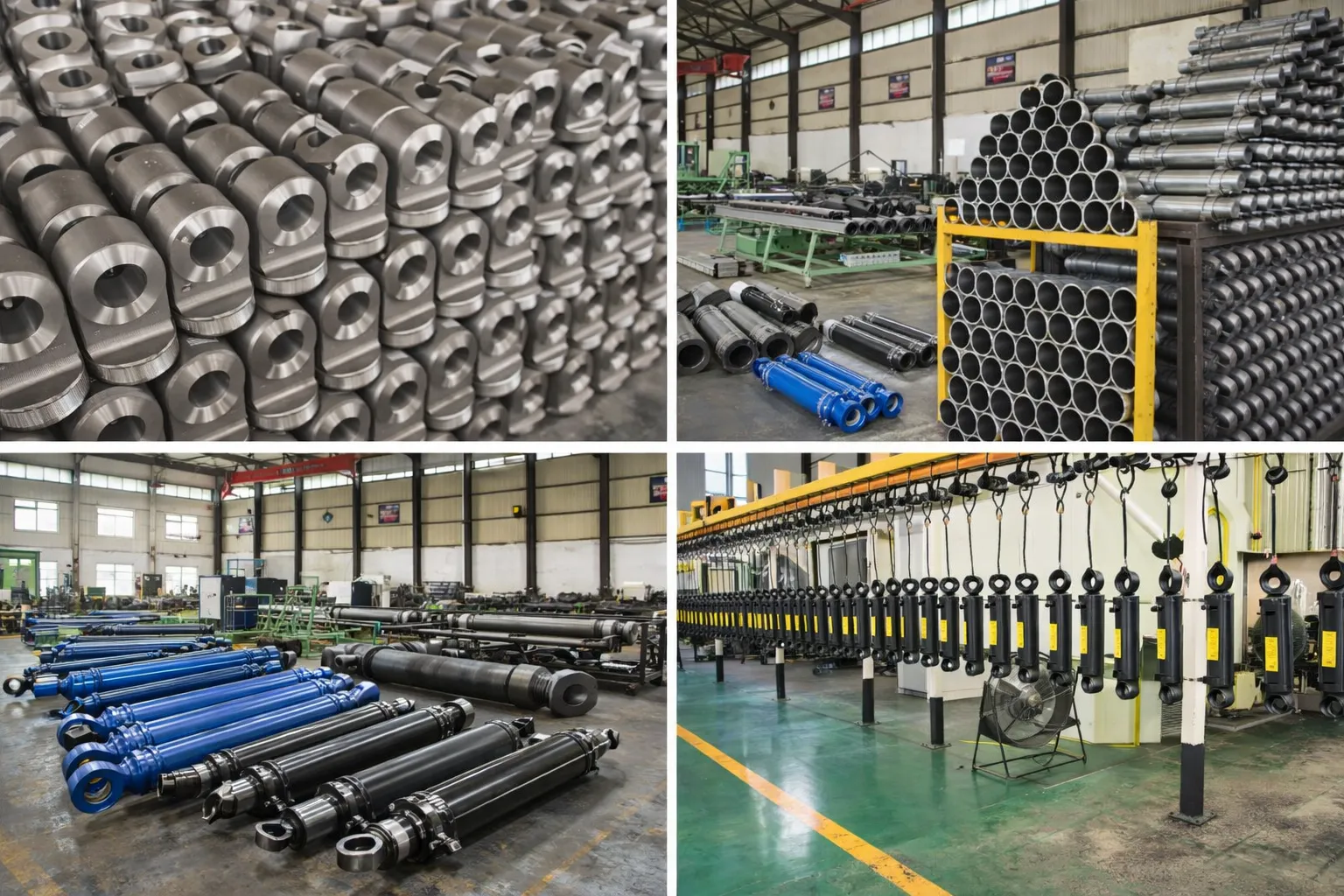
Uncompromising Manufacturing Process and Absolute Quality Control
Fabricating high-pressure fluid power components from premium stainless steel requires specific, highly specialized manufacturing methodologies. Unlike standard carbon steel, 316L stainless steel has distinct machining characteristics. We maintain absolute, autonomous control over our entire production facility to ensure flawless execution. When raw 316L billets and heavy-walled tubes arrive at our receiving bays, they immediately undergo strict optical emission spectrometry to firmly verify the Molybdenum and Chromium content, certifying their metallurgical purity for severe acidic environments.
Our advanced CNC machining centers utilize specialized tungsten carbide tooling designed specifically for stainless steel, ensuring precise dimensional tolerances without inducing excessive heat or work-hardening the material. Following the meticulous TIG welding phase, the entire welded assembly is subjected to a comprehensive chemical passivation process. This highly critical step removes any free iron or microscopic contaminants deposited during machining or welding, forcibly regenerating the protective chromium oxide layer on the steel surface and maximizing its innate corrosion resistance.
Before any hydraulic parts are authorized for international dispatch, they are subjected to an unyielding 100% factory acceptance testing protocol. Mounted on our computerized testing rigs, we stroke the cylinders repeatedly to dynamically chart the friction curves, ensuring perfectly smooth proportional response. We then execute severe hydrostatic pressure tests at 150% of the maximum rated operational pressure, holding it statically to guarantee absolute zero internal fluid bypass across the dynamic seals. Every completed actuator is permanently laser-engraved with a unique serial number, providing our clients with absolute material traceability and vastly simplifying future requests for exact-match hydraulic cylinder components or maintenance kits.
Expansive Heavy Industry Applications
The engineered capability to provide immense, precision-controlled hydraulic force while remaining entirely immune to severe chemical corrosion makes our full stainless steel architecture highly sought after across numerous extreme-duty industrial sectors globally.
- Metallurgical and Iron Industry: Continuous pickling lines, galvanizing plant tension levelers, acid regeneration facilities, and heavy-duty accumulators. Explore our deeply integrated heavy solutions for the Metallurgical and Iron Industry.
- Chemical Processing and Petrochemical: Valve actuation on massive chemical reactor vessels, harsh chemical mixing vats, and offshore oil rig platforms heavily subjected to continuous salt spray and sour gas exposure.
- Mining and Mineral Processing: High-pressure filter press actuators operating in hydrometallurgical extraction processes (such as copper or gold leaching) where sulfuric acid and abrasive slurries destroy standard equipment. Discover our ruggedized actuators for the Mining Industry.
- Marine and Offshore Construction: Specialized underwater tensioning units, dockside heavy lifting mechanisms, and massive shipboard hatch controls requiring a highly resilient lift cylinder that will not rust in a highly oxygenated saltwater environment. View our specialized parts for the Construction Machinery Industry.
- Food and Pharmaceutical Manufacturing: Heavy-duty industrial food presses and medical-grade manufacturing equipment where absolute hygiene, frequent caustic washdowns, and zero rust contamination are mandated by law.
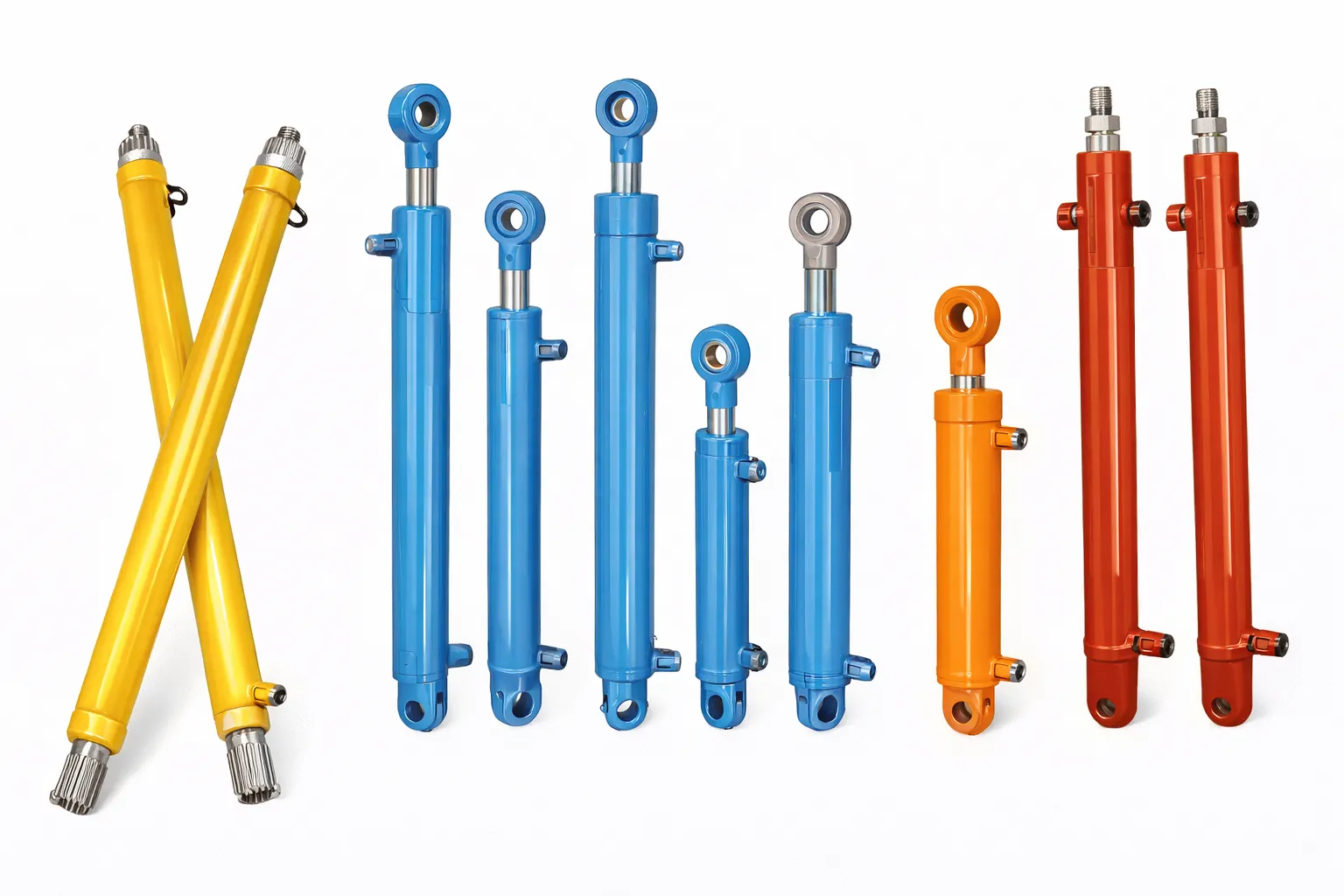
Comparative Analysis: Standard Carbon Steel Cylinders vs Full 316L Stainless Tension Cylinders
Installing a standard, painted hydraulic cylinder in a pickling line guarantees an incredibly short operational lifespan and a statistical certainty of catastrophic fluid leakage. The engineering disparities between a standard unit and our purpose-built stainless models fundamentally dictate the chemical safety and uptime of your facility.
| Component Feature | Standard Industrial Cylinder | Our Specialized 316L Cylinder |
|---|---|---|
| Structural Material | Standard Carbon Steel; rusts rapidly, causing the paint to peel and the metal to dissolve. | Solid 316L Stainless Steel; fundamentally immune to acidic vapor attack and chloride pitting. |
| Rod Surface Protection | Commercial Hard Chrome Plating; contains micro-cracks allowing acid to pit the base metal. | Solid Polished 316L Rod; no plating to peel off, physically rejecting corrosive condensate. |
| Dynamic Sealing Matrix | Standard Polyurethane/NBR; swells, hardens, and dissolves when exposed to chemical fumes. | Advanced FKM/PTFE Matrix; completely chemically inert, maintaining perfect sealing integrity. |
| Tension Control Response | High breakaway friction; causes severe stick-slip, jerking the steel strip and causing tension spikes. | Ultra-low friction components; highly responsive, allowing for flawless, continuous micro-adjustments. |
| Maintenance & ROI | Constant mid-campaign failures; massive ongoing costs due to leaks and ruined pickling baths. | Multi-year operational lifespan; a single investment that completely ends the cycle of corrosion failures. |
Global Success: Real-World B2B Case Studies in East Asia
Theoretical material science is only proven valuable on the actual factory floor. Our unwavering commitment to solving severe corrosion and fluid dynamics issues has made us a premier technical partner for massive steel producers. Here are five documented cases where our 316L architecture completely transformed operational reliability.
1. Eradicating Acid Pitting on a Major Continuous Line in Pohang
Incident Date: September 2024
Client Profile: A top-tier, globally recognized automotive steel manufacturer operating a high-speed continuous hydrochloric acid pickling line.
The Operational Challenge: The OEM carbon steel tension cylinders positioned directly over the acid tanks were suffering catastrophic rod pitting every four months. The deep pits were tearing the rod seals to shreds, causing highly pressurized hydraulic oil to violently spray directly into the hot acid bath, ruining the chemical mixture and causing massive environmental and safety hazards.
How They Discovered Us: The plant’s environmental and safety director urgently searched our B2B website looking for complete 316L metallurgical solutions to halt hydraulic fluid contamination.
The Tangible Result: We rapidly custom-engineered and delivered dimensionally identical drop-in replacements utilizing our full 316L stainless, polished architecture. The corrosive pitting was permanently eliminated. The replacement units have operated flawlessly for 18 months with absolute zero fluid leakage.
“The transition to full 316L stainless entirely eliminated our worst safety hazard on the line. The build quality is superb, and the acid simply does not affect these units. An outstanding investment.” — Mr. Park, Head of Maintenance
2. Resolving Severe Strip Tension Fluctuation in Gwangyang
Incident Date: November 2024
Client Profile: A massive flat-rolled steel facility producing surface-critical sheet metal for the appliance industry.
The Operational Challenge: The existing tension actuators were suffering from severe internal stick-slip friction due to seal degradation from ambient heat and chemical exposure. When the proportional valves attempted to adjust the tension, the cylinders jerked violently. This caused the steel strip to bounce aggressively inside the acid tanks, frequently splashing hot acid over the sides and causing uneven scale removal.
How They Discovered Us: Introduced by a fluid power consultant who had previously utilized our low-friction PTFE sealing matrices to stabilize heavy equipment.
The Tangible Result: We heavily upgraded their systems with our polished bore and chemically inert FKM/PTFE low-friction packages. The fluid motion became exceptionally smooth. The tension reading stabilized entirely, eliminating the violent bouncing of the steel strip and drastically improving the surface quality of the pickled steel.
“Friction was destroying our process control. Your low-friction seal technology combined with the stainless architecture gave us back total control over the strip tracking. Remarkable precision.” — S. Lee, Process Control Lead
3. Emergency Breakdown Recovery and Retrofit in Kaohsiung
Incident Date: February 2025
Client Profile: A specialized cold reduction facility requiring perfectly clean coils prior to entry.
The Operational Challenge: A legacy painted carbon steel cylinder suffered a catastrophic structural failure when acidic corrosion completely ate through the lower mounting trunnion weld, causing the cylinder to physically detach and drop. The original European supplier quoted a devastating 6-month lead time for a replacement.
How They Discovered Us: The plant’s crisis management team contacted us urgently, specifically searching for rapid-turnaround capabilities in fixing hydraulic cylinders and manufacturing heavy 316L replacements.
The Tangible Result: We rapidly reverse-engineered the exact dimensional footprint and manufactured a fully welded, monolithic 316L replacement unit in just 5 weeks. It dropped perfectly into their existing mounts, rapidly restoring production and fundamentally upgrading their facility’s chemical resilience.
“Unbelievable turnaround speed without sacrificing a single drop of quality. The new stainless unit bolted directly onto our old frame. You absolutely saved our production schedule.” — Director Chen, Procurement
4. Upgrading from Failed Epoxy Coatings in Kobe
Incident Date: June 2025
Client Profile: A high-capacity continuous pickling and galvanizing line.
The Operational Challenge: The plant had previously tried to save capital by purchasing standard carbon steel actuators heavily coated in marine-grade epoxy. However, the constant mechanical vibration of the rolling line caused the epoxy to chip, allowing acidic vapor to immediately attack and hollow out the base metal underneath, leading to dangerous structural weaknesses.
How They Discovered Us: Reached out after viewing our highly detailed technical whitepapers online regarding the false economy of chemical coatings versus solid 316L metallurgy.
The Tangible Result: We entirely replaced their epoxy-coated units with our solid 316L tension roll cylinder models. There is no coating to chip, peel, or fail. The units remain structurally pristine, ensuring the tensioning mechanics remain absolutely safe and rock solid.
“We learned the hard way that paint is not a permanent solution against hot acid. Your solid stainless cylinders are practically indestructible. A phenomenal and permanent fix.” — H. Tanaka, Lead Mechanical Engineer
5. Comprehensive Overhaul and Cost-Saving Rebuild in Ulsan
Incident Date: August 2025
Client Profile: A medium-sized stainless steel processing center heavily focused on strict budget control and maximizing equipment lifespan.
The Operational Challenge: They possessed several very large, extremely expensive OEM cylinders that had suffered severe rod pitting and seal failure, but the heavy outer barrels were still structurally sound. Buying brand new OEM replacements was entirely outside their annual capital budget.
How They Discovered Us: Searched our digital catalog for advanced hydraulic cylinder repair and heavy refurbishing capabilities.
The Tangible Result: We took in their damaged units, completely removed the ruined carbon steel rods, and manufactured custom, heavy-duty 316L solid stainless steel replacement rods. We re-honed the barrels, upgraded the entire internal package to our FKM/PTFE seals, and rigorously tested them. We returned actuators that were drastically more chemically resistant than when they were first built, saving them 60% compared to purchasing new OEM units. The lowered overall hydraulic cylinder price achieved their exact budgetary goals while improving performance.
“You didn’t just fix them; you engineered a permanent cure for our rod pitting issues and saved our maintenance budget. Phenomenal technical capability and business value.” — K. Choi, Facility Manager
Frequently Asked Questions
Procuring critical infrastructure for highly corrosive environments requires strict technical validation. Here are detailed responses to the most frequent engineering inquiries regarding our anti-corrosive tension actuators.
Why is 316L stainless steel specified instead of the more common 304 grade?
While 304 stainless offers general rust resistance, it remains highly vulnerable to pitting corrosion in chloride-rich environments, such as those created by hydrochloric acid (HCl) in a pickling line. 316L stainless steel contains a strategic addition of Molybdenum (typically 2-3%), which drastically enhances its resistance specifically against localized pitting and crevice corrosion in acidic chloride environments, making it the only acceptable choice for continuous exposure.
Can your engineers perfectly match the dimensions of our existing European OEM cylinders?
Yes, completely. Delivering 100% exact, drop-in structural replacements is a primary function of our heavy engineering division. By providing us with the OEM part numbers, basic dimensional drawings, or physical pin measurements, we will fully engineer a 316L stainless tension roll cylinder that bolts flawlessly into your current bridle frame, requiring absolutely no cutting, welding, or modification to your massive mill housing.
Why don’t you use hard chrome plating on the stainless steel rod?
Hard chrome electroplating inherently develops a network of microscopic thermal cracks during the deposition process. In an acid vapor environment, the acid droplets penetrate these micro-cracks, become trapped, and aggressively concentrate the chemical attack. Instead, we heavily polish the solid 316L rod mechanically to a mirror finish (Ra 0.2µm). This eliminates the porous plating layer entirely, giving the acid condensation absolutely nowhere to pool or initiate corrosion.
Why is a double acting hydraulic cylinder mandatory for the bridle tension setup?
The double acting hydraulic cylinder provides highly controlled, powered force in both the extend (clamping) and retract (release) directions. In a continuous mill, the system must constantly execute minute, rapid proportional adjustments in both directions to accommodate slight variations in strip thickness and to clear weld seams smoothly. A single acting hydraulic cylinder relying solely on a spring return would be far too slow, inaccurate, and prone to jamming, causing immediate strip chatter and tension loss.
Do you offer services for fixing hydraulic cylinders that have failed from chemical attack?
Yes. Our advanced heavy fabrication division excels at comprehensively fixing hydraulic cylinders from all global brands. If your existing carbon steel cylinders are structurally sound but suffer from rod pitting and seal failure, we can execute a massive overhaul. We tear down the unit, manufacture and install a brand new solid 316L polished rod, completely upgrade the internal and external sealing matrix to FKM/PTFE, and return a heavily upgraded actuator ready for the acid zone.
How does this specialized 316L construction impact the overall hydraulic cylinder price?
While manufacturing fully from 316L stainless steel requires a higher initial capital investment compared to standard carbon steel tubes, the Return on Investment (ROI) is staggering. By completely eradicating the risk of a seal blowout dumping oil into the acid tank, eliminating strip chatter from stick-slip, and vastly extending the actuator’s lifespan from months to many years, you drastically reduce both your environmental liability and your unplanned downtime.
Will spare hydraulic cylinder components be accessible for future maintenance?
Absolutely. We recognize that heavy metallurgical equipment runs for decades. Every single unit we build is permanently laser-engraved with a unique, traceable serial number. By simply providing this number during a future plant overhaul, we can instantly access your original engineering drawings and rapidly dispatch the exact PTFE step seals, FKM wiper rings, and replacement hydraulic cylinder components to your facility anywhere in the world.
Eradicate Acidic Corrosion and Secure Strip Tension Today
Do not allow inadequate standard steel actuators to jeopardize the safety, efficiency, and environmental compliance of your continuous pickling line. By upgrading to our fully welded 316L stainless steel tensioning units equipped with ultra-low friction PTFE sealing, you are investing in definitive, long-term structural certainty and perfectly smooth material handling. Partner closely with the elite fluid power experts dedicated to conquering severe industrial environments.
Share your current OEM dimensional drawings, line speeds, or specific acidic breakdown challenges with us, and our technical department will rapidly architect a highly resilient, drop-in solution for your facility.
Editor: Cxm