
Strategic Equipment Overview: Powering Earthmoving Efficiency
Within the high-stakes realm of underground extraction and bulk material logistics, the transfer vehicle—frequently known as an LHD (Load, Haul, Dump) loader—acts as the primary circulatory system of the entire mining operation. These massive machines are tasked with violently penetrating piles of blasted rock, scooping tons of highly abrasive ore, and elevating it to deposit into waiting haulers or primary crushers. The absolute linchpin of this entire mechanical sequence is the bucket lift system. If the primary lifting component lacks the structural integrity to handle the severe kinetic shock of earthmoving, the extraction process immediately halts.
In demanding operating theaters across South Korea and East Asia, machinery is routinely pushed to its absolute metallurgical limits. A standard commercial lift cylinder is woefully inadequate for continuous heavy load ore transport. When a loader bucket strikes a buried bedrock shelf or attempts to lift a highly asymmetrical load of dense iron ore, immense lateral forces are generated. These sudden, violent impacts transfer directly into the hydraulic hardware. Ordinary cylinders rapidly succumb to the most devastating failure mode in this application: rod bending. Once a rod deflects even a fraction of a millimeter, the internal seals are instantly shredded, catastrophic fluid loss occurs, and production stops entirely.
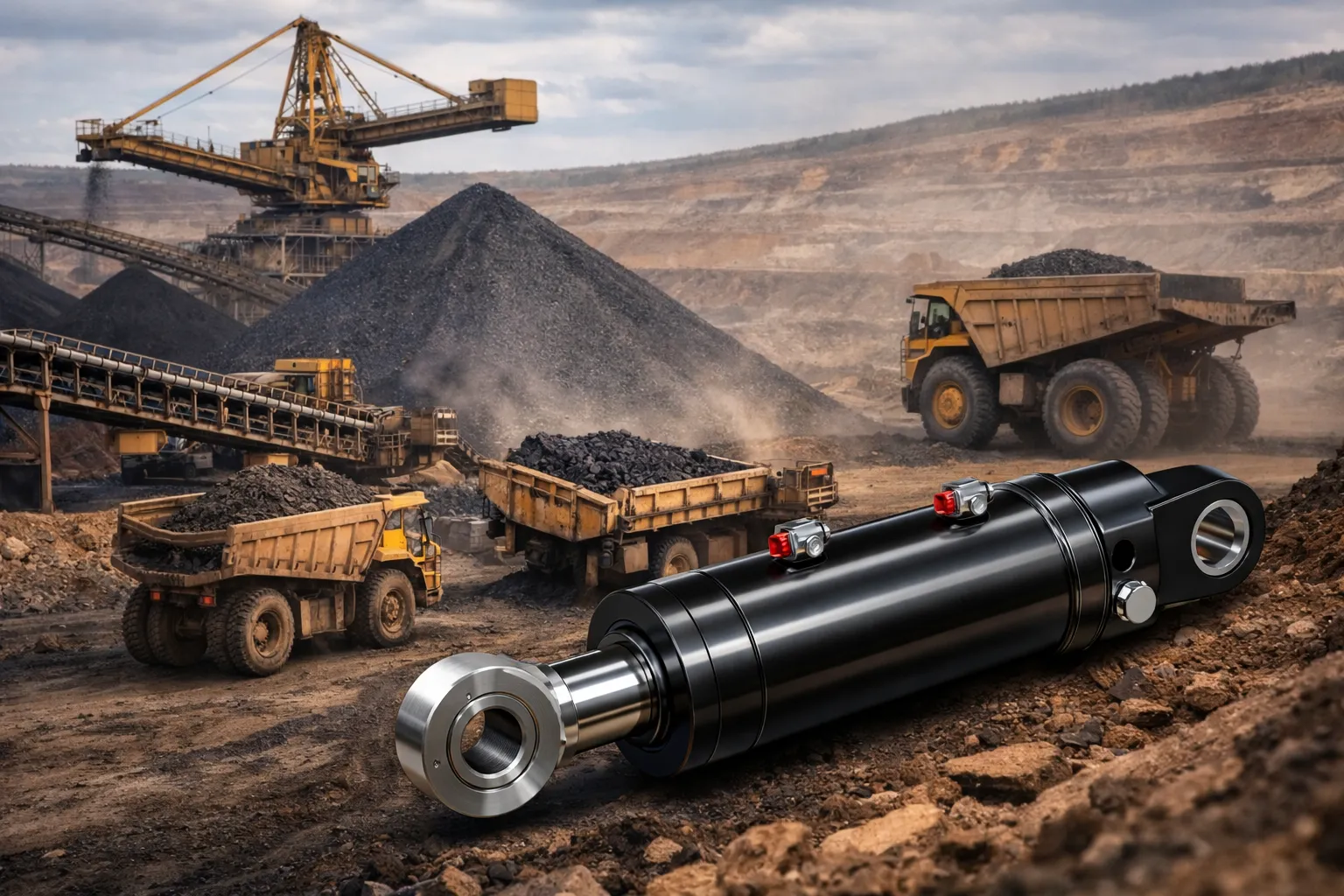
As a globally trusted hydraulic cylinder manufacturer, we have engineered a dedicated bucket lift hydraulic cylinder specifically to eradicate this failure mechanism. By upgrading the core material architecture to 42CrMo high-strength alloy steel and utilizing a heavy-duty welded body, our component serves as an impenetrable muscle for your machinery. This is not merely a replacement part; it is a strategic structural upgrade. Integrating our robust hydraulic parts into your fleet guarantees prolonged operational uptime, drastically reduces the frequency of unplanned maintenance, and ensures your transfer vehicles can aggressively tackle the most punishing excavation tasks without hesitation.
Engineered Technical Parameters
Precision engineering requires exact specifications to match the extreme forces at play. The data matrix below details the robust physical characteristics, material sciences, and customizable engineering thresholds of our bucket lift solutions, optimized explicitly for the severe shock loads encountered in mining equipment operations.
| System Attribute | Industrial Specification | Engineering & Customization Details |
|---|---|---|
| Industry Application | Mining Equipment | Heavily utilized in large-scale underground and open-pit sectors |
| Equipment Category | Transfer Vehicle / LHD Loader | Fully compatible with heavy wheeled and tracked loading platforms |
| Subsystem / Action | Bucket Lift System | Generates primary vertical breakout and hoisting force |
| Component Name | Bucket Lift Cylinder | Sized specifically to machine tonnage and bucket capacity limits |
| Action Type | Double Acting | A double acting hydraulic cylinder for powered lifting and controlled lowering |
| Structure Type | Piston Type | Heavy-wall barrel housing a high-stability hydraulic cylinder piston |
| Manufacturing Structure | Welded Construction | Eliminates tie-rod fatigue; features heavy-duty cross-tube trunnions |
| Material System | 42CrMo Alloy Steel | Ultra-high tensile strength to resist severe lateral deformation |
| Surface Treatment | Chrome Plated | Induction hardened substrate with 50-micron deep hard chrome layer |
| Environmental Grade | Heavy Load Ore Transport | Designed specifically for high particulate contamination and continuous duty |
| Working Condition | Impact | Engineered to handle explosive dynamic pressure spikes during rock breakout |
| Typical Failure Mode | Rod Bending | Standard commercial cylinders fail due to extreme asymmetrical bucket loads |
| Recommended Configuration | Strengthened Rod Design | Oversized 42CrMo rod geometry to physically neutralize bending moments |
Kinematic Functionality: The Fluid Mechanics Behind the Force
To fully appreciate the structural robustness of this equipment, one must comprehend the extreme fluid dynamics at play during a standard transfer loading cycle. The lifting mechanism of a transfer vehicle relies on a highly pressurized closed-loop hydraulic circuit. When the operator engages the lift command, the machine’s primary hydraulic pump forces high-viscosity synthetic fluid into the bore (cap end) of the bucket lift cylinder.
This rapid influx of fluid creates an immense hydrostatic pressure against the face of the internal hydraulic cylinder piston. This pressure is instantly converted into linear mechanical force, driving the heavily chromed rod outward. Because this is an advanced double acting hydraulic cylinder, as the rod extends to lift the loaded bucket, the fluid resting in the rod end of the barrel is smoothly pushed out and routed back to the main reservoir. The absolutely critical moment occurs during the “breakout” phase—when the bucket is forcefully curled back while buried deep in a pile of dense rock. This action creates a massive, instantaneous spike in fluid pressure, frequently exceeding 350 bar in milliseconds.
If the bucket catches unevenly on an immovable boulder, the force travels violently back through the linkage, applying severe lateral (side) loads to the extended rod. Our specialized engineering utilizes the ultra-rigid 42CrMo strengthened rod and elongated internal bronze guide bearings to absorb this misaligned kinetic energy. When it is time to lower the empty bucket or apply downward pressure to scrape the mine floor, the directional valve reverses, actively pumping fluid into the rod end and forcing the piston to retract. A single acting hydraulic cylinder relies purely on gravity to descend, which is highly unstable; our double-acting configuration ensures complete, rigid bidirectional control over the heavy implements.
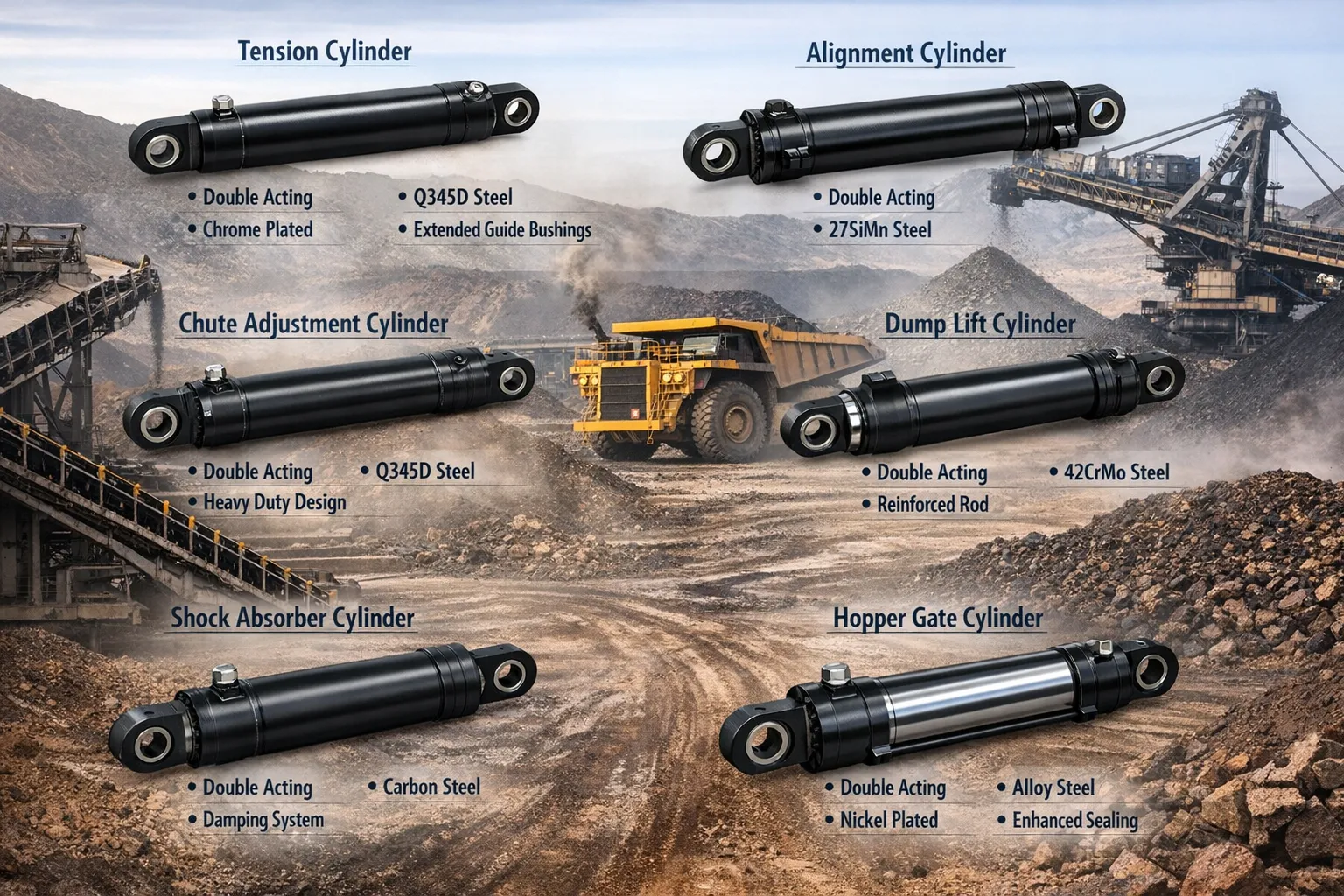
Seamless Dimensional Integration & Fleet Compatibility
Fleet standardization and rapid maintenance turnaround are non-negotiable for profitability in heavy earthmoving operations. When an OEM cylinder inevitably fails, waiting months for factory-backordered parts is not an economically viable option. Our engineering division specializes in manufacturing heavy-duty hydraulic components that serve as perfect, drop-in dimensional replacements for the world’s leading heavy machinery brands.
(Notice: To assist heavy equipment mechanics and fleet procurement managers with technical sizing and geometric matching, our strengthened cylinders are precision-engineered to perfectly replace factory units on transfer vehicles built by prominent manufacturers such as Komatsu, Caterpillar, Volvo CE, Hitachi, and Sandvik. The explicit reference to these corporate brands is solely for indicating physical fitment and maintenance compatibility. It does not imply trademark infringement, official OEM endorsement, or direct corporate affiliation.)
By providing the exact pin diameters, retracted stroke lengths, and robust spherical bearing mounts matched precisely to the original equipment, we empower your technicians to perform swift, complication-free fixing hydraulic cylinders procedures. Upgrading your fleet with our reinforced components delivers a remarkably competitive hydraulic cylinder price while drastically elevating the baseline durability of your loaders.
Architectural Superiority: 5 Core Technical Advantages
Surviving the violent realities of heavy load ore transport requires significantly more than just thick steel; it demands an uncompromising approach to metallurgical science and advanced fluid sealing. Here is how our engineering sharply separates our products from generic commercial actuators.
1. 42CrMo Strengthened Anti-Bending Rod
The defining feature of this lifting unit. Standard commercial cylinders use 45# carbon steel, which completely lacks the yield strength to handle extreme asymmetrical impact, leading to the dreaded “rod bending” failure. We forge our piston rods strictly from 42CrMo, an ultra-high-tensile chromium-molybdenum alloy. This material provides exceptional rigidity and elastic memory, allowing it to absorb violent lateral shockwaves without permanent structural deformation.
2. Heavy-Duty Deep Penetration Welded Body
Transfer vehicles vibrate aggressively. Standard tie-rod cylinder designs will rapidly stretch and loosen, causing catastrophic internal seal blowouts. Our cylinder bases and heavy-wall trunnion mounts are unified using deep-penetration, multi-pass automated submerged arc welding. This creates a monolithic steel structure that is completely immune to high-frequency vibrational loosening.
3. Extreme Impact Buffer & Hydraulic Cushioning
When a heavily loaded bucket is suddenly dropped, the cylinder rod retracts violently, threatening to slam the piston into the base. We integrate precision-machined hydraulic cushioning sleeves at both ends of the stroke. These progressive buffers automatically throttle the escaping fluid in the final millimeters of travel, gracefully decelerating massive loads to prevent internal mechanical shattering and protect the vehicle chassis.
4. Multi-Stage Abrasive Particulate Defense
Extraction environments are blanketed in highly abrasive silica dust. To protect the vital high-pressure seals, the 42CrMo rod is induction-hardened to create a tough outer casing and coated with a dense, 50-micron hard chrome layer. This is paired with an aggressive polyurethane double-lip scraper seal in the gland head, physically shearing away caked-on rock mud before it can ever enter the hydraulic fluid.
5. Ultra-Low Friction Polymer Sealing Matrix
Operating at high pressures creates immense internal frictional heat, which quickly thermally degrades standard NBR rubber. We utilize advanced PTFE (Teflon) composite step seals energized by high-temperature resilient elastomers. This drastically lowers the dynamic coefficient of friction, completely eliminating stick-slip judder during precise bucket positioning, and vastly extending the overall fatigue life of the hydraulic rams.
Autonomous Manufacturing Excellence & Quality Verification
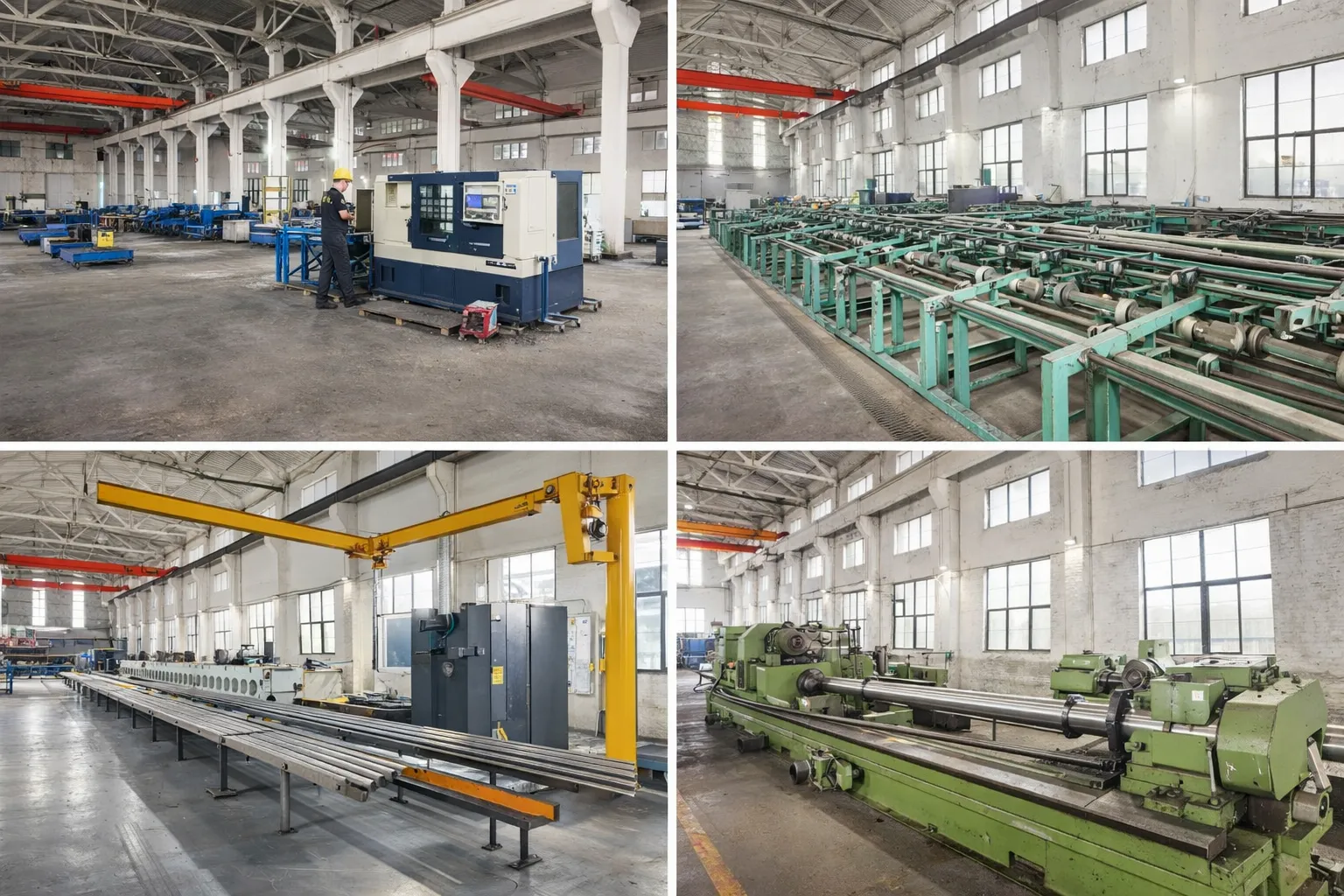
True heavy-duty reliability cannot be outsourced. As a comprehensively equipped hydraulic cylinder manufacturer, we maintain absolute authority over the entire production lifecycle. From the initial multi-axis CNC turning of the raw 42CrMo steel billets to the final precision skiving and roller burnishing of the heavy-wall barrel interiors to a mirror-like finish, every process is conducted autonomously within our advanced facility. All critical structural welds undergo ultrasonic non-destructive testing (NDT) to guarantee zero microscopic porosity, ensuring the cylinder body can withstand explosive shockloads without bursting.
Quality control is not an afterthought; it is a rigid protocol. We completely reject the industry practice of random batch sampling. Every single bucket lift hydraulic cylinder is mounted on a digital test bench and subjected to a 100% hydrostatic pressure overload test, verifying leak-free operation at 1.5 times its maximum rated working pressure. Upon passing these grueling evaluations, each unit is permanently laser-etched with a unique serial identifier, providing our international B2B clients with an unbroken chain of metallurgical traceability and absolute engineering accountability.
Expansive Industry Applications
While inherently designed to survive the brutal realities of heavy load ore transport, the exceptional anti-bending properties of our 42CrMo strengthened cylinders make them an invaluable asset across multiple heavy-duty industrial sectors where reliability is paramount.
- Mining Operations: The primary muscle for large articulated wheel loaders, underground shuttle cars, and continuous miners handling blasted granite and dense iron ore.
- Construction Machinery: Upgrading the primary lifting arms on heavy crawler excavators, backhoes, and track loaders for rigorous civil engineering and demolition tasks.
- Metallurgy & Steel Mills: Operating heavy slag-skimming machines and red-hot material transfer loaders where standard commercial cylinders warp under extreme radiant heat.
- Scrap Recycling & Material Handling: Powering massive mobile material handlers and grapple loaders that deal with unpredictable, highly asymmetrical loads of twisted scrap metal.
- Custom Heavy Engineering: Delivering bespoke high-tonnage lifting solutions for specialized tunnel boring equipment (TBM) and massive marine dredging platforms.
Comparative Engineering Analysis: Standard vs. Strengthened
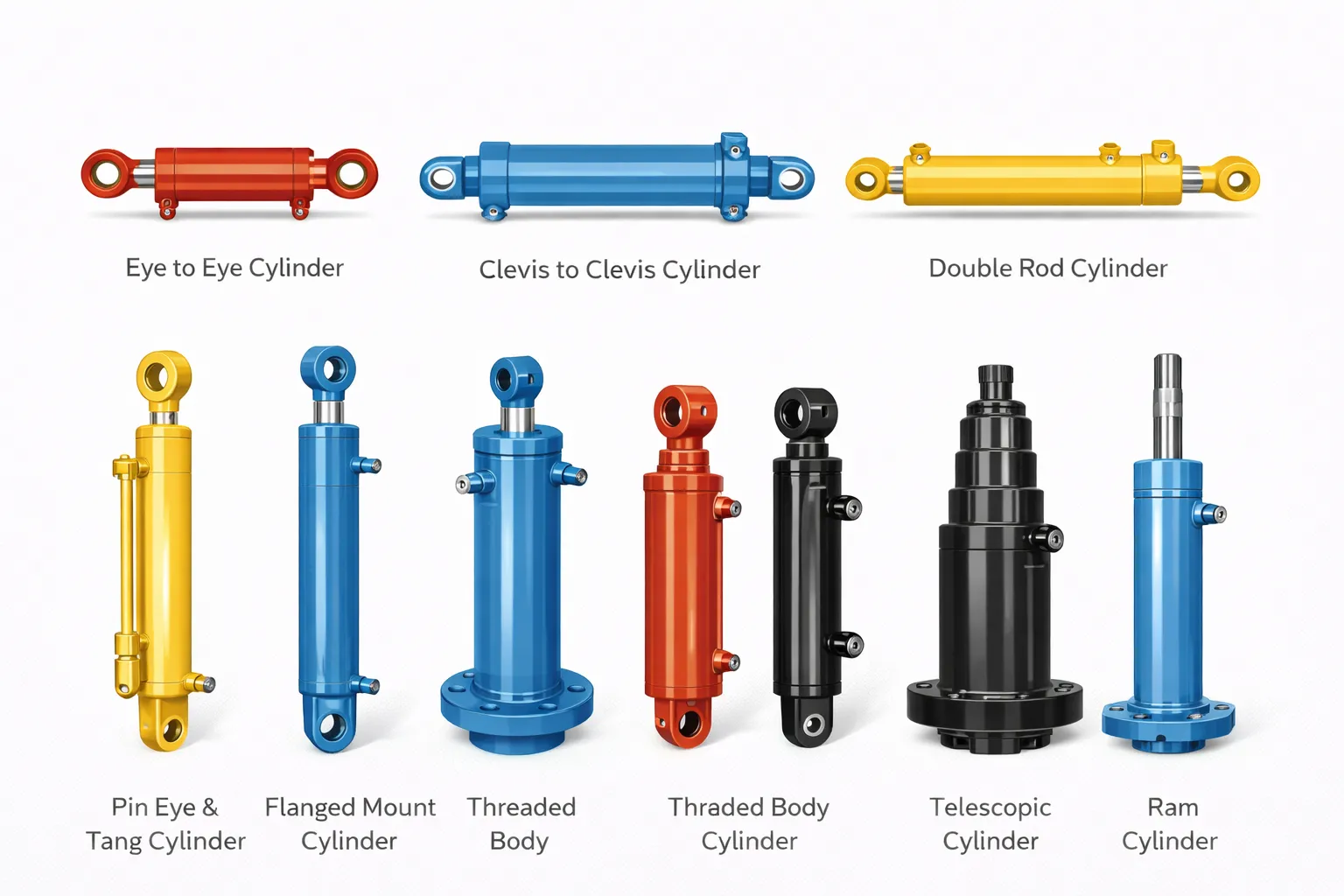
For fleet managers evaluating long-term total cost of ownership, the initial procurement cost of a component is secondary to operational uptime. A transfer loader paralyzed by a bent rod costs thousands of dollars per hour in lost production. The comparison below clearly illustrates why our strengthened 42CrMo design is the definitive, financially superior choice for severe-duty applications.
| Engineering Metric | Standard Commercial Lift Cylinder | Our 42CrMo Strengthened Lift Cylinder |
|---|---|---|
| Piston Rod Material | Standard 45# Carbon Steel (Low yield threshold). | 42CrMo Alloy Steel (Immense tensile strength). |
| Resistance to Bending | High failure rate during asymmetrical rock loading. | Structurally engineered to absorb severe lateral shock. |
| Internal Sealing | Basic NBR lip seals; highly vulnerable to friction heat. | Advanced PTFE composite seals; excellent thermal stability. |
| Mounting Architecture | Light-duty clevis mounts prone to pin-hole stretching. | Massive, deep-welded cross-tube mounts with self-aligning bearings. |
| Downtime Frequency | Frequent need for hydraulic cylinder repair and seal replacement. | Drastically reduced; specifically aligns with major multi-year engine overhauls. |
Proven In The Field: 5 Verified B2B Case Studies
Our commitment to resolving critical earthmoving challenges extends across the Asia-Pacific heavy industry sector. Below are five verified deployment logs demonstrating how our engineering team eliminated severe mechanical failures for our B2B partners in South Korea and surrounding industrial regions.
Case 1: Eradicating Rod Bending in a South Korean Zinc Mine
Client & Location: Deep Underground Zinc Operation, Gangwon Province, South Korea (Installed October 2024)
The Challenge: The operator’s fleet of low-profile transfer vehicles was suffering from severe rod bending on the primary lift linkage. When operators aggressively crowded the bucket into compacted ore, the sudden compressive loads permanently buckled the standard 45# steel rods on their OEM cylinders, locking the mechanism and causing severe vehicle downtime.
How They Contacted Us: The procurement manager searched for specialized heavy-duty replacement hydraulic parts and submitted blueprints via our engineering portal.
Solution & Result: We custom-manufactured bucket lift hydraulic cylinders utilizing our upgraded 42CrMo strengthened rods. Since deployment, the modified units have logged over 4,500 hours in heavy load ore transport without a single instance of rod deformation.
“Switching to the 42CrMo rods provided by your team was a structural game changer. The equipment takes heavy impacts daily, and the cylinders remain perfectly straight and leak-free. Exceptional engineering.” — Kim Min-soo, Chief Fleet Engineer.
Case 2: Surviving Freezing Impact in a Japanese Quarry
Client & Location: Open-Pit Limestone Quarry, Hokkaido, Japan (Installed January 2025)
The Challenge: Operating in deep winter conditions, standard carbon steel cylinder bases became brittle. When the loaders struck solid limestone shelves during the breakout phase, the impact shock literally fractured the cylinder mounting eyes, disabling the machines instantly.
How They Contacted Us: Reached out to our international sales team via email after receiving a referral from another heavy equipment operator evaluating a hydraulic cylinder price comparison.
Solution & Result: We provided custom heavy-duty units using low-temperature certified steel alloys and deep-penetration welding for the trunnion mounts. The units easily absorbed the violent winter impacts without a single structural failure.
“Your welded construction and material choice survived our harshest winter on record. Standard cylinders simply snap here. Your product provides true industrial resilience.” — Hiroshi Tanaka, Quarry Operations Manager.
Case 3: Defeating Abrasive Dust in a Vietnamese Coal Mine
Client & Location: Large Surface Coal Mine, Quang Ninh Province, Vietnam (Installed April 2025)
The Challenge: Airborne coal dust mixed with ambient humidity to form a highly abrasive grinding paste on the extended piston rods. This paste rapidly wore through standard chrome plating, destroying the rod seals and heavily contaminating the central hydraulic system.
How They Contacted Us: Found our technical documentation on advanced cylinder sealing online and requested a custom quote for replacement hydraulic cylinder components.
Solution & Result: We supplied units with 50-micron hard chrome plating and equipped them with aggressive dual-lip polyurethane dust scrapers. Hydraulic fluid analysis showed a 90% reduction in particulate contamination after six months of operation.
“The dual-lip scraper technology is incredibly effective. The chrome remains mirror-finish clean even in the dustiest sections of the mine. Protecting the cylinder seals has subsequently saved our main hydraulic pumps.” — Tran Van Nam, Lead Mechanic.
Case 4: Extreme Cold Reliability in Mongolian Copper Transport
Client & Location: Massive Open-Pit Copper Mine, South Gobi, Mongolia (Installed November 2024)
The Challenge: Operating transfer vehicles in winter temperatures plummeting below -35 degrees Celsius. Standard commercial seals became brittle and shattered during morning startups, resulting in immediate pressure loss and dropped payloads during transit.
How They Contacted Us: Reached out via our B2B portal specifically requesting cold-weather optimized engineering.
Solution & Result: We manufactured the cylinders using aerospace-grade, low-temperature resistant elastomeric seals and selected a specific steel alloy grade that retains high impact toughness in freezing conditions. The fleet operated through the entire winter season without a single seal failure.
“Before we found your cold-weather cylinders, winter mornings were a maintenance nightmare. Your equipment performed flawlessly in the extreme cold, holding load pressure perfectly from the moment the engine started.” — Batbayar, Operations Director.
Case 5: Resolving Internal Leakage in Indonesian Nickel Transport
Client & Location: Major Nickel Ore Processor, Sulawesi, Indonesia (Installed July 2025)
The Challenge: Continuous, heavy lifting operations in a tropical environment caused severe fluid overheating. The thermal degradation of standard piston seals resulted in extensive internal leakage. Operators reported the loaded buckets slowly drifting downward while the vehicle was in transit.
How They Contacted Us: Discovered a technical white paper we published on thermal stability in heavy duty equipment and emailed our engineering desk directly.
Solution & Result: We configured the bucket lift cylinder with high-temperature PTFE step seals and robust phenolic wear bands. The internal fluid bypass was eliminated entirely, allowing the vehicles to hold massive payloads perfectly steady during long transport runs.
“Load drifting is a major safety hazard in our facility. Your upgraded seal technology solved the problem instantly. The thermal stability of these cylinders is outstanding, maintaining full pressure even during 24-hour continuous operations.” — Agung Pratama, Equipment Reliability Manager.
Expert Technical FAQ for B2B Fleet Procurement
Optimizing heavy earthmoving equipment requires precise technical clarity. Below, our senior engineering team addresses the most critical questions regarding our bucket lift solutions and operational capabilities to assist procurement officers in making highly informed decisions.
1. How exactly does 42CrMo steel prevent rod bending compared to standard materials?
2. Are these lift cylinders strictly double acting hydraulic cylinders?
3. Can your cylinders directly replace standard OEM units on my transfer vehicles?
4. What data is needed to provide an accurate hydraulic cylinder price for a fleet upgrade?
5. Do you also supply internal replacement parts for long-term maintenance?
6. What are the shipping capabilities to South Korea and the broader Asian market?
Eliminate Equipment Downtime with Unbreakable Hydraulic Power
Do not allow standard commercial hardware to compromise the aggressive earthmoving capabilities of your heavy transfer vehicles. Whether your fleet requires a rapid, robust dimensional replacement or a fully customized 42CrMo bucket lift cylinder engineered specifically to conquer the severe impacts of a unique mining site, our senior technical team is ready to deliver an unyielding solution.
Editor: Cxm


























