Rotary Tiller Lift Cylinder For Tillage Machinery
Engineered specifically for absolute depth control in rotary tiller suspension systems. Fortified with Q345D structural steel and aggressive mud scrapers to completely dominate severe dust and waterlogged agricultural environments.
Product Overview: The Core Mechanism of Agricultural Precision
In the highly specialized field of commercial agricultural cultivation, maintaining exact kinematic control over heavy implements is a fundamental necessity. Specifically within the intensive farming regions of South Korea, Japan, and the broader Asian agricultural sector, highly optimized soil preparation dictates the overall success of the harvest. The rotary tiller is an exceptionally aggressive piece of tillage machinery, designed to shatter compacted hardpan clay, bury thick crop residue, and properly aerate the topsoil to create a uniform seedbed. However, the exact depth at which these high-speed steel blades engage the earth must be meticulously and actively controlled. This critical mechanical responsibility falls entirely upon the Rotary Tiller Lift Cylinder. Positioned deep within the three-point suspension linkage of the tractor, this vital fluid power actuator must continuously adjust and securely hold the implement’s vertical position against severe, upward rotational kinetic forces generated by the spinning blades. When an under-engineered suspension cylinder fails to hold internal pressure, the heavy tiller drifts upward during operation, resulting in shallow, highly ineffective cultivation that severely compromises root development and wastes massive amounts of tractor diesel fuel.
Operating heavy tillage machinery exposes mechanical components to some of the most tribologically destructive environmental conditions imaginable. The linkage system functions mere inches above the ground, meaning the actuator is perpetually bombarded by highly abrasive dry silica dust during the spring, and frequently fully submerged in heavily saturated, chemical-laden mud during the preparation of flooded rice paddies. Standard commercial hydraulic cylinders inevitably suffer from rapid internal seal degradation under these extreme realities. Microscopic quartz and silica particles easily bypass weak, factory-standard wiper rings, acting as a relentless grinding paste that violently scores the chrome piston rod during every retraction stroke. This leads directly to immediate hydrostatic pressure loss, fluid weeping, and complete component failure. To decisively counter these industry-wide vulnerabilities, we have completely re-engineered the sealing and metallurgical framework of these units. Our specialized Rotary Tiller Lifting Hydraulic Cylinder is built exclusively to combat abrasive mud-water ingress and totally prevent rod scratching, ensuring your agricultural fleet remains fully operational throughout the most punishing planting seasons.
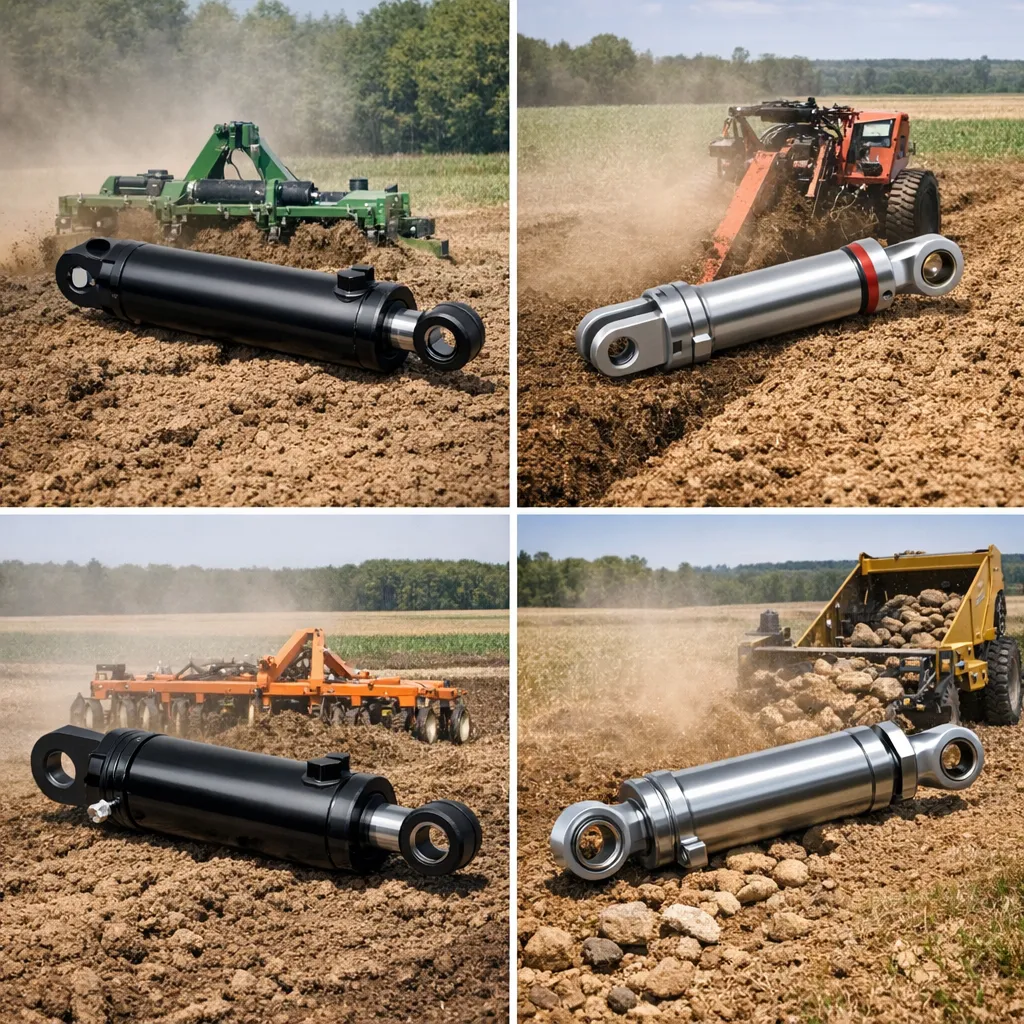
Agricultural fleet managers and mechanical procurement officers must recognize that the actual hydraulic cylinder price extends significantly beyond the initial component invoice. Equipment downtime during a tightly compressed, weather-dependent operational window translates directly into catastrophic lost agricultural revenue. By integrating our highly durable, heavy-duty hydraulic parts into your tillage equipment, you systematically eliminate the constant need for emergency field maintenance and unpredictable mechanical drift. Whether you are maintaining a fleet of compact utility tractors or heavy-duty commercial rigs, utilizing a highly reliable lift cylinder guarantees that your machinery operates at absolute peak efficiency.
Dimensional Specifications and Advanced Technical Parameters
Integrating reliable fluid power securely into existing tractor hydraulic systems demands absolute precision in structural dimensioning and advanced material selection. The comprehensive data matrix provided below details the exact engineering foundations of our dedicated tillage cylinder. As a completely vertically integrated hydraulic cylinder manufacturer, we maintain extensive customized CNC manufacturing capabilities to precisely accommodate varying linkage geometries, specific mounting pin diameters, and the extreme operational pressure requirements dictated by different global machinery OEMs.
| Technical Parameter | Engineering Specifications |
|---|---|
| Target Industry Segment | Agriculture |
| Target Equipment Category | Tillage Machinery |
| Sub-system / Mechanical Action | Rotary Tiller Suspension System Alignment |
| Fluid Power Nomenclature | Rotary Tiller Lift Cylinder |
| Kinematic Action Mode | Double acting hydraulic cylinder |
| Internal Structural Concept | Heavy-Duty Piston Cylinder Design |
| Manufacturing Construction | Precision Welded Type |
| Primary Material System | Q345D Low-Alloy High-Strength Structural Steel |
| Rod Surface Treatment | Precision Hard Chrome Plated (Anti-scoring finish) |
| Environmental Operating Level | Severe Dust + Abrasive Mud Water Submersion |
| Primary Work Condition Feature | Actively control implement soil penetration depth against kickback |
| Typical Industry Failure Mode | Severe rod scratching and rapid internal seal wear from mud |
| Recommended Engineering Setup | Hard chrome rod + heavy-duty mud scraper + sand/mud resistant sealing matrix |
Operational Mechanics: Governing Depth Through Precise Fluid Power
The mechanical demands of commercial rotary tilling require both massive downward force to cleanly penetrate heavily compacted soil, and high lifting capacity for rapid transport and turning at the field headlands. A single acting hydraulic cylinder is entirely incapable of fulfilling this dual requirement, as it simply cannot exert active downward hydraulic pressure. Instead, a single-acting system relies solely on gravity and the dead weight of the implement, which is highly insufficient when heavy tiller blades repeatedly strike unyielding hardpan clay; the implement will merely bounce across the surface. To thoroughly resolve this, our advanced fluid power engineers exclusively specify a highly rigid double acting hydraulic cylinder design for the suspension linkage. This architecture allows highly pressurized hydraulic oil from the tractor’s auxiliary pump to be precisely directed into either side of the hydraulic cylinder piston, offering absolute mechanical control in both extension and retraction directions simultaneously.
When the tractor operator commands the tiller to engage the earth, hydraulic fluid is forcefully driven into the cap end (base) of the cylinder barrel. The pressure rapidly builds against the full surface area of the piston, forcing the rod to extend with immense power. This outward extension pushes the heavy rotary tiller frame downward. As the rotating steel blades aggressively strike the soil, they generate immense upward reactive kickback forces. The true operational test of our specialized Rotary Tiller Lift Cylinder is its ability to act as an unyielding hydraulic lock during this tilling phase. When the directional control valves in the tractor cabin close, they trap the incompressible fluid completely inside the barrel. The heavy-duty Q345D steel construction refuses to flex or balloon, and our high-grade internal seals prevent any microscopic fluid bypass, thereby locking the heavy implement exactly at the depth selected by the operator without any upward drifting.
Upon reaching the end of a long crop row, the operator reverses the fluid flow. High-pressure oil rapidly enters the rod-end port, pushing against the annular area of the piston and generating powerful retraction force. This action pulls the heavy rotary tiller cleanly and swiftly out of the soil. Throughout these thousands of continuous dynamic cycles, our advanced hydraulic rams must flawlessly manage massive fluid pressures while completely isolating the clean internal oil from the highly abrasive mud slurry constantly splashing against the external rod surface. This flawless hydrostatic operation ensures that the tractor engine does not lug under uneven loads, massively maximizing diesel fuel efficiency across the entire agricultural property.
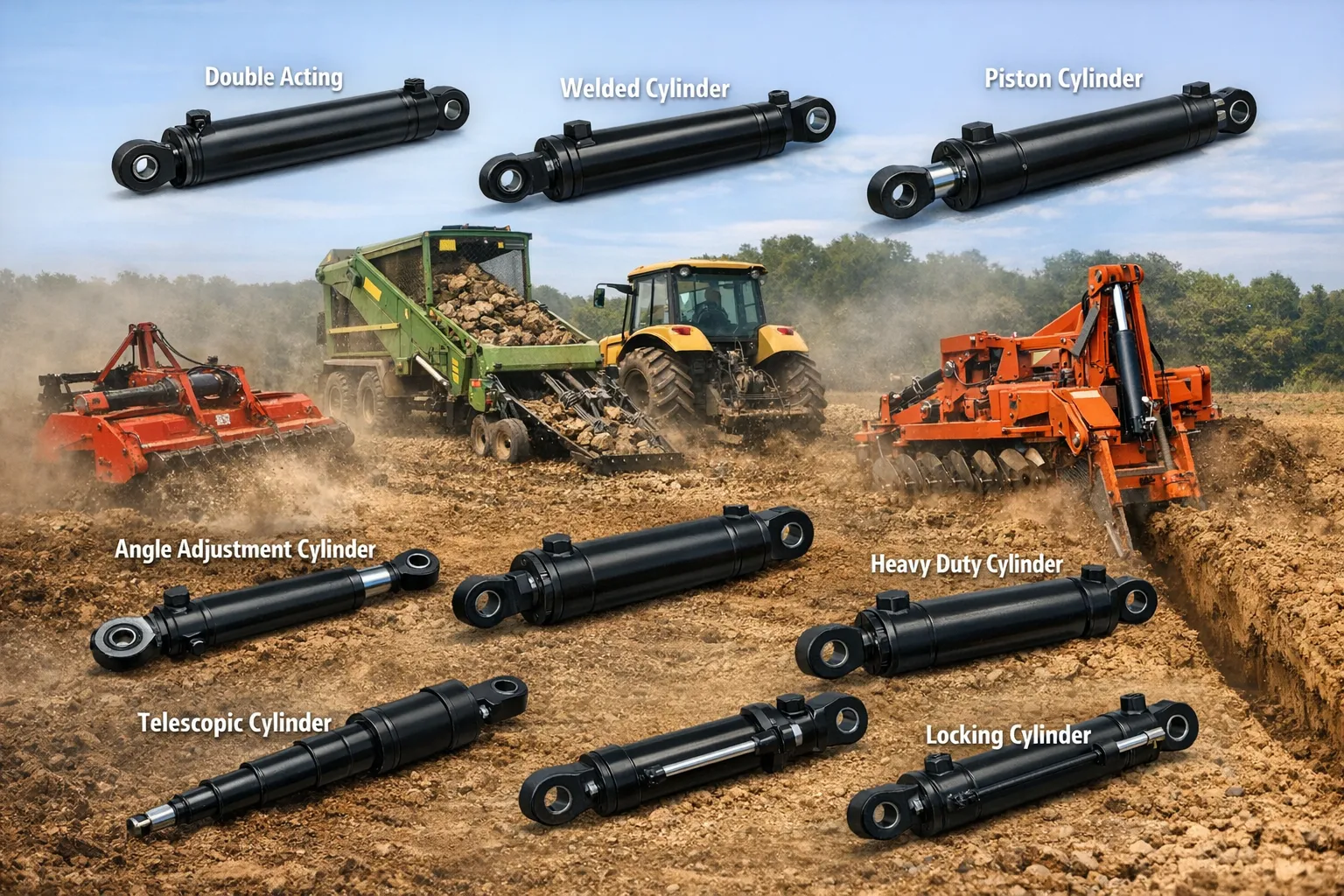
Direct Retrofit Capability and Exact Equipment Interchangeability
When managing a large agricultural cooperative, standardizing highly robust replacement parts is essential for significantly minimizing maintenance overhead. Many factory-original hydraulic cylinders feature sub-standard, commercial-grade sealing designs that simply fail prematurely in the punishing, wet conditions of South Korean rice paddies. When your mechanics are constantly forced into fixing hydraulic cylinders mid-season, the original equipment design itself must be critically questioned. We provide heavy-duty, exact-dimension upgrade units meticulously engineered to seamlessly replace failing OEM parts without requiring any cutting, welding, or structural frame modifications on your end.
Our precision-engineered lift cylinder models serve as ideal aftermarket upgrades for a vast array of global agricultural machinery. For dimensional reference, technical cross-referencing, and mechanical selection guidance—entirely without implying direct corporate affiliation, OEM endorsement, or trademark infringement—our heavy-duty hydraulic cylinder components are frequently requested to replace weak, leaking actuators on suspension systems manufactured by major global brands. This specifically includes machinery heavily utilized across Asia, such as tractors and tillers produced by Daedong (KIOTI), LS Mtron, TYM Tractors, Kukje Machinery, Yanmar, Kubota, Iseki, John Deere, and Mahindra. The highly standardized pin-to-pin retracted lengths, bore diameters, and mounting clevis widths ensure that the physical installation is a rapid, straightforward drop-in process.
Procuring your replacement hydraulic parts directly from our high-end manufacturing facility ensures you are completely bypassing weak commercial aftermarket designs. You receive a heavily fortified unit equipped with highly specialized mud scrapers and ultra-tough Q345D steel, permanently solving the recurring leakage and rod scratching issues that severely plague standard agricultural equipment. This drastically reduces the long-term necessity for complex hydraulic cylinder repair, keeping your vital fleet operating smoothly in the field rather than trapped in the maintenance workshop.
Eight Core Engineering Advantages: Dominating Mud, Dust, and Impact
To survive and reliably function in an environment defined by heavy mud and highly abrasive silica dust, a hydraulic cylinder cannot simply be a basic tube of steel; it must be a highly engineered protective fortress. Our design philosophy directly addresses and structurally eliminates the specific failure modes associated with rotary tiller equipment. Below are the definitive technical pillars that establish our product’s immense superiority in the field:
1. Q345D High-Strength Structural Alloy Steel
Rotary tillers generate extreme high-frequency vibrations and massive subterranean shock loads. Standard carbon steel heavily fatigues and inevitably cracks at the weld seams over time. We strictly utilize Q345D, a low-alloy, high-strength structural steel specifically chosen for its exceptional impact toughness and brilliant low-temperature performance, ensuring the structural barrel never fractures even in freezing winter conditions.
2. Aggressive Polyurethane Mud Scraper Technology
The primary root cause of agricultural cylinder failure is dried mud and silica pulling past the rod gland. We integrate an oversized, highly aggressive dual-lip polyurethane wiper ring. This specialized lip acts exactly like a rigid chisel during the retraction stroke, completely shaving off caked mud, dried clay, and ice before it can ever touch or bypass the internal primary pressure seals.
3. Specialized Sand & Mud-Resistant Sealing Matrix
Standard NBR rubber seals simply disintegrate when exposed to abrasive silicates. We deploy a proprietary multi-lip sand-resistant sealing matrix utilizing imported high-density polyurethane and PTFE glide rings. This advanced fluid matrix endures highly abrasive conditions while maintaining absolute, zero-leak hydrostatic locking for highly precise depth control over thousands of acres.
4. Deep-Layer Micro-Cracked Hard Chrome Plating
To strictly combat severe rod scratching from flying rocks and hidden field debris, the high-tensile steel rod undergoes an ultra-thick layer application of micro-cracked hard chrome plating. This dramatically raises the surface hardness, effortlessly deflecting sharp physical impacts and completely preventing the longitudinal scoring that cuts internal seals.
5. Robotic Pulse-MIG Heavy-Duty Welded Construction
The constant pulling and violently twisting forces of the rotary tiller attempt to rip the mounting brackets entirely off the cylinder. We employ automated, multi-axis robotic pulse-MIG welding to secure the heavy-duty forged mounts to the Q345D barrel. This provides flawless, deep weld penetration, completely neutralizing the risk of heat-affected zone (HAZ) fractures.
6. Corrosion-Resistant Industrial Exterior Coating
Working deep in flooded rice paddies exposes the steel to highly acidic agricultural chemicals, harsh fertilizers, and prolonged moisture. The entire exterior of our cylinder is heavily pre-treated with zinc-phosphate and finished with a baked polyurethane-acrylic enamel, providing serious industrial-grade protection against deep pitting and structural rust.
7. Ultra-Low Friction CNC Internal Finish
The internal bore of the thick Q345D barrel is heavily skived and precision roller burnished to a perfect, mirror-like Ra 0.2 to 0.4 finish. This drastically lowers dynamic friction, significantly reducing heat generation during rapid implement adjustments and completely preventing premature wear and shredding of the internal high-pressure piston seals.
8. Offset Load Bearing Dampening System
Uneven agricultural terrain creates massive asymmetrical side-loads that attempt to bend the extended rod. We mitigate this destructive force by integrating extra-wide, bronze-filled PTFE wear rings on the piston block and rod gland. These extended bearing surfaces act to absorb lateral thrusts, preventing the steel rod from leaning and scoring against the internal barrel wall.
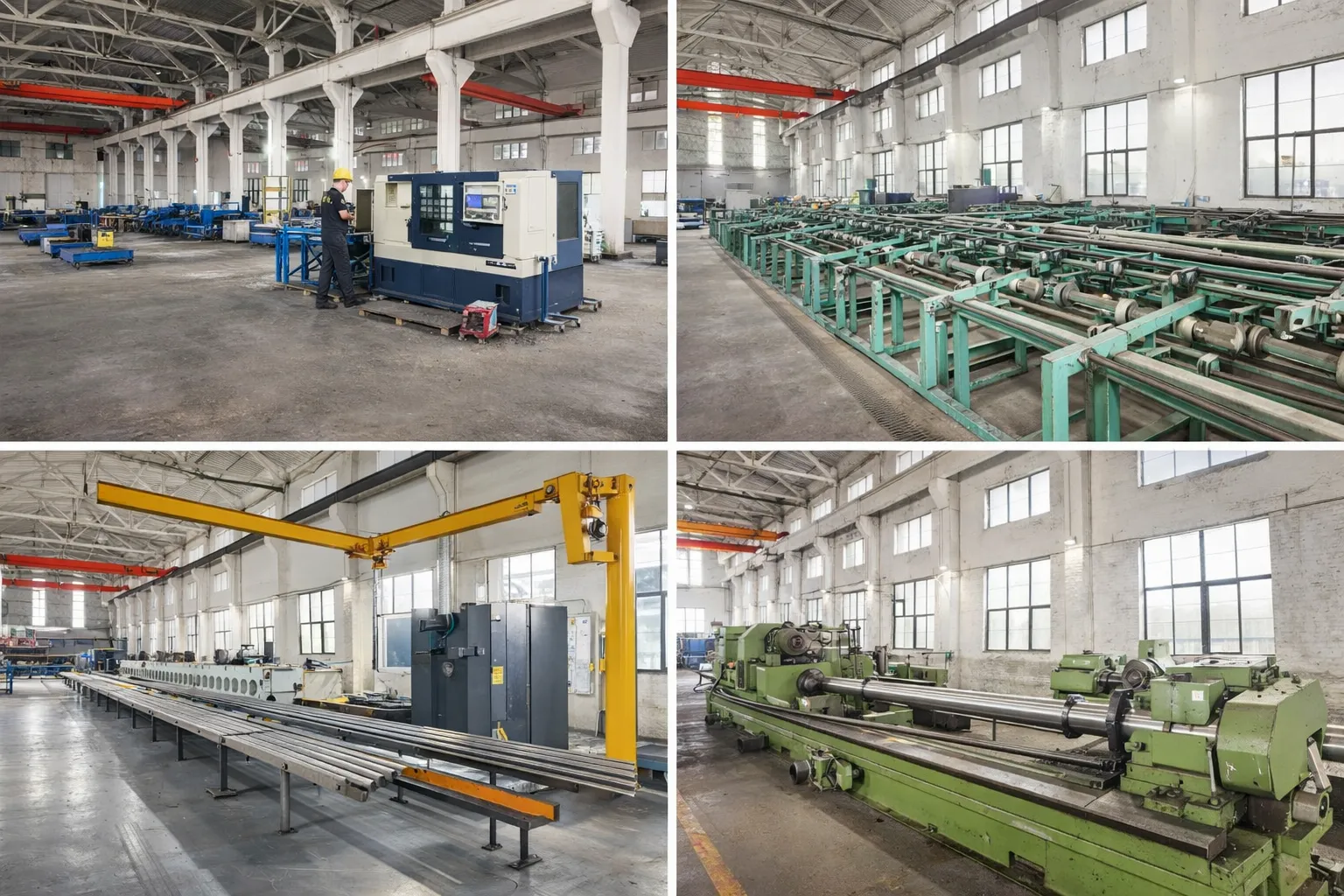
Uncompromising Quality Control and Autonomous In-House Production
The stark difference between a component that tragically fails after three months and one that operates flawlessly for years is dictated entirely by factory-level precision and uncompromising quality assurance. As a fully vertically integrated hydraulic cylinder manufacturer, our autonomous manufacturing facility heavily controls every single mechanical variable, entirely eliminating reliance on inconsistent third-party suppliers. Production strictly begins with deep metallurgical verification; every incoming batch of Q345D steel tubing is analyzed via advanced optical emission spectrometry to confirm its exact chemical composition and structural integrity before it ever enters the CNC machining phase.
Following the complex multi-axis CNC turning of the internal hydraulic cylinder piston elements and the robotic welding of the external structure inside our dust-free clean-room environments, we mandate a draconian testing protocol. We absolutely refuse to rely on statistical random batch testing. Every single completed hydraulic cylinder is bolted firmly into our computerized test rigs and subjected to severe dynamic hydrostatic pressure testing at exactly 150 percent of its rated maximum working load. Highly sensitive diagnostic sensors continuously monitor for any microscopic drop in pressure, ensuring zero internal fluid bypass across the piston and completely verifying the absolute structural integrity of all external base welds.
Every approved double acting hydraulic cylinder is permanently laser-engraved with a highly unique alphanumeric serial matrix. This guarantees total lifecycle traceability, allowing us to perfectly identify the exact batch of raw steel, the precise technician who assembled it, and the exact torque specifications utilized. This extreme level of rigorous documentation is precisely why top-tier procurement officers overwhelmingly trust our manufactured products over standard aftermarket alternatives. For a deeper understanding of our rigorous production standards, explore our hydraulic cylinder product category.
Exceptional Adaptability Across Severe Heavy Industries
While the specific geometric and sealing architecture detailed above is meticulously optimized to fully combat the abrasive mud and choking dust of agricultural rotary tillers, the fundamental engineering blueprint is incredibly adaptable. An actuator painstakingly built to survive complete submersion in a flooded, chemical-rich rice paddy can easily conquer other harsh operational environments where component failure is utterly unacceptable and downtime is catastrophically expensive.
For instance, the incredibly aggressive dual-lip mud scraping technology, the anti-scoring chrome treatments, and the massive yield strength of the Q345D barrel are routinely specified by demanding engineers operating within the construction machinery industry. Excavators, compact track loaders, and wheel loaders face identical destructive threats from abrasive silica dirt and violent physical impacts. Furthermore, the extreme corrosion resistance and heavy particulate defense of our robust systems make them highly applicable to the demanding environments found directly within the mining industry. Regardless of the industrial sector, deploying our high-quality actuation technology translates universally to massively maximized machinery uptime.
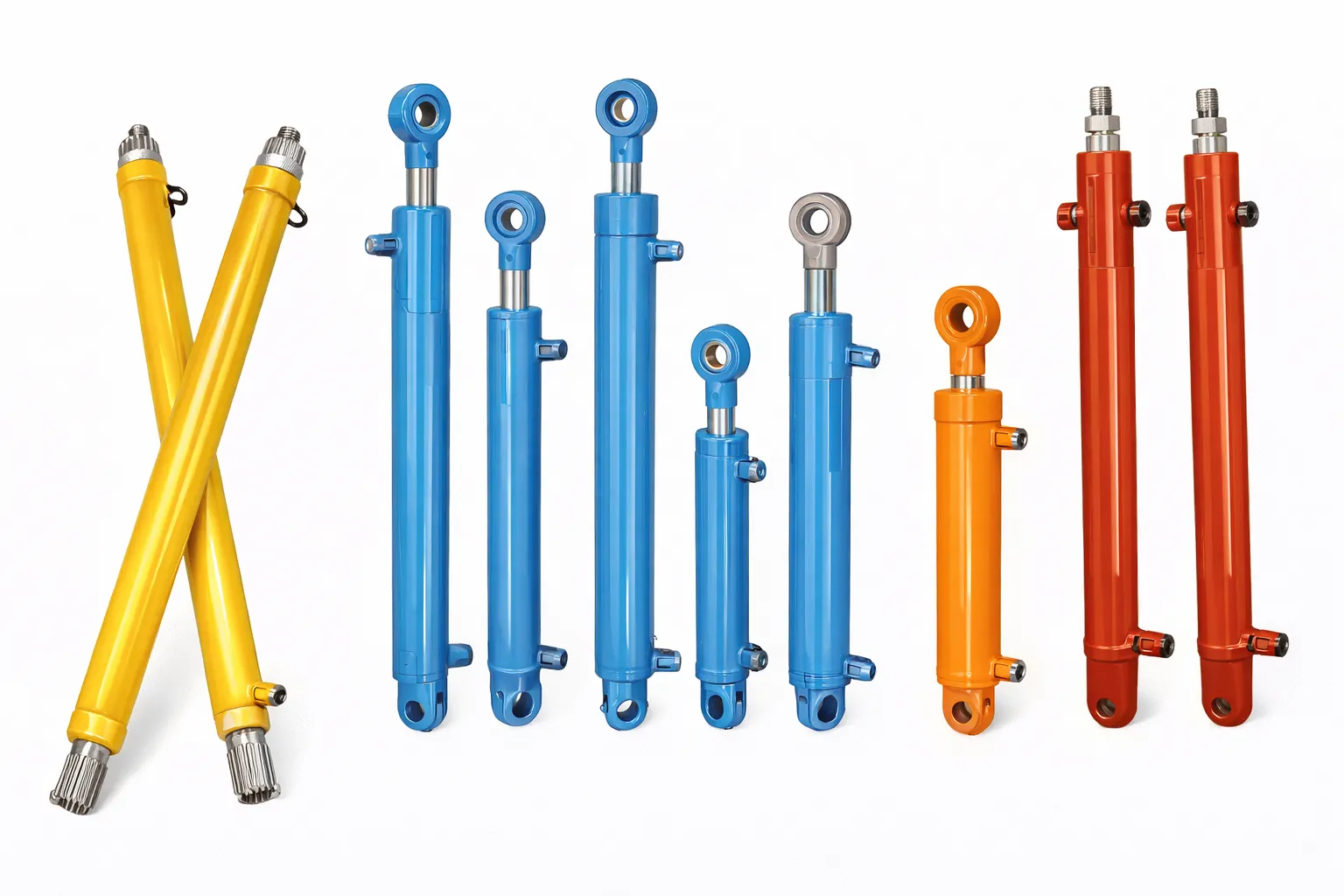
Comparative Technical Analysis: Standard Market Cylinders vs. Our Engineered Solution
For highly analytical procurement officers evaluating long-term capital expenditure, a direct side-by-side technical comparison clearly demonstrates exactly why investing in specialized fluid power engineering yields the absolute highest financial return. Purchasing a cheap commercial cylinder nearly always leads to cascading mechanical failures that severely cripple farm productivity.
| Component Feature | Standard Commercial Cylinder | Our High-Performance Cylinder |
|---|---|---|
| Barrel Metallurgy | Basic 45# carbon steel. Prone to severe micro-fracturing under freezing conditions or impact. | High-yield Q345D alloy. Exceptional low-temperature toughness and immense impact resistance. |
| External Rod Defense | Thin commercial chrome wash. Incredibly easily scratched by flying field stones. | Ultra-thick micro-cracked hard chrome. Heavily deflects severe impacts to prevent seal cutting. |
| Environmental Exclusion | Basic soft NBR dust ring. Allows abrasive wet clay to enter and completely destroy internal seals. | Aggressive dual-lip Polyurethane mud scraper. Provides 100% total exclusion of sludge and silica. |
| Load Control / Valving | Prone to massive internal bypass, causing the implement to quickly drift downward during operation. | Absolute hydrostatic locking. Perfect depth control maintained over massive acreage without drifting. |
| Quality Verification | Basic visual inspection, highly randomized batch testing resulting in high defect leakage. | 100% dynamic pressure cycle testing at 1.5x working pressure prior to global dispatch. |
Global Success: Field Proven Reliability and Actual Client Outcomes
Our fluid power solutions are actively resolving highly critical mechanical failures across the diverse and challenging agricultural topographies of the Asian market. By partnering directly with heavy equipment operators, we continuously prove the massive operational advantages of proper engineering through documented field outcomes.
Case Study 1: Halting Mud Ingress in South Korean Flooded Rice Paddies
Client Profile: Commercial Rice Farm Consortium, Jeollanam-do, South Korea.
The Challenge: The consortium heavily utilized massive rotary tillers mounted to Daedong tractors to prepare deep, fully flooded rice paddies. The chemical-rich mud water was completely destroying the OEM cylinder seals within a mere 60 days of use. The soft rubber wipers allowed liquid clay to aggressively enter the cylinder, causing catastrophic rust on the inner barrel walls and necessitating constant suspension actuator replacements mid-season. The massive labor expense of continuously fixing hydraulic cylinders was severely impacting their seasonal profitability.
The Solution & Result: The maintenance director discovered our dedicated hydraulic cylinder manufacturer portal via search and submitted the exact dimensions of the failing units. We rapidly delivered a fleet-wide engineered upgrade featuring our heavy-duty polyurethane mud scraper and specialized sand-resistant sealing matrix. Installed just prior to the heavy spring planting season, the entire fleet miraculously completed two full harvesting cycles with absolutely zero seal bypass and no evidence of internal water contamination. The highly robust design proved its immense financial worth instantly.
“The aggressive mud scrapers completely saved our season. We literally pulled the rods out after six months submerged in paddy mud and they looked brand new. The hydraulic cylinder price was incredibly reasonable considering it completely eliminated our downtime.” — Mr. Lee, Consortium Maintenance Director (October 2024)
Case Study 2: Eradicating Rod Scoring in Japanese Volcanic Soil
Client Profile: Tillage Equipment Importer & Service Center, Hokkaido, Japan.
The Challenge: The region’s notoriously dry, highly abrasive volcanic ash soil acts exactly like severe sandpaper on moving hydraulic components. The importer faced massive, costly warranty claims because the chrome rods on the factory-supplied rotary tiller lift cylinders were suffering incredibly deep longitudinal scratches within a single season, leading to immediate hydraulic fluid weeping and total pressure loss.
The Solution & Result: We comprehensively redesigned the actuator specifically for their highly challenging territory. By introducing advanced induction hardening directly before our micro-cracked hard chrome plating, we exponentially increased the rod’s surface resistance to physical scratching. We also heavily upgraded the external polyurethane wipers to reject the fine ash. The warranty claim rate on the suspension hydraulic systems miraculously dropped by over 98 percent over the following two years, perfectly restoring the equipment brand’s reputation for rugged reliability.
Case Study 3: Stopping Structural Vibration Cracks in Southeast Asia
Client Profile: Large Scale Agricultural Cooperative, Mekong Delta, Vietnam.
The Challenge: Operating extremely heavy, high-speed rotary tillers caused massive, high-frequency kinetic vibrations to transfer through the three-point linkage directly into the lift cylinders. The standard 45# carbon steel barrels were suffering severe metal fatigue fractures near the mounting welds, causing the total structural collapse of the implement suspension right in the middle of the field, leaving the tractors stranded.
The Solution & Result: We smartly transitioned their entire replacement inventory directly to our Q345D low-alloy structural steel specification. Combined seamlessly with our automated robotic pulse-MIG welding protocols, the structural integrity of the cylinder base was massively fortified. Field reports definitively confirm zero barrel fractures or weld separations since the transition, significantly maximizing their tractor uptime and vastly reducing the need for costly hydraulic cylinder repair or emergency welding in the dirt.
Frequently Asked Questions
To thoroughly support B2B procurement professionals, chief mechanics, and heavy equipment engineers, we have highly detailed the transparent answers to the most common operational and logistical questions concerning our heavy-duty tillage actuators.
Secure Unfailing Machinery Operation Today
Do not allow substandard sealing technology and weak steel to compromise your agricultural productivity and fleet efficiency. Partner with a dedicated fluid power engineering facility to integrate the most resilient, mud-resistant suspension actuation systems available in the global heavy industry sector.
Submit your specific dimensional requirements, OEM technical blueprints, or field failure descriptions for an immediate structural upgrade analysis. Whether you need a single testing prototype or a bulk container order, our engineering team is ready to deliver.
Editor: Cxm