
Swing Arm Cylinder for Roadheader Machinery
Engineered with a high-strength steel cylinder body and specialized nickel plating. Designed to absorb severe impact shear, deliver flawless swing adjustment, and permanently eradicate structural fatigue cracks in heavy-duty subterranean excavation environments.
Subterranean Industrial Overview & Operational Value
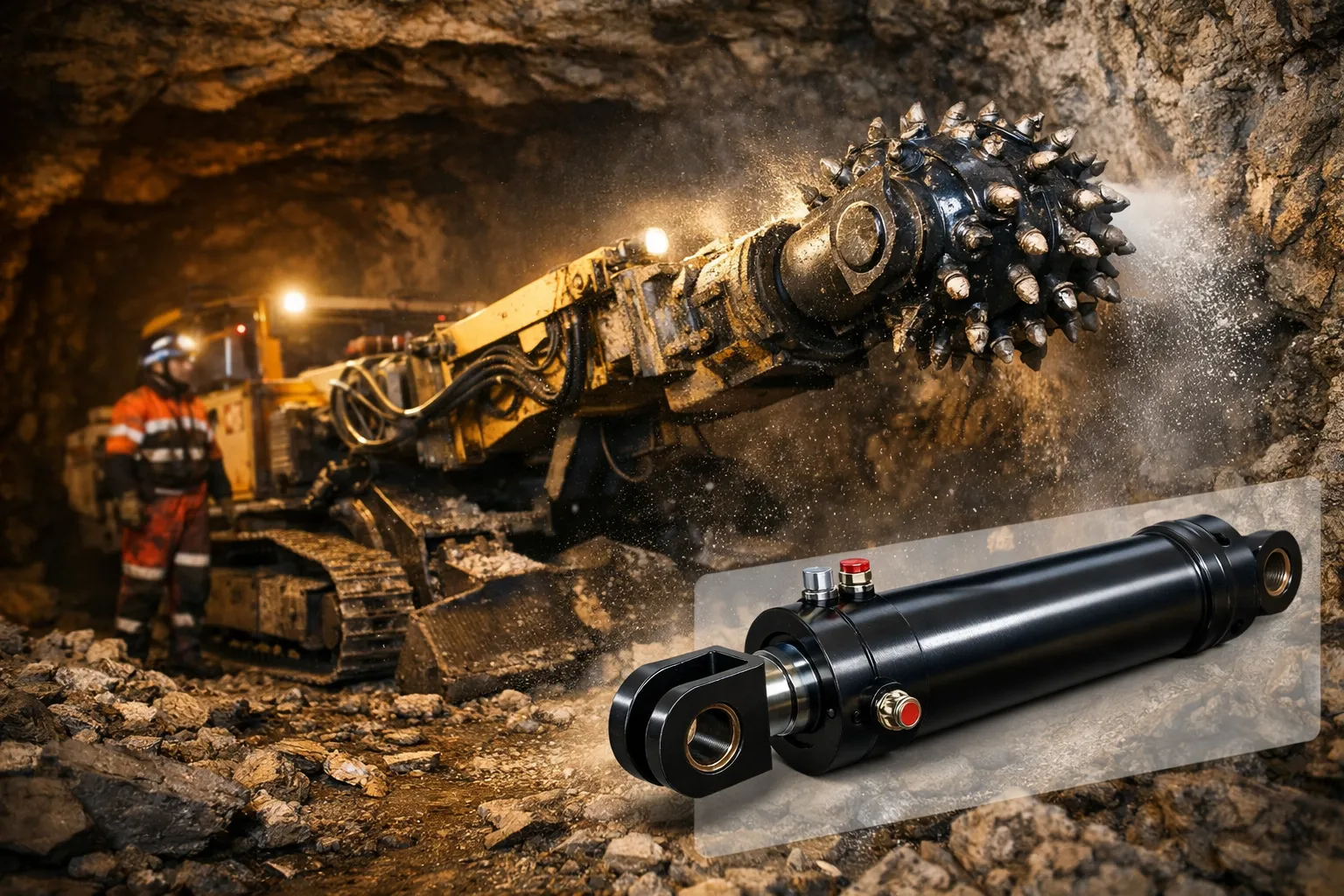
Operating heavy machinery deep within a mining shaft or a civil infrastructure tunnel presents a unique theater of mechanical stress. Unlike surface equipment, subterranean machinery is subjected to chaotic, multidirectional forces that instantly expose structural weaknesses. Within the complex kinematic architecture of a continuous miner or roadheader, the swing arm system serves as the primary directional control vector. As the heavy tungsten carbide cutting head sweeps laterally across the solid rock face, it dictates the entire tunneling profile. To execute this horizontal movement while absorbing violent reactionary forces, the machinery relies entirely on the structural integrity of the swing arm cylinder.
Forensic analysis of failed underground mining equipment consistently reveals a glaring vulnerability: standard commercial fluid power components are fundamentally unsuited for lateral sweeping operations against solid strata. The persistent side-loading and extreme mechanical shockwaves rapidly induce metal fatigue, culminating in a catastrophic fatigue crack along the housing and mounting trunnions. Recognizing this widespread industry bottleneck, our dedicated engineering facility operates as a highly specialized hydraulic cylinder manufacturer, focusing our metallurgical expertise exclusively on resolving these precise breakdown modes. We have developed a heavily reinforced swing arm hydraulic cylinder constructed from premium 42CrMo alloy steel, utilizing a robust high-strength steel cylinder body to entirely negate the risk of fracture under peak operational stress.
For procurement directors, fleet maintenance superintendents, and heavy equipment leasing firms operating across South Korea, Japan, and the broader Asia-Pacific sector, the true industrial value of this engineered hydraulic cylinder is measured in reclaimed operational uptime. Upgrading your heavy machinery with our specialized units ensures that your continuous miners remain actively engaged in rock excavation, rather than waiting in the maintenance bay for emergency welding repairs. When evaluating the total lifecycle hydraulic cylinder price, the financial return generated by eliminating unplanned underground equipment stoppages is undeniably compelling.
Engineered Technical Parameters
Achieving total mechanical reliability in extreme environments requires transparent, uncompromising design specifications. The detailed matrix below outlines the precise engineering parameters for our heavy-duty swing adjustment units. Every specific metric is rigorously calculated to vastly exceed the standard operational limits of mineral extraction and heavy civil excavation.
| Engineering Category | Specification Data & Material Configuration |
|---|---|
| Industry Sector | Mining Equipment |
| Equipment Category | Roadheader / Tunneling Machine |
| Subsystem / Action Target | Swing System |
| Cylinder Nomenclature | Swing Arm Cylinder |
| Hydraulic Action Method | Double Acting |
| Structural Typology | Piston Cylinder |
| Manufacturing Structure | Welded (Robotic Submerged Arc) |
| Core Material System | 42CrMo Alloy Steel Forgings |
| Exterior Surface Treatment | Nickel Plated |
| Environmental Grade | Impact Shear |
| Working Condition Feature | Swing Adjustment |
| Typical Failure Mode Solved | Fatigue Crack |
| Recommended Configuration | High Strength Steel Cylinder Body |
Operational Fluid Dynamics & Kinetic Principles
Understanding the precise kinematics of boom articulation requires an analysis of the fluid dynamics occurring within the system. The swing adjustment of a continuous miner is strictly dictated by a double acting hydraulic cylinder. Unlike a single acting hydraulic cylinder which relies on external forces or gravity to retract, our unit actively commands motion in both directions. Highly pressurized hydraulic fluid, generated by the machine’s primary axial piston pumps, is directed into the cap end chamber to extend the hydraulic cylinder piston, pushing the boom laterally. Simultaneously, fluid is metered out of the rod end chamber. To reverse the swing, proportional directional control valves seamlessly reverse the fluid flow. This creates a state of active hydraulic tension, enabling the operator to smoothly carve the tunnel profile.
The reality of cutting through solid granite, quartzite, or mixed geological strata is rarely a continuous, easy motion. When the cutting head impacts a particularly dense rock inclusion, the kinetic shockwave attempts to forcefully push the boom backward. The incompressible hydraulic fluid trapped within the cylinder barrel instantly acts as a rigid shock absorber. In ordinary commercial cylinders constructed from standard carbon steel, the internal pressure inside the chamber can spike from a nominal 250 bar to a devastating 450 bar in a fraction of a millisecond. This explosive pressure spike, combined with the lateral side-loading torque, causes the barrel to physically distort and ovalize.
Repeated thousands of times over a single mining shift, this flexing permanently alters the crystalline grain structure of the steel, eventually initiating microscopic fatigue cracks near the welded trunnion mounts. Our engineering team circumvents this entirely by utilizing a high strength steel cylinder body forged from 42CrMo. This alloy possesses an exceptionally high yield limit, ensuring the housing remains completely rigid under maximum impact shear. If the barrel does not yield even a fraction of a millimeter, the boom will not violently chatter. Our precision-engineered internal geometry guarantees zero fluid bypass, ensuring the boom holds its exact trajectory against the rock face without destroying itself.
Flawless Fleet Integration & Direct OEM Replacements
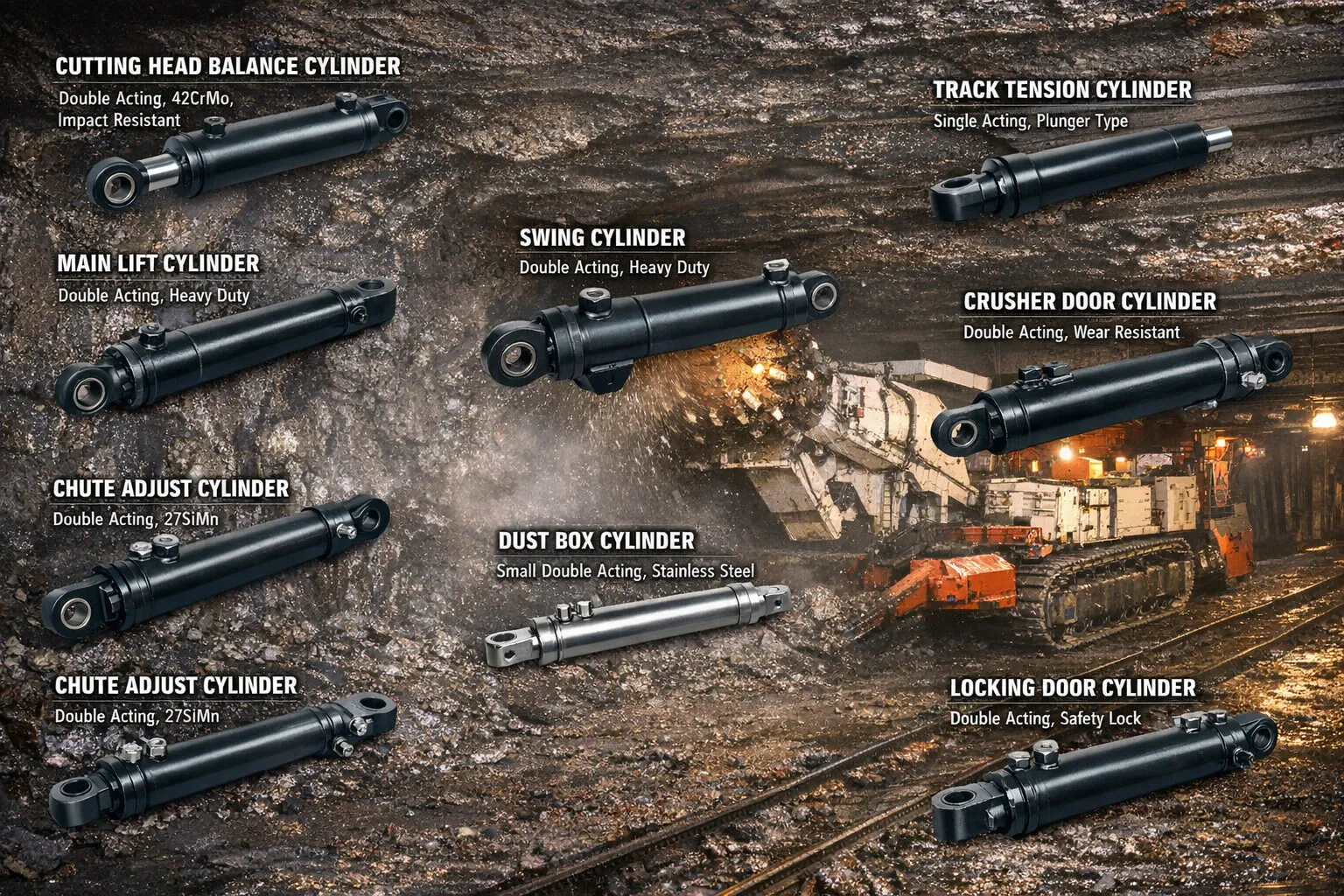
When a machine is immobilized deep underground due to a structural failure, waiting months for an overpriced OEM replacement part is a financial catastrophe. Project managers require immediate, exact-fit upgrade solutions to minimize downtime. We have meticulously reverse-engineered and mapped the precise dimensional tolerances, mounting pin hole diameters, retracted stroke lengths, and fluid port thread pitches of the global tunneling industry’s most prevalent machinery platforms. Your maintenance personnel can execute the hydraulic cylinder repair swiftly and safely, without needing to perform any hot-work, cutting, or structural modifications to the machine’s chassis.
Technical Disclaimer: The subsequent original equipment manufacturer (OEM) brand names and machinery classifications are referenced exclusively for the purpose of technical sizing reference, kinematic compatibility verification, and clear B2B procurement communication. We operate proudly as an independent engineering facility, and this reference does not constitute trademark infringement or official endorsement by these respective entities.
- Sandvik MT & MH Series: Perfect dimensional alignment for heavy-duty mining roadheaders, providing a critical structural upgrade in impact shear tolerance for hard rock tunnel advancing.
- Epiroc / Atlas Copco: Optimized internal bore and rod geometries matched flawlessly for their high-torque continuous mining fleets, significantly improving sweeping stability.
- SANY & XCMG Rigs: Direct pin-for-pin replacement for the primary tunneling platforms utilized heavily throughout the Asian infrastructure market, effectively curing the recurring factory-standard issues of premature weld cracking.
- Mitsui Miike: Integrated nickel plated surface treatments heavily requested by Japanese and Korean mining sectors dealing with highly acidic groundwater seepage that typically strips factory chrome.
Five Formidable Technical Advancements
True mechanical reliability in an extreme duty environment is not achieved by accident; it is the direct result of applied material science and advanced thermodynamic fluid engineering. When evaluating heavy hydraulic rams for critical underground infrastructure deployment, the following five technical pillars separate our manufacturing process from ordinary industrial commodities:
1. Absolute Defiance of Structural Fatigue
The metallurgical foundation of our high strength steel cylinder body is forged from premium 42CrMo alloy steel. Standard 45# carbon steel is notoriously susceptible to crystalline deformation when subjected to continuous lateral side-loading. 42CrMo undergoes a sophisticated thermal quenching and tempering process in our facility. This specific heat treatment yields exceptional ultimate tensile strength, guaranteeing the housing refuses to flex under maximum impact shear, permanently eliminating the development of a fatigue crack at the base.
2. Advanced Nickel Plated Chemical Defense
A subterranean tunnel is a chemically hostile environment. Groundwater seepage often carries high concentrations of dissolved minerals, resulting in severely acidic conditions. Traditional hydraulic rams rely on hard chromium plating, which inherently produces a network of microscopic micro-cracks. Corrosive mine water penetrates these fissures, aggressively rusting the underlying steel substrate and shredding the seals. We deploy a premium electroless nickel plated surface treatment. This specialized coating deposits a highly dense, completely non-porous metallic barrier that is impervious to acidic mine seepage.
3. Ultra-Low Friction Anti-Shear Sealing Matrix
Continuous left-to-right swing adjustment generates immense fluid friction and heat, which bakes and shatters standard rubber seals. We utilize a proprietary sealing matrix combining high-temperature carbon-filled PTFE step seals with heavy-duty polyurethane energizers. This low-friction geometry glides seamlessly against the internal barrel walls, drastically reducing heat generation while instantly trapping high-pressure oil during severe shock spikes to ensure zero internal fluid bypass.
4. Deep-Penetration Robotic Welded Integrity
The structural joints connecting the cylinder to the chassis endure the most aggressive mechanical torture. Manual welding creates inconsistent heat-affected zones (HAZ) highly prone to tearing under shear loads. We rely exclusively on automated robotic submerged arc welding. This guarantees incredibly deep, flawless metallic fusion at all mounting eyes. Subsequent thermal stress relief in specialized industrial ovens neutralizes residual welding tension, securing absolute structural longevity.
5. Optimized Thermal Stability for Continuous Operations
Operating non-stop in a confined tunnel generates significant fluid heat, which destroys standard elastomers. Through advanced computational fluid dynamics (CFD) modeling, our engineering team optimized the internal oil port trajectories, eliminating fluid turbulence and pressure drops. Combined with heavy-duty bronze guide bands, the system dissipates heat rapidly, ensuring smooth boom control over millions of continuous load cycles.
Autonomous Manufacturing & Relentless Quality Control
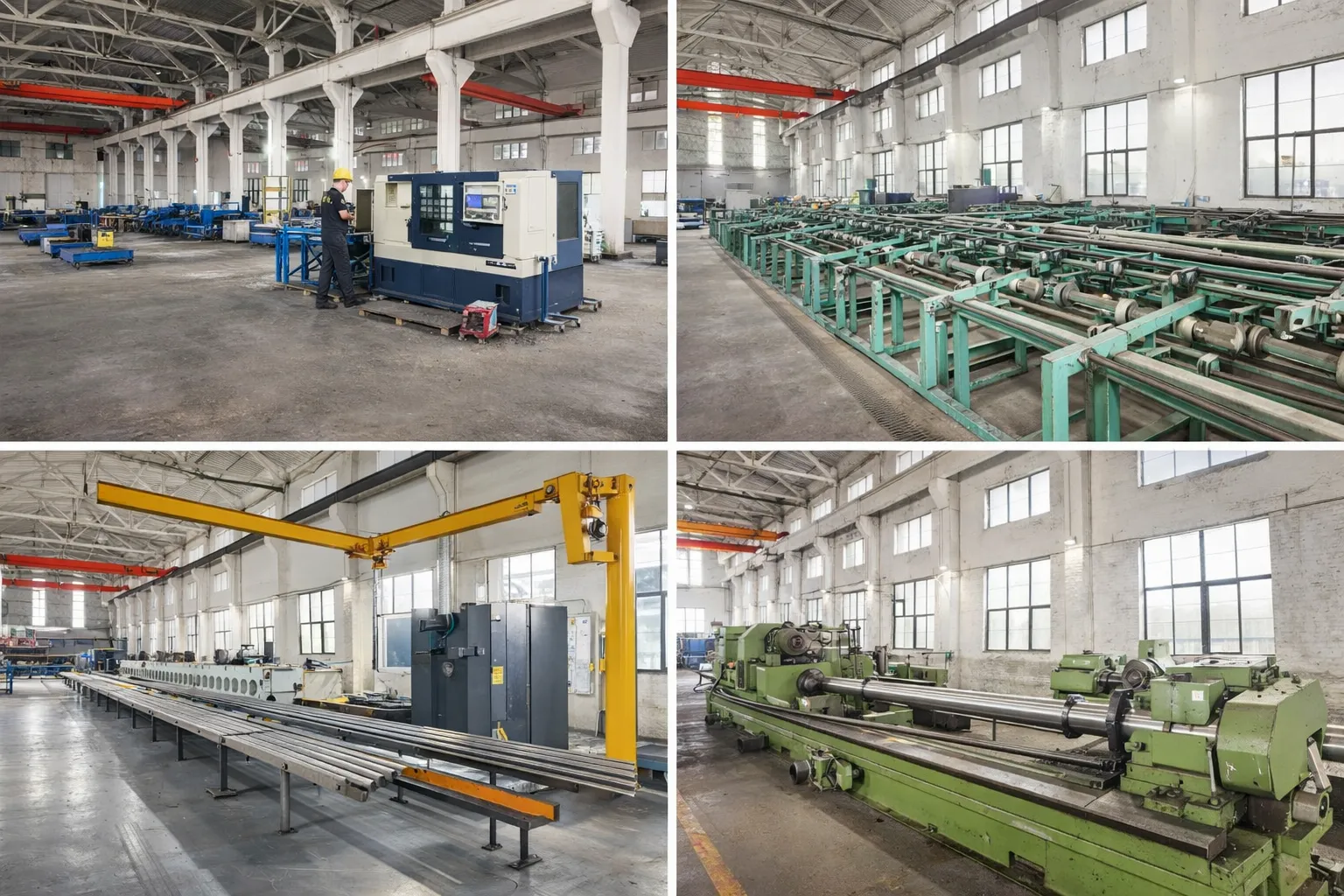
True heavy-duty reliability cannot be achieved by assembling outsourced parts from fragmented supply chains. We operate a fully autonomous manufacturing facility, granting us absolute oversight over every phase of production. The journey of our swing arm cylinder begins with raw material verification via optical emission spectrometry, ensuring the chemical composition of the 42CrMo steel perfectly aligns with our engineering parameters. The cylinder barrels then undergo multi-axis CNC deep-hole boring, followed by precision skiving and roller burnishing. This creates a mirror-like internal surface finish, drastically reducing dynamic seal friction.
In the heavy infrastructure sector, quality control must be absolute. We do not rely on statistical batch testing. Every single unit is subjected to a rigorous 100% computerized hydrostatic pressure test. We elevate the internal fluid pressure to 1.5 times the maximum rated operational load, holding it statically while highly sensitive digital flow meters monitor for microscopic pressure drops. Furthermore, all load-bearing structural welds undergo comprehensive ultrasonic non-destructive testing (NDT) to verify the absence of internal voids. This level of quality assurance allows us to confidently supply hydraulic parts to the most demanding infrastructure projects in South Korea and beyond.
Expansive Cross-Industry Application Matrix
The highly robust engineering blueprint developed to conquer the impact shear of underground tunneling possesses immense cross-industry versatility. The capability to endure chaotic side-loading, severe high-frequency vibration, and aggressive environmental contamination makes our fluid power systems the premier choice for various heavy-duty global sectors.
- Underground Mining Equipment: Aside from roadheaders, our impact-resistant cylinders dominate in roof bolting rigs, continuous miners, and massive articulated haul trucks. Review our dedicated capabilities within the mining industry sector.
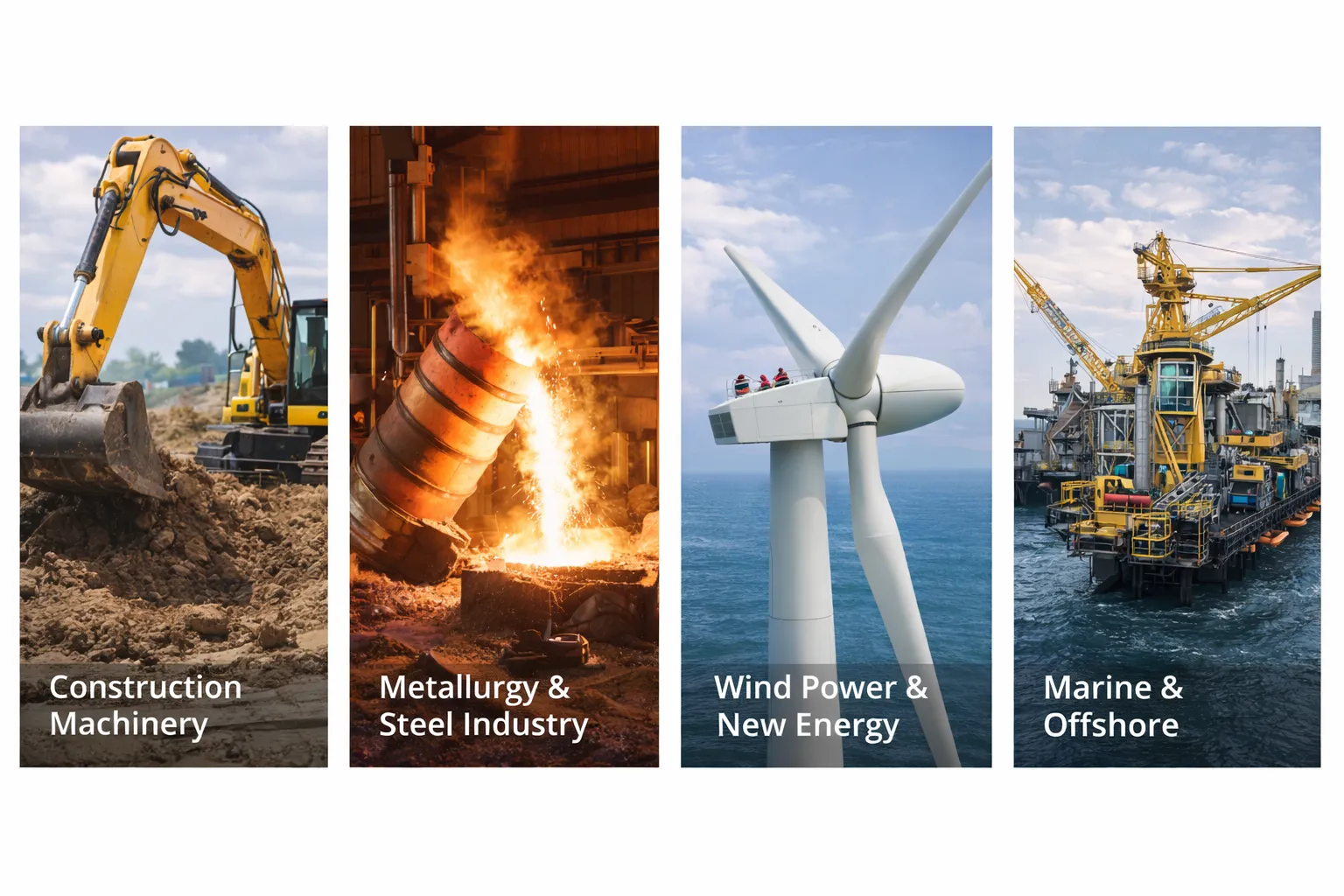
- Heavy Construction Machinery: Delivering absolute structural rigidity for the boom lifting, bucket curling, and stick operations of large-tonnage crawler excavators. Discover more inside our construction machinery industry hub.
- Metallurgical Processing: Built to withstand the extreme radiant heat, heavy metallic dust, and massive compressive forces found near industrial blast furnaces and heavy forging presses.
- Port Logistics & Material Handling: Supplying ruggedized, nickel plated lift cylinder configurations that resist saltwater corrosion for enormous ship-to-shore gantry cranes and reach stackers.
- Plastic & Rubber Machinery: Providing the precise, high-speed linear actuation necessary for massive platen clamping forces in industrial injection molding.
Comparative Technical Analysis: Ordinary vs. High-Performance
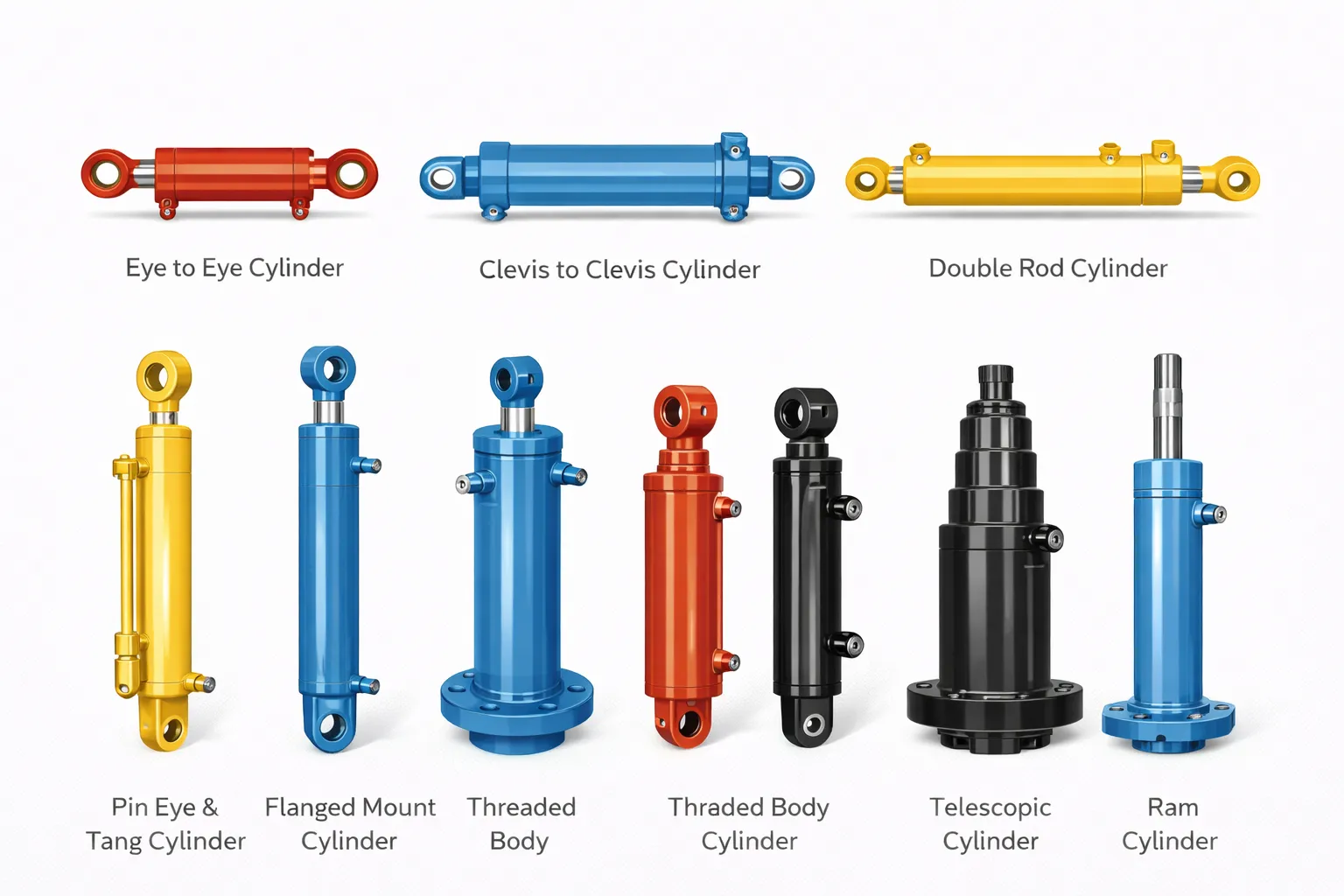
Procuring generic commercial cylinders in an attempt to reduce initial capital expenditure always results in massive financial hemorrhaging through unplanned machinery downtime. The comparative table below sharply illustrates the technical disparities that justify our uncompromising, heavy-duty engineering philosophy.
| Critical Engineering Feature | Standard Commercial Cylinders | Our High-Performance Cylinder |
|---|---|---|
| Material & Yield Rigidity | Standard 45# Carbon Steel (Prone to bending under shear) | Forged 42CrMo Alloy Steel (Maximum resistance to lateral loads) |
| Surface Chemical Defense | Basic Flash Chrome (Rapid rusting in acidic water) | Premium Nickel Plated (Impervious to corrosive mine seepage) |
| Reaction to Impact Shear | Barrel flexes, leading to a permanent fatigue crack | High strength steel cylinder body remains rigid, zero structural cracking |
| Welding Architecture | Manual MIG welding, untested heat-affected zones | Robotic Submerged Arc + 100% Ultrasonic NDT + Stress Relief |
| Lifecycle & ROI | Frequent boom failure requires continuous halting of excavation | Extends uninterrupted operational sweeping life by up to 300% |
Global Field Validation: Proven Operational Case Studies
Rigorous engineering theory is ultimately validated by survival in the dust, water, and shattered rock of live mining operations. Our custom fluid power solutions have secured massive infrastructural partnerships across the Asia-Pacific territory. Here are five detailed accounts demonstrating how our products resolve critical mechanical crises.
Case Study 1: Seoul Metropolitan High-Speed Rail Network Expansion, South Korea
Client Entity: Tier-1 Heavy Civil Infrastructure Consortium.
Application Setting: Continuous horizontal swing adjustment operations cutting through densely compacted subterranean granite layers.
Context & Connection: The chief procurement engineer was urgently seeking a reliable alternative after searching online for a competitive hydraulic cylinder price. Their factory-installed standard cylinders were literally tearing apart at the base trunnions every 400 hours. The massive impact shear from the solid granite was inducing fatal fatigue cracks in the thin carbon steel barrels, completely halting the tunnel advance and causing massive financial penalties.
The Solution & Result: We advised against temporary field welding and deployed a batch of our specialized swing arm cylinder units built with 42CrMo high strength steel cylinder bodies. Installed in early 2024, the machines have since logged over 3,500 continuous operational hours. Ultrasonic inspections confirmed zero micro-fracturing along the mounts or barrel.
“The structural rigidity of these units is genuinely unmatched. We completely eliminated our structural welding repair backlog, keeping the project well ahead of schedule in solid granite.” — Mr. Park M.S., Lead Tunneling Superintendent.
Case Study 2: Kyushu Geothermal Mineral Extraction, Japan
Client Entity: Regional Specialized Mining Contractor.
Application Setting: Operating roadheaders in an extremely wet, highly acidic volcanic rock environment.
Context & Connection: The client was facing massive maintenance costs and environmental hazards. The highly acidic groundwater was chemically stripping the standard chrome plating off their rods within weeks, leading to severe seal destruction and oil leaks. They contacted our engineering desk specifically looking for advanced surface treatments and durable hydraulic rams.
The Solution & Result: We delivered fully optimized units featuring our heavy-duty nickel plated exterior and rod surface. After 14 months of daily exposure to the corrosive mine water, the surface chemistry remained pristine, and internal fluid leakage was reduced to absolute zero.
“The nickel plating has completely halted the corrosion nightmare we were facing. The cylinders look and perform as if they were installed yesterday, and we are no longer leaking fluid into the environment.” — Hiroshi K., Fleet Maintenance Director.
Case Study 3: Busan Port Underground Logistics Tunnel, South Korea
Client Entity: Heavy Machinery Leasing Corporation.
Application Setting: Supplying robust continuous miners for lease to coastal excavation projects dealing with mixed abrasive strata.
Context & Connection: The client needed an extremely robust supply of internal hydraulic cylinder components and full assemblies for fixing hydraulic cylinders across multiple machine types. They required parts that would guarantee their lease clients wouldn’t experience mid-project breakdowns due to internal bypassing.
The Solution & Result: We established a direct supply chain of our double acting hydraulic cylinder units. The ultra-low friction PTFE sealing matrix absorbed the friction heat of continuous swing adjustment perfectly. The leased machines returned from 12-month projects with zero trunnion issues and perfectly sealed rods.
“Best aftermarket hydraulic parts we have ever sourced. Pure heavy-duty quality that absolutely protects our reputation as a reliable equipment provider in South Korea.” — Choi Y., Technical Director.
Case Study 4: Taipei Metro Expansion Project, Taiwan
Client Entity: Municipal Tunneling Specialist.
Application Setting: Heavy-duty tunneling platforms tearing through unpredictable, fractured urban bedrock.
Context & Connection: The client required immediate replacement units. They were experiencing severe rod deflection, where the massive lateral side-loading force was physically bending the piston rods of their lift cylinder and swing systems, destroying the internal wiper seals and letting abrasive rock dust into the hydraulic loop.
The Solution & Result: By utilizing the massive yield strength of our 42CrMo forgings, rod deflection was entirely neutralized. The hydraulic cylinder piston maintained perfectly linear movement, the wiper seals stayed intact, and hydraulic fluid contamination issues vanished overnight.
“The metallurgy makes all the difference. These rods take a brutal beating against the rock face and remain absolutely straight. An incredible piece of precise engineering.” — Lin C., Fleet Supervisor.
Case Study 5: Hydroelectric Diversion Tunnel, Northern Vietnam
Client Entity: State-Owned Hydropower Construction Enterprise.
Application Setting: Boom sweeping in a confined, high-temperature, highly humid underground cavern.
Context & Connection: Sourced us via a B2B search looking for a reputable hydraulic cylinder manufacturer to drastically reduce their long-term operational overhead. They were replacing cheap, standard cylinders every two months due to internal seal melting caused by massive friction heat generated during continuous sweeping.
The Solution & Result: We integrated our advanced fluid porting geometries and low-friction sealing matrix. The swing arm hydraulic cylinder ran vastly cooler, maintaining complete hydraulic tension and precise swing control throughout relentless three-shift operational cycles without degrading the elastomers.
“We finally have a hydraulic system that does not overheat under continuous load. The precision control over the cutter head has significantly improved our tunneling accuracy and saved our maintenance budget.” — Nguyen V., Operations Manager.
Frequently Asked Technical Questions
We deeply understand that sourcing critical heavy industrial fluid power components requires uncompromising technical due diligence. Below, we address the most prevalent inquiries from procurement directors and lead mechanical engineers regarding our subsurface solutions.
1. What exactly causes a fatigue crack to develop on standard tunneling cylinders?
2. Why do you specify nickel plated surfaces over standard hard chrome for underground use?
3. Can this double acting hydraulic cylinder directly interface with our existing machine fleet?
4. How does the internal sealing matrix handle the massive friction heat of continuous swing adjustment?
5. What is the standard production and ocean freight lead time to South Korea and Japan?
6. When fixing hydraulic cylinders on site, do you supply the necessary OEM-grade replacement parts?
7. How does investing in this heavily reinforced unit optimize our long-term operational budget?
Ready to Eradicate Structural Fatigue Failures?
Do not allow substandard, generic fluid power components to dictate your excavation velocity or compromise the safety of your deep-shaft operations. Partner with a globally proven engineering manufacturer and equip your heavy tunneling machinery with the most rigid, impact-resistant swing arm cylinder available on the heavy industrial market.
Transmit your exact OEM machinery part numbers, maximum hydrostatic system pressure ratings, and baseline physical dimensions for a comprehensive engineering evaluation and a rapid, factory-direct technical quotation.
Editor: Cxm


























