Tracking Hydraulic Cylinder for Belt Conveyor
Engineered specifically for heavy-duty mining environments to actively correct belt misalignment under severe dust and eccentric load conditions.
Product Overview & Industrial Value
In the continuous bulk material handling sector, belt misalignment is recognized as a primary cause of operational inefficiency. When transporting massive volumes of materials such as iron ore, coal, or crushed stone, a wandering conveyor belt quickly results in material spillage, accelerated edge damage, and immense structural strain on the conveyor framework. To directly counter this mechanical issue, an advanced tracking hydraulic cylinder serves as the primary actuation mechanism within the automated deviation correction system. By applying immediate, calculated force to the steering idlers, this specialized unit keeps the belt centered, ensuring that industrial operations remain continuous and safe.
As a dedicated hydraulic cylinder manufacturer, we understand that standard commercial fluid power components are simply not built to survive the localized stresses found in mining environments. Our engineering approach centers entirely around overcoming the two most destructive elements in this application: persistent eccentric loads and highly abrasive particulate matter. Our tracking cylinder design is uniquely positioned in the industrial market because it features a deeply integrated extended guide sleeve architecture and a fortified sealing matrix. This specific configuration neutralizes the lateral forces that cause conventional actuators to fail prematurely.
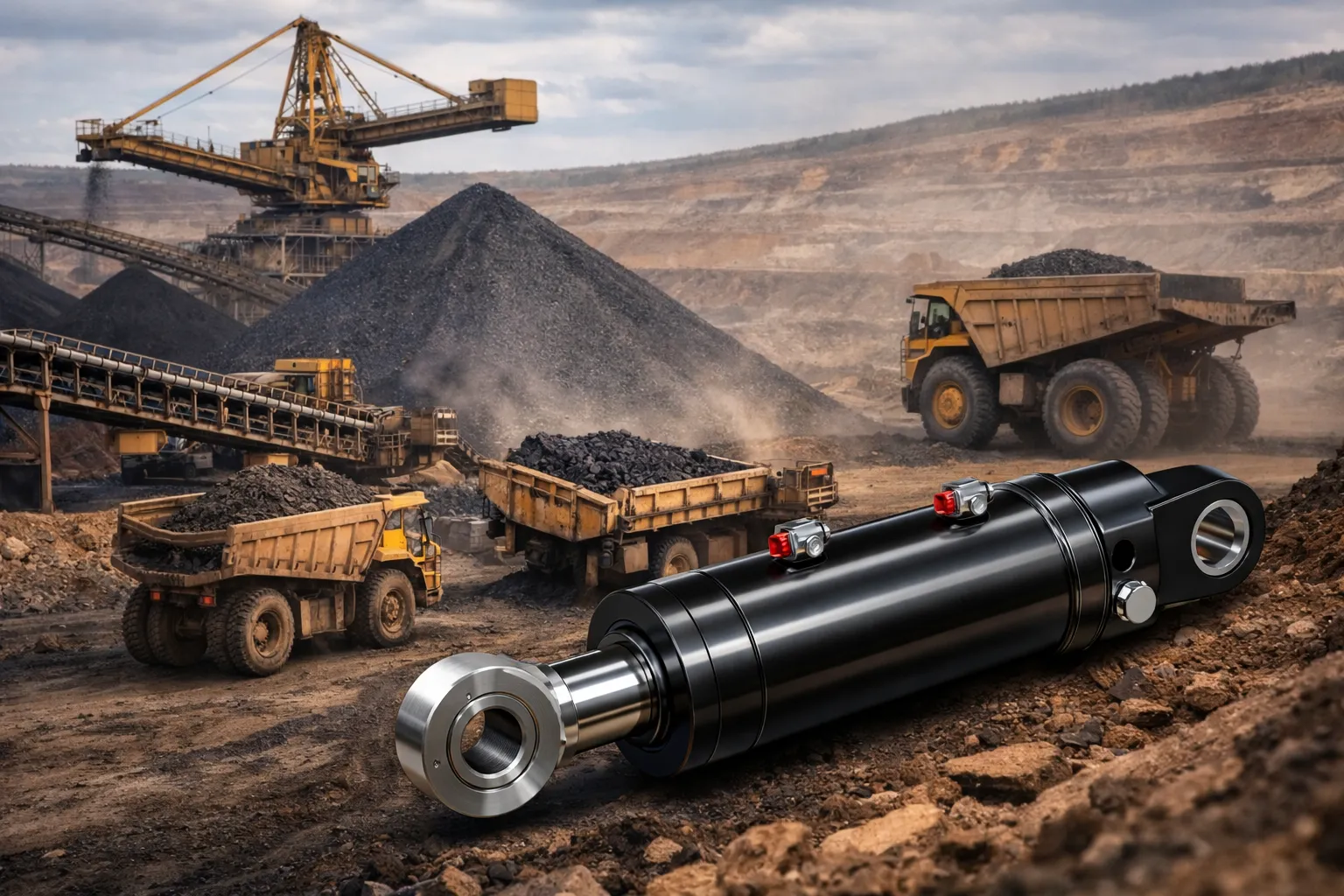
Evaluating the true hydraulic cylinder price goes far beyond the initial procurement cost. When you factor in the financial impact of a torn conveyor belt or an unscheduled plant shutdown, investing in a heavy-duty, application-specific deviation correction hydraulic cylinder becomes a clear economic advantage. Our products drastically lower your total cost of ownership by extending maintenance intervals and maximizing overall equipment uptime.
Core Technical Parameters & Specifications
Accurate specification is the foundation of mechanical reliability. The table below outlines the exact engineering parameters, manufacturing structures, and material selections that define our specialized tracking actuators. These specifications are engineered to meet the aggressive demands of continuous bulk handling.
| Technical Attribute | Engineering Specification & Configuration |
|---|---|
| Industry Application | Mining Equipment |
| Equipment Category | Belt Conveyor Systems |
| Subsystem & Action | Deviation Correction System / Tracking Action |
| Product Designation | Tracking Hydraulic Cylinder (Deviation Correction Cylinder) |
| Action Method | Double acting hydraulic cylinder |
| Structure Type | Piston type actuator |
| Manufacturing Structure | Heavy-duty welded construction |
| Core Material System | 27SiMn High-Strength Alloy Steel |
| Surface Treatment | Hard Chrome Plated (Anti-corrosion, anti-scoring) |
| Environmental Grade | Severe Condition: Eccentric Load + Abrasive Dust Integration |
| Typical Failure Mode Handled | Premature rod wear and internal seal extrusion |
| Recommended Configuration Key | Extended guide sleeve integration |
| Mounting Connections | Clevis, Trunnion, Flange, Spherical Bearing (Customizable) |
Functional Dynamics: The Working Principle
Understanding the specific mechanical operation of the tracking system reveals why standard actuators fail so frequently. The correction process begins when proximity sensors or mechanical limit switches detect that the heavy rubber belt has drifted off its designated centerline. These sensors instantly transmit an electronic signal to the system’s proportional directional control valve, which dictates the flow of pressurized hydraulic fluid.
Because tracking requires forceful, precise adjustments in two directions, a double acting hydraulic cylinder is mandatory. Unlike a basic single acting hydraulic cylinder which relies on gravity or an internal spring to return to its resting state, the double-acting design accepts pressurized fluid into both the cap end and the rod end. When fluid enters the base, it pushes against the hydraulic cylinder piston, forcefully extending the rod. When fluid is directed to the rod end, the cylinder retracts with equal control. This push-and-pull capability is directly linked to the pivoting idler bracket beneath the belt.
As the tracking hydraulic cylinder alters the angle of the idler rollers, the rotational friction between the rollers and the moving belt changes. This angled friction forcefully steers the massive belt back toward the center axis. However, as the cylinder pushes the heavy idler frame against the resistance of the tensioned belt, the reaction force pushes back at an angle. This generates a severe transverse load, commonly known as an eccentric load, which attempts to bend the cylinder rod. Our specialized internal geometry is entirely dedicated to absorbing this specific mechanical stress, ensuring fluid movement without component degradation.
Seamless OEM Replacement & Equipment Compatibility
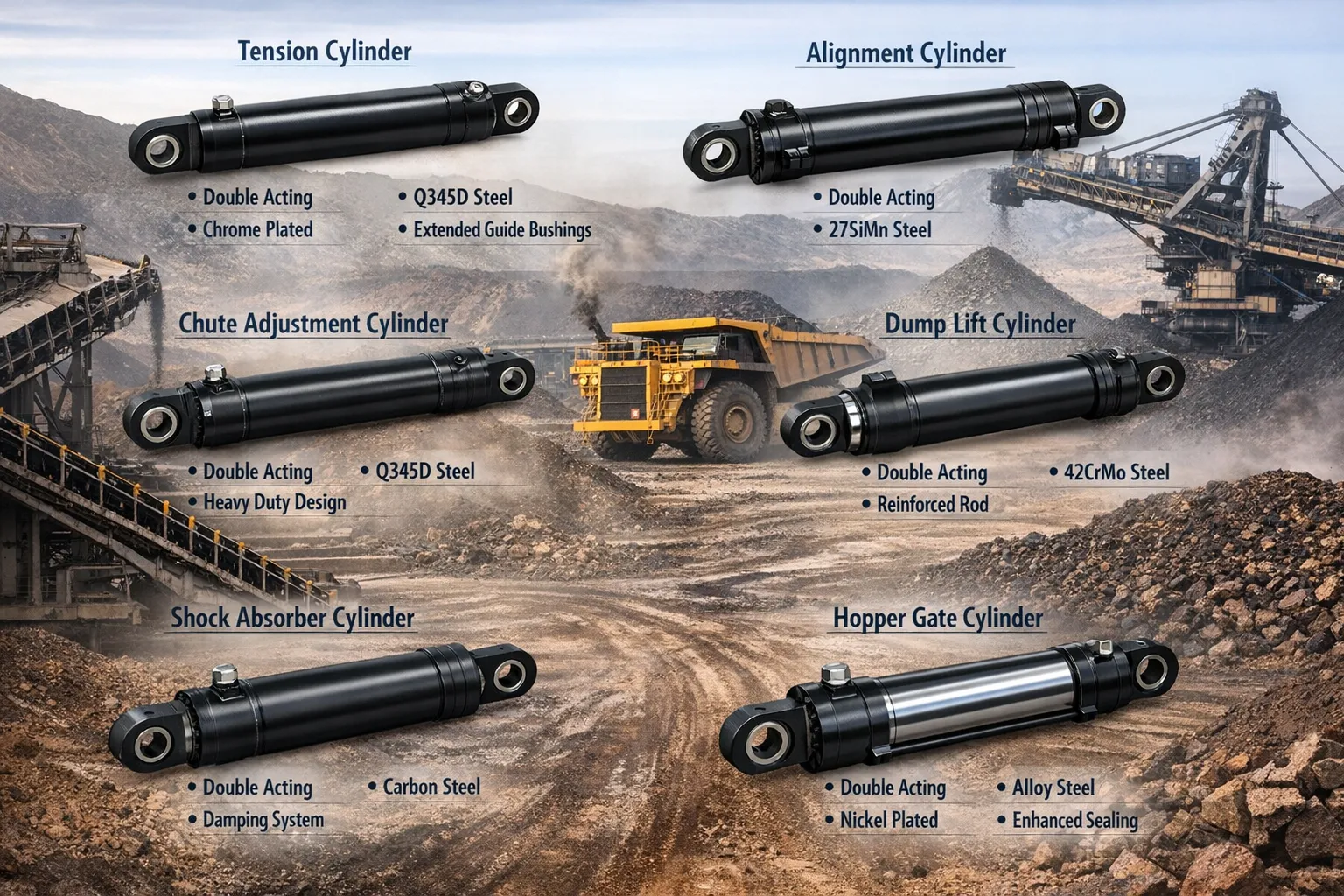
For plant managers and maintenance engineers, finding exact replacements for failing hydraulic cylinder components is a high-priority task. Modifying existing conveyor frames to accept different mounting brackets is a slow and costly process. We engineer our specialized tracking actuators to serve as precise, drop-in replacements for steering mechanisms used on major global material handling equipment.
We regularly supply heavily fortified replacements that dimensionally match original equipment from globally recognized brands such as Metso Outotec, Sandvik, FLSmidth, Continental Conveyor, and ThyssenKrupp. Please note: We list these brand names strictly to help our industrial clients verify dimensional compatibility and simplify the selection process. We are an independent hydraulic cylinder manufacturer and do not hold affiliations with, nor do we claim ownership of, these respective trademarks. By upgrading your existing hydraulic rams to our specialized units, you immediately benefit from our extended internal guides and upgraded dust seals without requiring any structural alterations to your machinery.
Five Pillars of Core Technical Advantage
Surviving the brutal operating conditions of a mining site requires more than just basic machining. We have isolated the most common failure modes associated with belt tracking and engineered five distinct technical solutions into every unit we produce.
1. Extended Guide Sleeve Technology
The defining characteristic of a deviation correction action is the immense side-loading applied to the rod. Standard commercial cylinders utilize short guide rings. Under an eccentric load, these short guides act as a fulcrum, causing the rod to tilt, crushing the internal seals, and grinding metal against metal. We mitigate this entirely by incorporating an elongated, heavy-duty bronze guide sleeve. This extended bearing surface distributes the lateral force over a significantly wider area, maintaining absolute concentricity for the hydraulic cylinder piston and practically eliminating rod wear.
2. High-Strength 27SiMn Welded Construction
To cut the hydraulic cylinder price, many generic manufacturers use basic 45# carbon steel. We exclusively forge our barrels and rods from 27SiMn (Silicon-Manganese) alloy steel. The addition of these elements drastically increases the yield strength and fatigue limit of the steel. Combined with our heavy-wall welded construction, this ensures the cylinder body will not deform or balloon under severe hydraulic pressure spikes generated by sudden load impacts on the conveyor belt.
3. Aggressive Multi-Lip Dust Sealing
Conveyor galleries are continuously filled with abrasive particulate matter—from coal dust to highly abrasive silica. If these particles bypass the primary wiper, they contaminate the hydraulic fluid and destroy internal hydraulic parts. We implement a tandem sealing architecture featuring a rigid metallic outer scraper paired with a heavy-duty polyurethane inner lip. This aggressively clears dried mud and abrasive dust off the retracting rod, ensuring the internal hydraulic circuit remains pristine.
4. Micro-Cracked Hard Chrome Plating
The exterior piston rod is highly susceptible to atmospheric moisture, acidic mine water, and mechanical scoring. We utilize a highly controlled, multi-stage grinding and micro-cracked hard chrome plating process. This creates an incredibly dense surface layer that resists chemical corrosion and physical impacts, while the microscopic cracks safely retain a minimal film of hydraulic oil to lubricate the primary seals during rapid tracking cycles.
5. Ultra-Low Friction Dynamic Seals
Precise tracking requires immediate, micro-millimeter adjustments. Standard elastomer seals often suffer from stick-slip (stiction), which causes the cylinder to jerk violently, forcing the belt to overcorrect and snake back and forth. By utilizing advanced PTFE blended step-seals, we dramatically lower the friction coefficient within the barrel. This ensures smooth, highly responsive linear actuation the moment the proportional valve shifts the fluid flow.
Advanced Manufacturing & Quality Assurance
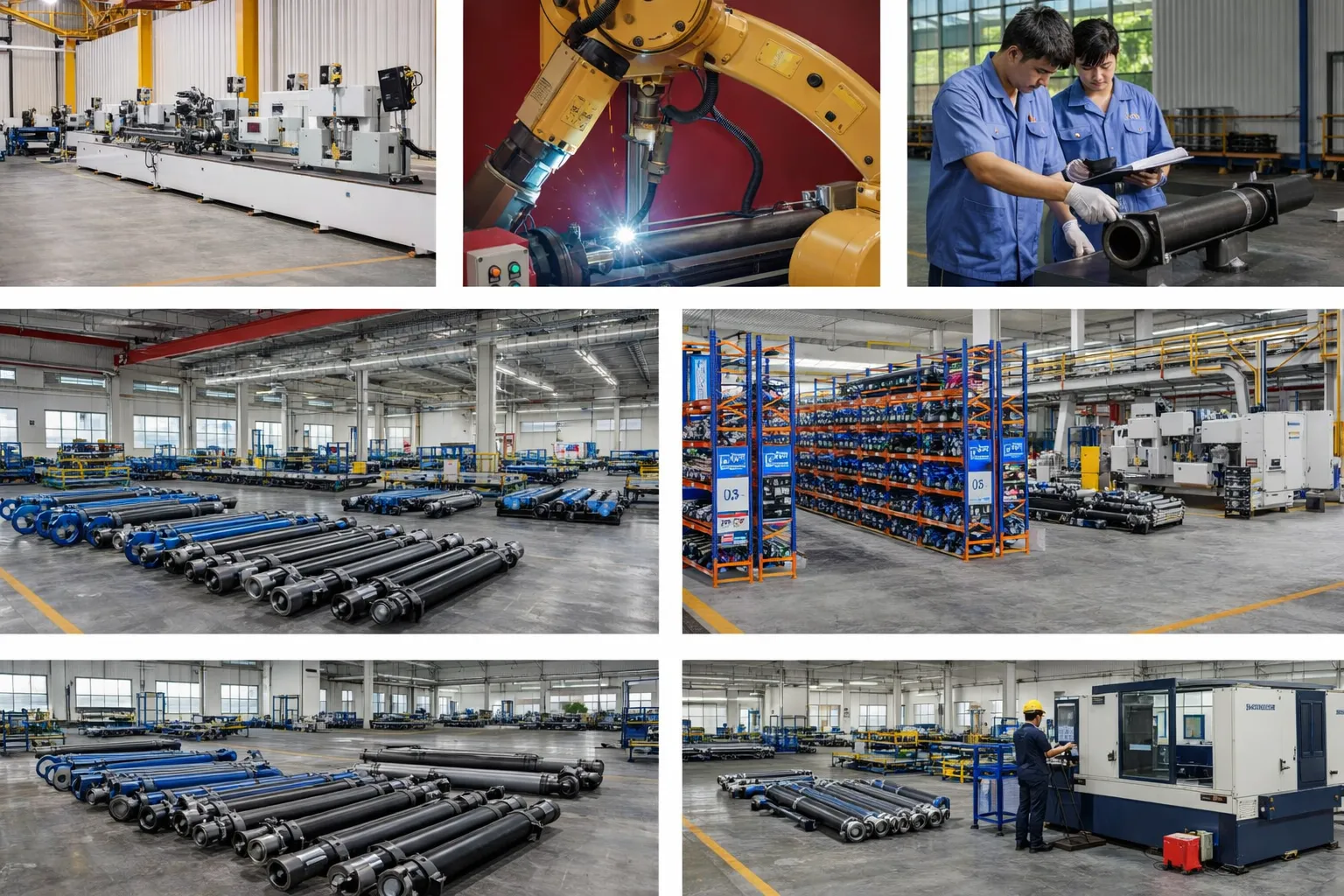
Consistency in heavy-duty performance relies entirely on strict manufacturing discipline. As a globally trusted hydraulic cylinder manufacturer, we manage the entire production lifecycle in-house. We do not rely on outsourced structural fabrication. Raw 27SiMn steel tubes undergo rigorous ultrasonic flaw detection to verify material integrity before any machining begins. Our facility utilizes advanced CNC skiving and roller burnishing machines to achieve a mirror-like finish on the internal barrel walls, optimizing the environment for our low-friction seals.
Welding operations on the base ends and trunnion mounts are executed by robotic submerged arc welding stations. This eliminates the inconsistencies of manual welding, guaranteeing deep, uniform penetration capable of withstanding massive vibrational stress. Precision is the baseline for all our hydraulic parts.
Quality control culminates in our automated testing bays. Every single tracking cylinder is subjected to a 100% hydrostatic pressure test. We pressurize the units to 150% of their rated operational limits, carefully monitoring for internal bypass leakage, external weeping, and stroke linearity. Following successful testing, each cylinder is permanently engraved with a serialized identification number. This comprehensive traceability ensures that if you ever need specific guidance for fixing hydraulic cylinders or require exact replacement seal kits years in the future, we can pull the original manufacturing blueprint instantly.
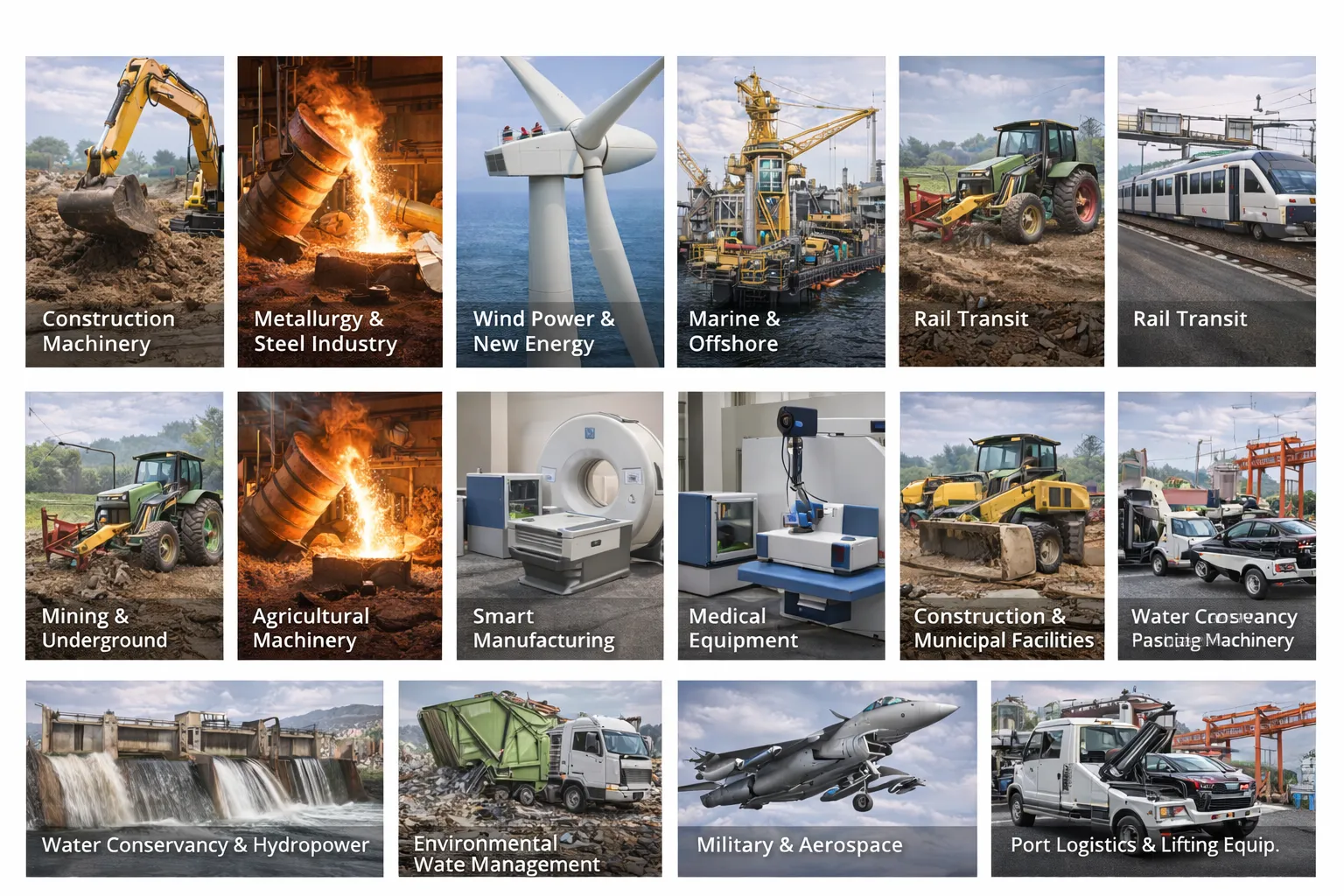
Expansive Industry Applications
While engineered explicitly to survive the side-loading forces of belt correction, the sheer mechanical resilience of these actuators makes them highly sought after across a broad spectrum of heavy industrial applications. Any sector that moves heavy, unbalanced loads continuously benefits from this design.
- Mining Industry Operations: Extensively utilized on long-distance overland conveyors, mobile stackers, and heavy bucket-wheel reclaimers where heavy dust and erratic loading are standard conditions.
- Construction Machinery Industry: Integrated into mobile aggregate crushers, screening plants, and heavy earth-moving conveyors that require absolute stability on uneven ground.
- Metallurgical and Steel Mills: Operating reliably near high-temperature zones to transport raw iron ore, sintered materials, and abrasive slag away from blast furnaces.
- Port and Terminal Logistics: Moving massive volumes of grain, coal, and bulk fertilizers onto ships. We provide specialized marine-grade coatings to prevent saltwater corrosion on these specific steering systems.
- Custom and Specialized Machinery: Due to their extreme structural rigidity, these units are frequently adapted to function as heavy-duty lift cylinder modules for diverter gates, heavy steel flaps, and loading chutes in custom plant designs.
Comparative Analysis: Standard Actuators vs. High-Performance
Procurement decisions should always be based on the total lifecycle value. The following comparative data highlights exactly why installing a standard industrial cylinder in a tracking application leads to rapid failure, whereas our engineered solution provides long-term reliability.
| Evaluation Metric | Standard Off-the-Shelf Cylinder | Our Tracking Hydraulic Cylinder |
|---|---|---|
| Guide Sleeve Geometry | Standard length; point-loads under eccentric stress. | Extended length; widely distributes side-loading forces. |
| Structural Metallurgy | Basic #45 Carbon Steel (lower yield limit). | 27SiMn High-Strength Alloy (superior fatigue resistance). |
| Particulate Defense | Single polyurethane dust wiper. | Tandem heavy-duty scrapers + thick hard chrome rod. |
| Maintenance Burden | Requires frequent hydraulic cylinder repair. | Extended Mean Time Between Failures (MTBF). |
| Long-term ROI | Low initial price, incredibly high downtime costs. | Excellent value, virtually eliminates tracking-related stoppages. |
Proven in the Field: Global Case Studies
Engineering theories are proven in the dust, vibration, and continuous strain of actual industrial environments. Below are five detailed accounts of how operators across East Asia have optimized their conveying systems by upgrading to our specialized tracking solutions.
Case 1: Heavy Iron Ore Terminal, South Korea
Client Profile: A major coastal steel manufacturing plant in Gwangyang handling imported raw materials.
The Application Challenge: High-speed iron ore feed conveyors were experiencing severe belt drift due to the massive weight of the ore and coastal crosswinds. Standard steering cylinders failed every few months as the rods bent under the heavy eccentric loads.
How They Found Us: The lead maintenance engineer searched online for a specialized hydraulic cylinder manufacturer and accessed our technical whitepapers on load distribution.
The Results: We delivered a batch of custom deviation correction hydraulic cylinders featuring our extended bronze guide sleeves. Installed in October 2024, the plant has reported zero tracking failures. Belt replacement intervals have extended from 8 months to over 18 months.
“The eccentric load handling of these units is unmatched. We used to spend days on tedious fixing hydraulic cylinders routines. It has been over a year now without a single seal leak. A brilliant engineering upgrade.” — Mr. Lee, Lead Maintenance Engineer.
Case 2: Coastal Coal Power Plant, Japan
Client Profile: A large-scale thermal power generation facility located in Hokkaido.
The Application Challenge: Freezing winter conditions combined with highly abrasive, wet coal sludge caused severe rod scoring. Standard seals cracked in the sub-zero temperatures, leading to catastrophic loss of hydraulic fluid.
How They Found Us: Recommended by an international heavy machinery consulting firm familiar with our cold-weather material specifications.
The Results: We implemented our 27SiMn welded cylinders with specialized cold-weather composite seals and heavy-duty metallic outer scrapers. Deployed in late 2024, the robust wipers perfectly rejected the freezing coal sludge, maintaining pristine internal pressure.
“We needed a reliable partner who truly understood extreme cold and aggressive dust. These actuators survived the brutal Hokkaido winter without a single drop in performance.” — T. Takahashi, Plant Manager.
Case 3: Limestone Quarry and Cement Plant, Taiwan
Client Profile: A high-capacity cement manufacturing enterprise in Hualien County.
The Application Challenge: The primary crusher discharge conveyor suffered from persistent lateral drift. The microscopic, highly abrasive limestone dust was bypassing standard wiper seals, destroying the internal hydraulic cylinder piston seals in under four months.
How They Found Us: Reached out to us directly through the inquiry form on our homepage after reading our case studies.
The Results: We retrofitted the tracking stations with our high-performance cylinders. The ultra-low friction sealing matrix completely locked out the limestone dust, extending the operational life by 400% compared to previous commercial units.
“The quality of the hard chrome plating and the seal design is visually evident. We have slashed our maintenance budget for the conveyor lines significantly this year.” — Chen W., Operations Director.
Case 4: Bauxite Mining Operation, Vietnam
Client Profile: An open-pit bauxite extraction and processing facility in the central highlands.
The Application Challenge: Extreme humidity and sticky bauxite mud caked onto the steering cylinders. When retracting, this mud caused massive friction spikes, leading to stick-slip action that made the conveyor belt overcorrect and snake dangerously.
How They Found Us: Met our regional sales engineering team at an industrial logistics expo in early 2025.
The Results: Delivered double acting hydraulic cylinder units featuring our advanced PTFE step-seals to eliminate stiction. The aggressive scrapers physically sheared the dried mud off the rods, ensuring perfectly smooth proportional tracking.
“The jerky movements are completely gone. The actuation is beautifully smooth, and we no longer struggle with mud ingestion on the main overland conveyor line.” — Nguyen T., Reliability Head.
Case 5: Copper Concentrate Logistics, Philippines
Client Profile: A large-scale copper concentrator facility loading raw materials onto massive transport ships.
The Application Challenge: The massive scale of the loading boom placed immense structural strain on tracking idlers, snapping the clevis mounts of inferior, standard-duty setups during heavy material surges.
How They Found Us: A B2B digital procurement search analyzing the best overall hydraulic cylinder price to performance ratio for custom port equipment.
The Results: Transitioned the entire boom alignment frame to our heavy-duty, welded 27SiMn structures. We heavily reinforced the trunnion mounts, successfully absorbing the lateral shock loads. No structural breakages have occurred since deployment.
“The structural rigidity is outstanding. These robust hydraulic parts form the reliable backbone of our port material handling system. Flawless performance.” — Reyes D., Chief Port Engineer.
FAQ: Technical & Commercial Insights
Making informed procurement decisions is critical for maintenance and engineering managers. Here are detailed answers to the most common technical questions we receive from our global B2B partners regarding conveyor correction systems.
1. How exactly does the extended guide sleeve prevent rod wear?
2. Can your tracking cylinder directly replace our existing OEM parts?
3. Why is a double acting hydraulic cylinder preferred over single acting for deviation correction?
4. Do you provide comprehensive hydraulic cylinder repair services?
5. What is the typical lead time for international orders to South Korea and surrounding areas?
6. How does your factory ensure the quality of the 27SiMn steel?
7. Are customized stroke lengths and bore sizes available for unique conveyor setups?
8. What kind of fluids are compatible with your internal sealing matrix?
Optimize Your Conveyor Reliability Today
Do not let unpredictable belt drift and premature component failure dictate your production schedule. Upgrade to our purpose-built tracking cylinders and experience the engineering difference that eliminates downtime and slashes your long-term maintenance costs. Connect with our technical engineering team to discuss your specific operational parameters.
Editor: Cxm