Blade Lift Hydraulic Cylinder for Heavy Bulldozers
Engineered with an extra-thick Q345D low-alloy steel architecture to permanently eliminate cylinder tube cracks during severe impact and heavy earthmoving operations.
Product Overview: The Absolute Core of Earthmoving Machinery
In the relentless environments of heavy infrastructure development and aggregate mining, the crawler bulldozer operates as the primary machine for massive earthmoving. The absolute functional capability of this massive equipment channels directly through its fluid power system. Specifically, the mechanical workload is concentrated entirely on the blade lift hydraulic cylinder. This critical linear actuator bears the immense dynamic forces required to lift the heavy steel implement, hold grading elevations with pinpoint accuracy, and apply the aggressive downforce needed for deep earth penetration.
Through years of analyzing equipment failures across active job sites in South Korea, Japan, and the broader Asian market, we identified a catastrophic recurring vulnerability. Standard aftermarket hydraulic parts consistently fail under severe operational conditions. The operating environment for these machines is defined by relentless impact and dust. When the dozer engages in heavy pushing and strikes unyielding subterranean bedrock or compacted frost, the kinetic energy transfers instantly through the trunnion linkages and into the linear actuator body as a massive pressure spike.
The most destructive and financially draining failure mode in this scenario is the cylinder tube crack. Thin-walled barrels found in generic replacement components stretch, deform, and violently split under these instantaneous shock loads. This results in explosive fluid loss, environmental contamination, and total machine disablement. As an expert hydraulic cylinder manufacturer, we engineered a permanent, heavy-duty solution to this exact problem.
Our specialized blade lift cylinder utilizes a proprietary, heavily reinforced thick-walled cylinder tube machined from premium Q345D low-alloy structural steel. This critical metallurgical upgrade provides the massive hoop strength necessary to absorb violent shock loads without yielding. For fleet operators managing multiple machines, integrating our engineered solutions translates to significantly reduced equipment downtime, optimized project timelines, and a drastic reduction in the repetitive labor costs associated with continuously fixing hydraulic cylinders in the muddy trenches of active job sites.
Comprehensive Technical Parameters
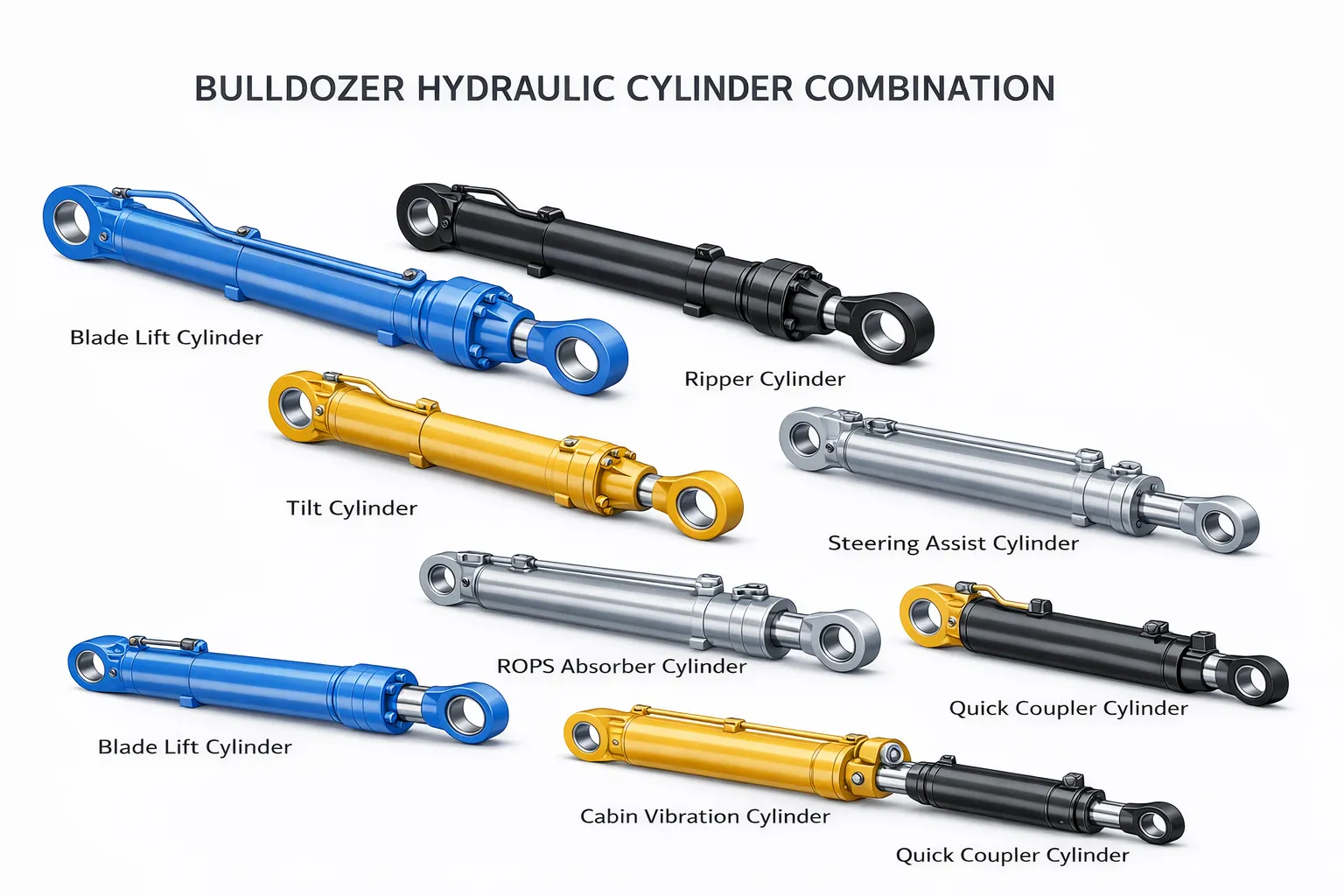
Precision fitment, operational safety, and long-term mechanical reliability require strict adherence to engineering specifications. Below is the detailed technical framework of our lifting mechanism, specifically configured to endure the punishing realities of civil engineering and aggregate mining operations where standard components surrender.
| Engineering Parameter | Specification Details & Tolerances |
|---|---|
| Target Industry | Construction Machinery |
| Equipment Category | Bulldozer (Crawler Tractor) |
| Subsystem / Action | Blade Lift / Active Downforce |
| Hydraulic Component Name | Blade lift cylinder |
| Action Modality | Double acting hydraulic cylinder |
| Structure Type | Piston type |
| Manufacturing Structure | Welded Assembly (Deep-Penetration Robotic) |
| Material System | Q345D Low-Alloy Structural Steel |
| Surface Treatment | Chrome plated (Micro-cracked, Induction Hardened) |
| Environment Level | Impact and dust (High Abrasive Exposure) |
| Work Condition Feature | Heavy pushing and deep ripping |
| Targeted Failure Mode Defeated | Cylinder tube crack |
| Recommended Configuration | Thick-walled cylinder tube with tandem wiping |
The Working Principle of the Lift Mechanism
To truly understand the necessity of our severe-duty structural upgrades, one must examine the extreme fluid dynamics happening inside the unit during operation. The equipment functions entirely as a double acting hydraulic cylinder. Unlike a single acting hydraulic cylinder that relies on gravity or mechanical springs to retract its load, a bulldozer requires highly pressurized hydraulic fluid to generate massive mechanical force during both the extension stroke and the retraction stroke. The machine cannot passively drop its blade; it requires powered downforce to effectively cut into hard earth.
When the operator initiates a lifting command from the cabin, the machine’s primary hydraulic pump routes high-pressure fluid through the directional control valves into the blind end (cap end) of the heavy-duty barrel. The fluid acts uniformly across the broad surface area of the internal hydraulic cylinder piston, generating staggering linear thrust that extends the rod and elevates the heavy steel blade. The precision geometry of the internal piston seals ensures the fluid pressure is converted directly into smooth, controllable lifting force, without internal bypassing.
Conversely, when deep soil penetration is required, the control valves instantly redirect the pressurized fluid into the rod end of the chamber. While the effective surface area is slightly reduced due to the physical displacement of the solid steel rod itself, modern machinery hydraulic systems run at extreme pressures, meaning the resulting downward pressing force remains immense. During these intense downward pushing cycles, if the cutting edge hooks under a solid concrete foundation or bedrock, a rapid shockwave travels back up through the piston rod and into the trapped fluid column. Standard aftermarket hydraulic rams stretch and burst under this rapid intensification. Our engineered thick-walled cylinder tube safely absorbs and contains these massive pressure shockwaves, ensuring your machinery continues to operate safely without explosive fluid blowouts or immediate catastrophic yielding.
Seamless Brand Replacement and Fleet Compatibility
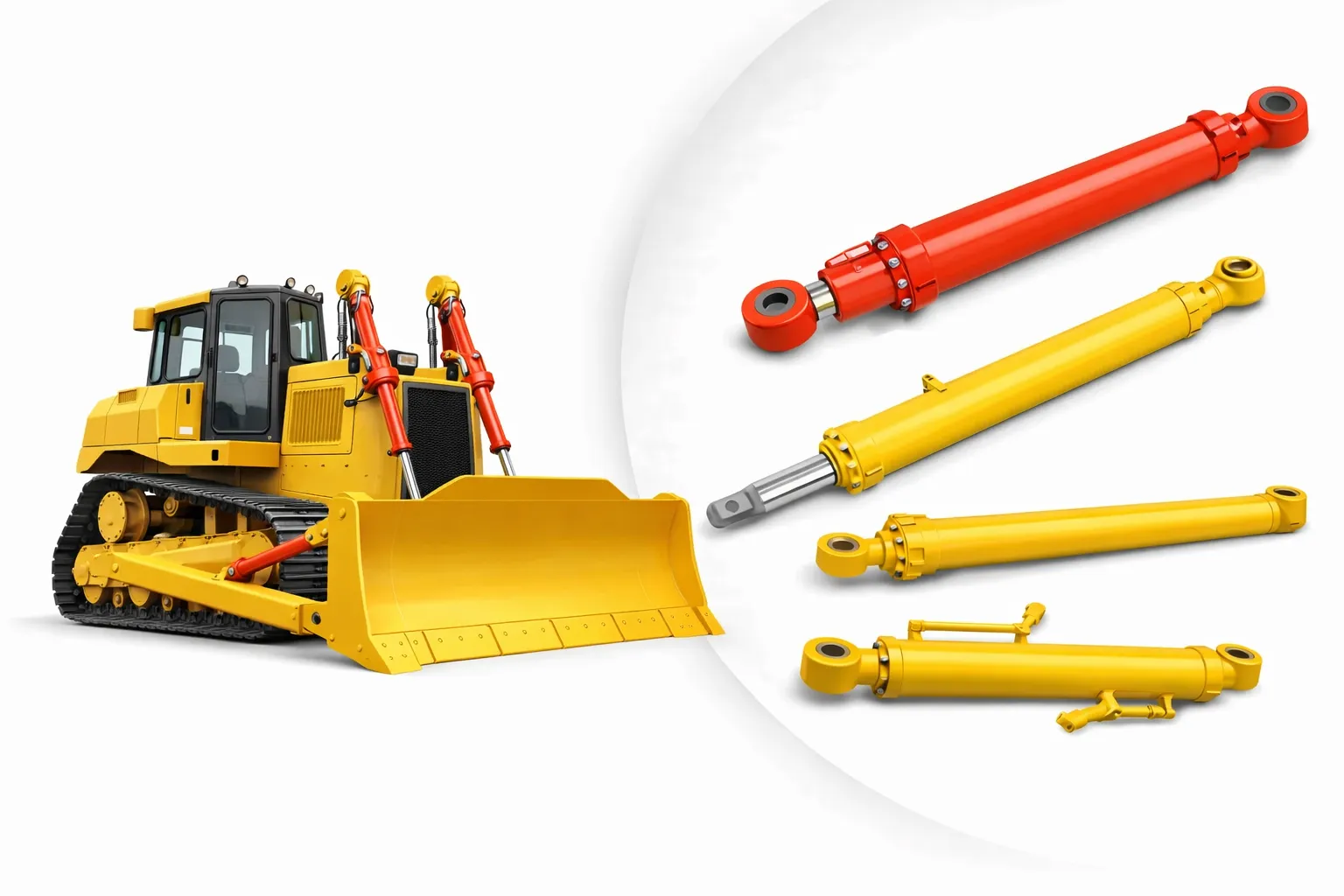
Large civil engineering firms, mining consortiums, and heavy equipment rental companies rely heavily on fleet standardization to keep maintenance schedules predictable. Sourcing original equipment manufacturer (OEM) components directly from local dealerships often involves unacceptable lead times, complex supply chain bottlenecks, and exorbitant pricing markups that quickly drain maintenance budgets. We manufacture our heavy-duty hydraulic components with absolute dimensional precision to solve this logistical bottleneck entirely.
Our components are constructed with exact pin-to-pin retracted and extended lengths, identical heavy-duty trunnion mounting brackets, and perfectly matching fluid port threads to serve as flawless drop-in replacements for the global industry’s leading machinery brands. Our lift cylinder assemblies flawlessly replace factory units on heavy crawler dozers originally manufactured by Caterpillar (CAT), Komatsu, HD Hyundai, Doosan, Volvo, John Deere, and Shantui.
(Important Technical Note: The mention of these specific brand names and original equipment manufacturers is strictly for technical sizing, structural fitment, and selection convenience for our B2B clients. We operate as a completely independent, premium aftermarket manufacturing facility and claim no direct legal affiliation, sponsorship, or trademark endorsement from these entities.)
Five Core Technical Advantages of Our Architecture
What truly differentiates a premium industrial actuator from a generic, mass-produced aftermarket commodity part? It is the uncompromising culmination of advanced metallurgy, specialized chemical surface treatments, and microscopic precision assembly. We build products specifically to survive the harshest operational environments on earth. Here are the five definitive advantages embedded in our design:
1. Extra-Thick Q345D Low-Alloy Barrel Architecture
While budget suppliers utilize standard, thin-walled carbon steel tubing to reduce shipping weight and raw material costs, we exclusively utilize Q345D low-alloy, high-tensile structural steel. By mathematically calculating the required hoop strength and implementing a customized thick-wall geometry, we permanently eliminate the risk of a cylinder tube crack. Furthermore, Q345D retains its exceptional impact toughness in freezing sub-zero temperatures, preventing the dangerous metallurgical brittleness that plagues standard carbon steel during winter operations.
2. Advanced Anti-Contamination Composite Sealing Matrix
An active earthmoving site is categorized by relentless impact and dust. Standard single-lip Nitrile (NBR) rubber seals are quickly chewed apart by abrasive silica dust adhering to the rod. We implement a sophisticated tandem polyurethane wiper system combined with ultra-low friction PTFE (Teflon) step seals. This matrix aggressively scrapes mud and rock dust off the rod before it can enter the gland, drastically extending the operational lifespan of the entire hydraulic circuit and preventing early seal degradation.
3. Induction Hardened & Micro-Cracked Chrome Plating
The exposed piston rod is the most vulnerable component, constantly subjected to physical strikes from falling boulders and abrasive aggregate. We deeply induction-harden the solid steel core of the rod to resist bending and denting. We then apply a heavy layer of micro-cracked hard chrome plated exterior. These engineered microscopic fissures act as tiny retention reservoirs for hydraulic fluid, providing constant self-lubrication to the rod seals while presenting an impenetrable barrier against rust and physical scoring.
4. Deep-Penetration Robotic Submerged Arc Welding
Manual human welding processes often result in inconsistent heat penetration, leaving microscopic internal voids that inevitably lead to joint fatigue and catastrophic failure. We employ multi-axis automated robotic submerged arc welding to fuse the heavy end caps, fluid ports, and massive mounting trunnions to the main barrel. This high-heat process guarantees 100% consistent, deep-root penetration, creating a monolithic structure capable of absorbing immense lateral shear forces without fracturing at the weld seam.
5. Thermal Stability and Dynamic Friction Optimization
Running a heavy crawler dozer for 14 hours continuously in the blazing summer sun causes hydraulic fluid temperatures to spike dangerously, thinning the oil’s viscosity. Our precision internal manufacturing includes an advanced deep-hole skiving and roller burnishing process that creates a mirror-like internal bore finish. This hyper-smooth surface vastly reduces dynamic sliding friction against the internal hydraulic cylinder piston seals, minimizing parasitic heat generation and ensuring your machinery maintains maximum lifting pressure.
Rigorous Manufacturing Process & 100% Quality Traceability
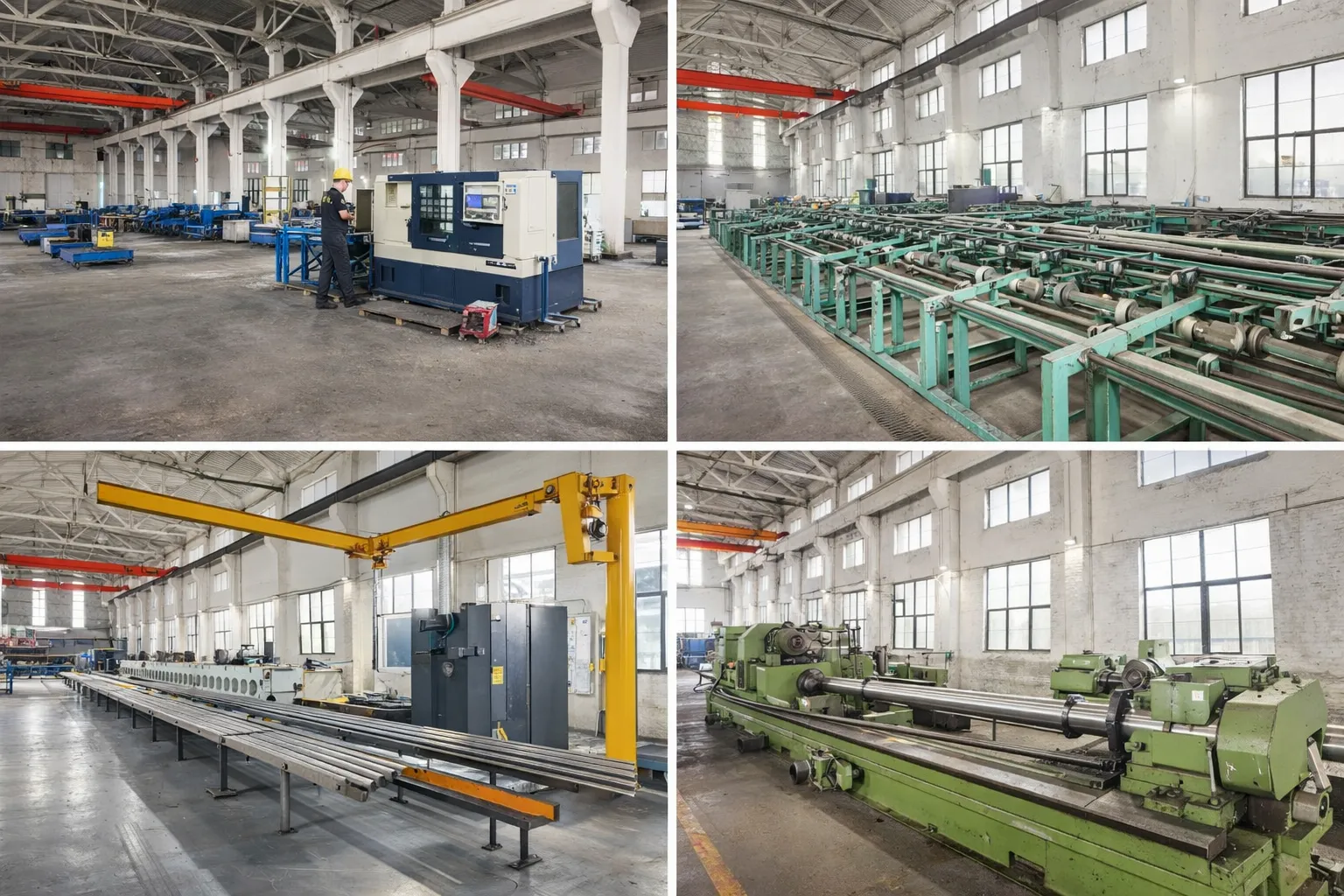
Operational reliability in fluid power is achieved through absolute control over the entire production environment. We manage the entire manufacturing cycle internally. Starting from the moment raw steel billets arrive at our facility, materials undergo immediate verification via optical emission spectrometer analysis to ensure the alloy chemistry matches our strict Q345D requirements before entering the CNC machining centers.
Unlike bulk component manufacturers who rely on random batch sampling, our facility enforces a strict 100% individual testing mandate. Every single assembled blade lift cylinder is systematically mounted on highly calibrated digital hydraulic test benches. The units are rapidly cycled to bleed all trapped air and then statically pressurized to 1.5 times their maximum rated working pressure for an extended holding period. High-precision digital flow meters monitor the closed circuit for any microscopic internal seal bypass, piston drift, or external fluid weeping.
Furthermore, to absolutely guarantee the integrity of our massive structural welds, all load-bearing joints undergo ultrasonic non-destructive testing (NDT) to thoroughly map the interior of the weldment and verify zero internal porosity or micro-cracking. Once a cylinder passes all mechanical audits, it is treated with a heavy-duty industrial epoxy-polyurethane paint system and stamped with a unique serialized identification code. This provides complete manufacturing traceability, ensuring our B2B partners receive a flawless product ready for immediate deployment.
Broad Industry Applications Beyond Earthmoving
While this specific engineering profile is highly optimized for bulldozer blade lifting and grading downforce, the core structural philosophy of our thick-walled architecture and advanced sealing translates seamlessly across multiple demanding industrial sectors. We encourage corporate procurement officers to explore our broader manufacturing capabilities. Our custom engineered solutions power essential operations across the construction machinery industry and beyond:
- Heavy Excavation & Trenching: Massively reinforced boom, arm, and bucket cylinders for large tracked excavators working continuously in hard rock quarries.
- Metallurgy & Heavy Forging: Specialized high-temperature sealing configurations utilizing fluoroelastomers (Viton) for operating heavy electric arc furnace doors and scrap metal baling presses in steel mills.
- Plastics & Rubber Injection Molding: High-speed, high-precision clamping cylinders and ejection rams that require absolute dimensional stability and zero fluid leakage.
- Port Logistics & Material Handling: Robust steering cylinders and heavy-duty reach stacker components requiring specialized anti-corrosion marine-grade epoxy coatings to combat harsh ocean air.
- New Energy & Environmental Protection: Compression actuators for municipal solid waste compactors and pitch control mechanisms for massive wind turbines that demand absolute operational reliability with minimal maintenance.
- Specialized Custom Scenarios: Full reverse engineering services to create exact drop-in replacements for obsolete or heavily modified industrial machinery where standard catalogs fall short.
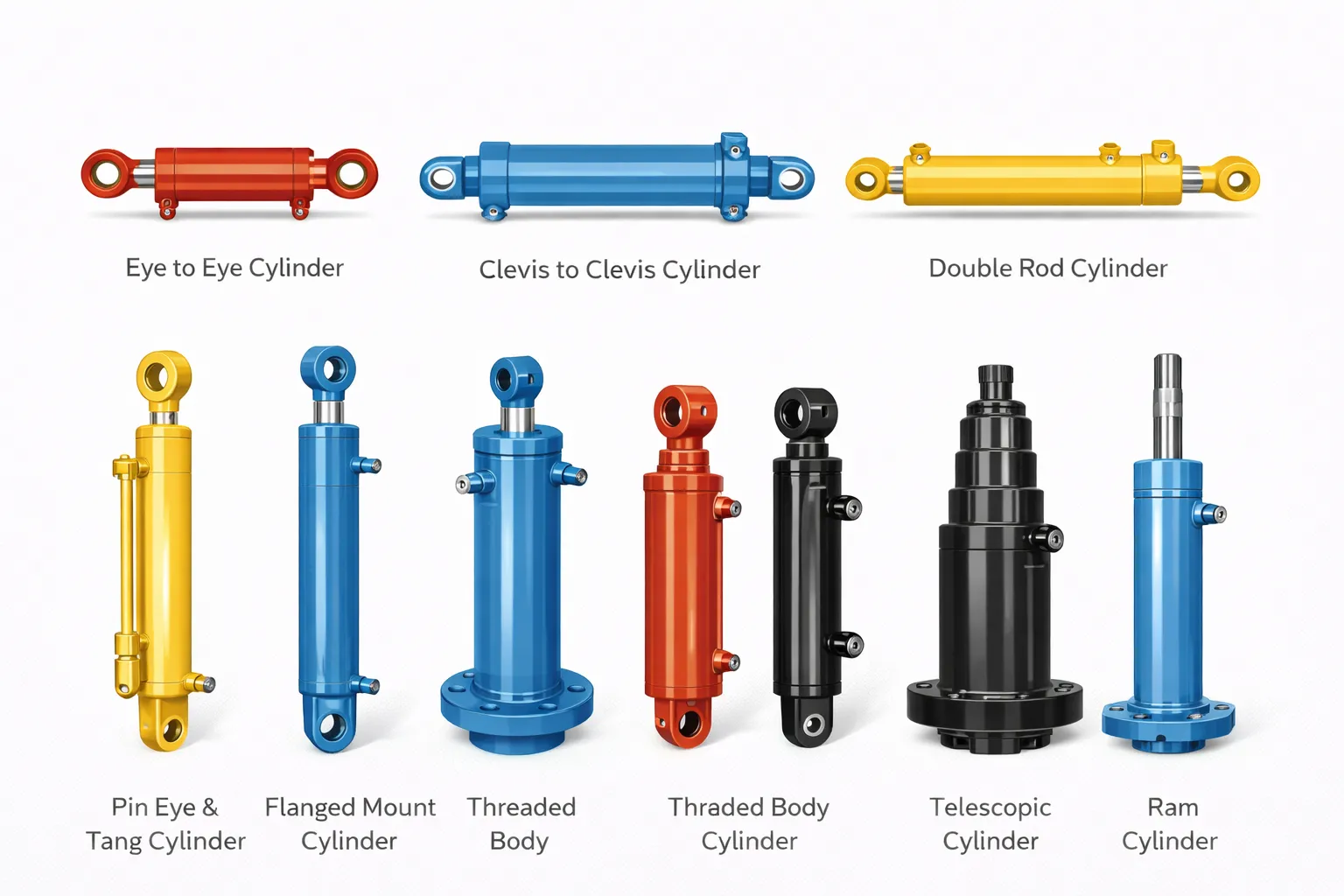
Comparative Analysis: Standard Market Offerings vs. Our High-Performance Solution
Evaluating the true Total Cost of Ownership (TCO) requires looking far beyond the initial procurement invoice. Cheap, generic replacement parts inevitably lead to catastrophic mid-project downtime, blown construction deadlines, and massive secondary labor costs for rapid re-installation. The following technical comparison illustrates exactly why investing in engineered resilience saves substantial capital over the machine’s lifecycle.
| Feature / Attribute | Ordinary Aftermarket Cylinders | Our High-Performance Cylinders |
|---|---|---|
| Barrel Structure | Thin commercial tubing using basic carbon steel. Highly prone to shock cracking and pressure ballooning. | Thick-walled cylinder tube machined from Q345D low-alloy steel. Virtually immune to impact cracking. |
| Seal Quality | Basic single-lip Nitrile (NBR) rubber. Degrades and hardens rapidly under high heat and continuous friction. | Advanced PTFE/Polyurethane composite matrix. Ultra-low friction, high thermal stability, zero pressure bypass. |
| Rod Defense Mechanism | Standard flash chrome over untreated steel. Allows fine silica dust to bypass, rapidly scoring internal bore walls. | Induction hardened core, micro-cracked heavy chrome, protected by aggressive heavy-duty tandem dust wipers. |
| Quality Control | Manual stick welding with random batch sampling. Frequent out-of-box field failures and microscopic weeping leaks. | Robotic submerged arc welding. Strict 100% individual pressure holding tests and ultrasonic weld inspection. |
| Financial Value Proposition | Lower upfront cost, but massive secondary capital drain due to machine downtime and constant repair cycles. | Highly competitive factory-direct hydraulic cylinder price with an extended operational lifespan, reducing TCO. |
Proven Global Success: Five Real-World Engineering Case Studies
Engineering theory is meaningless without severe field validation. Our specialized fluid power solutions are actively deployed across the most demanding job sites globally, with a strong presence in the rigorous East Asian market. The following five documented cases illustrate exactly how our deep manufacturing expertise directly resolves costly operational failures for our B2B clients.
Case 1: Eradicating Winter Ruptures in Heavy Urban Demolition
Location & Client: Seoul, South Korea — Hanil Earthmoving Consortium (October 2024)
The Application Crisis: Operating a fleet of heavy dozers to break highly compacted, steel-reinforced urban concrete foundations. The equipment experienced repeated, dangerous cylinder barrel splitting due to extreme shock loading, exacerbated by the embrittlement of cheap carbon steel during the freezing winter months.
The Engagement: The regional fleet director found our engineering portal via a targeted web search for a custom hydraulic cylinder manufacturer capable of solving cold-weather metallurgy failures.
The Delivered Solution: We manufactured and shipped heavily reinforced, thick-walled Q345D lift cylinders engineered specifically for high-impact resistance and sub-zero temperature toughness. The drop-in replacements required zero machine modifications.
“The structural rigidity of these units is visibly superior. We installed them across our entire demolition fleet, and we haven’t suffered a single cracked barrel or blown seal in over 4,000 hours of brutal winter operation. They saved our project deadline.” — Park Ji-hoon, Lead Maintenance Engineer
Case 2: Conquering Abrasive Destruction in Coastal Land Reclamation
Location & Client: Busan, South Korea — Donghae Maritime Construction (March 2025)
The Application Crisis: Operating bulldozers in wet, highly abrasive sea sand caused rapid, severe scoring of the piston rods. The salty grit completely destroyed standard wiper seals within weeks, leading to massive internal fluid contamination and downstream pump failures in their HD Hyundai machines.
The Engagement: Contacted our technical sales team via our B2B catalog seeking specialized anti-dust and marine-grade hydraulic parts.
The Delivered Solution: We implemented our aggressive tandem polyurethane wiping system alongside significantly enhanced micro-cracked chrome plating for superior salt-water corrosion resistance and deep scrape protection.
“Before sourcing from this manufacturer, our mechanics were pulling machines off the line to replace seals every two months. The new wiper configuration simply does not let the abrasive coastal sand enter the chamber. Seal life has easily tripled.” — Kim Min-su, Site Director
Case 3: Capital Optimization for Heavy Equipment Rental Fleets
Location & Client: Osaka, Japan — Kansai Heavy Equipment Rental Consortium (January 2024)
The Application Crisis: Managing a massive mixed fleet of CAT and Komatsu dozers resulted in a chaotic spare parts inventory. Unskilled rental operators frequently abused the equipment, causing bent rods and blown seals, ballooning the annual budget for continuously fixing hydraulic cylinders.
The Engagement: Met our senior technical representatives at a regional industrial trade expo, seeking standardized, highly durable, cost-effective aftermarket replacements.
The Delivered Solution: We provided dimensionally exact drop-in units featuring deeply induction-hardened rods to survive operator abuse, effectively standardizing their spare parts inventory across multiple machine brands.
“By standardizing our critical lift replacements with this factory supplier, we entirely bypassed massive OEM dealer markups. We reduced our long-term repair overhead by 35% while actually upgrading the structural durability of the machines we rent out.” — Kenji Takahashi, Operations Supervisor
Case 4: Stabilizing High-Temperature Highway Grading Operations
Location & Client: Hanoi, Vietnam — Viet-Road Civil Engineering (August 2024)
The Application Crisis: Continuous 14-hour summer shifts in extreme tropical heat caused hydraulic fluid overheating, leading to rapid seal extrusion, loss of pressure, and dangerous blade drift while attempting to precisely level fine highway foundations.
The Engagement: Submitted detailed technical schematics via our website requesting an emergency thermal stability engineering analysis.
The Delivered Solution: We integrated high-temperature resistant PTFE composite seals and optimized the internal bore finishes to a mirror polish, radically reducing dynamic friction heat generation within the cylinder body.
“The thermal stability is exceptional. We no longer have to pause operations midday to let the hydraulics cool down. The precision of the blade hold is absolutely perfect even operating in relentless 40-degree heat.” — Nguyen Van T., Procurement Head
Case 5: Reliable Upgrades for Massive Fleet Overhauls
Location & Client: Taipei, Taiwan — Apex Mining Logistics (November 2025)
The Application Crisis: The company needed to comprehensively overhaul 30 aging bulldozers before the start of a major mining extraction project. They required premium reliability but demanded a highly competitive cost structure to justify the capital expenditure of keeping the older machines running.
The Engagement: Contacted our global sales department via direct email to establish a direct bulk aftermarket supply chain, bypassing regional distributors completely.
The Delivered Solution: We provided a heavily discounted, containerized bulk shipment of specialized, thick-walled blade lift cylinder assemblies. The flawless fitment allowed their mechanics to complete the fleet overhaul rapidly and on schedule.
“Unbeatable engineering value. The robust build quality easily mirrors top-tier OEMs, but the factory-direct hydraulic cylinder price allowed us to overhaul our entire aging fleet well under budget without ever sacrificing operational safety.” — Lin Wei-chen, Fleet Owner
Frequently Asked Questions
Sourcing mission-critical industrial components for heavy fleets requires absolute transparency and clarity. Below are detailed, expert answers to the most frequent inquiries we receive from global procurement managers and engineering directors.
1. How exactly does your thick-walled design prevent cylinder tube cracks?
2. What makes your hydraulic cylinder price so competitive compared to OEM parts?
3. What is the typical lead time for a bulk order shipping to South Korea?
4. Do you supply individual replacement components for ongoing field maintenance?
5. Can you manufacture custom cylinders to precisely match older or heavily modified machinery?
6. How do your cylinders perform in extreme winter freezing conditions?
7. What kind of technical support do you offer after purchase?
8. Can your cylinders operate safely with biodegradable hydraulic fluids?
9. Do you handle international customs and import documentation for the Asian market?
10. How do we initiate a bulk fleet upgrade order?
Ready to Maximize Your Machinery’s Operational Uptime?
Do not allow inferior, thin-walled aftermarket components to dictate your project timelines and bleed your maintenance budgets. Stop wasting your operational capital on premature structural failures and endless seal blowouts. Partner with an expert manufacturing facility dedicated to solving the most severe earthmoving challenges.
Contact Our Engineering Team Today
Editor: Cxm