Blade Pitch Cylinder for Tidal Generators
Advanced 2205 duplex stainless steel subsea actuation featuring oil-free sealing, engineered specifically for precise angle control and total immunity to corrosion perforation in aggressive ocean energy environments.
Product Overview: Commanding the Kinetic Power of the Ocean
The global transition toward sustainable, zero-carbon baseload power has pushed mechanical engineering into the most unforgiving environment on the planet: the ocean floor. Marine renewable infrastructure, specifically ocean energy tidal generators, represents a massively potent and highly predictable grid asset. Unlike wind or solar generation, tidal streams offer dense, continuous kinetic force because seawater is over 800 times denser than atmospheric air. To effectively harvest this energy, massive submerged turbines are equipped with variable pitch hydrofoil blades. These blades must continuously adjust their physical angle of attack to match the speed and reversing direction of the tidal currents. Operating at the absolute mechanical core of this critical angular adjustment is the blade pitch cylinder. This specialized linear actuator is entirely responsible for translating fluid pressure into exact mechanical positioning under immense, multi-directional hydrodynamic loads.
Running a fluid power system continuously submerged in an active marine tidal zone introduces severe operational challenges that standard terrestrial components simply cannot survive. The aggressive salinity of seawater relentlessly attacks standard carbon steel and lower-grade alloys, while abrasive suspended sand particles circulating in the high-velocity tidal wash quickly destroy standard polymeric rod seals. For submerged equipment, the most frequent and catastrophic failure mode is corrosion perforation. When the outer barrel or the retracting rod of a cylinder is compromised by chloride pitting, high-pressure seawater forcibly invades the internal circuit. This instantly destroys the turbine’s pitching mechanism and causes a catastrophic leak of hydraulic fluid directly into the fragile marine ecosystem.
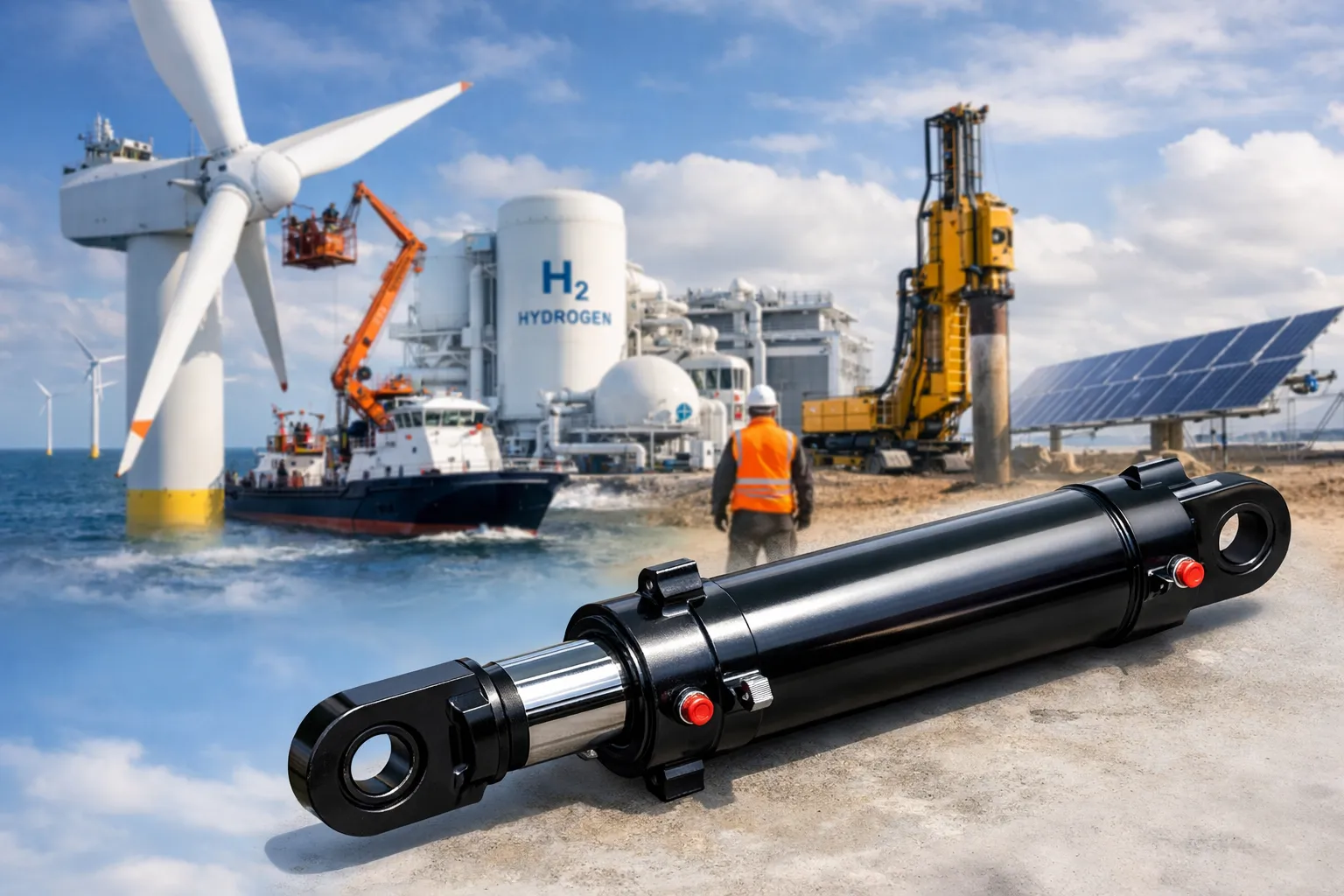
As a deeply experienced and globally recognized hydraulic cylinder manufacturer, we identified these fatal limitations and engineered a definitive actuation solution explicitly tailored for the marine renewable energy sector. Our custom-engineered blade pitch hydraulic cylinder represents the pinnacle of subsea fluid power engineering. Constructed entirely from premium 2205 duplex stainless steel and featuring an ultra-polished rod surface finish, it provides absolute, guaranteed immunity to chloride-induced stress corrosion cracking and pitting. Furthermore, to rigorously protect the marine ecosystem and comply with stringent international maritime regulations across South Korea, Japan, and the broader Asia-Pacific, we have integrated a proprietary oil-free sealing configuration. By delivering flawless servo-level angle control combined with unbreakable environmental resilience, our actuators secure the long-term industrial value and profitability of coastal tidal power stations.
Comprehensive Technical Parameters
Integrating mission-critical actuation systems into a multi-megawatt submerged tidal turbine requires exact specification alignments and zero tolerance for mechanical deviation. We provide robust, highly customizable hydraulic parts designed to interface flawlessly with your existing turbine hub architecture. The following data table outlines the foundational engineering parameters and configuration ranges for our specialized subsea pitch actuators.
| System Category | Specification Range | Engineering Significance |
|---|---|---|
| Target Industry | New Energy / Ocean Energy | Engineered strictly for continuous submerged renewable power extraction. |
| Equipment Category | Ocean Energy Tidal Generator | Designed to fit within the restrictive confines of sealed subsea rotor hubs. |
| Subsystem Action | Blade Pitch / Angle control | Dictates the aerodynamic stall, lift, and torque output of the heavy turbine. |
| Product Designation | Blade Pitch Cylinder | The exact dedicated nomenclature for marine rotary kinematic actuation. |
| Action Method | Double Acting | Provides rigid, highly pressurized hydraulic locking force in both extension and retraction. |
| Structure Type | Servo Cylinder | Integrates high-resolution linear variable differential transformer (LVDT) feedback sensors. |
| Manufacturing Architecture | Seawater Resistant | Hermetically sealed external geometry eliminating crevices where localized corrosion initiates. |
| Material System | 2205 Duplex Stainless Steel | Exceptional yield strength combined with extreme chloride pitting resistance capabilities. |
| Surface Treatment | Polished | Mirror-like finish completely prevents marine bio-fouling attachment and reduces dynamic seal wear. |
| Environmental Grade | Seawater + Sand | Withstands highly abrasive particulate matter suspended in turbulent tidal flows. |
| Targeted Failure Mode | Corrosion Perforation | Our specific metallurgical selection explicitly prevents saltwater from eating through the thick barrel walls. |
| Recommended Configuration | Oil-Free Sealing | Guarantees absolute zero hydrocarbon pollution, complying strictly with severe maritime laws. |
Kinematic Working Principle: Precision in Turbulent Waters
To comprehend the immense value of our specialized fluid engineering, one must deeply understand how a blade pitch cylinder operates dynamically within a sealed tidal turbine hub. The entire system relies on an internal closed-loop servo controller that constantly analyzes the velocity, density, and direction of the incoming tidal current. Based on this real-time hydrodynamic data, the controller calculates the absolute optimal angle of attack required for the massive turbine blades. The controller then commands highly responsive proportional servo valves to direct pressurized fluid into either the cap end or the rod end of our custom double acting hydraulic cylinder.
As this precisely metered fluid enters the sealed chamber, it exerts immense physical force against the specialized hydraulic cylinder piston. This linear motion is mechanically linked to the root of the turbine blade via a robust eccentric crank or lever arm mechanism. Extending or retracting the heavy-duty rod forces the massive blade to rotate smoothly on its main bearing, instantly altering its pitch angle relative to the water flow. Because tidal waters change direction entirely during alternating ebb and flood phases, the pitch mechanism must frequently execute full sweeps to keep the aerodynamic blade profile properly oriented. A basic single acting hydraulic cylinder relying on spring return is completely incapable of performing this task against the violent drag of ocean currents; the double-acting nature provides the active, unyielding hydraulic lock required to stabilize the rotor.
The accuracy of this subsea angle control must be flawless. Our servo cylinders integrate encapsulated linear variable differential transformers (LVDTs) directly into the hollow piston rod. These highly sensitive sensors feed continuous, real-time positional data back to the central hub computer in milliseconds. Coupled with our ultra-low friction internal polymer bands, the actuator performs minute, high-frequency angular adjustments perfectly, maintaining peak turbine RPM without inducing mechanical shock into the powertrain. When massive typhoon swells approach, the double-acting force allows the system to forcefully pitch the blades into a neutral “feathered” position, actively braking the turbine and saving the entire structure from catastrophic destruction.

Seamless Hub Upgrades & Legacy OEM Replacement
Extracting massive underwater energy equipment for routine maintenance is an incredibly expensive logistical operation, often requiring heavy-lift Dynamic Positioning (DP) offshore crane vessels and specialized deep-water diving teams. When original factory actuators supplied by initial turbine integrators begin to fail prematurely due to saltwater ingress or rod scoring, operators face staggering operational downtime costs. The necessity of continuously fixing hydraulic cylinders underwater or dry-docking massive nacelles completely destroys the financial viability of a tidal farm. Plant managers urgently require direct, ruggedized drop-in replacements that do not require heavily modifying or re-machining the heavy cast iron turbine hub.
We specialize in engineering dimensionally identical, heavy-duty replacements for these legacy systems. If your existing tidal or wave energy converters are struggling with failing commercial-grade actuators, our blade pitch hydraulic cylinder can be retrofitted perfectly. You gain an immediate, massive upgrade in 2205 metallurgical defense and oil-free environmental sealing, completely resolving chronic corrosion issues. Furthermore, by sourcing directly from our advanced manufacturing facility, you bypass complex international distribution networks, securing a highly optimized hydraulic cylinder price and significantly reducing your overall project capital expenditure while extending the lifespan of the offshore asset, preventing endless cycles of hydraulic cylinder repair.
Core Technical Advantages for Subsea Reliability
Surviving the brutal ocean environment for a projected 20-year operational lifespan requires moving far beyond standard industrial fluid mechanics. Our engineering team has implemented a series of uncompromising technical advancements to ensure our marine pitch systems operate flawlessly year after year:
- 1. Total Immunity to Corrosion Perforation (2205 Duplex): Standard marine grades like 316L stainless steel or epoxy-coated carbon steel eventually succumb to localized pitting in oxygen-starved subsea mud. We manufacture the entire cylinder body, end caps, and piston rod from solid 2205 Duplex Stainless Steel. This specialized micro-structure provides an exceptionally high Pitting Resistance Equivalent Number (PREN > 35) and double the yield strength, making it virtually impervious to the aggressive chlorides found in deep ocean installations.
- 2. Advanced Oil-Free Sealing Technology: Environmental compliance in ocean energy is absolute. A ruptured traditional cylinder spills toxic mineral oil directly into the sea, incurring massive fines. Our innovative configuration utilizes high-performance polymer seals designed to run on environmentally acceptable lubricants (EALs) or entirely water-glycol fluid mixtures, ensuring zero ecological impact in the event of extreme mechanical trauma.
- 3. Precision Surface Polishing & Biological Repulsion: Marine bio-fouling (barnacles and algae) easily destroy standard rod seals during the retraction stroke. Our 2205 piston rods undergo an intensive mechanical and electro-polishing process, resulting in a mirror-like finish with a roughness average (Ra) below 0.1µm. This extreme smoothness prevents biological organisms from taking root and provides a flawless sealing surface.
- 4. Aggressive Sand Exclusion Scrapers: Tidal flows near the seabed carry highly abrasive suspended sand. We incorporate a heavy-duty, multi-stage polyurethane scraper system. The outward-facing lip physically shears away abrasive sand and encrusted debris before the rod retracts, keeping the internal high-pressure seals completely isolated from particulate destruction.
- 5. High-Response Servo Linearity: Operating a turbine in turbulent ocean currents requires constant micro-adjustments. Our internal bore is micro-honed, and we utilize ultra-low friction PTFE-based glide bands on the piston. This completely eliminates the “stick-slip” hesitation phenomenon, allowing the servo valves to actuate perfectly smooth, high-frequency angle changes without jerking the mechanical linkages.
- 6. Extreme Fatigue Life Optimization: Tidal blades exert immense, alternating bending moments on the actuator rod 24 hours a day. We utilize advanced Finite Element Analysis (FEA) and deep-penetration robotic welding to ensure infinite fatigue life against these relentless cyclical forces, completely mitigating metal fatigue failures near the mounting trunnions of our hydraulic rams.
Autonomous Manufacturing & Marine-Grade Quality Control
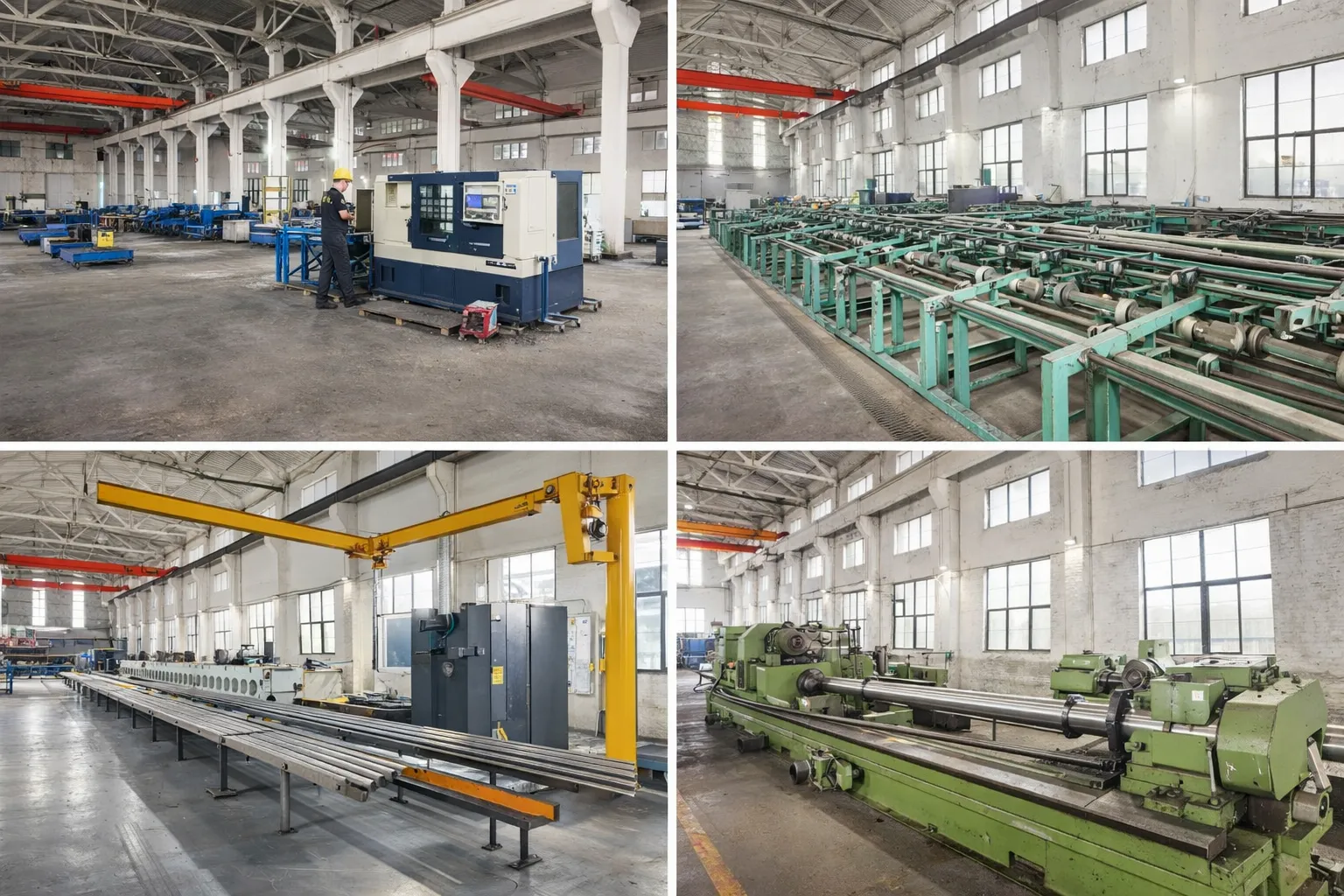
Machining duplex stainless steel is notoriously difficult due to its extreme hardness and rapid work-hardening characteristics. Sourcing these hydraulic cylinder components from third-party general machine shops frequently leads to dimensional inaccuracies and compromised sealing surfaces. As a premier hydraulic cylinder manufacturer, we execute the entire production lifecycle completely in-house. We procure certified 2205 duplex ingots and perform optical emission spectrometry to verify the exact chemical composition. We utilize highly rigid, specialized multi-axis CNC turning centers equipped with high-pressure coolant systems and specific carbide tooling to process the raw material to exacting servo-grade tolerances.
For underwater equipment, the margin for error is absolute zero. After assembly in our controlled cleanroom environment, 100% of our blade pitch cylinder units are subjected to punishing Factory Acceptance Testing (FAT) protocols. This includes static hydrostatic testing at 1.5 times the maximum rated operating pressure to verify structural integrity, dynamic servo-response charting to confirm smooth low-speed kinematics, and extended cyclic testing to validate our heavy-duty rod scraper efficiency.
Every completed cylinder receives a permanent laser-etched identification plate, accompanied by full material certificates and comprehensive testing documentation. This guarantees the total traceability required by stringent offshore classification societies and major global EPC contractors operating in the demanding waters of South Korea and Japan.
Cross-Industry Engineering Excellence
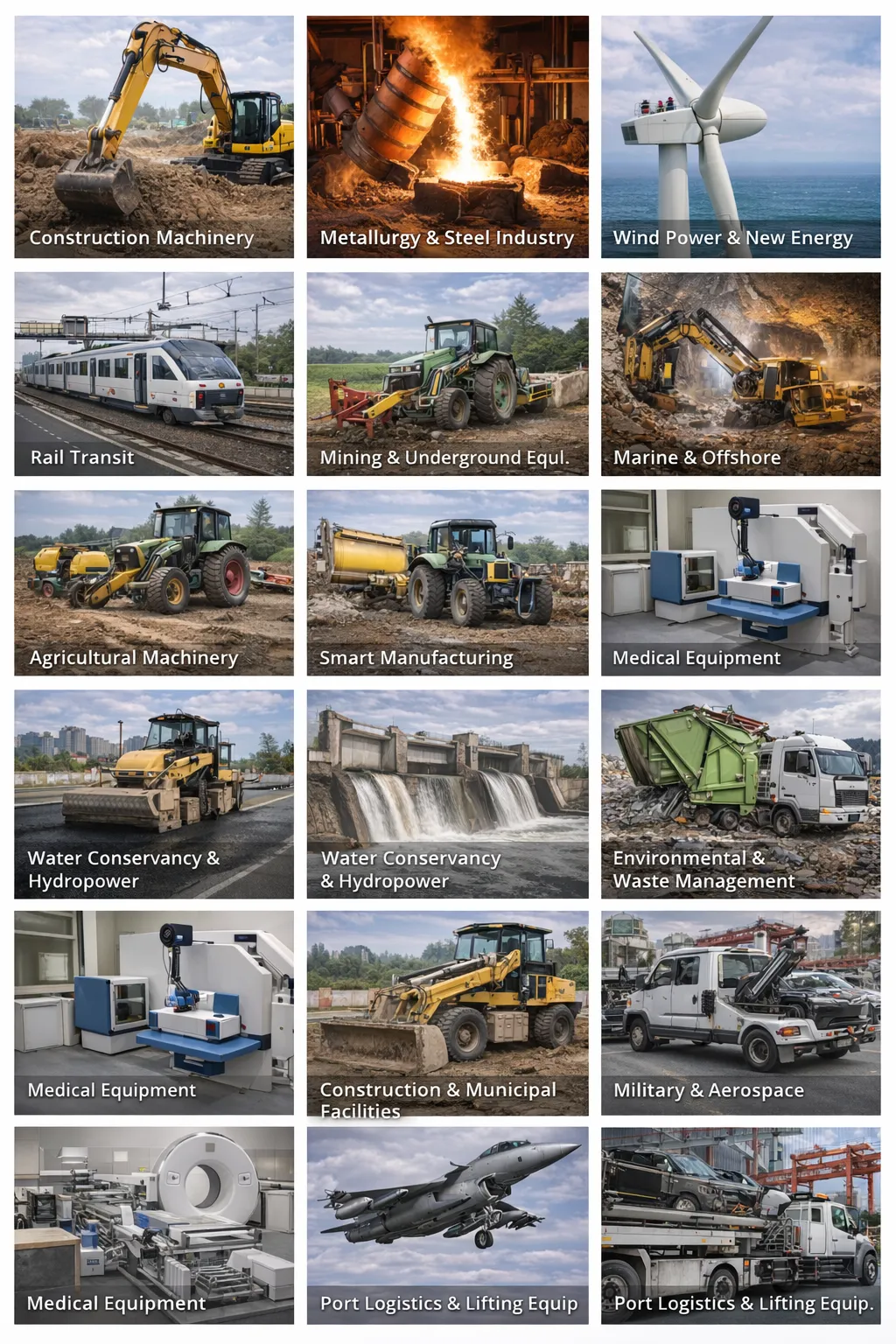
The extreme material science and precise fluid dynamics required to survive the ocean floor make our engineering highly sought after across diverse, heavy industrial sectors. The robust DNA of our marine pitch control systems can be found powering the most critical equipment globally:
- Metallurgical and Iron Industry: The advanced thermal stability and robust sealing designs translate directly to actuators operating near intense blast furnace radiant heat, molten metal splashes, and abrasive slag.
- Mining Industry: Our capacity to aggressively seal out abrasive seawater sand is exactly what is required to block highly corrosive, acidic groundwater and quartz dust in deep underground shaft drilling equipment.
- Construction Machinery Industry: The heavy-duty structural fatigue resistance of our tidal systems informs the design of a main lift cylinder on high-tonnage excavators subjected to brutal, sudden breakout forces in muddy terrain.
- Plastics & Rubber Machinery: Our high-pressure double-acting holding capabilities are repurposed to provide precise locking tonnage in massive, high-speed injection molding presses.
- Material Handling & Port Logistics: Exact servo-positioning technology allows automated port logistics cranes and massive straddle carriers to operate with millimeter precision in coastal salt-spray environments.
Comparative Analysis: Standard Offshore vs. Specialized Marine Duplex
Attempting to adapt standard industrial equipment—or even generic “marine-grade” components—for ocean energy extraction is a proven path to catastrophic failure and massive financial loss. The following matrix illustrates the critical engineering disparities between ordinary offshore cylinders and our purpose-built marine technology.
| Evaluation Metric | Standard Marine 316L / Coated Steel | Our 2205 Blade Pitch Cylinder |
|---|---|---|
| Base Metallurgy | 316L or Epoxy-Coated Steel (Highly vulnerable to long-term pitting) | Solid 2205 Duplex Stainless (Total immunity to chloride perforation) |
| Environmental Safety | Uses standard mineral oil (Massive ecological spill risk) | Oil-Free / Water-Glycol sealing (Absolute zero contamination risk) |
| Rod Surface Defense | Standard Hard Chrome (Micro-cracks attract rust and bio-fouling) | Precision Polished 2205 (Flawlessly repels biological growth and sand) |
| Motion Dynamics | Noticeable stick-slip juddering during slow angle adjustments | Ultra-smooth servo response via internal LVDT sensors |
| Maintenance Reality | Requires frequent, expensive retrieval for subsea seal replacements | Engineered for 10-15 years of uninterrupted offshore deployment |
Proven in the Depths: Real-World Global Case Studies
Theoretical marine capability must be validated against the unrelenting force of the ocean. Our specialized pitch actuation systems are currently regulating tidal energy capture in some of the most violent straits in the Asia-Pacific region. Here is how our engineering overcomes reality in the field.
Case Study 1: Defeating Corrosion Perforation in South Korea
Client Location: Sihwa Lake Coastal Waters, South Korea | Application: Grid-Connected Tidal Array | Date: November 2024
The Challenge: A massive submerged tidal installation suffered catastrophic downtime when their original 316L stainless steel actuators began failing. The oxygen-starved mud at the seabed induced severe pitting corrosion, leading to cylinder wall perforation and subsequent seawater flooding of the internal hydraulic network. The plant was facing disastrous retrieval costs involving heavy crane vessels and desperately sought a permanent engineering fix via our digital portal.
The Solution & Result: We rapidly manufactured a batch of heavily customized blade pitch cylinder units utilizing full 2205 duplex metallurgy. The high PREN value completely halted the chloride attack. After retrofitting, the turbines have operated flawlessly for over 18 months without a single instance of pressure loss or metal decay, restoring the array’s full megawatt output and eliminating massive underwater hydraulic cylinder repair bills.
“The corrosion resistance of these duplex cylinders is exceptional. We were pulling turbines every six months previously to handle leaks. Now, we are looking at uninterrupted long-term generation. Their engineering expertise completely saved our maintenance budget.” — Mr. Choi Min-Soo, Lead Offshore Operations Engineer
Case Study 2: Conquering Abrasive Sand in Japan’s Testing Sites
Client Location: Hokkaido Coast, Japan | Application: Deep-water Tidal Testing Platform | Date: May 2025
The Challenge: High-velocity tidal currents were kicking up massive amounts of sharp silica sand from the seabed. This particulate matter was scoring the piston rods of their standard cylinders, tearing the dynamic seals to shreds and requiring continuous, highly expensive intervention by technical dive teams to keep the pitch systems active.
The Solution & Result: We deployed our polished rod systems featuring an aggressive secondary scraper ring specifically designed for high-turbidity zones. Combined with our oil-free sealing matrix, the hydraulic rams completely rejected the suspended sand. Seal tearing dropped to absolute zero, allowing the testing platform to maintain highly accurate angle control throughout the entire turbulent spring tide season without a single leak.
“We needed an actuator that could essentially survive in an underwater sandblaster. Their polished duplex rods and specialized seal geometry did exactly that. The servo response remains incredibly smooth.” — Dr. Kenji Tanaka, Marine Systems Researcher
Case Study 3: Bypassing OEM Bottlenecks for Commercial Deployment
Client Location: Keelung, Taiwan | Application: Commercial Ocean Power Startup | Date: January 2026
The Challenge: An aggressive energy startup required four specialized subsea servo actuators for their new hub design. Their original European supplier quoted a staggering 8-month lead time and an inflated price, threatening to derail the startup’s entire deployment schedule and burn through their investor capital before generating a single watt of power.
The Solution & Result: Acting swiftly upon receipt of their mechanical interface drawings, our engineering team modeled precise drop-in replacements. Our autonomous factory delivered the complete batch in just 45 days. The client not only secured a vastly improved hydraulic cylinder price but successfully hit their subsea deployment weather window, initiating power generation safely ahead of schedule.
“Lead time is everything in offshore projects. They provided a highly superior 2205 duplex product in a fraction of the time the legacy brands offered. The integrated LVDT sensors communicated instantly with our hub controllers.” — Lin Chen-Yu, Project Manager
Frequently Asked Question
When specifying critical submerged infrastructure, absolute clarity is required. Below we address the most common technical inquiries from marine engineers and offshore project directors regarding our tidal actuation technologies.
1. Can we use a single acting hydraulic cylinder for blade pitch control?
2. Why is 2205 Duplex Stainless Steel necessary instead of standard 316L?
3. How does the oil-free sealing technology operate without mechanical seizure?
4. What is the typical lead time for a custom duplex stainless steel order delivered to South Korea?
5. Can you integrate specific LVDT sensors to match our existing PLC architecture?
6. How do your direct manufacturing capabilities impact project costs?
7. Do you provide ongoing parts support for offshore maintenance teams?
Secure Your Subsea Generation Reliability Today
Do not allow substandard terrestrial components to compromise the long-term viability of your offshore energy investments. Upgrade to specialized tidal pitch cylinders engineered for absolute corrosion immunity, zero environmental leakage, and continuous, micro-precise angle control. Submit your turbine’s operational blueprints to our marine engineering team for an immediate technical evaluation.
Editor: Cxm