Crane Luffing Cylinder For Wind Power Maintenance Deck Crane
Engineered specifically for wind power maintenance vessels. Featuring advanced anti-corrosion metallurgy and optional ceramic coating to permanently conquer offshore salt spray pitting and secure your heavy lifting operations.
Product Overview: The Core of Offshore Wind Logistics
The offshore renewable energy sector operates in one of the most unforgiving environments on the planet. As the global transition toward sustainable power accelerates, particularly across the dynamic coastlines of South Korea, Japan, and the Taiwan Strait, the physical demands placed on infrastructure are staggering. Constructing, commissioning, and servicing multi-megawatt offshore wind turbines requires highly specialized marine logistics, executed primarily via heavy-duty wind power maintenance vessels. The central artery of these logistical operations is the massive deck crane. Tasked with hoisting heavy nacelles, large rotor hubs, and massive turbine blades from the pitching deck of a ship hundreds of feet into the air, the crane must perform with absolute structural rigidity and microscopic control. The absolute critical component governing the reach, capacity, and safety of this hoisting equipment is the crane luffing cylinder. Without it, the vessel is entirely incapable of fulfilling its operational mandate.
The luffing mechanism physically determines the operating radius and elevation angle of the crane boom. When a deck crane is handling a hundred-ton turbine component in open sea conditions, the crane luffing hydraulic cylinder is subjected to immense, fluctuating compressive and tensile shock loads caused by oceanic wave heave and wind shear. Standard commercial actuators simply cannot survive this extreme application. Beyond the immense mechanical stress, the marine atmosphere presents a relentless, aggressive chemical attack. Constant exposure to highly concentrated salt spray induces rapid surface oxidation and chloride-induced pitting on standard chrome-plated cylinder rods. Once pitting occurs, the abrasive micro-craters swiftly shred the internal wiper and high-pressure dynamic seals, resulting in catastrophic hydraulic fluid leakage, an immediate loss of load-holding capability, and severe, costly vessel downtime.
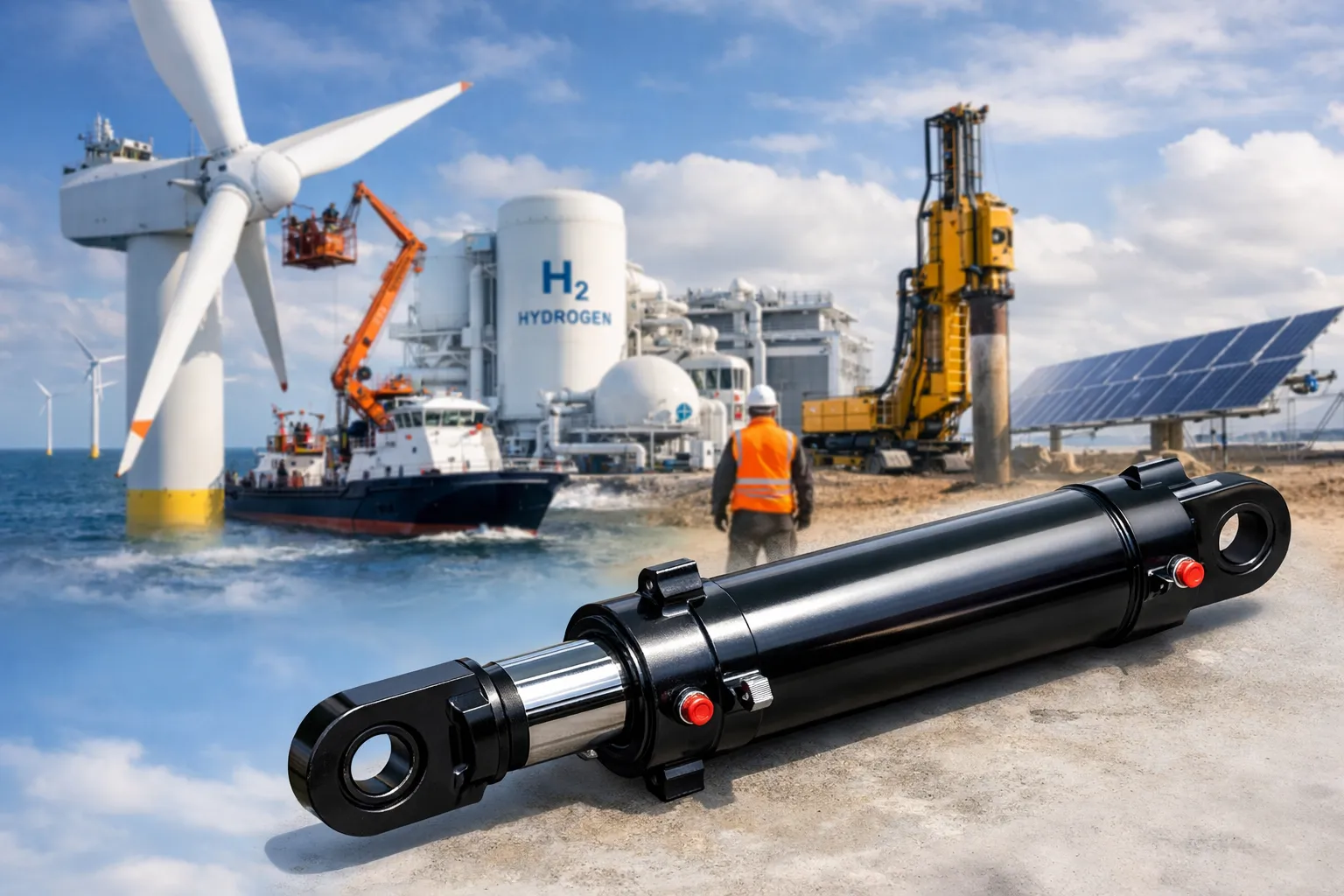
As a leading hydraulic cylinder manufacturer servicing elite fleets, our engineering methodology directly targets and neutralizes these exact maritime failure modes. We design our specialized fluid power platforms using forged alloy steel combined with heavy-duty welded architectures to explicitly combat dynamic mechanical fatigue. More importantly, we implement advanced surface tribology options, transitioning from standard commercial plating to heavy nickel plating, alongside an aerospace-grade ceramic coating optional upgrade. This creates an impenetrable, non-porous chemical shield against extreme salt spray corrosion. By maintaining pristine rod geometry, we permanently protect the sealing matrix, extending the operational lifespan by years. This definitive reliability ensures that fleet operators avoid the staggering financial penalties associated with delayed offshore installations, dramatically optimizing your long-term lifecycle hydraulic cylinder price.
Comprehensive Technical Specifications & Offshore Customization
Precision engineering in the marine sector demands an exacting alignment of physical dimensions, metallurgical chemistry, and hydrostatic pressure ratings. The following parameter matrix outlines the rigid foundational specifications and the broad customization envelope available for our heavy-duty offshore equipment. Every metric is meticulously calculated to secure continuous hoisting operations above the waterline.
| Engineering Parameter | Design Specification | Operational Significance |
|---|---|---|
| Industry Sector | New Energy | Engineered exclusively for the harsh logistics of offshore wind infrastructure. |
| Equipment Category | Wind power maintenance vessel deck crane | Integrates directly into the massive lattice or telescopic boom structures on service ships. |
| Subsystem / Action | Deck crane luffing articulation | Dictates the critical lifting radius and precise vertical reach of the hoist hook. |
| Hydraulic Cylinder Name | Crane luffing cylinder | The primary structural support and motion control linkage of the entire crane arm. |
| Action Mode | Double acting | Provides active hydraulic force to both elevate and smoothly lower massive payloads. |
| Structure Type | Piston cylinder | Utilizes an oversized hydraulic cylinder piston to absorb intense internal shock pressures. |
| Manufacturing Structure | Welded construction | Monolithic fusion of end caps entirely eliminates tie-rod stretching under high-tonnage marine loads. |
| Material System | Alloy steel | Massive yield strength prevents catastrophic buckling when the vessel pitches violently. |
| Surface Treatment | Nickel plated | Forms a uniform, non-porous chemical barrier against relentless atmospheric chloride attack. |
| Environment Grade | Salt spray corrosion | Rigorously tested to withstand decades of continuous open-ocean atmospheric exposure. |
| Working Condition Characteristics | Lifting equipment | Executing precise, millimeter-accurate load placements while suspended over the sea. |
| Typical Failure Mode Prevented | Pitting | Complete eradication of rod surface cratering, which traditionally shreds internal wiper seals. |
| Recommended Configuration | Ceramic coating optional | The ultimate offshore upgrade, yielding an indestructible, scratch-proof anti-corrosion layer. |
Advanced Marine Kinematics: The Working Principle
To fully comprehend the extraordinary capability of this specialized fluid power system, one must examine the intersection of fluid dynamics and offshore crane kinematics. During a typical offshore maintenance operation—such as replacing a massive wind turbine gear box—the vessel’s dynamic positioning (DP) system locks the ship’s geographic coordinates. However, ocean wave heave still causes continuous vertical and lateral motion. The crane operator relies entirely on the precision of the hydraulic control system to safely counter this unpredictable motion.
When the operator commands the boom to elevate to reach the turbine nacelle, high-pressure hydraulic fluid is pumped from the vessel’s central hydraulic power unit into the base (blank end) of the cylinder. The fluid generates immense active force against the heavy-duty hydraulic cylinder piston, smoothly extending the alloy steel rod and raising the massive crane jib. Because this is inherently a double acting hydraulic cylinder, lowering the boom is never left solely to gravity. Fluid is forcefully metered into the rod end while simultaneously being precisely bled from the base end. This controlled, dual-chamber fluid dynamics prevents the load from free-falling, offering absolute, shudder-free control even during extreme maritime swells.
Crucially, the lift cylinder is equipped with integrated counterbalance valves directly mounted to the high-pressure ports. In the highly unlikely event of an unexpected hydraulic hose rupture or main pump failure on the deck, these pilot-operated valves instantly snap shut, physically trapping the incompressible fluid inside the barrel. This rigidly locks the hydraulic rams in their exact current geometric position, holding the suspended multi-ton wind turbine component safely in mid-air and preventing a catastrophic, fatal deck collision.
Seamless Interoperability and Fleet Upgrades
Managing the operational readiness and maintenance lifecycle of a specialized offshore wind support fleet is incredibly demanding. Many existing vessels operating in the Asia-Pacific region were originally commissioned with deck cranes featuring actuation components from legacy global manufacturers such as MacGregor, Liebherr, National Oilwell Varco (NOV), Bosch Rexroth, or Parker Hannifin. (Please be advised: The inclusion of these distinguished corporate brand names is strictly for the purpose of technical dimension referencing, retrofit cross-compatibility analysis, and procurement convenience for our engineering B2B partners; we explicitly state that we hold no trademark affiliation, sponsorship, or endorsement with these respected corporate entities.)
When fleet engineers encounter premature offshore failure—typically severe rod pitting that destroys the seal glands—executing a standard hydraulic cylinder repair with identical OEM legacy components simply resets the clock for the next inevitable failure. Polishing out deep rust pits permanently compromises the dimensional tolerance of the rod, meaning replacement seals will blow out almost immediately upon return to service. Furthermore, sourcing OEM high-performance replacements often involves prohibitive lead times that keep vessels trapped in drydock, losing massive operational revenue. We have meticulously engineered our crane luffing cylinder to serve as a structurally superior, exacting drop-in upgrade.
By precisely matching the spherical bearing pin diameters, closed-center retraction distances, total stroke lengths, and flange mounting geometries of your existing crane, your marine technicians can seamlessly integrate our anti-pitting technology into your current framework. This direct interoperability empowers crews to comfortably execute fixing hydraulic cylinders during scheduled port calls. It entirely eliminates the need for expensive structural modifications or hot-work, drastically driving down your total hydraulic cylinder price overhead while simultaneously retrofitting your vessel with next-generation corrosion defense.
Uncompromising Core Technical Advantages
Transforming a standard heavy-duty actuator into a piece of survival-grade maritime machinery requires an obsessive re-evaluation of metallurgical chemistry and tribology. The following represent the core technical pillars engineered into every offshore unit:
1. Absolute Eradication of Pitting
Standard hard chrome develops micro-cracks allowing chlorides to rust the base metal, leading to severe pitting. Our advanced nickel plating or ceramic coating optional upgrade creates an impenetrable, non-porous oxide layer. It is chemically inert to salt spray, entirely eliminating the pitting mechanism that destroys standard hydraulic parts.
2. High-Yield Alloy Steel Architecture
The immense cantilevered weight of a crane boom magnifies forces exponentially. We forge our barrels and rods strictly from premium alloy steels, providing superior fracture toughness and ensuring the extended rod does not buckle or deform under extreme side-loading from sudden ocean swells.
3. Ultra-Low Friction Sealing Tribology
To execute precise millimeter adjustments while aligning heavy wind turbine nacelles, dangerous “stick-slip” juddering must be prevented. We utilize specialized PTFE-blended glide rings and optimized marine elastomers that reduce dynamic friction to a minimum, ensuring flawlessly smooth hydraulic motion even under maximum load.
4. Monolithic Welded Stability
Unlike basic tie-rod cylinders which can stretch and weep fluid under dynamic kinetic shock, our heavy-duty welded manufacturing structure permanently fuses the end caps to the main barrel. This robotic submerged arc welding completely seals the vessel against moisture ingress and maximizes structural fatigue life.
5. Environmental Fluid Compatibility
Modern offshore regulations stringently dictate the use of Environmentally Acceptable Lubricants (EALs). Standard polyurethane seals rapidly degrade in EALs. We outfit our units with advanced fluorocarbon and PTFE seals that are highly chemically resistant, preventing premature seal swelling or breakdown.
6. Marine-Grade Articulation Mounts
The mechanical connection points are where stress inevitably concentrates. We utilize oversized, heavy-duty spherical bearings forged from corrosion-resistant stainless steel alloys. These self-aligning mounts absorb the micro-deflections of the crane boom, preventing rod binding and extending the life of the entire assembly.
Autonomous Manufacturing and Absolute Traceability
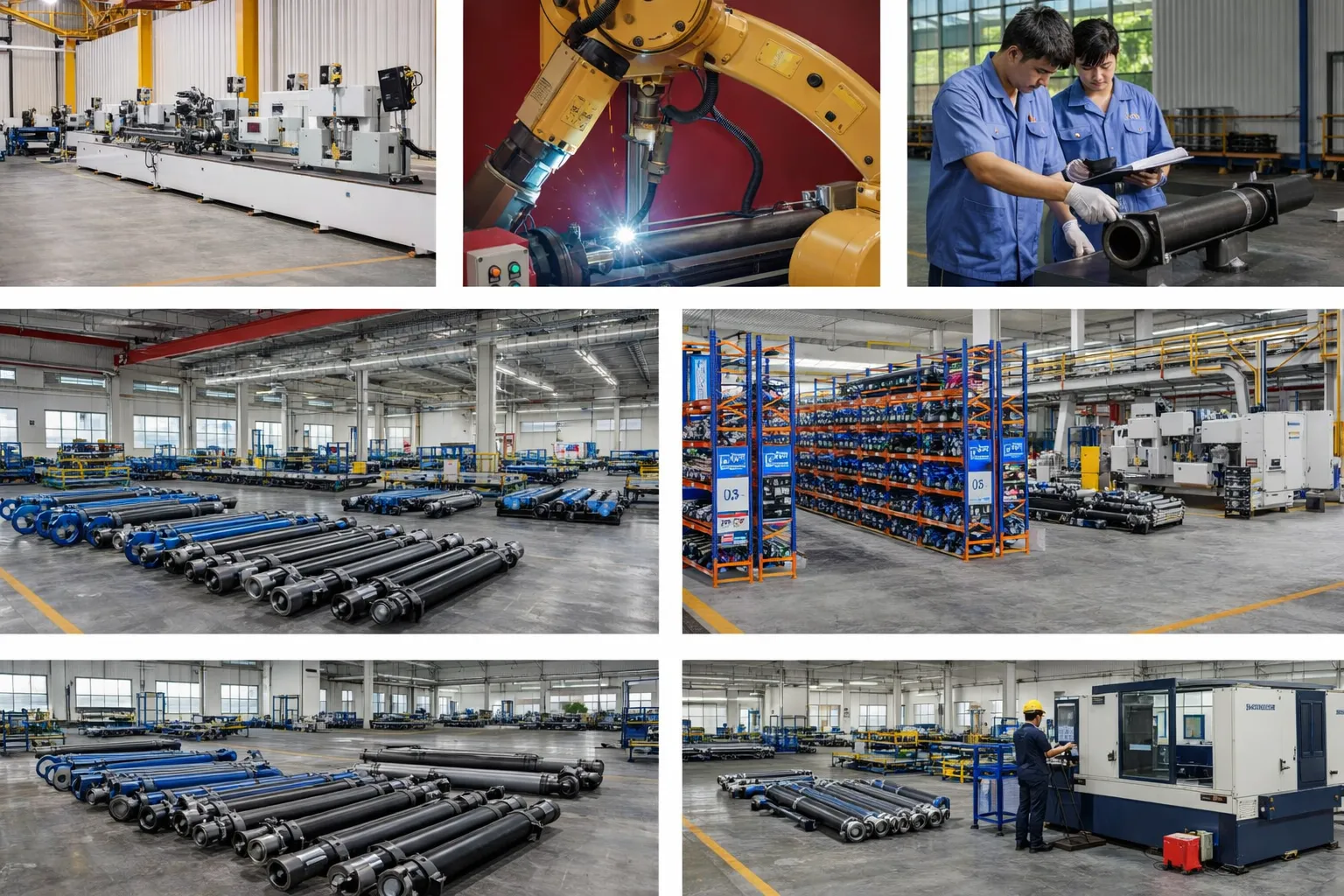
Producing maritime-grade hydraulic cylinder components that dictate the safety of a multi-million dollar offshore lifting operation cannot be outsourced to third-party assembly houses. As a premier, fully autonomous manufacturing facility, we exercise absolute sovereignty over our entire production pipeline. From the initial ultrasonic and spectrometer inspection of the raw alloy steel billets to the final, meticulous application of the marine epoxy topcoat, every process is conducted in-house under uncompromising ISO-certified protocols.
Our advanced machining centers utilize heavy-duty multi-axis CNC technology capable of handling massive boom cylinder dimensions. The internal bore of the cylinder barrel undergoes a rigorous sequence of deep-hole boring, skiving, and roller burnishing. This creates a highly uniform, mirror-like internal finish that significantly reduces dynamic friction and exponentially extends the operational lifespan of the internal seal matrix. Furthermore, all structural welds are executed by precise robotic cells and are subsequently verified through 100% Non-Destructive Testing (NDT), ensuring the absolute absence of internal voids or micro-cracks before the unit is certified for high-pressure service.
Our quality control philosophy is unforgiving. Before any crane luffing cylinder is cleared for international export, it must pass a grueling 100% Factory Acceptance Test (FAT). We conduct severe proof pressure testing at 150% of the maximum operational working pressure, dynamic low-speed friction profiling, and extended pressure-holding tests to validate complete counterbalance valve integrity. Full material test reports (MTRs), dimensional inspection logs, and permanent serial number engraving accompany every unit, providing our maritime partners with absolute, lifecycle-long traceability that satisfies stringent marine classification societies.
Versatile Capabilities Across Heavy Industries
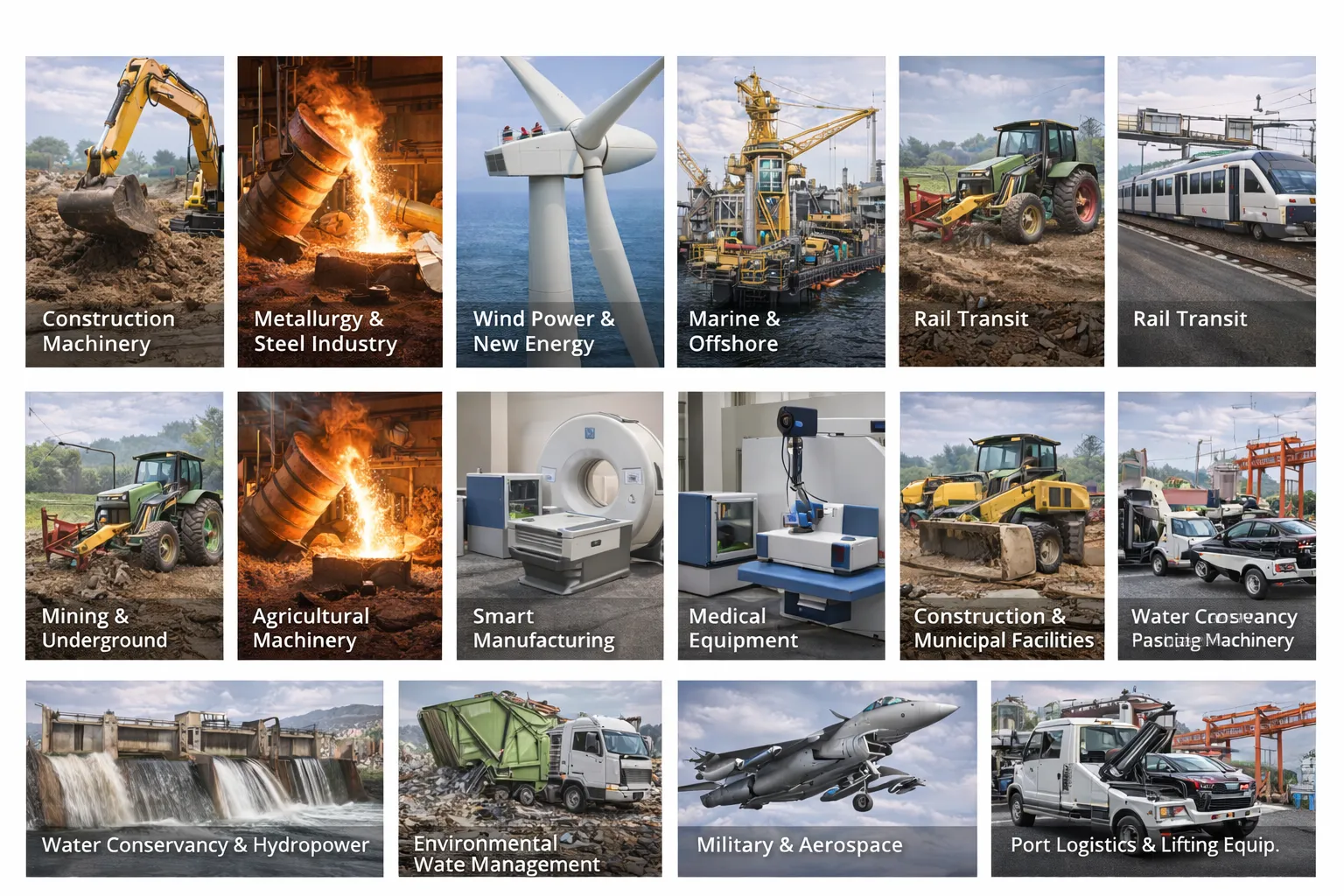
While the extraordinary corrosion resistance and immense kinetic power detailed here are exquisitely tuned for offshore deck cranes, these fundamental physical traits—extreme rigidity, reliable load holding, and environmental immunity—translate perfectly to a multitude of other demanding heavy industrial landscapes where equipment failure results in massive financial losses.
- Heavy Infrastructure Equipment: The rapid cycle times, unpredictable load spikes, and massive breakout forces required by excavators, articulated loaders, and mobile cranes rely heavily on our welded architectures. Discover our rugged solutions engineered for the construction machinery industry.
- Metallurgical and Iron Processing: Exposure to extreme radiant furnace heat, continuous heavy payloads, and abrasive airborne slag demands highly specialized, heat-resistant cylinder designs, specifically built for the metallurgical and iron industry.
- Subterranean Extraction: Operating deep underground requires unmatched impact resistance to survive rock strikes and highly corrosive, acidic groundwater. See how our high-yield alloy steel designs power heavy rock crushers and drill rigs. Explore the mining industry applications.
- Material Handling & Logistics: Supplying immense clamping and hoisting power for port-side reach stackers, container handlers, and specialized single acting hydraulic cylinder counterweight systems in massive gantry setups.
Comparative Analysis: Standard Marine Actuators vs. Our Offshore Benchmark
Evaluating long-term maritime capital expenditure requires looking critically past the initial procurement cost and focusing heavily on the Levelized Cost of Energy (LCOE) and the prevention of unscheduled drydocking. The following matrix illustrates exactly why leading fleet operators specify our customized solutions over standard commercial off-the-shelf variants.
| Performance Metric | Standard Commercial Hydraulic Cylinder | Our Specialized Crane Luffing Cylinder |
|---|---|---|
| Corrosion Resistance | Rapid failure; salt spray penetrates chrome micro-cracks causing deep pitting. | Absolute defense; nickel plating or ceramic coatings totally block chloride ion attack. |
| Dynamic Load Capacity | Carbon steel rods susceptible to bending during violent vessel roll/pitch spikes. | High-yield alloy steel handles massive lateral bending moments and wave shocks effortlessly. |
| Structural Integrity | Tie-rods stretch under crane vibration, causing continuous end-cap fluid weeping. | Monolithic welded design guarantees zero vibrational loosening or stretching forever. |
| Motion Smoothness | High friction causes dangerous stick-slip shuddering during fine load positioning. | PTFE composites and advanced tribology deliver silky, shudder-free micro-stepping control. |
| Maintenance Downtime | Extremely high; requires frequent emergency dry-docking to replace shredded seals. | Maximizes vessel uptime; significantly lowers the total maritime logistics budget. |
Proven Field Reliability: Global Maritime Case Studies
Rigorous engineering theory is ultimately validated by relentless execution in the harshest marine environments. The following comprehensive analyses document how our specialized fluid power technologies have permanently resolved critical lifting failures for prominent offshore wind operators across East Asia.
Case Study 1: Eradicating Saltwater Pitting off Jeju Island
Client & Location: Offshore Renewable Fleet Operator, Jeju, South Korea (October 2024)
The Maritime Challenge: Operating in highly corrosive, wind-swept offshore blocks, a premier maintenance vessel experienced catastrophic pressure failure on its main 250-ton deck crane. The original equipment utilized standard hard chrome, which had developed severe pitting from the aggressive salt spray. The jagged rust pits shredded the internal wiper seals, causing severe fluid blowby and paralyzing a critical nacelle installation. The port engineer contacted us directly while desperately seeking fixing hydraulic cylinders solutions online.
Solution & Implementation: We immediately engineered a massive structural drop-in replacement. The core upgrade utilized our crane luffing cylinder featuring the heavy-duty nickel-plated rod treatment to permanently defeat chloride ion penetration, and fully marine-rated spherical bearings.
The Tangible Outcome: The actuator was rapidly fitted during an emergency dry-dock. Following 16 months of continuous offshore service, recent ultrasonic inspections revealed the nickel surface remains perfectly smooth and mirror-like. Fleet maintenance budgets for crane repair were subsequently slashed by over 70%.
Case Study 2: Conquering Dynamic Shock Loads in the Sea of Japan
Client & Location: Maritime Construction Consortium, Akita, Japan (March 2025)
The Maritime Challenge: During harsh winter offshore installations, violent wave swells were causing suspended 80-ton wind turbine blades to swing wildly. This transferred massive lateral bending forces down the crane boom, physically bending the carbon steel rods of their existing OEM luffing cylinders, rendering them permanently jammed in the extended position.
Solution & Implementation: We completely redesigned their fluid power mechanisms, utilizing premium forged alloy steel for the hydraulic cylinder piston and rod assemblies to drastically increase the yield strength. We also implemented the premium ceramic coating optional upgrade to handle the freezing, abrasive sea spray.
The Tangible Outcome: The new alloy steel architecture effortlessly absorbed the extreme marine shockloads. The heavy-duty spherical bearings compensated for boom deflection perfectly, ending the recurring crisis of bent rods and paralyzed equipment in the freezing northern waters.
Case Study 3: Bypassing European OEM Monopolies in the Taiwan Strait
Client & Location: Offshore Support Services, Taichung, Taiwan (July 2025)
The Maritime Challenge: An aging European-built heavy-lift crane required a complete cylinder overhaul. Sourcing original replacements from the European OEM involved a staggering 32-week lead time and exorbitant maritime shipping surcharges. The vessel faced an unacceptable half-year grounding, crippling their regional turbine maintenance contracts.
Solution & Implementation: Provided with precise structural schematics, our factory rapidly engineered an exact geometric drop-in replacement crane luffing hydraulic cylinder. We upgraded the internal seals to handle Environmentally Acceptable Lubricants (EAL) perfectly.
The Tangible Outcome: The massive custom actuator was machined, fully load-tested, and delivered to the Taichung shipyard in exactly 5 weeks. The vessel returned to active duty 6 months ahead of the OEM schedule, saving the operator hundreds of thousands in lost operational revenue.
Technical B2B Frequently Asked Questions (FAQ)
For naval architects, fleet maintenance directors, and procurement managers evaluating our marine fluid power systems, we have compiled detailed engineering answers to the most rigorous technical inquiries encountered during vessel refit planning.
1. How exactly does nickel plating or ceramic coating prevent the pitting that destroys standard hard chrome?
Traditional hard chrome plating inherently features a microscopic network of fine cracks caused by internal stress during the electroplating process. In maritime environments, salt spray and chlorides seep through these micro-cracks, reacting with the steel underneath to create galvanic corrosion bubbles, which eventually burst into jagged rust pits. Electroless nickel plating and our thermal-sprayed ceramic coatings deposit chemically and mechanically to create entirely uniform, amorphous, and non-porous barriers. They physically block chloride ions from ever reaching the steel substrate, permanently defeating pitting.
2. Why is alloy steel necessary for the crane luffing cylinder rod instead of standard carbon steel?
A wind power maintenance vessel operates dynamically in rough seas. When the vessel rolls, a heavy suspended payload swings, transferring immense, sudden lateral bending moments down the crane jib directly into the fully extended actuator rod. Standard carbon steel lacks the necessary yield strength and will permanently bend under these severe shockloads. High-tensile alloy steel forgings provide superior elasticity and fracture toughness, absorbing the marine shock and returning to true center without buckling.
3. Under what specific conditions should we upgrade to the ceramic coating option?
While our heavy nickel plating provides exceptional, long-lasting defense for standard deck operations, vessels operating continuously in extreme “splash zones” or regions with heavy airborne sand and abrasive ice require the ultimate defense. Thermal-sprayed ceramic coatings are significantly harder than steel. This renders the rod entirely immune to mechanical scratching, heavy oxidation, and aggressive marine bio-fouling (such as barnacle adhesion), ensuring an extremely long rod life in the most hostile waters on earth.
4. Can you engineer exact drop-in replacements for our existing European OEM marine cranes?
Absolutely. Because we maintain entirely autonomous manufacturing capabilities, we are not limited to fixed catalog standards. We routinely reverse-engineer and custom-machine exact stroke lengths, heavy bore capacities, high-pressure counterbalance valve manifolds, and specialized spherical bearing eyes. This guarantees that our advanced systems bolt flawlessly into legacy crane pedestals without requiring any costly hot-work or structural modifications to your vessel.
5. What is the typical manufacturing lead time for a large marine cylinder retrofit in Asia?
By entirely bypassing third-party vendors and maintaining massive in-house alloy steel billet inventories, we aggressively compress maritime lead times. Large-scale custom orders for the Asian market can typically be machined, FAT tested, and dispatched within 4 to 6 weeks. Procuring directly from our factory also guarantees a highly competitive hydraulic cylinder price, substantially lowering your capital expenditure compared to importing from legacy Western monopolies.
6. Do you supply specialized seal kits for future maintenance, or provide overhaul support?
Yes. We design our marine actuators for extraordinary lifespans, but we supply comprehensive documentation and proprietary spare hydraulic cylinder components—including heavy-duty PTFE composite seals formulated for Environmentally Acceptable Lubricants (EAL), and replacement spherical bearings—for your ship’s onboard inventory. If your port technicians require assistance executing a scheduled overhaul or complex hydraulic cylinder repair, our factory engineering team is readily available for direct technical consultation to ensure the rebuild maintains the exact original marine specification.
Fortify Your Offshore Fleet Operations Today
Do not allow substandard industrial actuation components to compromise the safety of your deck crews or artificially inflate your dry-dock maintenance budgets. Upgrading to a specialized, anti-pitting fluid power solution immediately secures your maritime investments and guarantees flawless heavy lifting under the most aggressive oceanic conditions.
Whether you are engineering next-generation offshore wind maintenance vessels from the hull up or urgently seeking high-performance drop-in retrofits to resolve catastrophic rod pitting on existing cranes, our maritime engineering bureau is standing by to deliver highly competitive, precision-machined manufacturing proposals.
Editor: Cxm