Escape Door Cylinder for Metro Emergency Evacuation
Purpose-built for critical subterranean passenger safety. Engineered with an advanced high-reliability sealing matrix and lightweight alloy steel to guarantee immediate, light-load emergency opening after a decade of mechanical dormancy.
Product Overview: The Ultimate Fail-Safe in Passenger Transit
Operating a subterranean metro network in densely populated urban centers across East Asia carries an immense burden of public safety. Millions of commuters rely on these rail networks daily. When a catastrophic event occurs within the confines of a tunnel—whether it is a total power grid failure, an electrical fire, or a structural derailment—the standard sliding passenger doors are often rendered completely useless against the narrow concrete tunnel walls. In these critical, life-threatening moments, the only viable path to survival is through the reinforced emergency bulkheads located at the absolute front and rear of the train carriage. The singular mechanical device responsible for forcing this heavy bulkhead open and deploying the passenger egress ramp against intense tunnel air pressure is the Escape Door Cylinder.
Throughout two decades of engineering heavy industrial fluid power systems, I have consistently observed the critical flaw of utilizing standard commercial catalog actuators for emergency transit applications. This specific safety mechanism operates under an incredibly punishing engineering paradox: it may sit entirely dormant inside a humid, heavily vibrating locomotive nose-cone for ten to fifteen years, yet when the electronic emergency signal is triggered, it must deploy with flawless perfection in less than two seconds. The primary enemy of a dormant actuator is internal fluid bypass. Standard industrial rubber seals are designed for constant, daily movement. When left completely stationary for years, these conventional elastomers undergo a chemical process known as “compression set.” They lose their elasticity, flatten out against the metal bore, and occasionally vulcanize directly to the steel. When the emergency pressurized fluid is finally released from the onboard accumulator, instead of pushing the hydraulic cylinder piston forward, the fluid simply slips past the degraded seal. The cylinder loses its motive force, resulting in a terrifying mechanical failure right when human lives depend on it.
To permanently resolve this systemic safety hazard, our facility has completely re-engineered the emergency transit actuator. As an authoritative hydraulic cylinder manufacturer, we have developed a proprietary high-reliability sealing matrix combined with a highly rigid, fully welded alloy steel architecture. By prioritizing zero internal leakage and engineering ultra-low breakaway friction into the tribological design, we provide mass transit authorities with fluid power solutions that guarantee instant, unhesitating emergency opening. Our specialized double acting hydraulic cylinder configurations completely redefine the safety baselines of modern rolling stock, ensuring that evacuation pathways deploy with uncompromising certainty. Additionally, these units pair flawlessly with our synchronized boarding step cylinders, guaranteeing a complete, gap-free egress route to the tunnel floor.
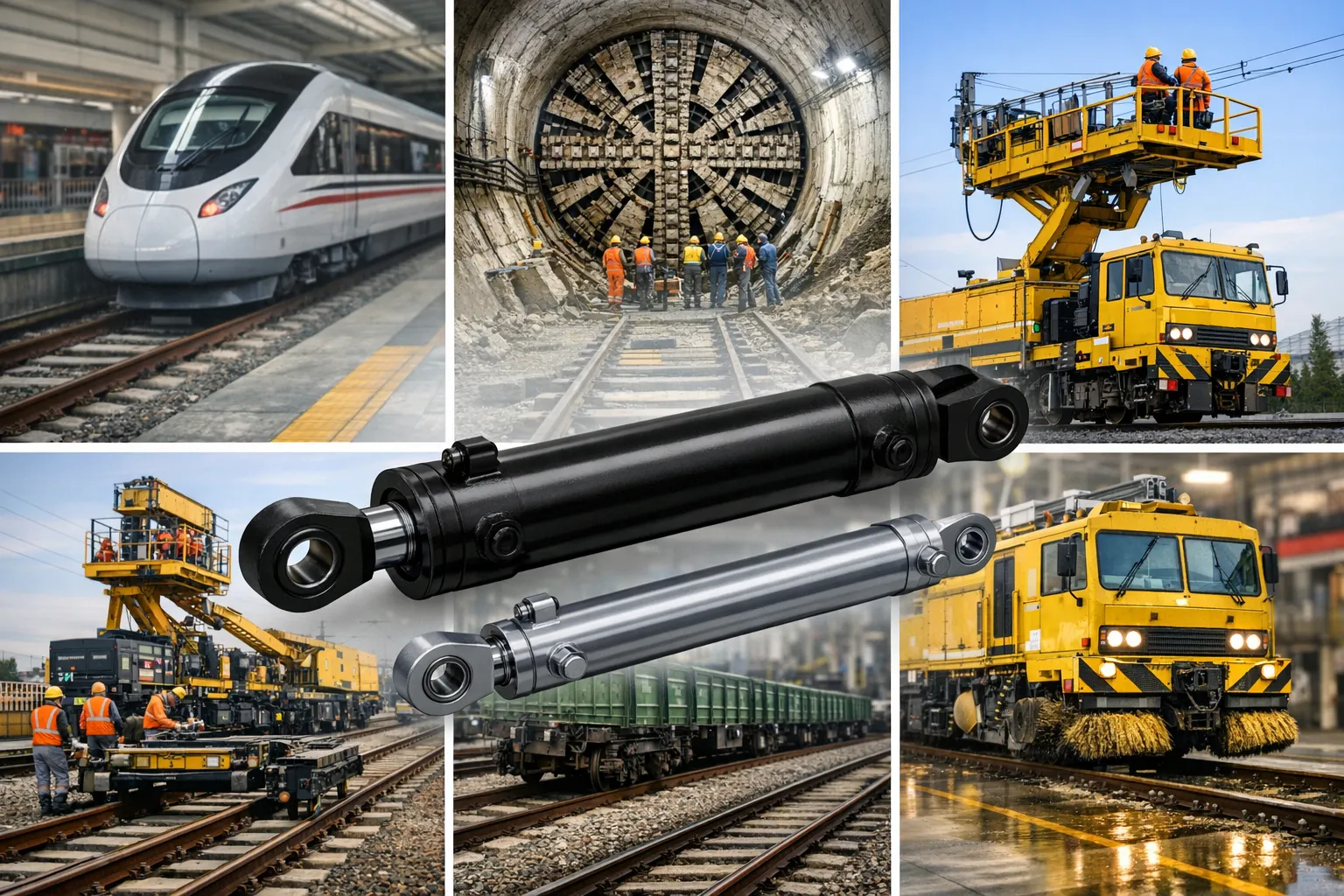
Comprehensive Technical Parameters
Integrating a specialized safety actuator into an automated metro pneumatic or hydraulic manifold requires absolute adherence to rigorous railway engineering specifications. The following table details the core manufacturing metrics, material baselines, and unique operational capabilities of our dedicated emergency egress cylinders.
| Engineering Parameter | Specification Details & Material Configuration |
|---|---|
| Target Industry Sector | Rail Transit / High-Density Commuter Networks |
| Equipment Category | Metro / Subway Locomotive Carriages |
| Subsystem / Functional Role | Emergency Evacuation Routing |
| Component Designation | Escape Door Cylinder |
| Fluid Action Mode | Double acting hydraulic cylinder – Powered extension and retraction |
| Structural Base Type | Linear Piston Cylinder with high-speed guide rings |
| Manufacturing Architecture | Fully Welded Construction to eliminate vibration loosening |
| Core Material System | High-Yield Alloy Steel for weight reduction in avionics bays |
| Rod Surface Treatment | Micro-cracked Hard Chrome Plated (Thickness: 25-30um) |
| Environmental Operating Grade | Light Load / High-Velocity Acceleration |
| Critical Kinetic Feature | Instantaneous Emergency Opening |
| Primary Failure Mode Prevented | Internal Leakage and Dormancy Stiction |
| Core Engineering Configuration | High-Reliability Sealing Matrix |
| Mounting Configurations | Front/Rear Flange, Clevis Mount, Center Trunnion (Customizable) |
Operational Fluid Dynamics: The Mechanics of Rapid Deployment
To fully comprehend the superiority of our emergency actuators, one must delve deeply into the fluid dynamics governing the system during a crisis. In a standard standby state, the train’s central hydraulic or pneumatic accumulator maintains a reservoir of highly pressurized fluid, blocked by an electrically monitored, normally-closed directional solenoid valve. For months or even years, the fluid trapped inside the escape door cylinder remains perfectly static. The engineering challenge here is immense: pressurized fluid constantly seeks the path of least resistance. It continuously attempts to squeeze past the internal seals from the high-pressure chamber into the low-pressure chamber. If a standard industrial actuator is used, this slow, microscopic bleed eventually drops the system pressure below the mathematical threshold required to force the door open.
Our specialized cylinders utilize a proprietary high-reliability sealing matrix to combat this. The internal barrel is CNC-honed to a pristine, mirror-like finish. We implement advanced composite step seals heavily energized by synthetic O-rings that physically expand under static pressure, creating a flawless molecular-level barrier against the fluid. When a crisis occurs, the train conductor or an automated crash-sensor strikes the emergency release. The solenoid valve snaps open instantly, flooding the blind end of the cylinder with the accumulated high-pressure fluid. The sudden, unyielding hydrostatic force violently impacts the piston face. Because the physical mass of the door is comparatively light, the cylinder’s volumetric stroke is engineered for high velocity rather than immense lifting power like a standard lift cylinder. The alloy steel rod shoots forward, forcefully swinging the door down on its hinges to form the evacuation ramp.
The strategic implementation of a double acting hydraulic cylinder design is critical here. Relying on a single acting hydraulic cylinder with a mechanical return spring in an emergency is extremely dangerous. In a derailment scenario, the carriage frame may become warped or bent, creating massive mechanical binding against the door tracks. A weak coiled spring lacks the sheer force to push the door open under duress. A double-acting setup utilizes powered fluid pressure to forcefully retract latching mechanisms and dynamically kick the door outward. This synchronized fluid power guarantees the evacuation path clears in fractions of a second, regardless of whether the train is resting at an angle or suffering from severe chassis deformation.
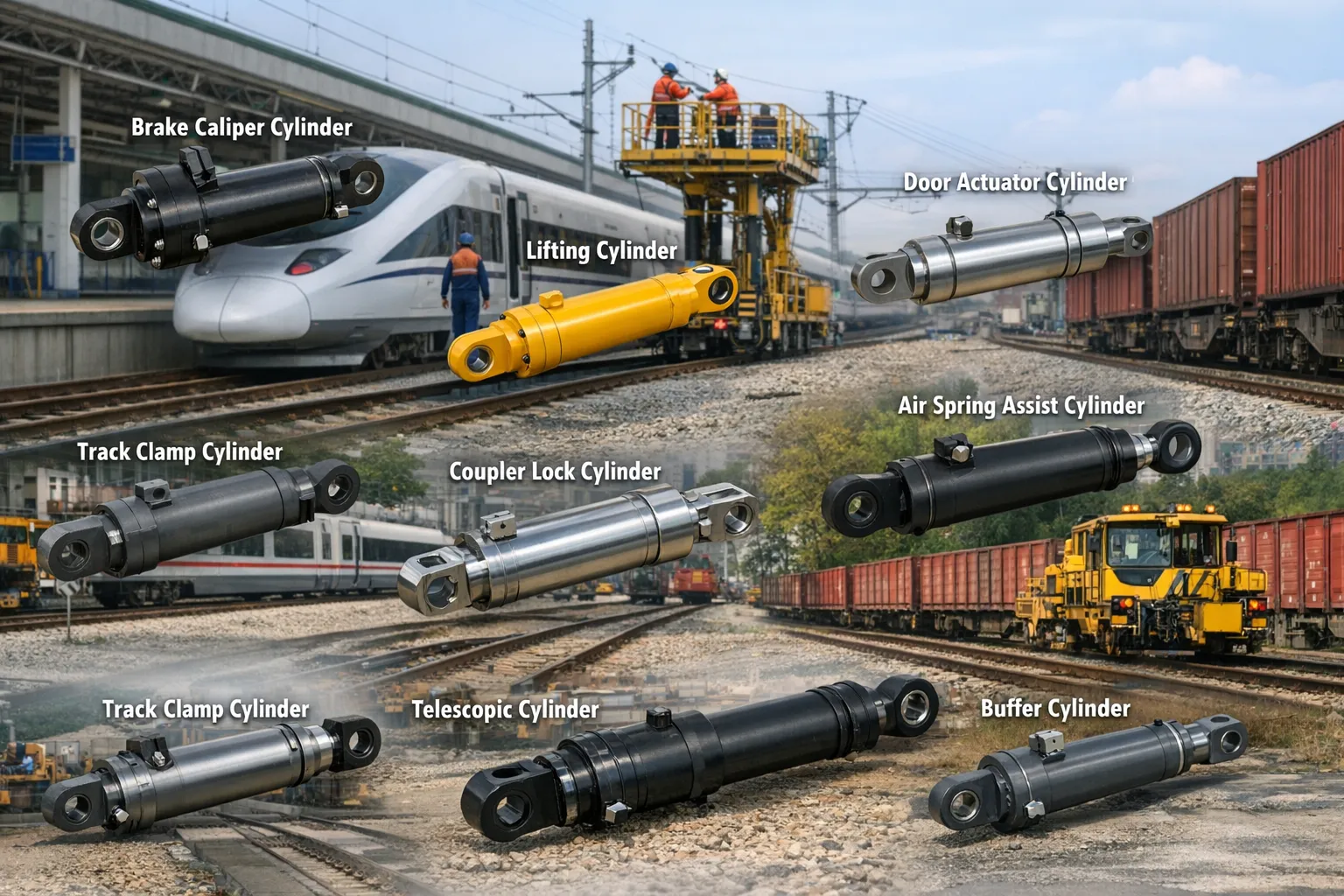
Seamless OEM Dimensional Matching for Fleet Overhauls
Procurement directors and depot maintenance teams managing massive metro fleets face significant hurdles when attempting to replace aging life-safety components. Sourcing a replacement actuator directly from the original train manufacturer (often a massive European or Japanese conglomerate) frequently involves navigating unacceptable lead times spanning many months and paying an exorbitantly inflated hydraulic cylinder price. Moreover, buying the exact same legacy OEM part means you are simply reinstalling the exact same internal leakage vulnerability back into your trains, guaranteeing the need for future complex hydraulic cylinder repair.
We offer a technically vastly superior and economically viable solution. Our engineering team specializes in the physical reverse-engineering of existing hydraulic parts. We manufacture exact drop-in dimensional replacements for legacy emergency actuators originally supplied by major global catalogs, such as SMC, Festo, Parker Hannifin, Bosch Rexroth, Knorr-Bremse, and Norgren. We ensure the pin-to-pin retracted length, the stroke distance, the mounting trunnion diameters, and the exact fluid port thread pitches match your existing chassis bracketry flawlessly. Your maintenance crews can quickly unbolt the failing OEM cylinder and bolt our upgraded, zero-leakage unit directly in its place, dramatically accelerating your fleet upgrade schedules without requiring a single welding torch.
Compliance Disclaimer: The corporate brand names, trademarks, and company identities referenced above are the exclusive intellectual property of their respective owners. We list these names strictly for the practical purposes of dimensional cross-referencing, mechanical compatibility analysis, and assisting fleet engineers in component selection. We operate as an autonomous, independent manufacturing factory and hold no formal affiliation with these entities. Our aftermarket components are specifically designed to resolve the inherent engineering flaws found in mass-produced commercial units.
Core Technological Advantages: Engineered for Crisis
Why explicitly specify our emergency transit actuators over standard industrial options? The distinction lies in a concentrated, uncompromising focus on eliminating failure modes before they occur. By merging advanced material science with precision fluid power engineering, we deliver unparalleled deployment reliability. Here are the core technical advantages integrated into our escape door cylinder systems:
-
1. High-Reliability Zero-Leakage Sealing Matrix
This is our paramount technological achievement. We completely reject standard nitrile rubber O-rings for this application. We utilize a proprietary blend of aerospace-grade elastomers and Polytetrafluoroethylene (PTFE) composite step seals. This intricate sealing matrix maintains an incredibly tight, permanent interference fit against the honed barrel wall. It definitively prevents microscopic fluid bypass, ensuring that the system holds its full pneumatic or hydraulic charge for years, guaranteeing maximum motive power at the exact moment of an emergency.
-
2. High-Rigidity Alloy Steel Construction
During a high-speed derailment or sudden tunnel impact, the carriage chassis may twist or warp violently. The emergency cylinder must survive this structural shock without buckling. By utilizing premium, high-yield alloy steel rather than standard heavy carbon steel, our barrels and rods possess a drastically higher tensile strength while reducing overall weight inside the crowded avionics bay. This ensures the geometric integrity of the cylinder remains perfect under severe duress.
-
3. Ultra-Low Breakaway Friction (Anti-Stiction)
Standard rubber seals can chemically adhere to metal barrels if left stationary for long periods, causing a dangerous delay in actuation known as “stick-slip.” Our specialized PTFE glide rings inherently resist chemical adhesion. Even after five to ten years of remaining completely dormant, the escape door cylinder will deploy with practically zero breakaway friction, ensuring the evacuation path is physically established in milliseconds.
-
4. Deep-Penetration Welded Architecture
Subway trains endure relentless, high-frequency kinetic vibration from the tracks. Cylinders built with threaded tie-rods will inevitably vibrate loose over time, leading to catastrophic depressurization and fluid dumping. We employ fully automated robotic TIG (Tungsten Inert Gas) welding to fuse the end caps directly to the alloy barrel. This creates an unyielding, unified pressure vessel completely impervious to high-speed transit vibration.
-
5. Advanced Micro-Cracked Chrome Atmospheric Defense
Condensation within train bulkheads can lead to surface rust on the cylinder rod, which acts like sandpaper and destroys the internal seals when the rod finally moves. Our alloy rods undergo a thick, specialized micro-cracked hard chrome plating process, followed by intensive mechanical polishing. This provides a mirror-smooth, rust-proof barrier that protects the delicate internal hydraulic cylinder components from atmospheric moisture decay.
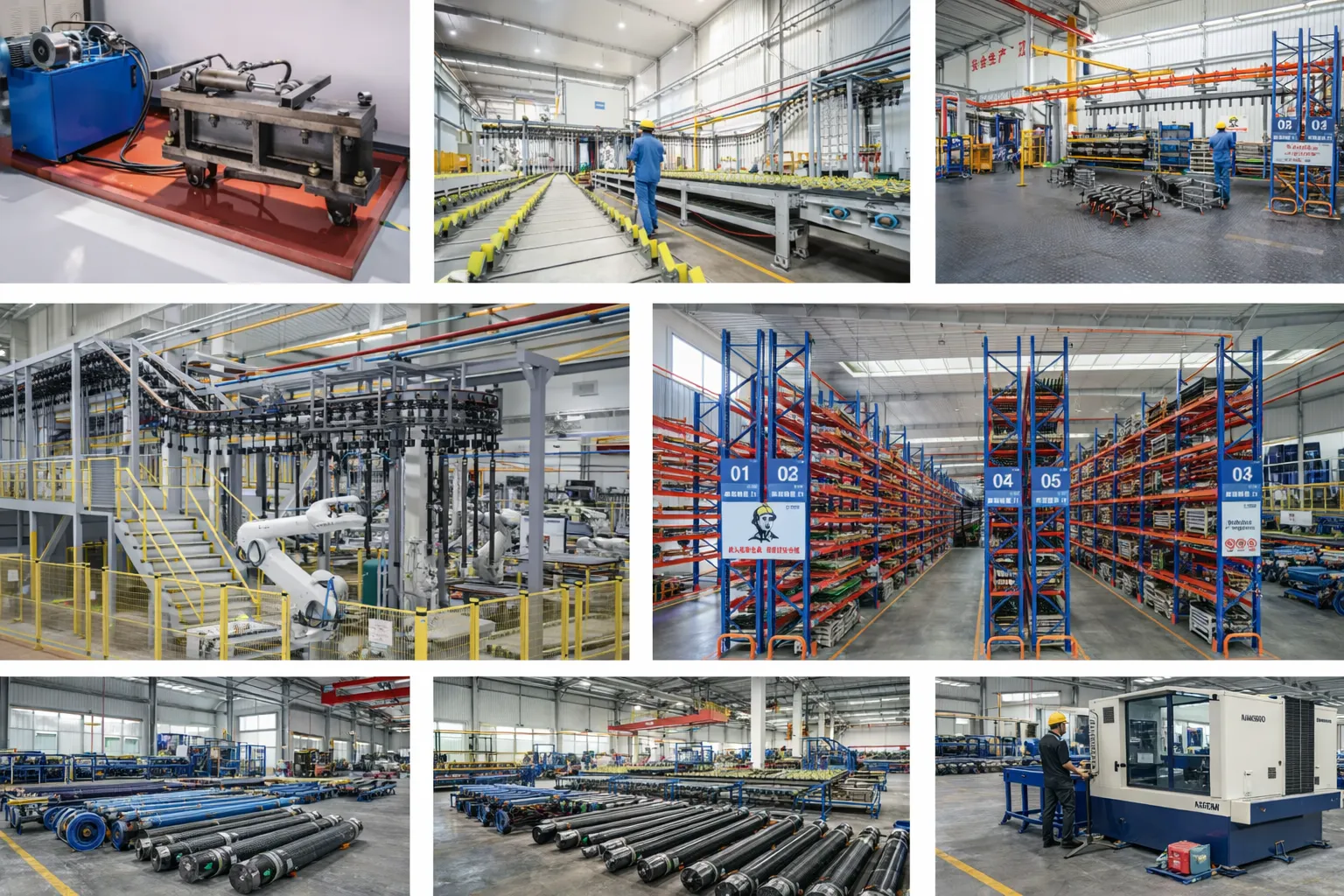
Uncompromising Manufacturing Control & Quality Traceability
When engineering equipment where human survival is the primary metric, outsourced or fragmented production is entirely unacceptable. As an authoritative and fully integrated hydraulic cylinder manufacturer, we exercise absolute autonomous control over every single phase of the manufacturing lifecycle. Our facility handles raw steel forging validation, precision CNC turning, robotic welding, and final clean-room assembly entirely in-house. This centralized control ensures that our stringent quality mandates are never compromised by third-party vendors.
The production of an emergency actuator involves extreme machining tolerances. Our internal cylinder bores undergo automated skiving and roller burnishing, achieving a surface roughness (Ra) of less than 0.2um. This flawless, glass-like internal surface is critical to preventing the high-pressure seals from wearing down over decades of static contact. Furthermore, every critical structural weld is thoroughly inspected using Ultrasonic Non-Destructive Testing (NDT) to guarantee absolute structural solidity without microscopic slag inclusions.
The cornerstone of our quality assurance is our rigorous hydrostatic testing protocol. We do not rely on random statistical batch sampling; 100% of our production units are individually clamped into our test rigs. They are pressurized to 1.5 times their maximum rated operating pressure and held statically for an extended duration. Highly sensitive digital pressure transducers monitor the fluid—if the pressure drops by even a fraction of a bar, indicating microscopic internal leakage, the unit is immediately scrapped. Finally, every approved cylinder receives a unique, laser-etched alphanumeric serial number, allowing us to trace the exact batch of steel, the seal profile, and the technician responsible, ensuring complete lifecycle accountability for your transit fleet.
Beyond Rail Transit: Expanding Versatile Safety Applications
The extreme metallurgical and tribological engineering required to perfectly actuate an emergency escape door under severe duress results in a highly versatile, incredibly reliable fluid power platform. Our zero-leakage, rapid-deployment technology is highly sought after in other heavy industries where safety and instantaneous response are non-negotiable requirements:
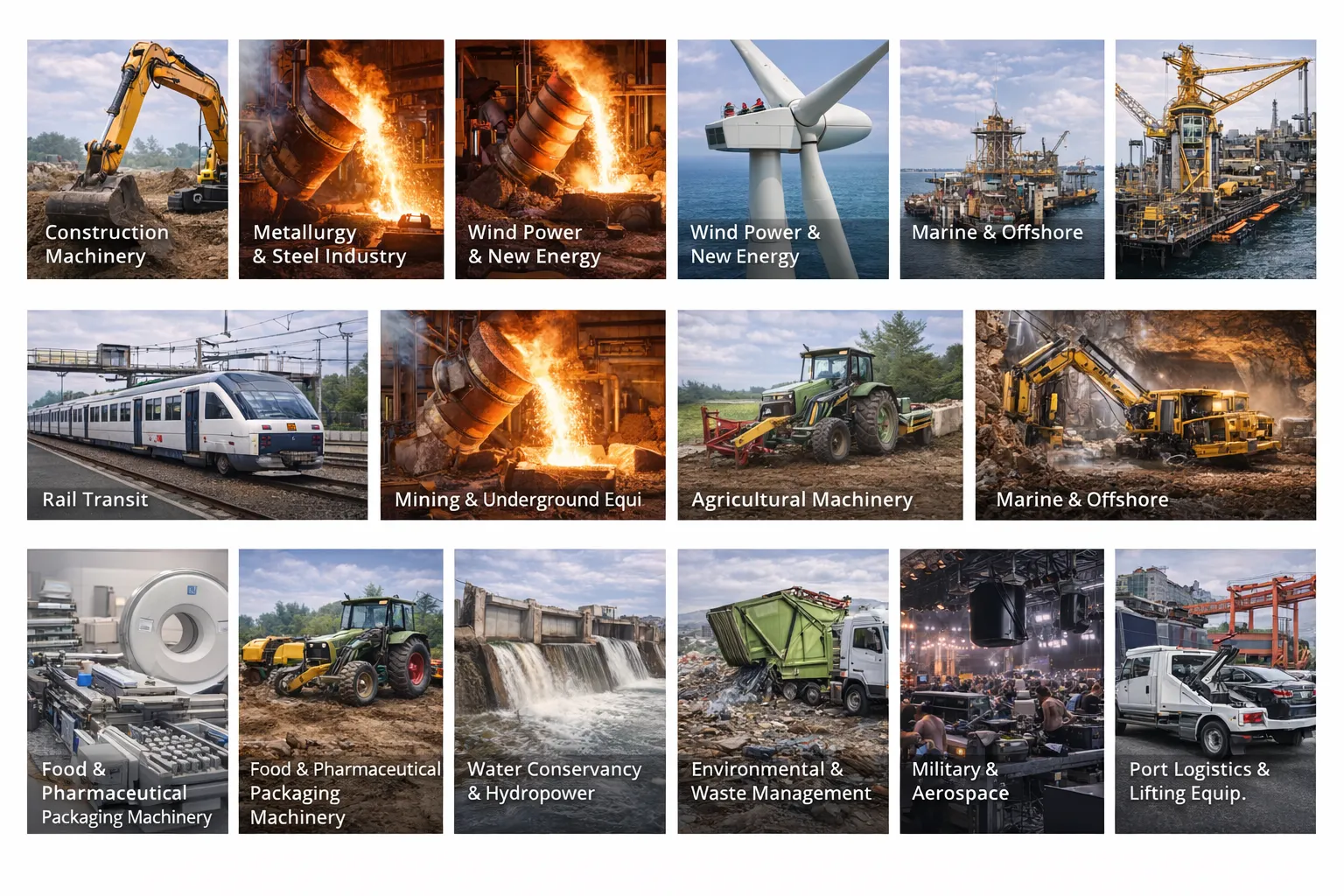
- Marine and Offshore Sector: Used heavily in the automated deployment of life-rafts and emergency survival craft davits on commercial vessels. The cylinders must withstand severe salt-spray corrosion and deploy the heavy fiberglass craft instantly during a maritime evacuation without relying on primary vessel power.
- Metallurgical and Iron Industry: Smelting foundries utilize our fail-safe cylinders to operate massive emergency ventilation louvers and blast furnace pressure release doors. The thermal stability of our seals ensures that emergency venting is guaranteed even in environments subjected to extreme radiant heat.
- Construction Machinery Industry: Integrated into ultra-heavy mining excavators and articulated haul trucks to actuate emergency cab-release hatches or fire-suppression chemical deployment systems in the sudden event of a roll-over or engine compartment fire.
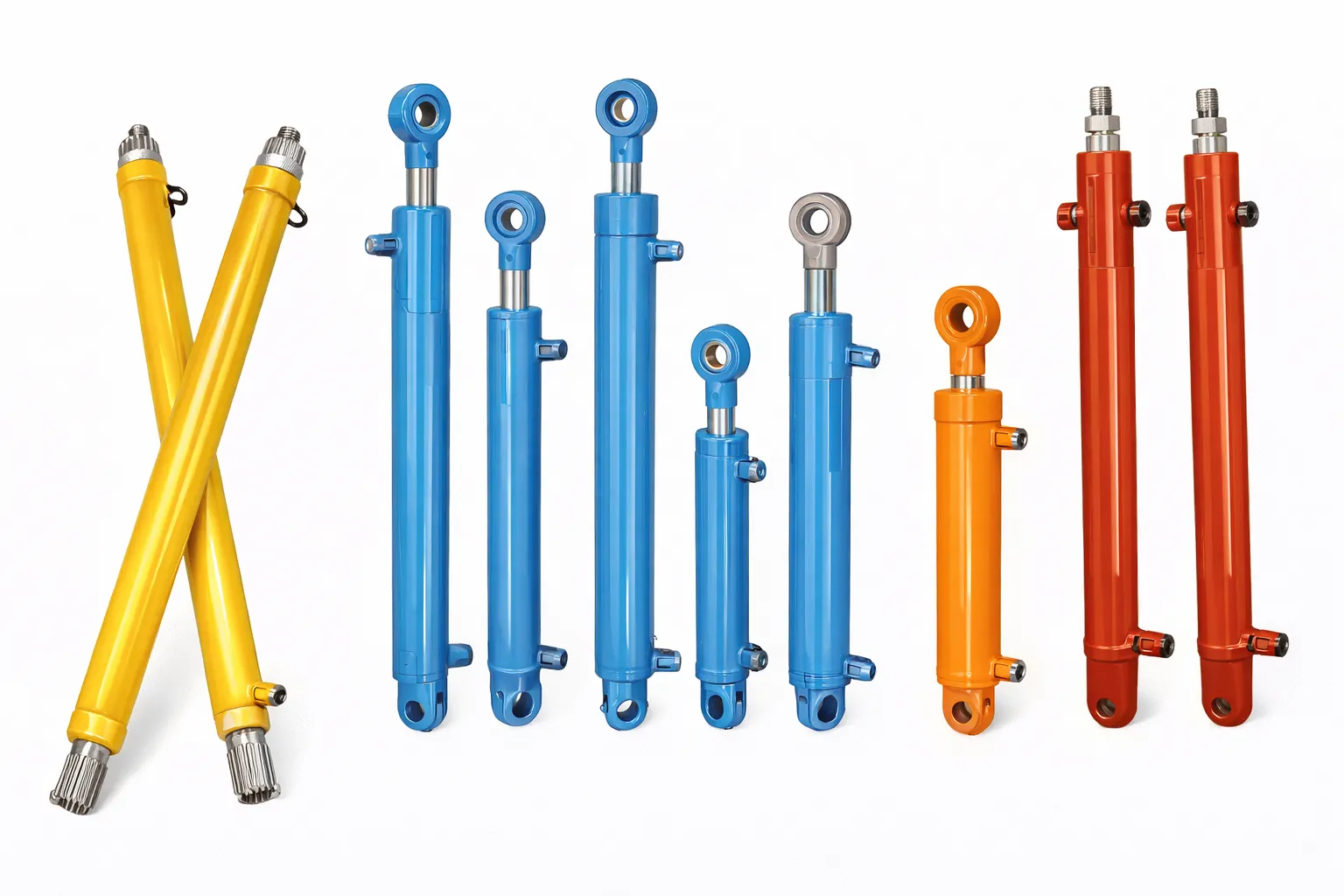
Comparative Analysis: Standard Actuator vs. Emergency Escape Cylinder
Attempting to cut capital expenditure corners by utilizing standard industrial catalog cylinders in life-safety applications is a profound engineering miscalculation. The table below illustrates the critical differences between a mass-market fluid power unit and our dedicated emergency transit solution.
| Engineering Metric | Standard Commercial Cylinder | Our Specialized Escape Door Cylinder |
|---|---|---|
| Standby Pressure Retention | Poor. Standard NBR seals allow slow internal fluid bypass over months of inactivity. | Absolute. Composite PTFE seals guarantee verified zero internal leakage indefinitely. |
| Breakaway Friction | High. Rubber seals chemically bond to the metal barrel, delaying emergency deployment. | Ultra-Low. Anti-adhesion glide rings ensure smooth, instantaneous movement. |
| Vibration Resistance | Vulnerable. Threaded tie-rods rattle loose over time, causing catastrophic fluid loss. | Invulnerable. 100% welded alloy steel architecture creates a unified, rigid pressure vessel. |
| Long-Term Economic Value | Requires constant pressure testing and frequent fixing hydraulic cylinders routines. | Maintenance-free reliability; drastically lowers the fleet’s lifetime operational overhead. |
Real-World Case Studies: Safeguarding Asian Rail Networks
The true measure of our fluid power engineering is validated in the field. Below are specific accounts detailing how our emergency actuation systems have successfully modernized and secured critical transit infrastructure across major East Asian corridors.
Case Study 1: Major Metropolitan Subway Overhaul
Location: Seoul Metro Line, South Korea | Application: Front & Rear Bulkhead Evacuation Doors
The Engineering Challenge: During a routine, highly stringent annual safety audit mandated by MOLIT (Ministry of Land, Infrastructure and Transport) in 2024, safety inspectors discovered a terrifying vulnerability. The legacy pneumatic and hydraulic cylinders controlling the emergency end-doors across a fleet of 50 older trainsets had lost over 40% of their standby pressure due to chronic internal leakage. In a simulated crisis, the doors failed to open against the simulated tunnel air pressure, effectively trapping the test personnel inside the carriage.
Consultation & Solution: The metro authority’s chief mechanical officer found our engineering portfolio via a B2B search for high-reliability hydraulic parts. We rapidly designed a bespoke batch of our zero-leakage escape door cylinder units. By precisely matching the exact trunnion mounts and stroke lengths of their failing European OEM units, we provided a solution that required no welding, cutting, or chassis modification by the depot crews.
Operational Result: The entire older fleet was successfully retrofitted over three months during scheduled C-checks. Subsequent 72-hour and 6-month static pressure tests showed absolutely zero pressure decay. The fleet effortlessly passed the rigorous national safety audit, restoring their operational certification.
“The direct engineering consultation we received was exceptional. Your custom alloy cylinders completely eradicated the pressure loss issue that was plaguing our older rolling stock. The deployment speed is now incredibly fast, and the build quality is vastly superior to the original factory units.” — Mr. Kim, Lead Rolling Stock Safety Engineer.
Case Study 2: Coastal Commuter Rail Network Integrity
Location: Busan, South Korea | Application: Defeating Severe Coastal Humidity
The Engineering Challenge: Operating heavily along coastal routes, this transit authority was fighting a constant, losing battle against extreme humidity and salt-air ingress into their underground tunnels. Their emergency doors were suffering from external rod pitting on the standard commercial actuators. The rust on the rods was tearing the wiper seals apart every time the cylinder moved, leading to rapid fluid contamination and failure.
The Solution: After a successful onsite consultation, we upgraded their entire fluid power safety architecture. We supplied alloy steel cylinders utilizing our significantly thicker, micro-cracked hard chrome plating process and integrated aggressive dual-lip polyurethane wiper seals to aggressively keep the external coastal humidity and salt grit out of the internal hydraulic fluid.
Operational Result: The transit authority reported a 75% reduction in their annual hydraulic cylinder repair budget over the next two years, proving the incredible Return on Investment (ROI) of investing in specialized, environment-resistant metallurgy.
Case Study 3: Advanced Airport Maglev Link Upgrade
Location: Incheon Airport Transit Corridor, South Korea | Application: Avionics Bay Weight Reduction
The Engineering Challenge: The highly advanced Maglev trains operating on this link require extreme weight optimization. Their legacy emergency actuators were made of heavy, thick-walled carbon steel and occupied too much valuable space inside the crowded front avionics bay of the nose-cone.
The Solution: Our technical design team provided a heavily redesigned, miniaturized double acting hydraulic cylinder utilizing ultra-high-yield alloy steel. This superior material strength allowed us to significantly reduce the barrel wall thickness and overall physical footprint by nearly 30% while maintaining the exact same hydraulic pushing force.
Operational Result: The lighter, compact cylinders integrated perfectly into the cramped avionics bay, helping the design engineering team meet their strict weight reduction targets for the next generation of carriages without compromising safety.
Case Study 4: Deep Subterranean MRT Safe-Room Doors
Location: Taipei, Taiwan | Application: Pedestrian Tunnel Blast Hatches
The Engineering Challenge: Deep subterranean tunnels feature pressurized safe rooms for workers and passengers during severe smoke emergencies. The massive steel blast doors were previously operated by commercial cylinders that rapidly deteriorated in the highly humid, stagnant tunnel air, requiring expensive quarterly maintenance and seal replacements.
The Solution: The facility directors contacted us to source specialized, zero-leakage hydraulic rams. We provided extreme-duty actuators featuring our anti-stiction sealing matrix to guarantee immediate safe-room access, even if the doors had not been cycled in over five years.
Operational Result: The depot radically reduced their operational maintenance expenditure. The new units have operated flawlessly for years without a single instance of rust or fluid weeping, proving their worth in stagnant, harsh environments.
Expert Technical FAQ for Engineering Procurement
Specifying life-safety mechanical hardware is an incredibly rigorous process. To assist B2B procurement managers and fleet mechanical engineers, we have compiled comprehensive answers to the most frequent technical inquiries regarding our emergency fluid power solutions.
1. What exactly is “internal leakage,” and how does your cylinder definitively prevent it?
Internal leakage occurs when highly pressurized hydraulic fluid slowly bypasses the seals located on the internal hydraulic cylinder piston, moving from the high-pressure chamber into the low-pressure chamber. In an emergency standby system, this slowly bleeds away the stored kinetic energy over months of inactivity. We prevent this by abandoning standard rubber O-rings. Instead, we utilize a highly engineered matrix of energized elastomeric step seals combined with extremely tight machining tolerances, creating a permanent, physical barrier that holds pressure indefinitely.
2. Why is a double-acting configuration vastly safer than a single-acting spring return for emergency doors?
In a severe train incident or derailment, the physical chassis frame housing the door may become bent or deformed, creating massive mechanical friction against the door tracks. A single acting hydraulic cylinder relies on a coiled mechanical spring to return or open the door. If the frame is bent, the spring lacks the sheer force to push the door open, trapping passengers. A double-acting system uses active, high-pressure fluid force to drive the rod in both directions. This immense fluid power can violently smash through jammed tracks or deformed frames, guaranteeing the exit path opens.
3. How do you ensure the replacement cylinders perfectly fit our existing older train carriages?
As a highly agile manufacturing facility, custom integration is our primary specialty. Your engineering team provides us with the dimensional schematics or an original sample of your failing OEM hydraulic components. We then CNC-machine exact replicas of the physical footprint—perfectly matching the pin diameters, stroke lengths, and flange threads—while entirely upgrading the internal metallurgy and sealing technology. This ensures a rapid, drop-in replacement that requires zero cutting or welding on your carriage bulkhead.
4. Are these sealed safety units capable of standard depot maintenance and seal replacement?
Yes. Although the primary barrel and rear trunnion are deeply TIG-welded to prevent vibration failure, the front sealing gland (the rod head) is precisely threaded or bolted into place and secured mechanically. This deliberate design ensures that during a major fleet overhaul, your technicians can easily unbolt the front gland to access, inspect, and replace the internal dynamic seals, making routine fixing hydraulic cylinders processes highly efficient entirely within your own facility.
5. What exactly drives the final hydraulic cylinder price for a large-scale fleet safety overhaul?
By managing 100% of the manufacturing process and shipping factory-direct, we eliminate all third-party distributors and international catalog markups. The final price is dictated primarily by the physical size of the cylinder (material weight of the alloy steel), the complexity of the end-mounts required to match your legacy equipment, and the total batch volume. We consistently offer superior engineering at a highly competitive budget point for major transit networks.
6. What is the standard lead time for a custom batch delivered to South Korea or neighboring regions?
Standard production for a batch of customized, precision-tested hydraulic parts typically ranges from 25 to 35 working days. Because we autonomously control our forging, machining, and testing, we can frequently expedite orders for urgent safety upgrades. Efficient ocean freight logistics to major ports like Incheon, Busan, or Tokyo typically add only a few days to the total delivery timeline.
Secure Your Transit Network with Uncompromising Engineering
In the realm of mass passenger safety, there is absolutely zero margin for equipment failure. Continuing to rely on standard commercial actuators that suffer from internal leakage puts millions of commuters at risk and exposes your transit authority to severe liabilities. Upgrade your emergency evacuation infrastructure by partnering with a dedicated fluid power manufacturer that engineers reliability into every millimeter of steel.
Editor: Cxm