Heavy Duty Feed Cylinder for Drilling Rigs
Engineered specifically for mining equipment propulsion systems. Featuring an advanced thickened guide sleeve to permanently eliminate rod eccentric wear, delivering unrelenting large thrust for continuous drill rod advancement in the most extreme geological environments.
Product Overview: The Driving Force of Subterranean Excavation
In the highly demanding sectors of geological exploration, geotechnical foundation engineering, and deep surface mining, the mechanical integrity of your heavy machinery strictly dictates your overall project profitability. The propulsion system, often considered the muscular core of any modern drilling rig, serves a singular, indispensable industrial function: to provide the immense, relentless linear force required to advance the drill string deep into solid, unyielding rock formations. When cutting through dense, abrasive strata—such as the hard granite frequently encountered in civil engineering projects across South Korea and the greater East Asian region—the feed mechanism is subjected to chaotic multidirectional forces, severe high-frequency percussion waves, and extreme lateral deflection.
As a dedicated and globally recognized hydraulic cylinder manufacturer with over two decades of specialized fluid power engineering experience, we recognize that standard, off-the-shelf actuators simply cannot survive these brutal operational realities. The unique engineering positioning of our heavy-duty propulsion cylinder (widely known in the industry as a feed cylinder) lies in its targeted metallurgical enhancements and specialized internal structural reinforcements. We designed this unit specifically to combat and neutralize the most common and catastrophic failure mode experienced by fleet operators in the drilling industry: rod eccentric wear.
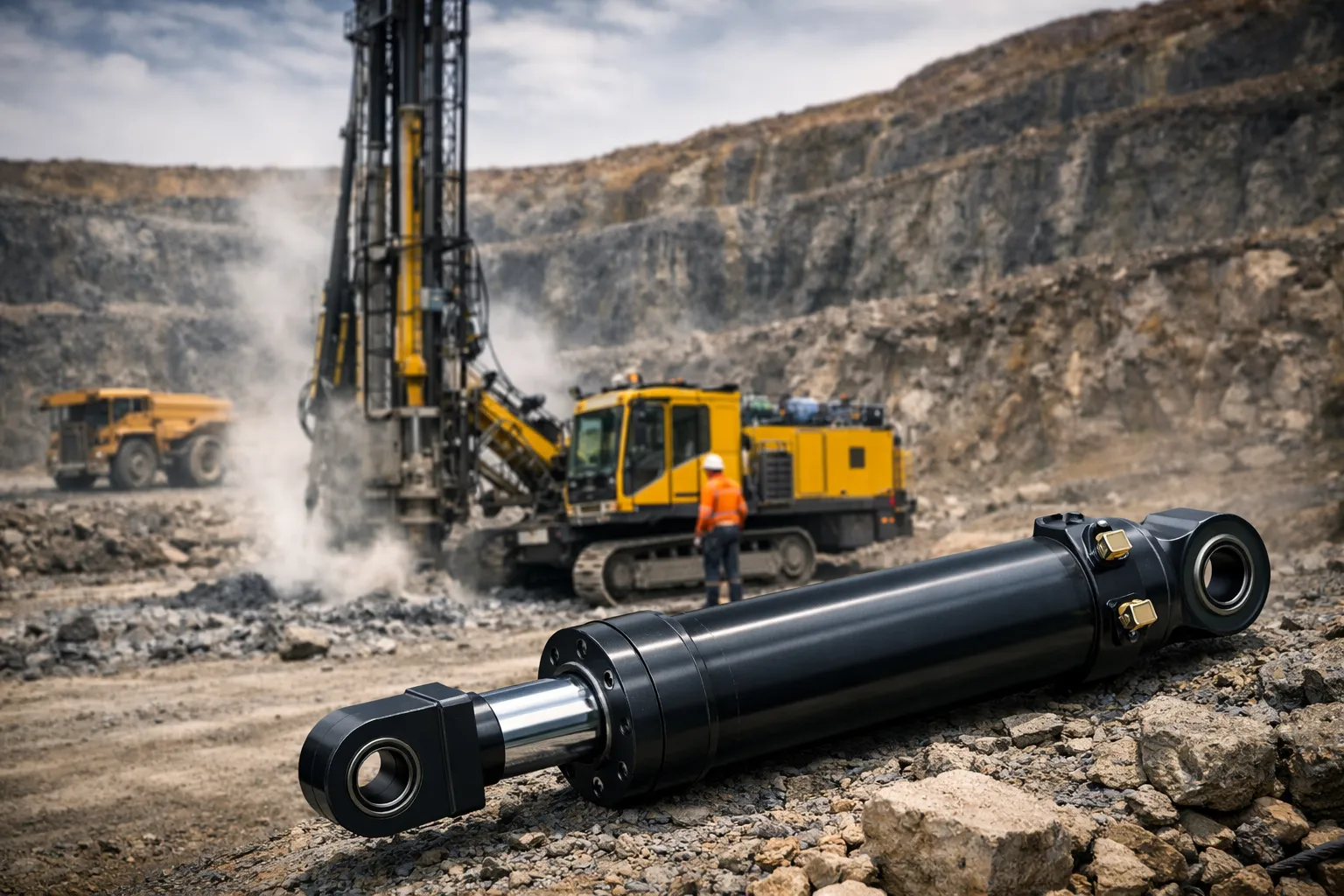
Standard cylinders mounted on long feed beams frequently succumb to severe lateral bending moments. As the heavy rotary head travels down the mast, or as the drill bit encounters varying rock densities and wanders off-center, the drill rod deflects. This deflection transfers immense side loads directly onto the extended cylinder rod. This forces the rod to grind heavily against the internal gland, rupturing the protective fluid film and leading to severe metal-to-metal scoring, rapid seal degradation, and ultimately, a complete loss of hydrostatic pressure. To entirely eradicate this problem, our engineering team has developed a specialized internal architecture featuring an elongated, thickened guide sleeve. This innovation drastically increases the radial load-bearing surface area, ensuring absolute rod concentricity even under maximum side loading scenarios. By integrating our specialized hydraulic parts into your fleet, you significantly reduce the frequency of fixing hydraulic cylinders in the field, thereby maximizing your machinery uptime and optimizing your total cost of ownership.
Comprehensive Technical Parameters and Customization Matrix
Precision engineering necessitates exacting, transparent specifications. Below are the standard operational parameters and customizable structural ranges for our primary feed systems, designed specifically for integration into surface and underground mining equipment. We maintain strict adherence to ISO engineering tolerances to ensure these units can seamlessly integrate into your existing fleet architecture while delivering massive thrust capabilities.
| Engineering Parameter | Specification Details & Customizable Range |
|---|---|
| Target Industry | Mining Equipment / Geotechnical Engineering |
| Equipment Category | Drilling Rig (Surface Crawler, Underground Jumbo, Rotary Foundation) |
| Subsystem / Action | Propulsion System / Axial Feed Mechanism |
| Component Name | Feed Cylinder (Propulsion Cylinder) |
| Action Mode | Double acting hydraulic cylinder |
| Structural Design | Piston type with integrated cushioning options |
| Manufacturing Structure | Heavy-duty welded construction (Tie-rod free for high burst pressure) |
| Primary Material System | High-strength 42CrMo Alloy Steel |
| Surface Treatment | Hard Chrome Plated (Micro-cracked structure for fluid retention, 30-50µm) |
| Environment Grade | Large thrust capacity, highly abrasive dust, extreme vibration |
| Working Condition Feature | Continuous propulsion of the drill rod under heavy axial compression |
| Typical Failure Mode Addressed | Rod eccentric wear (Galling and seal blowout due to lateral deflection) |
| Core Engineering Configuration | Thickened guide sleeve with proprietary ultra-low friction composite wear bands |
| Mounting Options | Heavy-duty Trunnion, Cleves, Spherical Bearings, Custom Welded Lugs |
Fluid Dynamics and Working Mechanics: Translating Pressure into Penetration
To fully grasp the absolute necessity for utilizing premium grade hydraulic cylinder components, one must delve deeply into the internal fluid dynamics governing the rig’s feed mechanism. The propulsion cylinder operates entirely on the foundational principles of high-pressure fluid mechanics, orchestrated by the rig’s primary variable displacement pump station and manipulated via complex proportional directional control valves. The efficiency of this conversion from fluid flow to mechanical thrust dictates the drilling speed and overall fuel economy of the machinery.
Unlike rudimentary single-acting systems that rely on mechanical springs or the sheer weight of gravity for their retraction phase, our highly specialized units utilize a sophisticated double acting hydraulic cylinder configuration. During the critical feeding phase—the active, aggressive rock penetration process—highly pressurized hydraulic fluid is forced into the cap end (also known as the blind end) of the cylinder barrel. The internal hydrostatic pressure acts vehemently against the entire surface area of the solid hydraulic cylinder piston. According to Pascal’s law, this vast surface area translates the hydraulic pressure into an immense, precisely calculated linear thrust. This force is transferred seamlessly through the high-tensile 42CrMo piston rod directly to the drifter cradle, advancing the drill bit through the geological strata with steady, unstoppable authority. The smoothness of this extension is paramount; any internal friction causing a “stick-slip” motion will send destructive shockwaves down the drill string, prematurely shattering expensive tungsten carbide drill bits.
Conversely, the retraction phase is equally critical. When the operator needs to pull the drill string out of the bore hole to change rods or replace a worn bit, high-pressure fluid is instantly redirected into the rod end of the barrel. The fluid pressure now acts upon the annular area of the piston (the total piston area minus the cross-sectional area of the rod). Because deep drilling operations frequently encounter fractured formations, collapsing holes, and swelling clays that physically trap the drill string, the rig requires significant pull-back force to extract jammed rods without causing structural deformation to the mast. The physical dimensions of the rod and bore in our feed cylinder are meticulously calculated to perfectly balance rapid retraction speed with massive emergency extraction power. Our heavy-duty hydraulic rams maintain a micro-tolerance seal throughout this bi-directional movement, completely preventing internal fluid bypass and ensuring a rigid mechanical hold when the control valve is set to the neutral holding position.
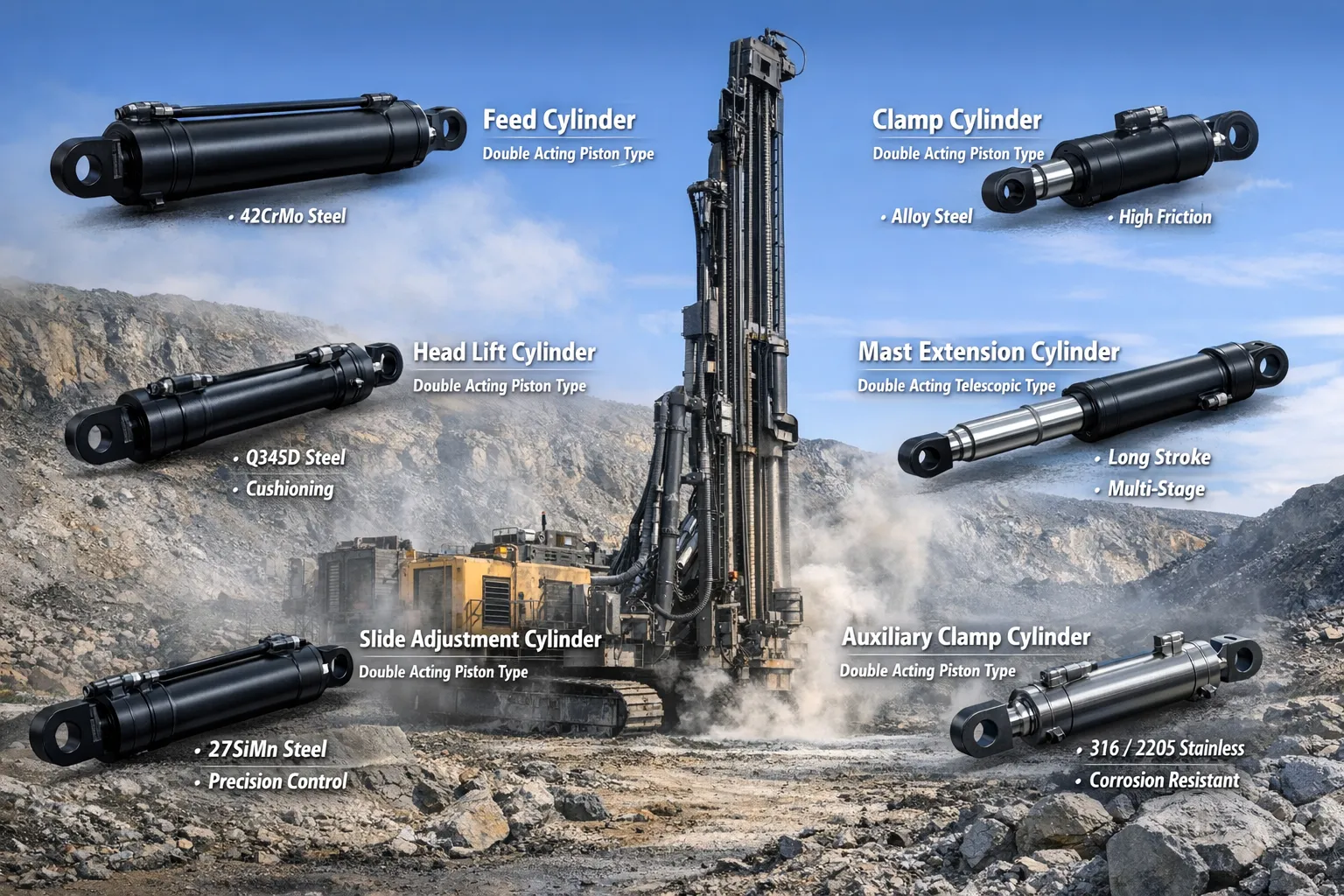
Seamless Drop-In Equipment Replacement and Compatibility
Machinery downtime on a remote mining site or a high-penalty urban construction zone is a massive financial drain. Fleet managers, procurement officers, and maintenance supervisors constantly seek reliable, high-performance aftermarket solutions to keep operations running smoothly without suffering the exorbitant price tags and agonizingly slow lead times associated with procuring Original Equipment Manufacturer (OEM) parts. Our propulsion systems are dimensionally engineered from the ground up to offer flawless drop-in replacement capability for a vast array of top-tier drilling machinery operating globally.
To facilitate exact component selection for our B2B clientele, it is highly relevant to note that our cylinders are regularly utilized as upgraded replacements for drilling rigs originally manufactured by industry-leading heavy equipment brands. Contractors operating fleets of Atlas Copco, Epiroc, Sandvik, Furukawa, Junjin, Everdigm, and Soosan frequently transition to our fluid power solutions. (Please note: The mention of these specific global brand names is strictly for the purpose of indicating dimensional compatibility, physical fitment sizing, and facilitating precise engineering selection for our clients. We are a completely independent hydraulic cylinder manufacturer and do not claim any affiliation with, sponsorship, or endorsement by these respective trademark holders.)
By precisely matching the trunnion mount locations, clevis dimensions, total stroke lengths, and pin diameters down to the millimeter, our clients can seamlessly integrate our heavy-duty upgrades into their existing fleets. This dimensional exactness allows for rapid maintenance execution without requiring any structural modifications, grinding, or field welding to the rig’s original feed beam. You receive a vastly superior component at a highly competitive hydraulic cylinder price, installed in a fraction of the time.
Five Core Technological Advancements
Why do our propulsion cylinder units consistently outlast standard market alternatives in the harshest environments? The answer lies in five highly specific, uncompromising engineering interventions designed specifically to combat the physical realities of underground and surface rock drilling.
1. Thickened Guide Sleeve Technology (Eradicating Eccentric Wear)
The primary enemy of any long-stroke feed cylinder is lateral deflection. When a rig drills at varying acute angles, the fully extended piston rod bows slightly under the massive weight of the rotary head and the immense counter-force of the rock. Standard, narrow guide glands act as a pivot point, forcing the rod to rub heavily against one side of the cylinder head, leading to catastrophic scoring and seal blowout. We utilize a uniquely designed, extra-long, thickened guide sleeve machined from specialized bearing-grade bronze and advanced composites. This vastly expanded surface area distributes the lateral load safely, maintaining absolute rod concentricity and permanently preventing the metal-to-metal galling that destroys ordinary cylinders.
2. Premium 42CrMo High-Tensile Metallurgical Structure
While standard generic fluid actuators often use basic, mild carbon steel (such as 1045 or 45# grade), our high-impact propulsion units are forged and precision-machined entirely from 42CrMo (Chromium-Molybdenum) alloy steel. This superior metallurgical material offers dramatically higher yield strength, extreme tensile strength, and remarkable impact toughness. It acts as an incredible safeguard against buckling under heavy compressive push loads, while providing exceptional resistance against the fatigue micro-cracking caused by continuous high-frequency percussion waves traveling up from the down-the-hole hammer or top-hammer drifter.
3. Ultra-Low Friction Tandem Sealing Matrix
Internal friction generates excessive heat, and thermal breakdown destroys standard polyurethane seals rapidly. We implement a state-of-the-art step-seal and secondary lip-seal configuration utilizing proprietary PTFE (Teflon) composite materials paired with high-temperature elastomers. This specific combination provides ultra-low dynamic friction operation, completely preventing the dreaded “stick-slip” phenomenon during fine micro-feed adjustments. Furthermore, an aggressive dual-lip metallic and polyurethane wiper seal aggressively ejects silica dust, abrasive mud, and ice, protecting the internal fluid pathways from contamination.
4. Micro-Cracked Hard Chrome Plating for Extreme Environments
The exterior of our 42CrMo piston rods undergoes a specialized, multi-pass hard chrome electroplating process, achieving a durable thickness of 30 to 50 microns. More importantly, we meticulously control the electroplating bath temperature and current density to create a specific micro-cracked surface topography. These intentional microscopic fissures act as tiny oil reservoirs, keeping the rod continuously lubricated as it extends and retracts through the gland. This drastically reduces seal friction and provides an impenetrable armor against corrosion in the highly acidic mine water environments frequently encountered underground.
5. Deep Penetration Robotic Submerged Arc Welding
Welds are the most common structural failure points under cyclical pressure loading and heavy vibration. We completely remove human error by utilizing automated submerged arc and robotic MIG welding stations to fuse the base clevis, trunnions, and cylinder head flanges to the heavy-wall barrel. This advanced process guarantees deep, perfectly uniform weld penetration without any dangerous porosity, cold lap, or slag inclusions. Following the welding phase, all crucial load-bearing components undergo stress-relief annealing. This thermal stability optimization ensures the cylinder will not warp or develop hairline fractures even after thousands of hours on the drill mast.
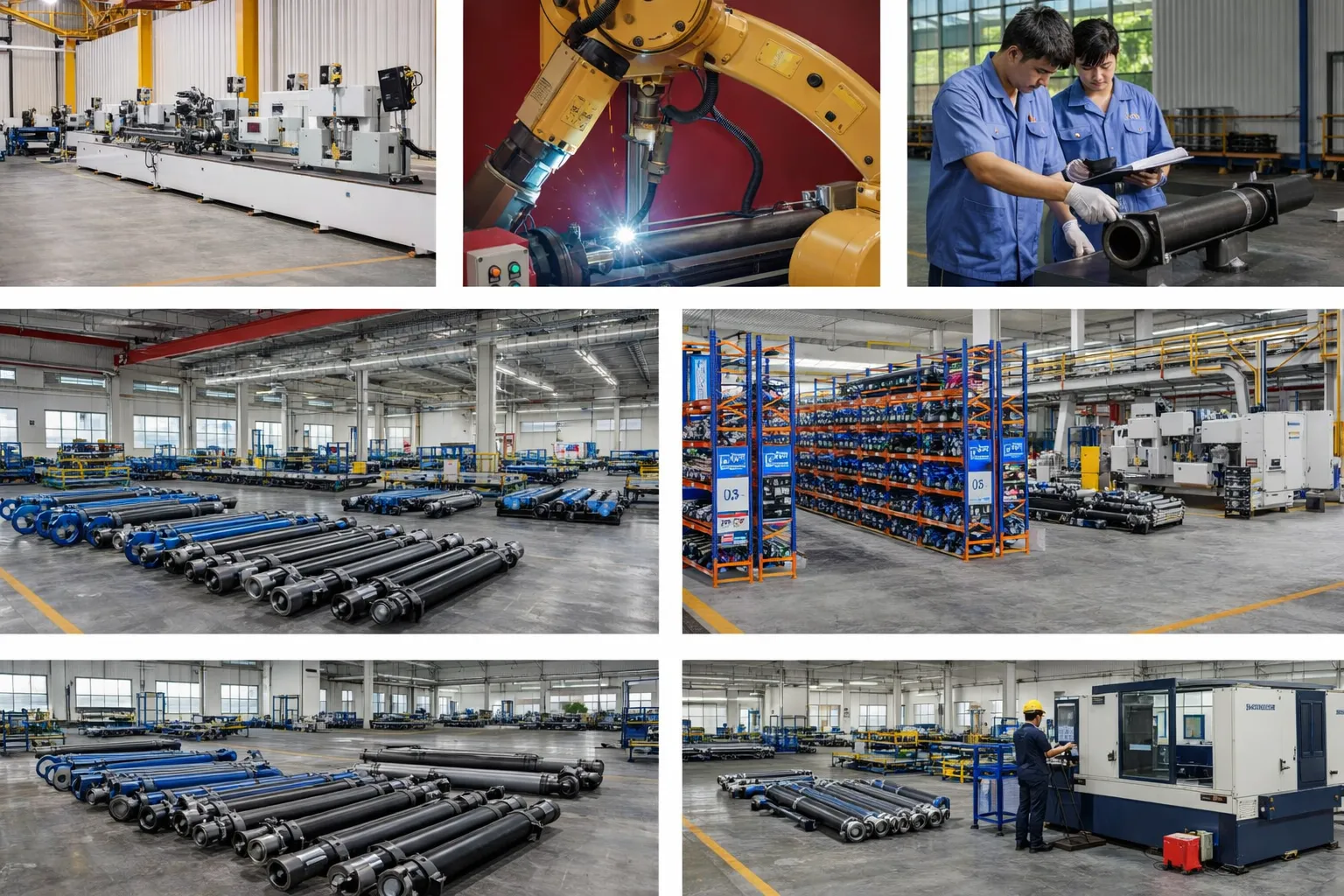
Uncompromising Manufacturing Excellence and Quality Control
The absolute reliability of any fluid power actuator is entirely dependent on the rigor and precision of its manufacturing process. Our facility operates under highly stringent ISO 9001:2015 quality management protocols. We maintain strict, end-to-end autonomous control over the entire production cycle, refusing to rely on fragmented third-party component suppliers. The manufacturing journey begins with thorough ultrasonic non-destructive testing (NDT) of the raw 42CrMo steel billets as they arrive at our receiving docks, ensuring zero internal voids, metallurgical inclusions, or micro-fractures before a single machining cut is ever made.
The intricate machining process is executed on advanced multi-axis CNC lathes alongside deep-hole boring and skiving machines, guaranteeing internal barrel finishes and rod diameters with tolerances measured strictly in micrometers. This exactness is absolutely critical for the long-term fitment between the hydraulic cylinder piston, the internal barrel wall, and the thickened guide sleeve. Final assembly takes place exclusively in a specialized, climate-controlled, dust-free cleanroom environment to prevent any airborne particulate matter from contaminating the delicate fluid sealing pathways before the unit is sealed.
Before any unit is cleared to leave our factory doors and enter global logistics, it undergoes a 100% rigorous hydraulic test bench procedure. Cylinders are dynamically cycled dozens of times and then subjected to a static holding pressure of 1.5 times their maximum rated working pressure (often exceeding 35 MPa). We verify absolute zero internal fluid bypass across the piston seals and absolutely no external weeping from the gland or the structural weld seams. Finally, a unique tracking serial number is permanently laser-engraved onto every barrel, providing total traceability of material batches, manufacturing dates, and testing records for the entire operational lifespan of the product. This makes future hydraulic cylinder repair and seal replacement predictable and straightforward.
Broad Spectrum Industrial Applications
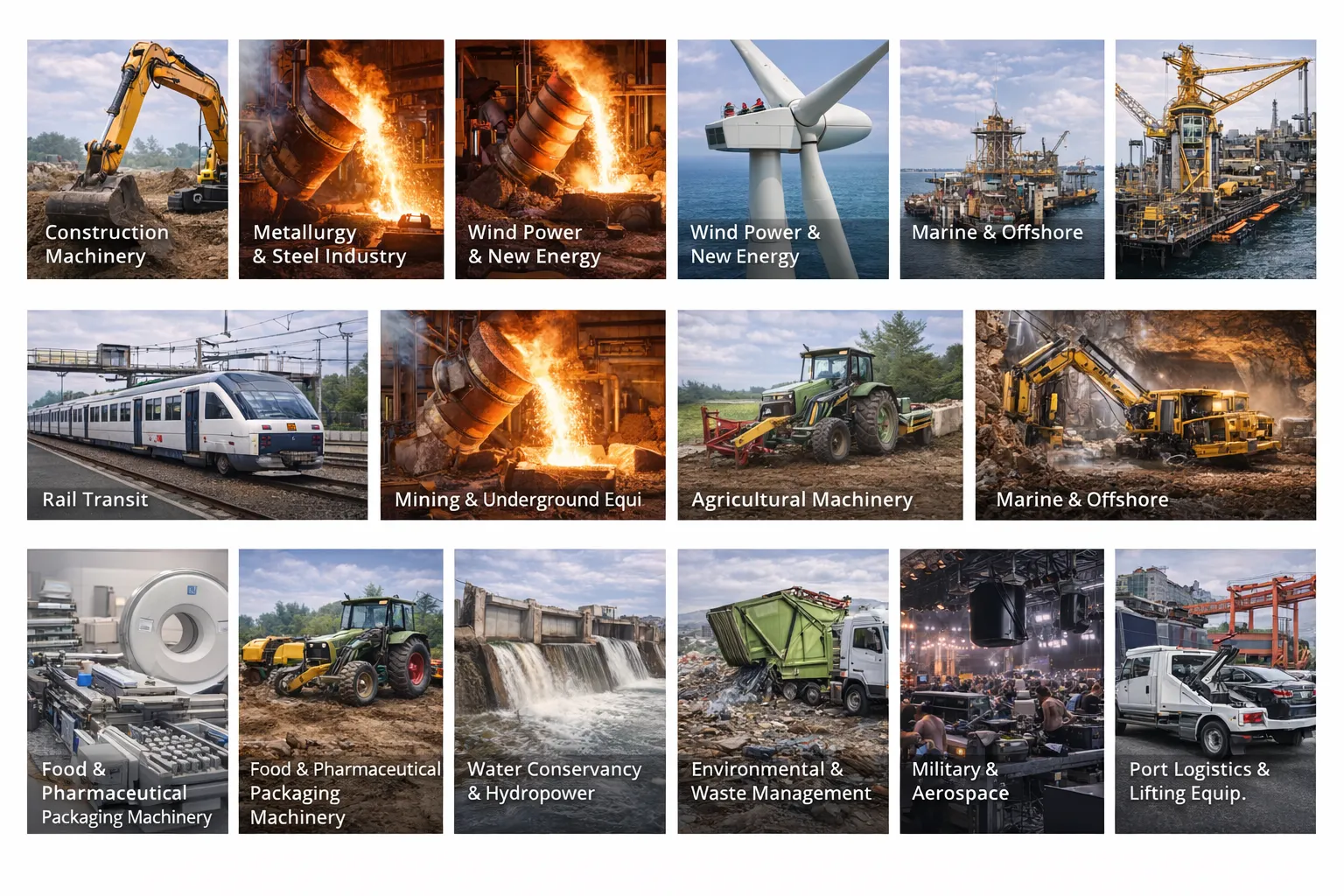
While heavily optimized as a primary feed propulsion mechanism for rock drilling rigs, the sheer robust architecture and incredible power density of this product line make it highly adaptable to a variety of heavy-duty industrial sectors. Equipment operators across the globe trust our engineering to power the most critical moving parts of their infrastructure. You can explore our dedicated application profiles comprehensively in the mining industry and the construction machinery industry sectors.
- Mining & Geotechnical Exploration: The absolute core component for surface blast hole rigs, underground twin-boom jumbo drills, core exploration rigs, and automated roof bolters relying on precise linear feed and massive extraction power.
- Heavy Construction & Deep Foundation: Providing immense downforce and pull-back capabilities for rotary piling rigs, diaphragm wall trenching grabs, anchor drilling machines, and heavy horizontal directional drilling (HDD) equipment.
- Material Handling & Logistics Automation: Our reinforced structural design translates perfectly into heavy-duty lift cylinder applications for rough-terrain reach stackers, massive port cranes, and automated warehouse logistics systems where vertical load safety is paramount.
- Metallurgy & Heavy Forging: Operating in extreme heat environments in steel mills for ladel tilting, continuous casting line actuation, and powering heavy forging presses.
- Specialized Custom Engineering: Supplying massive articulation cylinders for earthmoving equipment, thrust jacks for Tunnel Boring Machines (TBMs), and bespoke actuation systems for offshore oil platform tensioners.
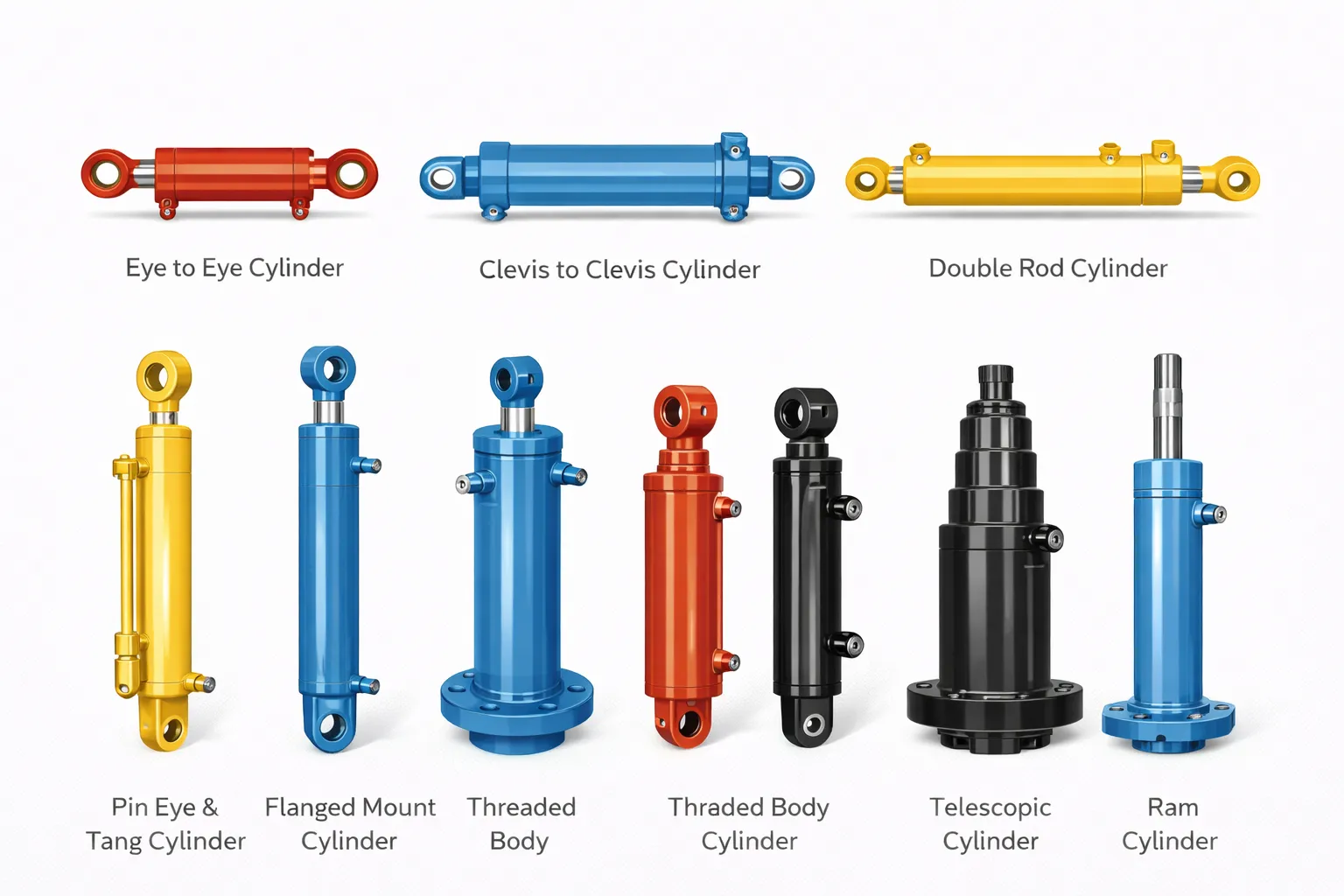
Comparative Analysis: Standard Market Cylinders vs. Our High-Performance Solution
Procurement decisions in heavy industry must hinge on balancing upfront component acquisition costs with long-term reliability and machinery uptime. We strongly advise fleet managers to evaluate the total cost of ownership. The comparative data table below clearly outlines why upgrading to our specialized propulsion cylinders significantly reduces overall operational expenditure and minimizes time spent fixing hydraulic cylinders on site.
| Feature / Engineering Metric | Ordinary Standard Market Cylinders | Our High-Performance Feed Cylinder |
|---|---|---|
| Base Material Strength | Standard Carbon Steel (e.g., 1045) – Prone to fatigue cracking under heavy percussive impact | 42CrMo Alloy Steel – Exceptional yield strength, high toughness, and shock resistance |
| Rod Guide System | Standard narrow cast iron or thin brass gland – Highly vulnerable to lateral loads | Thickened bronze composite guide sleeve – Physically eradicates eccentric wear |
| Dynamic Seal Configuration | Basic Nitrile (NBR) rings – High friction, easily susceptible to thermal breakdown | Tandem PTFE step-seals + High-temp Polyurethane – Zero fluid bypass, low friction |
| Welding Quality | Manual or semi-auto MIG – Inconsistent penetration depth, risk of internal porosity | Automated robotic submerged arc – 100% UT tested, flaw-free verified structure |
| Maintenance & Viability | High total cost due to frequent seal replacements, rod scoring, and machine downtime | Highly economical; vastly extended lifecycle yields massive operational savings |
Proven Global Performance: 5 Real-World Engineering Case Studies
Our engineering footprint extends deeply into the Asian and global heavy machinery markets. We do not just sell hydraulic parts; we solve chronic mechanical failures. Below are five meticulously documented B2B deployments demonstrating the tangible, profitable benefits of our advanced actuation technology.
Case 1: Eradicating Rod Deflection in Deep Foundation Drilling
- Location & Client: Seoul, South Korea | Top-Tier Geotechnical Construction Firm (Deployed March 2024)
- Equipment Application: Soosan Crawler-mounted top hammer drilling rig operating in heavy urban granite.
- The Background: The contractor was experiencing catastrophic rod eccentric wear every 3 to 4 months due to drilling at acute angles. They were bleeding capital constantly performing hydraulic cylinder repair and experiencing missed project deadlines. They discovered our engineering team while researching a more favorable hydraulic cylinder price online without sacrificing metallurgical quality.
- The Solution & Result: We supplied two highly customized heavy-duty feed cylinder units featuring our proprietary thickened bronze guide sleeves and 42CrMo rods. By late 2025, rigorous inspections revealed absolutely zero lateral scoring on the rods. Operational lifespan increased by over 300%, vastly reducing rig downtime.
“The robust design of the guide sleeve is exactly what these rigs required. We stopped constantly fixing hydraulic cylinders in the field and kept the rigs drilling. Superb engineering that directly impacted our bottom line.” — Mr. Park Ji-hoon, Fleet Maintenance Director.
Case 2: Winterizing Equipment for a Japanese Mining Operation
- Location & Client: Hokkaido, Japan | Major Limestone Quarry Operator (Deployed November 2024)
- Equipment Application: Surface crawler drills operating in sub-zero winter temperatures.
- The Background: Extreme cold (-25°C) caused standard polyurethane seals in their feed systems to shrink, harden, and shatter upon morning startups, causing massive fluid dumps. They contacted us specifically seeking cold-weather resilient aftermarket components.
- The Solution & Result: We custom-engineered a batch of our double acting hydraulic cylinder units using aerospace-grade low-temperature elastomeric seals designed to maintain flexibility in arctic conditions. The cylinders now provide perfectly smooth feed rates regardless of the freezing ambient temperature, ensuring continuous winter production without a single fluid leak.
“Winter seal failure used to halt our entire operation. These cold-weather customized units have been running through the harshest months without a single bypass issue. The thrust remains absolute.” — T. Sato, Procurement Manager.
Case 3: Cost-Effective Fleet Overhaul in Southeast Asia
- Location & Client: Hanoi, Vietnam | National Cement Production Facility (Deployed June 2025)
- Equipment Application: Fleet of 5 Sandvik surface drill rigs used for quarry blasting.
- The Background: Continuing to purchase European OEM replacements was severely straining their annual maintenance budget, and lead times were exceeding 14 weeks. They urgently needed a high-tier aftermarket alternative that guaranteed direct dimensional fitment.
- The Solution & Result: We supplied an initial test batch, followed rapidly by a full fleet rollout. Our exact pin-to-pin dimensional matching ensured installation took merely hours per rig. The client reduced their annual cylinder replacement expenditure by over 40% while receiving a product with superior 42CrMo construction.
“The quality-to-price ratio is outstanding. Identical mounting dimensions, but with noticeably better rod guides than the originals. We are incredibly satisfied with the transition and the fast delivery.” — Nguyen Hoang, Procurement Officer.
Case 4: Defeating Corrosion in a Marine Environment
- Location & Client: Busan, South Korea | Coastal Infrastructure Developer (Deployed January 2025)
- Equipment Application: Rotary foundation piling rigs operating directly over seawater.
- The Background: Highly corrosive salt air and seawater splashing were rapidly pitting the standard chrome rods on their propulsion cylinder units, leading to seal shredding and environmental fluid spills into the ocean.
- The Solution & Result: We delivered our heavy-duty cylinders featuring a specialized 50-micron, micro-cracked hard chrome plating over the 42CrMo rods, supplemented with heavy-duty marine-grade polyurethane dual wipers. The replacement interval was successfully extended from 6 months to over 2 years, with zero rust formation observed.
“The chrome plating is remarkably resilient against the salt air. We have completely eliminated the environmental hazard of fluid leaks and saved tens of thousands on replacement parts.” — Director Lee, Coastal Operations.
Case 5: Maximizing Pull-Back Force in Deep Exploration
- Location & Client: Queensland, Australia | Mineral Exploration Corporation (Deployed August 2025)
- Equipment Application: Deep core exploration drilling rigs.
- The Background: The existing factory cylinders lacked the structural rigidity to handle the intense pull-back forces needed when drill rods inevitably jammed in fractured geological seams deep underground. The barrel would balloon under extreme pressure spikes.
- The Solution & Result: We delivered custom oversized cylinders utilizing heavy-wall 42CrMo alloy bodies with reinforced, robotic welded end-caps. The significantly higher yield strength completely eliminated the barrel ballooning issue. The rig now handles maximum emergency pullback force with zero structural deformation.
“We intentionally pushed these cylinders to their absolute hydraulic pressure limits during severe rod jams, and they held perfectly. The 42CrMo steel formulation makes a massive difference in rigidity.” — Mark T., Rig Supervisor.
Expert Answers: Frequently Asked Questions
For B2B buyers, fleet managers, and maintenance engineers evaluating our fluid power systems, we have compiled detailed engineering and logistical answers to the most critical technical questions below.
1. What exactly causes rod eccentric wear, and how do your cylinders prevent it?
2. Can you manufacture an exact dimensional replacement if I provide my rig’s OEM model number?
3. Why use 42CrMo alloy steel instead of standard carbon steel for the cylinder components?
4. Are these double acting units suitable to be used as a heavy-duty lift cylinder?
5. Do you provide ongoing support for hydraulic cylinder repair and seal replacement?
6. How do I request a quote to determine the hydraulic cylinder price for my fleet?
7. What is the typical manufacturing lead time for custom heavy-duty orders destined for East Asia?
8. Do your technical manuals provide guidance for fixing hydraulic cylinders on site?
Ready to Upgrade Your Drilling Rig Feed System?
Stop losing valuable capital to premature cylinder wear, blown seals, and unpredictable machinery downtime. Partner with a dedicated fluid power manufacturer capable of delivering long-lasting, robust propulsion solutions engineered specifically for your harsh operating environment. From single prototype units to full-scale corporate fleet replacements, our engineers are ready to assist with sizing, customization, and rapid global fulfillment.
Provide your rig model or technical drawing, and we guarantee a detailed engineering response within 24 hours.
Editor: Cxm