Main Frame Lift Cylinder for Land Clearing Crusher
Engineered with 42CrMo aerospace-grade alloy steel to absorb violent subterranean tree root impacts without yielding. We pair heavily oversized rod diameters with an optimized short-stroke architecture to permanently eradicate rod bending in extreme land clearing operations.
Strategic Product Overview: Surviving Extreme Kinetic Shock
Transforming raw, overgrown forestry land into viable commercial agricultural acreage requires brutally aggressive heavy machinery. Land clearing crushers, often known as forestry mulchers or heavy-duty stone crushers, represent the absolute apex of extreme-duty tillage equipment. These machines utilize massive, dynamically balanced steel rotors equipped with heavy tungsten carbide teeth spinning at thousands of revolutions per minute. Their primary function is to physically drive into the earth, grinding standing timber, massive hidden tree stumps, and subterranean boulders directly into the soil. Governing the precise depth at which this violently spinning rotor engages the earth is the critical function of the Main Frame Lift Cylinder. This actuator must constantly hold the incredibly heavy main chassis frame at an exact, calculated depth while enduring the most violent kinetic environment imaginable.
The mechanical physics at play during land clearing are profoundly destructive. When a heavy crushing rotor spinning at high RPM strikes an immovable subterranean object—such as a dense, ancient oak root system or a massive granite boulder—an instantaneous, massive kinetic shockwave is generated. This shockwave travels directly backward from the rotor, through the steel chassis, and concentrates entirely on the extended rod of the hydraulic cylinder holding the frame. Standard commercial fluid power actuators are fundamentally incapable of surviving this sheer force. Built from standard 1045 carbon steel, generic rods immediately buckle and bend under this extreme lateral compressive load. Once the rod bends, the internal hydraulic cylinder piston jams inside the barrel, instantly destroying the internal seals and causing a catastrophic blowout of highly pressurized hydraulic fluid. For agricultural contractors, this specific failure is catastrophic, resulting in days of lost revenue and forcing technicians to engage in hazardous field operations involving complex fixing hydraulic cylinders just to recover the trapped machine.
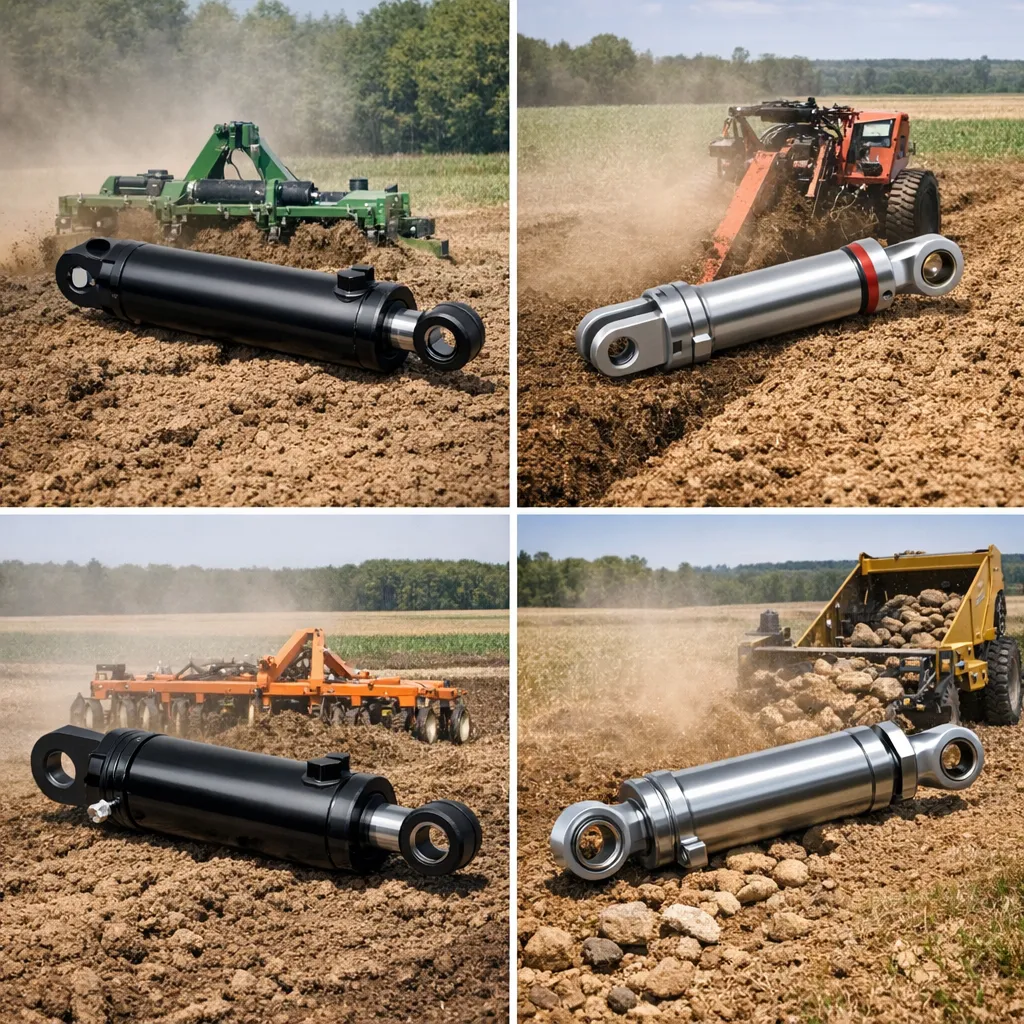
As a globally recognized, specialized hydraulic cylinder manufacturer, our engineering division has meticulously analyzed this exact failure mode. The solution cannot be found in standard catalog parts. Our custom-engineered Main Frame Lift Hydraulic Cylinder completely redesigns the structural parameters of load-bearing actuators. By upgrading the core metallurgy to ultra-high-yield 42CrMo alloy steel, mathematically maximizing the rod diameter, and deploying a highly customized short-stroke geometric architecture, we have created an actuator that acts as an unyielding structural pillar. Upgrading your heavy land clearing fleet with our heavily armored hydraulic parts guarantees your machinery will successfully crush through the most hostile root systems on earth without suffering a bent rod, drastically increasing your operational uptime and acreage yield.
Comprehensive Technical Specifications
Defeating kinetic shockwaves requires uncompromising dimensional scaling and premium material science. The engineering matrix below details the rigorous baseline parameters and specialized metallurgical configurations of our extreme-duty lifting units. For procurement directors seeking heavy-duty fluid power solutions across varied construction and agricultural platforms, we strongly advise reviewing our complete hydraulic cylinder product index.
Operational Fluid Dynamics: Governing Massive Subterranean Violence
Comprehending the intense fluid mechanics governing this specific implement is vital to understanding why standard actuators are physically destroyed in the field. Forcing a multi-ton steel crushing drum deep into virgin soil, pulling it up over massive boulders, and holding it steady against continuous subterranean resistance requires active, heavy-duty hydraulic power. Attempting to deploy a single acting hydraulic cylinder in this environment is structurally impossible. A single-acting unit relies purely on the deadweight of the implement to lower itself; it cannot actively force the crushing rotor downward into hard, heavily compacted clay or thick root mats. Therefore, the architecture dictates that this component must be a heavy-duty double acting hydraulic cylinder. This precise fluid configuration utilizes highly pressurized oil from the tractor to actively drive the rod outward, mechanically pushing the crusher deep into the earth, while simultaneously providing powered retraction to rapidly lift the rotor away from danger.
The defining test of this fluid power system occurs the exact millisecond the rotating hammers impact an immovable object, such as a deep taproot or an embedded granite boulder. The prime mover is continuously pushing forward while the rotor violently catches on the subterranean obstacle. This creates an immediate, massive upward and backward kinetic spike that is transferred directly into the extended cylinder rod. The tractor’s hydraulic valves are closed to hold the working depth, meaning the hydraulic fluid inside the cylinder is physically trapped. Because fluid cannot be compressed, the cylinder essentially acts as a solid steel column carrying the entire force of the impact. The energy travels straight up the rod. In engineering terms, this is an extreme dynamic compressive load. If a cylinder rod is too thin, or extended too far, Euler’s column buckling formula dictates that it will immediately flex and permanently bend. A bent rod instantly tears the internal hydraulic cylinder piston seals and cracks the gland housing, resulting in a catastrophic blowout of high-pressure fluid.
To systematically defeat this destructive physics equation, our engineers utilize a two-pronged structural defense. First, we dramatically increase the physical cross-sectional area of the rod itself, heavily over-sizing it relative to the bore diameter. Second, we integrate a highly specific short-stroke geometry into the lift cylinder. By severely limiting how far the rod can physically extend out of the supporting barrel, we drastically reduce the leverage of the bending moment. When this short, incredibly thick rod is forged from 42CrMo high-tensile steel, it creates an unyielding structural pillar. The kinetic energy from the rock strike is absorbed harmlessly by the tractor’s hydraulic relief valves and heavily reinforced chassis, rather than permanently bending the cylinder rod. This ensures your hydraulic rams survive the season.
Seamless Aftermarket Upgrades for Premier Land Clearing Fleets
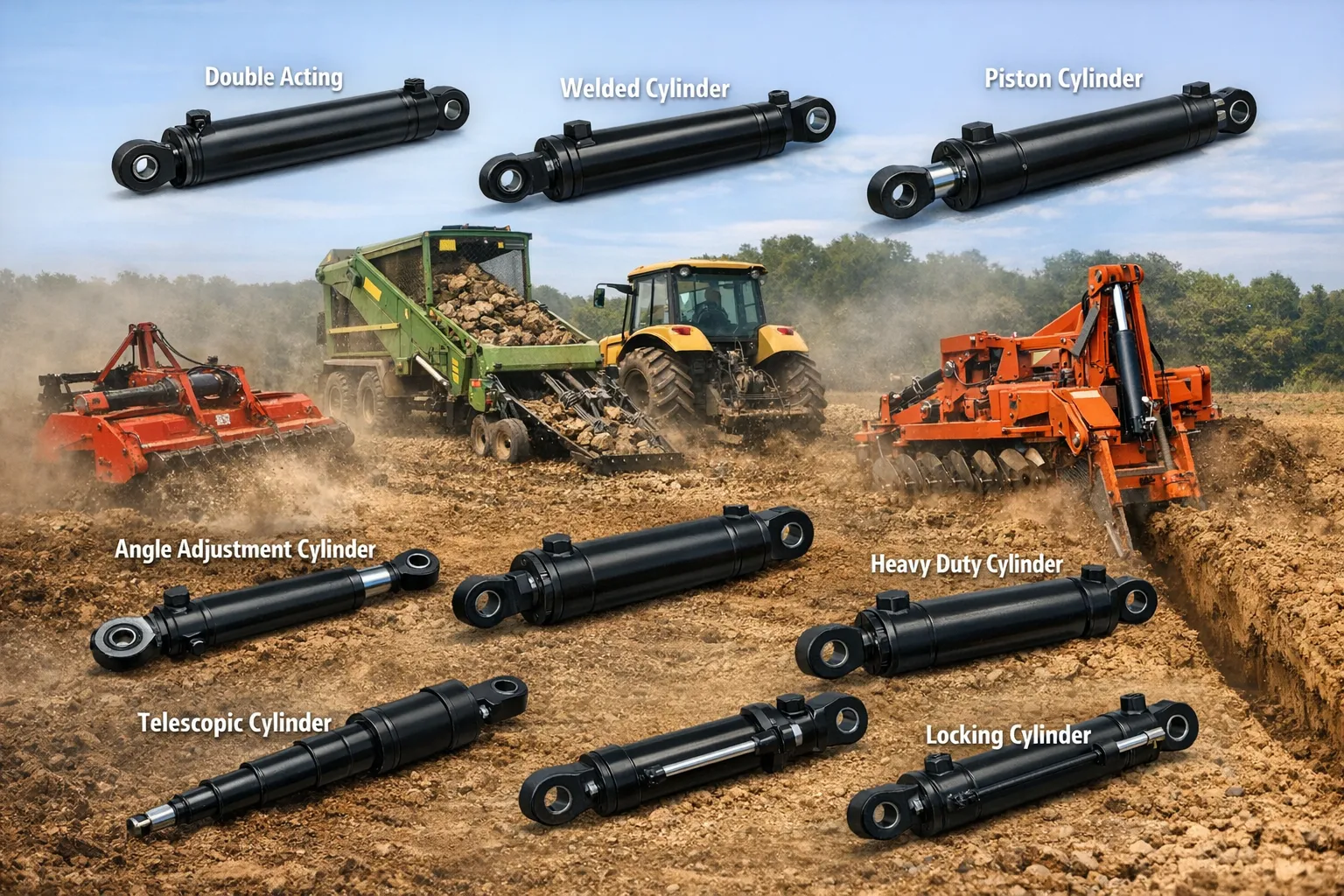
Commercial land reclamation contractors operate on incredibly tight, high-penalty project timelines. When a cylinder rod bends over a boulder, production halts, and profit margins evaporate. Sourcing a fragile, severely overpriced factory original replacement component through a slow dealership network is financially devastating. We purposefully engineer our heavily armored aftermarket hydraulic cylinder components to serve as rapid, dimensionally flawless mechanical upgrades for the industry’s most prominent heavy-duty forestry mulchers and soil tillers. Our stringent manufacturing protocols guarantee that critical installation metrics—including precise retracted pin-to-pin lengths, exact stroke dimensions, heavy-duty spherical bearing sizes, and hydraulic port thread pitches—flawlessly mirror your existing machinery for immediate integration using standard heavy field tools.
We continuously manufacture extreme-duty structural replacements for high-horsepower land clearing implements manufactured by global industry leaders such as FAE, Seppi M., Prinoth (AHWI), Fecon, and Denis Cimaf, frequently operated with large-chassis commercial tractors from John Deere, Fendt, Valtra, Kubota, and highly popular South Korean brands like LS Mtron, TYM, and Daedong. (Please be fully advised: The inclusion of these specific original equipment manufacturer brand names is strictly intended to assist heavy equipment mechanics and B2B procurement managers in efficiently cross-referencing dimensional compatibility and structural application intent. We operate exclusively as an independent manufacturer of premium hydraulic parts and assert no trademark affiliation or corporate endorsement by these entities.)
By choosing to retrofit your vulnerable factory equipment with our highly specialized, bend-resistant actuators, you actively bypass inflated dealership pricing structures while permanently curing the systemic structural vulnerabilities inherent in standard commercial designs. This strategic equipment upgrade significantly optimizes your operational profitability and long-term hydraulic cylinder price metrics by entirely eliminating catastrophic mid-project breakdowns.
Core Metallurgical Advancements: Defeating Structural Yielding
Preventing a hydraulic rod from bending when several tons of machinery slams into a subterranean boulder requires an absolute departure from standard commercial fluid power manufacturing. It demands specific metallurgical upgrades and an obsessive focus on geometric stress dispersion. The following technical pillars explicitly define why our specialized components survive where generic cylinders inevitably snap or bow:
1. 42CrMo High-Tensile Steel Forging
Standard aftermarket cylinders rely on cheap 1045 carbon steel rods, which lack the elemental structure to resist severe lateral shock. We exclusively forge our piston rods from 42CrMo (Chromium-Molybdenum) alloy steel. The addition of chromium and molybdenum dramatically increases the metal’s hardenability, yield strength, and sheer toughness. This allows the rod to absorb massive kinetic impacts elastically, instantly springing back to perfect straightness without suffering permanent plastic deformation.
2. Enlarged Rod & Short Stroke Geometry
Physics dictates that a longer, thinner column will buckle under vastly less pressure than a short, thick one. We mathematically engineer our units to feature a severely enlarged rod diameter relative to the bore size, combined with an intentionally restricted total stroke length. By keeping the massive 42CrMo rod deeply supported inside the steel barrel at all times, we exponentially raise the column buckling threshold, physically preventing bending during tree root impacts.
3. Impact-Absorbing Gland Architecture
When lateral shock travels through the rod, the primary point of failure is often the cylinder gland (the front cap). Standard cast iron glands crack instantly. We machine our heavy-duty glands from solid steel billets and deeply thread them into the barrel. This provides a massive, high-strength bearing surface area to smoothly transfer the lateral shockwave from the rod directly into the heavy welded barrel, protecting the internal seals.
4. Monolithic Submerged Arc Welding
The extreme, continuous violent chatter generated by thousands of steel hammers grinding rock will rapidly vibrate standard tie-rod cylinders loose, causing catastrophic structural failure. Our heavy-duty models utilize automated, deep-penetration submerged arc welding to permanently fuse the base caps and mounting clevises directly to the thick steel barrel. This creates an unyielding, monolithic pressure vessel that is completely immune to high-frequency kinetic vibration.
5. Micro-Cracked Hard Chrome Armor
Operating in raw dirt and gravel exposes the rod to continuous abrasion. We apply a strictly controlled, ultra-thick layer (25+ micrometers) of micro-cracked hard chrome plating over the induction-hardened 42CrMo core. This exceptional surface hardness acts as an impenetrable shield, deflecting sharp impacts from flying rocks and resisting the deep scratching that would normally tear internal seals to pieces.
6. Ultra-Low Friction Composite Sealing
Even when resisting bending, the rod will flex microscopically under massive loads. Standard rigid seals cannot handle this flex and will leak high-pressure fluid. We outfit our precision-honed barrels with an advanced composite sealing matrix integrating high-temperature polyurethanes and thick PTFE-bronze guide bands. This configuration acts as a heavy-duty shock absorber, maintaining a flawless hydrostatic lock while accommodating intense kinetic vibrations.
Autonomous Manufacturing and Exhaustive Quality Control
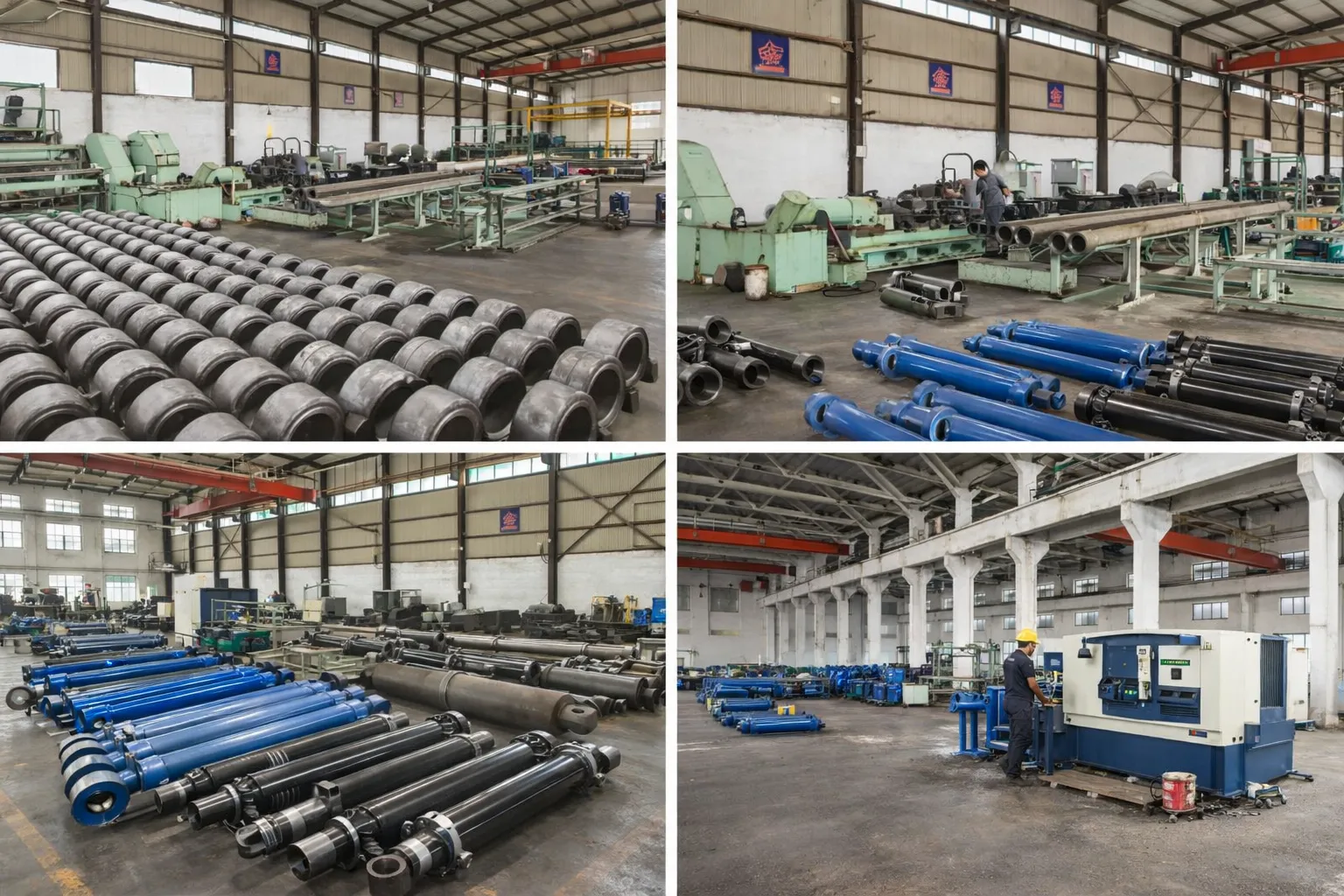
Industrial-grade mechanical reliability in a severe-impact environment cannot be achieved by simply assembling cheap, outsourced components; it must be systematically manufactured into the actuator from the raw metallurgical level upwards. By operating a massively capitalized, vertically integrated manufacturing facility, we maintain absolute sovereign control over the entire production lifecycle. When the raw 42CrMo alloy steel billets arrive at our loading docks, they undergo immediate material spectrometry and ultrasonic non-destructive testing (NDT) to verify their exact elemental composition and detect any sub-surface metallurgical flaws that could cause the rod to fracture under intense kinetic shock.
The heavy-duty internal architecture of our equipment is sculpted using highly advanced, multi-axis CNC turning and milling centers. This intense robotic automation allows us to consistently achieve incredibly tight diametrical tolerances on the seal grooves and heavy threaded glands. This mathematical precision is strictly necessary to ensure the structural components mate perfectly, preventing any microscopic movement that could lead to fatigue failure. Following the automated robotic welding phase, every single critical load-bearing structural seam undergoes secondary ultrasonic testing to confirm maximum weld penetration and the total lack of internal slag inclusions.
Critically, before any Main Frame Lift Cylinder is authorized for global export, it must survive a brutal 100% factory pressure testing protocol. The units are mounted to highly calibrated hydraulic test benches and intensely pressurized to 1.5 times their maximum rated operational capacity. We conduct stringent static holding tests to mathematically verify absolute zero internal fluid bypass across the piston, ensuring the heavy crushing rotor will not drop unexpectedly during transport. Every passing cylinder is then permanently laser-etched with a unique alphanumeric serial number, providing absolute lifetime material traceability for our commercial B2B partners worldwide.
Cross-Industry Adaptability of High-Impact Actuators
While the external mounting geometry of this specific unit is optimized for agricultural land clearing machinery, the foundational fluid power engineering—specifically the integration of 42CrMo steel and short-stroke geometry to defeat catastrophic rod bending—is universally demanded across multiple severe-duty industrial sectors where extreme kinetic impact is a daily reality.
- Subterranean Extraction: The supreme impact resistance and yield strength provided by our 42CrMo rods makes our systems the premier choice for actuating rock-crushers and heavy boom arms deep within the mining industry.
- Heavy Earthmoving: The exact same anti-bending technology is vital for protecting the heavy ripper shanks and massive dozer blades utilized extensively in the construction machinery industry when ripping bedrock.
- Heavy Infrastructure: Massive structural actuators utilizing these thick, bend-resistant geometries are required to safely position heavy turbine components in the wind power and new energy sectors.
- Heavy Manufacturing: The ability to absorb massive compressive loads makes these designs highly applicable for stamping presses and forging equipment in the metallurgical and iron industry.
Comparative Analysis: Standard Commercial vs. High-Impact Durability
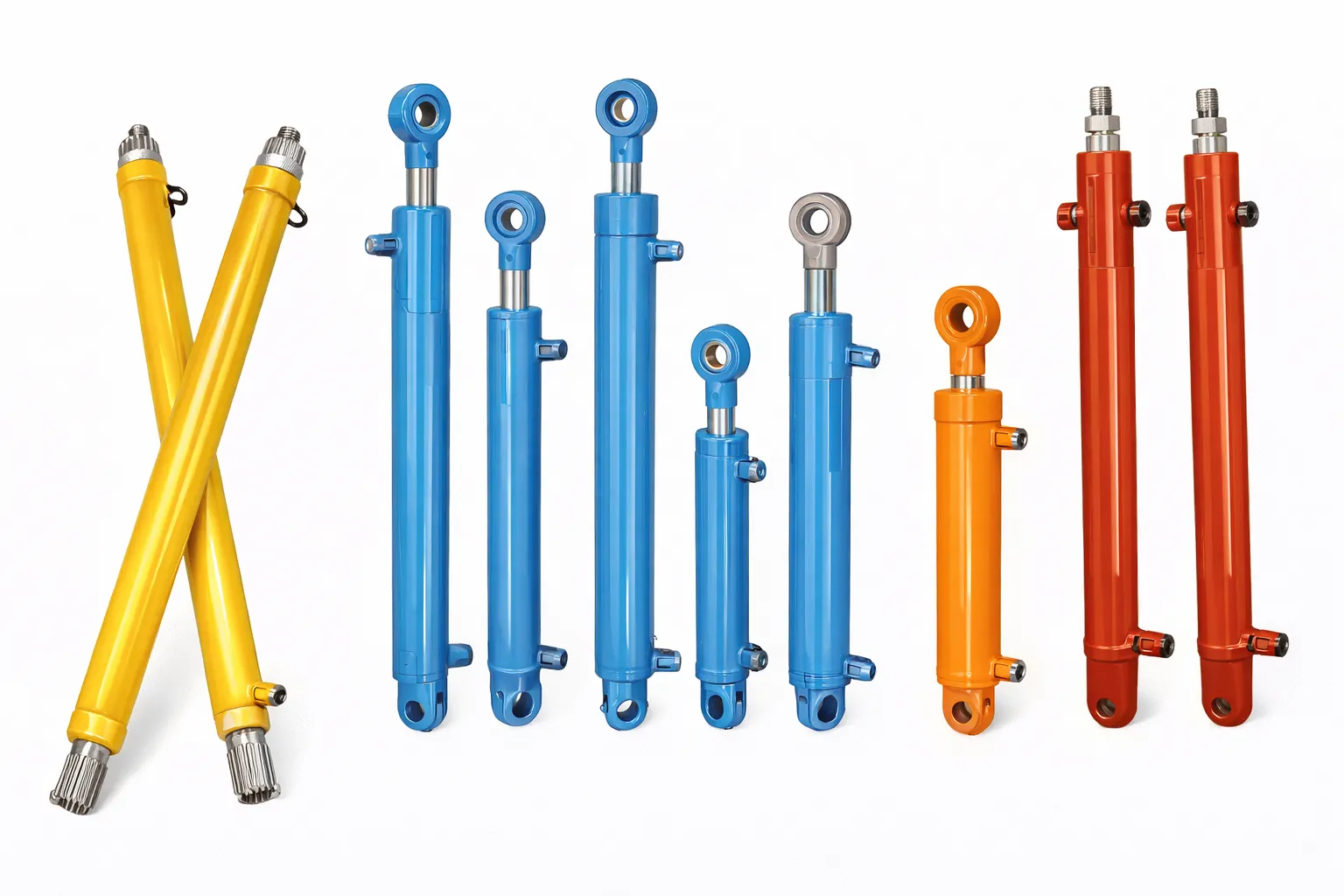
Evaluating the true commercial value of an actuator requires looking far beyond the initial procurement invoice. Selecting a cheap, generic cylinder for a land clearing application inevitably leads to catastrophic structural failure, massive project delays, and immense repair costs. The comparative matrix below definitively illustrates why upgrading to our specialized impact-resistant components is a fundamentally sound operational and business decision.
Proven Global Field Performance: Case Studies
The theoretical excellence of utilizing 42CrMo steel and over-sized rod geometry is definitively proven every day in the brutal realities of commercial land reclamation. Below are documented cases detailing how our high-impact fluid power solutions have systematically resolved catastrophic structural failures for major agricultural and forestry partners across the Asian market.
Case Study 1: Eradicating Bent Rods in South Korean Land Reclamation
Location & Client: Gangwon-do, South Korea — A large-scale commercial forestry and agricultural development firm tasked with clearing dense, overgrown mountain terrain for new terraced farming.
The Challenge: During the aggressive clearing phase in early 2024, the contractor’s heavy forestry tillers were repeatedly suffering catastrophic hydraulic failures. The terrain was riddled with massive, hidden oak stumps. When the high-speed crushing drum slammed into these immovable roots, the resulting kinetic shockwave was instantly bending the standard carbon steel rods on their OEM depth-control cylinders. The bent rods seized inside the barrels, ripping the seals apart and completely disabling the tractors, causing unacceptable project delays and bleeding repair budgets.
Contact & Solution: The chief fleet engineer located our specialized capabilities through a technical search targeting extreme-duty hydraulic cylinder repair and anti-buckling solutions. We rapidly manufactured and exported a fleet-wide retrofit batch of our Main Frame Lift Cylinder, explicitly outfitted with our over-sized 42CrMo alloy rods and impact-resistant sealing matrices.
The Result: After installation, rod bending was entirely eliminated. The operators could confidently drive the crushers deep into the root systems. When the implements struck massive stumps, the heavy tractors would stall or bounce, but the cylinder rods remained flawlessly straight, allowing the project to finish ahead of schedule.
Case Study 2: Conquering Volcanic Rock Impacts in Hokkaido, Japan
Location & Client: Hokkaido, Japan — An independent, large-scale commercial farming enterprise utilizing heavy European crushers to break up volcanic rock layers to increase arable acreage.
The Challenge: The crushing operation required the implement to run at maximum depth through highly abrasive and incredibly hard volcanic rock. The violent, high-frequency chatter combined with sudden, massive strikes against solid subterranean boulders was causing the internal seals of their standard cylinders to blow out repeatedly due to massive pressure transients. Furthermore, the constant barrage of shattered rock was destroying the chrome on the exposed rods, accelerating the seal failure.
Contact & Solution: The owner contacted us directly via our website portal seeking a vastly tougher solution. Our engineering team prescribed our specialized models featuring heavily reinforced pressure seals capable of containing explosive spikes, paired with our extra-thick 25-micron micro-cracked hard chrome plating to resist the rock shrapnel.
The Result: Seal blowouts and rod pitting were completely eradicated. The machinery operated with absolute hydraulic stability through months of brutal rock crushing, maintaining perfect depth control.
Case Study 3: Supplying Premium Reliability to a Taiwanese Forestry OEM
Location & Client: Taichung, Taiwan — A specialized heavy implement manufacturer building custom forestry mulchers and exporting automated land clearing equipment to the broader Southeast Asian market.
The Challenge: To maintain their reputation for producing indestructible machinery, the manufacturer needed to source highly dependable, anti-buckling lift mechanisms for their new line of heavy crushers. The cheap, locally sourced standard cylinders they initially tested suffered from catastrophic rod bending during field trials, leading to serious safety concerns and delaying their product launch.
Contact & Solution: Searching the global trade directory for a highly capable hydraulic cylinder manufacturer, their head of engineering connected with us. We established a long-term bulk-supply protocol, providing 100% pressure-tested units featuring our over-sized 42CrMo rod architecture, monolithic welded bodies, and impact-resistant internal seals.
The Result: The OEM successfully launched their new implement line with flawless, indestructible hydraulic lifting capabilities, entirely eliminating field warranty claims and securing massive export contracts across the tropical logging regions of Asia.
Case Study 4: Rescuing Palm Oil Plantation Clearing in Vietnam
Location & Client: Central Highlands, Vietnam — A massive agricultural contractor tasked with clearing thousands of hectares of old palm oil plantations for replanting.
The Challenge: Palm oil roots are notoriously fibrous and dense. When the mulchers hit these massive root balls, the lateral twisting forces on the frame were immense. These off-axis forces pushed the internal cylinder pistons hard against the barrels of their standard cylinders, scoring the bores and destroying the units within days of operation.
Contact & Solution: The project manager contacted our technical team. We supplied units engineered with our over-sized PTFE-Bronze composite wear bands on the pistons to physically absorb the extreme lateral twisting forces and protect the mirror-honed barrels.
The Result: Internal scoring and premature failure dropped to zero. The contractor cleared the plantations continuously without a single cylinder replacement.
Frequently Asked Questions
We prioritize absolute engineering transparency. To assist heavy equipment fleet operators, OEM designers, and procurement managers in thoroughly qualifying our impact-rated fluid power solutions, we have detailed comprehensive answers to the most common technical inquiries regarding our crushing control actuators.
1. Why exactly does the cylinder rod on my forestry mulcher keep bending when I hit a stump?
Rod bending is purely a failure of material strength and geometry against extreme kinetic energy. When your heavy crushing drum strikes an immovable object like a stump, the kinetic energy creates an instantaneous, massive upward shockwave. Because the hydraulic valves are closed to hold the depth, the fluid inside acts like a solid block. The extended steel rod must therefore absorb this massive compressive force. Standard 1045 carbon steel rods lack the yield strength, and if they are too thin, they immediately buckle under the explosive load. We solve this permanently by utilizing ultra-tough 42CrMo alloy steel, significantly increasing the rod diameter, and employing a short-stroke design to maximize the column buckling threshold.
2. Are these heavy-duty lift units structurally compatible with single acting hydraulic systems?
No. Actively pushing a multi-ton milling rotor deep into hard, compacted soil to grind roots requires immense, powered downward force. A single acting hydraulic cylinder only pushes one way and relies on gravity to return; it cannot forcefully drive the implement into the earth. Therefore, these heavy-duty actuators are exclusively engineered as a double acting hydraulic cylinder, ensuring the operator has rigid, powered hydraulic control to both crush downward and lift upward instantly.
3. What exactly makes 42CrMo steel better than the standard steel used in other cylinders?
42CrMo (Chromium-Molybdenum) is a highly specialized, aerospace-grade high-tensile alloy steel. The specific addition of chromium and molybdenum during the forging process dramatically increases the metal’s hardenability, yield strength, and impact toughness. While standard carbon steel will easily suffer plastic deformation (permanent bending) under severe shock, 42CrMo possesses the elasticity and sheer toughness to absorb massive kinetic energy and instantly spring back to perfect straightness.
4. How does your factory-direct model justify the hydraulic cylinder price compared to cheap aftermarket options?
By partnering with us, you are conducting business directly with the originating manufacturing facility, entirely bypassing the heavy, compounded markups imposed by trading companies and regional heavy-equipment dealerships. The price reflects direct-from-factory access to industrial-grade 42CrMo metallurgy, over-sized anti-buckling rod designs, advanced impact-resistant sealing technology, and rigorous 100% factory pressure testing. This strategic investment drastically lowers your long-term total cost of ownership by maximizing operational uptime and completely eliminating catastrophic mid-project cylinder failures.
5. Can you rapidly accommodate specific pin sizes and heavy-duty spherical bearings for custom land clearing machinery?
Yes. Custom mechanical engineering is a foundational aspect of our massive manufacturing operations. While we strictly stock heavy-duty configurations that seamlessly replace global OEM dimensions, our technical department can rapidly adjust the over-sized rod diameter, specific stroke length, closed pin-to-pin dimensions, and end clevis connections to precisely match the unique kinematics of your specific land clearing implement.
6. What are the standard lead times for manufacturing and exporting a bulk order to South Korea or Japan?
By maintaining a heavily stocked, vertically integrated inventory of raw 42CrMo steel billets and pre-machined internal components, our standard manufacturing, automated welding, and pressure testing cycles typically require 25 to 35 days for bulk commercial agricultural and forestry orders. Subsequent ocean freight logistics to major destinations in South Korea, Japan, or Taiwan generally add 5 to 10 days. We routinely synchronize our production schedules tightly with critical land development project timelines.
7. Can our fleet mechanics execute routine fixing hydraulic cylinders maintenance on these units at our own shop?
Absolutely. We deliberately engineer our equipment for high fleet maintainability. Because our cylinders utilize easily accessible, heavy-duty threaded glands rather than cheap welded-shut designs, routine internal inspection and seal replacement can be executed efficiently by your personnel using standard heavy shop tools. We provide comprehensive, exact-match OEM-grade replacement high-pressure seal kits globally to support your maintenance intervals.
8. How does your internal seal design survive the massive pressure spikes of a root impact?
When a cylinder takes a direct kinetic hit, the trapped hydraulic fluid experiences a massive, instantaneous pressure transient (spike) that easily blows out standard nitrile rubber O-rings. We engineer our pistons with a heavy-duty composite sealing matrix. This utilizes high-durometer (very hard) polyurethanes backed by thick PTFE wear bands. This architecture physically resists extrusion, meaning the seal will not squeeze past the piston even when the fluid pressure violently spikes, keeping the cylinder perfectly locked and sealed.
Conquer the Terrain and Eliminate Rod Bending Failures
The efficiency of your land clearing operations and the profitability of your entire development project should never be compromised by a buckled cylinder rod. By upgrading your heavy forestry machinery with our heavily armored, anti-bending Main Frame Lift Cylinder, you definitively ensure that your crushers will absorb the most violent root and rock impacts without suffering a catastrophic loss of hydraulic integrity.
Editor: Cxm