Mold Clamping Cylinder for Wind Blade Production
Engineered with advanced chemical-resistant seals and high-yield alloy steel to completely eradicate seal corrosion and deliver unwavering mold pressing force for flawless wind turbine rotor manufacturing.
Product Overview & Core Industrial Value
The production of modern wind turbine blades represents one of the most demanding composite engineering processes in the global manufacturing landscape. As the renewable energy sector across South Korea and the wider Asia-Pacific region aggressively expands its offshore wind infrastructure, the physical dimensions of rotor blades are reaching unprecedented scales, frequently exceeding 100 meters in length. Manufacturing these colossal aerodynamic structures requires the precise infusion of thousands of kilograms of epoxy resin and fiberglass under strict thermal and pressure conditions. At the absolute mechanical core of this highly sensitive operation is the mold clamping cylinder. This specialized heavy-duty actuator is entirely responsible for executing the mold pressing action, securely locking the massive upper and lower mold halves together against the immense internal pressures generated during the Vacuum Assisted Resin Transfer Molding (VARTM) process.
Operating fluid power equipment within a blade manufacturing facility introduces a highly specific and exceptionally destructive environmental variable: severe resin corrosion. The epoxy resins, volatile organic compounds (VOCs), and amine-based hardeners utilized in blade composite matrices generate aggressive chemical outgassing during the curing cycle. When standard commercial hydraulic parts are exposed to this environment, the airborne chemical particulates settle on the extended cylinder rods. As the rod retracts, these chemicals are dragged past the wipers, leading to a rapid and catastrophic failure mode universally known as seal corrosion. When the internal elastomers chemically degrade, they lose their elasticity and structural integrity. This results in an immediate loss of holding pressure. A drop in clamping pressure during the curing cycle allows the mold halves to separate microscopically, leading to fatal air voids, delamination, and dimensional inaccuracies that can force the scrapping of a blade worth hundreds of thousands of dollars.
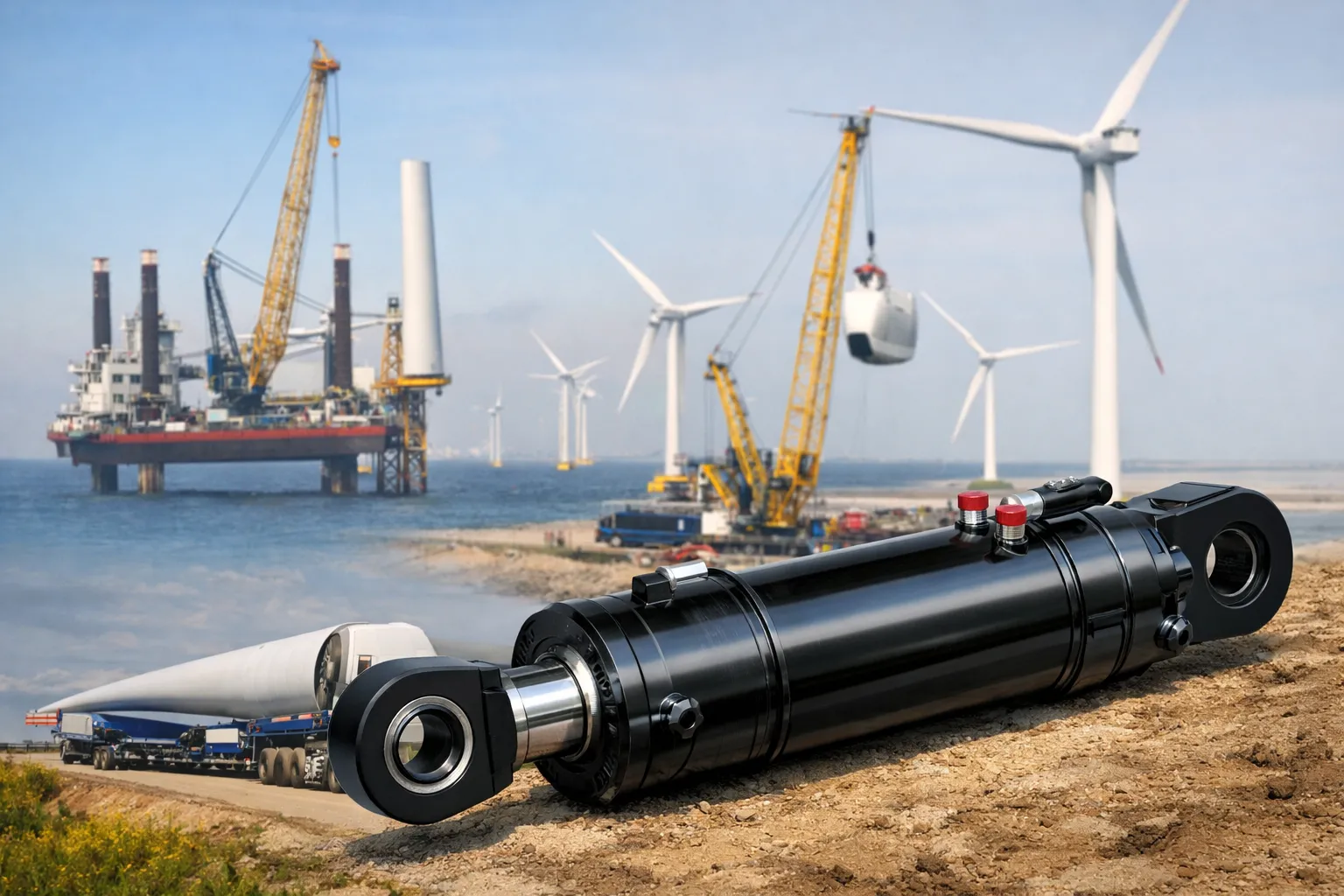
Recognizing this critical vulnerability in composite manufacturing, our engineering division—operating as a premier global hydraulic cylinder manufacturer—developed a targeted, permanent solution. Our specialized mold clamping hydraulic cylinder series is forged from ultra-dense alloy steel and fortified with a proprietary matrix of chemical-resistant seals. This specialized sealing architecture completely neutralizes the threat of resin corrosion, ensuring that the mold pressing action is maintained flawlessly over thousands of high-temperature curing cycles. By integrating our advanced hydraulic cylinder components into your production lines, you mathematically eliminate clamping-related blade defects, safeguard your massive material investments, and achieve a stabilized operational throughput that vastly outweighs the initial hydraulic cylinder price.
Technical Parameters & Customization Capabilities
Securing massive composite molds requires uncompromising mechanical precision and absolute clarity in engineering specifications. To guarantee flawless integration into your existing blade tooling infrastructure, we provide a transparent outline of our baseline operational parameters. The following matrix details the stringent specifications of our heavy-duty series, which can be custom-engineered regarding total stroke length, bore diameter, and manifold porting to perfectly match your specific factory layouts.
| Engineering Attribute | Specification & Technical Details |
|---|---|
| Target Industry Sector | Wind Power & Renewable Energy Manufacturing |
| Equipment Category | Wind turbine blade production tooling |
| Subsystem Application | Mold clamping and locking mechanism |
| Official Component Name | Mold clamping cylinder / Mold clamping hydraulic cylinder |
| Action Mechanism | Double acting hydraulic cylinder (Powered mold closing and powered opening) |
| Internal Structure Type | Piston cylinder (Heavy-duty precision monolithic piston) |
| Manufacturing Construction | Welded Construction (Deep-penetration automated Submerged Arc Welding) |
| Core Material System | Alloy steel (High-tensile strength for extreme holding pressure) |
| Rod Surface Treatment | Heavy Chrome plating (Micro-cracked, optimized for chemical deflection) |
| Environmental Hazard Rating | Severe Resin corrosion and VOC outgassing exposure |
| Primary Working Condition | Prolonged Mold pressing under elevated curing temperatures |
| Targeted Failure Mode Prevented | Seal corrosion leading to catastrophic pressure loss and blade voiding |
| Essential Recommended Configuration | Integration of pure Chemical-resistant seals (FKM/PTFE composites) |
Fluid Dynamics & The Mechanisms of Flawless Mold Pressing
Understanding the advanced fluid dynamics governing the blade production line is essential to appreciating why standard pneumatic systems or basic mechanical clamps are entirely insufficient for this scale of manufacturing. A 100-meter blade mold is not clamped at a single point; it utilizes dozens of synchronized clamping units acting in perfect unison. During the initial phase, hydraulic fluid is pumped heavily into the base ports of the entire cylinder array. The incompressible nature of hydraulic oil translates the pump pressure into immense mechanical thrust, pushing the heavy hydraulic cylinder piston assemblies forward to drive the upper mold half down. This creates the initial hermetic seal required to begin drawing a vacuum inside the tooling.
Once the mold is shut, the true test of the actuator begins: the sustained mold pressing phase. As hundreds of liters of resin are injected under pressure, the internal volume of the mold attempts to expand, creating a massive opposing force that tries to push the mold halves apart. The cylinders must now act as immovable mechanical anchors. Integral pilot-operated check valves lock the pressurized fluid tightly inside the cylinder barrel. For the duration of the multi-hour thermal curing process, the alloy steel barrel and the chemical-resistant seals must withstand this trapped, extreme high pressure without yielding a single millimeter. Any fluid bypass across the piston at this stage is a catastrophic failure that a standard lift cylinder cannot prevent.
Finally, when the epoxy has cross-linked and hardened, the massive upper mold—now bonded slightly to any flash resin—must be forced open. This necessitates a robust double acting hydraulic cylinder architecture. Gravity alone cannot break the stiction of cured epoxy, which is why a single acting hydraulic cylinder is entirely useless here. The hydraulic system actively reverses fluid flow, channeling ultra-high pressure into the rod-end annulus ports. The hydraulic rams forcefully retract, physically tearing the mold halves apart safely and steadily. This bidirectional kinetic power is an absolute necessity for protecting the pristine aerodynamic surface of the finished composite blade during the demolding sequence.
Seamless Machinery Brand Replacement Integration
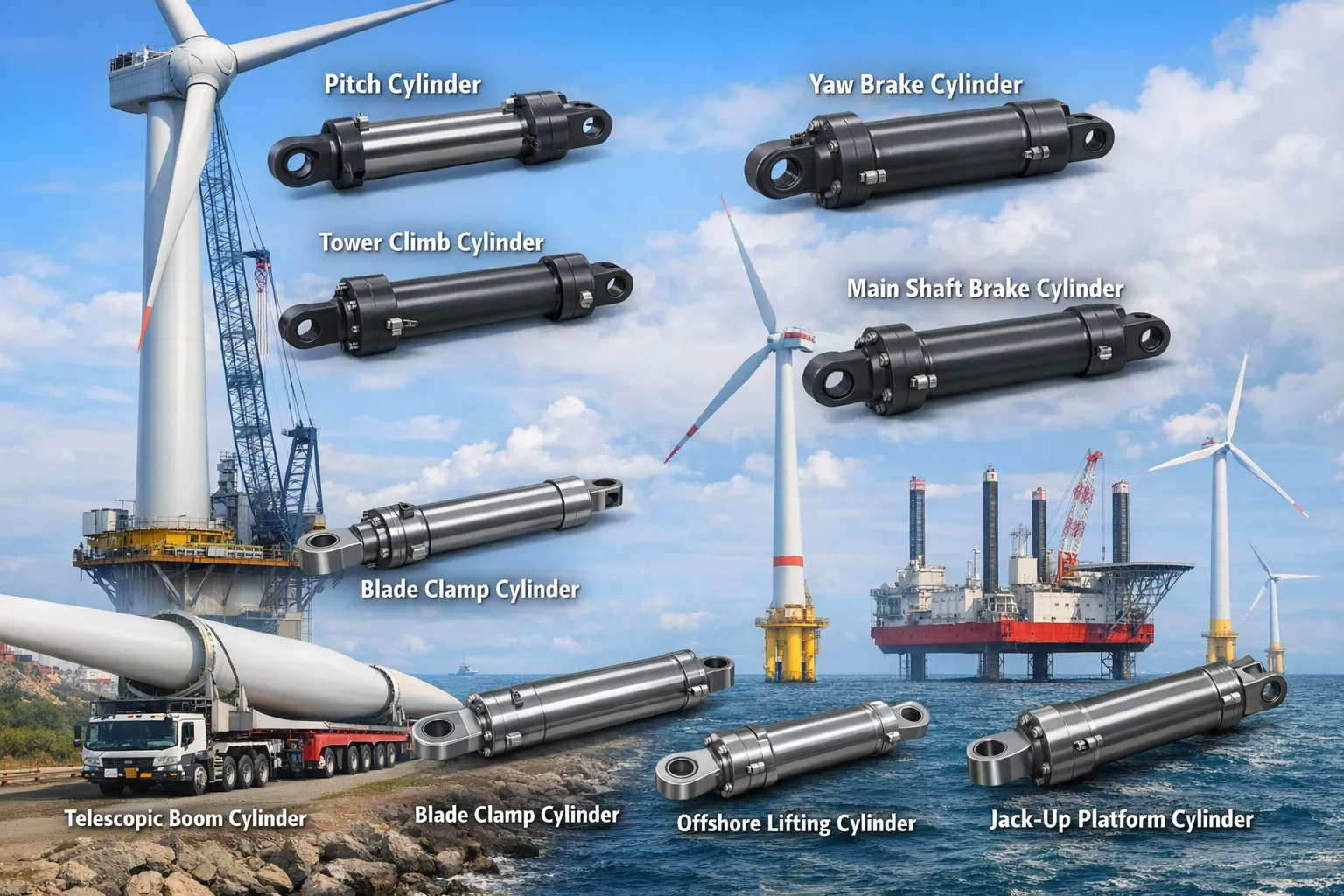
In the highly optimized environment of wind blade manufacturing, unexpected equipment failure halts the entire production line, incurring staggering financial losses by the hour. Sourcing original equipment manufacturer (OEM) replacement components from overseas tooling providers often involves unacceptable lead times and drastically inflated margins. Production managers demand immediate, exact-fit solutions. Our specialized hydraulic parts are expertly reverse-engineered and dimensionally mapped to serve as flawless, drop-in replacements for the clamping systems utilized by the world’s leading blade mold manufacturers.
We routinely supply exact-fit dimensional components and complete functional assemblies that perfectly match the hydraulic circuits, stroke lengths, and structural mounts of massive tooling systems traditionally supplied to tier-one blade manufacturers such as LM Wind Power tooling, Vestas mold systems, Siemens Gamesa tooling, TPI Composites automation, and Enercon presses. (Please note: Mentioning these highly esteemed corporate and brand names serves purely as a technical reference to facilitate accurate dimensional cross-referencing and precise model selection for our B2B manufacturing clients; we operate globally as an entirely independent hydraulic cylinder manufacturer and claim no trademark affiliation or direct endorsement from these entities.)
By strictly adhering to the precise flange mounting bolt patterns, pin-to-pin retracted lengths, and fluid port thread specifications of the original tooling, we enable phenomenally rapid turnaround times for fixing hydraulic cylinders directly on the factory floor. This precision guarantees that your maintenance engineering teams can execute complex hydraulic cylinder repair cycles and return the mold line to full active production without modifying the valuable steel tooling or altering the master PLC control algorithms. By choosing our chemical-resistant upgrades, you secure a significantly enhanced component lifespan while heavily optimizing your overall operational budget.
Eight Core Technical Advantages Dominating Composite Manufacturing
What precisely elevates our products from standard industrial actuators to highly sought-after, mission-critical upgrades for the wind energy sector? The answer lies in over two decades of uncompromising material science, advanced polymer chemistry, and rigorous structural engineering. Here are the eight fundamental engineering pillars that guarantee absolute holding power:
1. Chemical-Resistant Sealing Architecture
To directly combat the fatal issue of seal corrosion caused by aggressive epoxy outgassing, we utilize advanced chemical-resistant seals. We abandon standard polyurethane entirely, deploying proprietary Fluorocarbon (FKM/Viton) and Polytetrafluoroethylene (PTFE) composite sealing matrices. These advanced elastomers are chemically inert to the amines and solvents present in blade manufacturing, ensuring they never melt, swell, or degrade.
2. High-Yield Alloy Steel Construction
Standard carbon steel barrels can balloon or micro-fracture under the sustained internal pressures required to keep a 100-meter mold securely locked. We construct our mold clamping cylinder barrels exclusively from high-tensile alloy steel. This superior metallurgy possesses an exceptionally high flexural yield strength, entirely preventing barrel expansion and ensuring the piston seals maintain absolute, gapless contact.
3. Deep-Penetration Welded Integrity
The immense force required for demolding places extreme stress on the cylinder mounting points. We utilize automated, multi-pass Submerged Arc Welding (SAW) to fuse the heavy trunnion and flange mounts directly to the alloy steel barrel. This robotic process ensures perfect, deep-weld penetration without internal porosity, creating an unbreakable structural bond capable of surviving decades of violent demolding shocks.
4. Micro-Cracked Chrome Plating Defense
The exposed cylinder rods are magnets for airborne resin dust. We heavily plate all external rods with 40-50 microns of hard chrome, optimized with a specific micro-crack density. This extremely hard, slick surface creates a low-friction barrier that actively repels sticky resin buildup. When combined with our heavy-duty FKM wiper rings, it ensures that external contaminants are aggressively scraped away, protecting the inner hydraulics.
5. Optimized Thermal Stability
Blade curing processes subject the immediate environment to elevated temperatures for extended durations. Ordinary hydraulic components suffer from rapid fluid thinning and thermal seal degradation under these conditions. Our internal porting geometry is engineered to dissipate heat effectively, and our high-grade FKM seals are rated for continuous operation at temperatures far exceeding the ambient heat of composite curing ovens.
6. Precision CNC Honed Inner Bores
To guarantee absolute zero fluid bypass during the critical multi-hour mold pressing phase, the internal surface of the alloy steel barrel is processed via Skiving and Roller Burnishing (SRB) to achieve a mirror-like finish (Ra 0.2 micrometers). This extreme smoothness is vital for allowing the seals to hold maximum static pressure without suffering from microscopic abrasive wear.
7. Synchronized Multi-Cylinder Actuation Readiness
Because dozens of cylinders must move the gigantic mold simultaneously, any variation in internal friction causes twisting and dangerous mold binding. We machine all internal components to phenomenally tight geometric tolerances. This guarantees that every single cylinder in the array responds to the manifold fluid pressure with the exact same speed and kinetic force, ensuring perfectly synchronized opening and closing.
8. Modular Maintenance Architecture
We understand the logistical constraints of executing hydraulic cylinder repair within a crowded factory floor. Our design incorporates highly accessible, heavily bolted gland nuts and modular rod assemblies. This philosophy ensures that skilled maintenance technicians can perform rapid preventative seal kit replacements without requiring the massive, heavy cylinder to be entirely unbolted and removed from the blade tooling framework.
Autonomous Manufacturing & Zero-Defect Quality Control
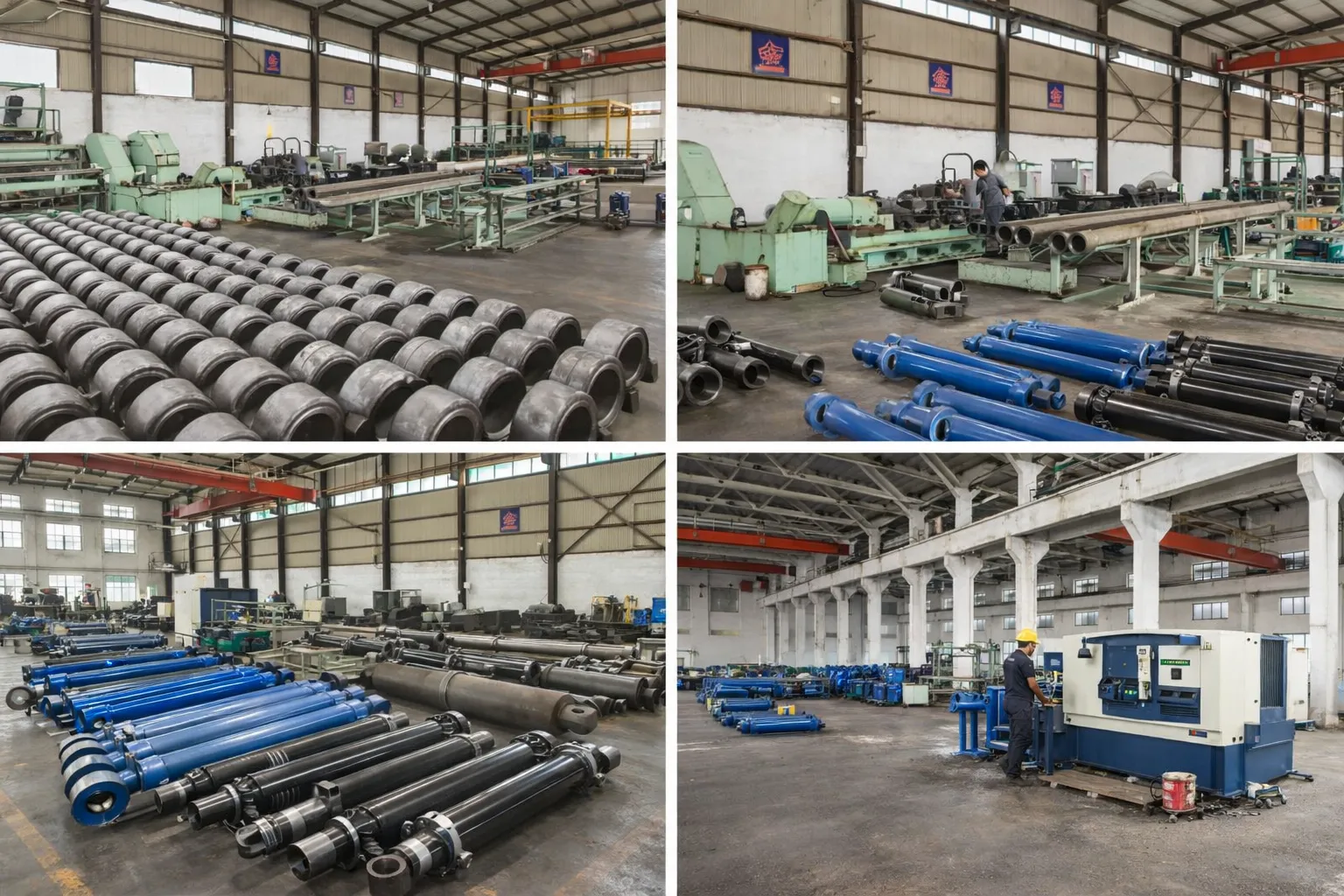
The undeniable physical resilience and pressure-holding capability of our products are not simply drafted on a digital screen; they are tangibly forged within our advanced, vertically integrated production facilities. We maintain absolute, unyielding control over the entire manufacturing lifecycle, refusing to outsource critical metallurgical treatments or CNC machining to unverified third parties. This closed-loop manufacturing philosophy ensures that every single unit arriving at your composite facility conforms perfectly to the highest global industrial safety directives.
The production journey commences with absolute raw material traceability. Every batch of incoming alloy steel undergoes immediate optical emission spectroscopy to verify its chemical composition and tensile capabilities. Following the heavy-duty SRB boring process, the heavy mounting structures are secured using our robotic welding cells. Every single critical load-bearing weld undergoes rigorous non-destructive testing (NDT), utilizing Ultrasonic Testing (UT) to find deep volumetric flaws and Magnetic Particle Inspection (MPI) to guarantee the total absence of subsurface micro-fissures. Assembly operations occur strictly within a climate-controlled, dust-free cleanroom environment to prevent microscopic particulate contamination—the primary cause of premature scoring in extreme high-pressure hydraulic systems.
Final quality assurance protocols are absolute. 100% of our produced units are routed through our computerized hydrostatic testing bays. Each completed mold clamping hydraulic cylinder is proof-tested at 150% of its rated nominal working pressure. The unit is held at this extreme stress level for extended periods while highly sensitive digital transducers monitor for even a fractional drop in pressure, verifying the complete integrity of the chemical-resistant seals and the internal piston. A unique serial number is deeply laser-etched into the alloy barrel, providing our B2B clients with a permanent digital record for future preventative maintenance or when rapidly sourcing replacement hydraulic cylinder components years later.
Versatile Industry Applications
While the highly specialized system discussed here is uncompromisingly optimized for the severe chemical environments of wind blade composite manufacturing, the extraordinarily robust engineering principles we apply translate flawlessly across a multitude of heavy industrial sectors. When immense clamping force, thermal stability, and structural reliability are non-negotiable, our products dominate the global landscape.
- Wind Power & Composites: Providing the critical clamping force for massive rotor blades, nacelle covers, and specialized fiberglass aerodynamic components exposed to aggressive epoxies.
- Plastic & Rubber Machinery: Executing high-speed, high-pressure mold locking functions for massive injection molding machines and heavy tire vulcanizing presses.
- Metallurgy & Heavy Forging: Operating continuously in extreme high-temperature foundries to actuate heavy furnace doors and continuous casting equipment within the metallurgical and iron industry.
- Mineral Processing: Delivering immense, unbreakable force for heavy filter presses and rock crushing equipment in the highly abrasive, dust-filled environment of the mining industry.
- Infrastructure & Lifting: Powering the primary lifting arms and stabilization outriggers for complex heavy machinery. Explore our tailored solutions for the construction machinery industry.
Comparative Analysis: Standard Hydraulics vs. Specialized Mold Clamping Units
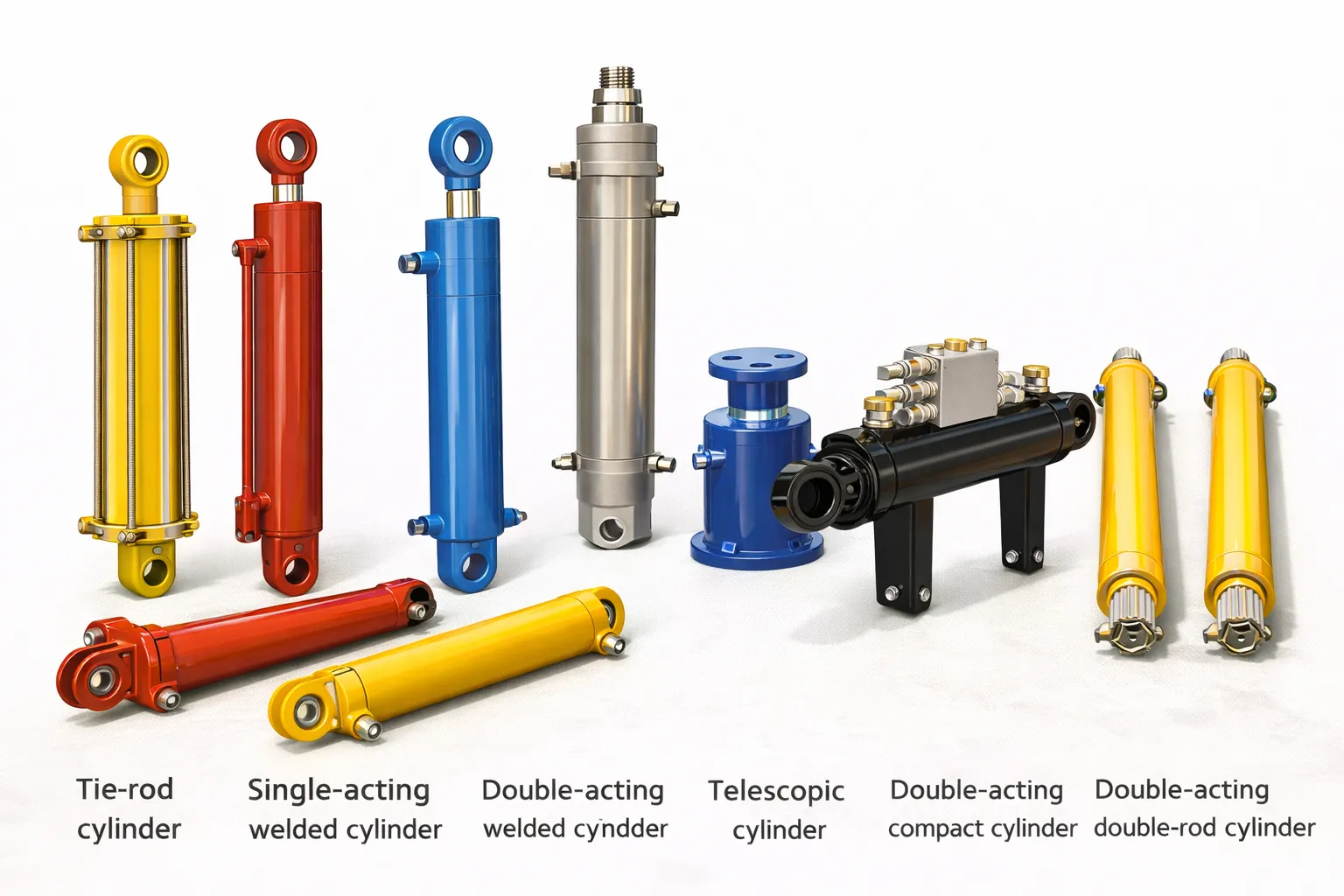
When evaluating procurement options for tooling upgrades, analyzing the initial hydraulic cylinder price without strictly factoring in the total cost of ownership and the sheer value of the composite materials being molded leads to disastrous financial outcomes. Utilizing a cheap, mass-market general-purpose cylinder guarantees rapid seal degradation and multi-thousand dollar blade rejections due to pressure loss. The objective comparison matrix below illustrates exactly why our specialized alloy steel cylinder represents a vastly superior, safer return on investment for your factory.
| Critical Engineering Metric | Standard General-Purpose Cylinder | Our High-Performance Mold Clamping Cylinder |
|---|---|---|
| Core Sealing Technology | Standard Polyurethane (PU) seals (Melts, swells, and corrodes rapidly when exposed to epoxy VOCs) | Chemical-resistant seals (FKM/PTFE composites; entirely immune to resin and amine hardeners) |
| Base Material Construction | Basic 1045 Carbon Steel (Vulnerable to micro-expansion and pressure loss under sustained load) | High-Yield Alloy Steel (Exceptional tensile strength guarantees absolute rigid mold pressing) |
| Thermal Operational Stability | Standard temperature ratings (Seals harden and leak when exposed to curing oven ambient heat) | High-temp rated FKM integration (Maintains absolute sealing elasticity during prolonged hot curing) |
| Rod Surface Protection | Thin commercial chrome plating (Epoxy sticks easily, dragging past wipers and scoring the bore) | Heavy, micro-cracked hard chrome (Ultra-slick barrier actively repels sticky resin buildup) |
| Action Mechanism Control | Basic porting (Prone to uneven speeds, causing long molds to bind or twist during opening) | Precision honed double acting hydraulic cylinder dynamics (Guarantees synchronized demolding) |
Proven Success: Real-World Engineering Case Studies
Our unwavering commitment to fluid power excellence is consistently validated by the measurable success and increased yield rates of our global B2B manufacturing clients. Below are authentic instances where our customized hydraulic solutions successfully resolved critical, highly expensive production bottlenecks in composite facilities across East Asia.
Case 1: Eradicating Blade Voids in Offshore Manufacturing (Mokpo, South Korea)
Client Profile: Tier-one Offshore Wind Turbine Blade Manufacturer (Project Date: November 2024)
The Engineering Crisis: The client was producing advanced 115-meter carbon-infused rotor blades. During the extensive 6-hour resin curing cycle, the high concentration of VOCs and amine hardeners in the air caused rapid seal corrosion in their standard European OEM clamping cylinders. The degraded seals caused subtle pressure drops across the massive tooling line. The mold halves micro-separated by mere millimeters, which was enough to pull air into the resin matrix, creating fatal structural voids and ruining three consecutive blades (a massive financial loss).
Contact & Solution: Facing a catastrophic scrap rate, the plant director found our specialized manufacturing capabilities via an industry search and urgently contacted us. Within 72 hours, we supplied fully engineered drawings for a custom mold clamping cylinder array featuring our proprietary FKM/PTFE chemical-resistant seals and ultra-rigid alloy steel barrels, designed to hold extreme static pressure indefinitely regardless of chemical exposure.
The Result: The retrofitted mold line has now operated continuously for over 14 months without a single instance of pressure loss or seal degradation. The blade scrap rate dropped to absolute zero, saving the company millions in wasted composite materials.
“The chemical resilience of these specific cylinders is extraordinary. We no longer suffer from the nightmare of mid-cure pressure drops. Upgrading the entire line was a brilliant decision given the highly reasonable hydraulic cylinder price compared to losing a single finished blade.” — Mr. Park Ji-Sung, Lead Production Engineer.
Case 2: Optimizing Maintenance and Reducing Downtime (Busan, South Korea)
Client Profile: Regional Composite Tooling and Machinery Retrofitter (Project Date: March 2025)
The Engineering Crisis: The client was tasked with refurbishing older blade molds for a new onshore wind project. The original hydraulic system was leaking profusely due to severe rod scoring. Sticky epoxy resin from previous production runs had adhered to the thin commercial chrome plating, pulling past the wipers and violently shredding the internal polyurethane seals during the demolding action.
Contact & Solution: They required immediate, highly durable replacement parts and reached out to our B2B portal for fixing hydraulic cylinders on a massive scale. We supplied a complete suite of upgraded cylinders featuring our micro-cracked hard chrome plating (50 microns thick), paired with heavy-duty dual-lip FKM scrapers designed to physically shear off cured epoxy before it could enter the barrel.
The Result: The refurbished molds returned to the production floor flawlessly. The aggressive new wiper system kept the rods pristine, completely eliminating the fluid leaks and drastically reducing the need for constant, messy maintenance interventions.
“Standard cylinders just cannot survive in a resin-heavy environment. Your specialized rod treatments and heavy-duty wipers solved our biggest maintenance headache. The turnaround time for the replacement hydraulic cylinder components was phenomenal.” — Kim Tae-Woo, Retrofit Facility Manager.
Case 3: Ensuring Synchronized Demolding on Ultra-Long Tooling (Taichung, Taiwan)
Client Profile: Advanced Composite Aerodynamics Corporation (Project Date: August 2025)
The Engineering Crisis: While commissioning a brand-new 120-meter mold, the client experienced severe structural binding during the mold opening phase. The array of cheap aftermarket cylinders they had initially installed suffered from vastly different internal friction levels. When hydraulic pressure was applied to retract the double acting hydraulic cylinder array, some units pulled faster than others, causing the gigantic, multi-ton steel mold to twist dangerously, threatening to crack the freshly cured fiberglass blade inside.
Contact & Solution: The facility engineers contacted us for an emergency redesign. We deployed a perfectly matched array of high-precision hydraulic rams. By utilizing strict CNC honing on the inner alloy barrels (achieving identical Ra 0.2 surface finishes across all units) and utilizing low-friction PTFE seals, we ensured that the dynamic friction coefficient was mathematically identical across the entire 40-cylinder array.
The Result: The mold binding issue was instantly resolved. The gigantic steel tooling now opens with perfect, buttery-smooth synchronization, protecting the intricate aerodynamics of the blades and securing the safety of the demolding personnel.
“The internal machining precision of your cylinders is remarkable. Achieving perfect synchronization across a 120-meter span requires incredible engineering consistency. We trust your manufacturing quality absolutely.” — H. Tanaka, Chief Tooling Engineer.
Frequently Asked Questions
We deeply understand that procuring specialized fluid power equipment for highly sensitive composite manufacturing requires rigorous due diligence. Below are highly transparent, detailed answers to the most common technical inquiries from our global B2B partners regarding our heavy-duty clamping product range.
Secure Your Composite Manufacturing Yield Today
Do not allow substandard, mass-market fluid power components to dictate the scrap rate of your multi-million dollar wind blade factory. Seal corrosion and pressure drops are entirely preventable. Equip your critical mold lines with a precision-engineered mold clamping cylinder designed specifically to conquer extreme resin environments and guarantee absolute, unwavering holding pressure. Partner with our advanced engineering team today for uncompromising heavy-duty support and a highly competitive factory-direct proposal.
Editor: Cxm