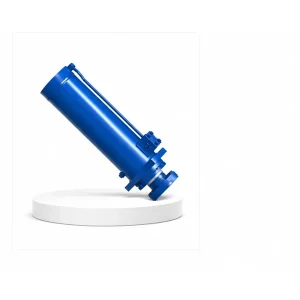
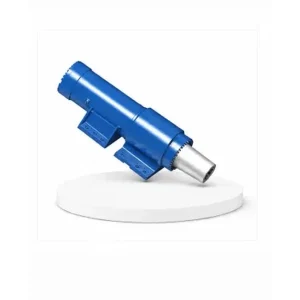
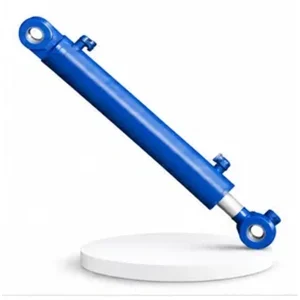
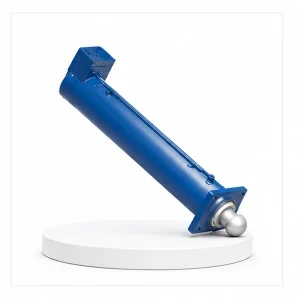
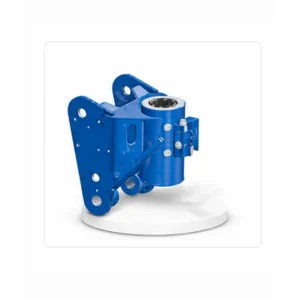
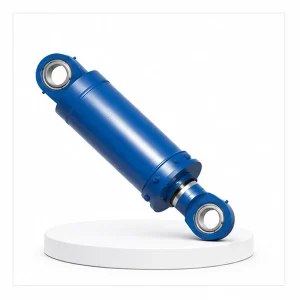
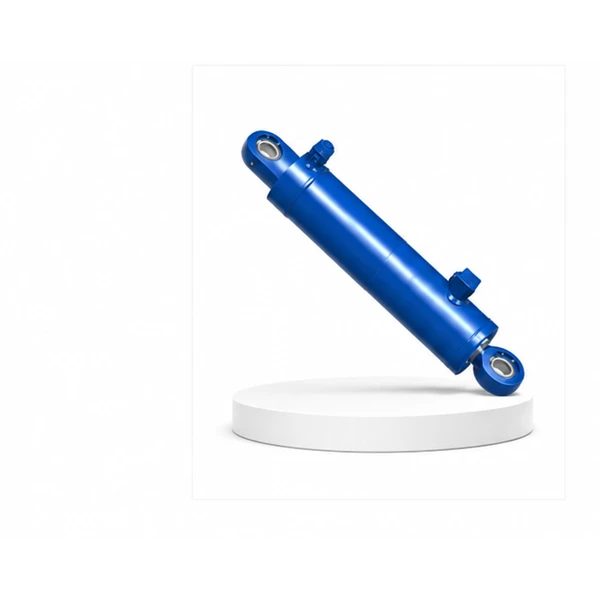
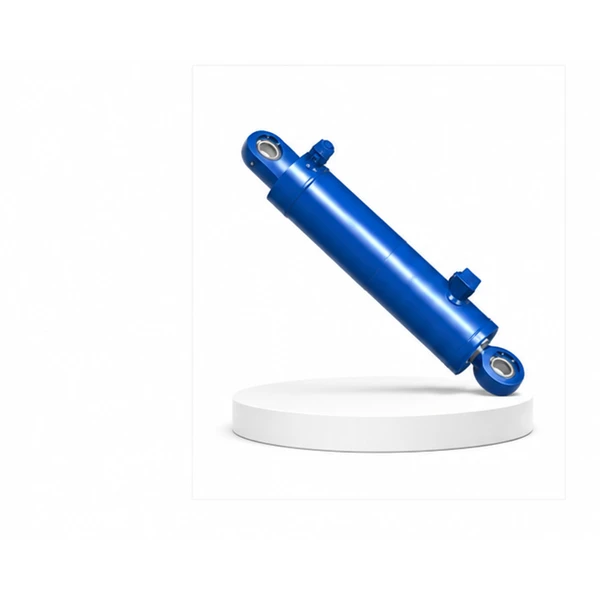
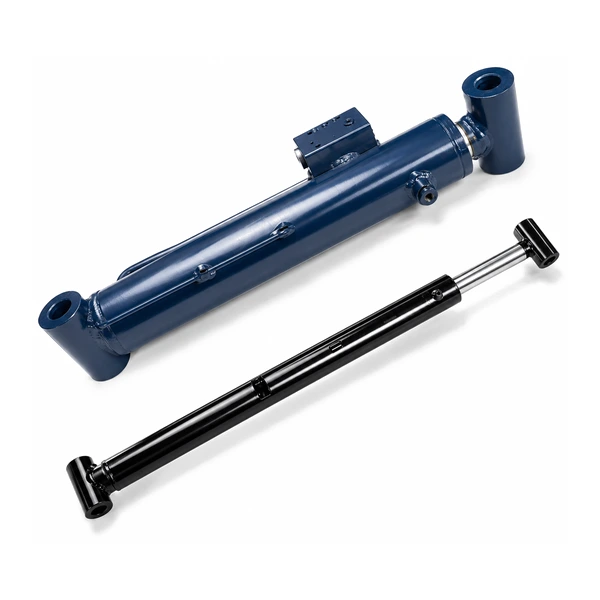
Mobile Crane Steering Cylinder
Multi-Axle Steering — Why Every Axle Needs Its Own Cylinder
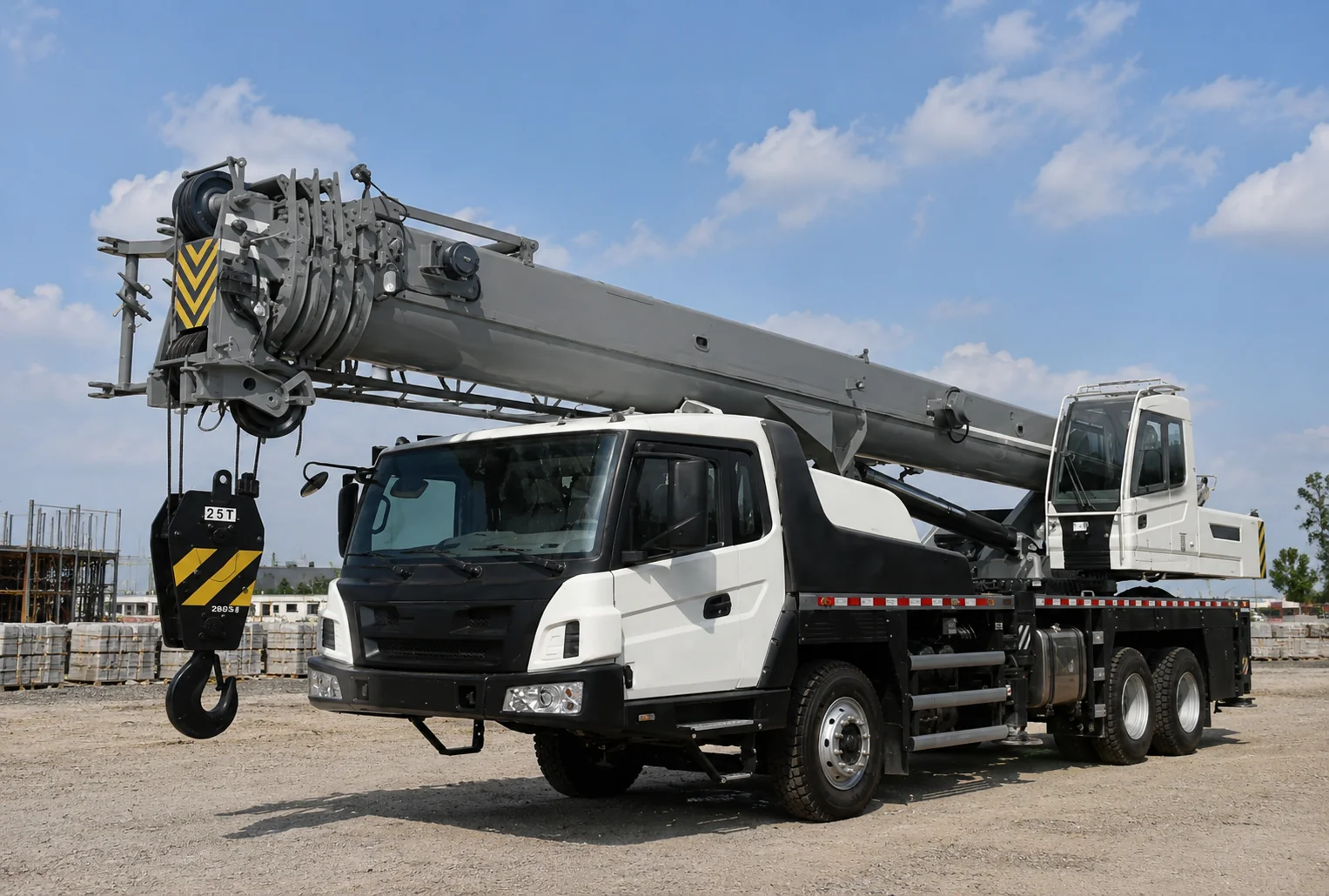
A car has one steerable axle and two steering cylinders (integrated into the rack-and-pinion). A large mobile crane has 5–9 axles — and each steerable axle requires its own pair of hydraulic steering cylinders (one per wheel). On a 9-axle all-terrain crane, that is up to 18 individual steering cylinders, each independently controlled by the crane's electronic steering computer.
Each axle must turn to a different angle — the inner wheels on a turn follow a tighter radius than the outer wheels, and the front axles turn to a larger angle than the rear axles. The steering computer calculates the correct angle for each wheel using Ackermann geometry corrected for the crane's specific wheelbase, track width, and turning centre. Each steering cylinder must extend to the precise length that produces the computed wheel angle — typically to within ±0.5° accuracy.
Korea Ever-Power manufactures steering cylinders as the final component of the mobile machinery hydraulic cylinder range — completing the 7-cylinder system that powers the mobile crane from foundation to fingertip.
Technical Specifications
| Parameter | Specification |
|---|---|
| Product | Mobile Crane Steering Cylinder |
| Function | Steering system for crane chassis tires |
| Bore Diameter | 63 mm – 200 mm |
| Rod Diameter | 36 mm – 140 mm |
| Stroke | ≤ 1,000 mm |
| Working Pressure | Maximum 35 MPa |
| Application | Mobile Crane Chassis (all steerable axles) |
| Certification | ISO 9001 · 100% hydrostatic tested |
Three Steering Modes — Same Cylinders, Different Geometry
The steering computer reconfigures the same set of steering cylinders into different modes depending on the driving situation:
All axles steer in a coordinated pattern — front axles turn one way, rear axles turn the opposite way. This produces the tightest turning circle for the vehicle length. A 9-axle crane with all-wheel steering can turn in a circle as tight as 23 metres — comparable to a standard delivery truck despite being 3× longer. Each cylinder extends to a different length, computed in real time by the steering controller.
All wheels turn to the same angle — the crane moves diagonally or sideways without changing its heading. Used to position the crane precisely on site when it cannot rotate (constrained by adjacent structures). The steering cylinders must all extend to identical lengths — any variation between cylinders causes the crane to drift rather than translate cleanly.
Only the front 1–3 axles steer; the rear axles lock straight. Used at highway speeds above 40 km/h, where rear-axle steering would make the vehicle unstable (the rear would swing outward on turns, causing oversteer). The rear steering cylinders hold the wheels at centre position — acting as rigid locks. Contact the Korea Ever-Power engineering team for multi-axle steering cylinder coordination.
Continuous, Precise, and Responsive — The Driver's Direct Connection
The steering cylinder is the only crane cylinder that the driver controls directly and continuously through the steering wheel. Every other crane cylinder responds to operator commands through control levers or programmed sequences — with time to think and correct. The steering cylinder responds in real time, with zero perceptible delay, because the driver's sense of vehicle direction depends on it.
This demands the lowest breakaway friction of any crane cylinder — the cylinder must start moving at the slightest steering input, without stiction or dead-band. If the steering feels "sticky" or has a lag, the driver over-corrects, and a 50-tonne vehicle oscillates across the lane. Korea Ever-Power specifies PTFE-composite guide rings and low-friction polyurethane seals for steering cylinders — the same low-breakaway specification used on electric forklift mast cylinders, adapted for the higher pressure and outdoor environment of a crane chassis.
The steering cylinder also sees the highest cycling frequency of any crane cylinder except the suspension. On a winding mountain road, the driver makes continuous small corrections — 30–60 corrections per minute — each requiring the steering cylinder to extend or retract by 1–10 mm. Over a day of road travel, each steering cylinder completes 20,000–50,000 micro-cycles.
Manufacturing Process
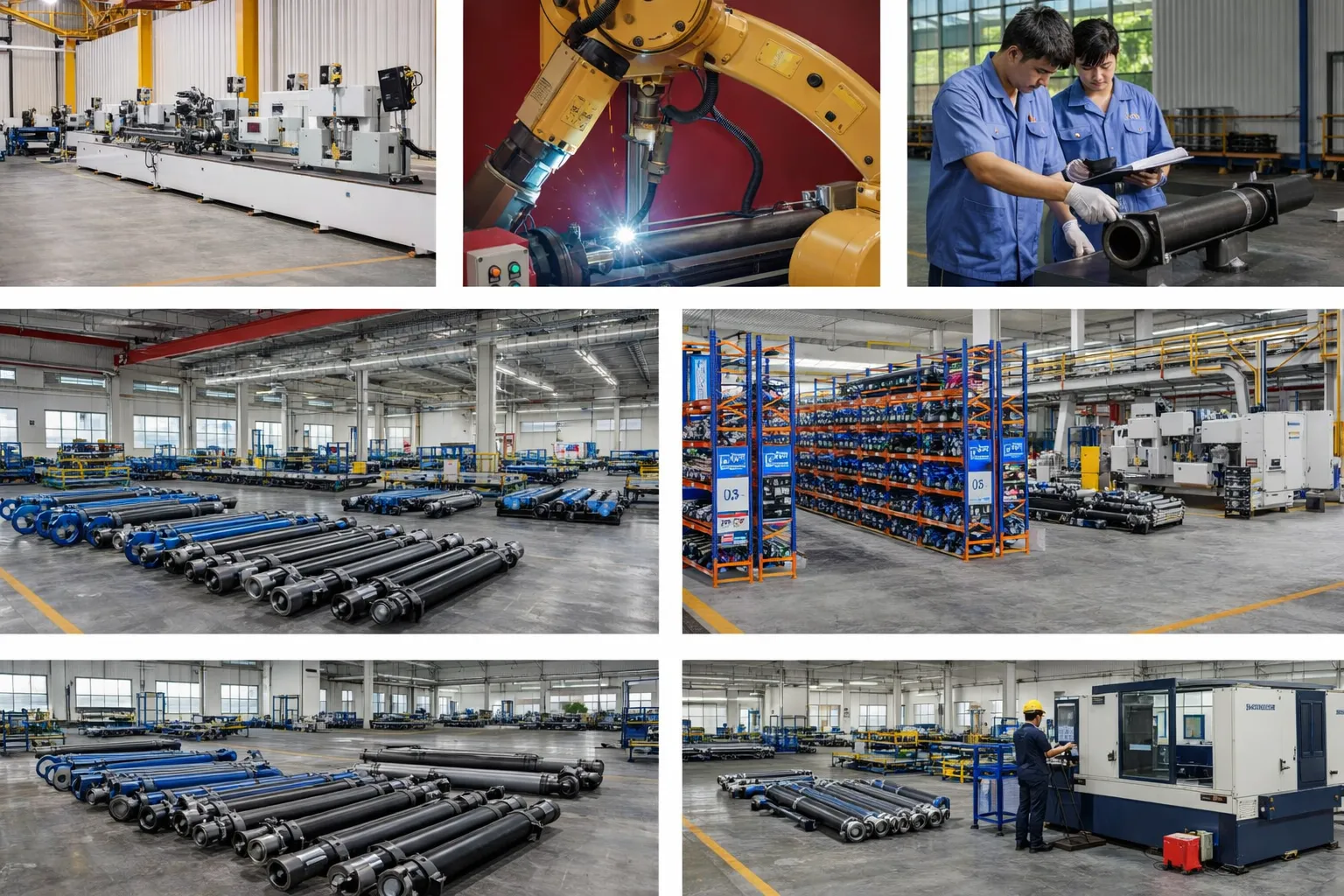
The steering cylinder bore (63–200 mm) is honed to Ra 0.1–0.2 µm — the fine end of the range, because smooth response at low speed requires minimum seal friction. Chrome plating is 50 µm (road splash and stone chip protection). Rod eye bushings are high-load spherical bearings rated for the dynamic steering loads — thrust, side-force, and moment simultaneously. Seals are polyurethane with PTFE guide rings, rated for -30 °C to +80 °C and designed for a service life exceeding 10 million micro-cycles.
Steering cylinders are ordered in matched sets of 4–18 per crane (depending on the number of steerable axles). Korea Ever-Power manufactures each set from the same bore batch and tests all cylinders at the same flow rate to verify matched response — ensuring that when the steering computer commands all cylinders simultaneously (as in crab steer), all wheels reach their target angle at the same time. Every cylinder is hydrostatic tested and response-time tested before shipment.
OEM & ODM
FAQ
Related Categories
Další informace
| Editor |
|---|