
Turntable Brake Cylinder for Offshore Platforms
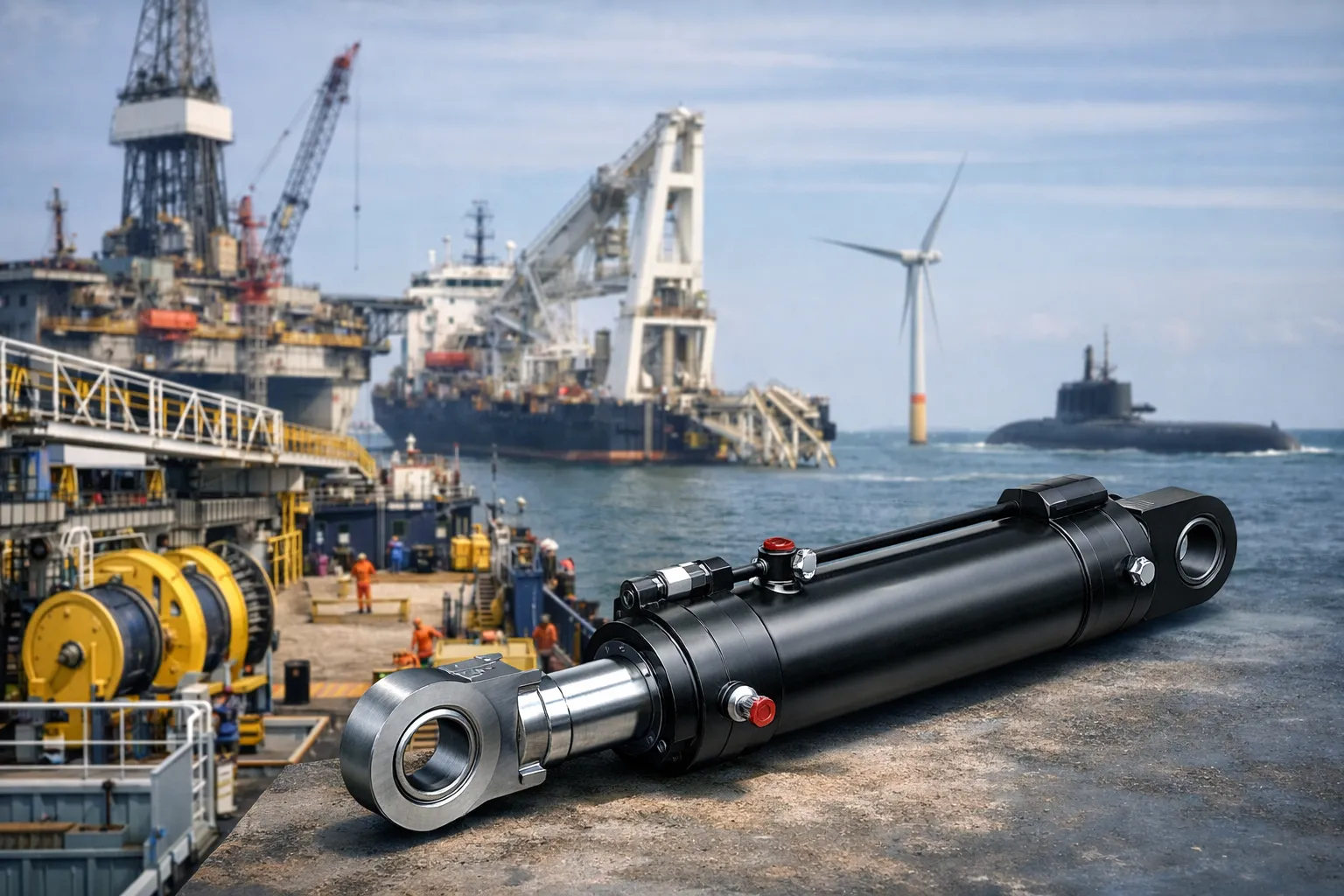
Engineered with high-tensile alloy steel and an ultra-large seal group to empirically eradicate internal leakage, securing absolute rotational locking against severe wind, wave, and mechanical vibration forces.
Product Overview: The Core of Offshore Rotational Stability
In the highly complex architecture of modern marine engineering, offshore platforms ranging from massive Floating Production Storage and Offloading (FPSO) vessels to heavy-lift crane ships and deep-water drilling rigs rely fundamentally on massive turntable systems. These rotating structures allow the vessel to dynamically weathervane, rotating freely around its mooring turret to continuously align the hull directly into prevailing ocean currents, gale-force winds, and massive wave fronts. However, this free rotation must frequently be halted. During critical operations, such as hydrocarbon offloading to shuttle tankers or when securing heavy subsea equipment during severe storms, the turntable must be absolutely locked into a fixed position. The mechanical component solely responsible for arresting the immense rotational inertia of a hundred-thousand-ton vessel and securing the ring gear is the turntable brake cylinder.
Operating as the primary active force element within the platform’s heavy-duty braking calipers, the turntable brake hydraulic cylinder operates in an exceptionally hostile environment. It is continuously battered by highly corrosive, chloride-laden marine air while simultaneously absorbing immense, low-frequency vibrations generated by the vessel’s massive diesel propulsion engines and the relentless physical pounding of ocean waves against the hull. Standard industrial fluid power components deteriorate rapidly under these compounded mechanical and environmental stresses. Through decades of analyzing offshore deck equipment degradation, it has become evident that the most prevalent and dangerous failure mode in these specific systems is internal fluid leakage. When a generic hydraulic cylinder is subjected to continuous micro-vibrations, the standard internal seals deform. This allows high-pressure fluid to slowly bypass the hydraulic cylinder piston, resulting in a gradual, unnoticed decay of hydraulic holding pressure. The massive brake pads subsequently lose their friction grip on the slewing ring. If the brake slips during a typhoon or a delicate offloading procedure, the vessel can swing violently out of control, threatening to snap heavy mooring chains or catastrophically rupture high-pressure subsea risers.
To entirely eradicate this profound operational risk, we engineer a highly specialized turntable brake cylinder designed strictly for absolute, unwavering brake holding reliability. We abandoned standard carbon steel in favor of a heavy-duty, high-tensile alloy steel welded structure that easily absorbs violent vibrational shock loads without suffering metallurgical fatigue or barrel stretching. Furthermore, we equip every unit with an ultra-large seal group. This proprietary, oversized offshore sealing matrix provides an impenetrable fluid barrier, empirically guaranteeing zero internal leakage over extended brake holding periods spanning weeks or months. By manufacturing these premium hydraulic parts directly, we provide shipyards and offshore fleet operators across South Korea, Japan, and the broader Asia-Pacific region with unmatched mechanical safety. We deliver this reliability alongside a highly competitive hydraulic cylinder price, drastically reducing the massive financial burden associated with unscheduled offshore dry-docking and emergency maintenance.
Comprehensive Technical Parameters
Securing a massive marine platform requires uncompromising specifications and total engineering transparency. Every turntable brake hydraulic cylinder we manufacture is built to rigorous, verifiable parameters tailored explicitly for the realities of deep-water operations. The table below details the extensive configuration envelope for our heavy-duty marine braking actuators.
| Parameter Category | Engineering Specification | Operational Significance |
|---|---|---|
| Target Industry | Marine & Offshore Engineering | Certified specifically for exposed weather decks and high-salinity deep-water installations. |
| Equipment Category | Offshore Platforms | Integrates directly into the primary rotational architecture of FPSOs and crane vessels. |
| Subsystem / Action | Turntable System | Provides absolute control over the free rotation and structural alignment of the mooring system. |
| Cylinder Designation | Turntable Brake Cylinder | The dedicated linear force provider for heavy-duty friction brake caliper assemblies. |
| Action Mode | double acting hydraulic cylingder | Utilizes highly pressurized fluid for both forceful brake application and rapid, clean release. |
| Structure Type | High-Pressure Piston Cylinder | Generates massive horizontal clamping force over a highly compact, short stroke length. |
| Manufacturing Structure | Heavy-Duty Welded Body | Eliminates the critical risk of tie-rod stretching and loosening under constant deck vibration. |
| Material System | High-Tensile Alloy Steel | Provides the immense physical yield strength necessary to absorb extreme vessel rotational torque. |
| Surface Treatment | Electroless Nickel Plated | Creates a highly ductile, non-porous metallurgical armor to defeat aggressive salt-spray corrosion. |
| Environmental Rating | Wind & Wave + Severe Vibration | Engineered specifically to survive continuous low-frequency structural resonance and impacts. |
| Working Condition Feature | Brake Holding | Designed to maintain peak hydraulic clamping pressure for days without requiring HPU pump action. |
| Typical Failure Mode Prevented | Internal Leakage | Guarantees the friction pads will not slowly release their grip under extreme rotational strain. |
| Recommended Configuration | Ultra-Large Seal Group | A specialized, oversized polymer matrix designed exclusively to block high-pressure fluid bypass. |
Fluid Mechanics: The Engineering of Platform Braking
To accurately appreciate the true capability of the turntable brake cylinder, one must thoroughly understand the immense fluid dynamics required to arrest a moving offshore platform. This system does not operate like a standard lift cylinder moving cargo vertically through a long stroke. Instead, it must generate sudden, massive horizontal clamping force over a distance of mere millimeters and maintain that force indefinitely. When the vessel’s control room initiates the turntable locking sequence, high-pressure hydraulic fluid—often exceeding 350 bar (5,000 PSI)—is pumped aggressively from the deck manifold into the extend chamber of the cylinder.
This high-density fluid floods the chamber and pushes directly against the large surface area of the precision-machined hydraulic cylinder piston. Because physical output force is the direct product of fluid pressure multiplied by the piston area, the actuator generates tremendous linear thrust. This thrust extends the heavy alloy steel piston rod outward, driving a mechanical linkage that forces large friction brake pads tightly against the massive steel slewing ring surrounding the turret structure. Once the clamping force reaches its peak requirement, the hydraulic directional valves close tightly, locking the highly pressurized fluid inside the cylinder. During this critical holding phase, the platform is repeatedly struck by heavy wave swells, attempting to violently twist the turret gear. If the turntable brake hydraulic cylinder suffers from even microscopic internal leakage across the piston seals, the trapped fluid will slowly bypass to the return line, causing the internal pressure to drop. The brake pads will subsequently lose their grip, leading to catastrophic turntable slippage.
When it is safe for the vessel to resume weathervaning or for the crane to rotate, the brake must be released immediately. In harsh, salt-encrusted marine environments, relying on a single acting hydraulic cylingder equipped with a mechanical spring return mechanism is highly dangerous, as steel springs frequently rust, bind, or snap. For this reason, our system is engineered strictly as a double acting hydraulic cylingder. High-pressure fluid is actively pumped into the retract chamber, forcefully pulling the piston back and physically disengaging the brake pads from the ring gear. This powered retraction guarantees a swift, reliable release every single time, preventing the brake pads from dragging and generating hazardous frictional heat or sparking during turret rotation. Every internal component of our hydraulic parts is specifically designed to handle this aggressive back-and-forth high-pressure cycling without degrading.
Seamless Global OEM Integration and Rapid Retrofitting
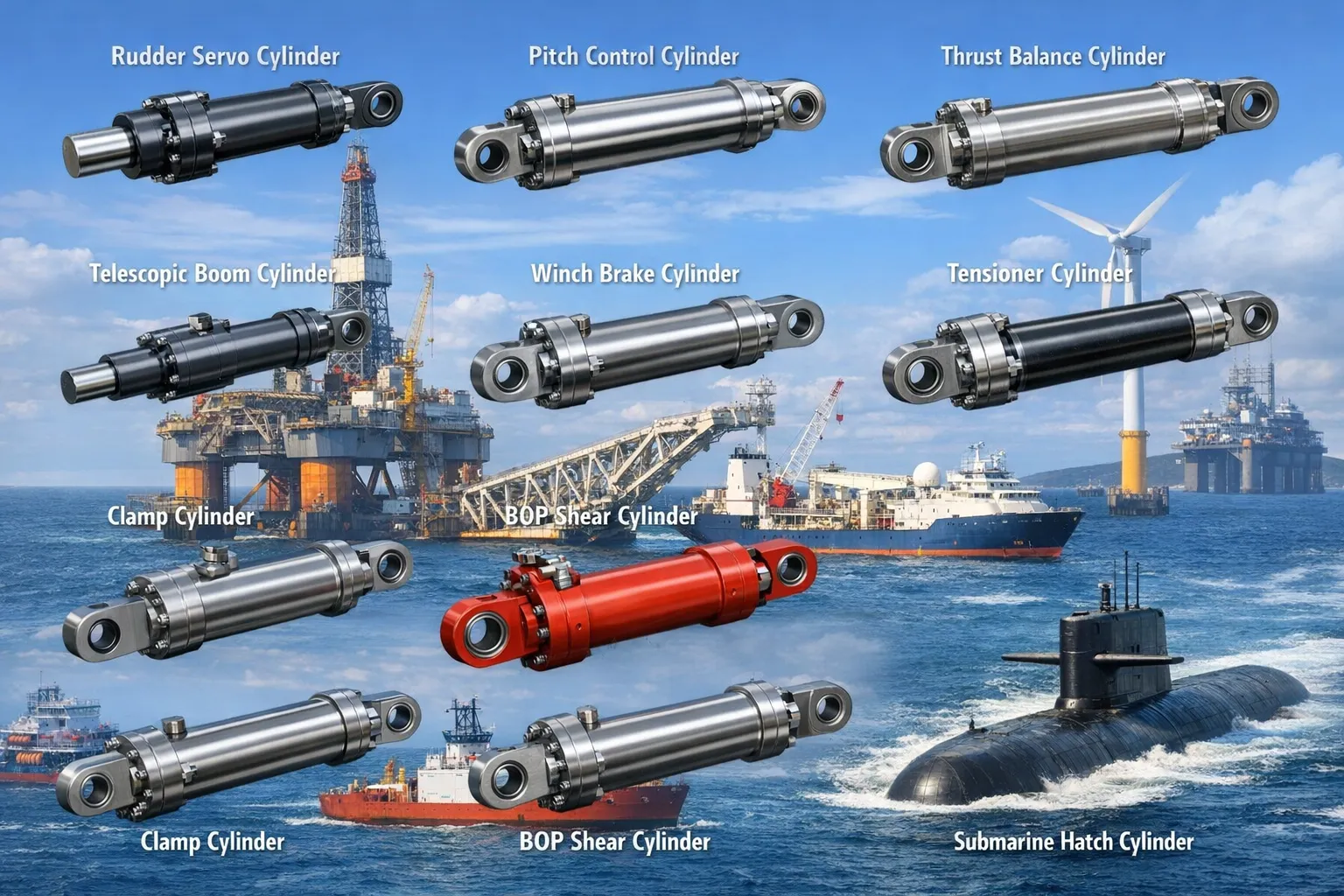
When an offshore platform requires unscheduled maintenance due to failing brakes, fleet operators face exorbitant off-hire financial penalties. Waiting over twenty weeks for replacement hydraulic cylinder components from European OEM suppliers is commercially unviable. Our dedicated marine engineering division excels in high-precision dimensional reverse-engineering to deliver heavily upgraded, exact-fit drop-in replacement units rapidly.
We routinely design and manufacture custom alloy steel turntable brake cylinder assemblies that flawlessly integrate with large-scale turret mooring and slewing systems originally designed by global offshore leaders such as SBM Offshore, SOFEC, MacGregor, National Oilwell Varco (NOV), Bluewater Energy Services, and Huisman. By precisely matching the original mounting flange dimensions, bolt circle diameters, trunnion pins, and high-pressure manifold thread profiles, we ensure that upgrading your platform requires absolutely no hot-work, welding, or structural modifications to your existing caliper frames. Your deck engineering crew can execute the fixing hydraulic cylinders protocol swiftly and safely, restoring full turntable locking capability with zero alignment issues.
(Disclaimer: The offshore marine and heavy machinery brand names referenced above are the registered trademarks of their respective corporate owners. They are mentioned herein strictly for the purpose of technical sizing, dimensional cross-referencing, and mechanical compatibility to aid procurement officers and naval architects. We operate as an entirely independent hydraulic cylinder manufacturer, and our provision of high-performance aftermarket upgrades does not imply official affiliation with or endorsement by these entities.)
8 Core Technical Advantages of Our Braking Cylinders
Holding a hundred-thousand-ton vessel steady against a raging ocean requires metallurgy and internal fluid sealing that significantly surpasses standard commercial specifications. Our turntable brake hydraulic cylinder is structurally optimized to deliver faultless reliability through eight critical engineering pillars:
1. Integration of an Ultra-Large Seal Group
To entirely combat the catastrophic failure mode of internal leakage, we utilize an ultra-large seal group configuration. This multi-tiered matrix of heavy-duty polyurethane and PTFE seals provides a substantially wider and deeper sealing footprint against the internal barrel. It physically blocks high-pressure fluid from bypassing the piston, guaranteeing absolute brake holding power for extended durations despite severe vibration.
2. High-Strength Alloy Steel Construction
The immense rotational torque of a shifting FPSO vessel places enormous radial strain on the brake calipers. We forge our main cylinder bodies from high-strength alloy steel (such as 42CrMo), which provides significantly higher physical yield strength and structural toughness than standard carbon steel, ensuring the cylinder barrel never stretches, bulges, or deforms under peak clamping pressure.
3. Advanced Nickel Plating Armor
Marine environments rapidly devour standard epoxy paint systems. To protect the external alloy steel body from aggressive chloride attack and constant salt spray, we apply a thick layer of electroless nickel plating. This creates a non-porous, highly ductile metallic armor that prevents sub-surface rusting and vastly extends the operational life of the unit.
4. Monolithic Welded Integrity
Offshore platforms suffer from constant, low-frequency engine and wave vibration. Standard tie-rod cylinders inevitably vibrate loose over time, leading to catastrophic seal blowouts. Our deep-penetration welded design creates a permanent, rigid structure that is completely immune to mechanical loosening, securing the pressure vessel permanently.
5. Optimized Thermal Stability
Rapid, repeated engagement of the brake during dynamic vessel positioning generates significant internal fluid friction and heat. Our large-bore designs incorporate optimized porting geometries to reduce flow restriction. This prevents the hydraulic fluid from overheating and actively protects the polymer seals from thermal degradation.
6. Ultra-Low Friction Surface Tribology
We hone the internal cylinder barrel and diamond-polish the piston rod to a mirror-like finish (Ra ≤ 0.2 µm). This extreme smoothness drastically reduces the start-up friction (stiction) when the brake is engaged or released, ensuring the heavy friction pads move cleanly and instantaneously without any mechanical juddering.
7. Rigorous Finite Element Analysis (FEA)
Prior to cutting any alloy steel, our engineering team constructs highly detailed 3D CAD models and subjects them to computerized FEA. This allows us to map high-stress concentrations at the mounting flanges and dynamically optimize wall thicknesses, guaranteeing a prolonged structural fatigue life under endless wave impacts.
8. Severe-Duty Scraper Wiper Seals
When the piston rod extends, it becomes exposed to heavily salt-laden air. Upon retraction, our specialized, heavy-duty polyurethane wiper seals aggressively scrape away the abrasive salt crust from the rod before it can enter the cylinder. This critical function keeps the internal hydraulic oil completely uncontaminated.
Autonomous Manufacturing Control & Certified Quality Traceability
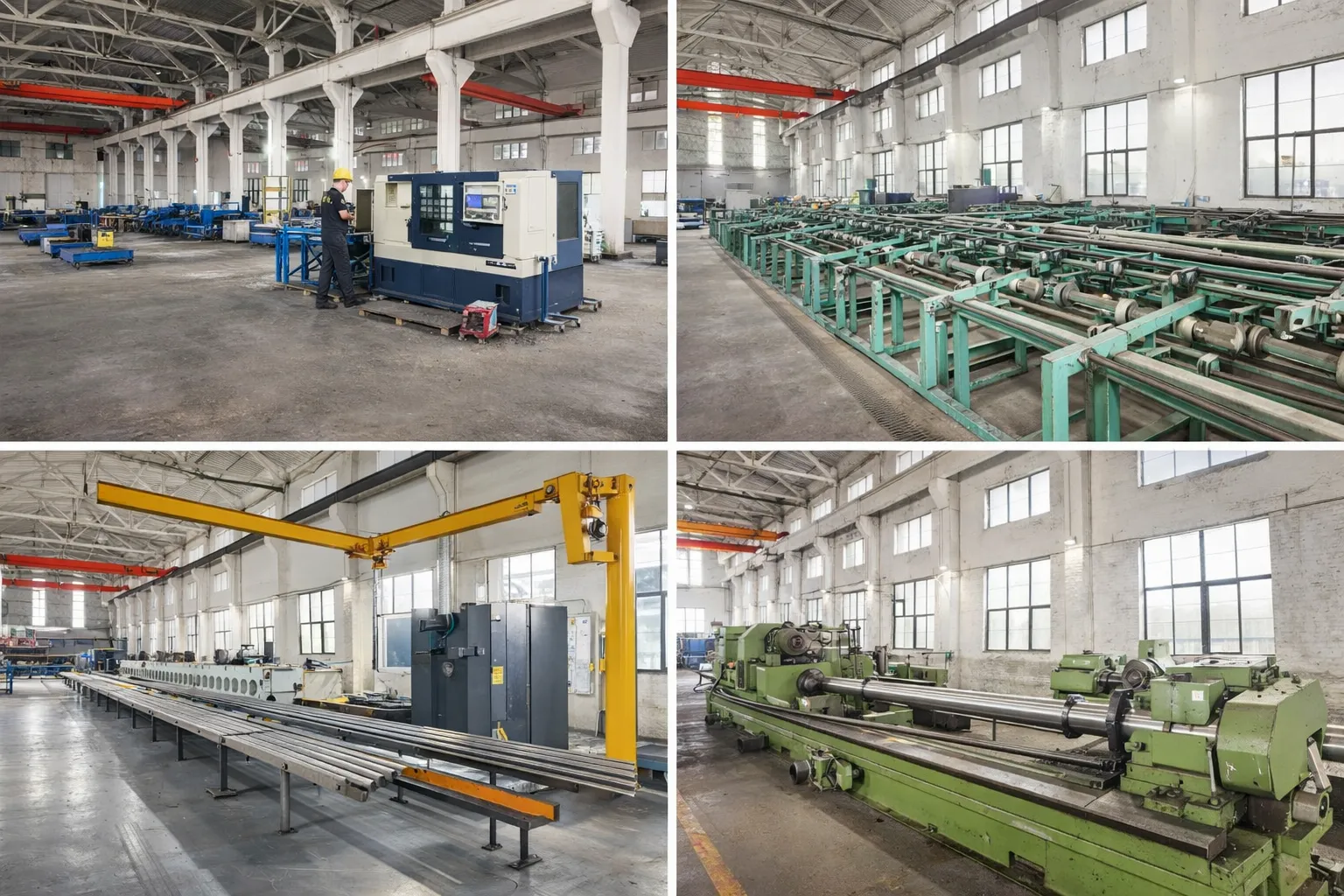
When an offshore energy asset’s physical safety depends entirely on the structural integrity of your braking components, the manufacturing process cannot be fragmented across an unreliable supply chain. To aggressively maintain our global reputation as an elite hydraulic cylinder manufacturer, we operate a fully vertically integrated production campus. We assert absolute metallurgical and mechanical control from raw material ingestion to the final hydrostatic validation sequence.
Our exacting manufacturing protocol begins with strict alloy verification. Every incoming billet of high-strength alloy steel undergoes rigorous Optical Emission Spectrometry (OES) to definitively confirm its chemical composition, alongside deep-penetration Ultrasonic Testing (UT) to detect any internal voids, ensuring it perfectly meets demanding marine classification standards. Following this validation, our multi-axis CNC lathes machine the internal barrels and hydraulic cylinder components to tight, micron-level H7 diametrical tolerances. The critical structural welds joining the steel flanges to the cylinder body are executed by automated robotic systems utilizing continuous inert gas shielding. Crucially, 100% of these structural welds are subjected to thorough Non-Destructive Testing (NDT)—including Magnetic Particle Inspection (MPI)—to verify the absolute absence of sub-surface micro-cracks.
Before any turntable brake cylinder is packaged for deployment to a shipyard, it undergoes an exhausting Factory Acceptance Test (FAT). The assembled units are pressurized hydrostatically to 1.5 times their maximum rated operating pressure. During these intense holding periods, highly sensitive digital transducers confirm absolute zero internal fluid bypass across the ultra-large seal group. Every cylinder is permanently serialized. We provide our B2B clients with comprehensive documentation, including full Material Test Reports (MTRs), and we frequently coordinate directly with major international marine classification societies—such as DNV, ABS, or the Korean Register (KR)—to formally survey and certify the cylinders for specific deep-water deployments.
Broad Industrial Heavy-Duty Applications
The severe-duty engineering required to secure a rotating platform in the open ocean—specifically the total mastery of vibration-resistant alloy steel and zero-leakage seal configurations—translates into unparalleled reliability for other brutal industrial sectors. The robust design principles embedded in our heavy hydraulic rams are actively deployed across multiple highly demanding terrestrial environments globally.
Heavy Metallurgy & Steel Manufacturing
In environments dominated by extreme radiant heat and abrasive flying slag, our robust, heat-resistant actuators operate heavy furnace doors reliably. Explore our highly specialized solutions tailored for the metallurgical and iron industry.
Subterranean Mining & Excavation
Underground operations expose machinery to massive rock falls and heavy lateral vibration. Our heavy-walled welded cylinders power rock crushers safely. Discover our heavy-duty applications in the mining industry.
Earthmoving & Heavy Construction
Heavy construction equipment requires absolute reliability. Our double-acting designs provide the massive breakout force needed for large excavator booms. Review our rugged parts built for the construction machinery industry.
Port Logistics & Material Handling
Heavy-duty ship-to-shore gantry cranes, automated straddle carriers, and massive container lifters utilize our highly responsive, pressure-tested cylinders for safe, reliable, and highly efficient global cargo movement.
Plastics & Rubber Injection Molding
Ultra-large industrial injection molding machines demand rapid, highly accurate clamping strokes to maintain strict production tolerances. Our zero-leakage internal designs provide the necessary micro-precision while holding thousands of tons of pressure.
New Energy & Environmental Equipment
Massive offshore wind turbines utilize our heavily protected, corrosion-resistant brake cylinders to securely lock the turbine blades safely in place during violent typhoons or routine hub maintenance.
Comparative Analysis: Standard Commercial Cylinders vs. High-Performance Offshore Braking
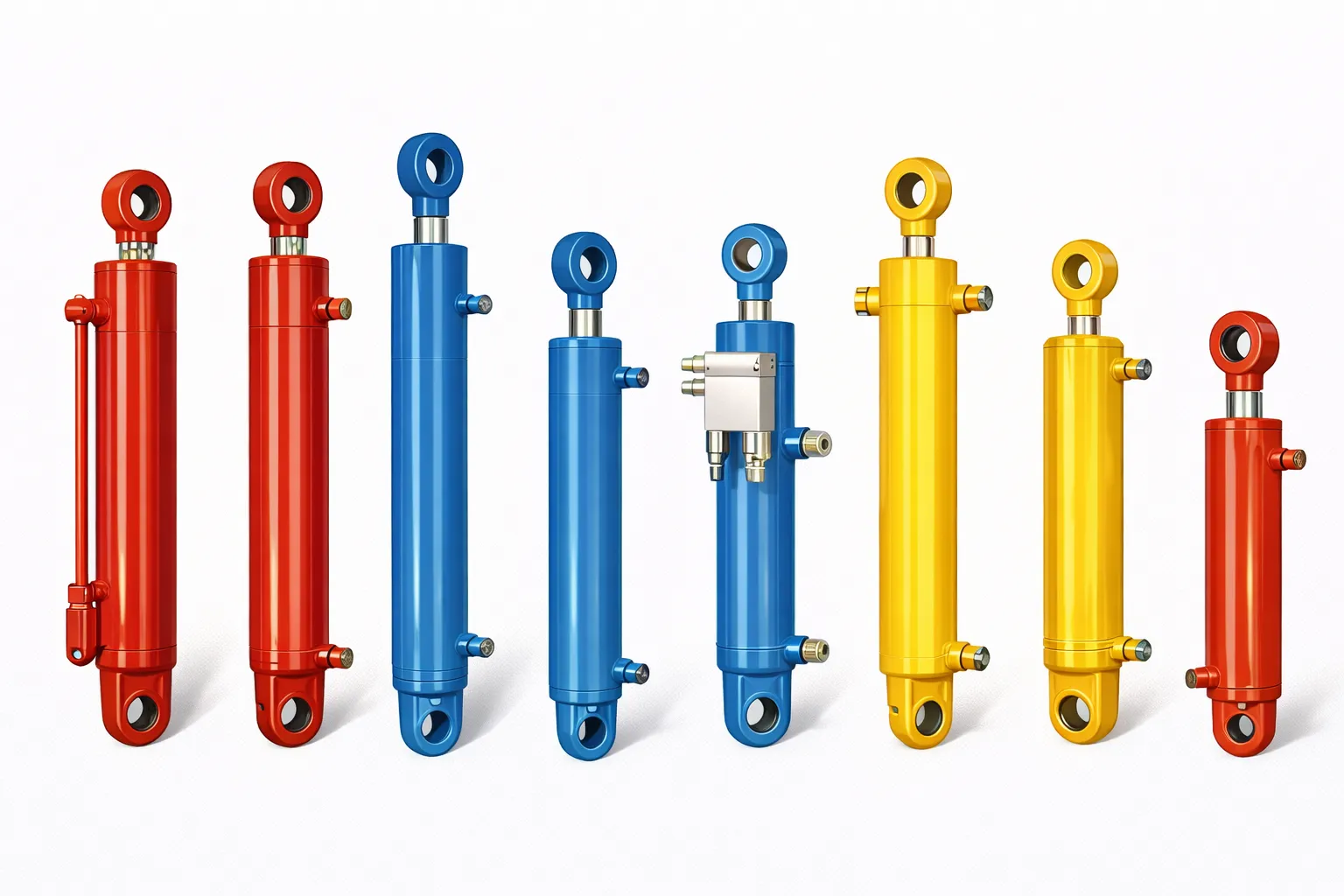
When outfitting a multi-million-dollar offshore platform, attempting to lower the initial hydraulic cylinder price by selecting standard commercial equipment is a profound operational risk. The comparative matrix below explicitly demonstrates why investing in our alloy steel and nickel-plated architecture is a strict engineering necessity for safe offshore rotation control.
| Critical Performance Feature | Ordinary Commercial Cylinders | Our Turntable Brake Hydraulic Cylinder |
|---|---|---|
| Internal Sealing Matrix | Standard single-lip NBR seals (Highly prone to fluid bypass under vibration over time) | Ultra-Large Seal Group (Provides an absolute, zero-leakage fluid barrier absorbing shock) |
| Structural Body Material | Standard Carbon Steel (Vulnerable to deformation under severe rotational torque) | High-Strength Alloy Steel (Massive yield strength effortlessly handles shock loads) |
| Exterior Environmental Defense | Basic Marine Epoxy Paint (Chips easily, rapidly exposing raw steel to deep rust) | Thick Electroless Nickel Plating (Forms a highly ductile, rust-proof metallic armor) |
| Resistance to Vibration | Tie-rod assembly (Vibrates loose and stretches, leading to catastrophic seal blowouts) | Heavy-duty welded body (Permanently rigid; completely immune to mechanical loosening) |
| Turntable Slip Risk Profile | High risk (Internal pressure drops over days of holding the brake closed) | Zero risk (Empirically verified holding power guarantees brake pads remain securely locked) |
Proven Success in the Field: East Asian Offshore Case Studies
Theoretical specifications matter very little without proven, real-world ocean combat records. Our customized marine actuators are deeply trusted by premier fleet operators and massive shipbuilding conglomerates, particularly within the heavy industry sectors of East Asia. Here are three documented examples demonstrating our capacity to solve critical operational challenges rapidly.
Case Study 1: Eradicating Brake Slippage on an FPSO Integration
Location & Client: Geoje, South Korea – A premier global offshore shipbuilding conglomerate.
The Challenge: During the final commissioning phases of a massive new-build FPSO in early 2025, the shipyard engineers discovered that the platform’s turntable system was experiencing dangerous uncommanded slipping during high-wind simulation tests. The original OEM brake actuators were suffering from severe internal fluid leakage across their seals due to intense low-frequency hull vibrations, causing the brake calipers to lose their grip over a 48-hour holding period.
The Solution: The shipyard procurement team contacted us via our specialized technical portal. We rapidly reverse-engineered the OEM footprint and supplied fully customized turntable brake cylinder replacements. We utilized an ultra-large seal group combined with our heavy-duty welded alloy steel bodies to perfectly absorb the vessel’s vibration without transferring the load to the internal seals.
Result & Client Feedback: The retrofit was completed, and the Korean Register (KR) formally certified the holding power of the new system during sea trials.
Case Study 2: Defeating Aggressive Corrosion for a Japanese Heavy Lift Vessel
Location & Client: Osaka, Japan – Offshore Energy Logistics Operator.
The Challenge: Operating continuously in the harsh, typhoon-prone waters off the Japanese coast, the vessel’s heavy crane turntable locking system was degrading rapidly. The standard marine paint on the brake cylinders was chipping off, exposing the raw carbon steel to severe chloride attack. The structural rusting was so deep it compromised the pressure vessel, forcing the maintenance team into constant, highly hazardous hydraulic cylinder repair routines.
The Solution: We provided heavy-duty double acting hydraulic cylingder units manufactured from high-strength alloy steel, but specifically treated the exterior with an extremely thick layer of electroless nickel plating. This provided a non-porous, highly ductile metallic shield against the aggressive salt spray.
Result & Client Feedback: The new actuators drastically extended the operational lifecycle, putting an end to the structural rusting.
Case Study 3: Overcoming Severe Lead Times for an Asian Fleet Refit
Location & Client: Jurong, Singapore – Regional FPSO Fleet Management Company.
The Challenge: An aging FPSO required a complete overhaul of its turntable braking system. The original manufacturer quoted an unacceptable 24-week lead time and a massive cost. The extensive delay would have kept the vessel off-hire, resulting in millions of dollars in lost oil production revenue. The local crew was attempting unsafe methods of fixing hydraulic cylinders just to maintain baseline safety.
The Solution: Leveraging our highly agile, vertically integrated manufacturing plant, we reverse-engineered the required heavy-duty actuators. We engineered, manufactured, completely pressure-tested, and shipped the alloy steel units within just 7 weeks.
Result & Client Feedback: The vessel resumed operations rapidly, safely avoiding massive off-hire financial penalties.
Frequently Asked Questions (FAQ)
Acquiring critical life-safety components for offshore turntable systems demands absolute technical clarity. Below, our specialized engineering team rigorously addresses the most common inquiries from marine architects and fleet procurement directors.
Secure Your Platform with Uncompromising Brake Holding Power
The structural safety of your massive offshore energy asset is completely non-negotiable. Do not risk a catastrophic turntable slippage event by relying on standard industrial components that suffer from internal leakage. Upgrade your mooring system with a premium, alloy-steel turntable brake hydraulic cylinder specifically engineered with an ultra-large seal matrix to definitively guarantee absolute holding power against severe wind, waves, and vibration.
Editor: Cxm


























