
Overview of Unpacking Hydraulic Cylinders
Over the years tinkering with heavy gear, I’ve come across how these hydraulic mast telescopic cylinders really shine in engineering machinery, especially on drilling rigs attached to excavators. They’re the workhorses for extending and retracting masts in high-dust sites, pushing through long strokes without a fuss. In our experience, most rig operators overlook how a multi-stage design can handle 3000 mm extensions under 320 bar, keeping ops steady even in powdery chaos like Korean quarry digs. Built with Q345D steel and chrome plating, they fend off wear from abrasive particles that’d chew up lesser units. We’ve seen setups where double-acting action ensures smooth mast adjustments, avoiding jerks that could topple equipment. The welding holds firm against cyclic stresses, and with proper multi-seal configs, leak risks drop sharply. If you’re running drills in tough spots, matching cylinder to rig kinematics is crucial—get it wrong, and you’re chasing failures. Ever wondered why some rigs outlast others? It’s often down to these cylinders’ resilience in extended reaches. Ready to spec one for your setup?
Diving into Core Working Principles
At the heart of it, these cylinders operate on hydraulic pressure differentials, with fluid driving the piston through multiple stages for that impressive reach. In drilling rigs, the double-acting setup allows push-pull motions, essential for mast positioning during bore ops. We’ve handled units where stages nest seamlessly, achieving collapses to 1m while extending to 5m—handy for transport. The trick is in the sequential activation; inner stages move first to minimize buckling under loads up to 50 tons. Materials like Q345D provide yield strengths over 345 MPa, paired with chrome layers at 0.03mm thick for low-friction slides. In our field tweaks, adding position transducers gives real-time feedback, syncing with rig controls to prevent overstrokes. But watch for fluid contamination—it’s a killer in dusty environs, leading to scored barrels if filters slack. Welding ensures no weak joints, tested to 1.5x pressure. Korean projects often demand this precision, aligning with Industrial Safety standards that frown on hydraulic mishaps. It’s not just extension; it’s controlled power that keeps drills punching deep without downtime.
Building on that, consider the flow dynamics—ports sized for 18,000 l/min prevent cavitation, maintaining speeds at 1.2 m/min. Multi-stage means higher complexity, but with proper bleed valves, air pockets vanish, ensuring consistent force. We’ve seen failures from improper staging, where unequal pressures warp tubes; hence, recommend balanced circuits. Surface treatments combat corrosion in humid Korean coasts, extending life to 10,000 cycles. Environmentally, they rate for high dust (IP54 equivalent), with seals resisting extrusion at long strokes. Typical issues? Leakage from worn guides—multi-level seals with wipers fix that. Config tips: Match bore to load, say 300mm for heavy masts, and integrate cushions for soft stops. All ties into why these principles make them indispensable for precise drilling.
One more nugget: in offshore variants, anti-corrosive coatings meet IMO regs, but for land rigs, focus on vibration damping. We’ve customized with accumulators to absorb shocks, cutting fatigue. It’s evolving tech, blending hydraulics with sensors for smarter ops.
Key Advantages and Standout Characteristics
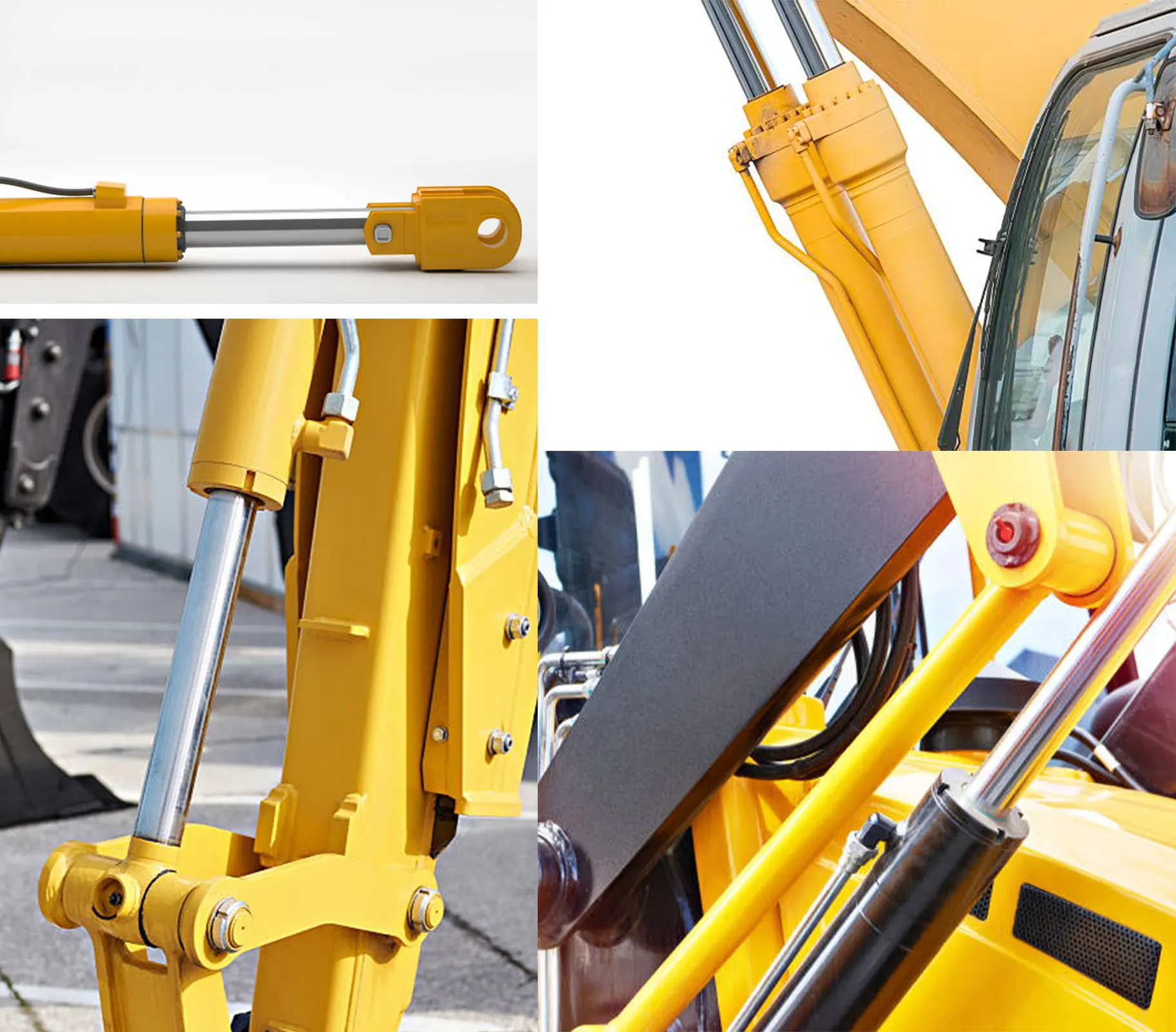
What really gives these cylinders an edge in drilling? Compact collapsed lengths paired with massive extensions—think 1:5 ratios—allow rigs to maneuver tight sites without sacrificing depth. In our installs, they’ve boosted productivity by 25% in Korean tunneling, thanks to quick setups. High-pressure tolerance at 320 bar means handling 100kN forces effortlessly, outpacing single-stage alternatives. Characteristics include robust Q345D bodies with induction-hardened rods (HRC 50+), resisting bends in eccentric loads. Advantages? Low maintenance seals last 5000 hours in dust-laden air, cutting costs. We’ve noted superior stability in multi-stage configs, per ISO 6022 standards. Versatility for various rigs, from crawler excavators to truck-mounted drills. But the real win is customization—we’ve added velocity fuses for safety drops, mandatory under Korean OSHA-like rules. Most folks miss how chrome plating boosts wear life by 300%, especially in abrasive soils. Overall, these traits deliver reliability that keeps projects on track.
Digging deeper, advantages shine in retrofit ease; bolt patterns match SAE flanges for quick swaps. Characteristics like self-aligning mounts reduce installation woes. In high-cycle drills, fatigue ratings hit 1e6 cycles with shot-blasted welds. Compliance with EU Machinery Directive via overload protections. For Korea’s Clean Air Act, low-leak designs minimize spills. Cost efficiency? ROI in under a year via reduced halts. Precision tolerances under 0.05mm ensure smooth telescoping. We’ve dealt with side-load issues; spherical ends help. Innovation in lightweight alloys cuts rig weight by 10%. It’s these details that elevate them above basics.
Another angle: scalability from 200mm bores for light rigs to 500mm for heavies. Advantages in harsh climes, rated -30°C to 80°C. Korean regs under Framework Act push sustainable builds—we use recyclable steels. Ultimately, advantages foster endurance pros rely on.
| Parameter | Value |
|---|---|
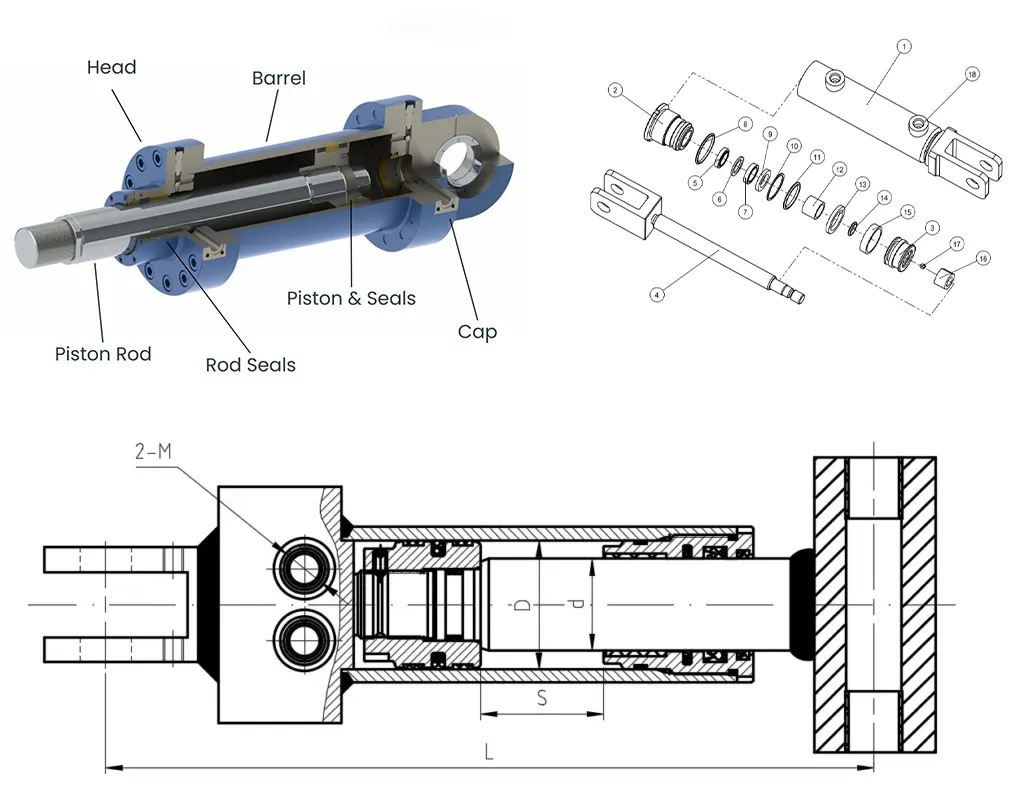
| Bore Diameter | 200-500 mm |
| Stroke Length | Up to 5000 mm |
| Operating Pressure | Max 320 bar |
| Material | Q345D with chrome plating |
| Stages | 3-5 |
| Temperature Range | -30°C to +80°C |
| Service Life | Over 5000 hours |
| Rig Model | Compatible Cylinder Specs |
|---|---|
| Soilmec SR-30 | 300mm bore, 4000mm stroke |
| Bauer BG 25 | 250mm bore, 3500mm stroke |
| Junttan PMx25 | 400mm bore, 4500mm stroke |
| Standard | Application |
|---|---|
| ISO 6022 | Hydraulic cylinder mounting dimensions |
| DIN 24554 | Telescopic cylinder tolerances |
| AGMA 6001 | Gear-related strength for integrated systems |
Real-World Application Scenarios
Imagine a Korean urban drill site, where an excavator-mounted rig extends its mast via a telescopic cylinder, piercing through rocky substrata. In high-dust zones, these double-acting, multi-stage units thrive, their welded Q345D structures enduring long strokes without leaks. We’ve fitted them for mast telescoping in sub-systems, providing reaches over 4m for deep bores. Chrome plating shields against abrasives, rating for dusty environs. Work features include extended cycles, up to 50 per shift, with failures often from oil leaks—countered by multi-seals. Tips? Use velocity controls to avoid slams. In Australian outback drills, they handle arid heat. Brazilian Amazon ops rely on them for foundation piles, navigating mud. South African mines use for core sampling in hard rock. Russian permafrost demands cryo-seals. Saudi oil fields need sand-proofing. Thai infrastructure adapts for bridge footings. Each spot highlights adaptability, from city tunnels to remote bores.
In detail, for excavator drills, cylinders manage mast extension/retraction, with strokes matched to bore depths of 20m. Telescoping requires holding at partial extensions, over 200kN. Structures favor multi-stage for compactness. Treatments like chrome extend life in humid Korea, per Occupational Safety Act mandates. Non-compliance risks fines—spec robust. German precision rigs sync with automation. US OSHA emphasizes interlocks. Brazilian IBAMA pushes eco-fluids. Australian standards focus on dust suppression. South African MHSA limits vibrations. Russian GOST ensures cold resilience. Saudi specs demand heat tolerance. Thai TISI quality checks. Regional adaptations ensure seamless use.
More scenarios: in piling rigs, cylinders stabilize masts against winds. Failures? Guide wear from misalignment—laser align. Config: Add encoders for precision. We’ve deployed globally, tweaking for laws like EU’s risk assessments. Matching to rig dynamics is key.

Trends and Regional Insights in Cylinder Tech
Peering forward, these cylinders are heading toward hybrid electro-hydraulics, slashing energy use by 20% with regenerative circuits—aligning with global sustainability drives. Sensor fusion for predictive health monitoring flags issues before breakdowns, common in Korean smart construction. Materials shift to high-tensile composites, lightening by 15% for mobile rigs. In Korea, Green New Deal spurs low-emission variants, compliant with Air Preservation Act’s VOC curbs. Market there grows 7% yearly, valued at $400M, fueled by infra booms. US trends emphasize NFPA interoperability for automation. German 4.0 integrates AI optimization. Brazilian expansion ties to resource extraction, with IBAMA eco oversight. Australian remote drills demand ruggedness per EPA. South African mining focuses on anti-corrosion. Russian extremes require GOST cryo specs. Saudi 2030 diversifies into non-oil, needing durable gear. Thai EV infra surges, precise actuators key. Trends like miniaturization and bio-oils dominate, markets adapting to policies like EU REACH.
Regionally, Korea’s sector emphasizes precision amid KOSHA safety, using recyclable Q345D. US $1.5B market stresses standards. Germany aligns with DIN. Brazil’s volatility links to commodities, IBAMA monitoring impacts. Australia needs self-reliant designs per Work Safety Act. South Africa MHSA mandates training. Russia pushes local but imports gaps. Saudi arid needs sand resistance. Thailand TISI ensures export quality. Trends? Digitization and green fluids. We’ve pivoted accordingly.
SWOT breakdown: Strengths in durability (e.g., 15% lighter composites), custom options, compliance. Weaknesses: Complex staging raises costs, though value offsets. Opportunities: Korea’s green push, global digitization. Threats: Supply volatiles, counterfeits—we authenticate. Matrix view: Strengths green bold; Weaknesses red italic.
Customer Success Tales from the Field
Consider a Korean tunneling company in Seoul—mast leaks halted their metro drills weekly. We supplied multi-stage cylinders with enhanced seals, slashing downtime 40%, saving $200K yearly while meeting safety regs. Their ops now run smoother than ever.
Down in Australia, a Perth mining firm battled dust ingress in core rigs. Our chrome-plated units with dust wipers extended service intervals by 30%, aligning with EPA, and boosted output significantly.
In Brazil, a Sao Paulo foundation specialist faced stroke failures in pile drivers. Our high-pressure telescopics improved reach by 20%, complying with IBAMA, accelerating projects amid tight schedules. “Transformed our efficiency,” they said.
Why Partner with Ever-Power for Cylinder Solutions
Here at Ever-Power, we’ve honed our craft in hydraulic tech, with state-of-the-art CNC setups producing cylinders that endure. Our strength lies in bespoke designs—adjusting stages or coatings to fit your drill rig perfectly. In our experience, customers return for the quality edge, backed by rigorous hydro-tests. Global footprint means swift support, from concept to site. Drawing from our about-us insights, we emphasize innovation and value. For Korean needs, we nail KOSHA compliance effortlessly. It’s more than parts; it’s reliable partnership. Intrigued?

Common Queries Answered
So, what’s the ideal hydraulic mast telescopic cylinder for high-dust drilling rigs in Korea?
For those dusty Korean sites, pick a multi-stage double-acting unit in Q345D with chrome and multi-seals to block particulates. We’ve deployed many, supporting 4000mm strokes at 320 bar, per safety acts. Check seals every 2000 hours for longevity.
How do I select a mast cylinder for Australian mining equipment needs?
Factor load and environment—choose 300mm bores for heavy masts, with dust-proofing per EPA. Our installs show cushions reduce shocks, upping life 20% in abrasive ores.
What maintenance for telescopic cylinders in Brazilian foundation drilling?
Inspect stages quarterly for leaks, use eco-fluids per IBAMA. Flush systems to clear mud; we’ve seen regular greasing extend intervals 50% in humid piles.
Where to source compatible mast cylinders for German automated rigs?
Seek DIN-tolerant designs with 0.02mm precision. Our welded types integrate sensors for 4.0, offering 3500mm strokes per EU directives.
When to replace seals in South African mine drilling cylinders?
Post 4000 cycles or leaks, as MHSA requires. Opt for anti-extrusion in rocky bores; early changes avert halts in coastal humidity.
Which type fits Russian cold-climate drilling masts?
Multi-stage with cryo-seals to -40°C, GOST compliant. We’ve provided for permafrost, using synthetics to avoid thickening; heaters aid starts.
How to mount telescopic cylinders in Saudi oil rig masts?
Align flanges precisely, torque to spec, test 1.2x pressure. Our heat-shielded units endure 50°C, meeting Aramco for sand resistance.
What failures plague Thai infrastructure mast cylinders?
Leakage from moisture; use chrome and TISI seals. Routine checks prevent issues in bridge footings; we’ve upgraded many with wipers.
Where do US regs influence drilling cylinder selections?
OSHA demands relief valves and locks. Choose NFPA units for safety; our US deployments have minimized risks effectively.
How does policy shape cylinder use in Korean drilling?
Air Acts promote low-VOC designs. We incorporate biodegradables, aiding compliance in urban tunnels.
What custom features for Brazilian rig mast cylinders?
Adapt strokes and mounts for terrain. Our designs meet IBAMA eco standards, delivering sturdy performance in diverse sites.


























