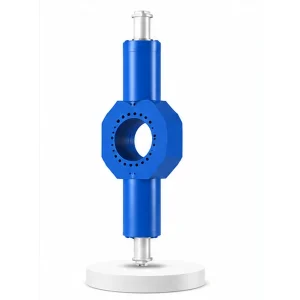
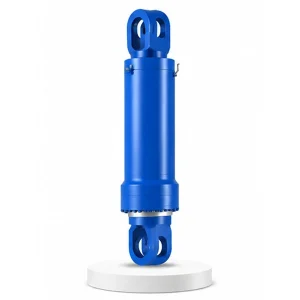
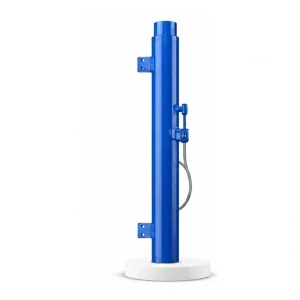
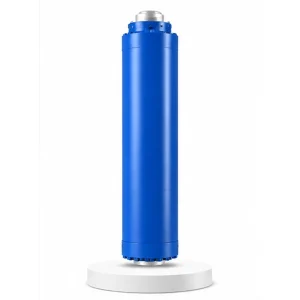
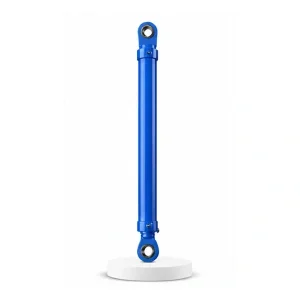
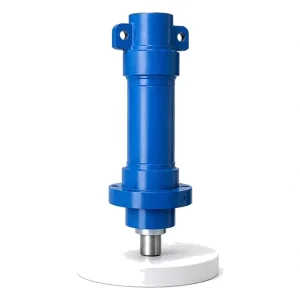
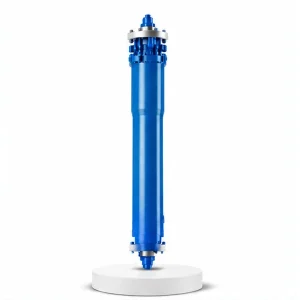
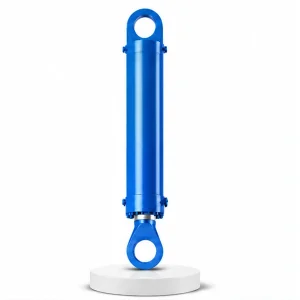
Injection Molding Machine Shooting Cylinder
Shooting Cylinder · Nozzle Docking
Dock. Hold. Inject.
Retract. Repeat.
After forges, furnaces, filter presses, and cement mills — a different world. The injection molding machine is clean, fast, and precise. The shooting cylinder slides the entire injection unit forward on its guide rails, docking the nozzle tip against the mold sprue. It holds the nozzle-to-mold contact force during the 1–30 second injection phase, preventing molten plastic from leaking at the junction. Then it retracts. Every cycle. Every 10–60 seconds. Thousands of times per shift.
What the Shooting Cylinder Does — And What It Does Not Do
An injection molding machine has two main assemblies: the clamping unit (which holds the mold closed) and the injection unit (which melts plastic and injects it into the mold). The injection unit sits on guide rails and can slide toward or away from the mold. The shooting cylinder drives this sliding motion — advancing the injection unit until the nozzle tip seats firmly against the mold's sprue bushing.
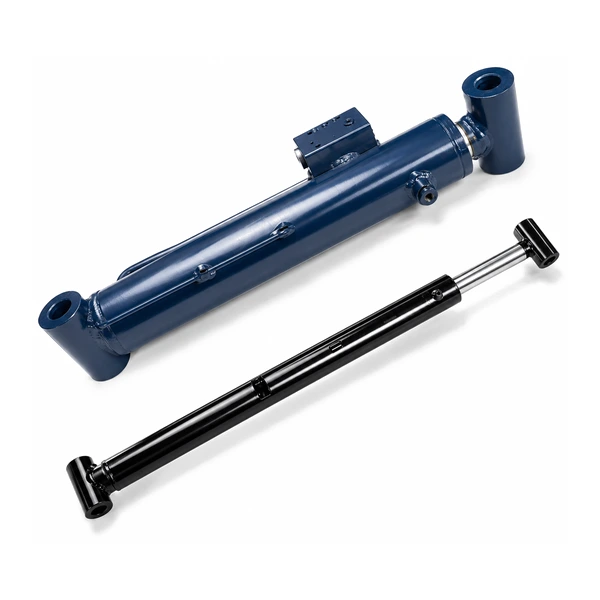
The shooting cylinder is a carriage cylinder — it moves the injection unit as a whole. It is not the injection ram (which pushes the screw forward to force molten plastic through the nozzle). The injection ram produces the high injection pressure (up to 200+ MPa at the plastic); the shooting cylinder produces the contact force between the nozzle tip and the sprue bushing (typically 20–100 KN depending on the machine size). These are two different cylinders with two different functions — and the shooting cylinder is manufactured by Korea Ever-Power as part of the industrial engineering hydraulic cylinder programme for injection molding machine builders.
Technical Specifications
| Parameter | Value |
|---|---|
| Product | Injection Molding Machine Shooting Cylinder |
| Function | Advance injection unit / dock nozzle to mold sprue |
| Bore Diameter | 63 mm – 140 mm |
| Rod Diameter | 36 mm – 90 mm |
| Stroke | ≤ 1,500 mm |
| Maximum Thrust | 384 KN (bore 140 mm / pressure 25 MPa) |
| Working Pressure | Up to 25 MPa |
| Certification | ISO 9001 · 100% hydrostatic tested |
Nozzle Touch-Off Force — The Narrow Window Between Leak and Damage
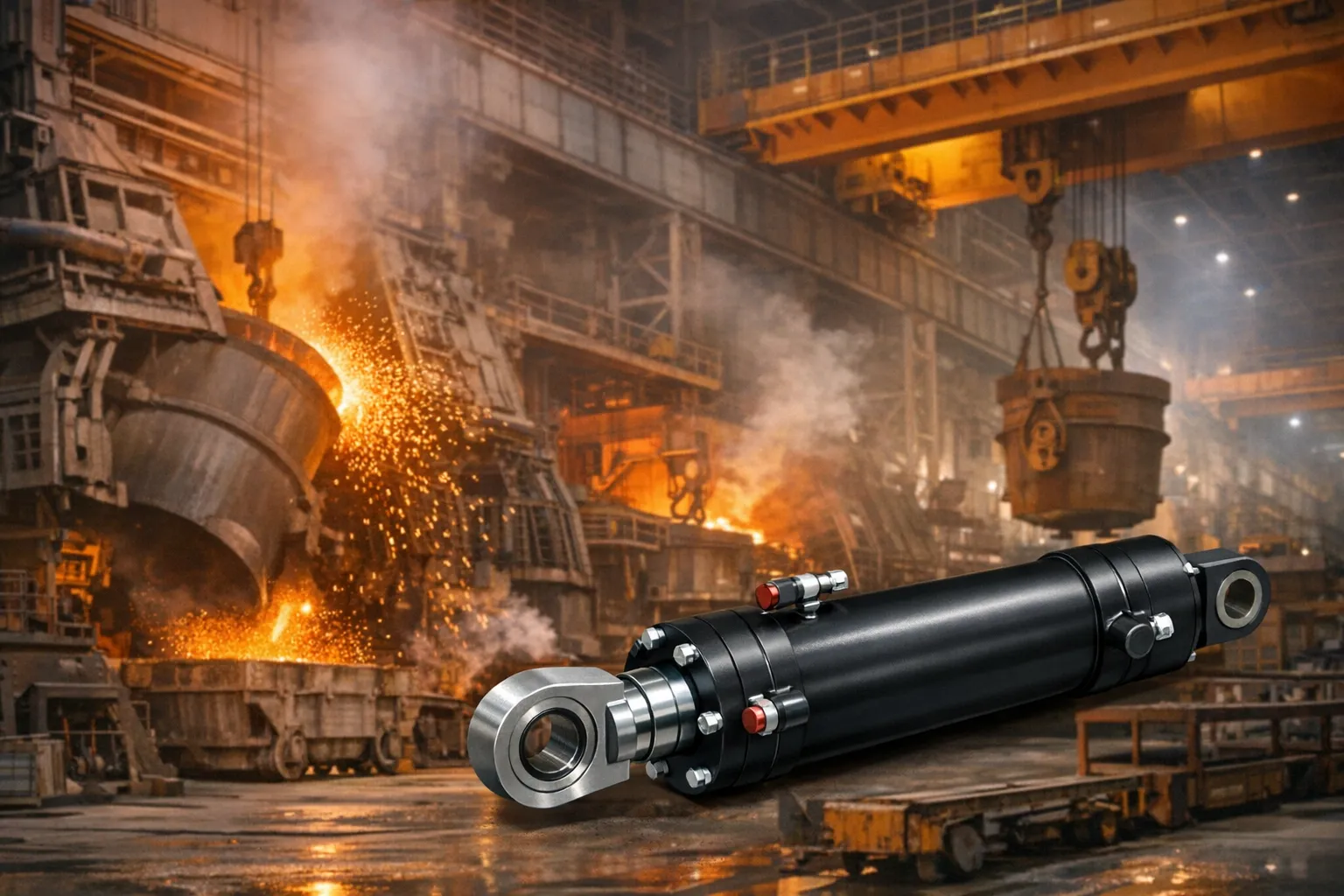
When the injection screw pushes molten plastic through the nozzle, the plastic pressure at the nozzle tip can reach 50–200 MPa. This pressure tries to push the nozzle away from the mold sprue. If the nozzle separates — even by 0.1 mm — molten plastic squeezes through the gap, creating a "nozzle drool" or a "flash ring" around the sprue that must be trimmed from every part. Repeated nozzle separation causes sprue bushing erosion, requiring expensive mold repair.
The shooting cylinder's contact force must exceed the injection pressure's separating force by a comfortable margin — ensuring the nozzle stays sealed throughout the injection and packing phases. But the contact force cannot be arbitrarily high: excessive force compresses the nozzle tip against the sprue bushing, accelerating wear on both surfaces and potentially cracking the sprue bushing (especially on small moulds with thin sprue inserts).
This touch-off force is set by the shooting cylinder's hydraulic pressure — the machine operator adjusts the cylinder pressure to match the injection pressure and the mould's sprue geometry. Korea Ever-Power designs the shooting cylinder bore diameter to produce the required force range at the machine's system pressure, providing a proportional control window from minimum contact (for small moulds with delicate sprue inserts) to maximum contact (for large moulds with robust sprue bushings).
The Injection Cycle — From the Shooting Cylinder's Perspective
The injection molding cycle takes 10–60 seconds (depending on part size and cooling time). The shooting cylinder has a specific role in each phase:
The shooting cylinder extends, sliding the injection unit forward until the nozzle tip contacts the sprue bushing. The cylinder pressure builds to the set touch-off force. The advance speed must be controlled — a hard impact between nozzle and sprue bushing damages both surfaces.
The injection screw pushes forward, injecting molten plastic through the nozzle into the mould. The shooting cylinder maintains contact force throughout — resisting the injection pressure's tendency to push the nozzle back. The cylinder must hold without drifting.
The plastic cools inside the mould. Some machines keep the nozzle docked during cooling (to prevent "cold slug" issues); others retract the nozzle slightly. The shooting cylinder either holds contact force or retracts a few millimetres, depending on the process setting.
If the process requires "suck-back" (nozzle retraction to prevent drool), the shooting cylinder retracts a few millimetres. For mould changes or maintenance, the cylinder retracts fully — pulling the injection unit back 500–1,500 mm to clear the mould area for crane access.
A Different World — Clean, Fast, Precise
The previous 23 products in this catalogue operate in forges (1,200 °C, scale, splash), steel mills (1,800 °C, fume, molten metal), cement plants (extreme dust, continuous vibration), and filter presses (corrosive slurry). The injection molding shooting cylinder operates in a clean factory environment — indoor, climate-controlled, with filtered ambient air and stable temperatures between 15–35 °C.
The nozzle tip reaches 200–400 °C (plastic processing temperature), but the cylinder body is 1–2 metres away from the nozzle — the cylinder itself operates at ambient temperature. Standard NBR seals are adequate — no need for the FKM high-temperature seals required by furnace and kiln cylinders.
The injection molding factory floor is clean by industrial standards. The shooting cylinder rod is not exposed to abrasive particles — standard single-lip wipers provide adequate rod protection. The double-lip wipers and rod boots specified for cement and forge service are not needed here.
In a 15-second injection cycle, the shooting cylinder's advance and retract add 2–6 seconds to each cycle. Every 0.5 seconds saved on the cylinder's motion saves 0.5 seconds per part — multiplied by 5,000 parts per shift, that is 2,500 seconds (40+ minutes) of additional production per shift. Cylinder speed and deceleration smoothness directly affect the machine's production rate. Contact the hydraulic cylinder engineering team for cycle-time-optimised specifications.

Manufacturing for High-Cycle Clean-Environment Service
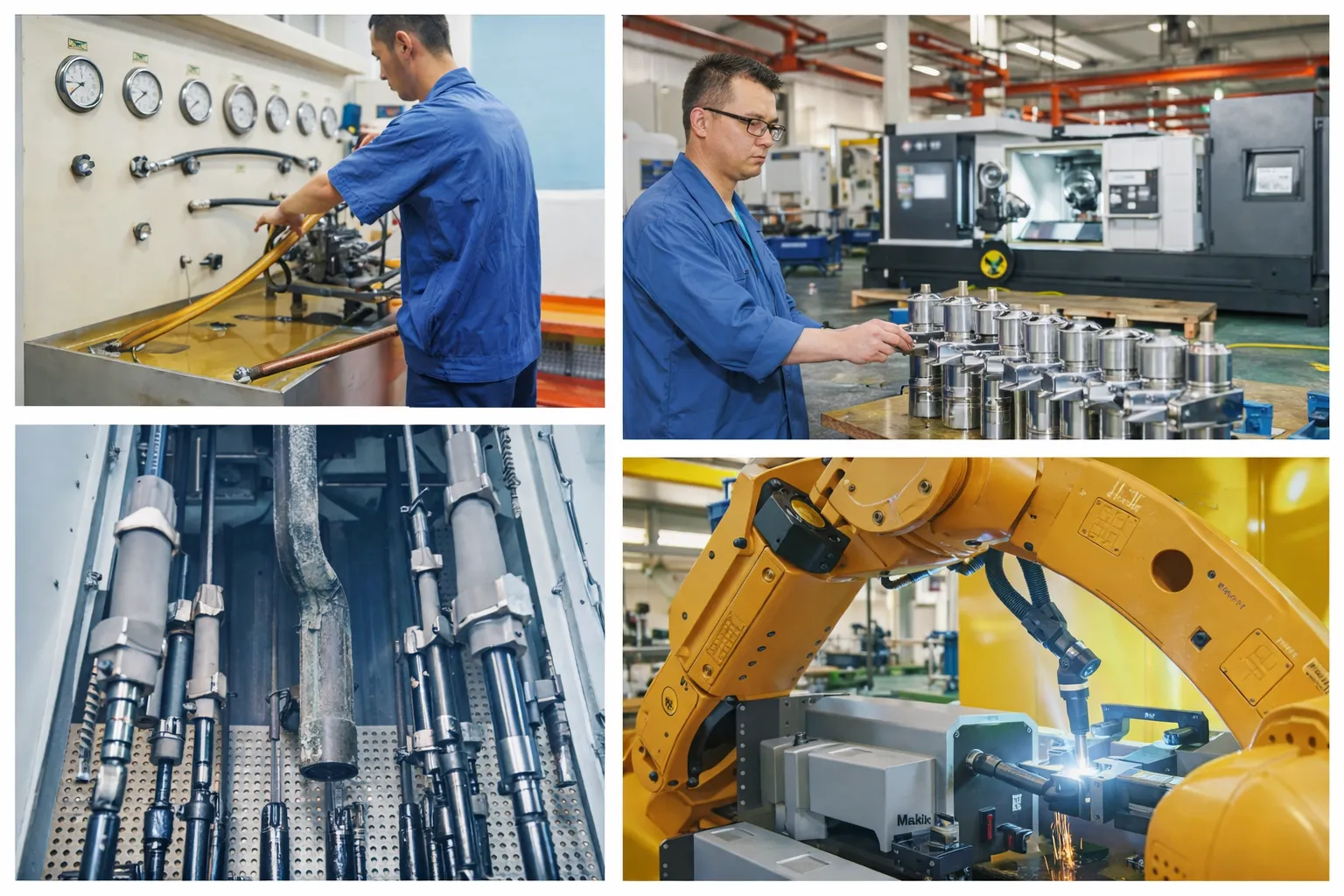
The shooting cylinder operates in a kinder environment than the forge or cement plant — but the cycle count is demanding. At one extend-retract cycle every 15–60 seconds, the cylinder accumulates 500,000–2,000,000 cycles per year. This is fewer than the cement cooler feeding cylinder (#23) but far more than the grinding or roll over cylinders (#20–22).
The bore is honed to Ra 0.2–0.4 µm — the Korea Ever-Power standard. The rod is chrome plated at 30–50 µm (lighter than the 80–100 µm used for forge and cement cylinders, because the clean environment does not attack the chrome). Seals are standard NBR or polyurethane — selected for low friction and high cycle life rather than extreme temperature or chemical resistance.
The end-of-stroke cushion on the extend side is critical — it decelerates the injection unit just before the nozzle contacts the sprue bushing. Without the cushion, the nozzle impacts the sprue at travel speed, which damages the nozzle tip seat over repeated cycles. Korea Ever-Power calibrates the cushion for the specific injection unit mass and maximum advance speed during factory testing.
OEM & ODM
FAQ
Related Categories
Yderligere information
| Editor |
|---|