Dust Collector Door Cylinder for Roadheader Dust System
Engineered exclusively from premium 316L stainless steel with an advanced mirror-polished surface finish. Designed to permanently eradicate pitting corrosion and deliver absolute door cover control within the extreme high-humidity environments of subterranean dust extraction networks.
Subterranean Environmental Control and Core Industrial Value
The continuous excavation of solid rock and mineral seams deep underground generates massive volumes of microscopic, highly hazardous silica and coal dust. To comply with rigorous international underground safety regulations and protect the tunneling crew from potentially fatal respiratory conditions, modern heavy mining machinery is equipped with integrated, high-capacity dust suppression scrubbers. These robust environmental control systems actively draw in contaminated tunnel air, binding the airborne particulates with high-pressure atomized water, and consolidating the resulting heavy, abrasive mud into a localized collection hopper. Operating these critical scrubbers requires regular mechanical access to discharge the accumulated slurry and inspect the internal filtration matrices. This critical access function is completely governed by the structural integrity and reliability of the Dust Collector Door Cylinder. If this specific fluid power actuator seizes, the hopper cannot be evacuated. If it fails to clamp the door tightly, the necessary negative vacuum pressure is broken, rendering the entire scrubber unit useless and forcing an immediate, costly halt to all cutting operations until proper hydraulic cylinder repair is executed.
The micro-climate surrounding a roadheader dust box is exceptionally aggressive. The operating atmosphere is characterized by perpetual 100% relative humidity, dense acidic mist, and heavy concentrations of dissolved chlorides and sulfur originating from the groundwater seepage. Standard commercial hydraulic parts, typically fabricated from basic carbon steel with a superficial layer of hard chrome, fail catastrophically in this zone. The acidic moisture easily penetrates the microscopic fissures inherent in standard chrome plating, aggressively oxidizing the underlying carbon steel. This galvanic reaction creates localized pitting corrosion—deep, sharp craters along the rod surface. When the cylinder operates, these jagged pits act like a rasp, instantly shredding the internal polyurethane pressure seals and causing immediate hydraulic fluid blowouts. As a dedicated, industry-leading hydraulic cylinder manufacturer, our engineering division has completely neutralized this specific failure vector. We have developed a heavy-duty, small-piston Dust Collector Door Hydraulic Cylinder manufactured entirely from solid 316L stainless steel, rendering it fundamentally immune to atmospheric moisture, abrasive silica, and aggressive chemical pitting.
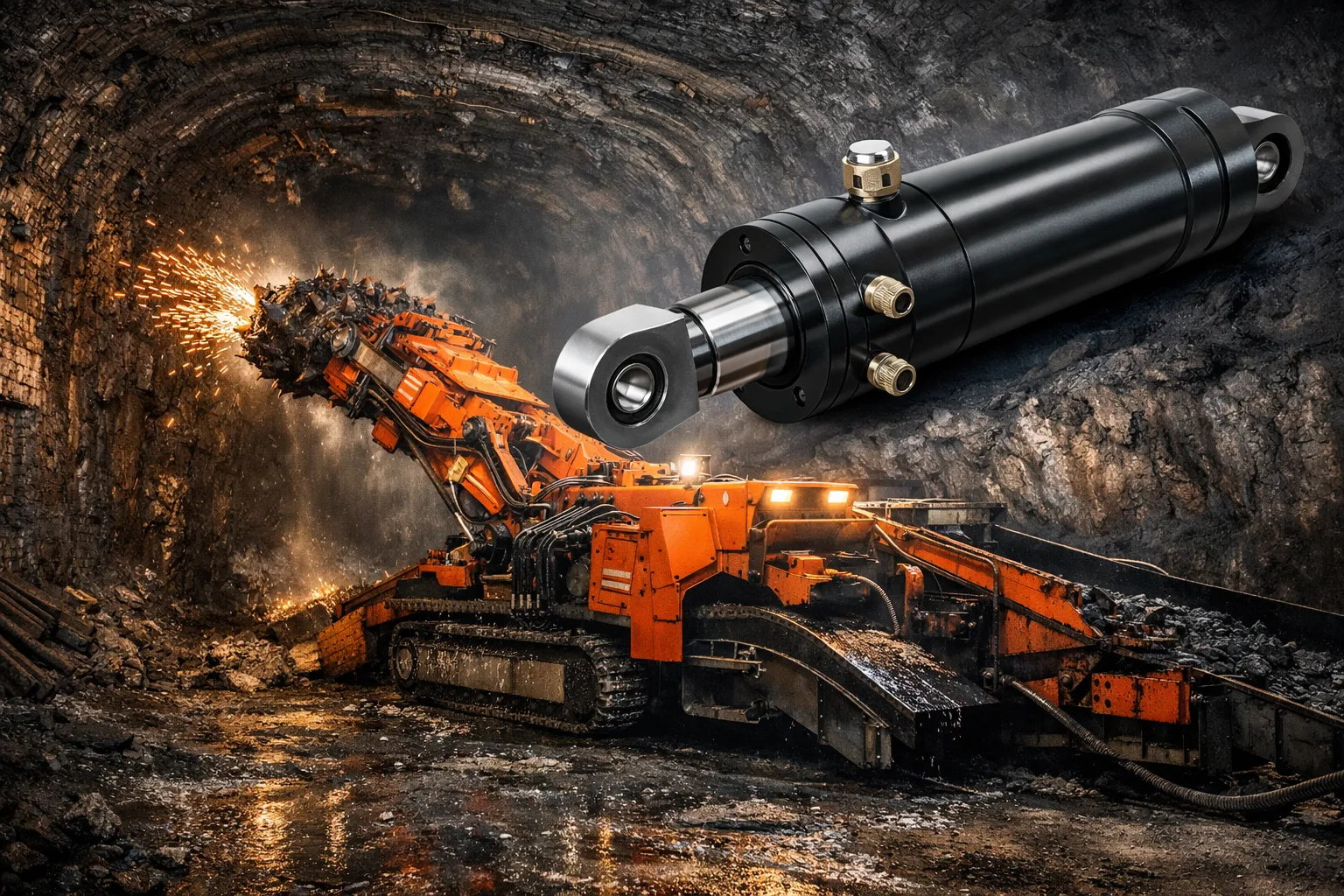
For procurement directors, heavy equipment leasing firms, and civil engineering contractors managing extensive machine fleets across South Korea, Japan, and the broader Asian infrastructure network, component longevity directly dictates project profitability. Upgrading your environmental control modules with our sophisticated, corrosion-proof hydraulic cylinder entirely eradicates the necessity for constant, reactive underground maintenance. By eliminating the cycle of rusted rods and blown seals, fleet managers guarantee uninterrupted tunnel advancement. When conducting a thorough assessment of the long-term hydraulic cylinder price, the capital preserved by preventing unscheduled machinery stoppages and avoiding severe regulatory safety fines delivers an immediate, profound return on investment that far outweighs the initial acquisition cost of premium stainless steel fluid power technology.
Engineered Technical Parameters
Securing total mechanical reliability in heavily saturated, highly acidic environments requires absolute transparency in metallurgical and dimensional engineering. The comprehensive technical matrix below details the precise material configurations, structural typology, and environmental tolerances built into our specialized door cover control units. Every operational parameter is rigorously formulated to vastly outlast generic industrial fluid power components in underground mining scenarios.
| Engineering Category | Specification Data & Material Configuration |
|---|---|
| Industry Sector | Mining Equipment / Subterranean Environmental Control |
| Equipment Category | Roadheader / Tunneling Machine / Continuous Miner |
| Subsystem / Action Target | Dust Removal System / Scrubber Housing Control |
| Component Nomenclature | Dust Collector Door Cylinder |
| Fluid Action Method | Double Acting |
| Structural Typology | Small Piston Cylinder (Highly Compact Architecture) |
| Manufacturing Structure | Fully Welded Assembly (TIG Argon Arc Welded) |
| Core Material System | Stainless Steel (316L Austenitic Alloy) |
| Exterior Surface Treatment | Mechanical Polishing (Mirror Finish Ra ≤ 0.2µm) |
| Environmental Grade | Extreme High Humidity / Acidic Mineral Slurry |
| Working Condition Feature | Door Cover Control / Continuous Airtight Clamping |
| Typical Failure Mode Solved | Pitting Corrosion and Subsequent Seal Rupture |
| Recommended Configuration | 316L Material Integration for Absolute Immunity |
Applied Kinematics and Anti-Corrosion Mechanisms
To fully comprehend the operational necessity of our metallurgical upgrades, one must thoroughly examine the internal fluid mechanics dictating the unit’s performance. The access hatch on a large dust extraction box is constructed from heavy steel plate and must continuously compress thick industrial rubber gaskets to form an absolute vacuum seal. Therefore, the actuation unit functions strictly as a double acting hydraulic cylinder. It cannot rely on passive mechanisms like a basic single acting hydraulic cylinder to function securely, as gravity alone cannot provide the necessary airtight compression. High-pressure hydraulic fluid is precisely metered into the cap end of the unit to extend the hydraulic cylinder piston, forcefully swinging the heavy steel door open against gravity to dump the collected mud and permit filter exchanges. To secure the environmental system for active tunneling operations, the directional valves route fluid to the rod end, forcefully retracting the door and maintaining constant, active hydraulic clamping pressure to prevent any contaminated air from bypassing the vital filter matrix.
The primary threat to this essential holding pressure is highly chemical, rather than strictly mechanical. The high-velocity extraction fans combined with high-pressure water atomization nozzles create a highly active micro-climate of 100% relative humidity. As the tunnel temperature fluctuates, aggressive acidic condensation continuously settles on the exterior of the hydraulic rams. When ordinary carbon steel rods are utilized, this moisture initiates a rapid galvanic reaction beneath the superficial chrome plating. The resulting oxidation forces the hard chrome to blister, crack, and peel, forming deep, localized pits that completely destroy the required smooth geometry.
When a pitted, rusted rod is commanded to retract into the cylinder barrel, the jagged metal surface acts exactly like a coarse file, permanently tearing the internal polyurethane fluid seals in a single stroke. The hydraulic clamping force instantly bleeds away, allowing the heavy dust box door to sag open, which immediately compromises the scrubber’s vacuum. Our engineering team resolves this fundamental vulnerability by completely discarding plated carbon steel. The barrel, the rod, and all associated structural trunnions of our specialized unit are CNC machined from solid 316L stainless steel. The high molybdenum concentration within the 316L alloy matrix establishes an impenetrable, self-healing passive oxide layer. This advanced chemical barrier provides absolute immunity to chloride pitting and acidic moisture. The rod remains perfectly smooth over years of service, guaranteeing the internal sealing matrix maintains a pristine, leak-free operating life and ensuring the heavy steel doors remain hermetically sealed.
Flawless Fleet Integration and OEM Compatibility
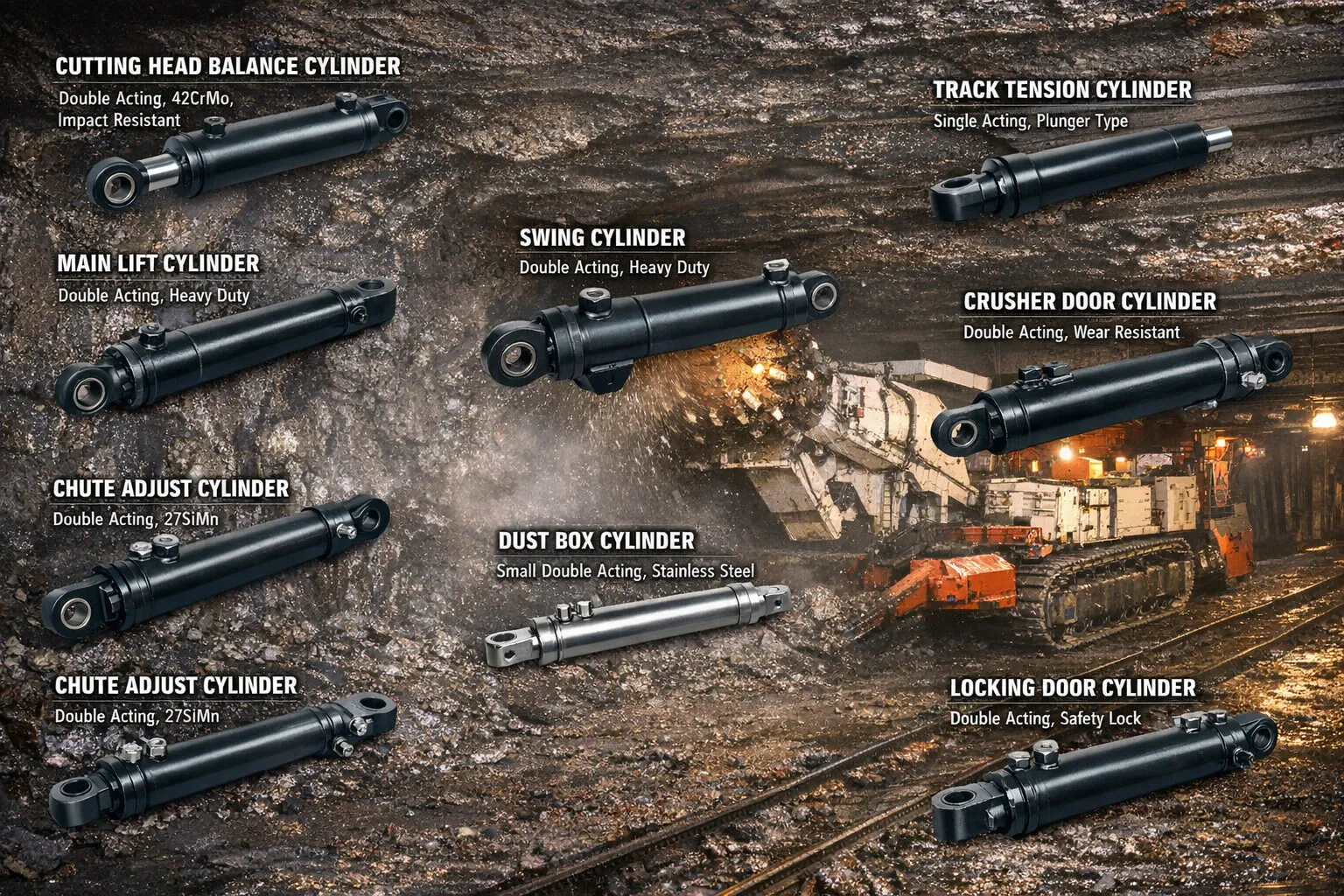
When an environmental safety system fails due to a seized door actuator, stringent mining regulations strictly prohibit continued excavation. Project managers cannot afford the massive financial losses associated with waiting weeks for specialized European original equipment manufacturer parts to arrive and clear customs. Maintenance engineers require immediate, dimensionally identical upgrade solutions. We possess an extensive engineering database mapping the precise dimensional geometries—including retracted pin-to-pin lengths, exact stroke limits, clevis mounting diameters, and specific metric fluid port thread pitches—of the industry’s most utilized tunneling platforms. This allows your mechanical crew to execute seamless field replacements, upgrading the machine’s corrosion resistance instantly without requiring any hot-work, drilling, or risky structural modifications to the scrubber housing.
Technical Disclaimer: The subsequent OEM brand names and equipment classifications are referenced strictly for B2B procurement clarity, technical sizing convenience, and kinematic compatibility verification. We operate as an independent, premier engineering facility. This reference does not imply trademark infringement, direct corporate affiliation, or official endorsement by these respective international entities.
- Sandvik MT Series Roadheaders: Direct drop-in compatibility for the primary wet scrubber access doors, providing a crucial metallurgical upgrade against the high humidity environments typical in deep hard rock advancing.
- Epiroc / Atlas Copco: Engineered with optimized compact internal bore geometries matched perfectly to their filtration access systems, ensuring highly responsive and powerful door clamping force.
- SANY and XCMG Fleets: A highly requested pin-for-pin structural upgrade utilized extensively in South Korean and Asian infrastructure projects, completely curing the factory-standard problem of rapid rod rusting and sudden seal blowout on dust extraction boxes.
- Mitsui Miike Miners: Integrated specifically to withstand the notoriously wet and geothermally flooded tunnel conditions frequently encountered in Japanese deep-shaft mineral extraction, maintaining perfect fluid containment and zero oxidation.
Five Formidable Core Technical Advancements
Surviving relentless exposure to 100% relative humidity and acidic condensation requires advanced material science and highly specialized fluid engineering. When evaluating hydraulic cylinder components for critical life-safety ventilation systems, these five engineered advantages dictate the immense lifespan and reliability of our specific access control technology over basic industrial alternatives:
1. Absolute Defense: 316L Stainless Steel Base
The defining feature of this environmental actuator is its metallurgical foundation. We completely discard standard carbon steel. Every structural component—the barrel, the rod, the end caps, and the mounting trunnions—is machined from premium 316L austenitic stainless steel. The heavy inclusion of molybdenum in the 316L alloy creates an incredibly stable passive oxide layer that absolutely prevents the formation of localized pitting corrosion, even when continuously submerged in highly acidic mine water condensation.
2. Ultra-Smooth Mechanical Polishing (Ra ≤ 0.2μm)
Because we do not rely on porous hard chrome plating, the surface finish of the 316L rod is achieved through an intensive, multi-stage mechanical polishing and buffing process. We achieve a mirror-like finish with an incredibly low surface roughness (Ra ≤ 0.2μm). This ultra-smooth topography drastically reduces dynamic friction against the elastomer seals, preventing premature wear and ensuring the door mechanism operates flawlessly without sticking, while denying moisture any crevices to cling to.
3. Specialized Hydrolysis-Resistant Sealing Matrix
Standard NBR rubber and basic polyurethane seals absorb ambient moisture over time—a destructive process called hydrolysis—causing them to swell, soften, and eventually disintegrate under pressure. We deploy a premium sealing matrix utilizing aerospace-grade Fluorocarbon (FKM) elastomers combined with high-pressure PTFE step rings. These seals possess exceptional chemical resistance and maintain their elastic memory in highly saturated environments, ensuring absolutely zero moisture ingresses into the fluid chamber.
4. Precision TIG (Argon Arc) Welded Integrity
Welding stainless steel requires specialized techniques to prevent carbide precipitation, which can induce rust at the weld seams. Our manufacturing protocol relies entirely on precision Tungsten Inert Gas (TIG) welding, completely shielded by high-purity argon gas. This ensures incredibly clean, deep-penetration fusion at the small piston end caps and mounting eyes without compromising the corrosion-resistant properties of the 316L base metal, guaranteeing the mounts never snap under intense machine vibration.
5. Optimized Thermal Stability and Clamping Geometry
The primary function of this unit is to maintain airtight pressure on the scrubber doors, often located near massive electric extraction fans generating significant radiant heat. We utilize advanced fluid dynamics modeling to optimize the internal bore-to-rod ratio. The combination of highly conductive 316L steel and high-temperature FKM seals ensures heat is rapidly dissipated. This maintains thermal stability inside the compact barrel, preventing seal baking and ensuring the cylinder exerts massive, continuous clamping force upon retraction.
Autonomous Manufacturing and Relentless Quality Assurance
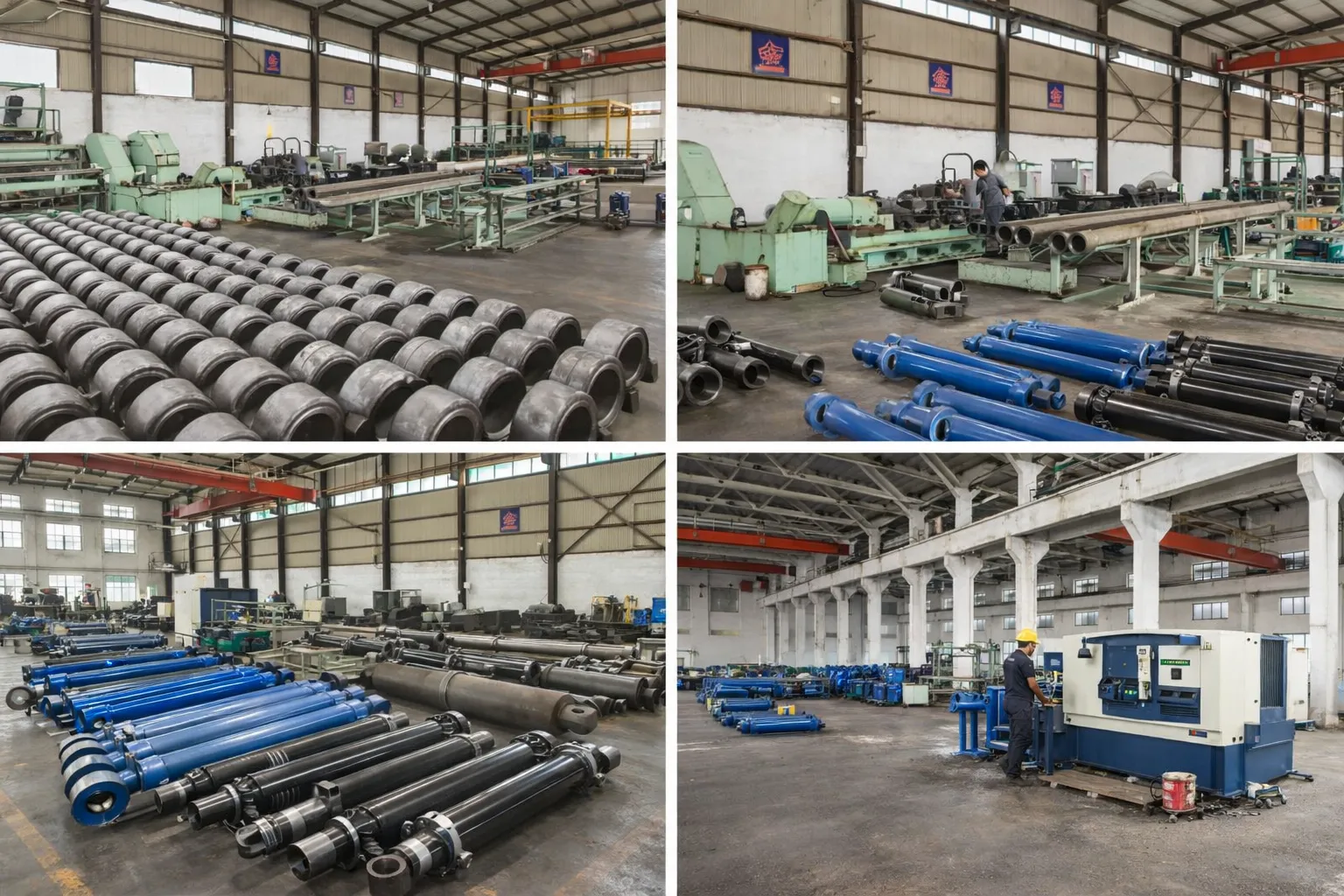
Protecting your environmental compliance capabilities requires that we command total authority over our entire production ecosystem. We operate a highly advanced, fully integrated manufacturing facility, completely eliminating the unpredictability associated with fragmented third-party supply chains. Every critical component begins with optical emission spectrometry to rigorously verify the precise molybdenum and nickel chemistry of the 316L stainless billets. From the accurate CNC deep-hole machining of the internal barrels to the exhaustive mechanical polishing of the external rods, our internal traceability protocols ensure zero manufacturing deviations. This absolute dimensional control guarantees friction-free, leak-proof operation.
Quality assurance within the heavy infrastructure supply sector leaves absolutely no margin for statistical error. We fundamentally reject random batch sampling. Every single Dust Collector Door Cylinder manufactured in our facility is subjected to a mandatory 100% computerized hydrostatic pressure evaluation. The units are internally pressurized to 1.5 times their maximum rated operational capability and held statically while high-resolution digital sensors monitor for microscopic fluid bypass or external leaks. Furthermore, all load-bearing TIG welds undergo intensive dye penetrant inspection (DPI) and ultrasonic testing to guarantee the absence of surface micro-cracking. Only upon passing this flawless testing matrix is the unit permanently serialized and cleared for global deployment.
Expansive Cross-Industry Application Matrix
The robust engineering blueprint developed to conquer the extreme humidity and highly corrosive atmosphere of underground scrubber systems is exceptionally adaptable. The verified capability to endure heavy chemical exposure, constant moisture, and continuous clamping loads makes our 316L hydraulic parts highly sought after across numerous extreme-duty industrial sectors globally.
- Underground Mining Equipment: Deployed heavily in specialized longwall roof emulsion systems and continuous miners facing highly acidic water conditions. Explore our dedicated engineering within the mining industry hub.
- Marine and Offshore Logistics: Providing essential corrosion-proof actuation for heavy-duty hatch covers and specialized deck lift cylinder configurations exposed constantly to saltwater spray and high winds. Discover more in our construction machinery industry solutions.
- Wastewater and Environmental Treatment: Built specifically to withstand the intense chemical exposure and high humidity found in municipal water treatment plants, operating heavy sluice gates and sludge press machinery flawlessly.
- Food Processing Machinery: Utilizing the strictly sanitary properties of 316L stainless steel for automated processing lines that require daily high-pressure, caustic chemical washdowns, demanding absolute hygiene and zero rust.
Comparative Analysis: Standard Commercial vs. High-Performance 316L
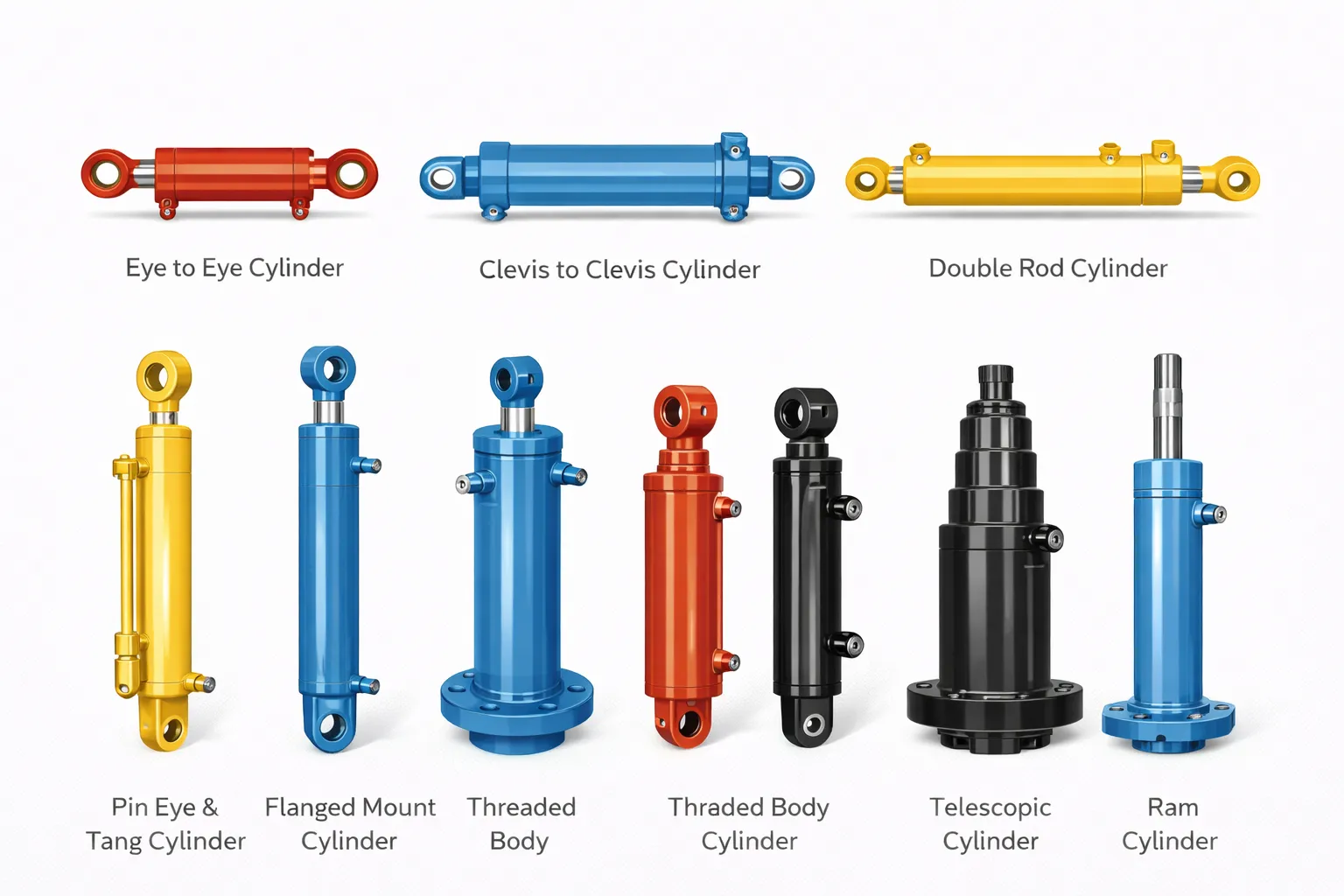
Procuring generic commercial cylinders in a misguided attempt to minimize initial purchasing costs invariably leads to immense financial losses caused by continuous equipment failures and halted tunnel advances due to safety violations. The analytical table below clearly illustrates the specific engineering disparities that justify our uncompromising, heavy-duty manufacturing approach.
| Critical Engineering Feature | Standard Commercial Cylinders | Our Dust Collector Door Cylinder |
|---|---|---|
| Core Material Base | Standard 45# Carbon Steel (Highly prone to rapid rusting) | Premium 316L Stainless Steel (Absolute corrosion immunity) |
| Reaction to High Humidity | Micro-cracked chrome allows moisture in, rapid pitting begins | Passive oxide layer repels all acidic condensation permanently |
| Seal Integrity | Jagged rust blisters shred standard NBR wipers, causing leaks | Polished 316L rod glides perfectly through FKM moisture seals |
| Door Clamping Reliability | Internal bypass causes pressure loss, doors leak contaminated air | Zero bypass design maintains fierce airtight clamping force indefinitely |
| Operational Lifecycle | Requires constant emergency seal replacements and rod buffing | Install and forget. Extends maintenance-free operational life by over 400% |
Global Field Validation: Proven Operational Case Studies
Advanced engineering theory is ultimately proven true in the corrosive mud and dense humidity of live construction and mining operations. Our specialized fluid power solutions have secured extensive, long-term procurement partnerships across the Asia-Pacific region. Here are five documented accounts of our stainless components resolving critical mechanical crises in the field.
Case Study 1: Seoul Underground Expressway Project, South Korea
Client Entity: Leading Tier-1 Heavy Civil Infrastructure Consortium.
Application Setting: Dust suppression units on roadheaders cutting through extremely wet, coastal geological formations in April 2024.
Context & Connection: The chief safety officer mandated an immediate equipment overhaul and contacted us online. The high humidity was causing the factory carbon steel cylinders on the scrubber doors to rust violently within three weeks. The rusted rods shredded the seals, causing the doors to loosen and vent toxic silica dust back into the tunnel, triggering multiple safety violations and work stoppages.
The Solution & Result: We deployed a batch of custom Dust Collector Door Hydraulic Cylinder units fabricated entirely from 316L stainless steel. Installed in mid-2024, the cylinders operated flawlessly for over a year. The 316L metallurgy completely ignored the humidity, the seals remained pristine, and the scrubber housings maintained an absolute airtight seal, restoring total safety compliance.
“The stainless steel upgrade saved this phase of the project. We haven’t had a single safety shutdown for dust bypass since installing these units. They are absolutely impervious to the tunnel condensation.” — Park J.W., Lead Equipment Superintendent.
Case Study 2: Hokkaido Deep Seam Mineral Mine, Japan
Client Entity: Regional Specialized Coal Mining Corporation.
Application Setting: Filtration access doors operating in an environment saturated with highly acidic mine water seepage.
Context & Connection: The client was facing a severe maintenance bottleneck and sought reliable hydraulic cylinder repair alternatives. The highly acidic water dripping from the tunnel roof was chemically stripping the chrome off their factory cylinders. Once the chrome was gone, severe pitting destroyed the wiper seals, resulting in constant hydraulic fluid leaks that posed a fire hazard in the coal drift.
The Solution & Result: We delivered fully optimized 316L stainless units featuring our aerospace-grade FKM sealing matrix. After fourteen months of exposure to the acidic dripping, the polished rods showed absolutely zero signs of chemical pitting, and the hydraulic fluid leaks were entirely eradicated.
“The chemical resistance of these cylinders is exactly what we needed. We’ve eliminated a major fire hazard and cut our hydraulic fluid consumption significantly.” — Kenji M., Operations Director.
Case Study 3: Taipei Metro Expansion Project, Taiwan
Client Entity: Municipal Civil Engineering Contractor.
Application Setting: Continuous miner dust extraction boxes operating in extremely hot, humid urban bedrock tunnels.
Context & Connection: The contractor was actively evaluating the global market to bypass exorbitant European OEM hydraulic cylinder price models for simple actuator replacements. Their existing carbon steel units were binding internally because rust had formed inside the barrels during extended periods of machine storage in the humid climate.
The Solution & Result: By fabricating the entire double acting hydraulic cylinder from 316L stainless, we provided a drop-in replacement that was immune to internal and external oxidation. The cylinders actuated smoothly every single time, ensuring rapid filter changes and maintaining maximum machine availability.
“These units are true install-and-forget components. Even after leaving the machine parked in the humid tunnel for a month, the doors open instantly without any binding. Incredible value.” — Lin C., Fleet Maintenance Supervisor.
Case Study 4: Queensland Contract Mining, Australia
Client Entity: Heavy Machinery Leasing Consortium.
Application Setting: Supplying ruggedized machines for environments where high-pressure washdowns are performed daily to clear coal slurry.
Context & Connection: The leasing firm needed reliable hydraulic cylinder components to upgrade their fleet. When machines were brought to the surface, they were subjected to aggressive, high-pressure caustic chemical washdowns to remove caked mud. These chemicals were destroying the paint and rapidly rusting the standard carbon steel door cylinders.
The Solution & Result: We supplied completely unpainted, mechanically polished 316L stainless steel single acting hydraulic cylinder and double acting models for all external access panels. The units withstood the harsh chemical washdowns flawlessly, maintaining their pristine finish and perfect sealing capability, drastically improving the perceived value and reliability of the leased fleet.
“The stainless steel construction handles our aggressive maintenance protocols perfectly. They look brand new even after a year of heavy use and caustic cleaning.” — D. Mitchell, Fleet Supervisor.
Case Study 5: Hydroelectric Diversion Tunnel, Vietnam
Client Entity: State-Owned Hydropower Engineering Group.
Application Setting: Confined, extreme-temperature tunnel advancing through fractured rock with relentless mud and high ambient heat.
Context & Connection: Discovered our expertise through a B2B search for fixing hydraulic cylinders solutions. Their maintenance team was exhausted from replacing the door cylinders because the constant heat and humidity were causing the factory NBR seals to melt and the rods to seize entirely within the barrels due to expanding rust.
The Solution & Result: We provided custom 316L lift cylinder style units equipped with high-temperature FKM sealing profiles. The cylinders operated smoothly despite the extreme heat and 100% humidity, holding the heavy filter doors shut tightly and eliminating the constant mechanical interventions previously required.
“We finally have an actuator that survives this jungle environment. The combination of stainless steel and high-temp seals has completely removed this maintenance headache from our schedule.” — Nguyen T., Chief Engineer.
Frequently Asked Questions
Sourcing critical fluid power equipment for extreme environments demands rigorous mechanical due diligence. Below, we address the most prevalent technical inquiries from engineering directors and procurement managers regarding our highly specialized stainless steel solutions.
1. What exactly causes the factory carbon steel cylinders to fail so rapidly in this application?
2. How does 316L stainless steel permanently solve this pitting corrosion issue?
3. If you do not use chrome plating, how do you achieve the necessary smooth surface for the rod seals?
4. Can this double acting hydraulic cylinder directly replace units from Sandvik or Epiroc?
5. What is the standard production and shipping lead time to South Korea or Southeast Asia?
6. Do you provide internal seals for fixing hydraulic cylinders at our own maintenance depot?
7. How does investing in a 316L unit impact the long-term hydraulic cylinder price structure of our project?
8. Are the TIG welded joints on the stainless housing prone to cracking under high vibration?
9. Will the FKM seals degrade if the dust scrubber is turned off and the cylinder dries out?
10. Can we order these stainless steel units for other fluid power applications on the machine?
Eradicate Corrosion and Ensure Safety Compliance
Do not allow substandard carbon steel components to compromise your environmental safety systems or dictate your excavation velocity. Partner with a globally trusted engineering facility and equip your heavy tunneling machinery with the absolute most robust, moisture-resistant Dust Collector Door Cylinder available in the heavy industrial sector.
Transmit your exact OEM machinery part numbers, maximum hydrostatic system pressure ratings, and baseline physical dimensions for a comprehensive technical evaluation and a rapid, factory-direct quotation.
Editor: Cxm