Encapsulation Jacking Cylinder For Energy Storage
Precision-engineered fluid power utilizing advanced linear guide and servo integration to permanently eliminate internal leakage during critical battery PACK encapsulation, ensuring absolute cleanroom compliance.
Product Overview: The Backbone of Advanced New Energy Manufacturing
The accelerated global transition toward renewable electrification has placed the modern energy storage power station at the absolute center of global infrastructure development. Within these massive, grid-stabilizing facilities, the core functional unit is the highly sensitive lithium-ion or solid-state battery PACK. The manufacturing, handling, and assembly of these high-density energy modules require an environment of absolute precision and unyielding mechanical control. During the final, most critical stage of assembly—known as PACK encapsulation—the outer protective housing is securely mated with the internal cell matrix. This specific industrial maneuver requires immense, perfectly distributed lifting and pressing force combined with microscopic positional accuracy. This is exactly why leading facility engineers and automation integrators rely on our highly specialized encapsulation jacking cylinder.
As a premier hydraulic cylinder manufacturer deeply embedded in the supply chains of South Korea, Japan, and the broader East Asian high-tech manufacturing corridor, we identified a catastrophic vulnerability in standard automation lines. Traditional lifting actuators frequently suffer from an invisible, destructive phenomenon known as internal leakage. When fluid bypasses the internal piston seal under heavy holding load, the jacking platform experiences a slow, imperceptible drop. In battery encapsulation, even a single millimeter of unexpected descent can cause severe misalignment, crushing delicate cell tabs, destroying the thermal seal, and leading to massive financial scrap rates or dangerous thermal runaway risks. Our custom-engineered encapsulation jacking hydraulic cylinder is fundamentally designed from the metallurgical level up to completely eradicate this specific failure mode, ensuring your payload remains perfectly locked in mid-air.
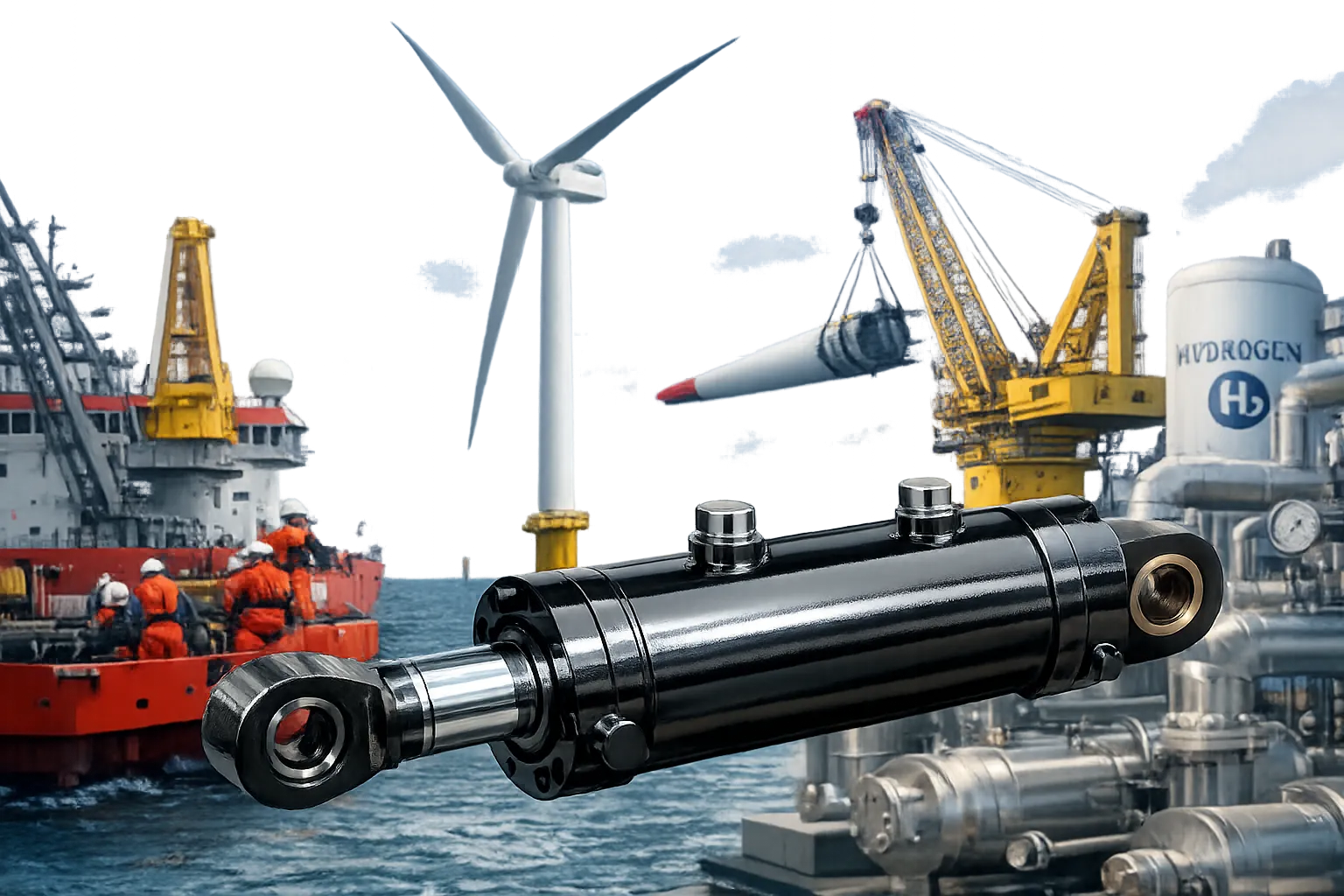
Furthermore, battery gigafactories operate under incredibly strict ISO cleanliness requirements. Standard hydraulic rams utilize traditional hard chrome plating, which inherently develops micro-cracks and sheds microscopic metallic flakes over millions of cycles—a disastrous event for exposed battery cells. We have abandoned these standard surface treatments in favor of an advanced, high-purity nickel-plated finish over a heavily welded Q345D steel architecture. By perfectly integrating a linear guide + servo new energy configuration, we decouple lateral stresses from the fluid power core. This creates the ultimate double acting hydraulic cylinder for the renewable sector, offering unparalleled operational longevity, sterile cleanroom compliance, and an exceptionally competitive hydraulic cylinder price by entirely eliminating the crippling costs of automated line downtime.
Comprehensive Technical Parameters and Customization Envelope
Successful integration of heavy-duty fluid power within highly automated robotic assembly lines demands absolute clarity regarding engineering specifications. Sizing the correct components is an uncompromising process that dictates the lifecycle of the entire press. Our systems are built to a rigorous baseline but offer a broad envelope of customization to match your specific facility footprint. The following table delineates the exact operational parameters and materials of our encapsulation jacking cylinder.
| Engineering Parameter | Design Specification | Operational Significance |
|---|---|---|
| Target Industry Sector | New Energy | Optimized specifically for high-capacity renewable storage technology. |
| Equipment Category | Energy storage power station | Built to handle the massive physical scale of utility grid modules. |
| Subsystem / Action | Battery PACK | Providing perfectly distributed force across sensitive energy modules. |
| Hydraulic Cylinder Name | Encapsulation jacking cylinder | The specialized vertical actuator driving the automated lift station. |
| Action Mode | Double acting | Provides actively pressurized fluid control for both extension and precise retraction. |
| Structure Type | Piston cylinder | Utilizes a high-precision internal piston for maximum load stability. |
| Manufacturing Structure | Welded construction | Monolithic fusion eliminates tie-rod stretching and loosening under high-frequency shock. |
| Material System | Q345D Low Alloy Steel | Offers immense structural yield strength and superior fatigue resistance. |
| Surface Treatment | Nickel plated | Prevents the dangerous micro-flaking associated with standard chrome plating. |
| Environment Grade | Cleanliness requirements | Strictly compliant with ISO-rated battery manufacturing cleanrooms. |
| Working Condition | PACK encapsulation | Continuous, rapid jacking to precise elevations for final structural sealing. |
| Failure Mode Prevented | Internal leakage | Absolute pressure retention ensures zero platform drift during the dwell cycle. |
| Recommended Configuration | Linear guide + servo new energy | The ultimate synergy of mechanical stability and digital fluid control. |
Advanced Kinematics: The Engineering Working Principle
To fully understand the reliability of this automated system, one must delve into the fluid mechanics and servo-digital logic behind the operation. During the battery PACK encapsulation phase, an extremely heavy matrix of lithium-ion cells arrives at the assembly station. The central Programmable Logic Controller (PLC) initiates the encapsulation sequence by commanding a highly responsive proportional servo valve. This valve meters high-purity hydraulic fluid with microscopic precision into the lower extension chamber of our encapsulation jacking hydraulic cylinder.
As fluid pressure builds against the massive internal hydraulic cylinder piston, the jacking platform ascends. However, lifting heavy, occasionally asymmetrical battery packs can induce severe lateral (side) loading and torsional stress. To protect the internal seals from uneven, accelerated wear, the cylinder is purposefully integrated with heavy-duty external linear guides. These external guides absorb 100% of the rotational and lateral forces, allowing the lift cylinder to perform a purely axial, frictionless thrust. This specific linear guide + servo new energy methodology guarantees perfectly smooth, shudder-free elevation, commonly referred to as eradicating “stick-slip” or stiction.
The most critical moment occurs when the platform reaches its exact target height for the encapsulation sealing to occur. The servo valve instantly closes, trapping the incompressible hydraulic fluid within the rigid Q345D steel barrel. Standard commercial cylinders fail catastrophically here due to internal leakage across inferior seals, causing the heavy load to drop. Our advanced PTFE-composite tandem sealing matrix completely blocks fluid bypass. The fluid column becomes completely rigid, mechanically locking the battery PACK in mid-air with zero millimeter drift. Once the thermal adhesive or mechanical encapsulation is complete, the double acting hydraulic cylinder actively powers the controlled, gentle descent of the finished module, readying the station for the next cycle.
Seamless Interoperability and Global Brand Replacement
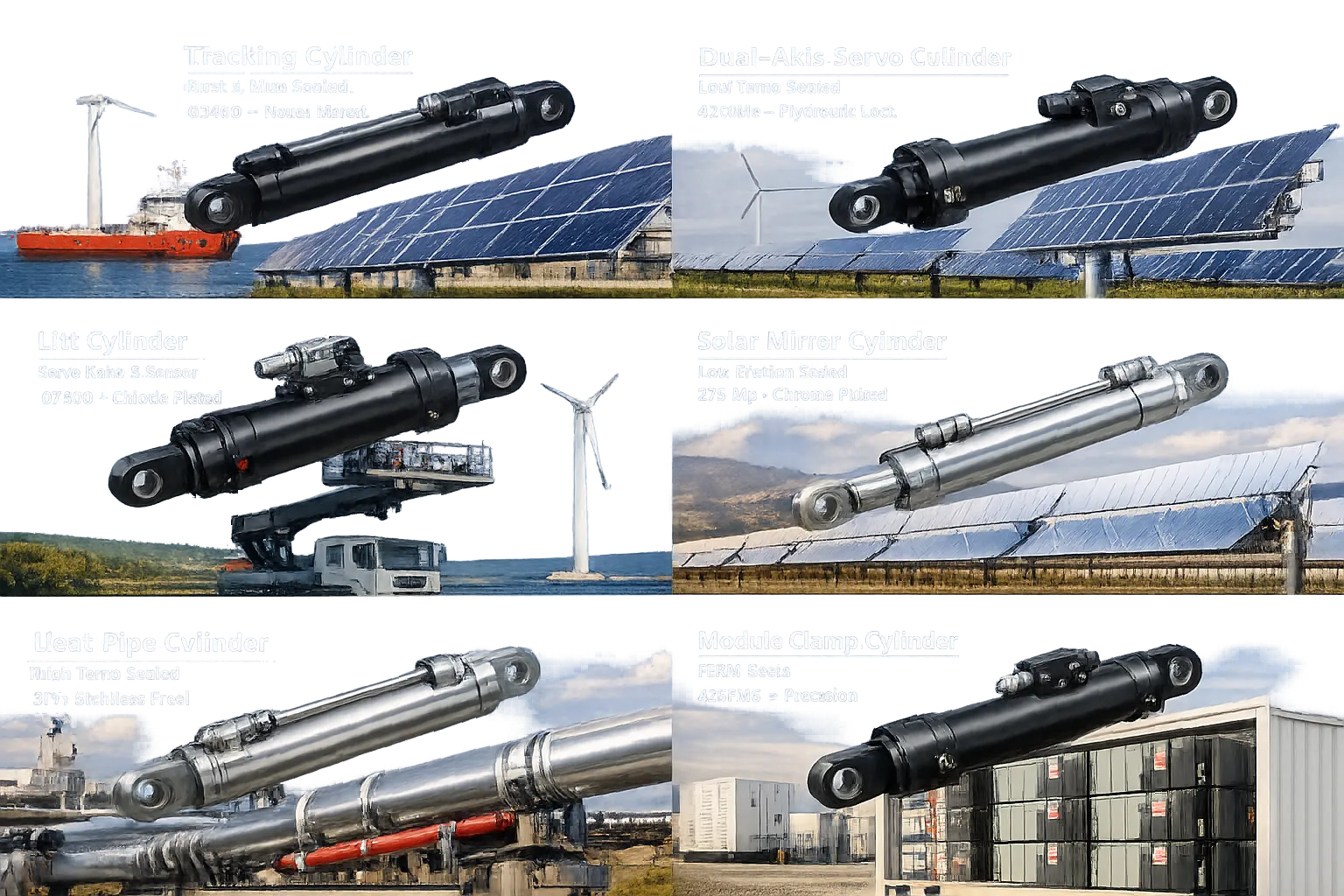
In the rapidly evolving battery manufacturing landscape, minimizing automated line downtime is paramount. Many existing production facilities across South Korea, Taiwan, and Japan were originally commissioned with standard actuation components from legacy global brands such as SMC, Festo, Bosch Rexroth, Yuken, or Parker Hannifin. (Please be advised: The mention of these distinguished corporate entities is strictly for the purpose of technical dimension referencing, cross-compatibility analysis, and selection convenience for our engineering B2B partners; we explicitly hold no trademark affiliation, sponsorship, or endorsement with these brands.)
When these legacy pneumatic or light-duty hydraulic units begin to exhibit internal leakage or particulate shedding, the cost of halted production and scrapped battery cells is financially devastating. Rather than repeatedly fixing hydraulic cylinders with temporary repair kits that fail to address the root cause, facility engineers require a permanent, drop-in upgrade. We have meticulously engineered our encapsulation jacking cylinder to directly match international ISO and JIS mounting standards.
By customizing the exact closed-center dimensions, rod thread pitches, stroke lengths, and flange geometries, our advanced zero-leakage hydraulic components can seamlessly replace your failing legacy actuators without requiring expensive structural modifications to your existing assembly press. This interoperability ensures a rapid transition during planned maintenance windows, driving down your long-term hydraulic cylinder repair costs while significantly elevating your facility’s cleanroom compliance and lifting reliability.
Uncompromising Core Technical Advantages
What exactly transforms a basic piece of industrial fluid power equipment into a specialized, mission-critical tool for new energy gigafactories? The answer lies in relentless, uncompromising metallurgical and tribological innovation. The following represent the core technical pillars engineered into every actuator:
1. Absolute Zero Internal Leakage Matrix
We utilize an advanced, multi-stage PTFE-bronze composite step-seal configuration energized by highly resilient elastomers. This creates a hermetic dynamic seal against the mirror-finished barrel wall, guaranteeing that high-pressure fluid cannot bypass the piston. The battery payload remains completely immobilized during the critical holding phase.
2. Cleanroom-Grade Nickel Plating
Standard hard chrome plating inherently possesses micro-cracks that can shed metallic flakes into sensitive manufacturing zones. To strictly comply with ISO battery cleanliness requirements, our hydraulic parts undergo a high-phosphorus electroless nickel plating process, yielding a perfectly smooth, non-shedding, and chemically inert surface.
3. High-Yield Q345D Architecture
Commercial actuators often use basic #45 carbon steel. Our pressure vessels are forged and machined entirely from Q345D low-alloy structural steel. This provides exceptional yield strength and impact toughness, ensuring the barrel does not microscopically expand or balloon under millions of high-pressure jacking cycles.
4. Monolithic Welded Stability
Standard tie-rod cylinders inevitably stretch and loosen due to the rapid acceleration and deceleration of automated lines. By employing a robotic submerged arc welded manufacturing structure, we permanently fuse the heavy end caps to the barrel, eliminating joint weepage and drastically extending the operational lifespan.
5. Optimized Thermal Dissipation
Continuous 24/7 robotic assembly generates significant internal fluid friction. Our engineered internal porting geometries reduce fluid turbulence, while specialized high-temperature bearing bands dissipate heat rapidly, ensuring the fluid maintains optimal viscosity and preventing premature seal vulcanization.
6. Synergy of Linear Guide & Servo Control
Designed explicitly to operate in tandem with heavy linear guide rails, completely isolating the cylinder from destructive lateral deflections. This allows the high-response servo valve to dictate sub-millimeter positioning accuracy, flawlessly merging raw hydraulic power with digital robotic precision.
Autonomous Manufacturing and Strict Quality Assurance
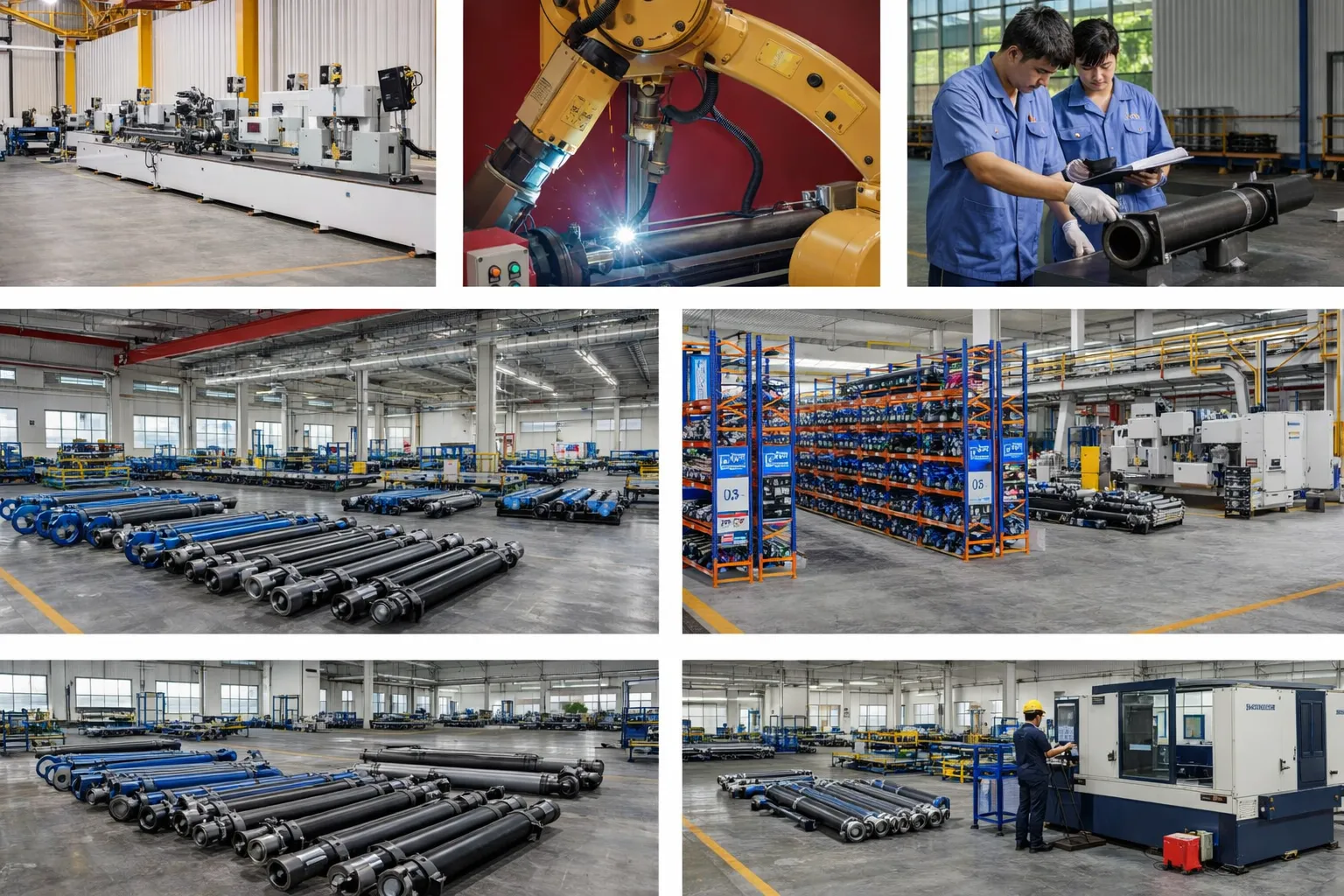
Producing zero-leakage, cleanroom-grade fluid power requires absolute control over the entire supply chain. As a premier, vertically integrated hydraulic cylinder manufacturer, we completely reject the industry practice of relying on third-party assembly houses. From the initial ultrasonic and spectrometer inspection of the raw Q345D steel billets to the final cleanroom packaging, every process is conducted autonomously within our advanced ISO-certified facilities.
Our machining centers utilize advanced multi-axis CNC technology to achieve diametrical tolerances measured in mere micrometers. The internal barrel surfaces are subjected to a rigorous deep-hole boring, skiving, and roller burnishing process. This critical operation creates a highly uniform, near-mirror internal finish (Ra < 0.2μm) that exponentially reduces dynamic friction and ensures the longevity of the PTFE sealing matrix. The subsequent nickel plating is applied under highly controlled electrochemical conditions to guarantee uniform thickness and perfect adhesion, preventing any future flaking.
Our quality control protocols are absolute and uncompromising. Before any encapsulation jacking cylinder is dispatched for international export, it must pass a grueling 100% Factory Acceptance Test (FAT). We conduct severe proof pressure testing at 150% of the maximum operational rating to validate the welded structure. This is followed by an extended, multi-hour static pressure-holding test using high-resolution digital flow sensors to conclusively verify that internal leakage is mathematically zero. Full material test reports, dimensional inspection logs, and individual serial number traceability accompany every single shipment.
Versatile Capabilities Across Heavy Industries
While the meticulous precision and cleanliness of this specific design are exquisitely tuned for battery PACK encapsulation within an energy storage power station, the fundamental physical traits—extreme rigidity, reliable servo control, and zero fluid bypass—translate perfectly to a multitude of other demanding heavy industrial applications globally. When failure is not an option, engineers choose our advanced hydraulic rams.
- High-Temperature Metal Processing: Continuous heavy loads, radiant heat, and abrasive slag demand specialized water-cooled cylinders with fire-resistant sealing. Explore our rugged solutions engineered for the metallurgical and iron industry.
- Subterranean Extraction: The brutal, highly abrasive environments of underground operations require unmatched impact resistance and robust sealing. See how our high-yield Q345D designs power the mining industry.
- Heavy Infrastructure Equipment: The rapid cycle times, unpredictable load spikes, and massive breakout forces required by excavators and loaders rely heavily on our heavy-duty welded architectures designed for the construction machinery industry.
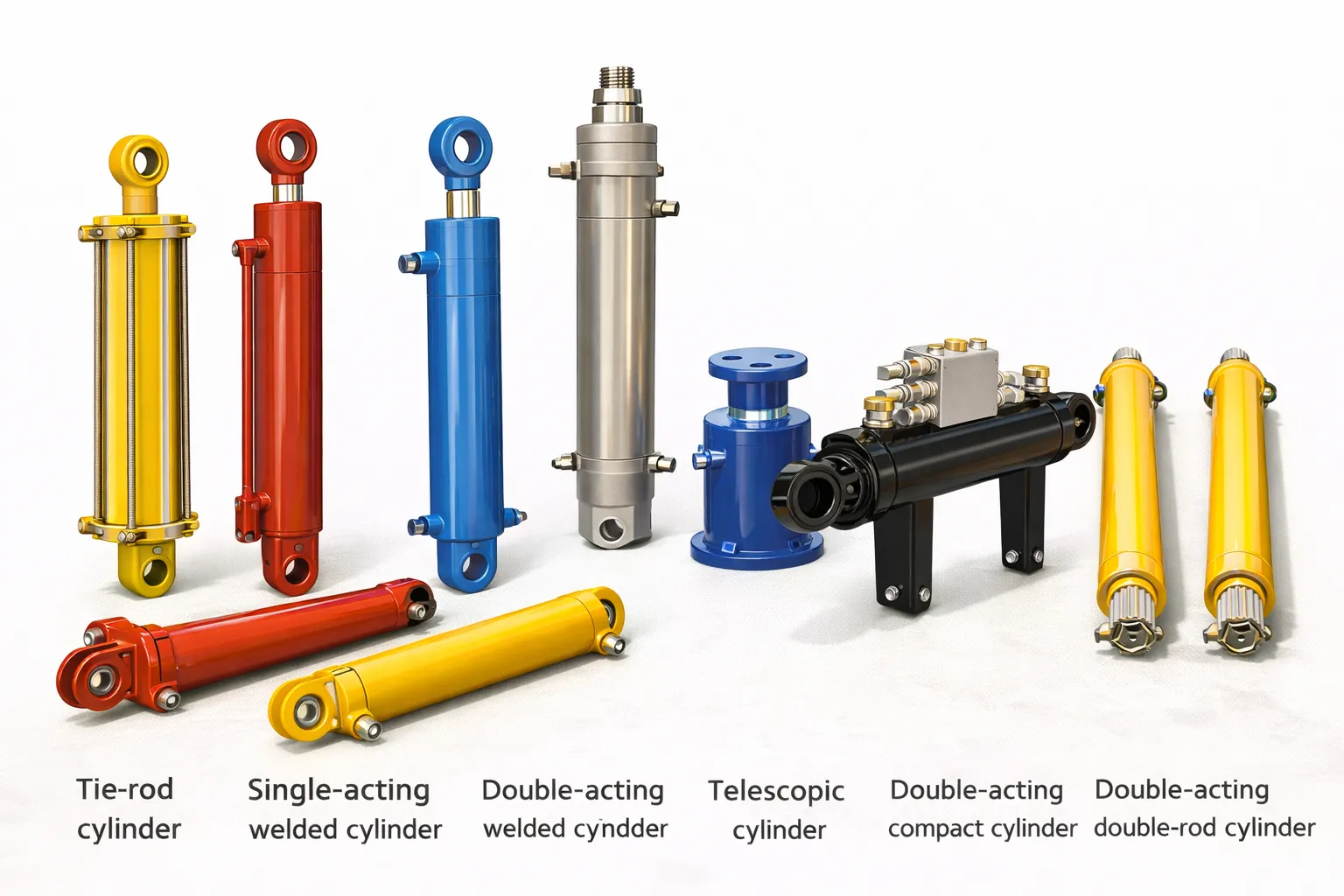
- Plastics & Rubber Injection Molding: Requiring exact linear positioning and massive clamping tonnage without pressure drop, often utilizing our highly responsive single acting hydraulic cylinder mechanisms paired with double-acting units to ensure perfect mold alignment and prevent flash defects.
Comparative Analysis: Standard Commercial Actuators vs. Our Cleanroom Benchmark
Evaluating an industrial asset requires looking critically past the initial capital expenditure and focusing heavily on long-term line efficiency, maintenance overhead, and defect prevention. The following technical matrix illustrates exactly why leading engineering procurement contractors mandate our customized solutions over standard commercial off-the-shelf variants.
| Performance Metric | Standard Commercial Hydraulic Cylinder | Our Encapsulation Jacking Cylinder |
|---|---|---|
| Positional Holding (Drift) | High risk of internal leakage causing millimeter dropping during dwell. | Absolute Zero Drift; hermetic PTFE-composite sealing matrix. |
| Cleanroom Suitability | Standard chrome plating micro-cracks, generating metallic dust. | Electroless Nickel Plated; 100% compliant with ISO cleanliness requirements. |
| Structural Material | Standard #45 Carbon Steel; tie-rod designs prone to stretching. | Q345D Low-Alloy Steel; monolithic welded construction for infinite life. |
| Motion Smoothness | Frequent stick-slip (stiction) juddering during low-speed descent. | Ultra-smooth motion via linear guide + servo integration synergy. |
| Maintenance Demand | High frequency; frequent hydraulic cylinder repair necessary. | Set-and-forget reliability; massive reduction in operational downtime. |
Field-Validated Performance: Global Case Studies
The ultimate validation of specialized engineering is relentless, flawless execution in high-stakes environments. The following analyses highlight exactly how our fluid power technology has permanently resolved manufacturing bottlenecks for top-tier energy integrators across the Asia-Pacific region.
Case Study 1: Eradicating Internal Leakage in a South Korean Gigafactory
Client & Location: Tier-1 Grid Energy Storage Manufacturer, Seoul, South Korea (October 2024)
The Engineering Challenge: A sprawling new automated assembly line was experiencing unacceptable cell rejection rates. The OEM lifting cylinders were suffering from microscopic internal leakage under the massive weight of high-density battery PACKs. The platforms would drift downwards by 1.5mm just before the final seal, causing severe cell misalignment. They found our technical specifications while urgently researching fixing hydraulic cylinders solutions and zero-leakage upgrades online.
Solution & Implementation: Our engineering bureau rapidly designed a complete plug-and-play retrofit utilizing our customized encapsulation jacking hydraulic cylinder. We integrated our proprietary zero-leakage PTFE seal matrix and Q345D welded bodies, matching their exact machine mounting flanges.
The Tangible Outcome: Within the first week of operation, the facility reported a 100% elimination of cylinder-related positional drift. The absolute structural rigidity allowed them to increase the encapsulation press speed by 15%, significantly boosting daily throughput.
Case Study 2: Conquering Cleanroom Contamination in Japan
Client & Location: Advanced Solid-State Battery Plant, Osaka, Japan (February 2025)
The Engineering Challenge: Operating an incredibly strict ISO Class 5 environment, the facility continuously failed internal particle audits. The source was traced to the standard hard chrome-plated jacking cylinders, which were micro-flaking under high-frequency robotic operation, shedding imperceptible metallic dust into the open battery modules.
Solution & Implementation: We immediately replaced the offending commercial units with our highly specialized nickel-plated actuators. The cylinders were assembled and hermetically sealed in our own cleanroom before direct air-freight shipment.
The Tangible Outcome: The automation line effortlessly passed all subsequent cleanroom audits. The nickel surface demonstrated zero particulate shedding after 500,000 rapid production cycles, saving the plant from devastating compliance shutdowns and product recalls.
Case Study 3: Overcoming Structural Fatigue in Taiwan
Client & Location: ESS Infrastructure Integrator, Hsinchu Science Park, Taiwan (July 2025)
The Engineering Challenge: An aggressive push to increase automated line speed caused intense dynamic shock loads during the encapsulation descent phase. The standard tie-rod lift cylinder bases were structurally cracking and weeping fluid after only a few months of operation due to violent pressure spikes.
Solution & Implementation: We deployed our heavy-duty welded structure manufactured exclusively from high-yield Q345D alloy steel. We also integrated advanced internal deceleration cushioning into the cylinder heads to absorb the kinetic shock before the piston bottomed out.
The Tangible Outcome: Cylinder lifespan increased by over 400%, entirely eliminating the mid-shift breakdowns that were severely throttling their export output capacity. The line now runs 24/7 without structural fatigue.
Technical B2B Frequently Asked Questions (FAQ)
For engineering directors, automation integrators, and procurement managers evaluating our fluid power systems, we have compiled comprehensive answers to the most rigorous technical inquiries we receive during system design.
1. How exactly does the sealing matrix prevent internal leakage compared to standard cylinders?
Standard industrial cylinders use simple polyurethane U-cups which naturally allow microscopic fluid bypass under extreme static holding loads. We utilize a highly engineered, multi-piece composite seal profile comprising a PTFE (Teflon) dynamic sealing element backed by a highly resilient elastomer energizer. When combined with our ultra-smooth barrel skiving (Ra < 0.2μm), this geometry perfectly blocks fluid transfer, locking the massive payload securely in space without millimeter dropping.
2. Why is Q345D steel strictly necessary for the cylinder body in this application?
Q345D is a structural low-alloy steel known for its high yield strength and exceptional impact toughness. When a heavy battery pack is loaded rapidly onto the jacking platform, the cylinder mounts experience intense localized stress and shockwaves. Standard carbon steel can micro-deform or crack over time. Q345D absorbs these dynamic loads effortlessly, ensuring the welded actuator housing lasts for the entire lifecycle of the production line without ballooning under pressure.
3. What makes the nickel plating process crucial for cleanroom cleanliness requirements?
Traditional hard chrome plating possesses a micro-cracked surface topography. While acceptable in rugged outdoor equipment because it holds lubrication, in a battery PACK cleanroom, these microscopic fissures can harbor airborne particulates or shed microscopic metallic flakes into the environment. Electroless nickel plating provides an entirely continuous, non-porous, and highly chemically resistant shield that completely eliminates particulate shedding and outgassing.
4. How does the “linear guide + servo new energy” configuration protect the hydraulic cylinder?
Hydraulic cylinders are fundamentally designed for pushing and pulling along their central axis. Side-loading forces the internal piston against the barrel wall, causing rapid scoring and seal destruction. By mechanically attaching the lifting platform to external heavy-duty linear guide rails, those rails absorb 100% of the lateral misalignment forces. The encapsulation jacking cylinder is left to perform pure, unhindered vertical thrust governed smoothly by the precise servo valve.
5. What is the typical lead time and cost structure for a custom retrofit project in Asia?
By entirely bypassing third-party vendors and maintaining massive in-house raw material inventories, we drastically compress our manufacturing lead times. Standard high-performance custom batches for the Asian market can be dispatched within 4 to 6 weeks. Because you are dealing directly with the factory, the hydraulic cylinder price is exceptionally competitive, often yielding a 30 percent reduction in upfront capital expenditure compared to sourcing equivalent legacy Western automation brands.
6. Do you supply replacement seal kits and provide on-site maintenance guidance?
Absolutely. While our systems are designed for extreme longevity and zero maintenance, we provide highly detailed maintenance documentation and proprietary spare hydraulic cylinder components. If your technicians are executing scheduled maintenance or fixing hydraulic cylinders on-site, our factory engineers are available for direct technical consultation to ensure the rebuild maintains the original zero-leakage cleanroom specification perfectly.
Optimize Your Battery Encapsulation Line Today
Do not allow substandard industrial cylinders to compromise the precision, safety, and cleanliness of your multi-million dollar energy storage manufacturing lines. Upgrading to a specialized, zero-leakage lifting solution immediately drives down rejection rates and permanently protects your high-value battery payloads.
Whether you are designing a brand-new automation facility from the ground up or urgently seeking to retrofit failing legacy components with exact, high-performance drop-in replacements, our engineering department is ready to analyze your kinematic load data and provide a highly competitive manufacturing proposal.
Editor: Cxm