
Float Stabilizing Cylinder for Wave Devices
Engineered with premium duplex steel and advanced ceramic rod technology to master severe sea wave scouring. Delivering ultimate float compensation, infinite fatigue resistance, and uninterrupted kinetic energy extraction for offshore marine renewable platforms.
Product Overview: Commanding the Extreme Kinetics of the Ocean
The relentless global pursuit of sustainable, zero-emission baseload power has propelled the new energy sector into the most physically punishing environment on our planet: the open ocean. Ocean energy wave devices, specifically point absorbers, attenuators, and oscillating wave surge converters, represent a monumental leap forward in marine renewable technology. These complex offshore structures rely entirely on massive floating buoys or hinged flaps that rise, fall, and surge with the immense kinetic energy of the sea. However, capturing this chaotic, multi-directional hydrodynamic force and smoothly translating it into usable, continuous mechanical power requires an exceptionally robust and intelligent dampening mechanism. At the absolute mechanical core of this floating architecture lies the float stabilizing cylinder. This critical actuation component serves an indispensable dual purpose: it continuously compensates for the erratic movement of the float to maintain the structural integrity of the mooring system, and it frequently functions as the primary power take-off (PTO) unit, converting wave heave into regulated high-pressure fluid flow to drive internal electrical turbine generators.
Operating offshore introduces a set of relentless engineering challenges that completely overwhelm standard terrestrial fluid power components. A float stabilizing hydraulic cylinder is continuously subjected to brutal sea wave scouring. High-velocity saltwater, densely laden with abrasive silica sand and sharp micro-organisms, relentlessly attacks the exterior of the actuator. Furthermore, ocean waves never cease. A typical offshore installation experiences a continuous wave cycle every six to ten seconds, translating to over three to five million actuation cycles per year. For standard commercial carbon steel components, this continuous, alternating mechanical stress inevitably leads to rapid metal fatigue—the most prevalent and catastrophic failure mode in offshore deployments. When a stabilizing arm fractures at the weld, or a dynamic seal fails due to saltwater chloride pitting on the rod, the entire multi-million-dollar wave energy device can be torn apart by the next severe storm surge. The financial devastation caused by unplanned downtime and emergency underwater repairs destroys the viability of the energy park.
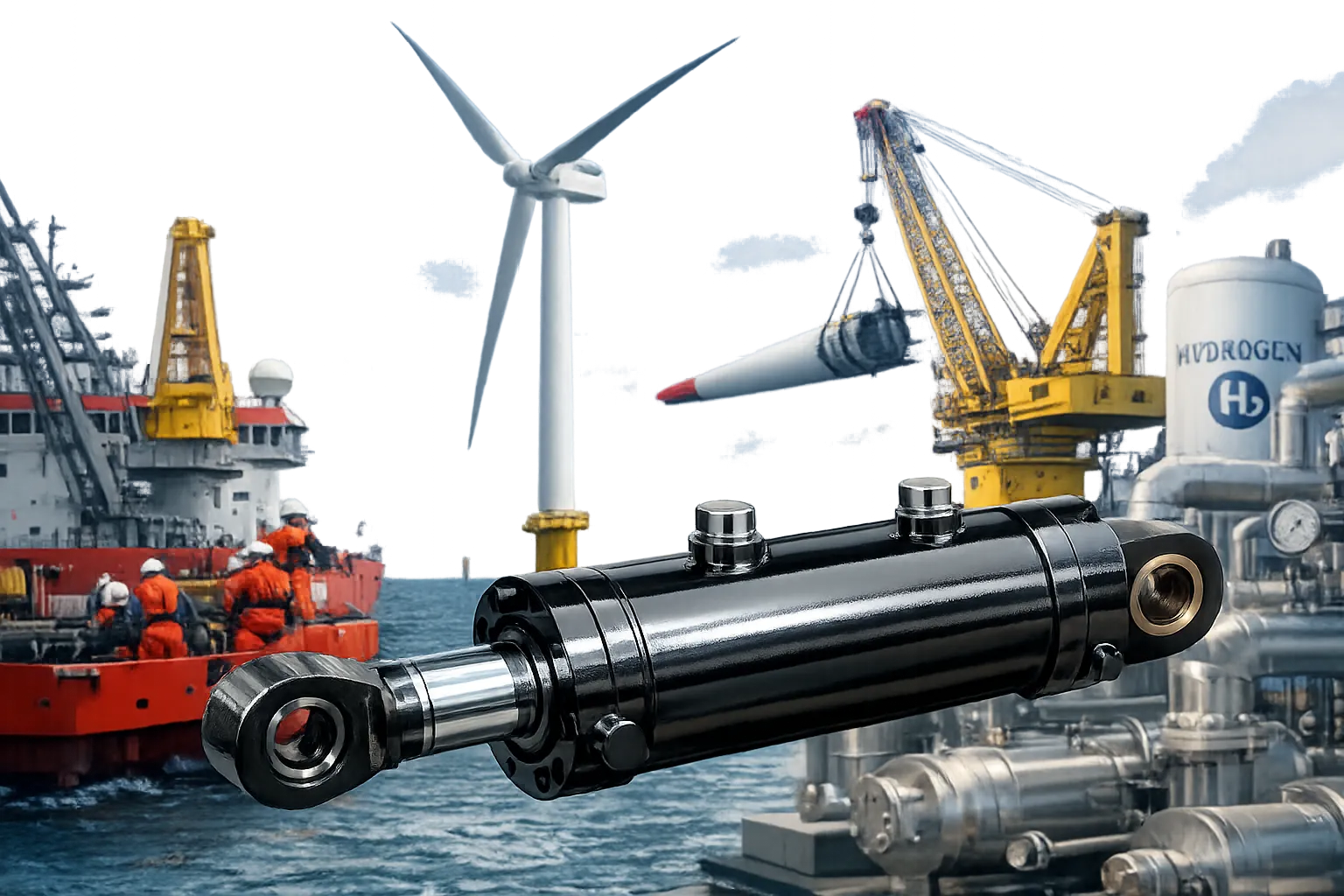
Recognizing the severe limitations and unacceptable risks of using commercial-grade actuators in marine applications, our engineering division has developed a definitive, purpose-built subsea solution. As a globally trusted hydraulic cylinder manufacturer, our technological pedigree is deeply rooted in extreme offshore survival. Our advanced float stabilizing cylinder transcends basic marine standards. It is constructed from heavy-wall 316L stainless steel, utilizing a deep-penetration, fully welded architecture to entirely eliminate the structural flexing and thread-shearing inherent in standard tie-rod designs. By relentlessly focusing on fatigue life optimization and integrating advanced corrosion defense mechanisms, we provide offshore project directors across South Korea, Japan, Taiwan, and the wider Asia-Pacific region with a stabilization system that absolutely guarantees the operational longevity and long-term financial viability of their marine renewable energy farms.
Comprehensive Technical Parameters
Deploying heavy machinery into the volatile marine environment requires exact material science and uncompromising dimensional precision. We provide highly customizable hydraulic parts engineered specifically to integrate seamlessly with your exact buoy dimensions, PTO requirements, and anticipated extreme wave states. The table below outlines the foundational engineering specifications and customized parameters for our offshore stabilization actuators.
| System Category | Configuration Specification | Marine Engineering Significance |
|---|---|---|
| Target Industry | New Energy | Engineered exclusively for zero-emission, sustainable marine power generation. |
| Equipment Category | Ocean Energy Wave Device | Interfaces directly with point absorbers, attenuators, and oscillating surge flaps. |
| Subsystem Action | Float Compensation | Dampens erratic kinetic movement to protect internal grid generators and moorings. |
| Product Name | Float Stabilizing Cylinder | The exact dedicated nomenclature for primary offshore wave dampening actuators. |
| Action Method | Double Acting | Provides active, highly controlled hydraulic resistance during both wave heave (rise) and surge (fall). |
| Structure Type | Piston Cylinder / Welded | Deep-penetration SAW welding eliminates mechanical weak points found in bolted designs. |
| Base Material System | 316L Stainless Steel | Superior austenitic metallurgy offering exceptional baseline resistance to chloride-induced pitting. |
| Surface Treatment | Polished | An ultra-smooth mirror finish that actively repels marine bio-fouling and barnacle attachment. |
| Environmental Grade | Sea wave scouring | Engineered to survive constant bombardment by high-velocity, sand-laden aerated saltwater. |
| Targeted Failure Mode | Fatigue | Optimized stress-relief geometry designed for infinite lifecycle endurance under cyclical loads. |
| Recommended Configuration | Duplex steel + Ceramic rod | The ultimate upgrade for harsh ocean deployments, combining extreme yield strength with impenetrable surface hardness. |
Kinematic Working Principle: Harnessing Marine Fluid Dynamics
To truly grasp the immense value of our offshore engineering, one must deeply understand how a float stabilizing cylinder interacts with the chaotic kinetics of the ocean. When a massive oceanic swell passes through the wave energy array, it exerts incredible upward buoyancy force on the surface float. This mechanical heave motion is directly and forcefully transferred to the extending piston rod of the actuator. Because the entire system utilizes a meticulously designed double acting hydraulic cylinder architecture, the upward extension forces the internal hydraulic fluid out of the rod-end port and into a centralized high-pressure accumulator circuit or directly into a hydraulic motor.
As the wave crest passes and the float begins its descent into the deep trough, gravity and wave suction pull the massive structure downward. Unlike a basic single acting hydraulic cylinder that would simply collapse under the weight without providing any resistance—causing severe slack lines and subsequent violent snap-loading—our double acting system actively manages this descent. The hydrostatic pressure within the cylinder acts upon the full face of the internal hydraulic cylinder piston, creating highly controlled dampening. Highly calibrated proportional valves restrict the fluid flow, ensuring the float descends smoothly and extracts energy on the downward stroke, rather than crashing violently into the mechanical end-stops of the platform frame.
This constant, bi-directional fluid restriction achieves two critical operational objectives. First, it extracts maximum kinetic energy across the entire 360-degree wave cycle, smoothing out the power delivery to the rotary generators and stabilizing grid output. Second, it acts as an infinitely rigid, intelligent hydraulic shock absorber. During violent typhoon conditions, the system’s logic controller can dynamically adjust valving to electronically “lock” the float in a submerged, safe position. The incompressible nature of the trapped fluid effectively shields the fragile superstructure from the most devastating surface wave impacts, guaranteeing survival during once-in-a-century storm events.
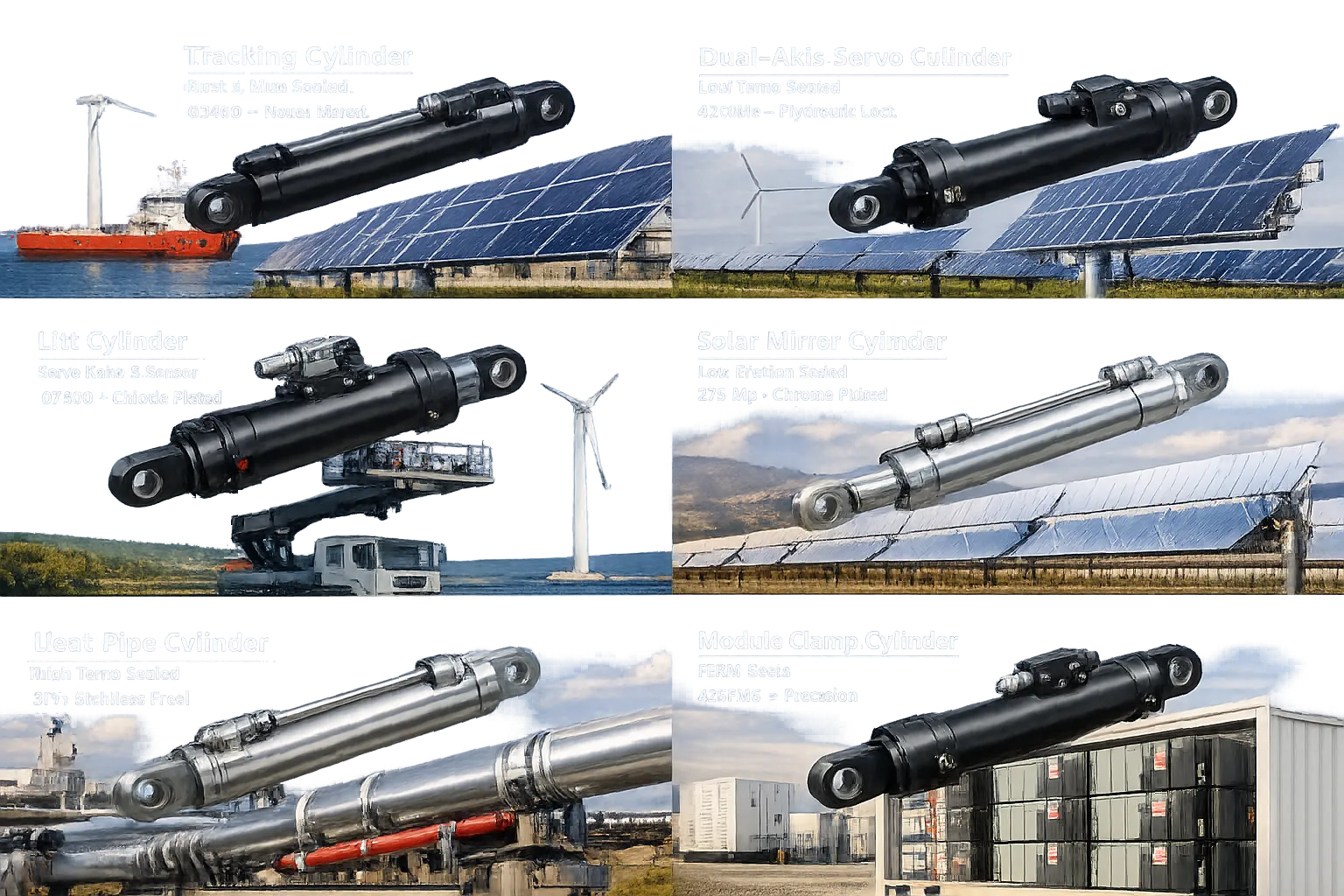
Offshore Asset Modernization & Strategic OEM Replacement
The financial mathematics of offshore renewable energy are heavily dependent on maximizing uptime and minimizing maintenance downtime. Extracting a multi-ton wave energy converter from the sea to perform routine seal replacements is logistically complex, highly dangerous, and incredibly expensive. When first-generation pilot projects utilizing standard industrial actuators begin to fail, plant operators realize that continuously fixing hydraulic cylinders on a rolling deck in open water rapidly destroys their profit margins. Securing highly durable, dimensionally exact replacement parts that guarantee a “fit-and-forget” operational lifespan becomes the absolute top priority for marine engineering teams.
If your offshore platform is currently suffering from unacceptable downtime due to failing legacy components, we engineer exact drop-in retrofits. Our specialized float stabilizing hydraulic cylinder can be deeply customized to perfectly match exact pin-to-pin dimensions, heavy-duty trunnion mounting brackets, spherical marine bearings, and specific stroke lengths of your existing OEM equipment. By bypassing complex, multi-tiered distribution chains, we offer a highly competitive hydraulic cylinder price directly from the manufacturer. You receive a massive structural upgrade in 316L or Duplex corrosion defense and infinite fatigue life optimization, completely eliminating the need to modify your expensive floating steel superstructure.
Core Engineering Advantages for Ultimate Marine Survival
Defeating metal fatigue and relentless saltwater abrasion requires pushing far beyond the traditional boundaries of standard fluid mechanics. Our offshore actuation systems integrate a multitude of specialized technical advancements to ensure decades of uninterrupted power generation:
- 1. Infinite Fatigue Life Optimization (Welded 316L Structure): Millions of alternating wave cycles cause standard tie-rod cylinders to stretch, resulting in catastrophic thread fracture and end-cap blowouts. We utilize a heavy-wall, fully welded 316L stainless steel monolithic body. The end caps are fused to the barrel using advanced, automated Submerged Arc Welding (SAW) processes. We employ exhaustive Finite Element Analysis (FEA) to ensure the heavy-duty mounting eyes disperse kinetic shock evenly, providing virtually infinite fatigue resistance against constant wave action.
- 2. The Ultimate Offshore Upgrade: Duplex Steel & Ceramic Rod Configuration: For the most severe tidal zones and deep-water installations, standard 316L is sometimes not enough. We highly recommend our premier upgrade: a cylinder body forged from 2205 Duplex Stainless Steel paired with a thermally sprayed Ceramic coated piston rod. Duplex steel offers double the yield strength of 316L. The ceramic rod coating provides an impenetrable, diamond-hard barrier (exceeding 1000 HV) that completely ignores abrasive silica sand, guarantees zero chloride pitting, and eliminates the risk of flaking inherent in standard hard chrome. It is the absolute pinnacle of offshore hydraulic rams technology.
- 3. High-Polished Surface Repulsion: Marine bio-fouling—the rapid, encrusting growth of barnacles and algae—will act like sandpaper and shred standard rod seals in weeks. By mechanically and electro-polishing our stainless and ceramic surfaces to a flawless mirror finish (Ra < 0.1µm), we remove the microscopic anchor points that organisms need to attach. When combined with our aggressive multi-lip polyurethane scrapers, the rod remains perfectly clean and smooth upon every single retraction.
- 4. Ultra-Low Friction Sealing Matrix: To efficiently capture energy from small, low-amplitude wave ripples, the internal breakout friction of the cylinder must be practically zero. We utilize a proprietary matrix of PTFE-energized seals and advanced polymer wear rings. This eradicates the “stick-slip” hesitation effect, allowing the float to track the ocean surface with perfect, frictionless fidelity, thereby maximizing PTO efficiency.
- 5. Wave Scouring Defense Geometry: Ocean energy devices operate directly in the turbulent splash zone where air and highly oxygenated saltwater mix aggressively. Our cylinders feature hermetically sealed external geometries, actively eliminating exposed threads, crevices, and sharp corners where localized galvanic or crevice corrosion typically initiates in standard designs.
- 6. Ecological Fluid Compatibility: Protecting the marine ecosystem is a strict legal necessity. Our internal elastomer seals are specifically formulated and thoroughly tested to run seamlessly with Environmentally Acceptable Lubricants (EALs) and water-glycol fire-resistant fluids, ensuring that even in the unlikely event of a catastrophic hull breach, zero toxic hydrocarbons are released into the ocean.
Autonomous Marine Manufacturing & Total Traceability
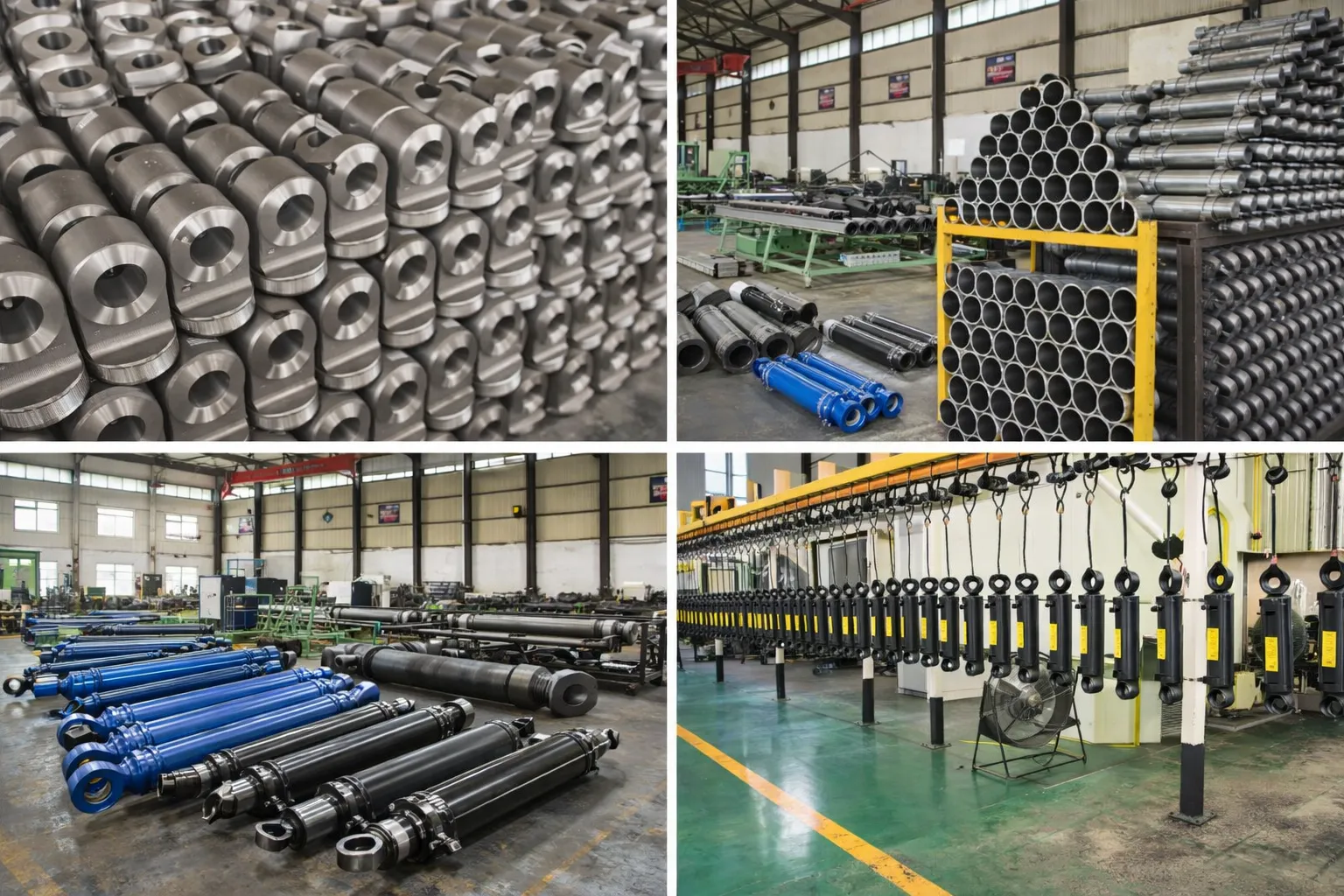
Processing advanced marine alloys like 316L and 2205 Duplex requires specialized carbide tooling, rigid machinery, and deep metallurgical expertise due to their rapid work-hardening properties. Outsourcing these critical components to general machine shops introduces unacceptable quality risks. As a premier global provider, we maintain total autonomous control over our manufacturing loop. From the initial optical emission spectrometry verifying the exact chemical composition of raw stainless steel billets to the final precision CNC machining of internal hydraulic cylinder components, everything occurs within our state-of-the-art facilities.
Because underwater equipment cannot be easily monitored, we operate with a strict zero-defect mandate. 100% of our float stabilizing cylinder units undergo punishing Factory Acceptance Testing (FAT). This protocol includes dynamic friction testing, prolonged cyclic endurance runs to verify the ceramic rod coating adherence, and static hydrostatic pressure holding at 1.5 times the maximum rated load to certify absolute zero internal fluid bypass.
Every completed cylinder is permanently laser-etched with a unique serial identifier. This provides major EPC contractors and offshore classification societies (such as DNV or ABS) with complete, unbroken material and testing traceability—a critical requirement for securing insurance, regulatory approvals, and deployment certifications for multi-megawatt offshore arrays.
Cross-Industry Engineering Pedigree
The advanced material science and heavy-duty structural engineering required to dominate the ocean surface heavily informs our design philosophy across all industrial sectors. Our proven capability to prevent metal fatigue and block severe environmental contamination translates to immense reliability in other demanding environments:
- Mining Industry: The advanced ceramic rod technology that ignores marine sand is exactly what protects deep shaft drilling actuators from highly abrasive quartz dust and corrosive, acidic groundwater.
- Construction Machinery Industry: The heavy-wall welded architecture that provides infinite fatigue life against wave pounding serves as the foundation for a main lift cylinder subjected to brutal, sudden shock loads on high-tonnage earthmoving excavators.
- Metallurgical and Iron Industry: Our ultra-low friction, high-temperature tolerant seal configurations are repurposed to survive the intense radiant heat and abrasive slag found near active blast furnaces and continuous casting lines.
- Offshore Oil & Gas: Providing the critical heave compensation systems for deep-water drilling risers and offshore floating production platforms.
- Marine Logistics: Powering the precise, corrosion-resistant articulation required for heavy-duty ship-to-shore cranes and automated port straddle carriers operating continuously in aggressive coastal salt-spray zones.
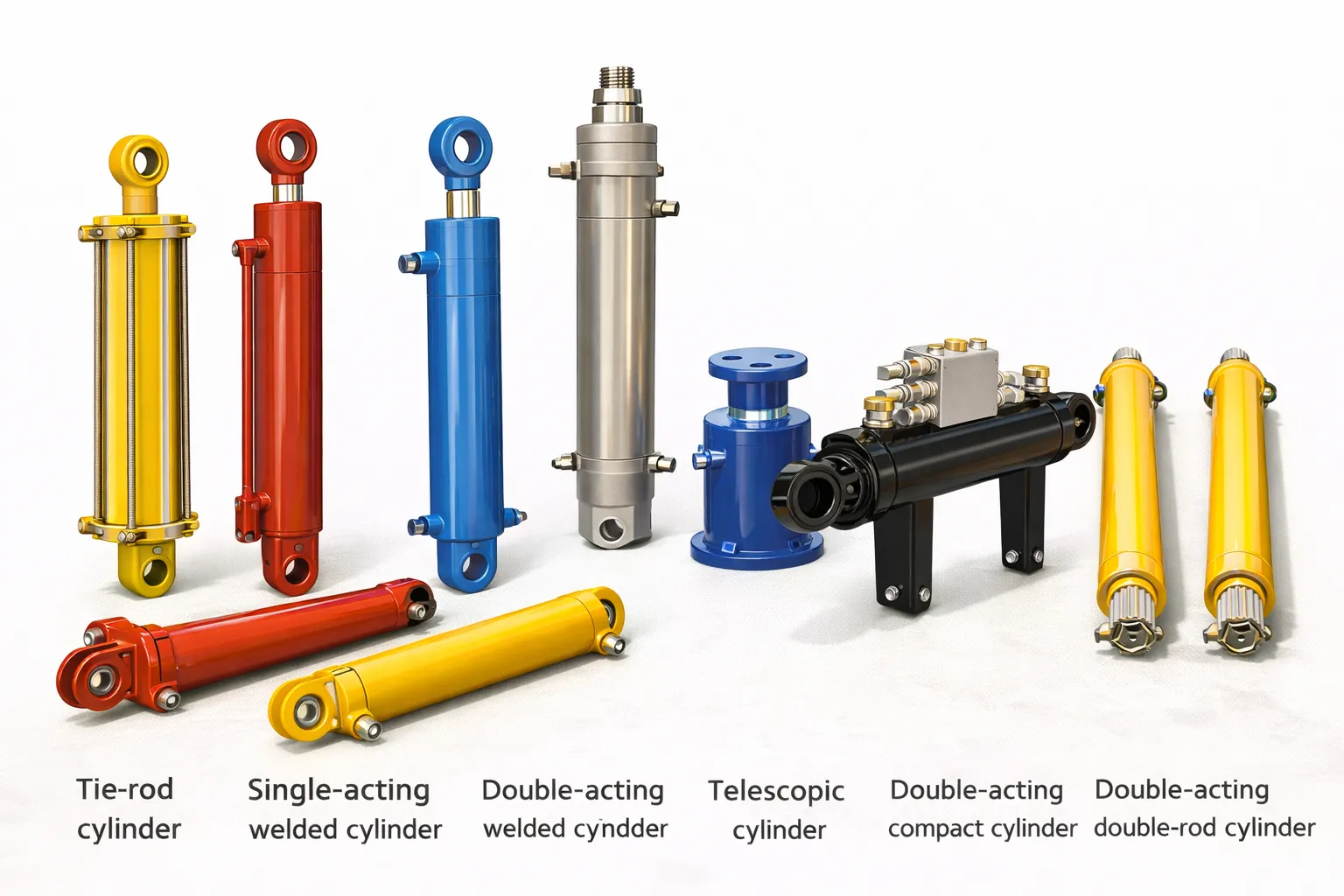
Comparative Analysis: Standard Marine vs. High-Performance Offshore Actuation
Many early-stage marine projects fail because developers attempt to save capital by deploying basic “marine-grade” industrial cylinders painted with epoxy. The ocean destroys these components rapidly. The matrix below highlights exactly why purpose-built wave energy engineering is a strict necessity to protect your LCOE.
| Engineering Metric | Standard Commercial Marine Cylinder | Our Float Stabilizing Cylinder |
|---|---|---|
| Fatigue Resistance | Tie-rod construction (Stretches and snaps under cyclic wave loads) | Deep-penetration Welded Body (Infinite fatigue life geometry) |
| Piston Rod Metallurgy | Hard Chrome Plated Steel (Micro-cracks allow rapid salt pitting) | Thermally Sprayed Ceramic (Impenetrable, absolute zero corrosion) |
| Bio-Fouling Defense | Standard finish (Barnacles attach easily and shred internal seals) | Ultra-Polished Ra < 0.1µm (Actively repels marine growth) |
| Friction Kinematics | High friction (Struggles to absorb low-amplitude wave energy) | PTFE Matrix (Perfectly tracks ocean heave without hesitation) |
| Operational Lifespan | Requires constant retrieval and seal replacement every 1-2 years | Engineered for 10-15 years of uninterrupted offshore deployment |
Proven at Sea: Real-World Global Case Studies
Theoretical marine specifications must be validated against the violent reality of the ocean. Our stabilization systems are currently defending wave energy infrastructure across the most brutal coastal environments in Asia. Below are real examples of how our engineering resolves critical offshore failures.
Case Study 1: Eradicating Metal Fatigue in South Korean Wave Farms
Client Location: Jeju Island Coastal Waters, South Korea | Application: Grid-Connected Point Absorber Array | Date: October 2024
The Challenge: A prominent marine energy startup operating off the coast of Jeju experienced catastrophic structural failures during the autumn typhoon season. Their original stabilizing actuators, built with standard threaded tie-rods, suffered severe metal fatigue due to the relentless wave heave. The tie-rods snapped entirely, causing the massive floats to crash violently into the main spars, threatening to sink the entire million-dollar array. They urgently required a heavy-duty structural redesign to salvage the project.
The Solution & Result: We rapidly engineered and supplied our heavy-wall welded 316L float stabilizing hydraulic cylinder units. The elimination of threaded weak points provided infinite fatigue resistance. The new hydraulic rams absorbed the cyclic shock loads effortlessly. The array survived the subsequent brutal winter storm season with zero mechanical downtime or structural degradation.
“The structural rigidity of their welded design saved our project. The fatigue failures simply vanished overnight. We haven’t had to dispatch a single maintenance vessel to deal with actuator breakages since we installed them. Their deep understanding of offshore cyclical stress is unmatched.” — Mr. Park Ji-hoon, Lead Marine Structural Engineer
Case Study 2: Conquering Sand Scouring & Bio-Fouling in Japan
Client Location: Hokkaido Coastline, Japan | Application: Near-Shore Oscillating Surge Converter | Date: April 2025
The Challenge: Operating in shallow, highly turbulent coastal waters meant the wave devices were constantly bombarded by suspended silica sand. Furthermore, aggressive barnacle growth during the warm summer months adhered rapidly to the standard chrome cylinder rods. Every time the wave flap surged, the barnacles and sand were dragged mercilessly through the rod seals, causing massive saltwater intrusion and hydraulic fluid leakage into the pristine coastal waters, resulting in severe environmental fines.
The Solution & Result: We deployed our premium configuration utilizing 2205 Duplex steel with thermally sprayed Ceramic rods. The ceramic coating offered an extreme hardness that simply ignored the abrasive sand, while the ultra-polished finish completely prevented barnacle attachment. Seal tearing was entirely eliminated, keeping the ecological zone 100% safe and the power output perfectly steady. Our systems eliminated the need for continuous hydraulic cylinder repair.
“We were spending an absolute fortune on dive teams just to scrape barnacles off the old actuators. The ceramic rods on these new units are a revelation. After eight months submerged, they look like they were installed yesterday. Completely impervious to the environment.” — Dr. Kenjiro Sato, Director of Ocean Energy Operations
Case Study 3: Overcoming OEM Supply Chain Failures
Client Location: Kaohsiung, Taiwan | Application: Deep-Water Wave Energy Research Platform | Date: December 2025
The Challenge: A massive commercial research platform was grounded in dry dock because their original European equipment supplier quoted a ten-month lead time for replacement stabilization cylinders. The delay threatened to void their government renewable energy grants. They needed exact dimensional drop-in replacements utilizing high-grade 316L stainless, delivered in a fraction of the time to hit their weather window.
The Solution & Result: Leveraging our fully autonomous manufacturing capabilities, we reverse-engineered the mounting trunnions from their CAD files. We produced the heavy-duty 316L batch, completed full hydrostatic testing, and delivered the units via expedited sea freight in just 35 days. The platform deployed on schedule, and the client secured a vastly optimized hydraulic cylinder price compared to the legacy brand.
“Their manufacturing speed is incredible, yet they didn’t sacrifice an ounce of metallurgical quality. The cylinders bolted perfectly into our existing float geometry. They bypassed the OEM bottleneck and unequivocally saved our deployment schedule.” — Lin Chen-wei, Project Procurement Manager
Frequently Asked Questions
Specifying heavy machinery for open-ocean deployment requires absolute engineering clarity. Below, we address the most critical inquiries from marine structural engineers and procurement directors regarding our wave dampening technologies.
1. Why is a double acting system mandatory? Can we use a single acting cylinder with gravity return?
2. How does the ceramic rod upgrade justify the additional capital expenditure?
3. What is the standard lead time for a custom batch of 316L cylinders delivered to South Korea?
4. How does your pricing eliminate third-party supply chain markups?
5. Do you supply spare sealing kits for preventative offshore maintenance?
6. Can you handle custom spherical bearing sizes for our float attachments?
Anchor Your Wave Energy Reliability Today
Do not permit substandard terrestrial actuators to jeopardize the structural integrity and financial returns of your marine renewable deployments. Upgrade to dedicated stabilization cylinders engineered for infinite fatigue resistance, total wave scouring defense, and decades of flawless float compensation. Submit your platform’s operational parameters to our marine engineering team for an immediate technical proposal.
Editor: Cxm


























