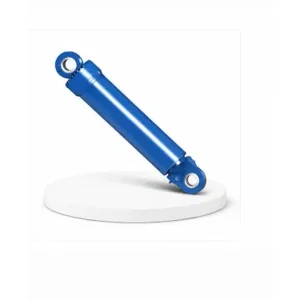
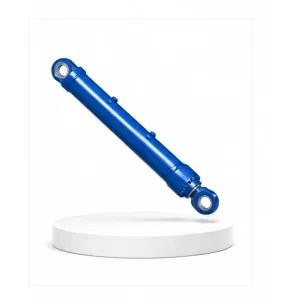
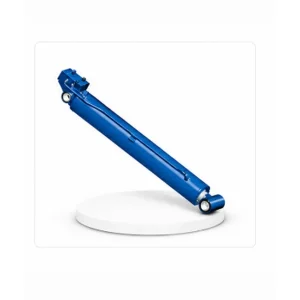
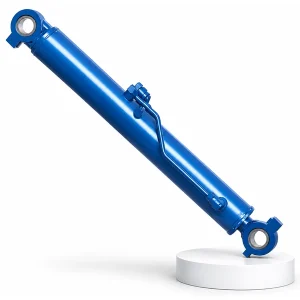
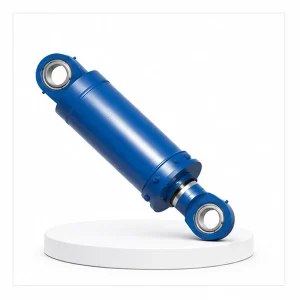
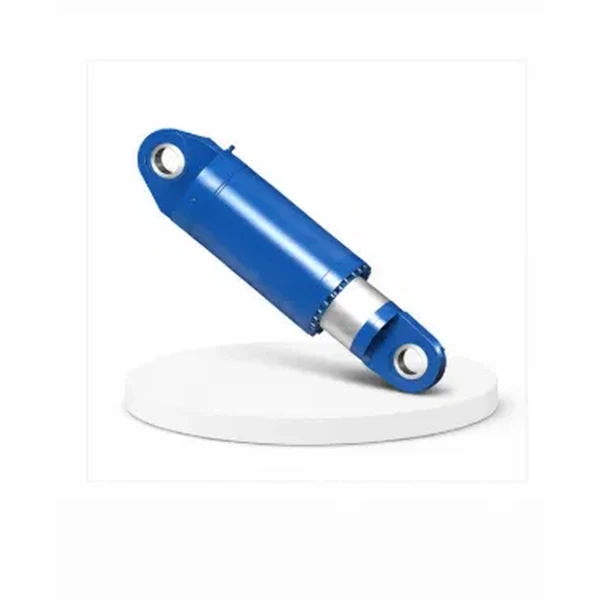
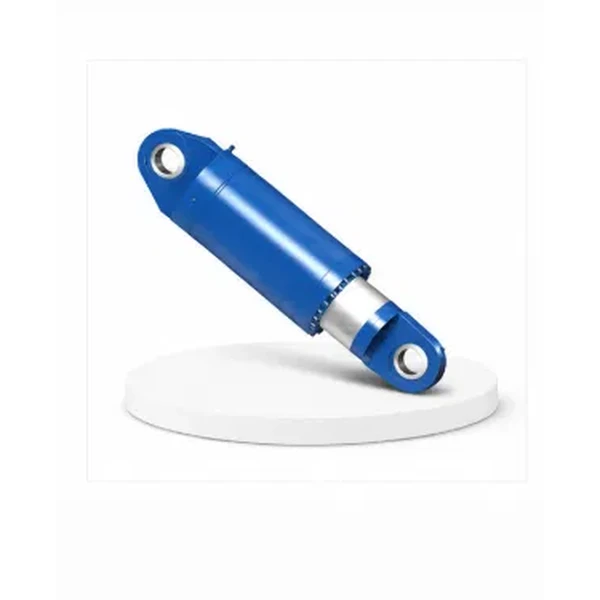
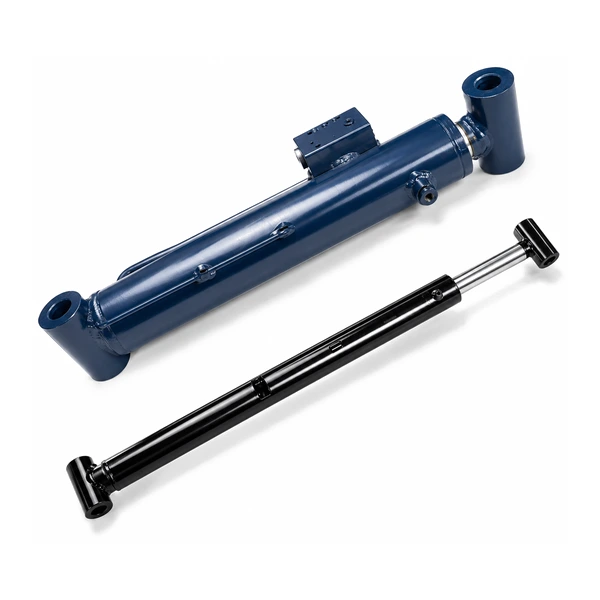
Mining Dump Truck Rear Suspension Cylinder
The 10:1 Load Swing — The Engineering Challenge the Front Suspension Doesn't Face
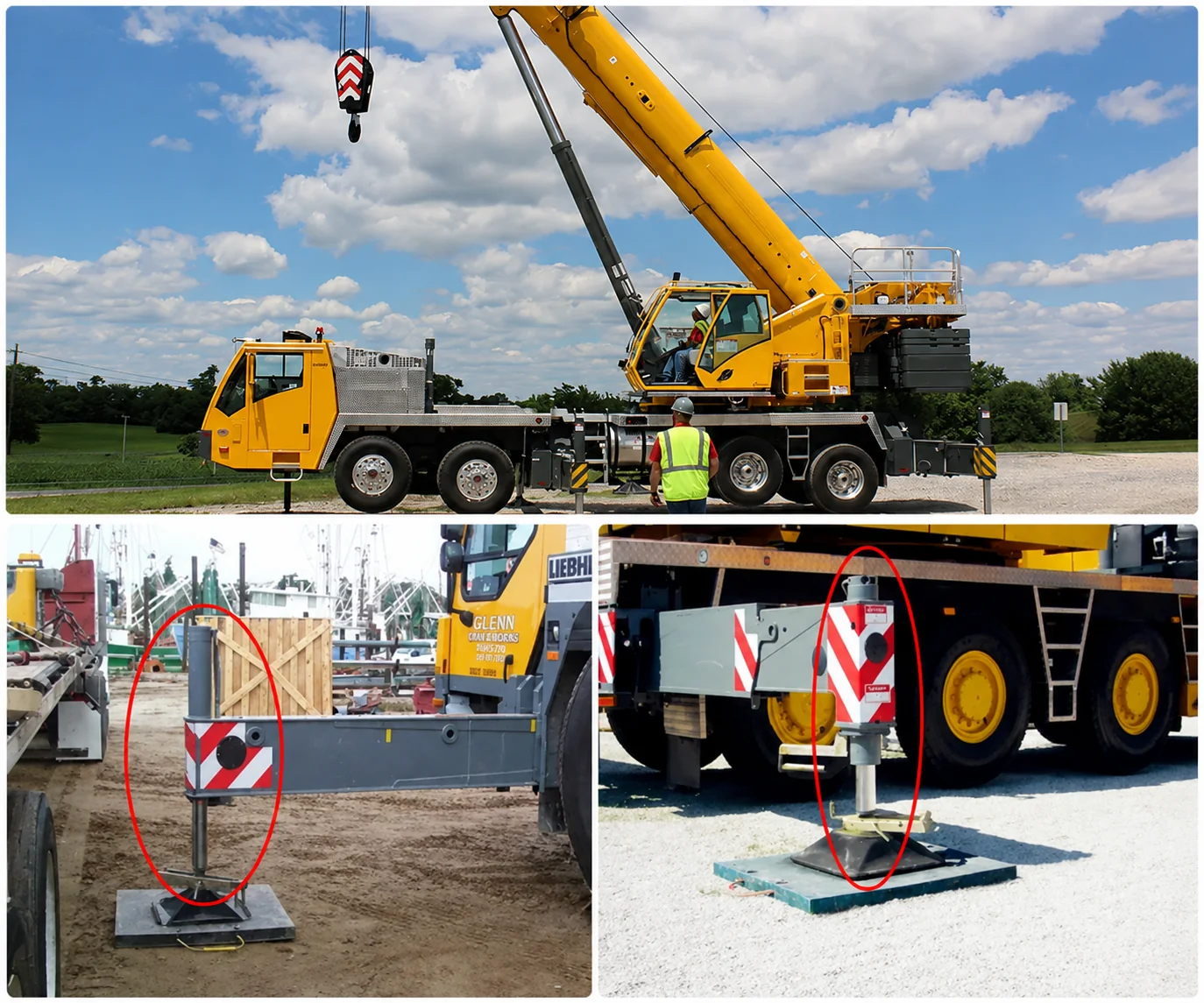
The front suspension (#29) carries a load that varies by 20–40% between empty and loaded trips — a gentle, predictable change. The rear suspension carries the entire payload mass, which swings from zero (empty body) to 300–400 tonnes (full load) in the space of 3–5 minutes while the excavator fills the body. Each bucket load adds 30–50 tonnes in a single impact — the suspension must absorb this step-change without bottoming out or bouncing the body.
The nitrogen gas pre-charge for the rear struts is set to produce the correct ride height when the truck is loaded — which means the suspension is over-extended (high in its travel) when the truck is empty. This trade-off is deliberate: the truck spends most of its hauling time either loaded (travelling to the dump point) or being loaded (at the excavator face). The empty-return trip is shorter and at lower speed, so the softer, higher ride position during the empty run is acceptable.
Korea Ever-Power tunes the rear suspension for each truck model's payload class — with the gas pre-charge optimised for the loaded condition. Browse the full mobile machinery hydraulic cylinder range.
Technical Specifications
| Parameter | Specification |
|---|---|
| Product | Mining Dump Truck Rear Suspension Cylinder |
| Function | Support weight, absorb, and eliminate vibration |
| Bore Diameter | 150 mm – 450 mm |
| Rod Diameter | 120 mm – 400 mm |
| Stroke | ≤ 400 mm |
| Working Pressure | Maximum 38 MPa |
| Application | Mining Dump Truck (rear axle / tandem axle) |
| Certification | ISO 9001 · 100% tested · gas pre-charge certified |
Excavator Impact — 30 Tonnes Dropped from 3 Metres, 5 Times per Load
The excavator doesn't gently place the ore into the truck body. It swings the bucket over the body and opens it — dropping 30–50 tonnes of rock from a height of 2–4 metres. Each bucket drop produces a shock pulse that travels through the body, through the chassis, and into the rear suspension. A typical load requires 4–7 bucket drops to fill the body — each one a sharp impact that the rear suspension must absorb.
Each bucket impact compresses the rear suspension by 30–80 mm in 0.1–0.3 seconds — a piston velocity far exceeding normal haul-road cycling. The damping orifice must flow enough oil at this high velocity to prevent pressure spikes that could damage seals, while still providing enough restriction to prevent the body from rebounding violently after the impact.
The excavator usually loads one side of the body first — placing the first 2–3 buckets on the left, then the last 2–3 on the right (or alternating). This asymmetric loading compresses one side of the rear suspension more than the other, tilting the body sideways. The four rear suspension cylinders must equalise this tilt through their interconnected hydraulic circuit — or through the piston accumulator (#31) that balances the load across axles. Contact the Korea Ever-Power engineering team for impact-loading specifications.
Four Rear Struts, Not Two — Why the Rear Axle Needs Double the Support Points
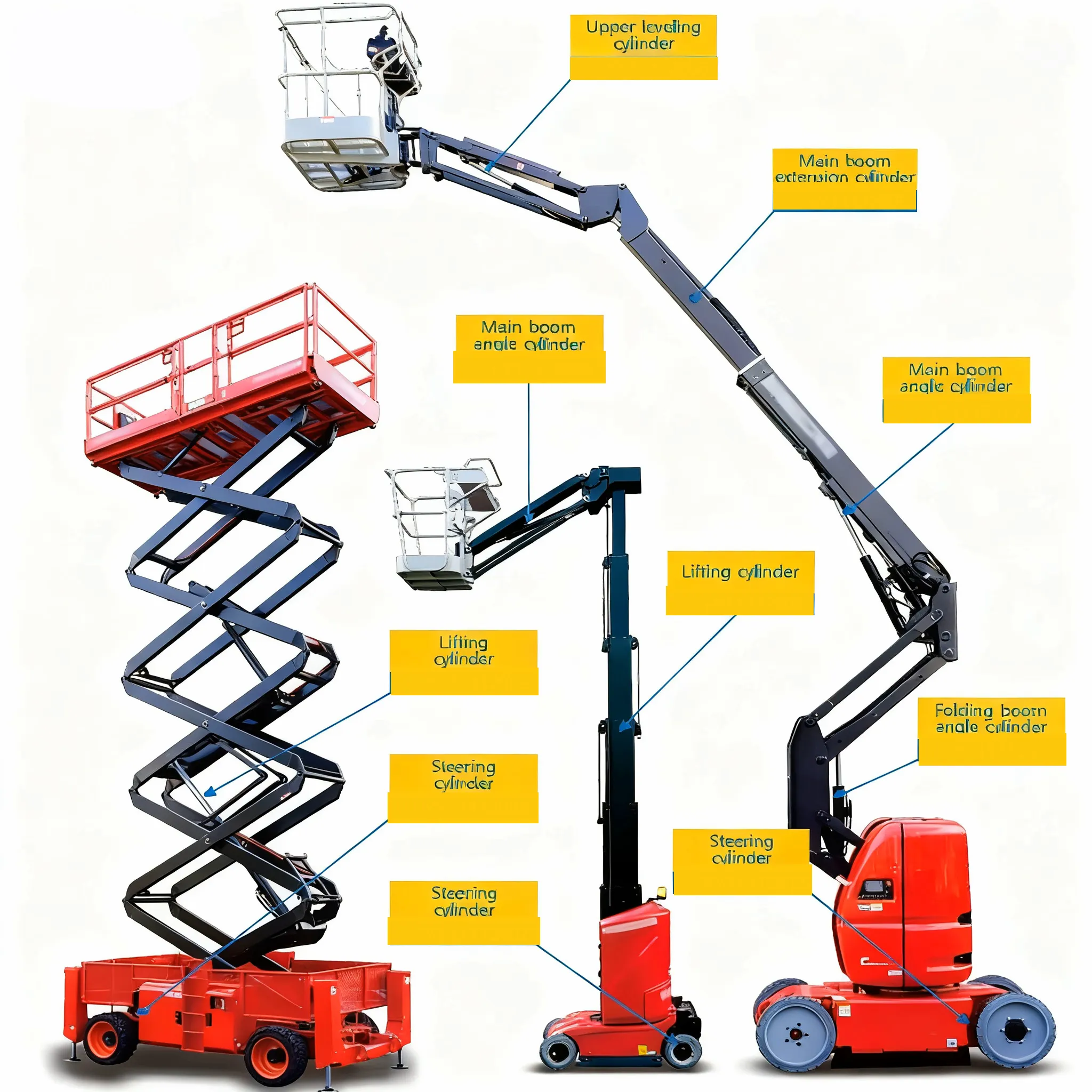
The front axle uses 2 suspension cylinders (one per wheel). The rear axle uses 4 — two per wheel, positioned fore and aft on each rear wheel hub. On tandem-rear-axle trucks, the total may reach 8 rear struts (4 per axle × 2 axles). The reason is simple: the rear axle load is 3–5× the front axle load when the truck is full, and the impact loading from the excavator demands more support points to distribute the force without overloading any single strut.
The four rear struts also provide roll stability — with two struts per side spaced fore and aft, the rear suspension resists the body's tendency to roll sideways during cornering on the haul road. A two-strut arrangement (as on the front) would allow more body roll under the heavier rear load — increasing the risk of load shifting within the body.
Korea Ever-Power supplies rear suspension cylinders in matched sets of 4 (single rear axle) or 8 (tandem rear axle) — all gas-charged on the same calibrated station, all damping-tested at the same flow rate, ensuring symmetrical support across the entire rear axle group.
Manufacturing Process
The rear suspension cylinder shares the bore/rod/stroke dimensions of the front — but the internal tuning is different. The damping orifice is larger (to handle the higher piston velocities from excavator impacts without excessive pressure spikes). The gas pre-charge is higher (to support the heavier loaded rear axle). The accumulator volume is proportionally larger to maintain a progressive spring rate across the full 10:1 load range.
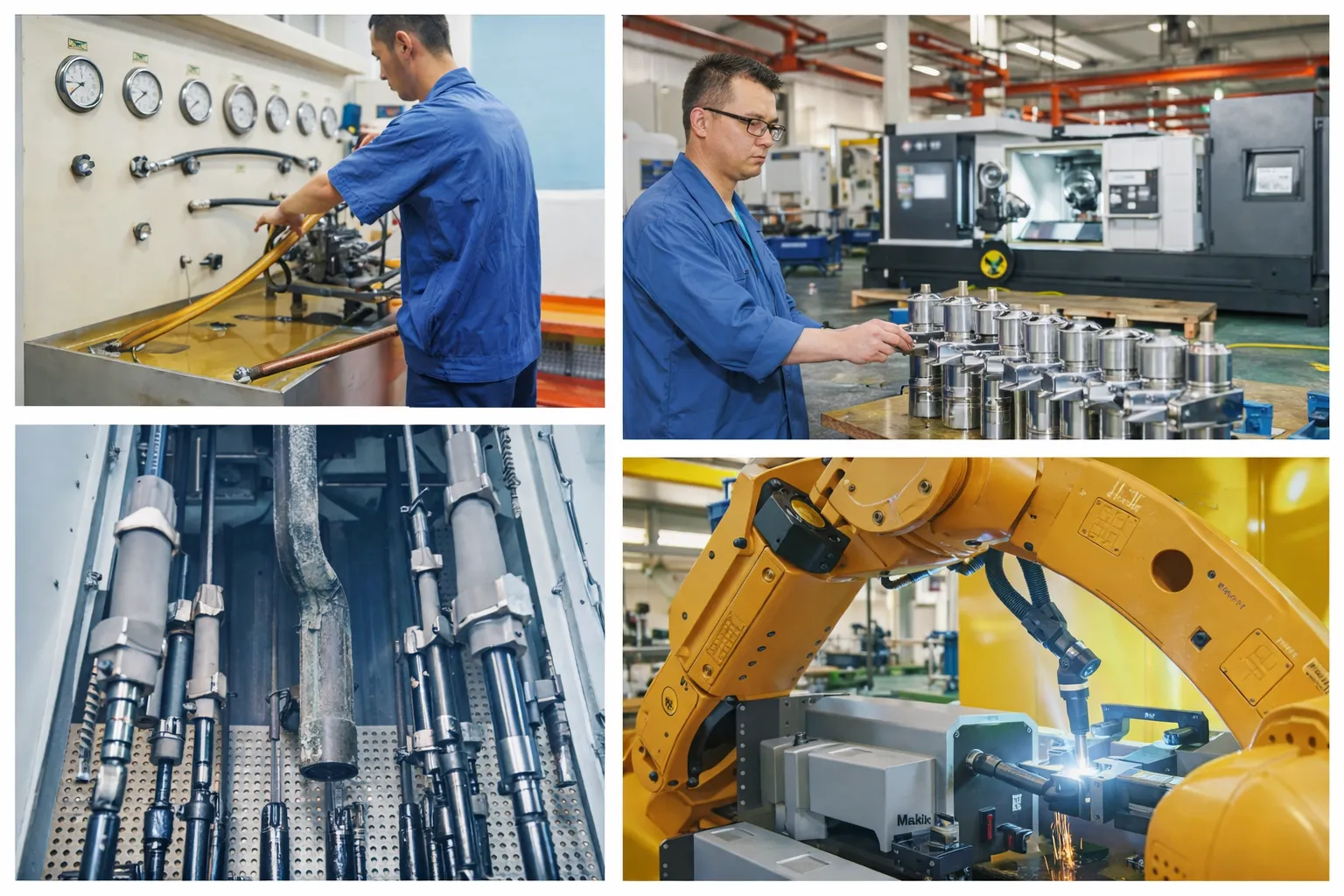
Bore honed to Ra 0.2–0.4 µm. Chrome 80 µm. Seals rated -40 to +100 °C. Hydrostatic tested at 57 MPa (1.5× rated). Impact-cycle tested — simulating excavator bucket-drop loading at the worst-case frequency and amplitude to verify seal survival and damping performance under impact conditions. Matched sets gas-charged to within ±0.5 bar.
OEM & ODM
FAQ
Related Categories
Informations complémentaires
| Editor |
|---|