Grouting Control Cylinder for TBM Synchronous Systems
Advanced 316L stainless steel hydraulic solutions engineered for precision proportioning and absolute resistance to corrosive slurry in extreme subterranean excavation.
Product Overview & Industrial Value
In the highly complex field of modern subterranean excavation, the stability of the ground above is entirely dependent on the systems operating below. When a Shield Tunneling Machine (TBM) advances, it inherently leaves an annular void between the newly excavated soil profile and the newly erected concrete tunnel segments. To prevent catastrophic surface settlement, water ingress, and structural shifting, this void must be filled instantaneously through a process known as synchronous grouting. At the very heart of this critical operation is the grouting control cylinder.
The industrial value of a high-tier grouting control hydraulic cylinder cannot be overstated. The fluids being pumped—typically a two-component mixture of cementitious mortar and sodium silicate accelerators—are highly abrasive, incredibly viscous, and severely alkaline. A standard hydraulic oil cylinder deployed in this environment will suffer rapid degradation. The caustic nature of the slurry aggressively attacks standard carbon steel, leading to pitting, scoring, and ultimately, massive seal failure. As elite hydraulic cylinder manufacturers, we recognized this systemic vulnerability and engineered a purpose-built solution.
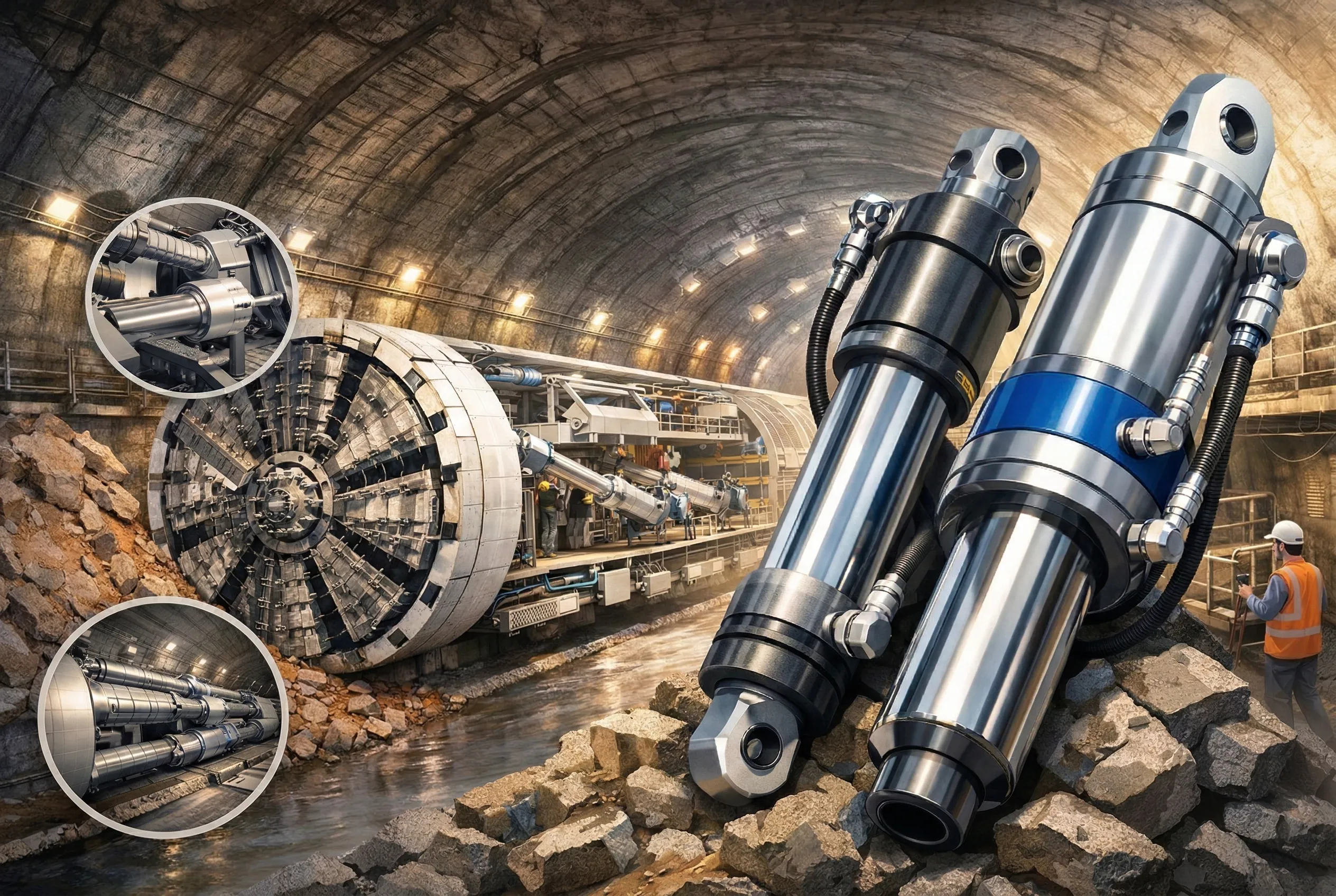
Our unique positioning in the market stems from our uncompromising approach to material science and fluid dynamics. We do not adapt general-purpose hydraulic parts for tunneling; we construct specific instruments of precision. By utilizing premium stainless steel architectures and advanced surface polishing techniques, our cylinders immunity to corrosive slurry while maintaining the exact volumetric displacement required for precision proportioning. This ensures that the two-component grout mixes in the correct ratio only at the injection tail seal, preventing premature solidification within the machine’s internal pipework, thereby safeguarding the entire multi-million dollar tunneling asset.
Technical Parameters & Specifications
To meet the exacting demands of global infrastructure projects, our engineering baseline is structured around durability and absolute chemical resistance. The following parameters detail the core specifications of our specialized synchronous injection systems.
| Industry Domain | Equipment Category | Subsystem / Function | Designated Component |
|---|---|---|---|
| Construction Machinery | Shield Tunneling Machine / TBM | Synchronous Grouting System | Grouting Control Cylinder |
| Action Configuration | Structural Topology | Manufacturing Assembly | Primary Material System |
|---|---|---|---|
| Double Acting Hydraulic Cylinder | Heavy-Duty Piston Cylinder | High-Integrity Welding | Stainless Steel |
| Surface Treatment | Environmental Grade | Working Condition Focus | Mitigated Failure Mode |
|---|---|---|---|
| Ultra-fine Polished | Severe / Corrosive Slurry | Precision Proportioning | Seal Corrosion & Bypass |
Engineering Recommendation: To completely neutralize the threat of highly alkaline cement and silicate mixtures, our standard configuration for this application strictly mandates the use of 316L corrosion resistance metallurgy for all fluid-contacting surfaces.
Fundamental Working Principle
Understanding the operational mechanics of the grouting control hydraulic cylinder requires a look into the fluid dynamics of a TBM. Unlike standard lifting operations, this cylinder acts as a highly precise, high-pressure volumetric pump.
Configured as a robust double acting hydraulic cylinder, hydraulic fluid is introduced to the drive-side of the cylinder, forcefully extending the hydraulic cylinder piston. As the rod extends into the grout chamber, it displaces an exact, mathematically predetermined volume of the thick cementitious slurry, pushing it through heavy-duty hoses toward the tail skin of the shield. Upon reaching the end of its stroke, hydraulic pressure is instantly diverted to the annulus side, forcefully retracting the piston. This retraction creates a powerful vacuum in the grout chamber, drawing in the next precise batch of slurry from the holding tanks.
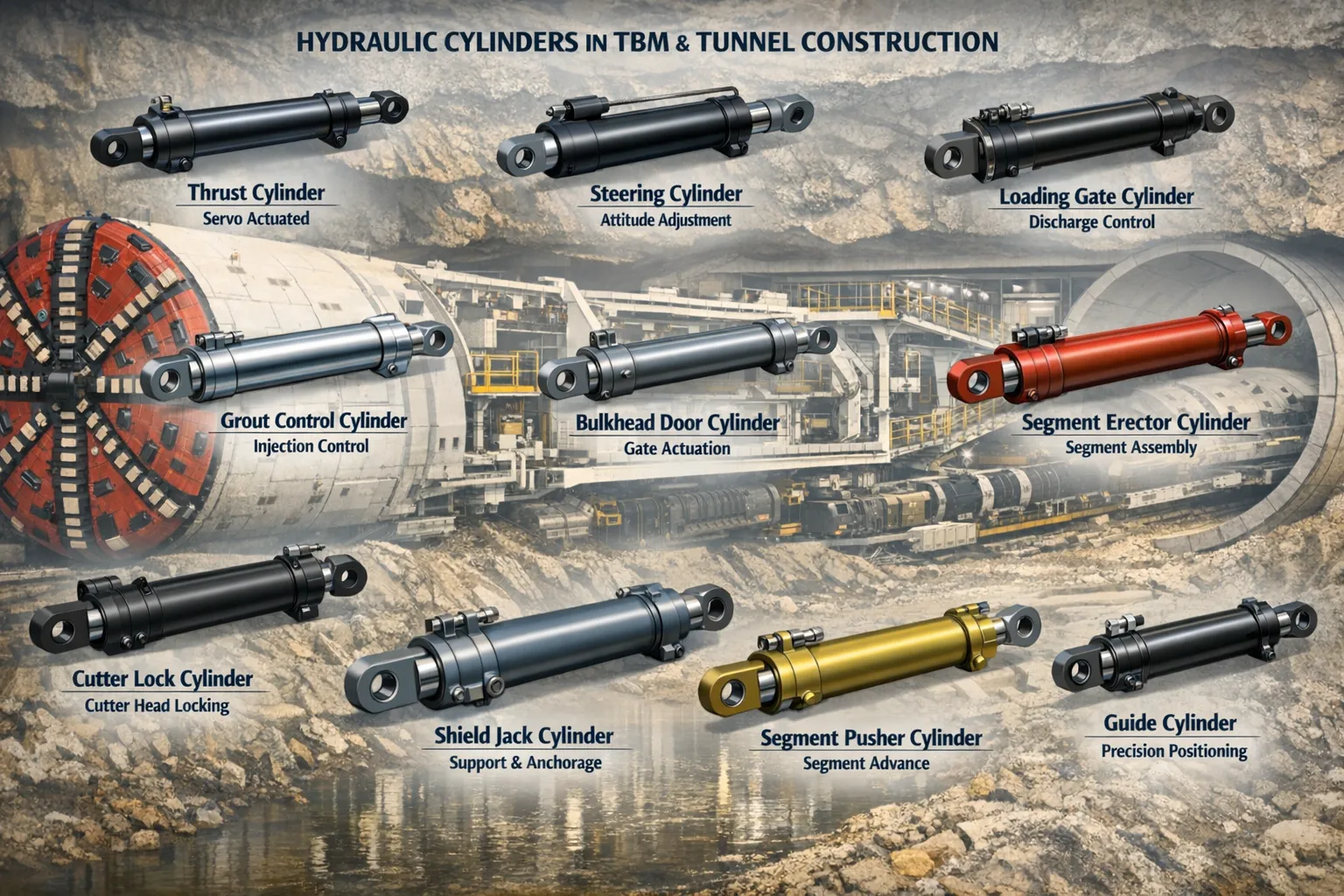
The critical factor here is precision proportioning. TBMs utilize a two-part grout system (Component A is typically a cement/bentonite/water mix; Component B is a liquid sodium silicate accelerator). If the grouting control cylinder fails to deliver the exact volume of Component A relative to Component B, the grout may flash-set inside the delivery lines (causing massive downtime) or fail to set in the annular gap (causing ground collapse). Therefore, the internal geometry, stroke linearity, and absolute seal integrity of our piston cylinder design are paramount to the survival of the tunneling project.
Equipment Replacement & Fleet Compatibility
When navigating the complexities of heavy machinery maintenance, sourcing reliable hydraulic components that interface flawlessly with existing equipment is vital. We engineer our specialized cylinders to serve as direct, drop-in upgrades for the synchronous injection systems of the world’s leading TBM platforms.
To assist procurement officers and chief mechanics in dimensional selection and sizing verification, our grouting control cylinder series can perfectly replace original components found on machinery produced by the following entities. (Please note: The inclusion of the following brand names is strictly for the purpose of communicating equipment compatibility and technical sizing; we claim no direct affiliation, and all trademarks remain the property of their respective owners.)
- ✔ Herrenknecht AG (Earth Pressure Balance and Slurry configurations)
- ✔ CRCHI (China Railway Construction Heavy Industry)
- ✔ Hitachi Zosen Corporation
- ✔ Kawasaki Heavy Industries Tunneling Divisions
- ✔ IHI Corporation (Shield systems)
5 Core Technical Advantages
What elevates our product above a standard hydraulic cylinder? It is the forensic application of metallurgical science directed at a highly specific industrial problem. As veteran engineers, we have optimized five critical areas to ensure uninterrupted injection:
1. Superior 316L Stainless Steel Metallurgy
Standard steel rods pit and flake when exposed to the high pH of cementitious mortar. We utilize premium 316L stainless steel, rich in molybdenum. This specific alloy provides exceptional resistance to chloride-induced pitting and pervasive chemical attacks from the corrosive slurry, ensuring the structural integrity of the cylinder remains uncompromised over hundreds of thousands of cycles.
2. Micro-Polished Surface Finish
Even stainless steel will fail if abrasive grout adheres to it and is dragged through the seals. We employ a rigorous, multi-stage polishing process on the rod and internal barrel, achieving a near-mirror surface finish (Ra ≤ 0.2 μm). This ultra-smooth profile prevents the corrosive slurry from adhering, drastically reducing friction and extending seal life exponentially.
3. Proprietary Anti-Corrosion Sealing Matrix
The most frequent mode of failure is seal corrosion. Standard polyurethane seals dissolve in sodium silicate. Our grouting control cylinder utilizes a proprietary matrix of PTFE (Polytetrafluoroethylene) and Viton fluoroelastomers. These highly inert compounds are impervious to alkaline degradation and provide a relentless wiping action against abrasive quartz particles.
4. Volumetric Precision Proportioning Architecture
To guarantee the two-part grout flashes exactly when intended, our cylinder’s internal displacement is calibrated to exacting microscopic tolerances. There is zero internal fluid bypass. This means every stroke of the double acting hydraulic cylinder delivers the exact mathematical volume of grout commanded by the TBM’s programmable logic controller (PLC).
5. High-Integrity Welded Construction
Pumping highly viscous fluids through long, narrow hoses creates massive backpressure and hydraulic shock spikes. Threaded or tie-rod cylinders often stretch or deform under these conditions. We employ deep-penetration, robotic submerged arc welding to fuse the end caps and barrel into a single, unyielding monoblock, capable of withstanding extreme pressure transients without fatiguing.
In-House Manufacturing & Uncompromising QC
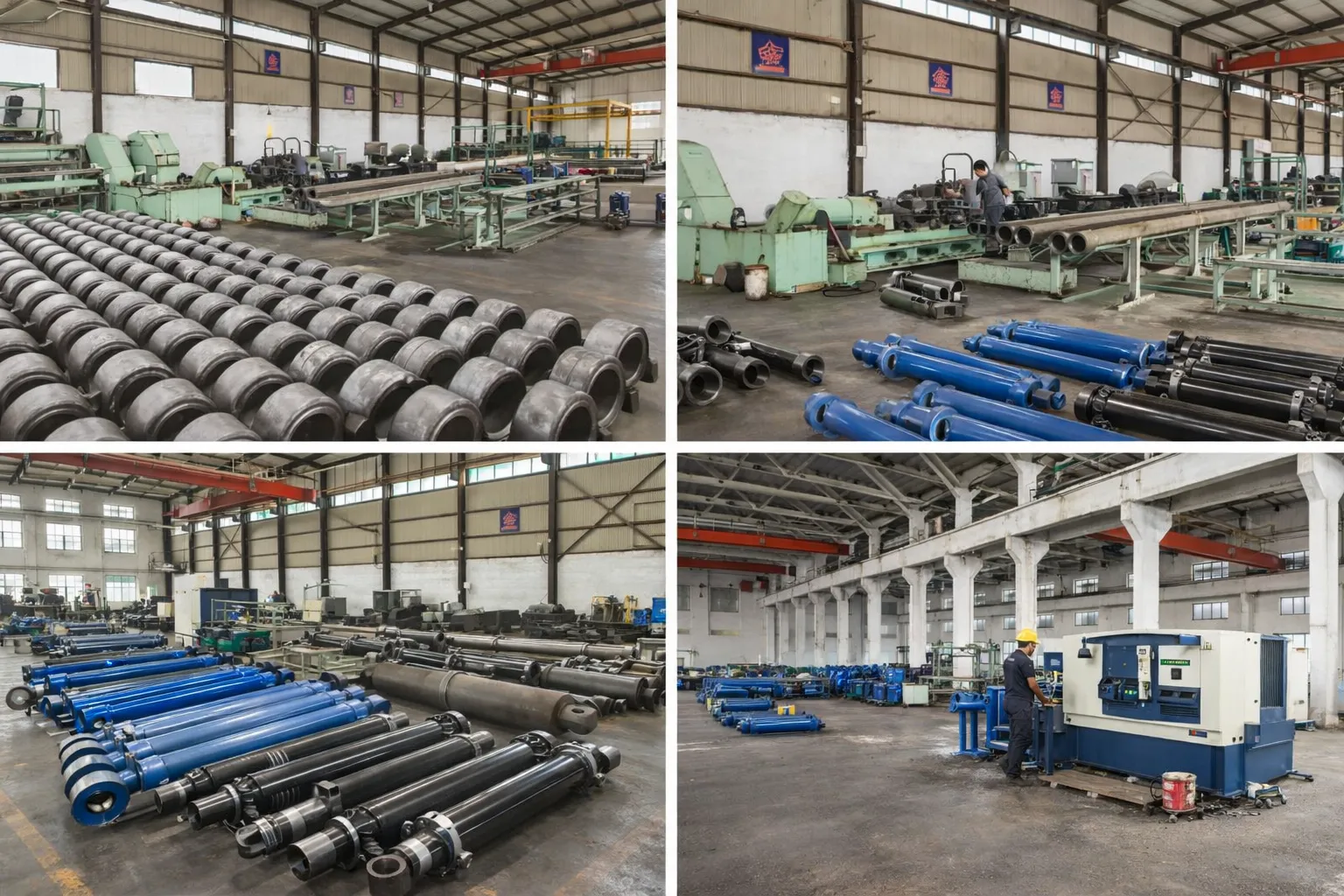
The reliability of a high-pressure cylinder operating deep underground is dictated entirely by the rigorousness of its fabrication. As dedicated hydraulic cylinder manufacturers, we maintain absolute vertical control over our production line. We do not outsource critical path machining or metallurgical treatments.
Our manufacturing process begins with incoming material verification; every batch of stainless steel undergoes positive material identification (PMI) via X-ray fluorescence to guarantee the exact molybdenum content required for 316L certification. During the welding phase, all structural seams are subjected to ultrasonic flaw detection to ensure zero porosity or micro-cracking.
Before any grouting control hydraulic cylinder leaves our facility, it must pass a grueling 100% factory acceptance test regimen. This includes sustained hydrostatic pressure testing at 150% of the maximum rated working pressure, followed by dynamic cycle testing to verify friction coefficients and seal integrity. We provide full digital traceability; every cylinder is permanently laser-etched with a serial number linked to its specific heat maps, dimensional inspection reports, and pressure test charts.
Expansive Range of Industry Applications
While optimized for the grueling environment of shield tunneling, the exceptional chemical resistance and volumetric accuracy of our specialized hydraulic series make them indispensable across various heavy industrial sectors facing aggressive media.
- Construction Machinery (Tunneling): The primary application for continuous, synchronous backfill grouting behind TBM shield tails in urban subway and drainage tunnel construction.
- Mining & Shaft Sinking: High-pressure injection of stabilizing resins and rapid-set cement into fractured rock formations to prevent water ingress and tunnel collapse.
- Hydroelectric & Dam Foundation: Deep foundation curtain grouting operations where abrasive silicate mixtures must be pumped at massive pressures into bedrock fissures.
- Environmental Remediation: Precise injection of highly reactive chemical oxidants or bio-remediation fluids into contaminated soil matrices where standard seals would dissolve.
- Deep Excavation & Soil Mixing: Delivering precise ratios of cement slurry to cutter-soil mixing (CSM) rigs or deep cement mixing (DCM) barges in corrosive coastal soil conditions.
Comparative Analysis: Standard vs. Specialized
To highlight the critical return on investment, we contrast a standard commercial cylinder against our highly engineered grouting unit when exposed to tunneling slurries.
| Performance Metric | Standard Carbon Steel Cylinder | Our 316L Grouting Control Cylinder |
|---|---|---|
| Chemical Resistance | Poor. Chrome plating pits rapidly under high alkaline exposure. | Exceptional. 316L base metal inherently resists caustic silicates and cement. |
| Seal Integrity | Polyurethane melts/hardens; abrasive quartz tears the seals. | PTFE/Viton matrix withstands chemical attack and aggressive abrasion. |
| Surface Adhesion | Grout bakes onto the rod, causing immediate seal bypass. | Micro-polished finish prevents grout from gaining purchase on the metal. |
| Volumetric Accuracy | Fluctuates as internal leakage develops over short operational periods. | Absolute precision proportioning maintained throughout the project lifecycle. |
| Maintenance Frequency | Constant rebuilding required; massive hidden labor costs. | Extended operational intervals; often completes full tunnel drives unserviced. |
Global Field Verification: Asia-Pacific Success Stories
Our engineering theories are rigorously proven in the most challenging soils of East Asia. Here is how our specialized solutions have rescued massive infrastructure investments.
1. South Korea: Seoul GTX Deep Underground Express Network
Client Sector: Tier 1 National Infrastructure Consortium
Operational Challenge: Deep TBM driving through fractured granite required extremely high-pressure, fast-setting grout to prevent water massive ingress. The OEM cylinders were failing from severe seal corrosion every three weeks.
Initial Contact: The lead mechanical engineer located our technical specifications via a targeted web search for “corrosion resistant grouting control cylinder replacements” in late 2024.
Delivered Solution: We supplied a complete array of 316L stainless steel, micro-polished cylinders equipped with our proprietary PTFE/Viton seals.
Measurable Result: Zero seal bypass or corrosion recorded over a continuous 14-month drive. Grout proportioning remained flawlessly precise.
Client Feedback: “The downtime costs for replacing standard cylinders deep underground were devastating our budget. Installing these specialized units was the best engineering decision we made on this phase. Absolute reliability.”
2. South Korea: Busan Coastal Metro Extension
Client Sector: Municipal Public Works Authority
Operational Challenge: Slurry shield operating under high hydrostatic pressure in a saline coastal environment. The mixture of seawater and highly alkaline cement was destroying standard chromium-plated rods.
Initial Contact: Reached out to us after a referral from another heavy equipment maintenance firm.
Delivered Solution: Upgraded the entire synchronous injection system to our double acting hydraulic cylinder design, ensuring the corrosive slurry could not adhere to the retracting rod.
Measurable Result: The system maintained exact injection pressures, stabilizing the loose coastal sands and preventing any surface subsidence under densely populated areas.
Client Feedback: “A harsh environment requires serious hardware. Your hydraulic parts completely solved our pitting and leakage nightmare.”
3. South Korea: Incheon Port Subsea Utility Tunnel
Client Sector: Specialized Marine Tunneling Contractor
Operational Challenge: The grout accelerators utilized were highly reactive silicates that crystallized rapidly on any rough surface, locking up the injection pumps.
Initial Contact: Contacted our engineering team via the portal on our website, requesting customized, highly polished internal components.
Delivered Solution: We manufactured cylinders with an internal and external surface finish of Ra 0.15 μm, paired with aggressive scraper seals.
Measurable Result: The silicate could no longer grip the metal surfaces, allowing the cylinders to stroke smoothly and maintain precise volumetric delivery without jamming.
Client Feedback: “The micro-polishing technique is brilliant. We haven’t had a single mechanical lockup since integration in early 2025.”
4. Japan: Tokyo Underground Stormwater Catchment
Client Sector: Mega-Civil Engineering Firm
Operational Challenge: Driving a massive diameter TBM required an unprecedented volume of synchronous grout with hyper-accurate precision proportioning to secure the giant concrete segments.
Initial Contact: Met at an international tunneling symposium, seeking advanced hydraulic cylinder manufacturers with large-bore capabilities.
Delivered Solution: Engineered large-displacement 316L cylinders with reinforced welded construction to handle the massive fluid volumes without structural fatigue.
Measurable Result: Provided flawless, synchronized delivery of over 50 cubic meters of grout per ring, ensuring total tunnel stability.
Client Feedback: “Your capability to scale up the technology without losing the precision or the chemical resistance is highly commendable.”
5. Taiwan: Kaohsiung MRT Network Expansion
Client Sector: Urban Transit Authority Joint Venture
Operational Challenge: High ambient subterranean temperatures combined with chemically aggressive fast-setting mortar caused standard seals to melt and blow out frequently.
Initial Contact: The procurement team reached out looking for a permanent solution rather than continually sourcing replacement seals.
Delivered Solution: Deployed our heat and chemical resistant PTFE/Viton sealing matrix housed within our thermally stable stainless steel bodies.
Measurable Result: Completely eradicated the thermal and chemical seal degradation, resulting in a 40% reduction in overall system maintenance costs.
Client Feedback: “We stopped buying cheap replacements and invested in your highly engineered product. The return on investment was realized within the first three months of uninterrupted tunneling.”
Technical B2B FAQ
For procurement managers and chief engineers, clarity is essential. Below are the definitive answers regarding the procurement, integration, and lifecycle of our advanced fluid power solutions.
1. What is the typical lead time for manufacturing customized grouting control cylinders?
Standard dimensional configurations typically require 4 to 5 weeks from drawing approval. For entirely bespoke designs requiring specialized stroke lengths or unique mounting interfaces for older equipment, the lead time is approximately 6 to 8 weeks, which incorporates rigorous factory acceptance testing.
2. Can these units be used to pump chemicals other than cementitious mortar?
Yes. Because the wetted parts are constructed from premium 316L stainless steel and utilize highly inert PTFE/Viton seals, these cylinders are highly effective at pumping aggressive mining resins, chemical oxidants, and bio-remediation fluids where standard steel would rapidly corrode.
3. How does the 316L stainless construction affect the overall hydraulic cylinder price?
While the initial capital expenditure for a 316L grouting control hydraulic cylinder is higher than a standard carbon steel unit, the total cost of ownership is drastically lower. The elimination of constant seal replacement, reduced machinery downtime, and prevention of catastrophic tunneling delays provide an exceptional return on investment, usually realized within the first few months of deployment.
4. Do you provide services for fixing hydraulic cylinders that have been damaged?
Yes, we offer comprehensive hydraulic cylinder repair and rebuilding services. We can assess heavily worn OEM cylinders, bore and hone the barrels, re-plate or replace the rods with high-grade stainless, and upgrade the sealing architecture to our proprietary anti-corrosion standards, essentially returning them to better-than-new condition.
5. How do I ensure correct sizing when replacing existing OEM components?
The most efficient method is to provide our engineering team with the original manufacturer’s part number, the machine model (e.g., a specific Herrenknecht EPB diameter), or the original mechanical drawings. We will cross-reference this data to manufacture an exact dimensional match that integrates seamlessly into your existing hydraulic circuits.
6. Can you supply the complete assembly, including integrated position sensors?
Absolutely. While basic volumetric control is achieved via stroke length, for fully automated TBM systems requiring ultra-precise feedback, we can integrate highly durable magnetostrictive displacement sensors directly into the core of the cylinder, fully protected from the external corrosive slurry.
Secure Your Subterranean Operations Today
Do not allow standard carbon steel components to jeopardize the integrity of your multi-million dollar tunneling investments. Upgrade your synchronous injection systems to equipment engineered for the reality of extreme subterranean environments.
Editor: Cxm