Hatch Locking Cylinder for Submarine Equipment
Engineered from aerospace-grade titanium alloy with integrated hydraulic pilot-operated check valves. Delivering absolute fail-safe hatch door sealing under extreme saltwater hydrostatic pressure for critical deep-sea manned operations.
Product Overview: The Ultimate Guarantee of Deep-Sea Survival
Submarine design represents the absolute pinnacle of maritime engineering, where the margin for component error is strictly zero. When a manned submersible, naval submarine, or autonomous underwater vehicle (AUV) descends into the abyss, the hull must withstand crushing external saltwater hydrostatic pressure. At a depth of merely 300 meters, the pressure exceeds 430 pounds per square inch (PSI), and in the extreme depths of the Hadal zone, it can surpass 15,000 PSI. The most vulnerable points in this meticulously designed pressure envelope are the access hatches, payload bay doors, and torpedo tube breeches. Securing these ingress points requires significantly more than simple mechanical latches; it demands immense, sustained, and perfectly balanced fluid power to compress the heavy elastomeric O-ring seals perfectly watertight. The dedicated actuator responsible for this critical life-support function is the hatch locking cylinder. In the harsh reality of the deep ocean, a failure of this component does not merely cause an operational delay; it leads to instantaneous catastrophic flooding and the loss of the vessel.
The industrial, strategic, and human value of an uncompromising hatch locking hydraulic cylinder cannot be overstated. Standard commercial marine equipment is entirely unfit for this extreme application. If a conventional carbon steel hydraulic cylinder is utilized in a wet subsea environment, the relentless saltwater will initiate rapid galvanic pitting and crevice corrosion on the polished rod surface. When that pitted, sandpaper-like rod retracts, it shreds the internal polymeric seals, leading to a sudden loss of locking pressure and subsequent hatch failure. For naval shipyards, fleet commanders, and advanced maritime research institutes across South Korea, Japan, Singapore, and the wider Asia-Pacific region, mitigating this exact failure mode is the absolute highest procurement priority when designing or retrofitting subsea infrastructure.
As an elite, highly specialized hydraulic cylinder manufacturer, our unique positioning lies in our absolute metallurgical mastery for extreme depths and our zero-compromise safety architecture. We engineer out the risk of corrosion entirely by manufacturing our fluid power units strictly from premium forged titanium alloy. Unlike any grade of stainless steel, titanium is fundamentally immune to chloride attack in seawater. Furthermore, we integrate highly specialized liquid-controlled check valves directly into the solid titanium cylinder body. This guarantees that even in the terrifying event of a total vessel power loss or a violently severed hydraulic line, the locking force on the hatch remains mechanically absolute. When human lives depend on perfect fluid containment, our subsea actuators deliver unyielding, failsafe performance.
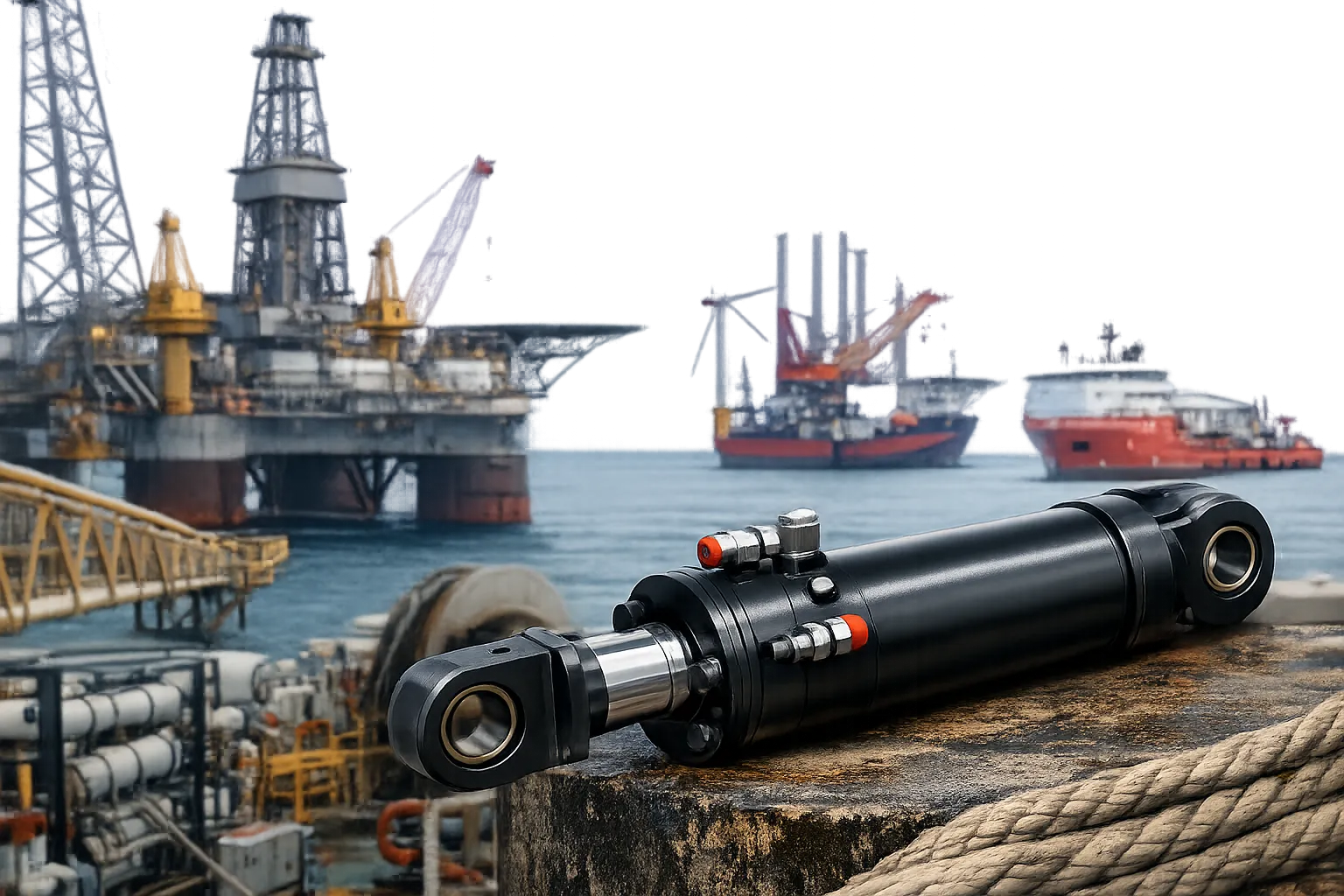
Rigorous Technical Parameters & Custom Engineering Envelope
Submarine hatch systems are rarely standardized. The geometry of the pressure hull, the required clamping tonnage, the available acoustic signature allowances, and the manifold integration space dictate highly specific actuator dimensions. Off-the-shelf procurement is not viable for subsea architecture. The comprehensive table below outlines our strict metallurgical baseline alongside the extensive custom engineering options we provide to ensure seamless, compliant integration with your vessel’s specific locking mechanisms.
| Engineering Specification | Standard Subsea Baseline | Customization Adaptations |
|---|---|---|
| Industry Domain | Marine and Offshore Engineering | Adaptable for deep-sea ROV tooling and Hyperbaric chambers |
| Equipment Target | Submarine Equipment | Diving bells, Saturation diving systems, AUVs |
| Subsystem Application | Hatch systems | Torpedo tube breech doors, Watertight bulkhead securement, Payload bays |
| Component Designation | Hatch locking cylinder | Synchronized multi-cylinder array configurations for massive dry-deck shelters |
| Fluid Action Principle | Double acting hydraulic cylinder | Compatible with highly pressurized dielectric synthetic fluids |
| Physical Architecture | Piston cylinder | Ultra-compact block profiles for confined pressure hull spacing |
| Manufacturing Structure | Welded Monolithic Frame | Heavy-duty flange or trunnion mounts isolated from acoustic vibration |
| Primary Material System | Titanium alloy | Super Duplex (SAF 2507) options for non-magnetic shallow-water requirements |
| Surface Treatment | Precision Polished | Advanced acoustic dampening coatings to minimize sonar signatures |
| Environmental Tolerance | Saltwater hydrostatic pressure | Full-ocean depth (Hadal zone) pressure compensation adaptations |
| Operational Condition | Hatch door sealing | Driving heavy locking rings, wedges, and complex bayonet breech mechanisms |
| Defeated Failure Mode | Corrosion and Pressure Decay | Total immunity to galvanic pitting and chloride-induced stress cracking |
| Crucial Integration Standard | Pilot-operated check valve | Redundant dual-circuit valving for ultimate military fail-safe compliance |
Working Principle: Absolute Hydrostatic Containment
The mechanics of a subsea hatch locking cylinder are defined by the absolute necessity to overcome extreme opposing forces while maintaining an unbreakable fail-safe state. When a submarine prepares to submerge, the external hydrostatic pressure will push violently against the hatch, while internal pressure dynamics may push outward. A generic single acting hydraulic cylinder relying on a mechanical spring for retraction or clamping is fundamentally unsafe for this task; it cannot generate sufficient holding torque and will inevitably collapse under severe depth pressure. Only a fully integrated double acting hydraulic cylinder can guarantee bidirectional security and the brute force required to operate a heavy naval mechanism safely.
During the hatch securing sequence, the vessel’s central hydraulic power unit directs high-pressure fluid to the bore end of the cylinder. This acts forcefully against the massive titanium hydraulic cylinder piston, driving the polished rod outward. This extension physically drives heavy locking wedges or rotates a massive bayonet ring over the hatch dogs, compressing the thick rubber O-rings completely flat against the hull seating surface to create an initial watertight seal. This operation requires immense, smooth kinetic force to overcome the friction of the heavy locking mechanism without dangerous juddering or acoustic noise, which could be detected by hostile passive sonar systems.
The most critical phase of the operation occurs immediately after lockup. A submarine may operate silently for weeks on patrol, meaning the main hydraulic pumps will shut down to conserve energy and minimize noise. If the cylinder pressure bled off during this time, the hatch could vibrate loose under dynamic loads. We completely eliminate this risk by machining a specialized pilot-operated check valve directly into the solid titanium cylinder head. Once the locking pressure is achieved, this internal valve snaps shut, mechanically trapping the high-pressure fluid inside the cylinder chamber. Even if the main hydraulic supply lines to the cylinder are completely severed by an accident or combat damage, the cylinder cannot retract. To open the hatch, pilot pressure must be intentionally applied to the rod-end port to actively unseat the check valve before the double acting hydraulic cylinder will forcefully extract the locking wedges. This absolute redundancy is why top naval architects specify our hydraulic cylinder components for life-critical deep-sea missions.
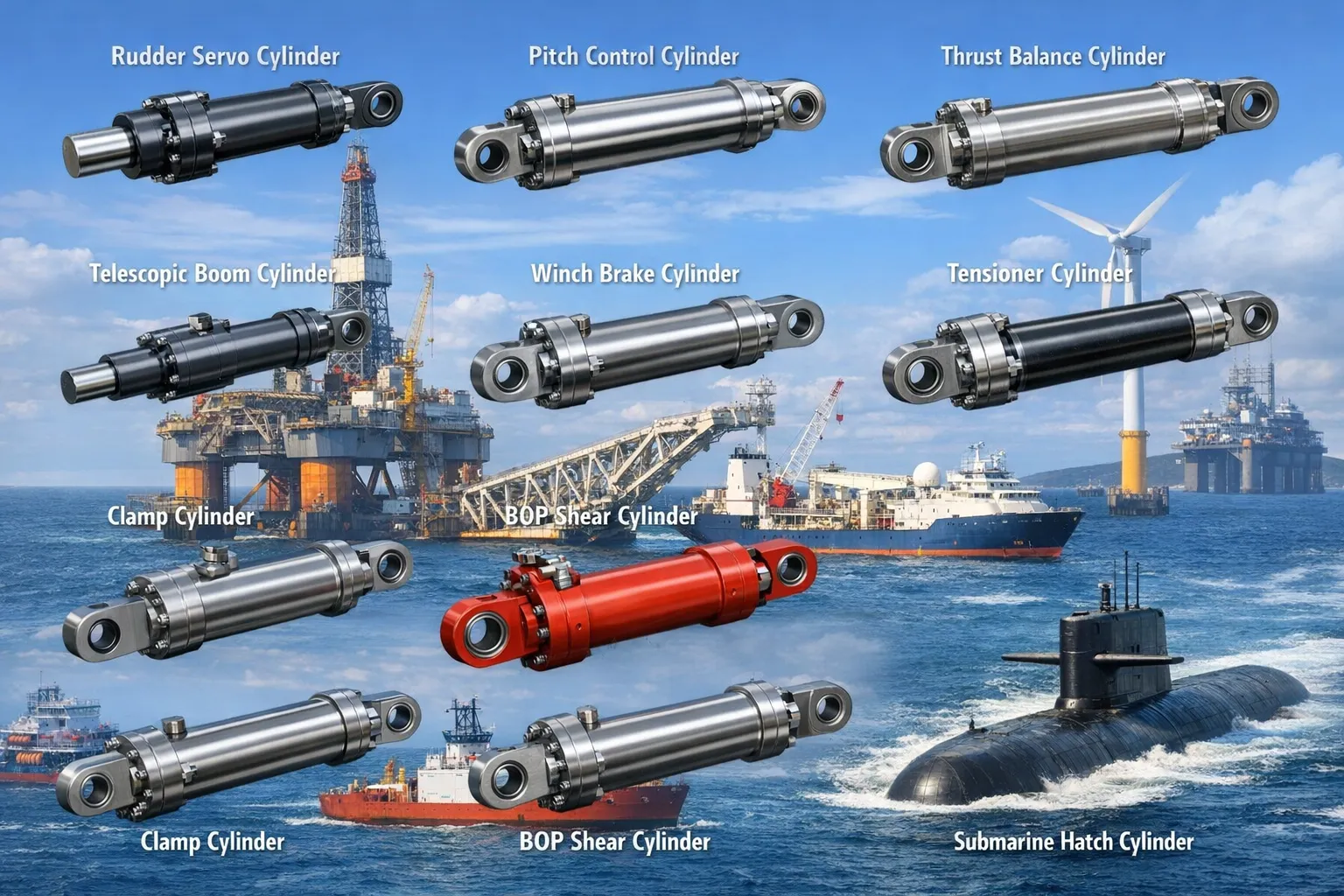
Strategic Fleet Standardization and Direct Brand Replacement
Managing the lifecycle of a submarine fleet involves navigating incredibly complex, expensive, and fragile supply chains. Naval shipyards and commercial subsea contractors are often held hostage by original equipment manufacturers (OEMs) who impose massive markups and extended lead times for proprietary defense-grade hydraulic parts. When a vessel is in drydock for its mandatory mid-life refit, waiting six to twelve months for a replacement locking actuator is financially and strategically unacceptable. Our engineering division resolves this severe friction by designing our titanium units to serve as perfect, drop-in dimensional replacements for the industry’s most common subsea systems.
Whether your submarine class currently utilizes legacy fluid power systems originally engineered by Bosch Rexroth, Parker Hannifin Subsea, MacGregor, or customized OEM assemblies from yards like Naval Group, TKMS, or DSME, we can precisely match the exact closed lengths, trunnion dimensions, and fluid port thread specifications. (Please note: The mention of these specific corporate defense brands and shipyards is provided strictly for technical compatibility sizing and engineering fitment cross-referencing for our B2B clients. We operate as a premier independent manufacturer and claim no trademark affiliation, sponsorship, or endorsement by these entities.)
In the context of pressure hull integrity, attempting fixing hydraulic cylinders that exhibit deep saltwater pitting or fatigue micro-cracking is a severe violation of safety protocols. Re-chroming a rusted rod does not restore the original tensile strength of the metal, and honed-out barrels lose their burst rating. By completely replacing the degraded carbon steel unit with our brand-new, hyperbaric-tested titanium assembly, you permanently eradicate the corrosion risk. Sourcing directly from our manufacturing facility ensures you secure a highly optimized hydraulic cylinder price while drastically cutting your drydock turnaround time, returning vital maritime assets to the water faster and safer.
Core Technical Advantages: Forged for the Abyss
Surviving the crushing depths and highly corrosive chemistry of the ocean floor requires metallurgical and fluid power perfection. The following technical advantages define exactly why our equipment vastly outperforms standard marine cylinders in critical subsea environments:
1. Aerospace-Grade Titanium Construction
Standard carbon steel with chrome plating develops micro-cracks under pressure, allowing saltwater to rapidly pit the steel beneath. We construct the entire barrel, rod, and gland of our hatch locking hydraulic cylinder from solid forged Titanium Alloy. This material provides an exceptional strength-to-weight ratio and is completely immune to galvanic corrosion and chloride pitting, ensuring decades of rust-free, reliable operation even when continuously submerged.
2. Integrated Liquid-Controlled Check Valves
Safety in a submarine relies on absolute redundancy. We machine highly specialized pilot-operated (PO) check valves directly into the titanium end cap. This ensures that the hatch locking pressure is physically trapped inside the cylinder chamber. Even if the vessel suffers total power loss or a ruptured hydraulic line, the hatch cannot vibrate loose or be forced open by external pressure.
3. Ultra-Low Friction Silent Sealing Technology
Acoustic stealth is paramount for military submarines; a shuddering, squeaking cylinder can broadcast the vessel’s position to passive sonar. We utilize advanced PTFE-blended composite seals that drastically lower the friction coefficient against the mirror-polished titanium rod. This eliminates “stick-slip” juddering, providing flawlessly smooth and completely silent actuation.
4. High-Rigidity Monolithic Welded Architecture
A pressure hull flexes and compresses slightly as the submarine dives deep. Standard tie-rod cylinders will stretch and distort under this hull torsion, causing sudden fluid leaks. Our fully welded, monolithic block design creates a rigid structure that maintains perfect internal concentricity, absorbing hull flex without compromising the delicate seal integrity.
5. Deep-Sea High Pressure Anti-Extrusion Matrix
To combat the crushing forces of the deep ocean, our gland heads are engineered with specialized high-strength PEEK (Polyether ether ketone) anti-extrusion backup rings. This configuration physically prevents the primary elastomeric seals from being forced out of their grooves under massive depth pressures, ensuring absolute containment of the internal fluid.
6. Unyielding Thermal Stability
Submarines transition rapidly from warm surface waters on tropical decks to freezing abyssal depths in mere hours. Standard alloys and fluids contract unpredictably, causing seal leakage. The specific thermal expansion coefficients of our titanium alloy and polymer guide rings are perfectly matched to maintain exact micro-clearances across extreme temperature gradients.
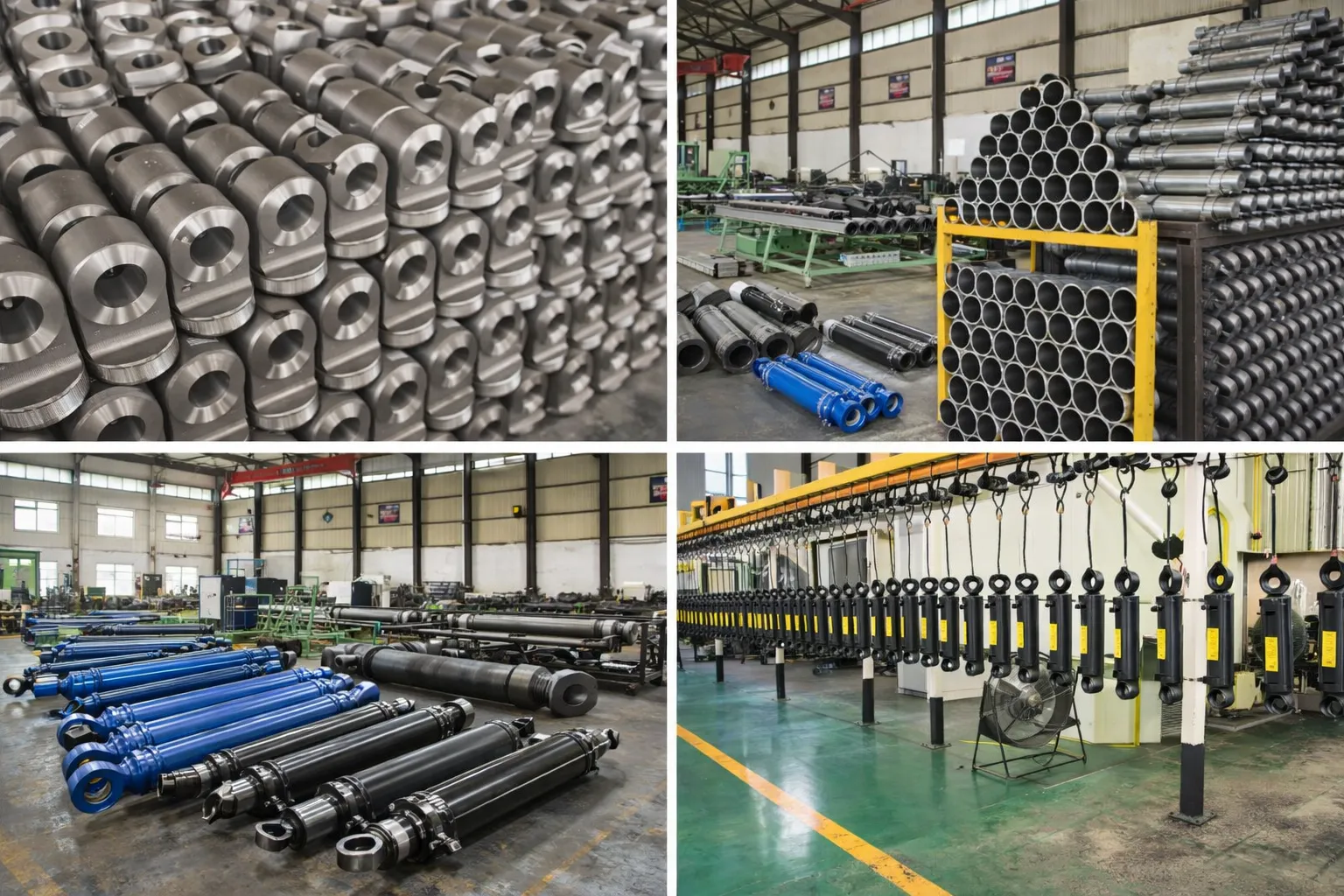
Uncompromising Manufacturing Process & Flawless Traceability
Fabricating titanium fluid power components for life-critical subsea deployment demands a manufacturing environment governed by intense engineering scrutiny. Titanium is highly reactive at elevated welding temperatures; if exposed to atmospheric oxygen or nitrogen while molten, it will become severely embrittled and suffer catastrophic structural failure under pressure. Therefore, all structural welding on our hatch locking cylinder units is executed utilizing automated Tungsten Inert Gas (TIG) processes inside completely sealed, inert argon-gas purged chambers. By keeping all complex CNC machining and specialized welding strictly in-house, we entirely eliminate the severe quality control blind spots associated with outsourcing to commercial foundries.
Because human survival relies directly on this equipment, our testing protocols are uncompromising. We do not rely on standard internal pressure bench tests. Every single unit undergoes rigorous hyperbaric testing prior to dispatch. We place the cylinders inside specialized high-pressure chambers to simulate external hydrostatic pressures mimicking depths of up to 6,000 meters. We actuate the cylinders under these simulated deep-sea loads to verify flawless operation, perfect check-valve locking, and absolute zero seawater ingress.
Furthermore, we adhere meticulously to the stringent manufacturing guidelines set forth by major naval and marine classification societies, including DNV, ABS, and the Korean Register (KR). Every cylinder is permanently laser-etched with a unique serial identifier linked to a comprehensive digital production dossier. This guarantees our clients full material traceability (EN 10204 3.1 certificates) for the titanium billets, ultrasonic NDT weld reports, and seal batch records, ensuring rapid compliance during rigorous military or commercial safety audits.
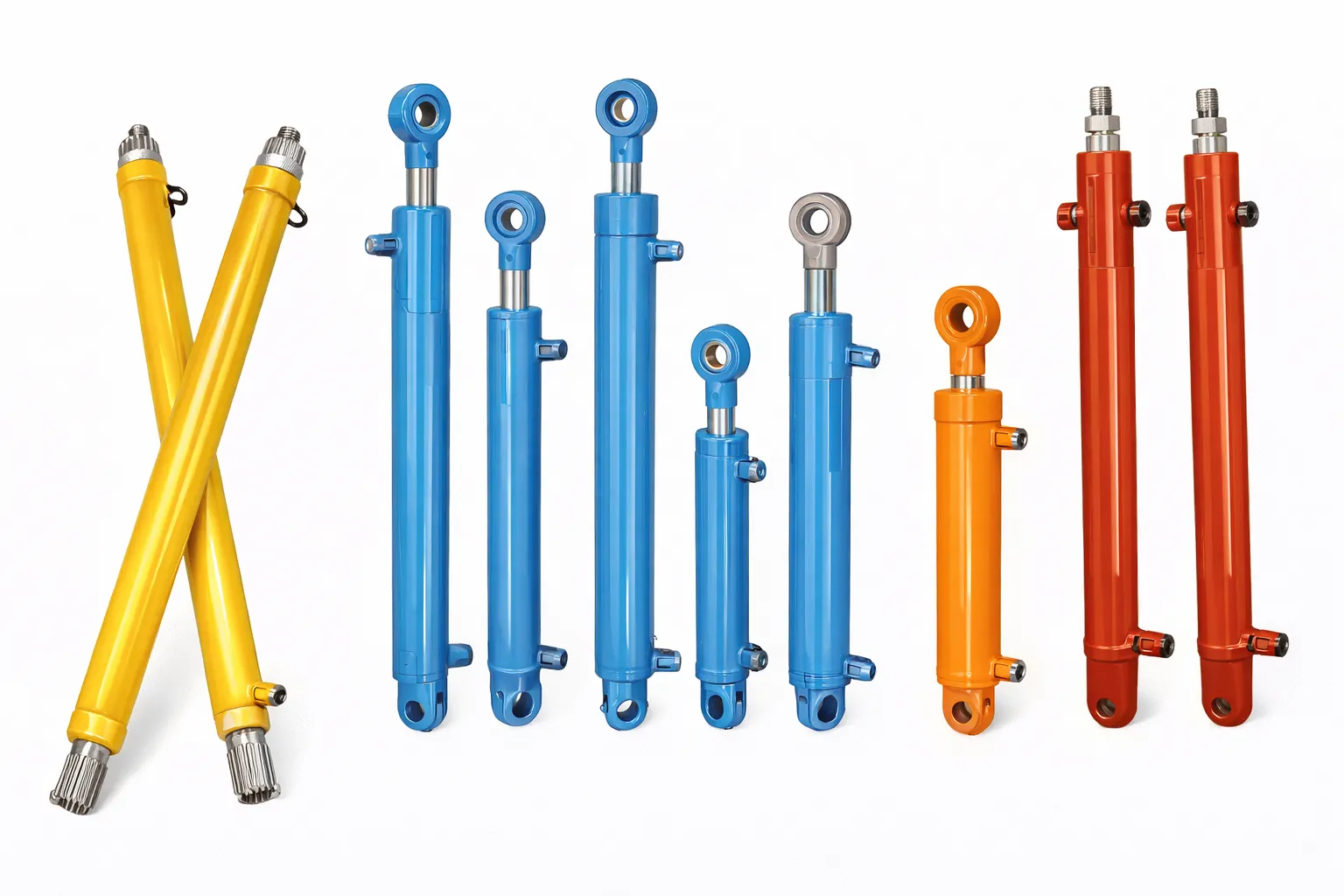
Expanding Synergies: Broader Industrial Integration
The immense engineering breakthroughs required to survive the bottom of the ocean—specifically the total corrosion immunity, absolute load-holding capability, and intense fatigue resistance—translate perfectly into solving severe mechanical issues in terrestrial heavy industries. When standard commercial actuators fail repeatedly, engineering managers consistently specify our specialized titanium locking cylinders.
- Subsea Infrastructure: Beyond manned submarines, our locking actuators secure heavy blowout preventer (BOP) access hatches, subsea manifold covers, and hyperbaric welding habitats.
- Metallurgical and Iron Industry: The intense radiant heat, acidic vapor, and abrasive slag dust of continuous casting lines require robust, locking actuators that will not jam or corrode like standard carbon steel.
- Mining Industry: Autonomous underground drilling rigs rely on our ultra-compact designs with integrated locking valves to provide massive clamping force in highly acidic, flooded mine shafts without failing.
- Construction Machinery Industry: Specialized coastal demolition robots upgrade to our sealed titanium units to prevent abrasive saltwater mud from destroying their standard cylinders during heavy lifting tasks.
- Material Handling & Logistics: High-cycle automated port equipment where an unexpected failure of a critical lift cylinder could halt container loading operations for hours.
- Nuclear Decommissioning: Tele-operated robotic arms working inside radioactive hot cells require the exact same zero-leak, high-precision telemetry and failsafe locking as deep-sea equipment to prevent hazardous exposure.
Comparative Analysis: Standard Subsea Cylinder vs. Titanium Excellence
Procurement teams occasionally attempt to control initial capital expenditures by purchasing standard 316L stainless steel subsea cylinders for hatch mechanisms. However, a lifecycle cost and safety analysis quickly reveals that the risk of galvanic pitting and the lack of integrated safety valves make standard units unacceptable for life-critical deployment.
| Evaluation Metric | Standard 316L Stainless Steel Cylinder | Our Titanium Hatch Locking Cylinder |
|---|---|---|
| Corrosion Immunity | Good overall, but highly susceptible to crevice corrosion when stagnant in warm saltwater. | Absolute immunity. Titanium will not pit or oxidize under any extreme marine conditions. |
| Failsafe Locking | Relies on external manifold valves; if a hose bursts, the cylinder immediately loses all clamping force. | Integrated liquid-controlled check valve mechanically traps pressure, guaranteeing the hatch stays locked. |
| Weight Penalty | Heavy mass requires adding expensive syntactic buoyancy foam to the submersible to balance. | Ultra-lightweight Titanium significantly increases allowable payload and battery capacity. |
| Structural Fatigue | Standard tie-rod designs warp as the pressure hull flexes, causing sudden fluid blow-by. | Monolithic welded block design absorbs extreme hull flex without yielding or leaking. |
Proven in the Abyss: B2B Engineering Case Studies
Theoretical specifications must execute flawlessly at extreme depth. Our specialized fluid power equipment actively supports major naval and commercial subsea operations across the demanding Asian maritime sector. Below are four documented B2B examples demonstrating our engineering resolution.
Project 1: Research Submersible Refit in Japan
Client Location & Date: Oceanographic Institute, Yokohama, Japan (October 2024)
The Engineering Hurdle: A deep-sea manned research submersible was experiencing dangerous pressure fluctuations on its main upper access hatch during 2,000-meter dives. The legacy stainless steel cylinders were suffering from severe crevice corrosion around the seals, allowing high-pressure fluid to slowly bypass the piston and loosen the hatch dogs.
The Engineering Action: The institute’s lead engineer located our subsea capabilities. We rapidly engineered completely custom Titanium hatch locking cylinders featuring integrated PO check valves for absolute redundancy, ensuring the locking pressure remained trapped regardless of seal wear.
The Outcome: We delivered the hyperbaric-tested units within 5 weeks. Since installation, the submersible has executed dozens of deep-water dives with zero pressure decay on the hatch mechanisms, restoring total confidence to the pilot crew.
“Upgrading to these Titanium micro-cylinders with integrated safety valves completely eliminated our hatch security issues. The precision machining is flawless, and the rapid delivery saved our exploration season.” – Chief Subsea Engineer, Yokohama.
Project 2: Securing Subsea Habitat Airlocks
Client Location & Date: Offshore Diving Contractor, Singapore (April 2025)
The Engineering Hurdle: A saturation diving bell required a complete overhaul of its bottom mating door actuators. The original OEM parts were quoted with an unacceptable 7-month lead time, leaving the commercial diving vessel stranded in port and losing thousands of dollars daily.
The Engineering Action: We reverse-engineered the required heavy-duty configurations, perfectly replicating the exact mounting geometries while significantly upgrading the internal sealing matrix to utilize anti-extrusion PEEK backup rings.
The Outcome: Delivered via express air-freight within 4 weeks, the Titanium double acting hydraulic cylinder units dropped perfectly into the existing bell framework, allowing the diving vessel to return to active contract work months ahead of the OEM schedule.
Project 3: Modernizing Torpedo Tube Breech Doors
Client Location & Date: Naval Shipyard, Busan, South Korea (January 2026)
The Engineering Hurdle: A conventional submarine undergoing mid-life refit required modernized actuators for the inner torpedo tube doors. The system needed extreme clamping force to overcome the immense internal pressure required for weapons discharge without leaking water into the torpedo room.
The Engineering Action: We supplied heavily reinforced, compact block-style cylinders that utilized oversized polished Titanium rods to generate the massive locking tonnage required within the extremely confined space of the torpedo room manifold.
The Outcome: The new units provided flawlessly smooth, high-speed lockup, successfully passing all rigorous pressure hull integrity tests mandated by the naval surveyors.

Professional FAQ for Naval Architects & Procurement Teams
Specifying mission-critical fluid power components for the deep ocean requires absolute technical clarity. Below, we address the most frequent inquiries from submersible designers, fleet managers, and offshore B2B procurement officers.
Why exactly is Titanium vastly superior to 316L stainless steel for a hatch locking cylinder?
How does the integrated liquid-controlled check valve function during a power loss?
Why must the system use a double acting hydraulic cylinder instead of a single acting one?
Is fixing hydraulic cylinders that belong to deep-sea pressure hulls a recommended practice?
Can you customize the stroke and bore of the cylinder for unique submersible doors?
How does your hydraulic cylinder price compare to purchasing OEM replacements?
Do you supply replacement hydraulic cylinder components like subsea seal kits?
What is the expected delivery timeframe to shipyards in South Korea or Japan?
Guarantee Hull Integrity with Ultimate Clamping Power
Do not gamble the lives of your crew or the success of your deep-sea mission on standard steel actuators that crack under fatigue or corrode at depth. Transitioning to our engineered Titanium assemblies guarantees precise hatch articulation, failsafe pressure containment, and absolute immunity to deep ocean corrosion.
Editor: Cxm