Customized 5 Stage Telescopic Hydraulic Cylinders
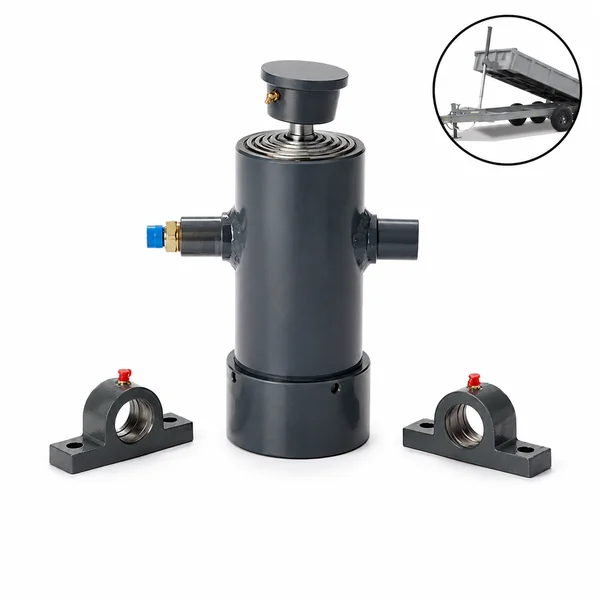
5-STAGE · CUSTOMIZED
Customized 5 Stage
Telescopic Cylinder
Five Mounting Types — Which One Fits Your Hoist
A telescopic hydraulic cylinder connects to the vehicle at two points: the base mount (attached to the chassis or hoist frame) and the rod end mount (attached to the dump body or push plate). The geometry of these mounting points — pin eye, clevis, trunnion, cross tube, or flange — determines how force is transmitted, how much angular freedom the cylinder has during the tipping stroke, and how the cylinder is installed and removed for service.
The mounting type is one of the most critical customization parameters — and the one most frequently specified incorrectly by first-time buyers. A cylinder with the wrong mounting type either cannot be installed at all, or creates a stress concentration that leads to premature failure at the mounting bracket. Korea Ever-Power manufactures the 5-stage telescopic cylinder with any of the five standard mounting types at both the base and rod end — and can also produce custom mounting geometries for non-standard hoist frames.
Customized 5 Stage Cylinder — Parameters
| Stage Count | 5 stages |
| Bore / Rod / Stroke / Pin | 2–6″ / 1.125–4″ / 4–100″ / 0.5–2″ |
| Mounting Types Available | Pin eye · Clevis · Trunnion · Cross tube · Flange · Custom |
| Port Options | G / SAE / NPT / M |
| Body / Certification | Steel / ISO 9001 / 100% pressure tested |
| Lead Time / Warranty | 25–35 days / 1 year |
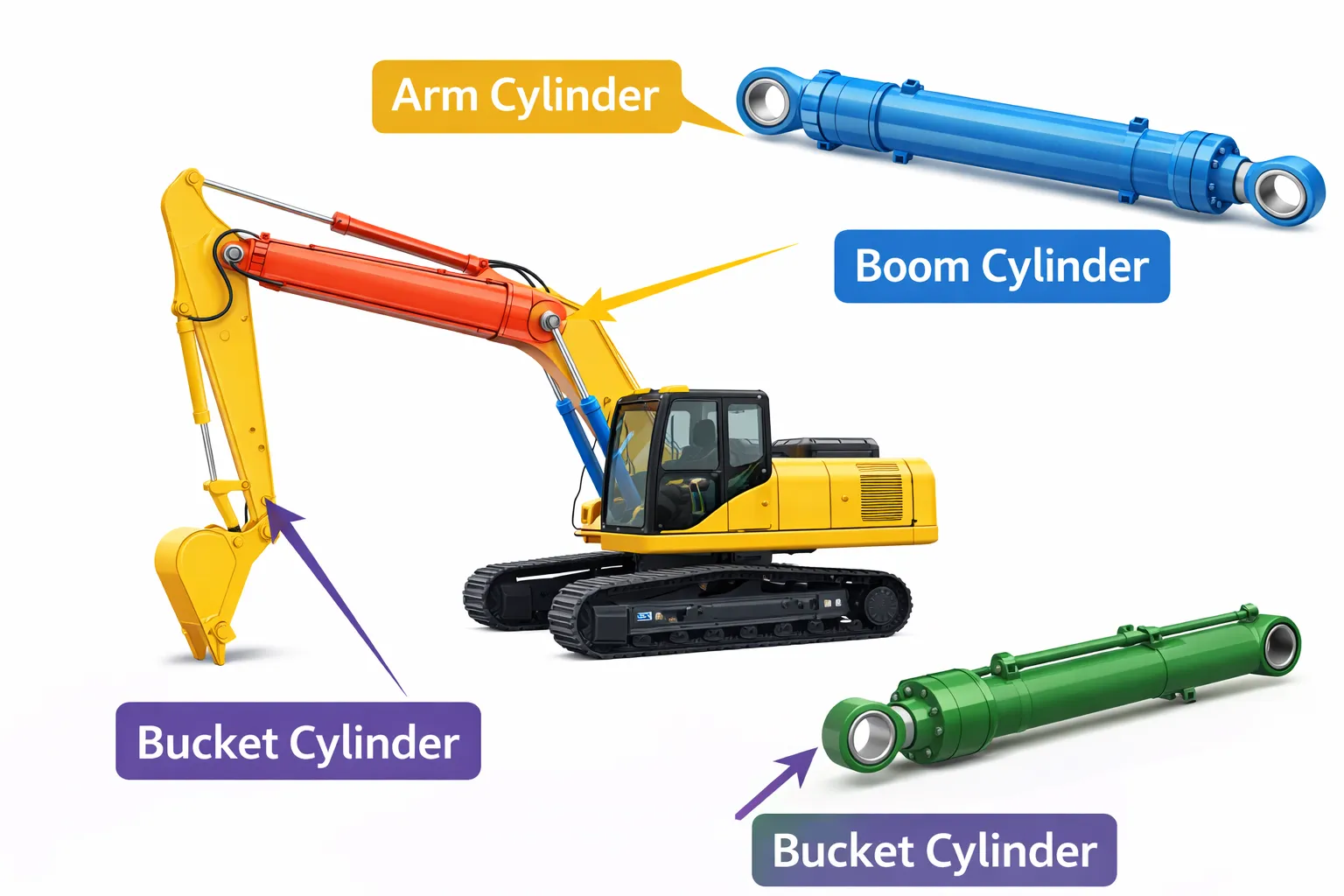
Five Mounting Types — Engineering Guide
Each mounting type provides a different balance of angular freedom, load capacity, installation simplicity, and space requirements. The base mount and rod end mount can be different types — for example, a trunnion base with a pin eye rod end is a common combination on under-body hoist dump trucks.
1. Pin Eye — Simplest Single-Pivot Mount
A welded ring (eye) at the cylinder end, through which a pin passes to connect the cylinder to a mounting bracket on the chassis or dump body. The pin eye allows rotation in one plane — the cylinder can pivot as the dump body rises. This is the simplest and most common mounting type for telescopic cylinders on dump trucks.
2. Clevis — Fork-Type Pin Mount
Two parallel lugs (fork) welded to the cylinder end, with a pin through both lugs and the mounting bracket sandwiched between them. The clevis is stronger than a single pin eye because the load is distributed across two shear planes instead of one. Clevis mounts are preferred for higher-force applications and larger bore cylinders where the pin shear load exceeds the capacity of a single-eye mount.
3. Trunnion — Mid-Barrel Pivot
Two opposed pins (trunnions) welded to the outer barrel, perpendicular to the cylinder axis. The trunnions sit in bearing saddles on the chassis, allowing the entire cylinder to pivot around the trunnion axis as the dump body rises. Trunnion mounts are used when the cylinder needs to swing through a large angular range — the cylinder body rotates rather than having a fixed base with an articulating pin eye at the end.
4. Cross Tube — Through-Barrel Pivot
A steel tube welded through the base of the outer barrel, extending beyond the barrel on both sides. The protruding tube ends rest in mounting brackets on the chassis, and the cylinder pivots around the tube axis. Cross tube mounts are common on North American dump truck and dump trailer telescopic cylinders — they provide a strong, simple pivot point and are easy to install (slide the tube ends into the bracket slots).
5. Flange — Bolted Fixed Mount
A flat machined flange welded to the cylinder end, bolted directly to a mating flange on the chassis or equipment frame. Flange mounts do not pivot — the cylinder is rigidly fixed. This is used in applications where the cylinder does not change angle during the stroke (vertical under-body hoists with straight-line extension) or in industrial/press applications where the cylinder axis remains fixed. Flange mounts offer the highest axial load capacity but no angular freedom.
Mounting Type × Hoist Type — Quick Reference
| Hoist Type | Common Base Mount | Common Rod End Mount | Why This Combination |
|---|---|---|---|
| Under-body (vertical) | Cross tube or Flange | Pin eye | Base fixed or minimal pivot; rod end follows body arc |
| Front-push (angled) | Trunnion or Clevis | Pin eye or Clevis | Wide angular swing at base as body rises; strong load at rod end |
| Scissor (horizontal) | Clevis or Pin eye | Clevis or Pin eye | Both ends pivot as linkage articulates |
| Dump trailer | Cross tube | Pin eye | Cross tube = standard NA trailer mount; easy slide-in installation |
| Industrial / press | Flange | Flange | No angular movement — rigid straight-line force |
When ordering from Korea Ever-Power, specify BOTH mount types: "Base: cross tube, 40 mm diameter" and "Rod end: pin eye, 25 mm pin diameter." If replacing an existing cylinder, measure both mounting points (pin diameter, eye bore, lug spacing, or flange bolt pattern) and provide these dimensions. A 1 mm error on pin diameter makes installation impossible — measure precisely. Browse the full telescopic cylinder range for all mounting configurations.
OEM & ODM — Customized Mounting for Your Hoist
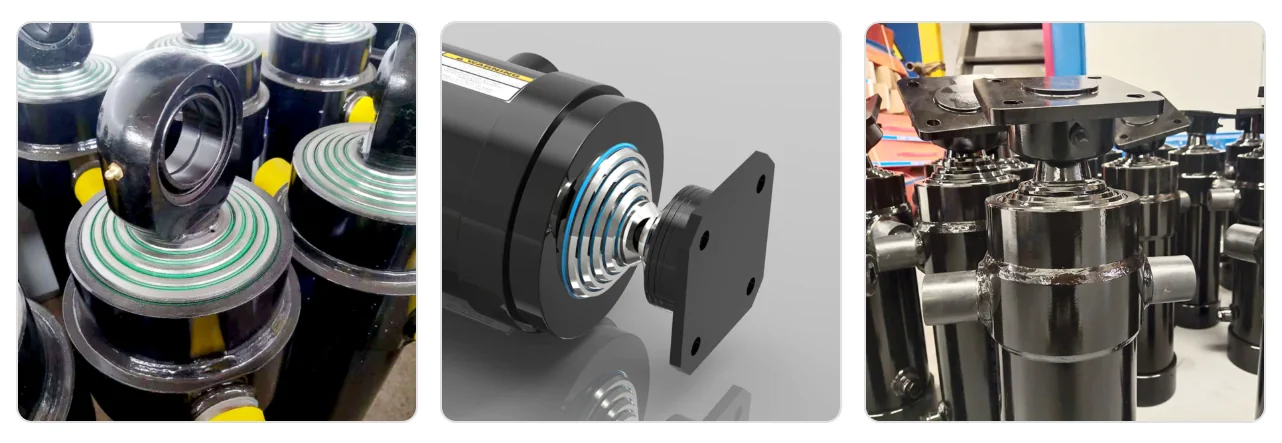
Mounting Type FAQ
Field Reports
We standardised on cross tube base with pin eye rod end for all our end-dump trailers — exactly what this mounting guide recommends. Ever-Power machines the cross tube to our exact diameter and length specification so it slides into our chassis cradle without modification. The pin eye bore matches our standard pin diameter within 0.2 mm — the fit is precise and there's no play. 50+ cylinders delivered, every mounting point dimensionally correct. The mounting type specification is just as important as bore and stroke — this guide explains it well.
Our front-push hoists swing through 55° of angular range during the full tipping stroke. We use trunnion base mounts to accommodate this swing — a pin eye would bind at 20°. Ever-Power welds the trunnion pins perpendicular to the barrel axis with ±0.5° angular accuracy — critical for our bearing saddle alignment. The clevis rod end distributes the push load across double shear. 5-stage, 5-inch bore, double-acting. 12 units, all mounting dimensions perfect. The trunnion/clevis combination is the correct engineering choice for front-push geometry — this page confirms it.
Ordered a replacement 5-stage for a dump truck — specified pin eye at both ends because that's what the original cylinder had. Turns out the base mount was actually a cross tube (I measured the pin eye bore of the rod end and assumed both ends were the same — they weren't). The replacement couldn't be installed because it had a pin eye where the chassis cradle expected a cross tube. Ever-Power replaced it at cost after I re-measured and provided correct dimensions. Four stars because the mistake was mine, but the lesson is real: always measure BOTH mounting points independently. Don't assume they're the same type.
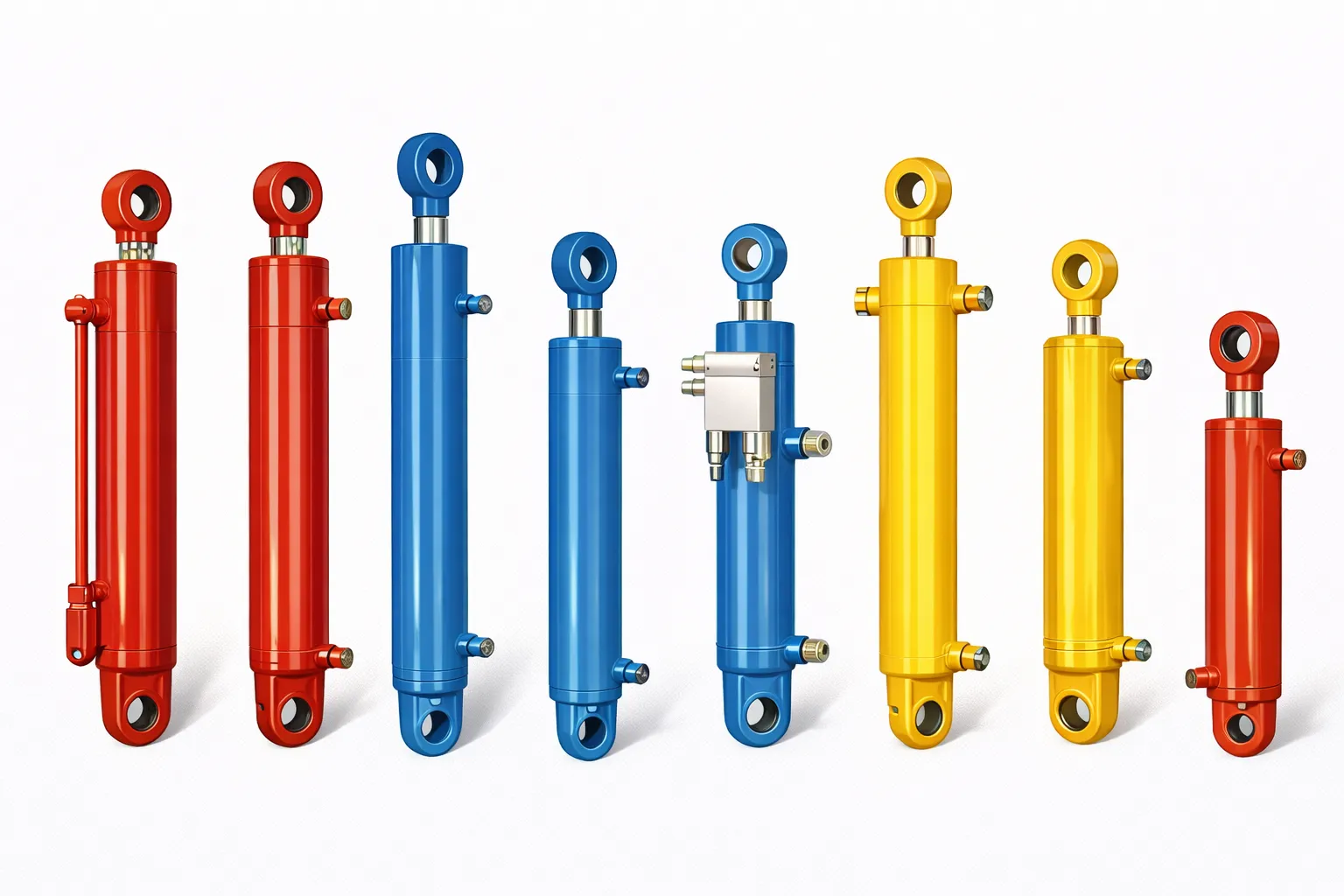
Other Hydraulic Cylinder Categories
Informasi Tambahan
| Editor | Cxm |
|---|
Produk Terkait
-
Hot Sale Double Acting Small Dump Truck Telescopic Hydraulic Cylinder
-
Low Price Double Acting Small Dump Truck Telescopic Hydraulic Cylinder
-

High Quality Small Hydraulic Cylinder Telescopic Hydraulic Cylinder For Dump Truck
-
Guaranteed Quality Mini Dump Truck Hydraulic Cylinders
-
Factory Direct Sale 2 Stage Small Hydraulic Cylinder
-
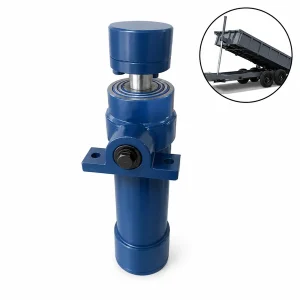
Professional 5 Stage Telescopic Dump Truck Hydraulic Cylinder
-
Professional Craftsmanship Dump Truck 4 Stage Hydraulic Cylinder
-
Strong Stable Telescopic Hydraulic Cylinder — Multistage for Dump Trailer