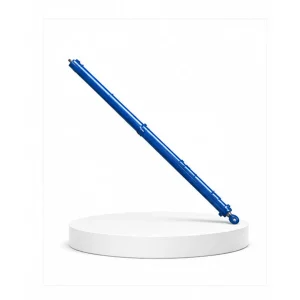
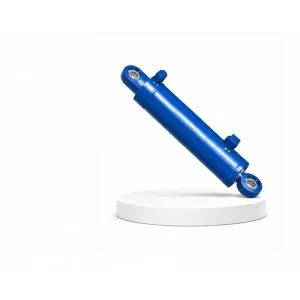
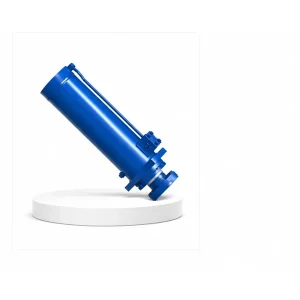
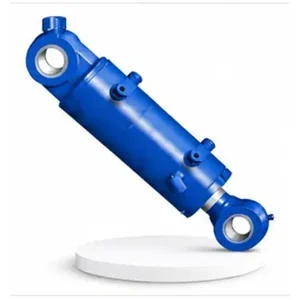
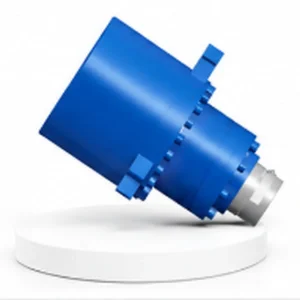
Mining Dump Truck Piston Accumulator
Not a Cylinder, Not an Actuator — A Hydraulic Equaliser Between Two Axles
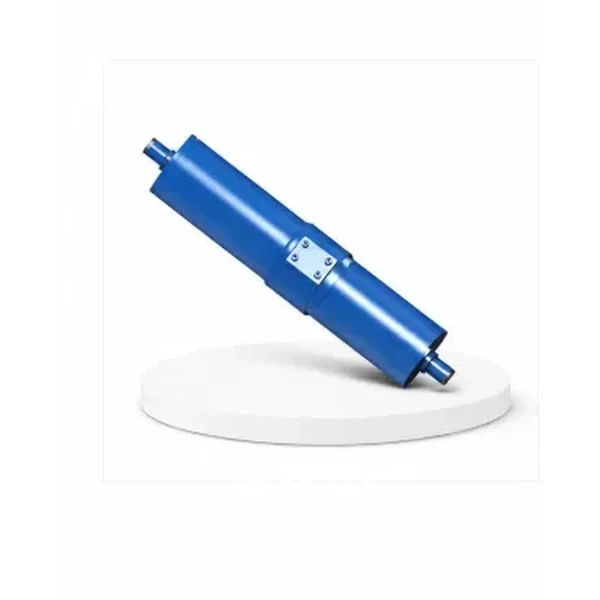
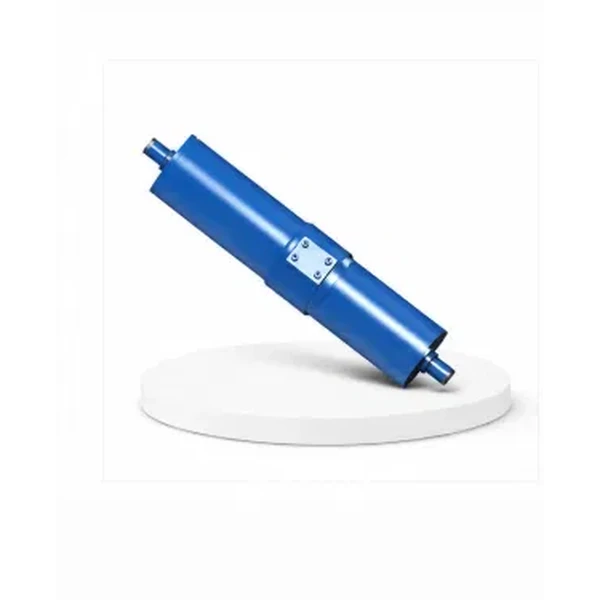
Every other product in this 31-product catalogue is a hydraulic cylinder — a device that converts hydraulic pressure into linear motion. The piston accumulator is different: it has no rod, no external motion, and produces no work. It is a sealed vessel with a free-floating piston inside — nitrogen gas on one side, hydraulic oil on the other. Its purpose is to store and release energy, equalising pressure between two connected hydraulic circuits.
On a tandem-rear-axle mining truck, the piston accumulator sits between the middle-axle and rear-axle suspension circuits. When the middle axle hits a bump (its suspension compresses, displacing oil), the accumulator absorbs the excess oil — preventing a pressure spike that would overload the middle axle. Simultaneously, the nitrogen gas on the other side of the piston pushes oil into the rear-axle circuit — compensating for the rear axle's extension as it enters the dip behind the bump. The result: both axles carry equal load at all times, regardless of the haul-road surface profile.
Korea Ever-Power manufactures the piston accumulator as the final component of the five-product mining dump truck hydraulic system — the equaliser that ties the suspension cylinders (#29, #30) into a balanced whole.
Technical Specifications
| Parameter | Specification |
|---|---|
| Product | Mining Dump Truck Piston Accumulator |
| Function | Equalise load distribution between middle and rear axles in real time |
| Type | Piston accumulator (free-floating piston, N₂ gas / hydraulic oil) |
| Working Pressure | Maximum 27.5 MPa |
| Application | Mining Dump Truck (tandem rear axle load balancing) |
| Certification | ISO 9001 · 100% pressure tested · gas pre-charge certified |
How the Piston Accumulator Balances Two Axles in Real Time
The middle-axle suspension compresses, displacing oil from the suspension cylinders. This oil flows into the piston accumulator, pushing the free piston against the nitrogen gas. The gas compresses, absorbing the volume of oil — preventing a pressure spike that would overload the middle axle tyres and transmit a harsh jolt through the chassis.
A fraction of a second later, the rear axle reaches the same bump (or a different surface irregularity). As its suspension extends into a dip, it demands more oil. The nitrogen gas in the accumulator pushes the piston back, supplying oil to the rear-axle circuit — keeping the rear axle loaded and in contact with the ground.
The piston accumulator operates passively — no valves, no electronics, no control system. It responds purely to pressure differentials between the two axle circuits. The response is instantaneous (limited only by oil flow speed and piston inertia), providing real-time load equalisation over every bump, rut, and grade change on the haul road. Contact the Korea Ever-Power engineering team for accumulator sizing.
Piston Type vs Bladder Type — Why Mining Trucks Use a Free-Floating Piston
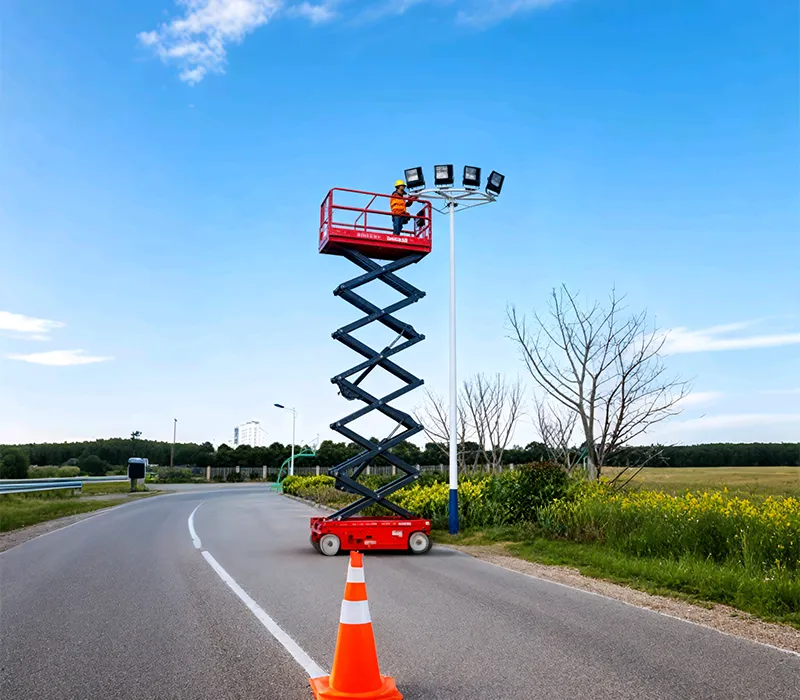
Accumulators come in three types: bladder (a rubber bag inside a steel shell), diaphragm (a rubber disc), and piston (a metal piston sliding inside a cylinder bore). Mining trucks use the piston type exclusively because of the operating conditions:
The temperature range (-40 °C to +100 °C) exceeds the service limits of most bladder rubber compounds. The continuous high-frequency cycling on haul roads (5–30 cycles per second, millions per year) would fatigue a rubber bladder within months. The high oil flow rate during impact loading (when the excavator drops a bucket load) requires a flow cross-section that a bladder's squeeze-neck cannot provide. The piston accumulator has none of these limitations: the metal piston withstands any temperature, any cycle count, and any flow rate that the bore diameter permits.
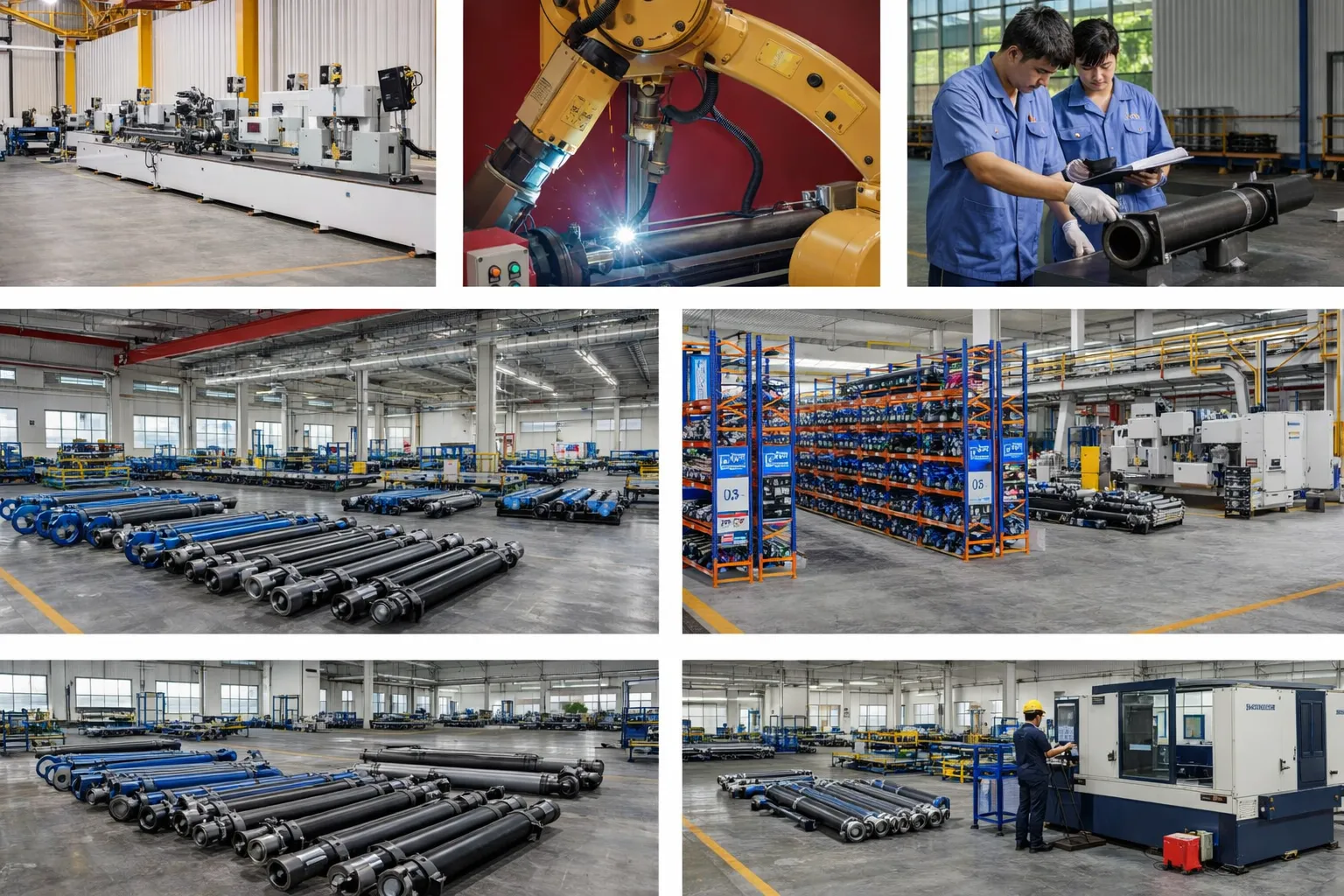
The piston slides inside a precision-honed bore, sealed by the same polyurethane seals used on the suspension cylinders (#29, #30) — and manufactured on the same production line. Korea Ever-Power applies its cylinder-manufacturing precision (bore honing, seal technology, gas sealing) directly to the piston accumulator, ensuring the same quality standard across the entire mining dump truck hydraulic system.
Manufacturing Process
The accumulator bore is honed to Ra 0.2–0.4 µm — identical to the suspension cylinder bore finish, because the piston accumulator IS effectively a short-stroke, rodless cylinder with a gas-side end cap instead of a rod gland. The free-floating piston is machined from a single steel billet with integrated seal grooves. Piston seal and gas seal are polyurethane, rated for -40 °C to +100 °C and 27.5 MPa.
Every piston accumulator is pressure tested at 1.5× rated pressure on both the oil side and the gas side independently, then gas-charged with dry nitrogen to the specified pre-charge pressure — verified with a calibrated gauge and certified. The gas charge determines the accumulator's stiffness (how much pressure change is needed to move a given volume of oil) and must match the truck OEM's specification to within ±1 bar.
OEM & ODM
FAQ
Related Categories
Informazioni aggiuntive
| Editor |
|---|