Main Lift Cylinder for Sugarcane Defoliator Machines
42CrMo alloy steel with forged mounting ears and gusset-reinforced barrel. Handles the off-center loads and violent impacts of raising and lowering a full defoliator head through dense cane stands.
The Mounting Ear Cracks Before the Barrel Does. That Is the Real Failure Point.
Most discussions about heavy-duty hydraulic cylinder failures focus on rod bending, seal wear, and barrel fatigue. Those problems are real, but on sugarcane defoliator main lift cylinders, the component that fails first is almost always the mounting ear. The clevis or trunnion ear that connects the cylinder to the defoliator frame carries the full weight of the defoliator head, typically 300 to 600 kg, plus the dynamic impact forces from the spinning blade assembly hitting cane stalks at high speed. To make matters worse, this load acts off-center from the cylinder axis because the defoliator head is mounted asymmetrically relative to the lift cylinder position.
This off-center loading creates a bending moment at the mounting ear root that standard cast or flame-cut ears cannot withstand for long. Cracks initiate at the ear-to-barrel weld junction, propagate with each lift-lower cycle, and eventually the ear separates from the barrel entirely. When that happens, the defoliator head drops uncontrolled onto the cane row, potentially damaging both the crop and the machine. In severe cases, the falling head can injure nearby workers.
Our sugarcane defoliator main lift cylinder is built from 42CrMo alloy steel with forged mounting ears and welded gusset reinforcement plates at the ear-to-barrel junction. The forged ears have a grain structure aligned with the load direction, which provides fundamentally better fatigue resistance than cast ears with random grain orientation. The gussets distribute the off-center load over a wider area of the barrel wall, reducing the peak stress at the weld root that initiates cracking. It is a double acting hydraulic cylinder in a heavy-duty welded configuration, designed to handle the specific combination of heavy weight, asymmetric loading, and violent impact cycling that sugarcane defoliator main lift applications demand.
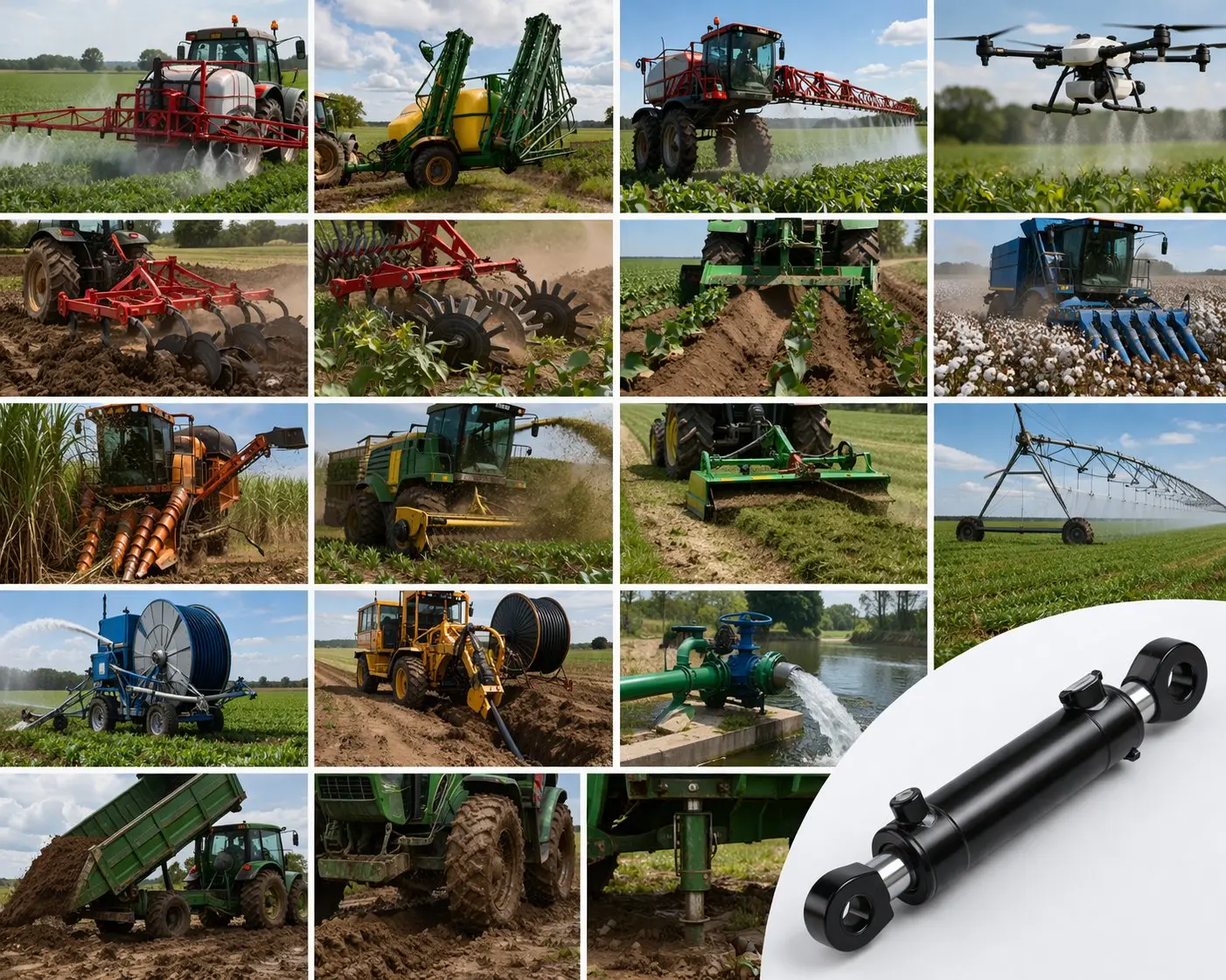
Why Offset Loading Destroys Mounting Ears and How Forged Construction Prevents It
A defoliator head does not hang directly below the cylinder rod like a simple hoist load. The head mounts to one side of the machine frame through a pivot arm, and the cylinder connects at an angle between the frame and this arm. The lift force must overcome both the head weight and the moment arm distance from the pivot. This geometry means the cylinder rod pushes at an angle to the vertical, and the reaction force at the mounting ear has a significant lateral component that creates bending stress at the ear root.
During operation, the blade assembly adds dynamic forces on top of the static weight. Each cane stalk impact sends a torque pulse through the head frame into the lift arm and ultimately into the cylinder mounting. These dynamic forces cycle 20 to 40 times per second at field operating speed, creating a high-frequency fatigue loading pattern at the ear-to-barrel weld that is far more demanding than the static weight alone.
| Mounting Ear Type | Fatigue Crack Initiation | Typical Service Life | Failure Mode |
|---|---|---|---|
| Cast Steel Ears | 50,000 – 150,000 cycles | 0.5 – 1 season | Brittle fracture at casting defect |
| Flame-Cut Plate Ears | 100,000 – 300,000 cycles | 1 – 2 seasons | Crack at weld toe, progressive |
| Forged Ears + Gussets (Ours) | 1,000,000+ cycles | 5 – 8 seasons | No failure within rated life |
The forged ear’s grain structure follows the contour of the ear geometry, aligning the strongest metallurgical direction with the primary load path. Cast ears have random grain orientation with shrinkage porosity and inclusions that act as stress concentrators. Flame-cut plate ears have a heat-affected zone along the cut edge that hardens and becomes brittle. Forging eliminates both problems, and the gusset plates at the ear root spread the weld-line stress over a 3 to 4 times larger area, pushing the peak stress below the fatigue threshold of the 42CrMo weld.
How the Main Lift Cylinder Operates on a Sugarcane Defoliator
The main lift cylinder on a sugarcane defoliator raises and lowers the entire defoliator head assembly. At the start of a row, the operator lowers the head into working position by retracting the cylinder rod, which swings the pivot arm downward and brings the spinning blade shaft into contact with the cane stand. During defoliation, the cylinder holds the head at the set working height while absorbing the reaction forces from the blade-stalk impacts.
At row ends, headlands, and when obstacles appear, the operator raises the head by extending the cylinder rod. This lift must handle the full weight of the head assembly (300 to 600 kg depending on the machine model) plus any accumulated cane fiber and debris wrapped around the blade shaft, which can add 30 to 50 kg of additional mass. The lift speed must be fast enough to clear the head before the tractor reaches the headland, but controlled enough to avoid slamming the head against its upper travel stop.
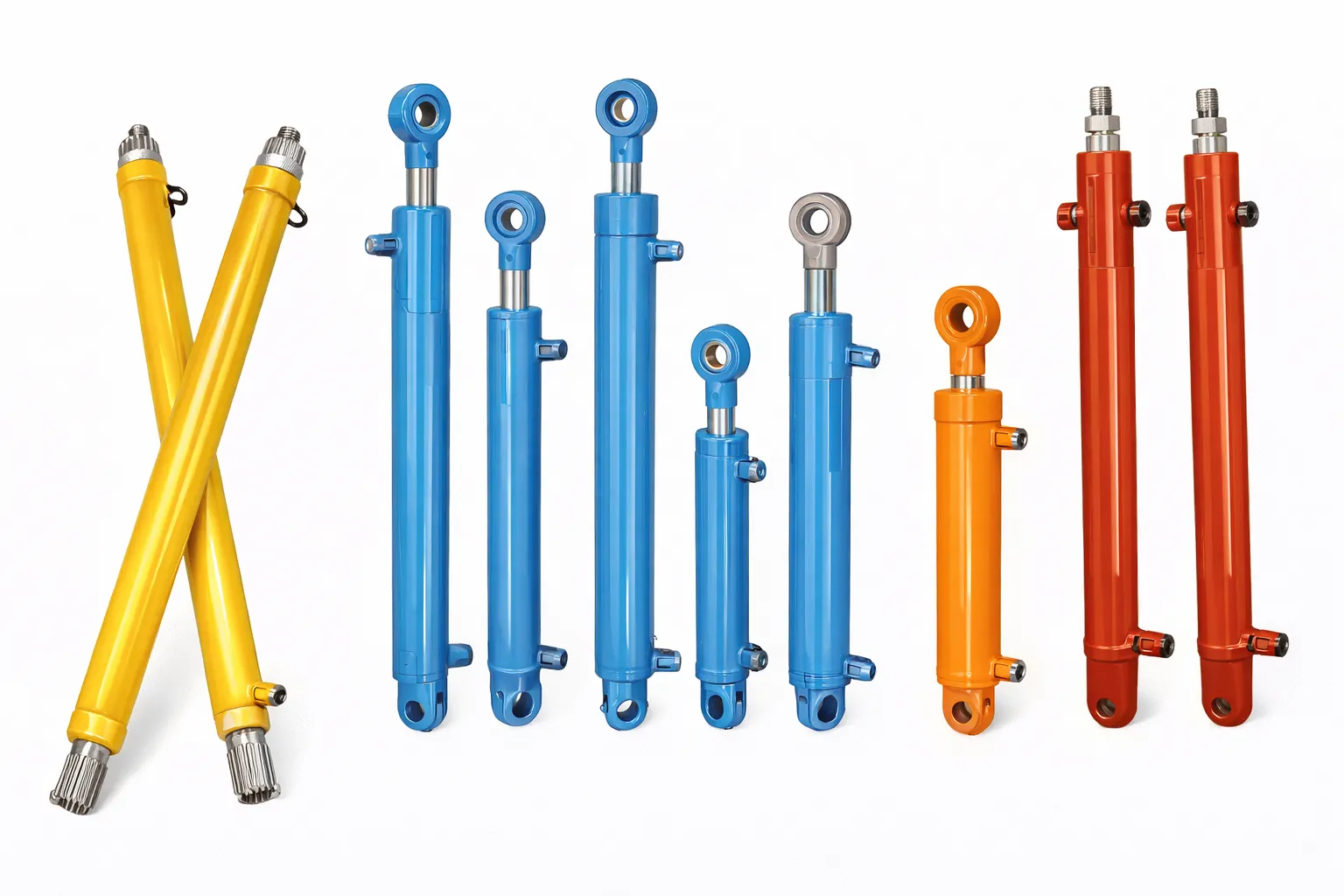
The cylinder experiences three distinct loading modes in each operating cycle: high-force extension against gravity to lift the head, sustained holding against gravity while the head is raised during turns, and controlled retraction against the weight to lower the head into the cane. In the lowered working position, the cylinder absorbs continuous dynamic impact loads from the blade shaft while holding the working height steady. This combination of heavy static loads, gravitational forces, and superimposed dynamic impacts defines the engineering requirements for this agricultural hydraulic cylinder application.
Technical Specifications
| Specification | Available Range |
|---|---|
| Bore Diameter | 63 mm – 125 mm |
| Rod Diameter | 40 mm – 80 mm |
| Stroke Length | 200 mm – 800 mm |
| Working Pressure | Up to 21 MPa (3,045 PSI) |
| Action Type | Double Acting |
| Structure | Heavy-Duty Welded Piston Cylinder |
| Body Material | 42CrMo Alloy Steel (AISI 4140), Q&T |
| Piston Rod | 42CrMo, Hard Chrome 25+ micron |
| Body Finish | Zinc Primer + Epoxy Topcoat |
| Piston Seal | High-Strength PU + PTFE-Bronze Wear Ring |
| Rod Seal | FKM (Viton) + PTFE Back-up |
| Scraper | Metal-Cased PU + Fiber Deflector Ring |
| Mounting | Forged Clevis / Forged Trunnion with Gusset Reinforcement |
| Port Thread | BSP / NPT / SAE / Metric |
| Operating Temperature | -20 C to +90 C |
| Environment Rating | Offset Load / Impact / Cane Fiber + Juice |
Seven Engineering Features for Heavy Off-Center Defoliator Lift Duty
Drop-Forged Alloy Steel Mounting Ears
Ears forged from alloy steel with grain flow aligned to the load direction. Eliminates the casting porosity, random grain structure, and heat-affected edge zones that cause fatigue cracking in cast and flame-cut ears. Forged ears withstand 5 to 10 times more fatigue cycles than cast alternatives under the same off-center loading.
Gusset Reinforcement at Ear-to-Barrel Junction
Triangular gusset plates welded between the ear base and the barrel surface distribute the off-center bending moment over a 3 to 4 times wider area of barrel wall. This reduces peak stress at the critical weld root below the fatigue endurance limit of the 42CrMo material, preventing crack initiation entirely rather than simply delaying it.
42CrMo Barrel and Rod with Post-Weld Stress Relief
42CrMo provides yield strength above 750 MPa. Pre-heat welding at 200 to 300 C followed by stress relief at 550 to 620 C restores weld zone toughness. Thermocouple-monitored furnace cycles ensure uniform heat treatment across all weld joints, including the gusset welds and ear attachment welds.
FKM Rod Seals for Cane Juice Resistance
The main lift cylinder sits in the splash zone of sugarcane juice expelled during defoliation. FKM seals resist swelling from cane juice acids and sugars, maintaining dimensional stability where NBR would swell and fail within weeks of continuous juice exposure.
Fiber Deflector Ring + Heavy-Duty Scraper
A dedicated ring ahead of the main wiper deflects long sugarcane fiber strands that would otherwise wrap around the rod. The metal-cased PU scraper behind it handles fine particle debris. This two-stage protection keeps the rod clean in the heavy fiber and dust environment surrounding the defoliator head.
25-Micron Chrome Rod
Heavy chrome layer resists the scratching from silica-rich cane fiber particles and provides corrosion protection against the acidic cane juice that coats all exposed surfaces during defoliation. Optional nickel undercoat for operations using copper-based fungicides on cane.
Epoxy Body Coating
Zinc primer plus epoxy topcoat system withstands direct sugarcane juice contact and the corrosive humidity of tropical growing regions. Coating applied after all welding, machining, and stress relief are complete for full coverage including weld zones.
Application Scenarios
Sugarcane Defoliator Main Lift: The primary application. Tractor-mounted and self-propelled defoliators use main lift cylinders to raise and lower the entire blade head assembly weighing 300 to 600 kg through off-center pivot geometry.
Sugarcane Harvester Head Lift: Full combine-style sugarcane harvesters use similar lift cylinders for the topper disc and base cutter assemblies. The offset loading and cane fiber exposure are comparable. Our custom hydraulic cylinder platform accommodates all common harvester mounting geometries.
Heavy Agricultural Mower Head Lift: Large flail mowers and brush cutters use head lift cylinders with similar offset loading and impact characteristics. The forged ear and gusset reinforcement design is directly applicable.
Forestry Mulcher Head Lift: Land clearing mulchers carry even heavier cutting heads than sugarcane defoliators. The 42CrMo construction with forged ears handles the extreme loads and impacts of forestry mulching operations.
Biomass Harvester Head Positioning: Energy crop harvesters that cut and process standing biomass use head lift cylinders exposed to similar fiber debris and juice environments as sugarcane equipment. The agricultural machinery hydraulic cylinder specifications translate directly.

Manufacturing and Quality Control
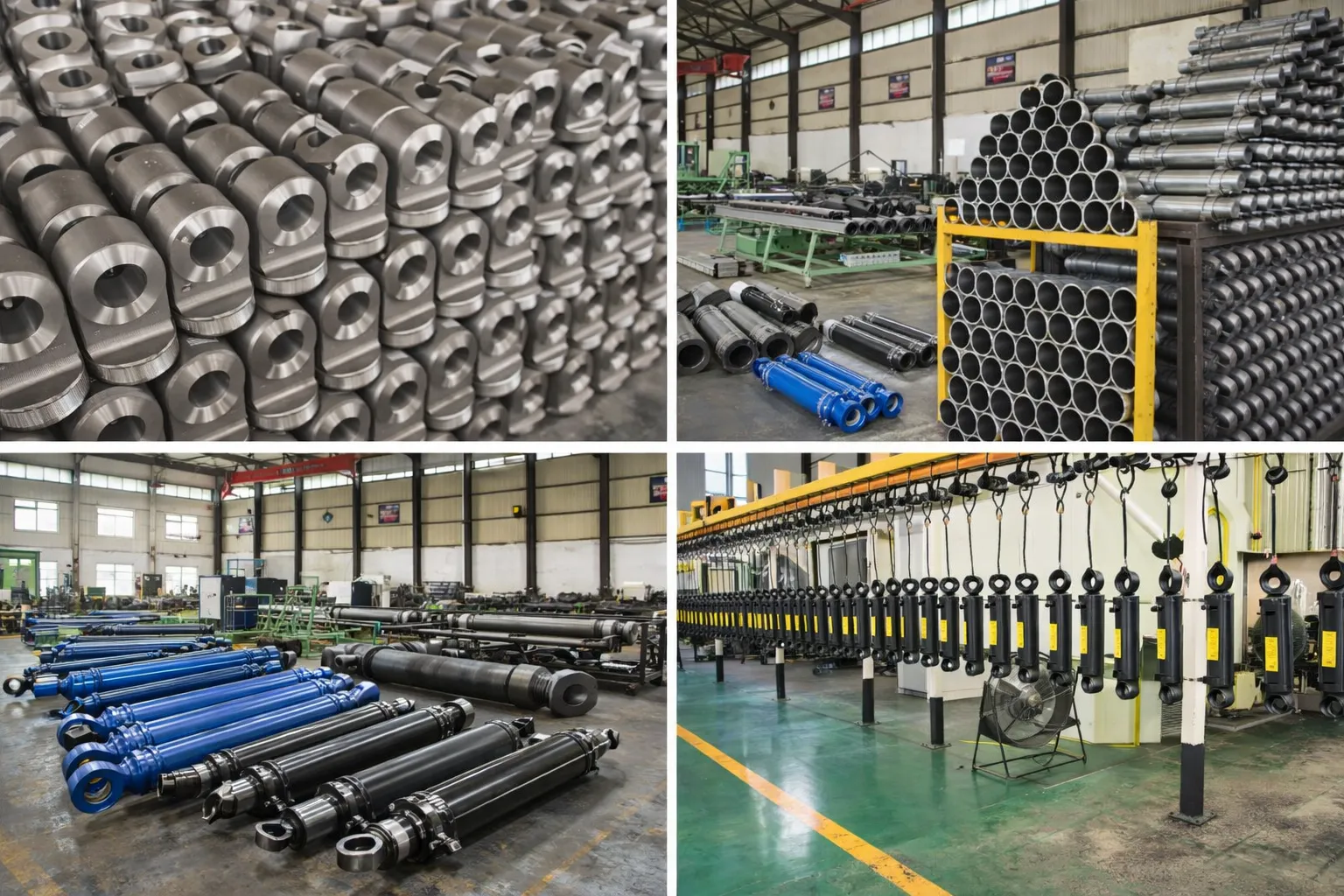
42CrMo material throughout, verified by spectrometer and hardness test (28-34 HRC). Forged ears ultrasonically inspected for internal defects before machining. Barrels CNC bored and honed to Ra 0.2. Rods ground to h6 and chrome plated to 25+ micron. Pre-heat welding (200-300 C), MIG welded with matched filler, gussets welded in the same operation. Post-weld stress relief at 550-620 C with thermocouple-monitored furnace profiles retained for traceability. Clean-room assembly. 100% pressure tested at 1.5x rated pressure for three minutes. Ear-to-barrel weld joints inspected by magnetic particle testing on every unit. Serial numbered with ten-year traceability. ISO 9001 certified. Full documentation package included.
Standard Heavy Cylinder vs. Our Defoliator Main Lift Cylinder
| Defoliator Lift Metric | Standard Heavy Cylinder | Our Defoliator Lift Cylinder |
|---|---|---|
| Mounting Ear Type | Cast or flame-cut plate | Drop-forged alloy + gusset |
| Ear Fatigue Life (offset loading) | 50,000 – 300,000 cycles | 1,000,000+ cycles |
| Material Yield Strength | ~490 MPa (S45C) | 750+ MPa (42CrMo Q&T) |
| Fiber / Juice Protection | Basic wiper + paint | Deflector + metal scraper + FKM + epoxy |
| Chrome Thickness | 10 – 15 micron | 25+ micron |
| Typical Service Life (sugarcane) | 0.5 – 2 seasons | 5 – 8 seasons |
Customer Case Studies
Seogwipo, Jeju Province, South Korea
Customer: Sugarcane processing cooperative operating 8 defoliators on Jeju Island volcanic fields
How They Found Us: Equipment manager searched for “sugarcane defoliator lift cylinder forged ear” in March 2025.
Results: The cooperative had been welding cracked ears mid-season as an emergency repair. After switching to forged-ear cylinders, zero ear cracking occurred through two full campaigns. Emergency repair downtime was eliminated entirely.
“We used to carry welding equipment on the field truck because ears cracked every week. Two seasons with these cylinders and the welder has not left the workshop.” – Mr. Go, Equipment Supervisor, November 2025
Ulsan Metropolitan Area, South Korea
Customer: Agricultural equipment OEM building sugarcane processing machines for Southeast Asian export
How They Found Us: Met at BICES exhibition, November 2024. Evaluation began January 2025.
Results: OEM fatigue testing confirmed forged ears survived 1.2 million cycles at 130% rated load with no crack initiation. Previous cast-ear supplier’s units cracked at 120,000 cycles. Approved for production. Annual order is 120 units.
“Ear cracking was our number one export warranty problem. Switching to forged ears with gussets eliminated it. Our Thai and Vietnamese distributors noticed immediately.” – Mr. Park, VP Manufacturing, June 2025
Miyazaki Prefecture, Japan
Customer: Sugarcane equipment service company maintaining defoliator fleets for Miyazaki and Kagoshima cane growers
How They Found Us: Referral from Okinawa cooperative (page 24 customer). Inquiry in May 2025.
Results: Replaced main lift cylinders on 15 machines across two service fleets. Zero ear failures through the 2025 harvest season. Service company reduced their emergency field repair calls related to lift cylinder mounting failures by 100%.
“Ear cracks on lift cylinders were our most common emergency call during harvest. Having zero calls this season freed up technician time for scheduled maintenance work instead of crisis repairs.” – Mr. Yamada, Service Director, October 2025
Nakhon Sawan Province, Thailand
Customer: Major sugar mill group operating defoliators at field collection points ahead of mill delivery
How They Found Us: Mill engineering team contacted us after web search in September 2024.
Results: Thai crushing seasons run 120 to 150 days. Previous cylinders averaged 2 to 3 ear failures per machine per season. Our forged-ear cylinders completed two consecutive seasons with zero ear cracking across their 20-machine fleet. Estimated savings of 45% on lift cylinder maintenance costs.
“A cracked ear means the defoliator head drops. That is a safety incident and a production stop. Zero incidents across two seasons and 20 machines speaks for itself.” – Mr. Amnuay, Group Safety Engineer, March 2025
Uttar Pradesh State, India
Customer: Sugarcane machinery OEM building defoliators for the Indian sugar industry
How They Found Us: Contacted us after visiting EIMA Agrimach India, December 2024.
Results: Indian cane stands are among the densest in the world, generating extreme impact loads. OEM field testing showed our forged ears survived conditions that cracked their previous supplier’s cast ears within 30 operating hours. Approved as standard. Annual order is 300 units.
“Dense Indian cane generates impact forces that no cast ear can survive for long. The forged ears on these cylinders are the first ones that lasted through our entire UP crushing season.” – Mr. Tripathi, Chief Engineer, April 2025
Frequently Asked Questions
Why do mounting ears crack on sugarcane defoliator lift cylinders?
What cylinder bore size is typical for a defoliator main lift?
Can I retrofit forged-ear cylinders onto existing machines with cast-ear cylinders?
What is the lead time for defoliator main lift cylinders?
Forged Ears. Gusset Reinforcement. Zero Cracking.
Share your defoliator model, head weight, and mounting geometry. We will design a forged-ear replacement and deliver a quotation within 48 hours.
Editor: Cxm