
Product Overview & Industrial Value
In the heavy foundation and geotechnical construction sector, converting a standard earthmoving machine into a dedicated drill rig is a highly efficient operational strategy. The drilling mast must achieve extreme vertical heights to accommodate long continuous flight augers or heavy Kelly bars. However, it must also retract into a highly compact physical footprint to maintain a safe center of gravity during transit across rough job sites or public highways. A traditional single-rod fluid power actuator cannot fulfill this geometric requirement. The structural backbone of this equipment relies entirely on the mast telescopic hydraulic cylinder. By utilizing multiple nested tubular stages, this specialized mast telescopic hydraulic cylinder delivers an exceptionally long stroke from a highly compressed installation length.
Deploying a long-stroke mast telescopic hydraulic cylinder in a geotechnical drilling environment introduces severe mechanical vulnerabilities. Operating an excavator drill rig generates massive volumes of airborne silica dust and abrasive rock particulate. Standard commercial actuators fail rapidly under these conditions. When the long sleeves of the mast telescopic hydraulic cylinder extend, this abrasive grit coats the chrome surfaces. As the stages retract, ordinary single-lip wiper seals fail to block the particulate. The dust is dragged directly into the internal housing, acting as a grinding compound against the primary pressure seals. This inevitably causes immediate, catastrophic oil leakage. Once the internal sealing architecture is compromised, fluid escapes, the machine loses its downward feed force, and the entire multi-million dollar operation grinds to an expensive halt.
As a specialized fluid power manufacturer focusing heavily on the demanding infrastructure markets of South Korea and surrounding East Asian nations, we have completely re-engineered the standard approach to long-stroke mobility. Our heavy-duty mast telescopic hydraulic cylinder is designed explicitly to conquer high-dust environments. By utilizing a highly rigid Q345D structural steel architecture and deploying an advanced multi-stage sealing system, we effectively eliminate the chronic oil leakage issues that plague ordinary aftermarket units. For fleet managers analyzing the true hydraulic cylinder price, the initial acquisition cost is secondary to continuous operational uptime. Investing in our highly refined mast telescopic hydraulic cylinder ensures your drilling rigs remain strictly operational, drastically reducing your annual maintenance budget and preventing dangerous mid-operation mast drops.
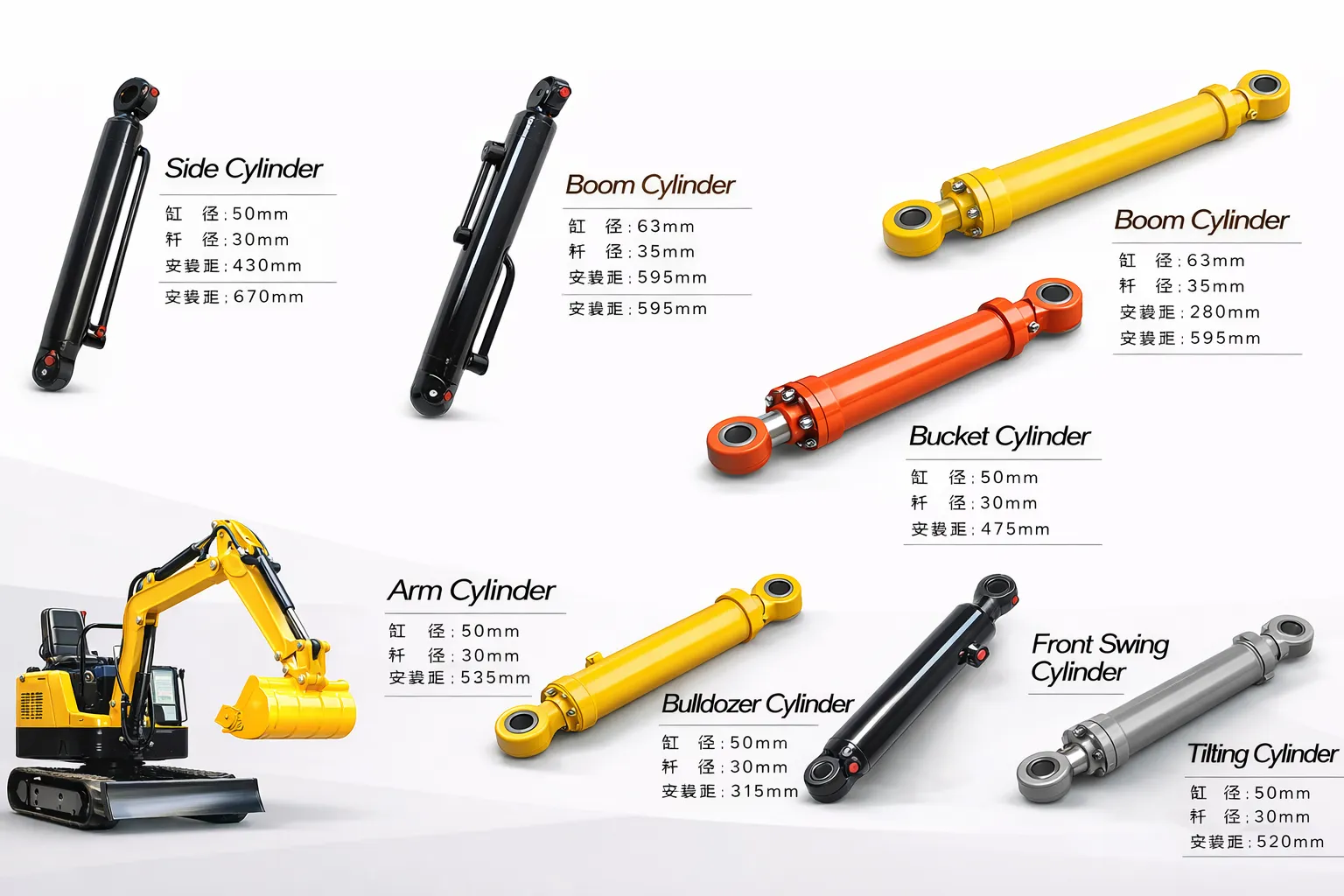
Technical Specifications & Customization Parameters
Achieving perfect operational stability over a ten-meter extension requires precise control over manufacturing tolerances and material selection. Below is the comprehensive engineering profile of our mast telescopic hydraulic cylinder series, designed specifically for heavy excavator drilling attachments and dedicated piling rigs. We heavily customize the stroke length, stage count, and mounting geometry to align perfectly with your specific structural requirements.
| Engineering Specification | Detailed Parameter & Material Standard |
|---|---|
| Primary Industry Sector | Construction Machinery & Deep Foundation Work |
| Equipment Classification | Excavator / Drilling Rig / Piling Machine |
| Subsystem Action | Mast Telescoping / Vertical Extension Control |
| Specific Component Name | Mast Telescopic Hydraulic Cylinder |
| Fluid Action Mode | Double acting hydraulic cylinder |
| Internal Structure Type | Multi-stage Telescopic (Typically 2 to 5 distinct stages) |
| Manufacturing Structure | Welded Construction (Automated deep-penetration seams) |
| Core Material System | Q345D Low Alloy High Strength Structural Steel |
| Surface Treatment Strategy | Heavy-Duty Chrome Plated (All moving telescoping stages) |
| Environmental Grade | High Dust, Airborne Silica, Severe Weather Exposed |
| Working Condition Feature | Long Stroke with strict anti-deflection requirements |
| Typical Addressed Failure Mode | Severe Oil Leakage and Internal Stage Binding |
| Recommended Configuration | Multi-stage Sealing Matrix with Heavy-Duty Bronze Wipers |
Advanced Working Principle of Multi-Stage Extension
Understanding the complex fluid dynamics inside a multi-stage unit is critical to appreciating its mechanical superiority. Unlike a basic actuator with a single rod, this unit features a series of tubular steel sections nested neatly inside one another. In heavy drilling applications, the mast must be raised and lowered with absolute, powered control in both directions. Therefore, this component is constructed strictly as a double acting hydraulic cylinder system. It utilizes high-pressure fluid to both push the mast upward into its working position and pull it securely back down into its transport configuration, offering total safety and control regardless of the heavy tool weight attached to the mast.
During the extension phase, the machine’s main pump directs highly pressurized fluid into the base port of the mast telescopic hydraulic cylinder. The laws of fluid dynamics dictate that pressure will act upon the largest available internal surface area first. This massive force pushes the largest internal sleeve (the first stage) outward. Once this first stage reaches the end of its physical travel, internal porting allows the fluid to bypass and act upon the base of the second, slightly smaller stage, pushing it outward. This sequential extension continues until all stages are fully deployed. Because the effective surface area of the hydraulic cylinder piston decreases with each subsequent stage, the lifting speed generally increases while the lifting force slightly decreases as the unit reaches full height. Our engineers calculate these differential pressures precisely to ensure smooth, uniform mast elevation without sudden, dangerous jerking motions.
Retraction is equally critical, especially when breaking down a rig in high winds or when the operator requires active downward feed pressure to force an auger into hard bedrock. The control valve reverses the fluid flow, directing pressurized oil into the rod-end annular ports while simultaneously opening the base to the return tank. The oil enters the tight annular space between the nested tubes of the mast telescopic hydraulic cylinder, physically pushing against the back side of the internal pistons. The stages typically retract in the reverse order, pulling the massive drilling mast down smoothly. Managing the fluid transfer between multiple moving sleeves without causing internal pressure spikes requires highly sophisticated internal machining and perfectly aligned oil transfer galleries.
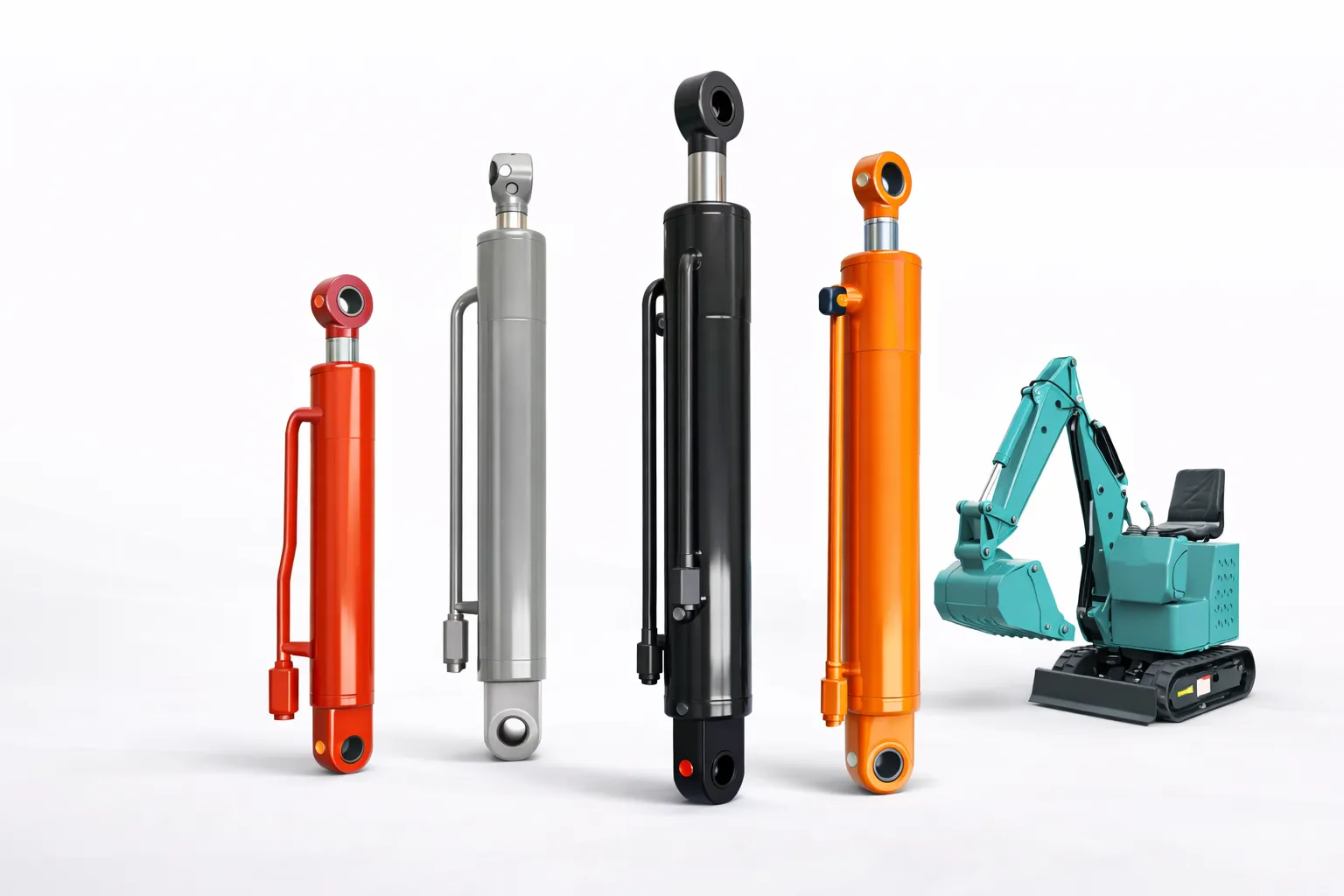
Flawless Drop-In Replacement for Global Machinery Fleets
When a drilling rig suffers a blown mast actuator, the entire construction site grinds to a highly expensive halt. Attempting a temporary hydraulic cylinder repair on a scored multi-stage unit in the dirt is nearly impossible and extremely unsafe. Procurement teams need an immediate, perfectly fitting replacement that requires zero field modification. We manufacture our heavy-duty mast telescopic hydraulic cylinder assemblies to strictly align with original equipment manufacturer (OEM) dimensional geometries, guaranteeing a straightforward bolt-on process for your field mechanics.
Our deep engineering database covers exact specifications for equipment heavily utilized across the Asian construction sector. We provide direct drop-in upgrades for specialized drilling excavators and piling rigs manufactured by brands such as Doosan, Hyundai, Caterpillar, Komatsu, Volvo, Bauer, and Soilmec. We meticulously match the closed length dimensions, the maximum stroke length, the trunnion or pin-eye mounting hole diameters, and the hydraulic fluid port threads exactly. (Please note: The mention of these specific global machinery brands is strictly for dimensional cross-referencing and component sizing compatibility to assist our B2B customers. We do not claim any trademark affiliation or direct endorsement from these manufacturers.)
If your service department is constantly tasked with fixing hydraulic cylinders that leak oil all over the mast due to dust contamination, replacing them with our specialized mast telescopic hydraulic cylinder upgrades is the most permanent financial solution. We encourage fleet operators to standardize their replacement programs to eliminate downtime. You can verify available sizes and explore our broad capability in manufacturing heavy-duty hydraulic parts by visiting our main hydraulic cylinder product catalog.
Core Technical Advantages & Specialized Engineering
Designing a mast telescopic hydraulic cylinder that survives high-dust environments requires departing completely from standard industrial manufacturing norms. A long-stroke design amplifies any structural weakness or seal vulnerability. Here are the five definitive technical advantages that prevent oil leakage and guarantee years of stability on your drilling rig:
1. Multi-Stage Advanced Sealing Matrix
The leading cause of failure for any mast telescopic hydraulic cylinder is abrasive rock dust destroying the pressure seals, leading to rapid oil leakage down the mast structure. We resolve this by implementing a highly progressive multi-stage sealing architecture at the gland of every single moving stage. The primary defense is an aggressive, double-lip polyurethane dust wiper that physically shaves baked-on mud and silica off the chrome surface during retraction. Behind this, a secondary buffer ring handles any micro-particles, protecting the main ultra-low friction PTFE pressure seal deep inside the groove. This staged defense guarantees the internal fluid remains completely isolated from the harsh environment.
2. Q345D Low Alloy High-Strength Steel Construction
When a mast telescopic hydraulic cylinder is fully extended to a long stroke, the overlapping sections are subjected to significant lateral bending forces from wind and machine vibration. If the metal bends, the sleeves will bind and gall against each other. We exclusively construct the heavy outer barrel and all internal sliding stages from Q345D steel. This specific grade provides an exceptional yield strength-to-weight ratio, maintaining absolute structural rigidity over long spans. It effectively resists deflection, ensuring the internal stages slide smoothly without side-loading the seals, even when the rig is operating on uneven terrain.
3. Extra-Thick Chrome Plated Surface Protection
Because the extended stages spend hours exposed to flying rock chips and severe weather, standard thin chrome will quickly pit and rust. We apply an extra-thick layer of industrial hard chrome plating to the external diameter of every single moving sleeve on our mast telescopic hydraulic cylinder. This creates a remarkably hard, mirror-like surface that easily deflects abrasive impacts. The controlled micro-porosity of our plating process also retains a microscopic film of oil, constantly lubricating the heavy-duty wiper seals as they travel. This prevents the seals from burning up under the friction of rapid, long-stroke movements while providing a diamond-hard shield against physical abrasion.
4. Expanded Bronze-Filled Guiding Bands
Because the sleeves of a mast telescopic hydraulic cylinder overlap, any lateral side-load from the mast will attempt to force the metal tubes to grind against each other internally. This metal-to-metal contact causes deep internal scoring and instant failure. We utilize extra-wide, bronze-filled PTFE guide bands at every overlapping junction. These specialized bearing materials provide an incredibly strong, low-friction sliding surface that absorbs lateral shocks and guarantees the steel sleeves remain perfectly concentric throughout the entire stroke.
5. Thermal Stability and Fatigue-Resistant Welding
The constant raising and lowering of a heavy mast generates significant heat within the fluid power system, while the weight of the mast places immense fatigue stress on the mounting points. The base and rod-end mounts of our mast telescopic hydraulic cylinder are attached using deep-penetration, automated submerged arc welding. We follow this immediately with specialized thermal stress-relieving processes in industrial ovens. This stabilizes the molecular structure of the Q345D steel at the weld zones, completely preventing the microscopic fatigue cracking that typically destroys standard units after a few years of heavy use.
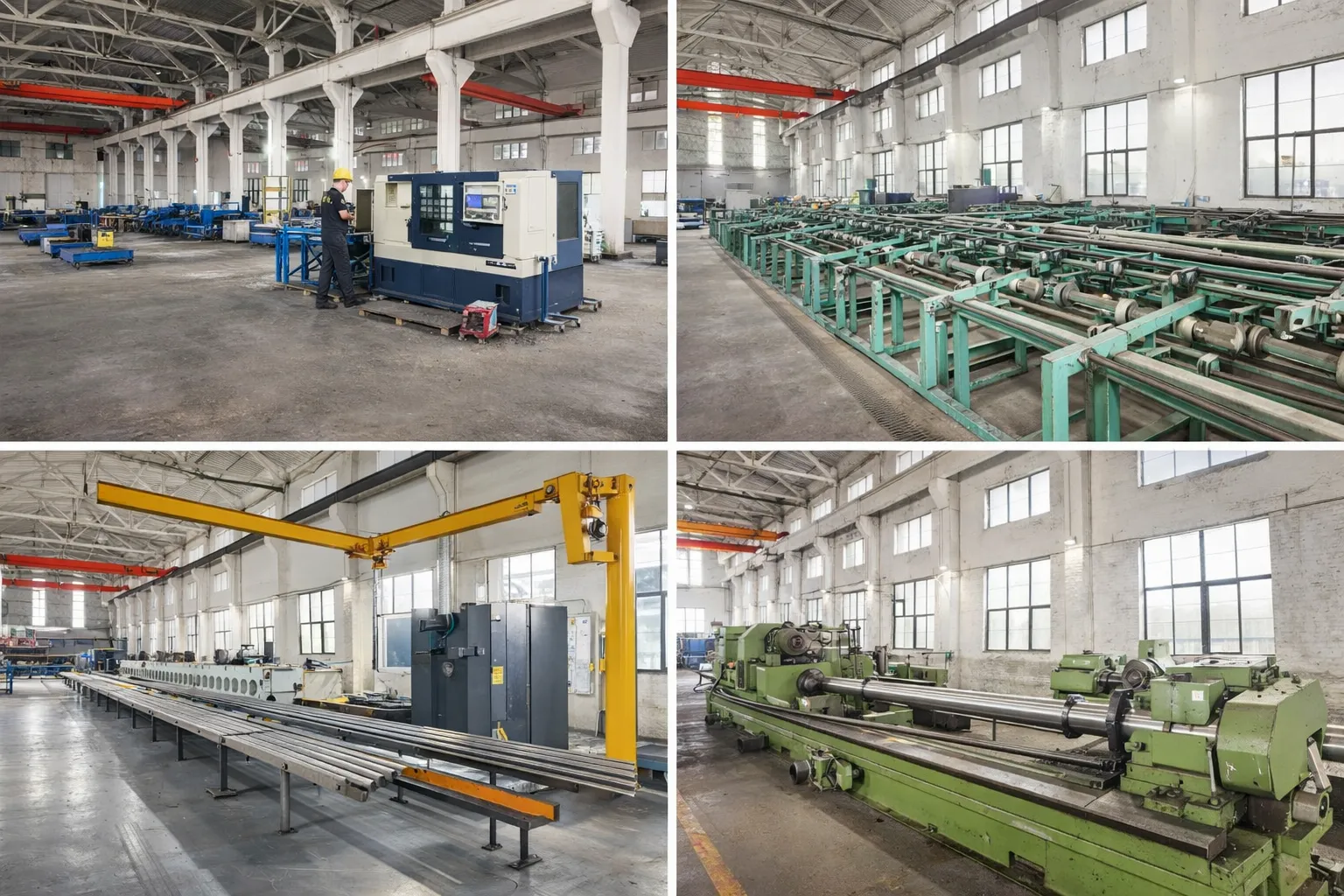
Autonomous Manufacturing Process & Strict Quality Control
Producing a reliable mast telescopic hydraulic cylinder requires a level of machining precision far beyond that of standard components. The clearance between nested steel tubes must be absolutely perfect—too tight, and the cylinder binds from thermal expansion; too loose, and the long stroke becomes highly unstable. We maintain absolute control over these critical tolerances by executing the entire manufacturing process autonomously within our own advanced facilities, rather than relying on inconsistent outsourced machining.
Every phase of production is heavily monitored. We begin by verifying the metallurgy of our Q345D steel batches using chemical spectrometry. The heavy tubes are then machined using Skiving and Roller Burnishing (SRB) machines. This advanced cold-working process violently compresses the internal crystalline structure of the metal, yielding a mirror-smooth finish while significantly increasing surface hardness. This provides the multi-stage hydraulic cylinder components with a flawless, ultra-low friction pathway to travel against for thousands of rapid cycles.
Quality control is an absolute mandate, not a secondary thought. Prior to packaging, every single mast telescopic hydraulic cylinder is mounted to our computerized testing benches. We execute a rigorous 100% hydrostatic pressure protocol, forcing the multi-stage assembly to extend and retract fully multiple times under pressure levels that exceed its maximum field rating by 1.5 times. We hold the pressure to guarantee zero internal bypass and zero external oil weeping. Upon passing, a permanent serial number is laser-engraved onto the barrel base, granting full traceability back to the exact batch of steel, the specific seal lot, and the technician responsible for the final assembly.
Broad Applications Across Heavy Industry
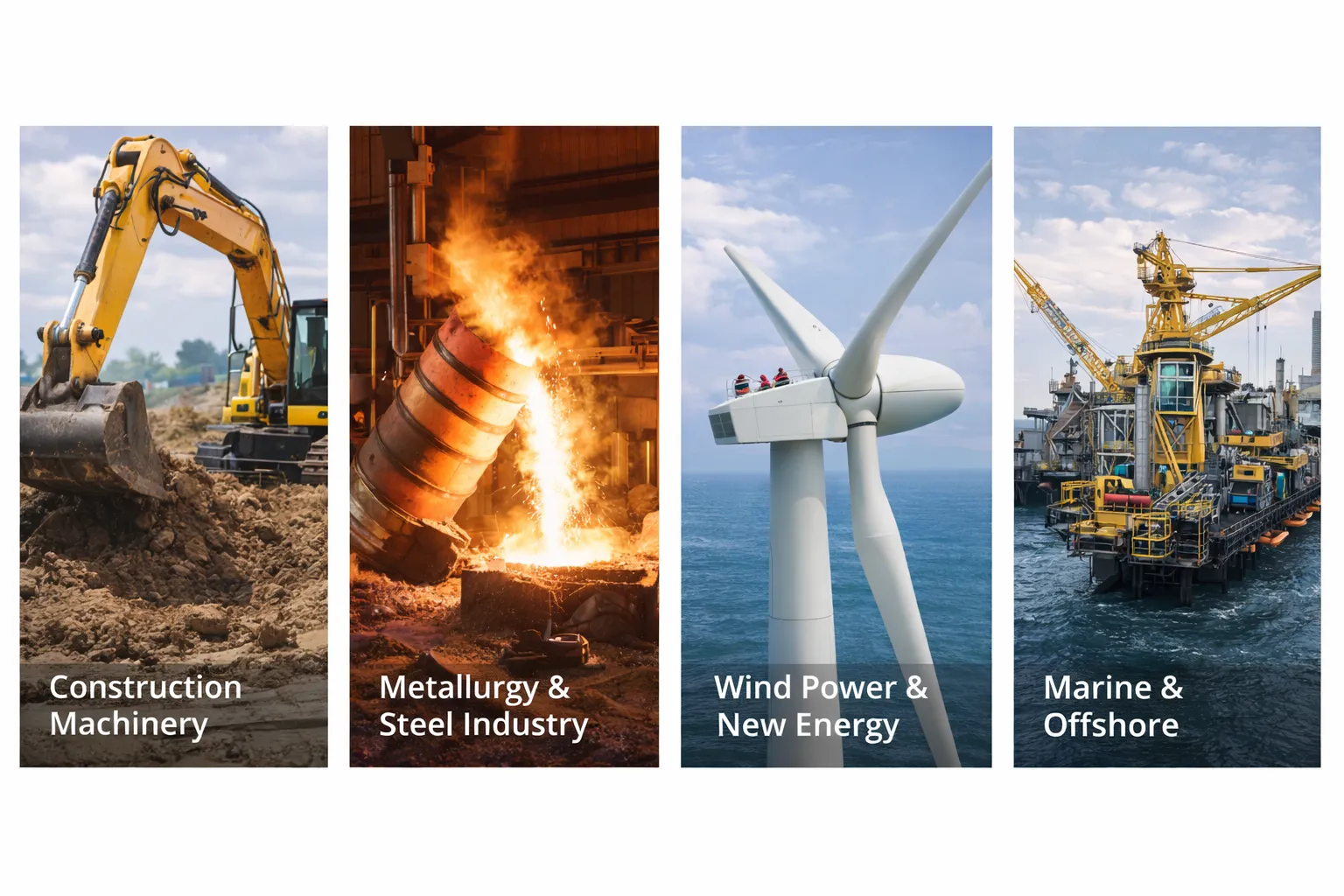
While the intense demands of an excavator drill rig mast represent the pinnacle of our engineering capability in highly abrasive environments, the core design principles of extreme rigidity and long-stroke leak prevention translate perfectly to other harsh industries. Discover more about how fluid power is driving global infrastructure by exploring our dedicated section on the construction machinery industry.
- Foundation & Piling Equipment: Essential for operating heavy drop hammers, vibratory pile drivers, and rotary drilling rigs where the mast telescopic hydraulic cylinder must remain perfectly rigid under immense vertical vibration and heavy torque.
- Excavator Modifications: Used to power long-reach telescopic dipper arms tailored for deep trench excavation, underwater dredging, or structural demolition in confined urban spaces.
- Material Handling & Logistics: Acts as the primary lift cylinder on heavy reach stackers and specialized mobile cranes, safely raising shipping containers or heavy steel beams precisely to extreme heights.
- Metallurgy & Heavy Manufacturing: Deployed in automated steel mills for pushing heavy slag carts over long distances, enduring immense radiant heat without seal degradation.
- Specialized Custom Scenarios: Municipal maintenance vehicles, such as long-reach boom mowers and heavy aerial work platforms, depend on double-acting telescoping capability for smooth, safe positioning away from the carrier chassis.
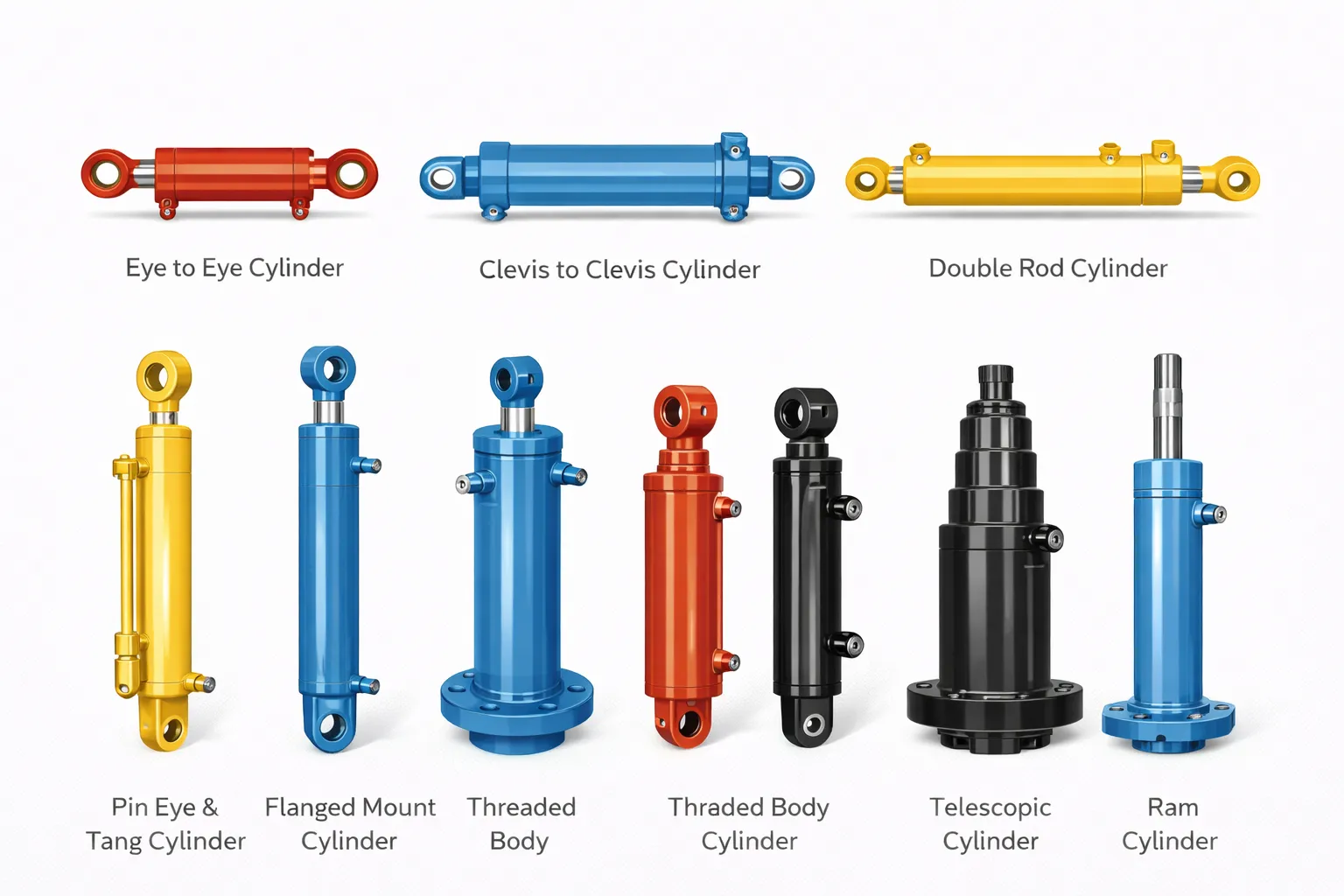
Comparative Analysis: Standard vs. Our High-Performance Solution
When evaluating multiple hydraulic cylinder price options for a major machinery overhaul, it is absolutely essential to compare internal engineering, not just external dimensions. Cheaper telescopic units invariably use softer steel and basic seals, leading directly to the dreaded oil leakage that ruins project timelines. Here is a direct technical comparison between standard aftermarket options and our heavy-duty solution.
| Feature Component | Standard Telescopic Cylinder | Our Mast Telescopic Hydraulic Cylinder |
|---|---|---|
| Material Rigidity | Standard Carbon Steel (Prone to bending at full stroke) | Q345D High-Strength Steel (Zero deflection under load) |
| Dust Defense Strategy | Single-lip rubber wiper (Allows fine dust to enter easily) | Multi-stage progressive aggressive wipers & buffers |
| Surface Longevity | Thin commercial chrome (Rusts quickly outdoors) | Extra-thick industrial chrome plating |
| Internal Guiding | Narrow nylon bands (Allows stages to rub metal-to-metal) | Wide composite heavy-duty wear bands |
| Operational Lifespan | Frequent oil leakage requiring rebuilds every few months | Highly durable, massive reduction in maintenance hours |
Real Field Applications: Proven B2B Case Studies
The true validation of heavy engineering occurs directly in the dirt. Over the past several years, we have actively solved severe mechanical problems for specialized machinery operators across Asia using our mast telescopic hydraulic cylinder technology. Here are five detailed accounts of how our long-stroke technology performs under extreme pressure.
Case Study 1: Stopping Leaks in South Korean Bedrock
Client & Location: A major deep foundation contracting firm headquartered in Seoul, South Korea.
Application: Operating rotary drilling rigs to install deep concrete piles through heavy granite layers for new commercial high-rises.
How They Found Us: The purchasing manager searched specifically for a reliable manufacturer of hydraulic parts after their OEM mast cylinders repeatedly failed safety inspections due to severe oil leaks.
The Result: The incredibly fine, airborne granite dust produced by the drill bit was quickly destroying the standard single-lip wipers, causing fluid to pour down the mast structure. We replaced the units with our custom mast telescopic hydraulic cylinder featuring the multi-stage aggressive sealing matrix. The heavy wipers easily scraped the dust away, maintaining a completely dry mast throughout the entire 2024 construction season.
“Oil dripping from the mast is a massive safety violation on our sites. Since installing these upgraded cylinders last October, the chrome stages have stayed completely dry and clean. Outstanding sealing technology.” — Kim Min-jun, Chief Equipment Officer.
Case Study 2: Long-Stroke Stability in Urban Japan
Client & Location: A specialized infrastructure contractor in Tokyo, Japan.
Application: Operating specialized compact piling machines designed to work in extremely narrow urban alleyways, requiring a massive vertical reach from a very short retracted base.
How They Found Us: Contacted our technical sales team via our website looking for a supplier capable of precise multi-stage machining.
The Result: Their previous cylinders suffered from severe stage deflection when fully extended, causing the internal sleeves to bind and shudder on the way down. Our strict use of rigid Q345D steel in our mast telescopic hydraulic cylinder combined with wide composite guide bands ensured the mast raised and lowered with perfectly smooth, absolute vertical precision, greatly improving operator safety near adjacent buildings.
“The smooth operation of the retraction cycle is phenomenal. We work centimeters away from glass buildings, so avoiding that sudden shaking and binding is critical. Installed February 2025.” — Tanaka Hiroshi, Operations Director.
Case Study 3: Saltwater and Dust Defense in Taiwan
Client & Location: A heavy marine civil engineering firm operating out of Kaohsiung Port, Taiwan.
Application: Operating barge-mounted piling rigs driving massive steel tubes into the ocean floor.
How They Found Us: Referred by a regional shipbuilder who uses our heavy-duty hydraulic rams.
The Result: The combination of abrasive sea sand and highly corrosive salt spray was rapidly rusting the commercial-grade chrome on their existing units, destroying the wiper seals in mere weeks. We supplied a mast telescopic hydraulic cylinder protected by our extra-thick, industrial-grade chrome plating process. After a full year of exposure in the salty air, the stages show zero signs of pitting or rust.
“Salt spray usually eats our hydraulic rods alive. We checked the chrome thickness and finish after the monsoon season (August 2025), and they are entirely unblemished. An incredible upgrade.” — Chen Wei-lun, Lead Marine Mechanic.
Case Study 4: Deep Mineral Exploration in Vietnam
Client & Location: A specialized geological exploration company working in the Central Highlands of Vietnam.
Application: Operating mobile, tracked core drilling rigs extracting mineral samples from deep underground.
How They Found Us: Searched the internet specifically for a manufacturer capable of building custom lengths for extreme dust environments.
The Result: Working far off the grid meant that a blown seal would strand the rig for days. The intense heat and thick red dirt were easily bypassing their standard OEM cylinders, forcing them into constant hydraulic cylinder repair situations. By utilizing our highly temperature-stable PTFE seals and aggressive wipers in the new mast telescopic hydraulic cylinder, the rigs managed to operate continuously through the brutal dry season without a single hour of hydraulic downtime.
“Out in the highlands, reliability is survival. These cylinders run noticeably cooler than our old ones, and the dirt stays outside where it belongs. Reviewed late 2025.” — Nguyen Duc Trong, Field Operations Manager.
Case Study 5: Simplifying Fleet Maintenance in the Philippines
Client & Location: A large heavy machinery leasing corporation based in Manila, Philippines.
Application: Managing a diverse rental fleet of excavators modified with various piling and drilling attachments for regional infrastructure development.
How They Found Us: They were desperately seeking a unified, direct factory source to help them avoid the constant nightmare of locating parts for a dozen different machine brands.
The Result: Instead of buying expensive, weak OEM parts from five different dealers, we became their centralized supplier. We provided exact drop-in replacements for their mixed fleet, all built to our superior Q345D heavy-duty standard. This massive standardization effort simplified their parts inventory and substantially lowered their total cost of ownership.
“Having a single, highly competent factory partner that can build exact-fit telescopic units for all our different rig brands is a massive operational advantage. (January 2026)” — Roberto Santos, Fleet Maintenance Director.
Frequently Asked Questions (FAQ)
Replacing a large telescopic unit on a drilling rig is a major technical decision. We understand that fleet managers and purchasing engineers need precise operational facts. Here are the direct answers to the most common technical inquiries we receive.
Eliminate Downtime on Your Drilling Projects
Every single day your drilling rig sits idle due to a leaking mast actuator, your project bleeds money and falls behind schedule. Upgrade immediately to a heavy-duty, long-stroke solution explicitly engineered to survive high dust and heavy vertical loads without leaking. Connect with our engineering department today to confirm your machine’s exact dimensions and secure a competitive quote for your operation.
Connect With Our Engineering Team
Explore our complete catalog of industrial fluid power solutions directly at hydrauliccylindersprice.com.