Hydraulic Press Centering Cylinder
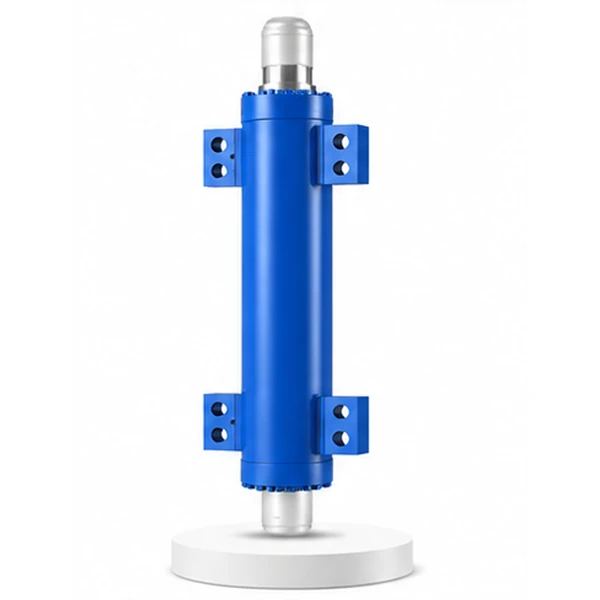
The Smallest Cylinder.
The First Thing That
Must Be Right.
The master cylinder delivers 80 MN. The clamping cylinder grips with 9,621 KN. The centering cylinder produces just 441 KN — the lowest thrust of any press cylinder. But if this cylinder fails, the billet is gripped off-centre, forged off-centre, and every dimension on the finished part shifts with it. Alignment is not optional.
What "Centering" Means — And Why It Comes First
Before the clamping cylinder can grip a billet, the manipulator's clamp head must be centred — returned to its neutral, mid-stroke position so the jaws open symmetrically around the billet axis. If the clamp head has drifted left, right, up, or down from its previous forging operation, gripping from that off-centre position locks the billet into an asymmetric hold. Every subsequent forging pass inherits that initial offset.
The centering cylinder acts before the clamping cylinder — it pushes the clamp head to the mechanical centre of its travel range, then holds it there while the clamping jaws close around the billet. Once the billet is gripped and the clamping cylinder is at full pressure, the centering cylinder's job is done until the next billet changeover. Korea Ever-Power manufactures centering cylinders as part of the industrial engineering hydraulic cylinder programme for manipulator builders.
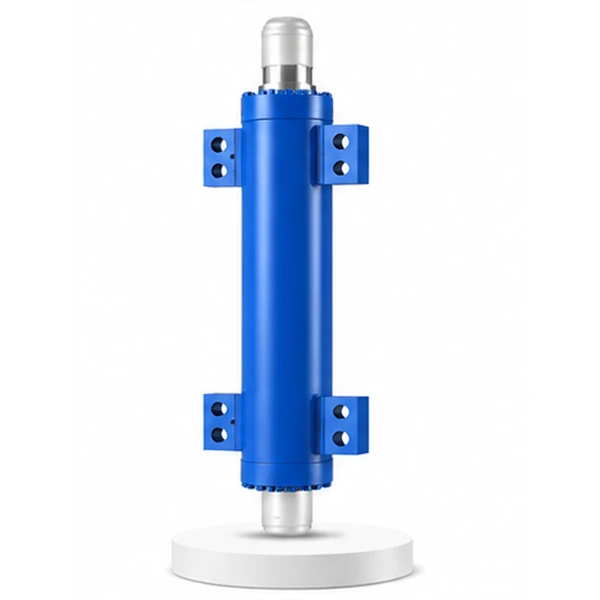
Technical Specifications
| Parameter | Value |
|---|---|
| Product | Hydraulic Press Centering Cylinder |
| Function | Centre the clamp head to its neutral position |
| Bore Diameter | 50 mm – 190 mm |
| Rod Diameter | 35 mm – 150 mm |
| Stroke | ≤ 1,200 mm |
| Maximum Thrust | 441 KN (bore 190 mm / pressure 25 MPa) |
| Working Pressure | Up to 25 MPa |
| Certification | ISO 9001 · 100% hydrostatic tested |
10 mm Off-Centre → Every Downstream Dimension Shifts
A centering error is not a single defect — it is a propagating error that distorts every forging operation in the sequence. Here is how 10 mm of clamp head offset cascades through the process:
The clamping cylinder grips the billet. The billet axis is now 10 mm from the manipulator's rotation axis.
When the manipulator positions the billet under the ram, the billet centre is 10 mm from the die centre. One side of the billet receives more forming force than the other.
The off-centre contact produces uneven deformation — thicker on one side, thinner on the other. On a multi-pass forging, this asymmetry compounds with each stroke.
When the manipulator rotates the billet 90° for the next forging pass, the 10 mm offset rotates too — now in a different axis. The forging error shifts from left-right to front-back, creating a complex, three-dimensional shape deviation.
The final forging has asymmetric dimensions that may exceed tolerance. If the machining allowance can absorb the offset, the part is salvaged at the cost of extra metal removal. If not, the forging is scrapped. Either way, the root cause was a 10 mm centering error — correctable by a 441 KN cylinder.
How Centering Works Mechanically

The centering cylinder is typically a double-acting cylinder mounted on the manipulator frame, connected to the clamp head carriage via a direct rod connection or a lever linkage. When both ports are pressurised equally (or a dedicated centering valve is activated), the cylinder pushes the clamp head to a mechanical mid-stroke position — defined by equal oil volume on both sides of the piston, or by a mechanical stop at the centre of travel.
The centering force (up to 441 KN) needs only to overcome the friction and inertia of the clamp head carriage — not to resist forging forces. Once centred, the clamp head is held in position by the centering cylinder's hydraulic lock while the clamping cylinder grips the billet. After gripping, the billet's position is fixed by the clamping force, and the centering cylinder can be depressurised without affecting the billet alignment.
On manipulators that handle multiple billet sizes, the centering cylinder can also function as a jaw-width adjustment actuator — positioning the clamp head at a specific offset (not centre) to accommodate billets of different diameters. This dual-purpose capability eliminates the need for a separate adjustment cylinder on some manipulator designs.
Perspective — The Smallest Cylinder in a System of Giants
The centering cylinder is the smallest actuator on the manipulator and in the entire press cylinder system. But its output — precise billet alignment — feeds directly into the quality of every downstream operation. Here is how it compares to its neighbours:
| Cylinder | Max Force | Bore Range | Role |
|---|---|---|---|
| Master | 80,000 KN | 500–1800 mm | Primary press force |
| Clamping | 9,621 KN | 125–700 mm | Grip the billet |
| Tilt | 3,141 KN | 100–400 mm | Rotate the billet |
| Centering | 441 KN | 50–190 mm | Align before gripping |
The centering cylinder's 441 KN is 0.55% of the master cylinder's 80 MN — but a centering error propagates through every single press stroke that the 80 MN master delivers. The cost-to-impact ratio of the centering cylinder is the highest of any actuator in the system. Contact the hydraulic cylinder engineering team for manipulator cylinder sets.
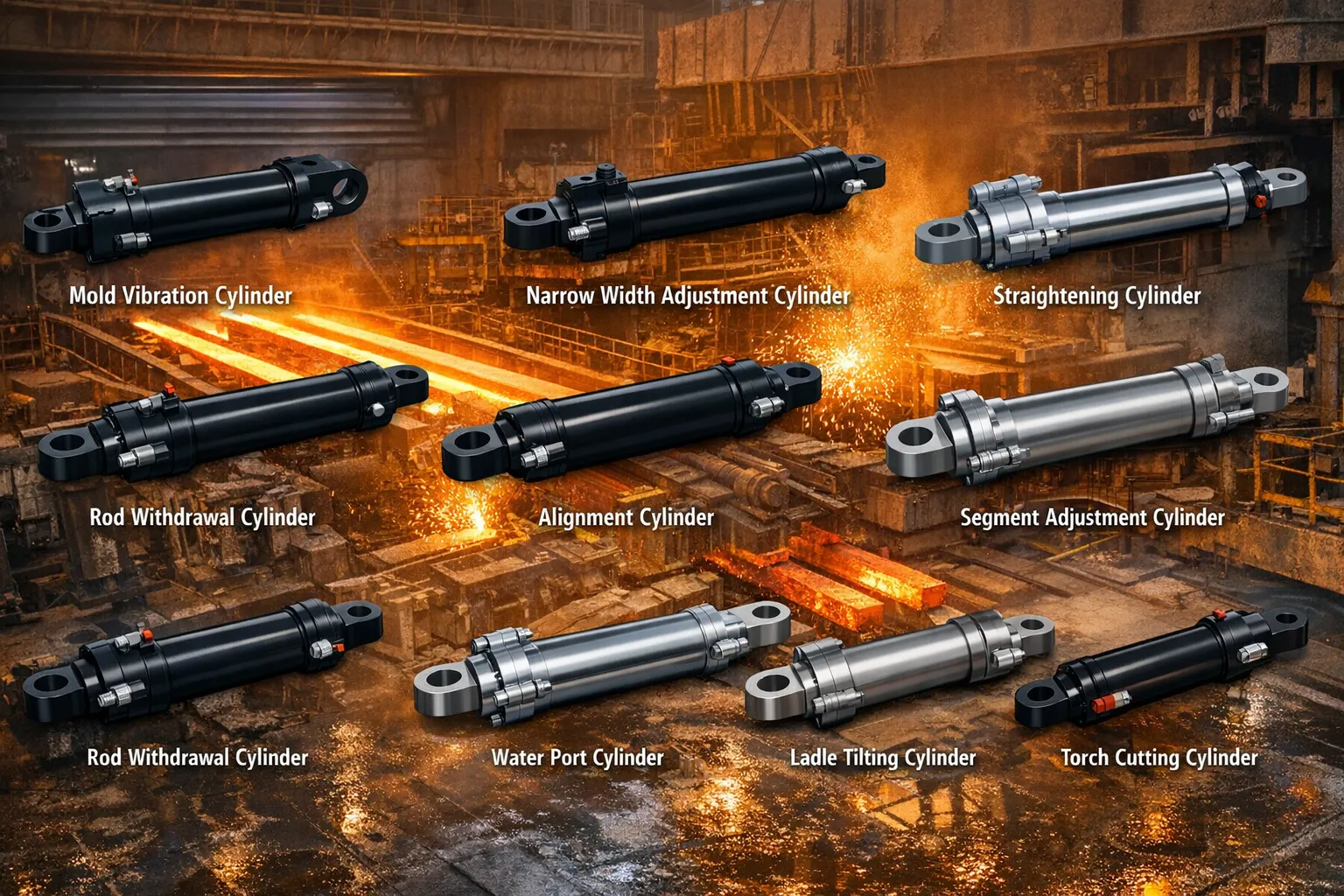
Manufacturing — Small Cylinder, Same Precision
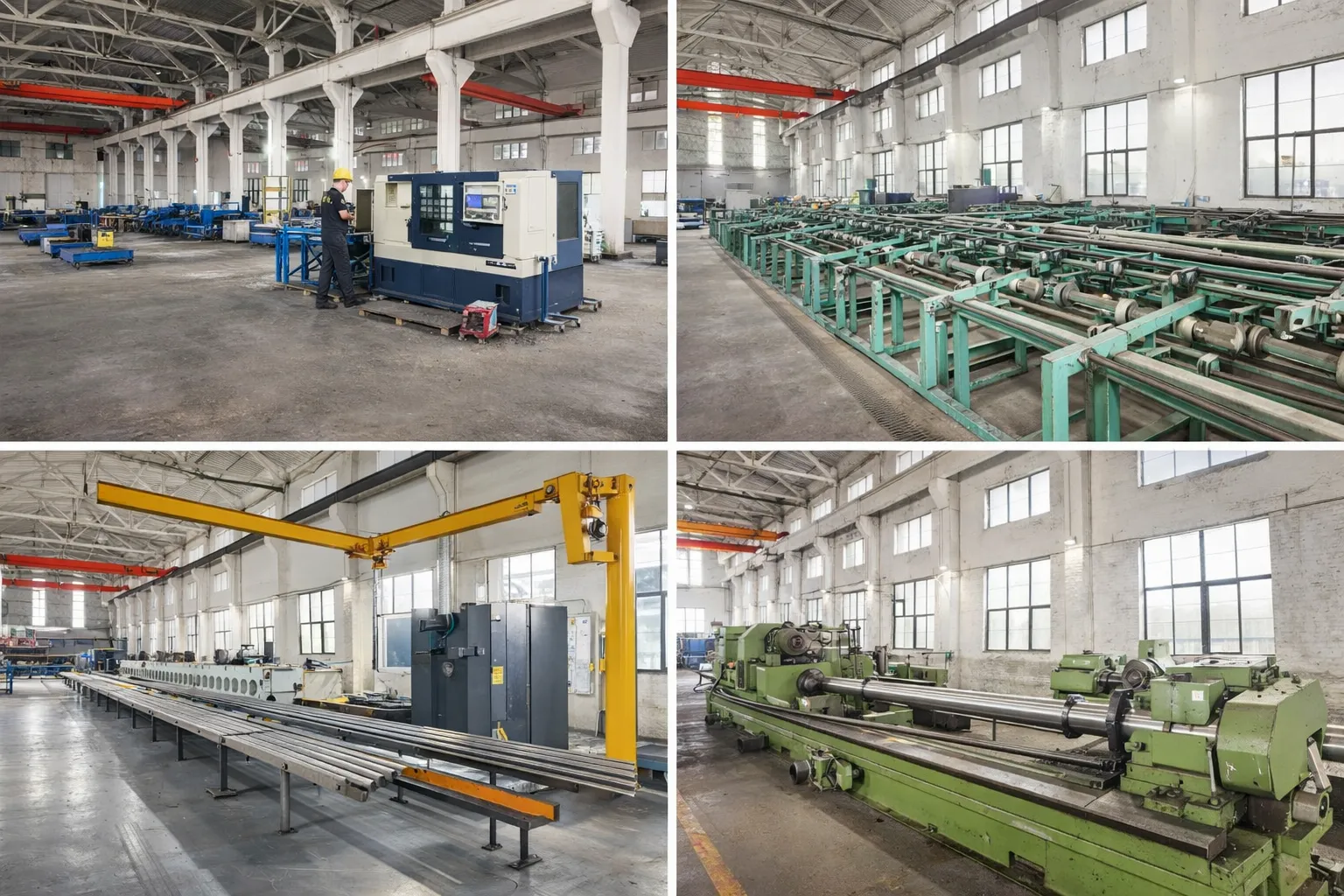
The centering cylinder is physically smaller than the clamping, tilt, or return cylinder — but the machining precision is identical. The bore is honed to the same Ra 0.2–0.4 µm finish, the rod is chrome plated to the same thickness and ground to the same surface standard, and the seal grooves are machined to the same tolerances. A centering cylinder that sticks, chatters, or creeps at low speed defeats its purpose — the clamp head must move smoothly and stop precisely at the centre position.
Because the centering cylinder is mounted on the manipulator arm — in the same harsh forging environment as the tilt and clamping cylinders — it receives the same environmental protection: high-temperature seals (FKM), heavy-duty wiper seals to exclude scale, and chrome plating thickness appropriate for forge-spray exposure. Korea Ever-Power manufactures centering cylinders as part of the manipulator cylinder set, alongside the clamping and tilt cylinders, using the same batch of materials and seals for consistency.
Every centering cylinder is hydrostatic tested at 1.5× working pressure. For position-critical applications, the cylinder is also tested for mid-stroke positioning accuracy — verifying that the centring position is repeatable within ±1 mm across multiple cycles.
OEM & ODM
FAQ
Related Categories
Aanvullende informatie
| Editor |
|---|
Gerelateerde producten
-
Pressurized Hydraulic Cylinder for Vulcanizing Machine
-
Injection Molding Machine Mold Opening and Closing Cylinder
-
Hydraulic Press Cushion Cylinder
-
Cement Equipment Feeding Cylinder
-
Electric Furnace Lifting Cylinder
-
Hydraulic Press Clamping Cylinder
-
Injection Molding Machine Ejection Cylinder
-
Hydraulic Press Master Cylinder