Lower Ring Hydraulic Cylinder for Vulcanizing Machine
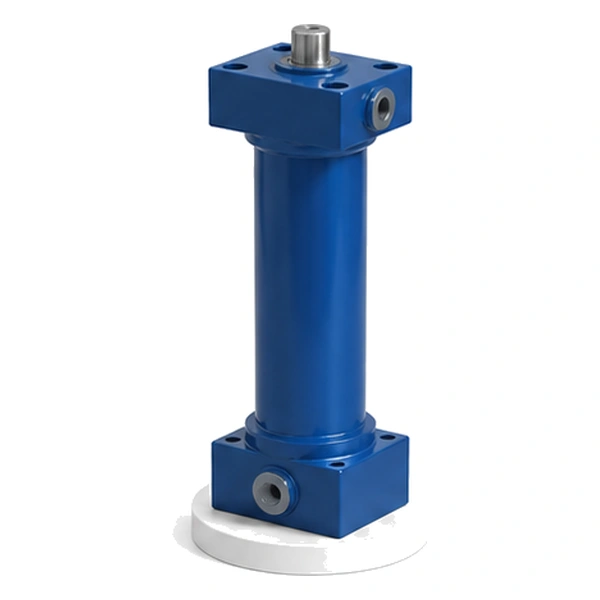
Lower Ring Cylinder · Centre Mechanism
Same Bore. Double the Stroke.
The Hardest Position
on the Press.
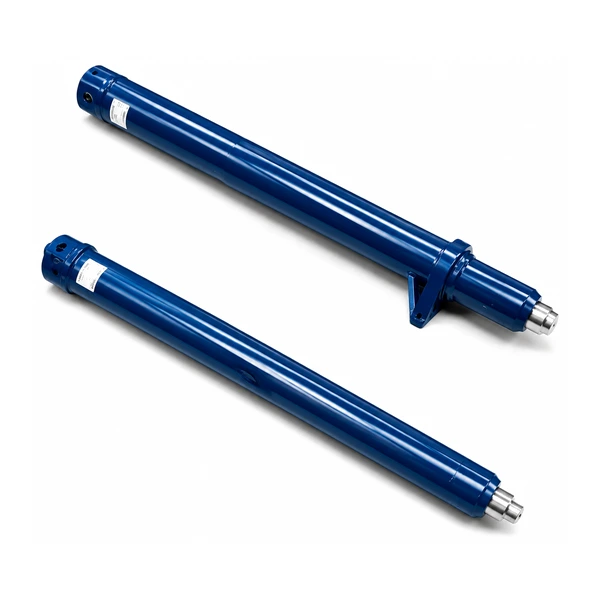
The upper ring cylinder (#31) operates from above — lowering the upper chuck onto the tire's upper bead. The lower ring cylinder operates from below — rising upward through the centre mechanism column to grip the lower bead. Same bore. Same force. But the lower position needs double the stroke (2,000 mm vs 1,000 mm), fits in a tighter space, and sits closer to the steam-heated mold — the hottest position on the press frame.
Why the Lower Ring Cylinder Needs Double the Stroke
The upper ring cylinder (#31) travels ≤1,000 mm — enough to move the upper chuck from its raised rest position down to the tire's upper bead and back. The lower ring cylinder must travel ≤2,000 mm because the lower chuck starts further away from its working position and must clear additional structure during retraction.
The lower chuck rises from below the mold container, passing upward through the centre of the lower mold, past the bladder well (the recess where the deflated bladder folds during tire loading), and up to the lower bead seat level. The upward travel distance from the rest position to the bead seat is 500–1,000 mm — similar to the upper ring's stroke. But the lower chuck must also retract far enough below the mold container for the bladder to be changed or inspected from below — adding another 500–1,000 mm of downward travel that the upper ring never needs. The total: up to 2,000 mm.
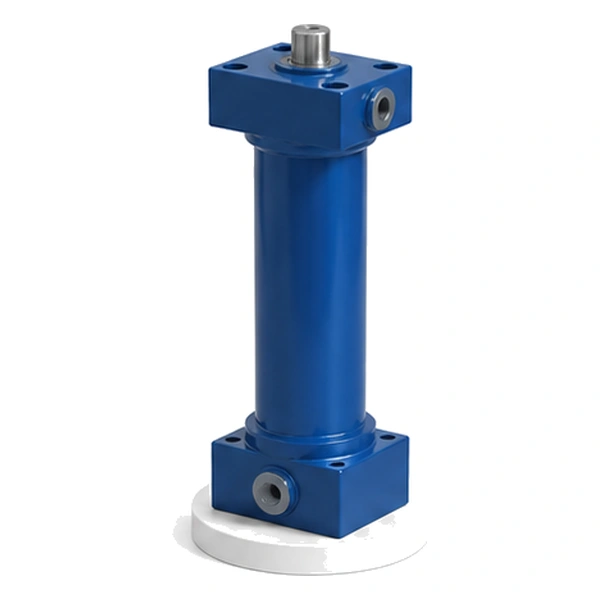
Technical Specifications
| Parameter | Value |
|---|---|
| Product | Lower Ring Hydraulic Cylinder for Vulcanizing Machine |
| Function | Drive the lower bead chuck — grip lower bead + bladder access |
| Bore Diameter | 50 mm – 140 mm |
| Rod Diameter | 28 mm – 100 mm |
| Stroke | ≤ 2,000 mm (2× upper ring) |
| Maximum Thrust | 384 KN (bore 140 mm / pressure 25 MPa) |
| Key Feature | Compact front and rear cushioning |
| Certification | ISO 9001 · 100% hydrostatic tested |
Compact Cushioning — A Long Cylinder That Must Fit in a Short Space
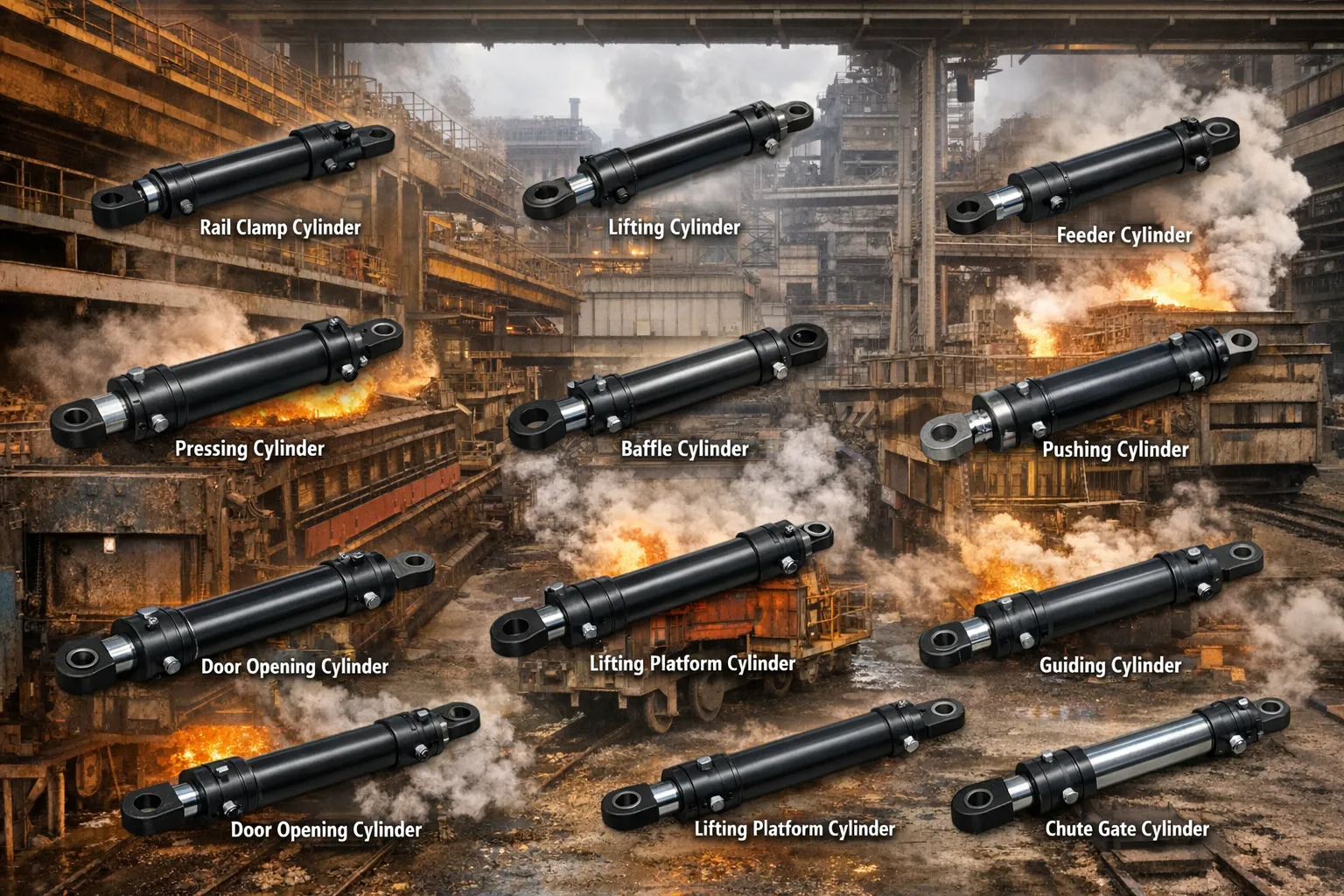
The lower ring cylinder has ≤2,000 mm of stroke — but it must fit inside the centre mechanism column, which is a narrow vertical tube built into the press base. The column's diameter is fixed by the mold geometry (it passes through the centre of the tire), and its height below the mold container is limited by the press foundation depth.
Standard end-of-stroke cushions add 50–100 mm to the overall cylinder length at each end — 100–200 mm total. On a 2,000 mm stroke cylinder, this extra length may not fit within the available column height. The lower ring cylinder uses compact cushion designs — shorter cushion noses, integrated deceleration passages within the end cap rather than external cushion sleeves — to reduce the overall cylinder length while maintaining the same deceleration performance.
Both the extend (chuck rising to bead) and retract (chuck dropping for bladder access) ends of the stroke are cushioned. The extend cushion decelerates the chuck before it contacts the bead ring — preventing impact damage to the bead wire positioning surface. The retract cushion decelerates the chuck before it reaches the column's lower limit — preventing impact on the press base structure. Korea Ever-Power designs the compact cushion geometry for each customer's specific column dimensions.
The Lower Position — Three Challenges the Upper Ring Never Faces
The steam or hot water that heats the mold enters through the lower platen and the centre mechanism's lower structure. The lower ring cylinder sits directly adjacent to these steam passages — experiencing ambient temperatures 20–40 °C higher than the upper ring cylinder. FKM seals are mandatory, and Korea Ever-Power specifies a thermal barrier sleeve between the cylinder body and the centre mechanism column on high-temperature presses.
The upper ring cylinder can be accessed from above the press — visible, reachable, and removable by crane. The lower ring cylinder is buried inside the centre mechanism column, accessible only from below the press base. Seal replacement requires either withdrawing the cylinder downward through a service hatch in the press foundation, or — on some press designs — removing the entire centre mechanism assembly. Korea Ever-Power designs the lower ring cylinder with a removable gland that allows seal replacement without extracting the entire cylinder from the column.
The lower position collects condensate (from steam leaks and cooling), rubber crumbs (from bladder wear and bead seal scuffing), and lubricant residue — all of which drain downward by gravity into the lower column where the cylinder lives. This contamination must not reach the cylinder's rod seal. Korea Ever-Power specifies heavy-duty wiper seals and a drain passage below the rod gland to channel debris away from the seal. Contact the hydraulic cylinder engineering team for lower ring cylinder specifications.
Upper Ring vs Lower Ring — Same Job, Different Engineering
| Feature | Upper Ring (#31) | Lower Ring (#32) |
|---|---|---|
| Stroke | ≤1,000 mm | ≤2,000 mm |
| Operating direction | Down to grip ↓ | Up to grip ↑ |
| Position on press | Above mold — accessible | Inside column — confined |
| Temperature exposure | Moderate (60–100 °C) | Higher (80–140 °C) |
| Contamination risk | Low | High (condensate + debris) |
| Cushion design | Standard | Compact (space-constrained) |
| Maintenance access | Crane from above | Service hatch from below |
Both cylinders are manufactured as a matched pair with identical bore and rod diameters — ensuring both bead chucks produce the same gripping force and maintain matched concentricity.
Bladder Access — The Extra 1,000 mm the Upper Ring Does Not Need
The rubber bladder — the inflatable bag inside the tire that presses the rubber against the mold — is a consumable. It wears, ages, and eventually tears. Bladder life is typically 300–1,000 cure cycles. When the bladder is replaced, the lower chuck must retract far enough for the maintenance technician to remove the old bladder from the centre mechanism and install a new one.
The bladder folds into a well below the lower chuck during tire loading. To access this well for bladder replacement, the lower chuck must retract well below its normal operating range — dropping past the bladder well to expose the bladder mounting hardware. This additional retraction distance is the primary reason the lower ring cylinder has 2,000 mm of stroke instead of the upper ring's 1,000 mm.
Bladder changes happen every 3–7 days on a high-volume passenger tire press. The time to retract the lower chuck, change the bladder, and re-extend the chuck is dead production time — typically 15–30 minutes. A fast, reliable lower ring cylinder with smooth retraction and accurate re-positioning minimises this changeover loss.
Manufacturing — Compact, Hot, Contaminated
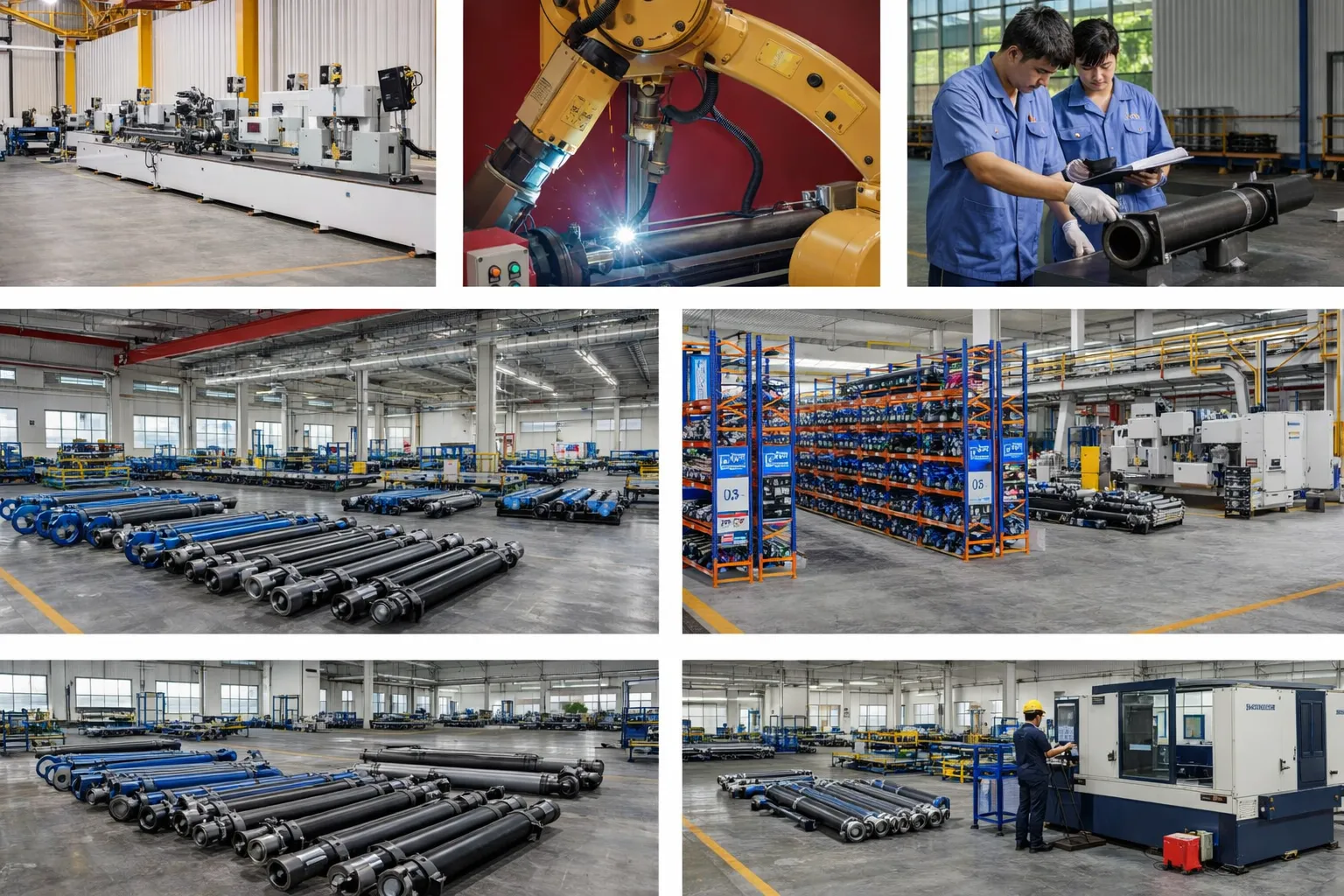
The lower ring cylinder combines three engineering challenges: compact packaging (2,000 mm stroke in a column-constrained space), elevated temperature (80–140 °C from steam proximity), and contamination exposure (condensate, rubber debris, lubricant draining into the column from above). Korea Ever-Power addresses all three: compact integrated cushions reduce overall length by 80–120 mm compared to standard cushion designs; FKM seals with thermal barrier sleeves handle the temperature; heavy-duty wipers with a drain passage below the gland handle the contamination. The bore is honed to Ra 0.2–0.4 µm over the full 2,000 mm stroke length. Rod concentricity to the bore axis is verified to ≤0.1 mm TIR — matching the upper ring cylinder for paired bead concentricity. Chrome plating is 50–80 µm. Every lower ring cylinder is hydrostatic tested at 1.5× working pressure and position-hold tested alongside its matched upper ring cylinder.
OEM & ODM
FAQ
Related Categories
Aanvullende informatie
| Editor |
|---|
Gerelateerde producten
-
Injection Molding Machine Reciprocating Cylinder (Mold Shifting Cylinder)
-
Hydraulic Press Mobile Workbench Cylinder
-
Filter Press Hydraulic Cylinder
-
Electric Furnace Tipping Cylinder
-
Cement Equipment Roller Press Cylinder
-
Hydraulic Press Clamping Cylinder
-
Electric Furnace Lock Cylinder
-
Hydraulic Press Return Cylinder