Plow Pitch Cylinder for Tillage Machinery
Engineered strictly for precision moldboard plow tilt control, featuring hot-forged trunnions and advanced offset load mitigation to permanently eliminate structural failure in severe agricultural environments.
Product Overview: The Foundation of Tillage Efficiency and Industrial Value
When assessing the overall operational efficiency of large-scale agricultural enterprises, mechanical engineers and farm fleet managers must deeply scrutinize the durability of their implement control systems. Soil preparation is not a passive activity; it is a violent, high-impact mechanical process. The moldboard plow, a primary tool for deep soil inversion and crop residue burial, encounters wildly fluctuating resistance forces as it slices through the earth. To maintain an optimal angle of attack, the implement relies completely on the structural and fluid power integrity of the plow pitch adjustment cylinder. If this critical actuator fails or suffers from internal fluid bypass, the plow loses its kinematic alignment. This results in uneven furrow depths, massive increases in tractor wheel slip, and a catastrophic drop in diesel fuel efficiency. In regions characterized by dense, rocky, or heavily compacted clay soils—such as the terraced agricultural zones of South Korea and Japan—standard commercial cylinders simply tear themselves apart under these relentless draft loads.
As an elite hydraulic cylinder manufacturer with over two decades of dedicated fluid power engineering experience, we have meticulously dissected the root causes of agricultural machinery failure. We understand that conventional actuators are critically compromised by cost-cutting manufacturing measures: inferior carbon steel barrels that balloon under pressure, cheap cast-iron trunnions that snap under shock loads, and basic rubber seals that disintegrate when exposed to abrasive silicate dust. To resolve these systemic industry issues, we have completely reimagined the heavy-duty hydraulic cylinder architecture. Our specialized pitch adjustment units are heavily fortified fluid power solutions designed specifically to absorb violent kinetic energy, maintain absolute hydrostatic locking, and deliver unwavering performance season after season. By integrating our highly advanced hydraulic parts into your machinery, you proactively eliminate the costly downtime associated with mid-field breakdowns.
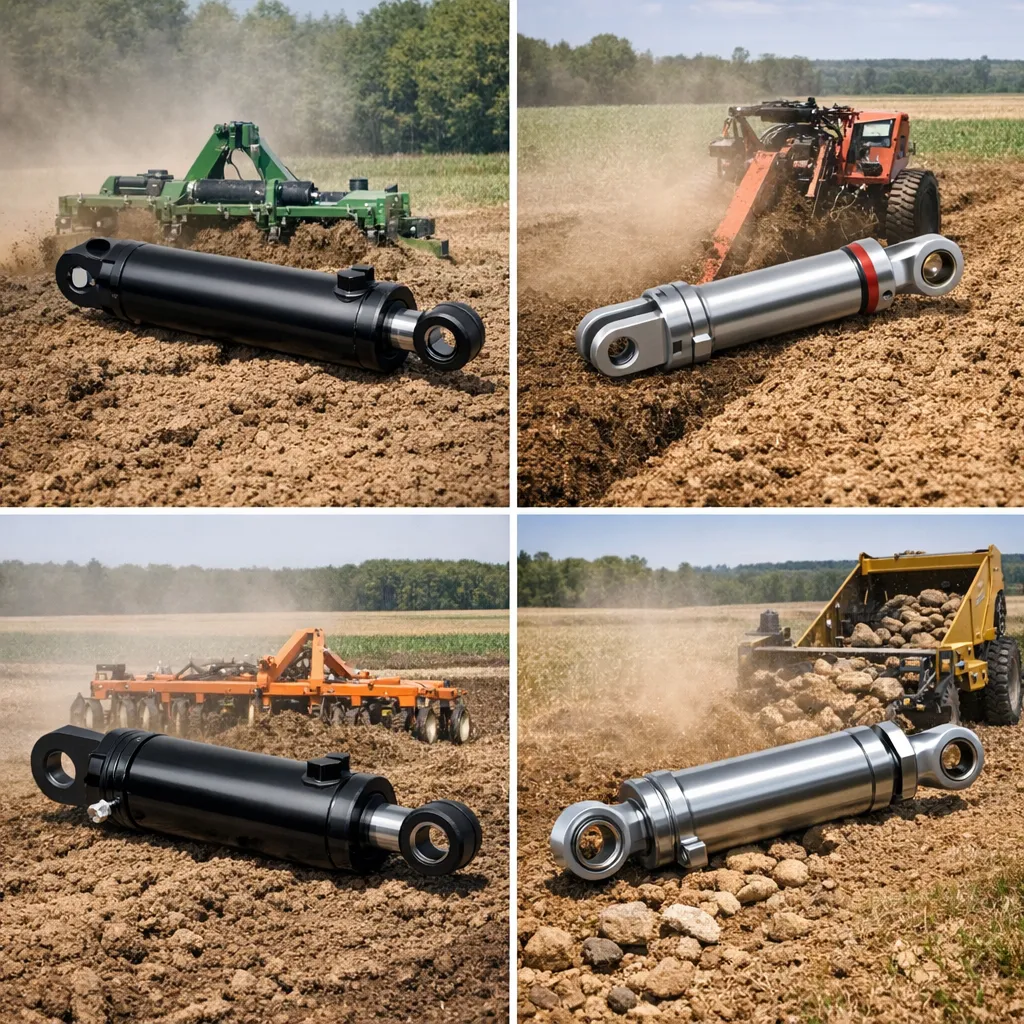
Evaluating the true hydraulic cylinder price requires looking far beyond the initial purchase order. When a substandard cylinder blows a primary seal or bends a rod during a narrow, weather-dependent spring planting window, the financial cost of lost productivity heavily dwarfs the price of the component itself. Upgrading your agricultural fleet with our heavily reinforced hydraulic rams guarantees a highly measurable return on investment through drastically extended maintenance intervals and sustained operational uptime.
Comprehensive Technical Parameters and Dimensional Capabilities
Seamless mechanical integration into existing tractor hydraulic circuitry requires strict adherence to precise technical specifications. The data matrix below outlines the core structural framework, advanced material composition, and extreme environmental tolerances of our purpose-built tillage cylinder. We offer extensive CNC customization capabilities to align with varying tractor horsepower ratings, auxiliary pump flow rates, and specific linkage geometries required by OEM manufacturers.
| Engineering Parameter Category | Specification Range and Technical Details |
|---|---|
| Industry Segment | Agriculture |
| Equipment Category | Tillage Machinery |
| Sub-system / Action Sequence | Moldboard Plow Tilt Adjustment |
| Hydraulic Cylinder Nomenclature | Plow Pitch Adjustment Cylinder |
| Kinematic Action Mode | Double acting hydraulic cylinder |
| Internal Structure Type | Piston Cylinder |
| Manufacturing Construction | Heavy-Duty Welded Type |
| Core Material System | High-Yield 27SiMn Alloy Steel |
| Rod Surface Treatment | Precision Hard Chrome Plated |
| Environmental Operating Level | Open Air + Medium to Heavy Impact Load |
| Primary Work Condition Feature | Continuous fine-tuning of plow body pitch angle under draft load |
| Typical Failure Mode Handled | Severe Trunnion Wear and Pinhole Elongation |
| Recommended Engineering Configuration | Forged trunnion seat + reinforced bushing + offset load control |
Operational Mechanics and Fluid Dynamics Working Principle
To truly appreciate the robust nature of this heavy-duty unit, it is necessary to understand the complex fluid dynamics and mechanical translations occurring within the steel barrel during active field operation. The entire system functions fundamentally through a closed-loop hydraulic circuit powered continuously by the tractor’s auxiliary hydraulic pump. Because agricultural implement adjustments require immense, positive mechanical control in multiple directions simultaneously, a single acting hydraulic cylinder is entirely inadequate for this critical task. Single-acting units rely solely on gravity or the implement’s dead weight to retract—forces that are instantly overpowered by the massive drag of compacted earth.
Instead, we utilize a highly responsive and rigid double acting hydraulic cylinder architecture, meaning highly pressurized fluid is actively harnessed for both the extension and the retraction strokes. When the tractor operator needs to alter the pitch of the moldboard plow—perhaps to drastically increase penetration depth when encountering a dense clay patch—they actuate the proportional directional control valve in the cabin. Pressurized hydraulic oil floods violently into the cap end (base end) port of the cylinder. This high-pressure fluid acts directly against the full internal surface area of the hydraulic cylinder piston. The resulting mathematical force effortlessly overcomes the massive draft resistance exerted by the soil, pushing the hardened steel rod outward. This linear extension physically alters the mechanical linkage geometry of the implement, tipping the plowshares forward for a significantly more aggressive bite angle into the subsoil.
Conversely, routing fluid into the rod end applies extreme pressure to the annular area of the piston (the total piston area minus the rod cross-section area), forcibly retracting the rod and decreasing the implement’s pitch angle. The true engineering marvel lies in the micro-adjustment capability and load-holding integrity. Once the directional valve closes, the internal sealing matrix absolutely traps the fluid. Despite the immense, fluctuating draft forces continuously trying to push or pull the plow out of geometric alignment, the cylinder acts as a rigid, unyielding structural member. Zero internal fluid bypass ensures the implement maintains a uniform, perfectly level furrow depth without the operator needing to constantly compensate for hydraulic drift.
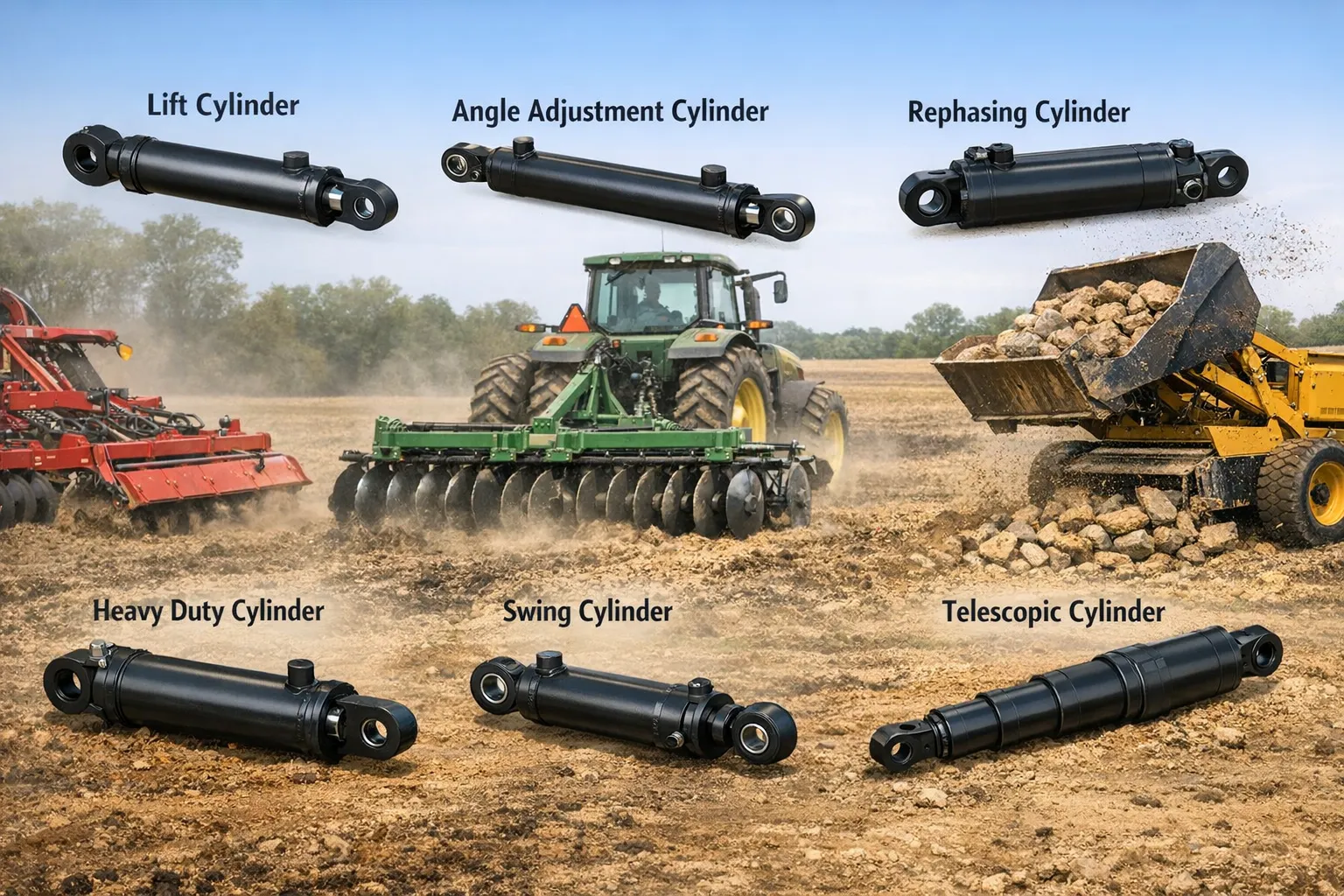
Seamless Equipment Compatibility and Retrofit Replacement
In the highly competitive agricultural sector, mechanical downtime during the extremely narrow windows of spring planting and autumn harvesting translates directly into severe financial loss. Immediate component interchangeability is therefore a primary engineering directive in our design process. When fleet managers find themselves continuously fixing hydraulic cylinders that were poorly specified by the original equipment manufacturer, they require highly reliable, heavy-duty drop-in replacements that do not require major implement frame modifications or welding.
Our fluid power units are meticulously dimensioned to serve as direct upgrades for a wide array of OEM machinery prominent in the South Korean, Japanese, and wider Asian markets. For the specific purpose of equipment selection, dimensional cross-referencing, and maintenance sizing (and emphatically not to imply any trademark infringement or corporate affiliation), our customized hydraulic cylinder components can be perfectly matched to the linkage geometries utilized by leading equipment brands. This includes, but is not limited to, heavy machinery manufactured by LS Tractor, Daedong (KIOTI), TYM, Yanmar, Kubota, John Deere, Case IH, Lemken, and Kverneland.
By securing our structurally superior hydraulic parts, maintenance teams can instantly elevate the performance of aging implements, often vastly surpassing the original factory reliability metrics and significantly extending the machinery’s productive lifecycle. We maintain a comprehensive inventory of standard dimensions, ensuring that your procurement process for a replacement lift cylinder or pitch actuator is rapid and frictionless.
Eight Pillars of Core Technical Superiority
What explicitly differentiates a premium, industrial-grade fluid power solution from an average commercial tube? It resides entirely in the microscopic engineering decisions, the strict selection of advanced raw materials, and a deep understanding of field tribology. Below are the eight definitive advantages of our specialized cylinder system:
1. Hot-Forged Trunnion Seat Architecture
The most prevalent failure mode in heavy tillage implements is catastrophic trunnion shear or pinhole elongation caused by violent lateral impacts. We abandon weak welded blocks in favor of precision closed-die forged trunnion seats. This aligns the metallic grain structure, vastly increasing fatigue resistance against subterranean shock loads.
2. Reinforced Composite Bushing Integration
To protect the main pivot points, we press-fit heavy-duty, self-lubricating reinforced composite bushings into the forged seats. These act as highly resilient sacrificial wear points, absorbing destructive micro-vibrations and making long-term mounting pin maintenance incredibly straightforward for fleet mechanics.
3. Advanced 27SiMn Alloy Steel Metallurgy
We deviate entirely from standard 1045 or 45# carbon steel. The cylinder barrel is crafted from 27SiMn (Silicon-Manganese alloy), offering a profoundly higher yield strength. This ensures the barrel does not suffer plastic deformation or ballooning under extreme hydraulic pressure spikes when the plow strikes an immovable boulder.
4. Offset Load Control Engineering
Tillage inherently generates eccentric loads (side-loading). We utilize extended gland bearings and specialized internal bronze-filled PTFE wear rings. These wide bearing surfaces absorb lateral thrusts, preventing the rod from scoring the internal barrel wall and protecting the primary seals from crushing compression forces.
5. Ultra-Low Friction Sealing Matrix
To guarantee incredibly smooth micro-adjustments without the jarring “stick-slip” phenomenon, we utilize a highly engineered composite matrix of imported polyurethane and PTFE-energized seals. This technology allows the piston to glide effortlessly while maintaining an absolute, zero-leak high-pressure barrier.
6. Multi-Stage Environmental Exclusion
Open-air operation dictates constant exposure to abrasive silica dust and wet mud. Our specialized double-lip heavy-duty polyurethane wiper rings aggressively scrape the rod clean during every single retraction stroke, ensuring absolutely no external particulate contaminants breach the clean hydraulic fluid reservoir.
7. Superior Micro-Cracked Hard Chrome
The piston rod is treated with a thick, heavily controlled layer of hard chrome featuring a micro-cracked surface topology. This invisible network holds microscopic amounts of hydraulic oil for continuous seal lubrication while forming an impenetrable barrier against highly corrosive agricultural fertilizers.
8. Automated Robotic Welding Integrity
The heavy-duty welded construction relies on programmable automated robotic MIG welding cells. This provides deep, incredibly uniform weld penetration with a strictly controlled heat-affected zone (HAZ), ensuring the cylinder base and fluid ports never crack under heavy mechanical draft forces.
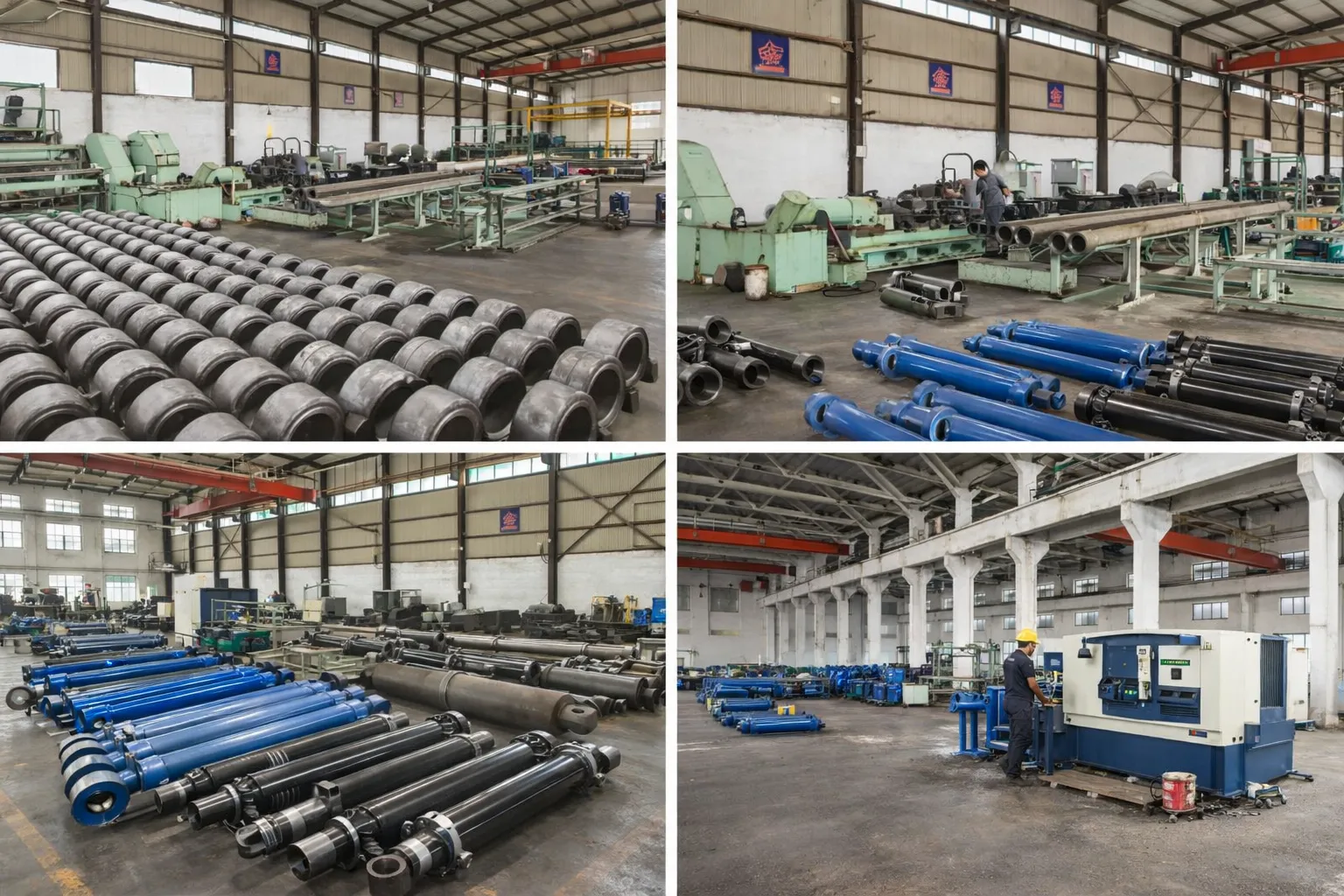
Autonomous Manufacturing Process and Absolute Quality Control
True mechanical reliability cannot simply be inspected into a completed product at the end of an assembly line; it must be systematically manufactured into every single component from the raw material stage onward. As a vertically integrated hydraulic cylinder manufacturer, our production ecosystem is governed by uncompromising quality assurance protocols. The lifecycle of our products begins with rigorous metallurgical verification. When the raw 27SiMn steel billets arrive at our facility, they undergo strict optical emission spectrometry to verify their exact chemical composition, ensuring the carbon, silicon, and manganese ratios perfectly align with our heavy-duty engineering specifications.
Following material clearance, the internal cylinder barrels are processed through state-of-the-art multi-axis CNC skiving and roller burnishing centers. This highly specialized machining process physically compresses the microscopic peaks of the steel’s internal surface, achieving a mirror-like finish with a surface roughness (Ra) of 0.2 to 0.4 micrometers. This extreme internal smoothness is highly critical for minimizing dynamic friction against the internal seals, drastically reducing heat generation, and entirely preventing the premature seal shredding that necessitates frequent hydraulic cylinder repair. For the external structure, we utilize automated robotic pulse-MIG welding cells to fuse the forged trunnion bases and hydraulic ports to the main barrel. This robotic precision guarantees flawless weld penetration, effectively eliminating the brittle heat-affected zones (HAZ) and porosity that cause standard cylinders to fracture.
Before any unit is authorized for global dispatch, it must pass our mandatory 100% dynamic hydrostatic testing protocol. We do not rely on random batch sampling. Every assembled cylinder is connected to computerized test benches and aggressively cycled at 1.5 times its maximum rated working pressure. Our technicians strictly monitor for zero external weeping, zero internal fluid bypass across the piston, and smooth, hesitation-free stroke actuation. Finally, each approved cylinder is permanently laser-etched with a unique serialization matrix, guaranteeing absolute lifetime traceability back to the original steel heat batch.
Expanding Beyond Agriculture: Cross-Industry Fluid Power Versatility
While this specific geometric blueprint is meticulously optimized for the agricultural sector as a plow pitch adjustment mechanism, its inherent resistance to extreme shock loading and eccentric forces makes the underlying fluid power technology highly adaptable. We routinely modify this robust engineering platform to provide seamless power transmission in other severe-duty environments where component failure is not an option.
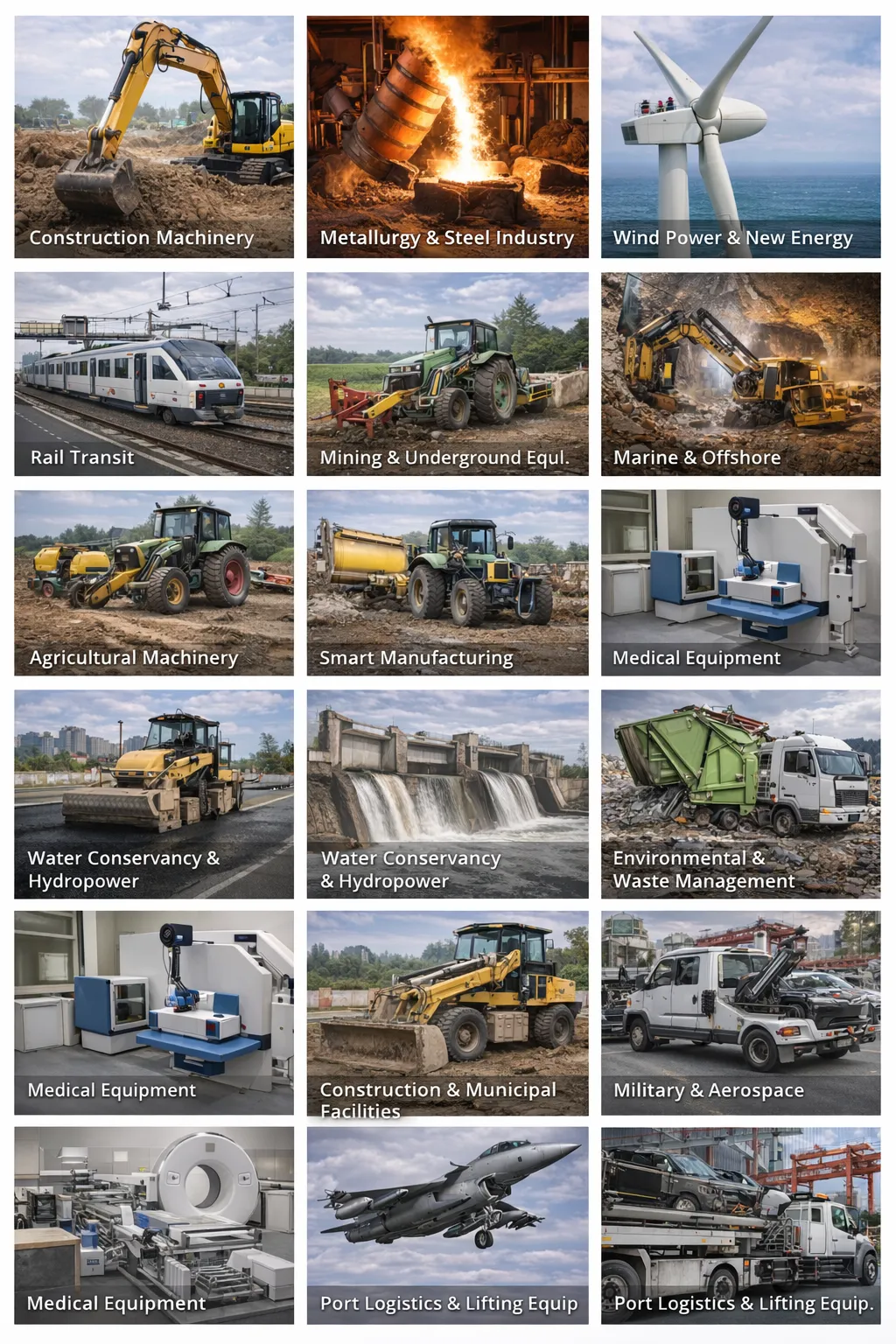
For instance, the heavy-duty forging of the trunnion mounts and the advanced offset load control capabilities translate perfectly to the construction machinery industry, where excavators, skid steers, and bulldozers face similarly abrasive dirt and violent operational impacts. Furthermore, our advanced anti-corrosion chrome treatments and high-temperature thermal stability modifications are frequently specified by heavy equipment engineers operating in the highly abrasive mining industry and the demanding metallurgical and iron industry. The universal truth across all these sectors is that integrating high-quality actuation is the most effective method to guarantee plant safety and operational profitability.
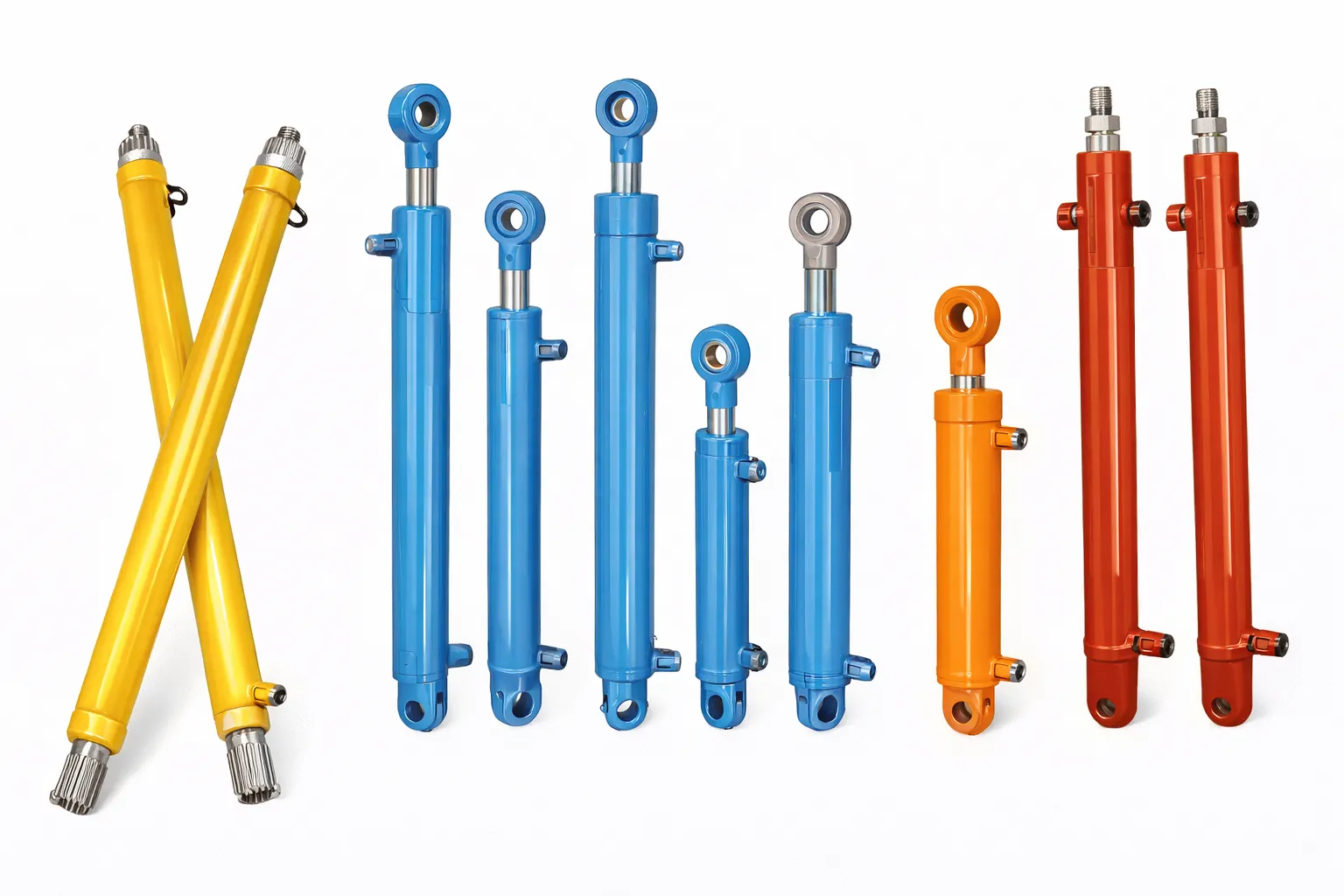
Comparative Analysis: Standard Commercial vs. High-Performance Cylinder
Evaluating the true acquisition cost over the equipment’s lifecycle reveals the absolute value of high-performance engineering. Initial procurement savings on cheap parts are rapidly obliterated by the cost of downtime and emergency field repairs. The table below illustrates the stark contrast between conventional off-the-shelf agricultural cylinders and our highly engineered pitch adjustment architecture.
| Engineering Feature | Standard Agricultural Cylinder | Our High-Performance Cylinder |
|---|---|---|
| Barrel Metallurgy | Standard 1045 or 45# Carbon Steel (Prone to bulging under pressure spikes) | 27SiMn High-Strength Alloy (Exceptional yield strength, zero plastic deformation) |
| Trunnion / Mounting | Basic welded block or brittle cast iron (High shear risk in rocky soil) | Hot-forged steel base with self-lubricating reinforced composite bushings |
| Side-Load Handling | Minimal. Relies entirely on rod stiffness. High risk of barrel scoring. | Extra-wide bronze/PTFE eccentric load control bands to maintain rod linearity |
| Wiper Seal System | Single-lip NBR (Rubber) – Allows abrasive mud and ice ingress over time. | Dual-lip heavy-duty Polyurethane aggressive mud scraper (Total exclusion) |
| Testing Protocol | Random batch sampling, basic visual dimensional checks. | 100% full-stroke dynamic pressure cycled at 1.5x working load before shipping |
Field Proven Success: Global Real-World Case Studies
Empirical data gathered from the harshest agricultural environments validates our fluid power engineering theory. By partnering closely with heavy implement manufacturers and large-scale agricultural cooperatives, we have consistently proven the transformative impact of upgrading to our specialized hydraulic systems across the Asian market.
Case Study 1: Eradicating Trunnion Failure for a South Korean Fleet
Client Profile: Regional Agricultural Cooperative Fleet Manager, Gyeonggi-do, South Korea.
The Challenge: The cooperative was experiencing an unacceptable 35% failure rate per season with their OEM-supplied pitch cylinders on heavy reversible moldboard plows. The extreme underground impact forces from rocky, hardpan clay terrain were causing catastrophic shearing of the cast iron trunnion mounts, leading to extensive tractor downtime during the critical spring tilling window.
The Solution & Result: The maintenance director contacted our engineering team online. We rapidly prototyped and delivered a retrofit batch utilizing our signature hot-forged trunnion seats and 27SiMn alloy barrels. Following the installation in early 2024, the cooperative tracked the performance and recorded exactly zero cylinder structural failures over the subsequent two intense planting seasons.
“The sheer rigidity of the forged mounts entirely solved the pin slop and snapping issues we faced. The highly competitive hydraulic cylinder price was instantly offset by the massive reduction in labor hours we previously wasted on fixing hydraulic cylinders mid-season.” — Mr. Choi, Fleet Maintenance Director (Nov 2024)
Case Study 2: Overcoming Severe Side-Loading Deflection in Japan
Client Profile: Precision Tillage Implement OEM, Hokkaido, Japan.
The Challenge: The OEM was struggling with mounting warranty claims on their automated GPS-guided plows. The unique, dense volcanic ash soil created massive asymmetrical draft forces. These eccentric loads caused the piston rods of their standard cylinders to bend and deflect, leading to severe “stick-slip” juddering and rapid blowout of the internal polyurethane seals.
The Solution & Result: We re-engineered the internal architecture of their actuation units. We extended the bearing area of the rod gland and integrated our extra-wide, bronze-impregnated PTFE guide rings to handle the offset load. The resulting actuation was perfectly smooth, allowing their software to maintain the plowing depth perfectly within millimeters. The OEM integrated our solution as their standard factory fitment.
Case Study 3: Maximizing Uptime in Corrosive Rice Paddy Operations
Client Profile: Commercial Rice Farming Enterprise, Mekong Delta, Vietnam.
The Challenge: Deep rotary tilling and plowing in highly abrasive, waterlogged, and chemically treated rice paddies. Standard chrome plating on local aftermarket parts was pitting rapidly due to aggressive fertilizers mixed in the standing water. This led to deep rust, which shredded the primary seals as the rod retracted, causing massive hydraulic fluid leaks into the ecosystem.
The Solution & Result: We supplied custom-engineered units featuring our advanced, multi-layer micro-cracked hard chrome plating process, paired with specialized double-lip polyurethane wiper seals designed to aggressively exclude abrasive mud slurry. The operational lifespan of the cylinders was extended from a mere 5 months to over 30 months of continuous, leak-free operation.
Frequently Asked Procurement Questions (FAQ)
To further assist procurement managers, fleet directors, and mechanical engineering teams, we have compiled detailed answers to the most common technical and commercial inquiries regarding the specification, acquisition, and maintenance of our specialized tillage hydraulic systems.
Upgrade Your Agricultural Fleet’s Reliability Today
Do not allow subpar, under-engineered fluid power components to dictate your operational uptime and agricultural profitability. Partner with a proven engineering leader to integrate the most robust, trunnion-reinforced actuation systems available on the global market.
Submit your dimensional requirements, operational challenges, or technical OEM blueprints for a rapid, highly detailed technical consultation.
Editor: Cxm