Scissor Lift Steering Cylinder | EP-HCYY11112004 Model
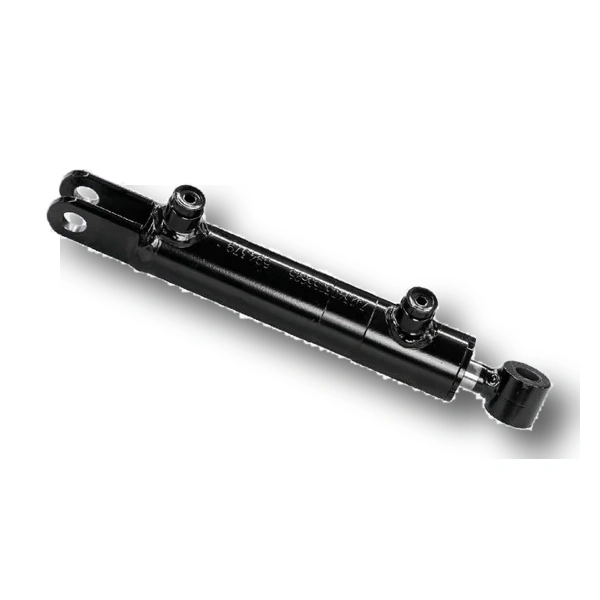
Scissor Lift Steering Cylinder
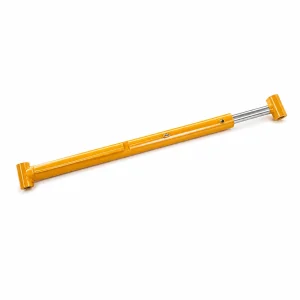
EP-HCYY11112004 · Bore Φ40mm · 20 MPa · 2.8 kg
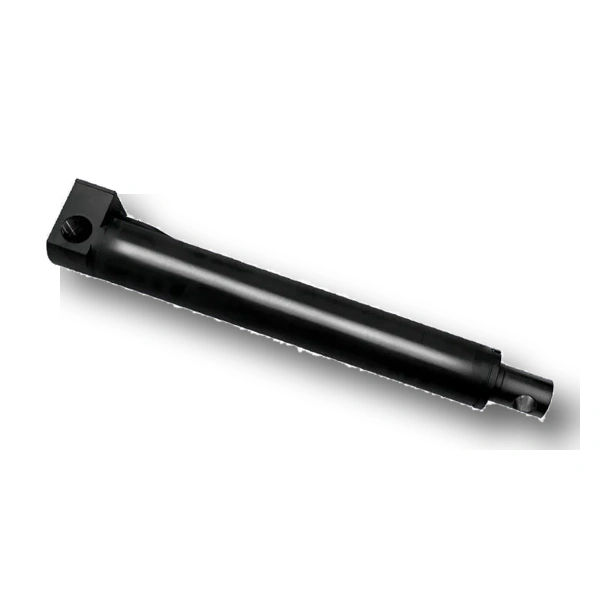
The compact steering actuator on self-propelled scissor lifts. At just 2.8 kg and 400 mm installation distance, this cylinder steers the drive wheels for precise positioning of the platform — manoeuvring around columns, walls, and equipment on crowded job sites. Mounted on the steer axle, it converts hydraulic pressure from the operator's joystick into wheel angle.
Technical Specifications
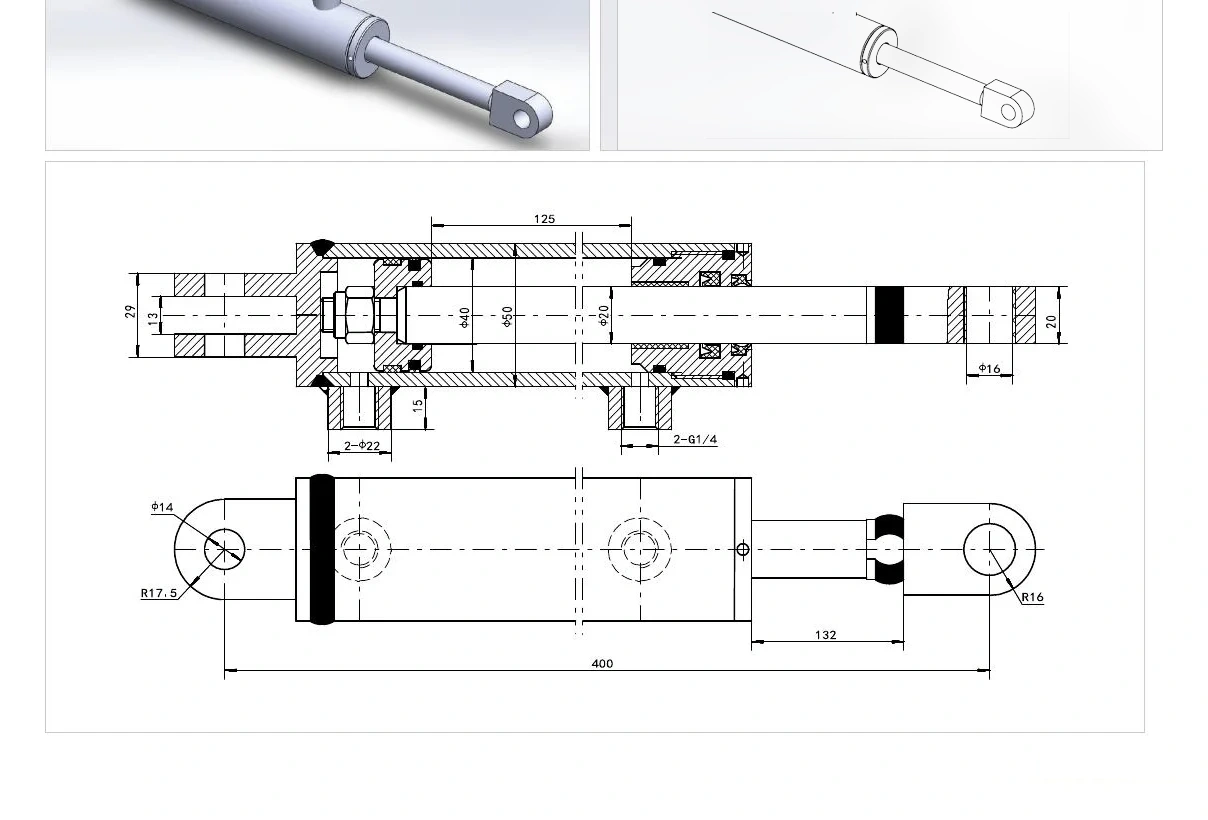 ▲ Dimension Drawing
| Parameter | Specification |
|---|---|
| Product Name | Scissor Lift Steering Cylinder |
| Cylinder Model | EP-HCYY11112004 |
| Bore Diameter (D) | Φ40 mm |
| Rod Diameter (d) | Φ20 mm |
| Stroke (S) | 125 – 150 mm (2 specifications) |
| Installation Distance (L) | 400 mm |
| Working Pressure | 20 MPa |
| Maximum Withstand Pressure | 30 MPa |
| Weight | 2.8 kg |
| Cylinder Type | Double-acting, single rod |
| Application | Self-Propelled Scissor Lift — Drive Wheel Steering |
 ▲ Scissor Lift Steering Cylinder | EP-HCYY11112004 Model
How the Steering Cylinder Positions the Scissor Lift
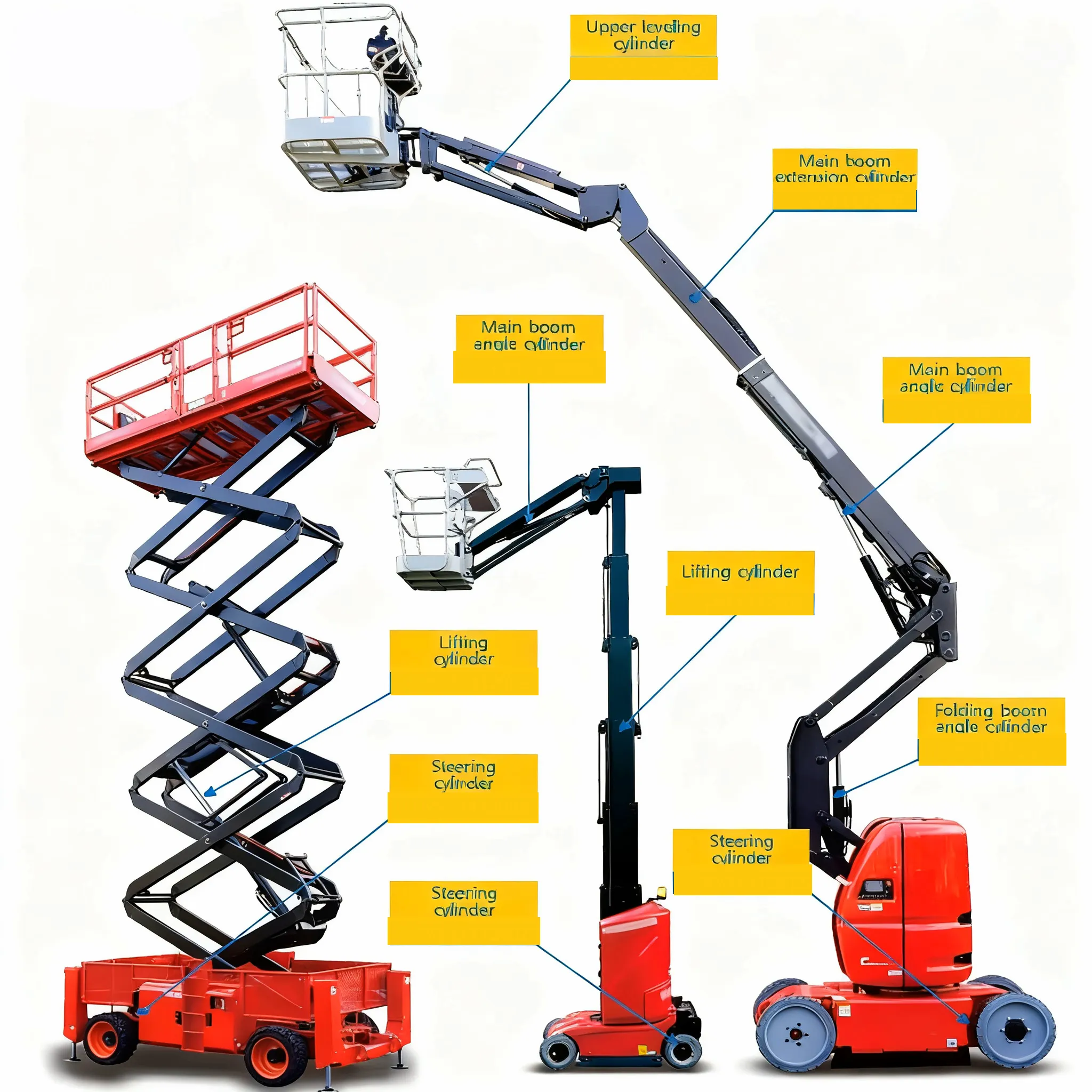
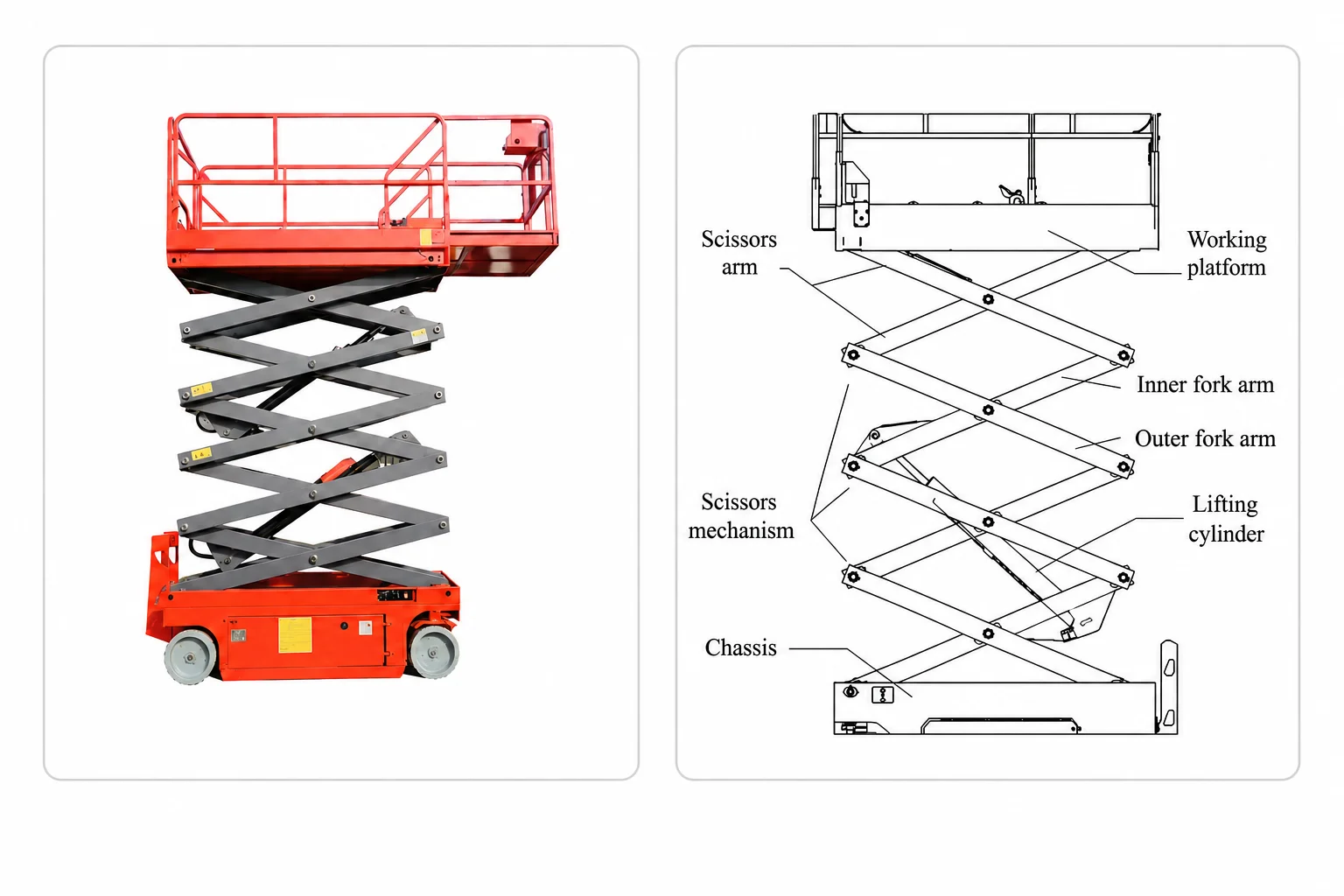
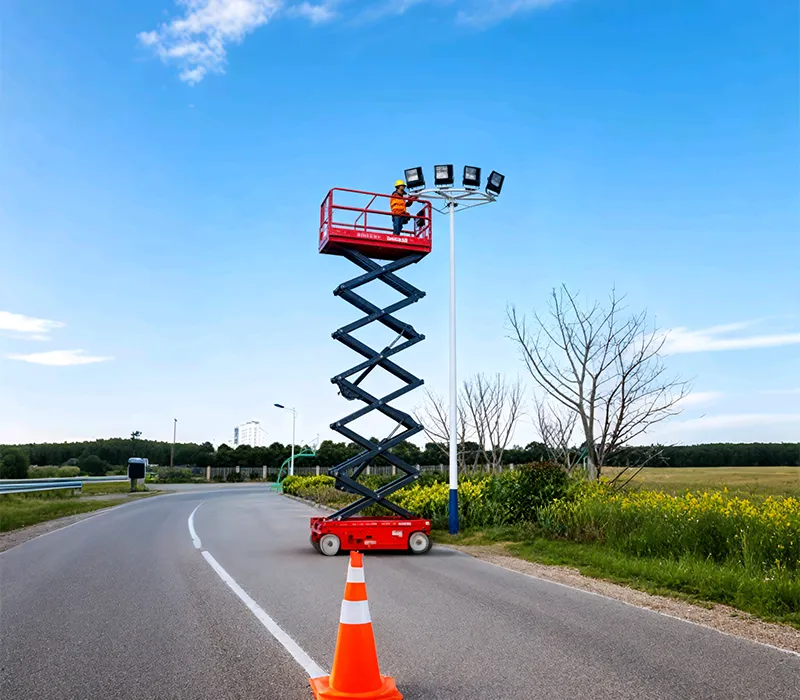
Self-propelled scissor lifts drive and steer under their own power — the operator controls movement from the platform at height using a joystick. The steering cylinder sits on the steer axle (typically the non-drive axle), connected to the wheel spindles through tie rods. When the operator pushes the joystick left or right, the cylinder extends or retracts through its 125–150 mm stroke, turning the steer wheels.
Scissor lift steering differs from forklift steering in two important ways. First, the speeds are much lower — scissor lifts typically travel at 0.5–1.0 m/s versus 10–15 km/h for forklifts. Second, steering corrections happen while the operator is at height on the platform, so steering response must be smooth and predictable — no sudden wheel movements. The compact Φ40 mm bore at 20 MPa produces enough force to turn the steer wheels on hard indoor surfaces without the aggressive response that a larger cylinder would create.
The cylinder operates at 20 MPa — higher than the forklift steering cylinder (16 MPa) — because the scissor lift's smaller wheels and solid rubber tyres create more ground friction per unit of steering force. Browse the complete aerial work vehicle hydraulic cylinder range.
Available Specifications
Two specifications cover the most common scissor lift steer axle configurations:
| No. | Bore (D) | Rod (d) | Stroke (S) | Inst. Dist. (L) | Specifications |
|---|---|---|---|---|---|
| 1 | Φ40 | Φ20 | 125 | 400 | Φ40×Φ20×125 |
| 2 | Φ40 | Φ20 | 150 | 400 | Φ40×Φ20×150 |
Scissor Lift Steering vs Forklift Steering
Both machines use hydraulic steering cylinders — but the operating requirements are fundamentally different:
Single-rod Φ40 mm, 20 MPa. Low travel speed (≤1 m/s). Operator steers from height via joystick. Smooth, predictable response critical — sudden movements risk destabilising the elevated platform. Solid rubber tyres create high ground friction.
Double-rod Φ65–80 mm, 16 MPa. Higher travel speed (10–15 km/h). Operator steers from the cab at ground level. Fast, responsive steering needed for tight aisle manoeuvring. Pneumatic or cushion tyres with lower ground friction.
Key Advantages
- ⚡ Only 2.8 kg — the lightest hydraulic cylinder in the aerial work vehicle range. The compact size fits within the limited space of a scissor lift steer axle without adding significant weight to the machine's front end.
- 20 MPa working / 30 MPa max — the 1.5× safety factor handles shock loads from kerb strikes and uneven floor surfaces. The higher pressure (vs forklift 16 MPa) compensates for the compact bore size and the solid rubber tyres' higher ground friction.
- 400 mm installation distance — standardised pin-to-pin length across both stroke specifications (125 mm and 150 mm), simplifying steer axle design and replacement logistics.
- Smooth joystick response — the small bore and moderate pressure produce progressive steering force — no sudden wheel snap. Critical for operator confidence when positioning the platform at height.
- ️ Hard-chrome rod — essential for scissor lifts that operate outdoors on construction sites, where dust, concrete powder, and rain challenge seal integrity. The Ra ≤0.2 µm finish protects the seals from abrasive contamination.
Complete Aerial Work Vehicle Cylinder Family
Korea Ever-Power manufactures hydraulic cylinders for both scissor lift and boom lift aerial work platforms:
Scissor Lift Lifting Cylinder — extends the scissor mechanism. 3 specs, Φ63–75 mm.
Scissor Lift Steering Cylinder — steers drive wheels. 2 specs, Φ40 mm, 2.8 kg.
Steering + leveling + lower arm + upper arm. 4 types, Φ63–110 mm.
Why Choose Korea Ever-Power
Korea Ever-Power is a professional hydraulic cylinder manufacturer and supplier, specialising in forklift hydraulic cylinders, aerial work vehicle cylinders, mobile machinery cylinders, offshore cylinders, and industrial engineering cylinders. Our production facilities are equipped with composite machining centres, multi-station welding robots, automated assembly lines, specialised cylinder testing machines, and a dedicated quality inspection area — ensuring every cylinder meets OEM-grade performance standards.
Korea Ever-Power forklift tilt cylinders are manufactured to the same specifications and quality standards as original equipment cylinders fitted to major forklift brands worldwide. Every cylinder is 100% hydrostatic pressure tested, dimensionally inspected, and shipped with a test certificate and seal kit. Contact the Korea Ever-Power team for pricing and lead time.
Frequently Asked Questions
What Our Customers Say
"Replaced steering cylinders on 10 scissor lifts in our rental fleet. At 2.8 kg each, swapping them takes 30 minutes per machine. The 400 mm installation distance matched perfectly on all 10 units — no surprises."
B. Murphy — Rental Technician, Ireland
"Our scissor lifts operate on dusty construction sites. The previous aftermarket steering cylinders leaked within 4 months. Korea Ever-Power units have been running 11 months with zero leaks — the rod chrome quality makes the difference."
L. Dubois — Maintenance Manager, France
"Good quality, competitive price — approximately 40% below OEM. We ordered both the 125 mm and 150 mm stroke versions for different scissor lift models. The joystick response is smooth and progressive."
M. Hansen — Service Engineer, Norway
"We ordered steering + lifting cylinders together for a 15-unit scissor lift fleet overhaul. Korea Ever-Power shipped both types in one delivery — consistent quality, consistent dimensions. All passed our incoming inspection."
J. Martínez — Fleet Director, Spain
"The 30 MPa burst rating gives us confidence on rough outdoor terrain. Our scissor lifts regularly drive over cable runs, expansion joints, and uneven concrete — the steering cylinder handles the shock loads without issue."
A. Korhonen — Site Manager, Finland
Related Hydraulic Cylinder Categories

Additional information
| Editor |
|---|
Related products
-
Boom Lift Hydraulic Cylinder Set | 8 Models | Bore Φ40–110mm
-
HCYY11112005 Main Boom Angle Cylinder for Aerial Work Vehicles
-
HCYY11112003 Lifting Cylinder for Aerial Work Vehicles
-
Boom Aerial Work Vehicle Upper Arm Hydraulic Cylinder
-
Boom Aerial Work Vehicle Lower Arm Hydraulic Cylinder
-
Scissor Fork Aerial Work Vehicle Steering Hydraulic Cylinder — Double-Acting
-

Scissor Fork Aerial Work Vehicle Steering Hydraulic Cylinder
-
Boom Aerial Work Vehicle Floating Hydraulic Cylinder