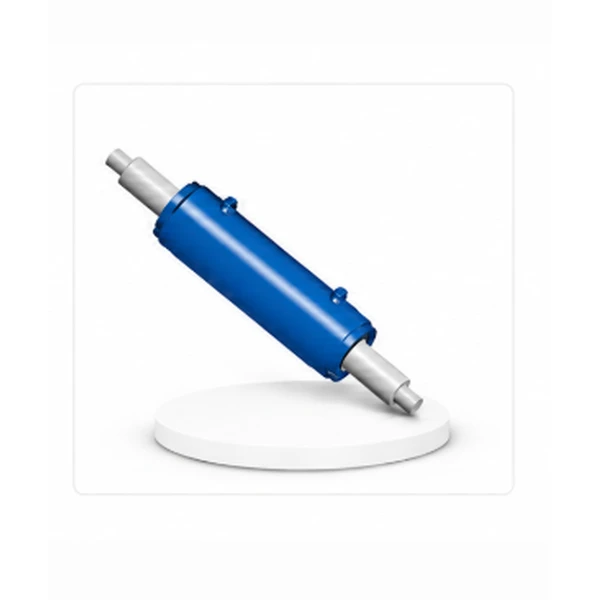
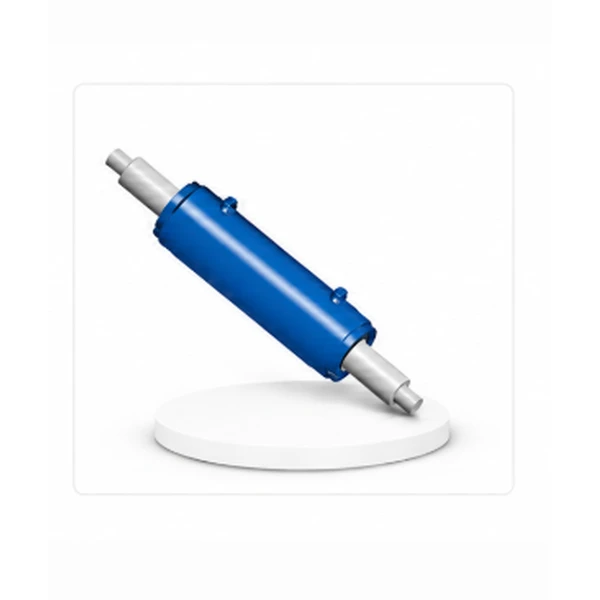
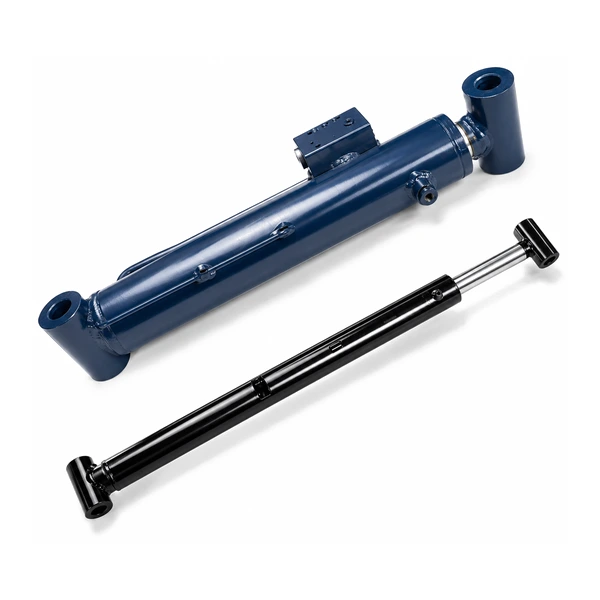
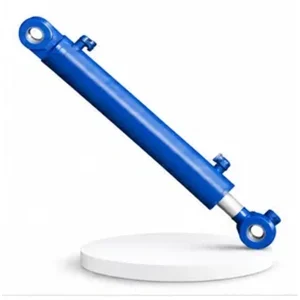
Aerial Work Platform Steering Cylinder
Joystick at 30 Metres, Wheels at Ground Level — Remote Steering Without Line of Sight
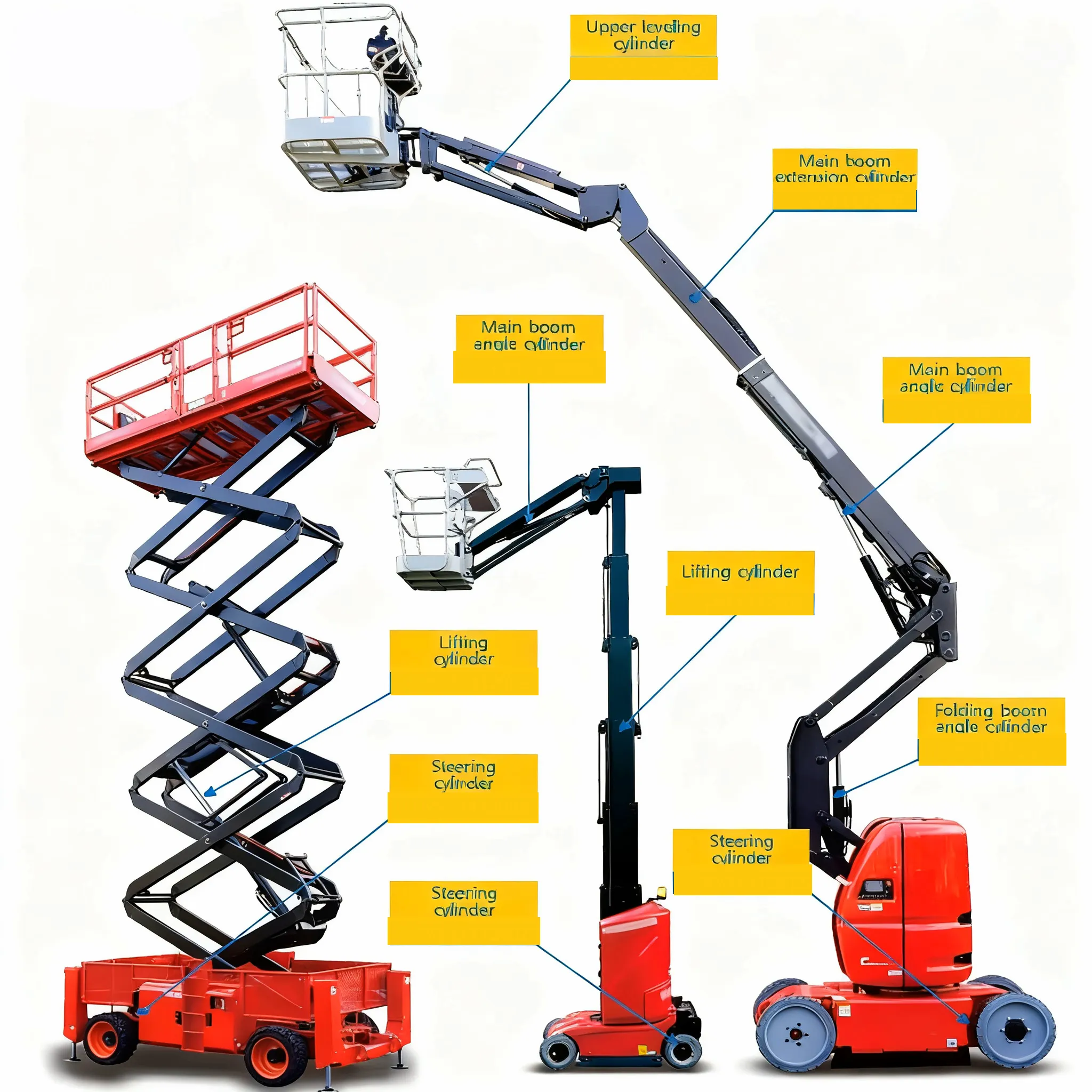
The crane steering cylinder (#23) responds to a steering wheel with direct mechanical feedback — the driver feels the road through the wheel. The mining steering cylinder (#28) overcomes massive tyre friction on gravel — brute force is the priority. The aerial platform steering cylinder operates in a completely different paradigm: the operator is in the basket, 20–40 metres above the ground, steering the chassis by pushing a joystick — no mechanical linkage, no haptic feedback, no direct view of the wheels.
The operator judges the steering angle by looking down from the basket at the chassis below — a perspective distorted by height, parallax, and the boom structure. The steering cylinder must respond proportionally and predictably to the joystick signal: small joystick deflection = small wheel turn, medium deflection = medium turn, full deflection = full lock. Any non-linearity, dead-band, or overshoot makes the machine feel unpredictable from the basket — and the operator overcorrects, weaving between racking columns instead of driving a straight line.
Korea Ever-Power manufactures the steering cylinder with the bore finish, seal friction, and response characteristics that joystick-from-basket control demands, as the sixth of seven aerial work platform hydraulic cylinders.
Technical Specifications
| Parameter | Specification |
|---|---|
| Product | Aerial Work Platform Steering Cylinder |
| Function | Steering system for chassis tyres (joystick-controlled) |
| Bore | 63 mm – 200 mm |
| Rod | 36 mm – 140 mm |
| Stroke | ≤ 1,000 mm |
| Max Pressure | 30 MPa |
| Application | Self-propelled boom lift, scissor lift |
| Certification | ISO 9001 · EN 280 / ANSI A92 compatible |
Indoor Navigation — Polished Floors, Non-Marking Tyres, 50 mm Clearance
At walking speed on polished concrete with non-marking tyres, the steering forces are minimal — the cylinder operates at 5–15% of its pressure capacity. At this low pressure, seal friction dominates the response. A Ra 0.2 µm bore (standard for all other products) produces noticeable stick-slip at low speed. Korea Ever-Power hones the steering cylinder bore to Ra 0.1 µm — the finest finish in the entire 31-product catalogue — to eliminate stick-slip at walking speed.
A joystick in the basket (for drive-while-elevated) and a second control at ground level (for transport and trailer loading). The steering cylinder must respond identically to both — same sensitivity, same proportionality, same turn rate. If the ground-level control feels different from the basket control, the operator will misjudge steering angles when switching between stations. Contact Korea Ever-Power for platform steering specifications.
Manufacturing Process
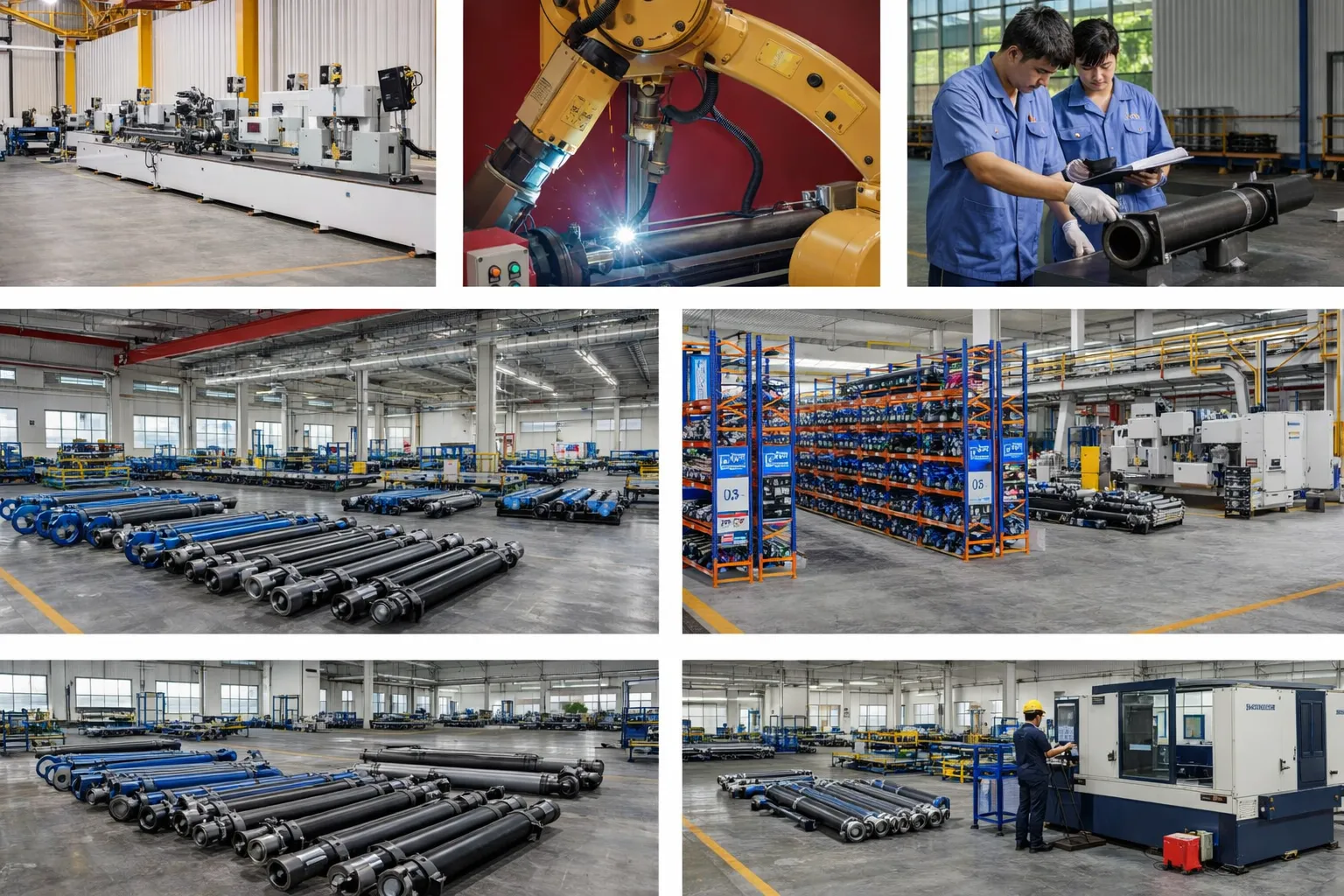
Bore (63–200 mm) honed to Ra 0.1 µm — the finest specification in the Korea Ever-Power mobile machinery catalogue. PTFE-composite guide rings eliminate metal-to-metal contact. Low-friction polyurethane seals selected for near-zero breakaway friction at 5–15% of rated pressure. Chrome 50 µm. Seals rated -30 °C to +80 °C.
Every steering cylinder is hydrostatic tested at 45 MPa and proportional-response tested — the cylinder is connected to a proportional valve, and the extension rate is measured at 10 valve opening positions (5%, 10%, 15%… 50% of full opening). The response must be linear (±10%) across the entire range — ensuring the joystick-to-wheel relationship is predictable from the basket.
OEM & ODM
FAQ
Related Categories
Додатне информације
| Editor |
|---|
Повезани производи
-
Mobile Crane Counterweight Cylinder
-
Rotary Drilling Luffing Cylinder
-
Mining Dump Truck Steering Cylinder
-
Small Excavator Stick Cylinder (Arm Cylinder)
-
Aerial Work Platform Telescopic Cylinder
-
Aerial Work Platform Luffing Cylinder
-
Aerial Work Platform Electric Cylinder
-
Small Excavator Rotary Actuator