Door Opening Cylinder for High-Speed Train Door Systems
Engineered for light-load, high-frequency transit environments. Featuring ultra-low friction sealing technology to ensure millions of reliable passenger access cycles without seal degradation.
Product Overview: The Backbone of Mass Transit Safety
As railway infrastructure expands across South Korea and neighboring regions, rolling stock engineers are continually tasked with improving component reliability. The mechanized subsystems within a passenger train directly dictate the daily commuting experience and overall network punctuality. Among these critical systems, the automated passenger access doors endure the most rigorous operational cycles. The primary linear actuator driving this precise motion is the door opening cylinder. Operating within a distinct mechanical profile characterized by relatively light structural loads combined with an extraordinarily high frequency of actuation, standard industrial fluid power components simply cannot survive the long-term demands of a busy transit line.
When a commuter train or high-speed railcar arrives at a station platform, the doors must actuate swiftly, smoothly, and safely. A single mechanical hesitation can trigger a cascading delay across the entire regional transit grid. Operating as a dedicated hydraulic cylinder manufacturer, our engineering division has thoroughly analyzed the root causes of transit door actuator failures. The most prevalent issue encountered by fleet operators is accelerated seal wear. Continuous, rapid micro-strokes generate localized boundary friction and heat within the cylinder barrel, eventually hardening and degrading standard elastomer seals. This physical degradation leads to internal fluid bypass, a sudden loss of operational pressure, and the development of a jerky, unstable motion profile commonly referred to as stick-slip.
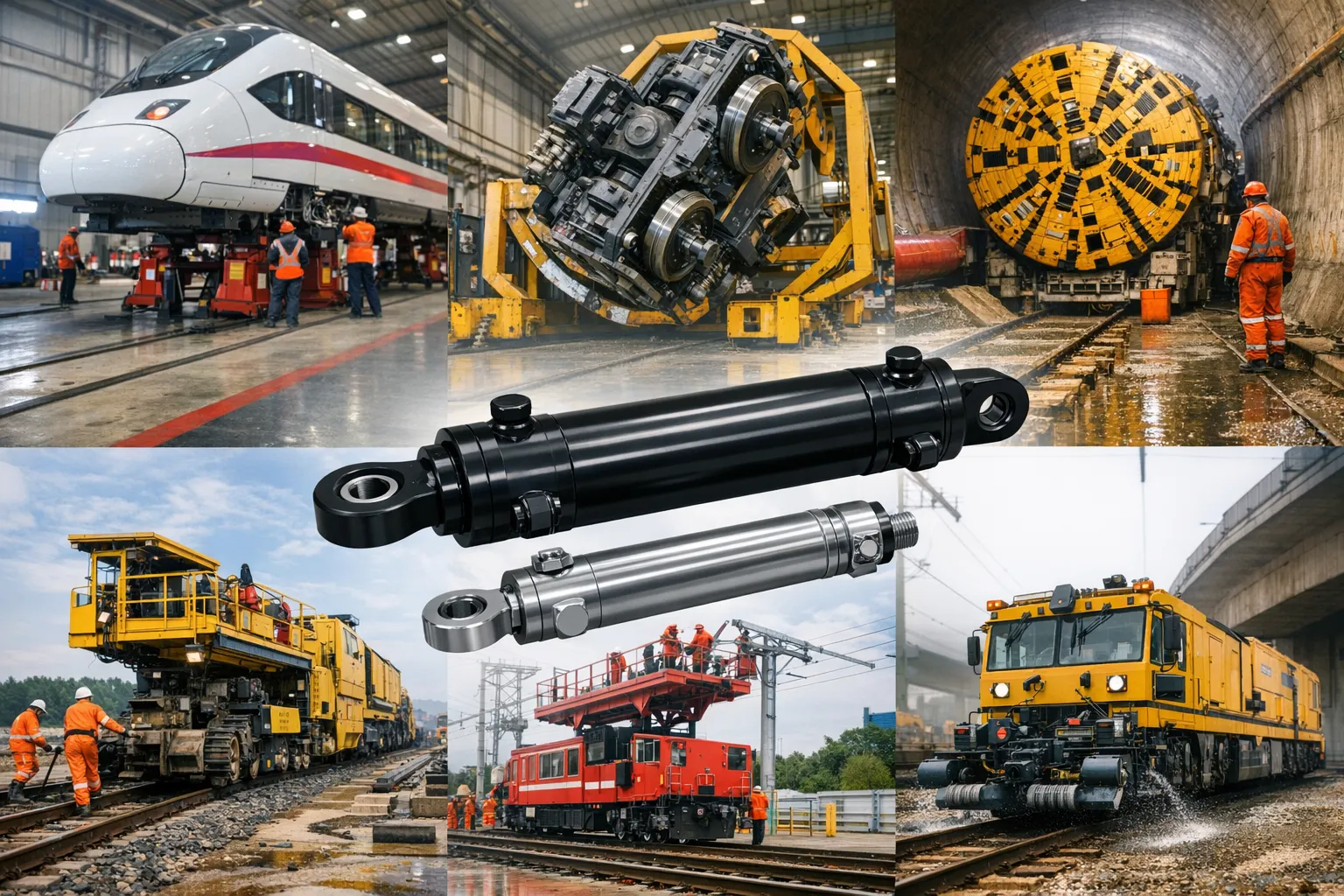
To engineer a permanent solution to this industry-wide problem, our specialized door opening hydraulic cylinder integrates proprietary tribological advancements. By employing an ultra-low friction sealing architecture combined with highly polished internal bore surfaces, we drastically reduce the dynamic friction coefficient between the sealing lip and the internal barrel wall. This highly engineered internal geometry ensures that the door mechanism glides silently and effortlessly, vastly extending the operational lifespan of the unit. Our commitment to precise fluid power engineering ensures that transit authorities can procure premium hydraulic parts that guarantee passenger safety while optimizing their long-term maintenance strategies. When evaluating total lifecycle value, our highly competitive hydraulic cylinder price provides an unmatched return on investment for large-scale fleet modernization and overhaul projects.
Comprehensive Technical Specifications
Selecting the correct mechanical specifications is vital for seamless integration into complex high-speed train networks. The following data table outlines the customizable ranges and baseline technical parameters of our transit-grade actuation components. We ensure that every double acting hydraulic cylinder meets the rigorous dimensional, metallurgical, and functional requirements of your specific rolling stock architecture.
| Engineering Category | Parameter Detail & Customization Range |
|---|---|
| Target Industry | Railway Transit / Commuter Rail |
| Equipment Classification | High-Speed Train / Metropolitan Subway |
| Sub-system Function | Door System / Automated Passenger Access |
| Specific Component Name | Door Opening Cylinder |
| Actuation Method | Double Acting Hydraulic Cylinder |
| Structural Type | Piston Cylinder (Compact Architecture) |
| Manufacturing Method | Automated Robotic Welded Construction |
| Primary Material System | 27SiMn High-Strength Alloy Steel |
| Rod Surface Treatment | Deep Hard Chrome Plating (Micro-polished) |
| Environmental Adaptability | Severe Weather Tolerant (-40 to +80 Degrees Celsius) |
| Operational Workload | Light Load + Extreme High-Frequency Cycling |
| Typical Prevented Failure | Premature Seal Abrasion & Stick-Slip Phenomenon |
| Recommended Configuration | Ultra-Low Friction PTFE Composite Sealing Matrix |
| Mounting Orientations | Custom Clevis, Trunnion, or Flange Mounts available |
The implementation of 27SiMn alloy steel for the main barrel is a deliberate engineering decision that significantly elevates our product above conventional offerings. Compared to standard carbon steels frequently found in generic hydraulic cylinder components, 27SiMn provides vastly superior yield strength and exceptional torsional rigidity. This metallurgical advantage allows our design team to reduce the overall wall thickness, resulting in a lighter component that directly contributes to the energy efficiency of the train without compromising burst pressure safety limits.
Operational Fluid Dynamics and Kinematics
Understanding the dynamic fluid mechanics governing the door opening hydraulic cylinder is essential for appreciating its necessity in high-speed rail networks. Unlike pneumatic systems that suffer from air compressibility issues, or simple single-acting actuators that utilize internal mechanical springs for return strokes, a double acting hydraulic cylinder provides absolute, bi-directional powered control. This rigid fluid control is mandatory for passenger doors to ensure they cannot be accidentally pushed open by aerodynamic pressure pockets while the train is moving at high velocities through tunnels.
The operational sequence is initiated when the central train control unit sends an electronic signal to the local hydraulic manifold. To open the doors, pressurized hydraulic fluid is precisely channeled into the cap end port of the cylinder barrel. The fluid exerts force across the full surface area of the hydraulic cylinder piston, smoothly driving the rod outward. Because the door mechanism is relatively light compared to heavy industrial machinery, the required hydraulic pressure is modest. However, the velocity must be rapid and the motion completely uniform. Our proprietary low-friction sealing configuration guarantees that this outward stroke occurs without any micro-stuttering, ensuring the heavy door panels glide silently apart.
Conversely, to secure the cabin prior to departure, fluid is directed into the rod end port, pushing against the annular area of the piston and retracting the rod. Crucially, our engineers incorporate advanced internal hydraulic cushioning at both ends of the stroke. As the door approaches its fully closed or fully open state, a specialized damping spear restricts the exiting hydraulic fluid. This restriction causes a progressive, controlled deceleration, allowing the door panels to come to a soft, silent rest. This anti-slamming feature is critical not only for mitigating noise pollution in the passenger cabin but also for preserving the mechanical integrity of the door hinges, guide rails, and surrounding hydraulic rams from repetitive impact fatigue over years of service.
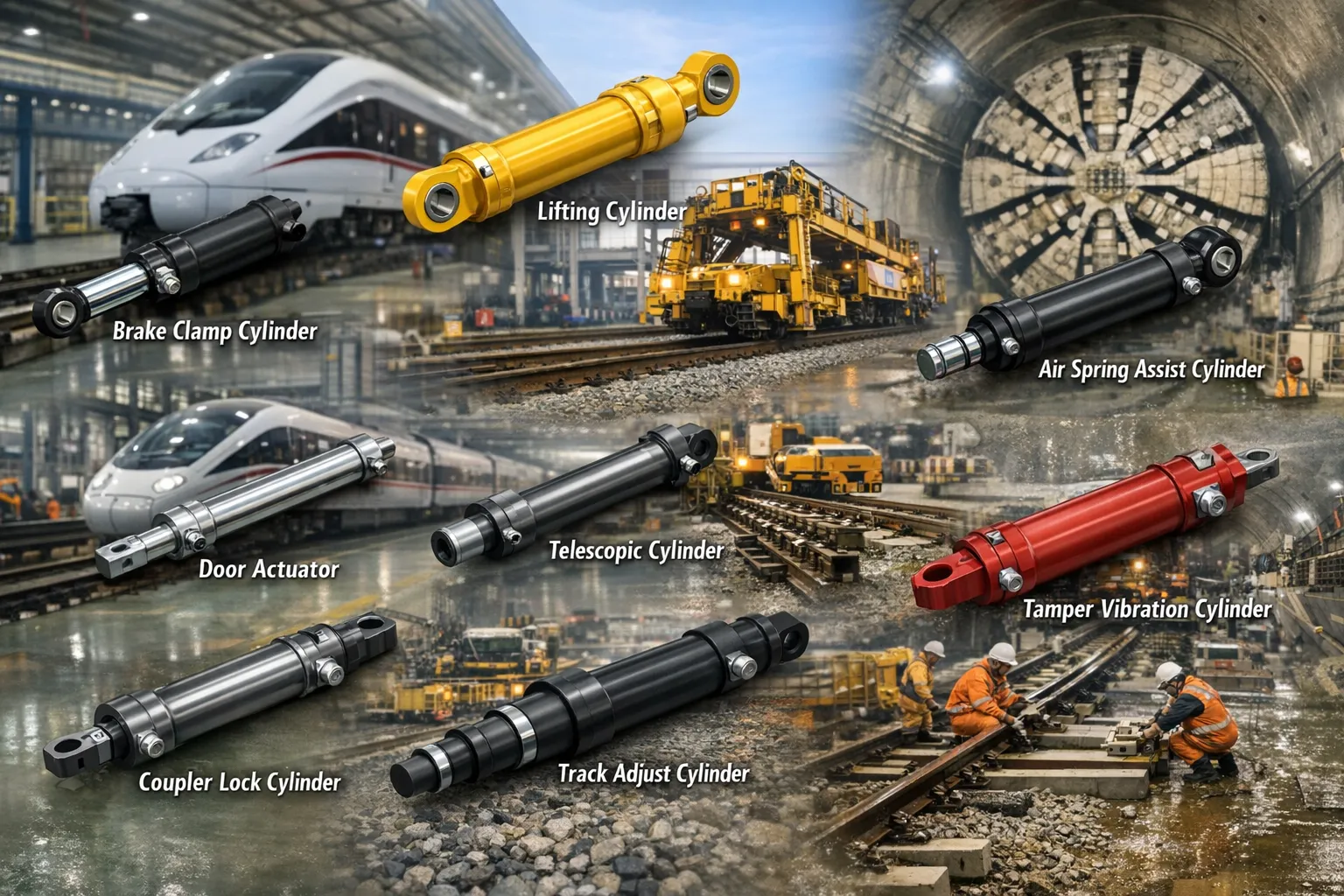
Seamless Brand Replacement and Fleet Integration
For maintenance, repair, and overhaul (MRO) facilities, sourcing exact replacement components for aging rolling stock can be a logistical nightmare, often fraught with incredibly long lead times and exorbitant costs imposed by the original equipment manufacturers. We simplify this procurement process entirely. Our custom fluid power components are dimensionally mapped and precision-machined to serve as perfect drop-in replacements for standard equipment originally outfitted by major global automation brands.
Whether your train doors are currently actuated by systems designed by Parker Hannifin, Bosch Rexroth, SMC, Norgren, or Festo, our engineering facility can provide identically sized alternatives. (Please note: The mention of these respective brands is exclusively for the purpose of demonstrating compatibility, dimensional sizing, and facilitating ease of technical selection for engineers. We do not claim any trademark ownership or direct affiliation with these entities.)
By meticulously reverse-engineering the mounting pin diameters, stroke lengths, and port thread specifications, we ensure that our highly durable hydraulic parts bolt directly into your existing chassis without requiring any structural modifications to the train car. This specialized capability allows transit authorities to substantially reduce their overarching hydraulic cylinder price overhead while simultaneously upgrading to our superior low-friction internal architecture, significantly reducing the future need for fixing hydraulic cylinders in the depot.
Core Technical Advantages of Our Actuation Systems
What exactly elevates our specialized transit-grade actuation solutions above generic industrial fluid power devices? The answer lies in our uncompromising dedication to solving the exact physics and failure modes unique to railway environments. The following core advantages ensure that our door opening cylinder consistently outperforms conventional alternatives:
- 1. Revolutionary Ultra-Low Friction Sealing Technology
The absolute primary adversary of a cylinder operating under light-load, high-frequency conditions is dry friction. Standard rubber seals grip the rod too tightly, generating boundary friction and heat. We employ a specialized composite blend of Polytetrafluoroethylene (PTFE) and advanced polyurethanes. This creates a self-lubricating seal geometry that slashes the coefficient of friction, completely eliminating the jerky stick-slip effect and preventing premature thermal degradation of the seal lip. - 2. Unmatched Structural Rigidity via 27SiMn Steel
Railway carriages are subjected to constant, severe lateral vibrational forces while traversing tracks at high speeds. By manufacturing our cylinder barrels from premium 27SiMn alloy steel rather than standard 1045 carbon steel, we achieve exceptional yield strength and shock resistance. This prevents micro-deformation of the cylinder body over years of service, ensuring the hydraulic cylinder piston always travels perfectly true within the bore. - 3. Optimized Thermal Stability and Fluid Compatibility
High-speed trains operate across vastly diverse geographic climates, from freezing mountainous winters to sweltering coastal heatwaves. Our fluid power components are strictly engineered for supreme thermal stability. The carefully selected seal compounds and internal tolerances ensure that fluid viscosity changes do not compromise performance, guaranteeing that the door opening speed remains completely identical from -40°C to +80°C. - 4. Precision Welded Piston Cylinder Design
Installation space is an incredibly precious commodity within the architectural confines of modern train doors. Our cylinders feature a state-of-the-art robotic welded construction. By purposefully avoiding bulky external tie-rods, we create a sleek, exceptionally compact profile that integrates flawlessly into narrow overhead bulkhead cavities without sacrificing a single fraction of burst pressure integrity. - 5. Micro-Cracked Hard Chrome Plating Surface Defense
The railway environment constantly exposes components to aggressive atmospheric moisture and harsh chemical cleaning agents. The exposed piston rods receive a dense, micro-cracked hard chrome plating treatment. This robust surface defense retains a microscopic film of oil, presenting an impenetrable barrier against corrosion and pitting, ensuring that rust never forms to tear the internal wiper seals during retraction. - 6. Exceptional Fatigue Life Maximization via FEA
A single double acting hydraulic cylinder may execute millions of strokes during its operational tenure. To prevent catastrophic metal fatigue, our engineering team utilizes comprehensive Finite Element Analysis (FEA) during the design phase to mathematically eliminate stress concentration points around the mounting trunnions and fluid ports, ensuring the structure easily survives decades of service. - 7. Precision Integrated Progressive Cushioning
To preserve the intricate mechanical linkages of the train door system, our cylinders incorporate sophisticated end-of-stroke hydraulic dampers. As the door reaches its limit, fluid is metered through a progressively restricting orifice, gently decelerating the massive door panels and completely eliminating destructive mechanical slamming against the train frame. - 8. 100% Factory Certification and Traceability
We refuse to rely on random batch sampling. Every single cylinder that departs our facility undergoes rigorous, individualized proof pressure testing. Laser-engraved serial numbers guarantee complete lifecycle traceability, empowering your maintenance crews with absolute confidence when managing long-term fleet audits.
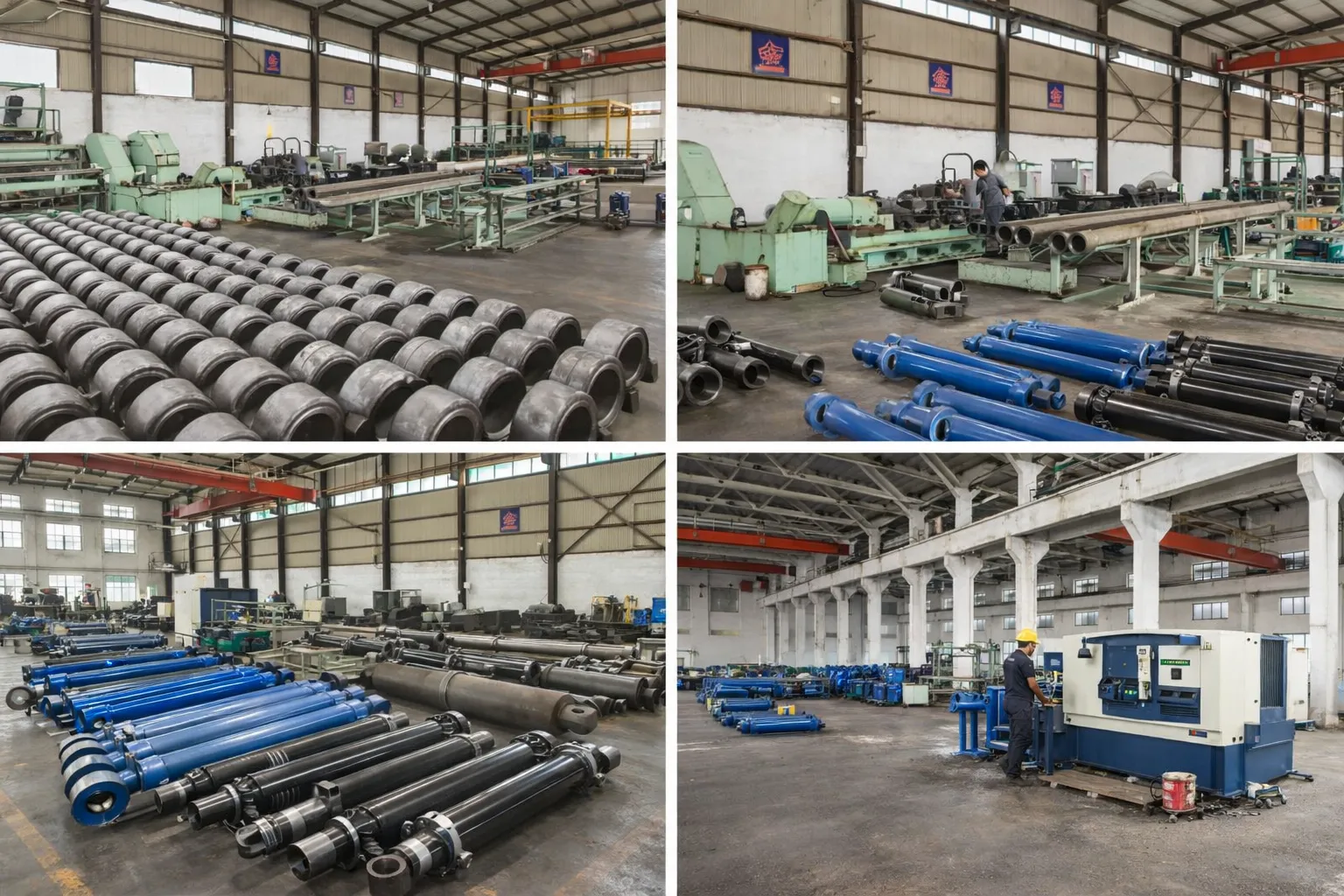
Autonomous Manufacturing and Unyielding Quality Control
Producing a highly specialized component responsible for the daily safety of thousands of commuters requires a manufacturing environment defined by absolute precision and strict oversight. We operate a fully autonomous, vertically integrated production facility. As a dedicated hydraulic cylinder manufacturer, we do not merely assemble parts purchased elsewhere; we forge, machine, treat, and assemble every critical element under our direct engineering control.
The manufacturing journey of our door opening hydraulic cylinder begins with stringent metallurgical verification. Every batch of incoming 27SiMn steel billets undergoes Ultrasonic Non-Destructive Testing (NDT) to guarantee the complete absence of internal voids or inclusions. Using state-of-the-art multi-axis CNC turning and milling centers, we achieve micrometer-level dimensional tolerances. The internal bore of the cylinder is subjected to deep-hole honing to achieve a mirror-like surface finish (Ra < 0.2µm), which works in perfect tandem with our low-friction seals to eliminate drag. Following the machining phase, the structural components proceed to our automated robotic welding cells, where deep-penetration, defect-free welds fuse the end caps into a singular, high-rigidity pressure vessel.
Quality assurance is not an afterthought; it is woven into the very fabric of our production line. 100% of our completed hydraulic rams undergo rigorous end-of-line testing prior to dispatch. This exhaustive protocol includes pressure holding tests at 150% of the maximum rated operating pressure to verify structural integrity, zero-leakage verification over prolonged periods, and dynamic low-pressure actuation tests to ensure smooth motion without friction spikes. This rigorous certification process is exactly why international clients confidently rely on us to supply premium hydraulic cylinder components for their most critical infrastructure projects.
Beyond Rail: Broad Industry Applications
While this specific product architecture is meticulously tuned as a high-frequency actuator for high-speed trains and metropolitan subways, the underlying fluid power principles we employ possess profound versatility. The ability to manage continuous, light-load actuation with zero stick-slip and an extended fatigue life makes this structural design highly sought after across numerous severe-duty industrial sectors.
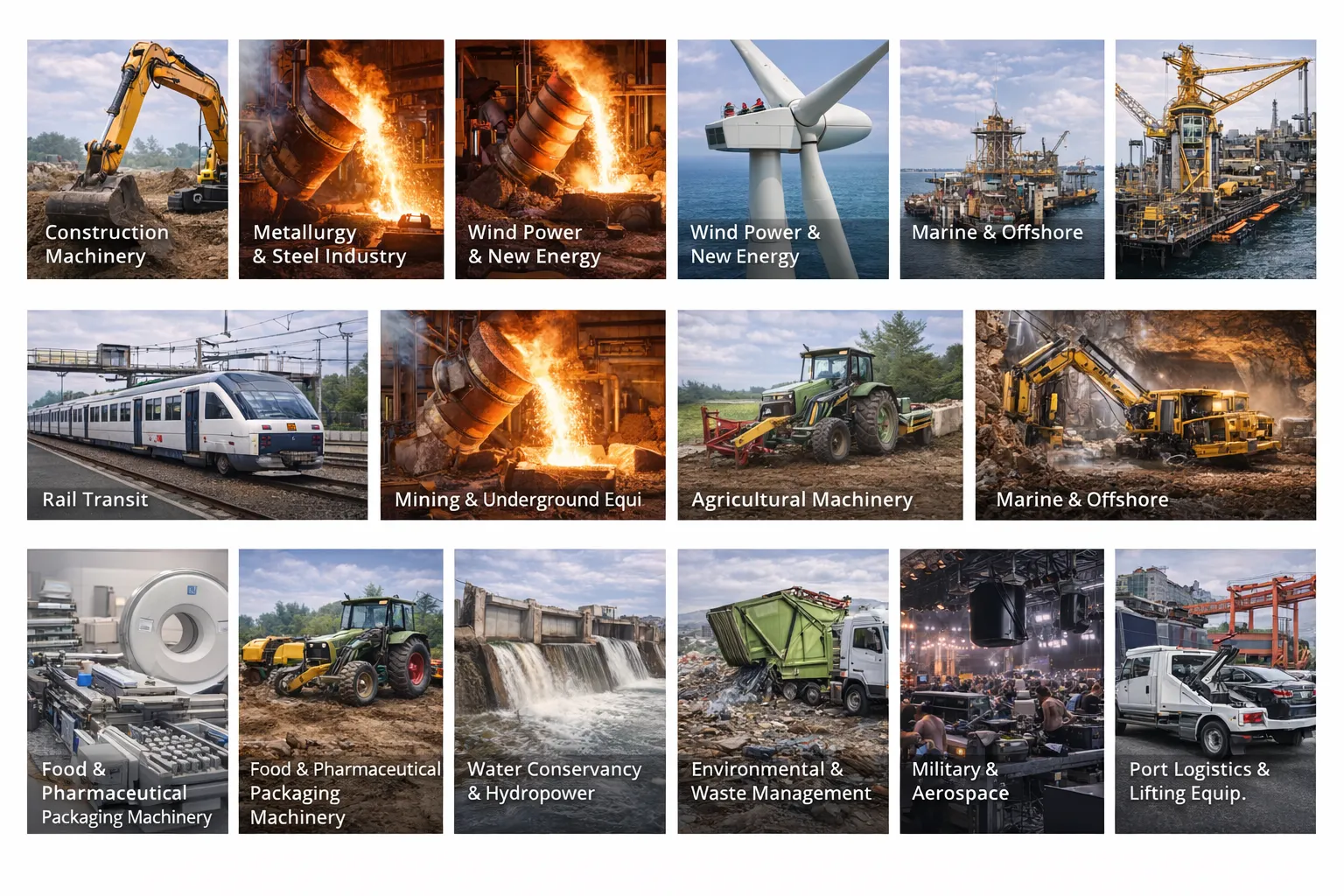
- Heavy Machinery & Earthmoving: Where immense force and environmental resistance are required, similar metallurgical rigor is applied to our products for the Construction Machinery Industry, including highly robust lift cylinder applications for excavators and loaders.
- Foundries & Steel Mills: High ambient temperatures and continuous duty cycles demand rigid, thermally stable construction, as seen in our specialized automated door solutions for the Metallurgical and Iron Industry.
- Renewable Energy Systems: Pitch control and braking mechanisms require absolute reliability and low maintenance, making our advanced fluid power technology ideal for the Wind Power and New Energy sector.
- Automated Logistics & Warehousing: High-speed sorting gates and Automated Guided Vehicles (AGVs) benefit immensely from highly responsive, compact hydraulic actuators capable of millions of uninterrupted cycles.
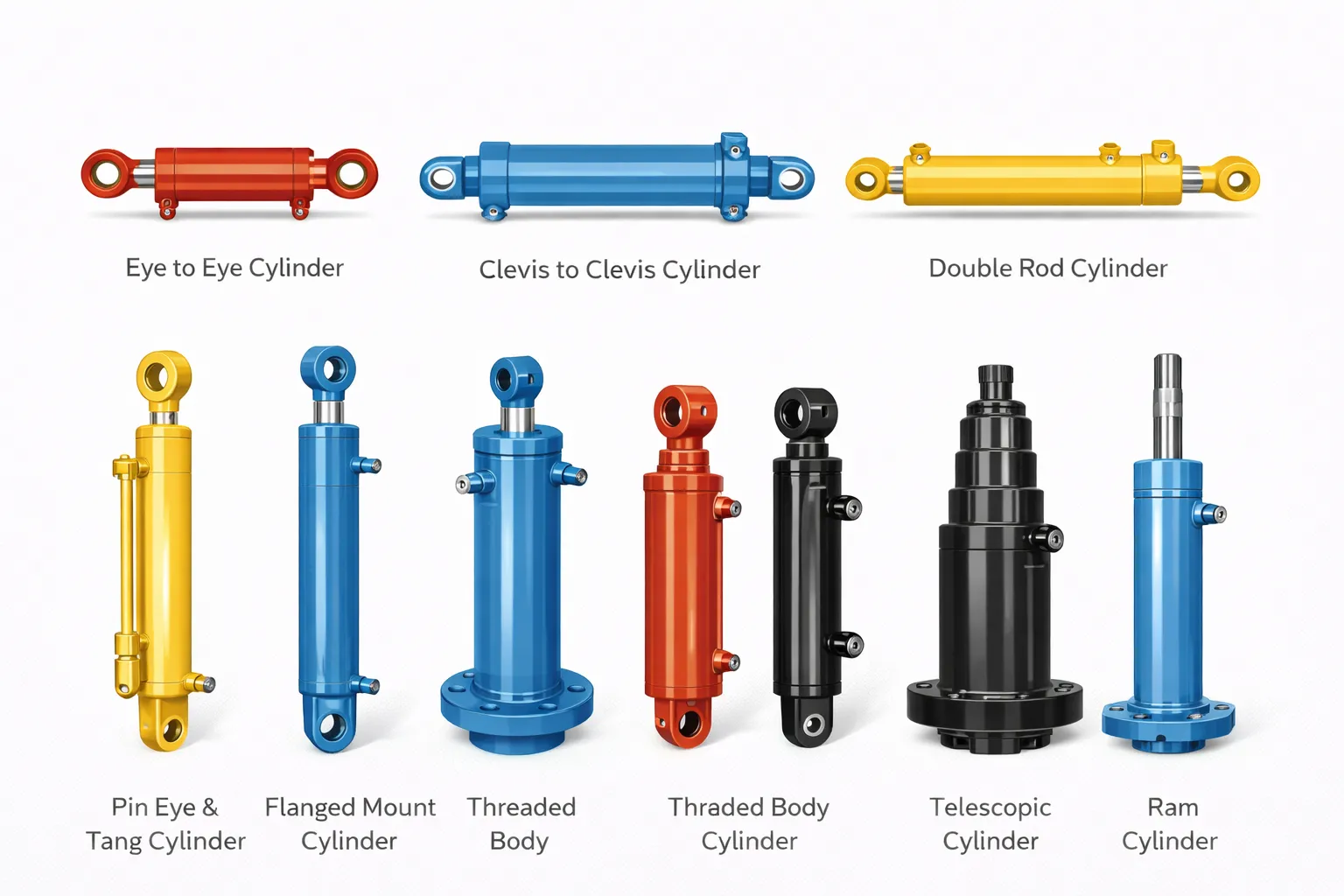
Comparative Analysis: Standard vs. High-Performance Cylinders
Why is it critical to invest in a purpose-built transit actuator rather than retrofitting a generic industrial component? The comparison table below starkly illustrates the performance disparities and highlights why our highly engineered products offer a vastly superior return on investment for fleet operators.
| Feature / Metric | Generic Industrial Cylinder | Our Door Opening Cylinder |
|---|---|---|
| Friction Characteristics | High starting friction; highly prone to the stick-slip effect at low speeds. | Ultra-low friction seals; provides constant, smooth velocity. |
| Base Structural Material | Standard 1045 Carbon Steel (Heavier, lower yield threshold). | 27SiMn High-strength alloy steel (Lighter, significantly stronger). |
| Fatigue Life Expectancy | Moderate; suitable for intermittent, slow industrial loads. | Extremely high; mathematically optimized for millions of rapid cycles. |
| End-of-Stroke Dampening | Often absent or rudimentary; results in mechanical slamming. | Precision metered internal hydraulic cushioning for silent stops. |
| Quality Testing Standard | Randomized batch sampling. | 100% individual hydrostatic & dynamic cycle testing. |
| Maintenance Frequency | High; requires frequent tear-downs for seal replacement. | Extended MTBF; significantly lowers ongoing operational costs. |
Proven Field Reliability: Case Studies in Asia
Theoretical engineering is only validated by practical, real-world application. Over the past decade, our technical team has successfully deployed thousands of specialized units across East Asia. Below are detailed accounts of how we resolve critical operational bottlenecks for major transit operators in South Korea and surrounding regions.
Case Study 1: Eradicating Winter Freezing in High-Speed Rail Networks
Location & Client: Seoul, South Korea — National High-Speed Transit Authority.
The Challenge: The operator experienced an unacceptable increase in minor station delays during the harsh winter months. The extreme cold caused standard seals in the OEM door cylinders to harden rapidly, leading to fluid bypass, sluggish retraction times, and the dreaded stick-slip effect, disrupting the national timetable.
How We Connected: The procurement department initiated a web search for an expert hydraulic cylinder manufacturer capable of custom low-temperature batch production and contacted us via our technical engineering portal.
The Solution & Result: We rapidly prototyped and supplied 400 custom-dimensioned double acting hydraulic cylinders. These units featured aviation-grade hydraulic fluid profiles and specialized polyurethane seals that remain entirely pliable down to -40°C. Upon deployment, winter door faults plummeted to zero.
Case Study 2: Mitigating Coastal Corrosion and Seal Wear
Location & Client: Busan, South Korea — Coastal Metro Railway Corporation.
The Challenge: Operating in a highly humid, saline environment, the metro trains’ existing actuators were falling victim to aggressive rod pitting, which subsequently shredded the internal wiper seals during retraction. The high frequency of station stops further accelerated this mechanical degradation.
How We Connected: A highly regarded structural engineering consultant within the Asian rail industry recommended our extensive portfolio of corrosion-resistant fluid power components.
The Solution & Result: We delivered a comprehensive fleet retrofit package featuring our door opening cylinder augmented with an extra-thick, micro-cracked hard chrome plating layer for supreme saline resistance. After 24 months of relentless duty, depot inspections revealed absolutely zero signs of surface pitting. The maintenance overhaul interval was safely extended by 200%.
Case Study 3: Acoustic Optimization for Luxury Airport Express Lines
Location & Client: Incheon Area, South Korea — Premium Airport Express Consortium.
The Challenge: The automated passenger doors on luxury airport express trains were generating a distinct, jarring mechanical clunking noise upon closing, leading to passenger complaints regarding cabin acoustic comfort.
How We Connected: The consortium’s acoustic engineering department reached out through our dedicated technical portal after reviewing our specifications on integrated hydraulic cushioning.
The Solution & Result: We engineered a bespoke batch of cylinders featuring our advanced, progressive end-of-stroke damping technology. This innovation gracefully metered the exiting fluid in the final 15 millimeters of the retraction stroke, ensuring the massive doors decelerated smoothly and closed with a silent lock.
Frequently Asked Questions
We recognize that specifying critical fluid power safety components involves rigorous technical due diligence. To assist your procurement and engineering teams, we have compiled comprehensive answers to the most frequently asked questions regarding our transit-grade hydraulic solutions.
Modernize Your Transit Network Infrastructure Today
Do not allow substandard actuation mechanisms to jeopardize your operational efficiency, inflate your annual maintenance budgets, or compromise commuter safety. Our precision-engineered fluid power solutions represent the absolute pinnacle of high-frequency, low-friction hydraulic technology, guaranteeing millions of flawless cycles under the most demanding environmental conditions.
Editor: Cxm