Slag Stopping Cylinder for Ladle Refining Systems
Engineered with Q345D structural steel and advanced ceramic coatings to definitively eliminate molten slag pitting corrosion and ensure absolute steel purity.
Product Overview: The Definitive Barrier for Steel Purity
Within the highly complex and unforgiving architecture of modern secondary steelmaking, the Ladle Refining Furnace (LF) serves as the primary arena where the final chemical composition, temperature homogenization, and ultimate quality of the steel are strictly determined. A fundamental operational requirement during the tapping and refining phases is the absolute separation of the purified molten steel from the highly reactive, sulfur-rich floating slag. Allowing this non-metallic slag to carry over into the tundish or continuous casting molds causes immediate phosphorus and sulfur reversion, generates catastrophic structural inclusions, and severely compromises the mechanical integrity and market value of the final steel product. The highly critical mechanical system responsible for dropping the dart, positioning the slide gate, or violently actuating the blocking mechanism to halt this slag flow is driven entirely by the slag stopping cylinder. In the highly demanding metallurgical markets across South Korea, Japan, Taiwan, and the greater East Asian manufacturing hub, the precision, speed, and reliability of this specific actuator directly dictate a steel plant’s clean yield rate and overall profitability.
Operating in the immediate vicinity of the tapping stream and the slag line is undeniably one of the most destructive environments possible for any form of industrial fluid power equipment. A standard commercial hydraulic cylinder is completely outmatched and mathematically guaranteed to fail here. The ambient environment is not only subjected to extreme radiant heat, but the actuator is constantly exposed to direct, violent splashes of molten slag. This liquid slag is highly alkaline, loaded with fluxes, and chemically aggressive. When it impacts a standard chrome-plated rod, the extreme temperature differential causes microscopic thermal cracking in the chrome layer. The corrosive slag immediately penetrates these fine cracks, aggressively attacking the base carbon steel and causing severe, deep pitting. Once the rod is pitted and scarred, it effectively acts like a jagged rasp, violently shredding the internal gland seals upon every retraction stroke. This leads to immediate, catastrophic hydraulic fluid leaks directly over a molten heat zone—a severe fire hazard and a massive mechanical failure.
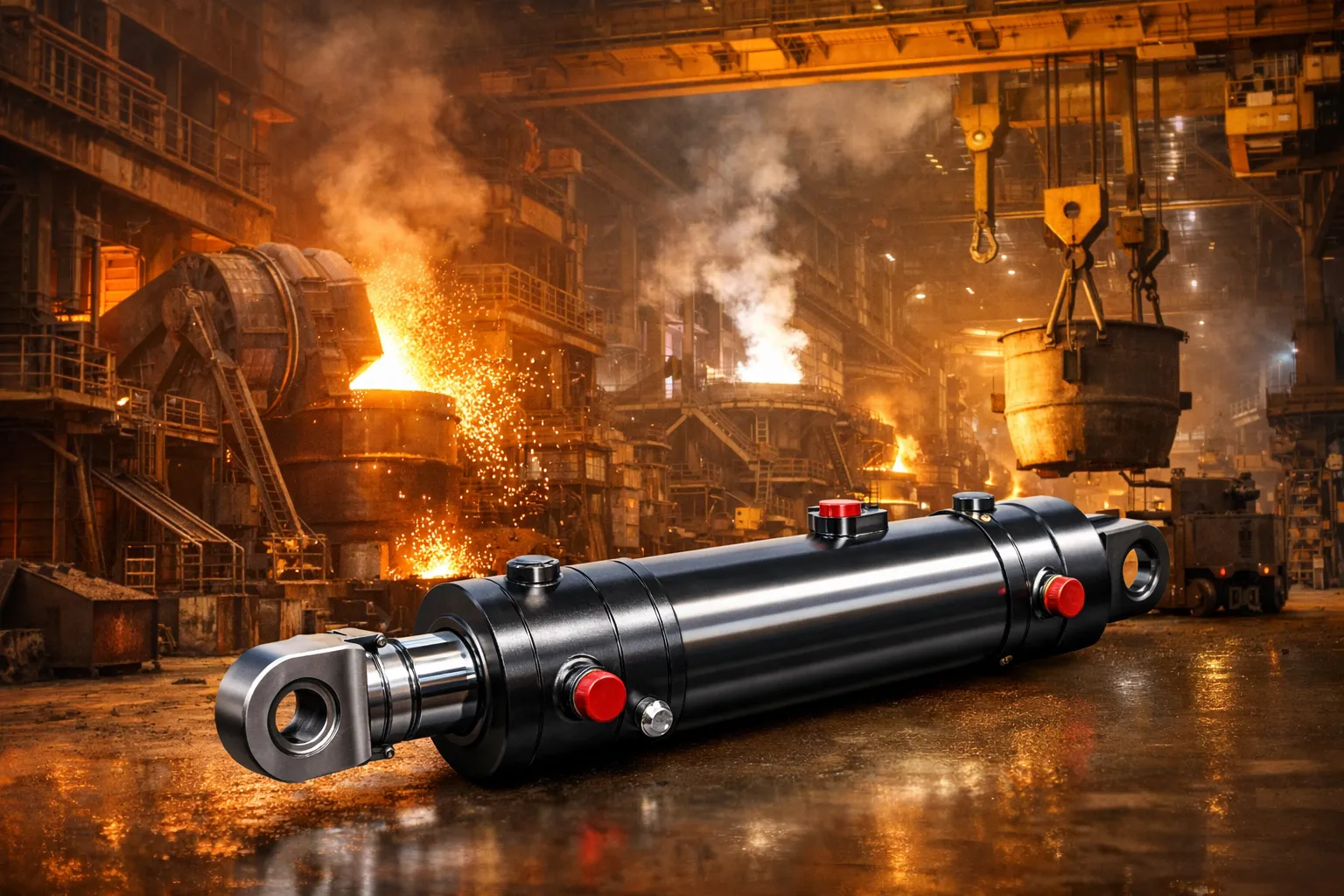
Recognizing these immense operational challenges, as a highly specialized and deeply experienced hydraulic cylinder manufacturer, our engineering division has systematically dismantled and resolved these exact metallurgical failure modes. We have entirely discarded the use of standard commercial materials and manufacturing techniques for this specific application. By forging the main barrel and mounting structures from highly rigid Q345D structural steel, we guarantee immense mechanical strength against severe shock loads. More importantly, we bypass the inherent vulnerabilities of traditional chrome plating by implementing our proprietary plasma-sprayed ceramic coating technology. This creates an impenetrable, ultra-hard, and chemically inert barrier that completely stops molten slag corrosion and pitting dead in its tracks. For procurement directors and plant managers seeking to permanently eliminate unscheduled LF downtime, our specialized slag stopping hydraulic cylinder delivers uncompromising, continuous operational safety.
Core Technical Parameters & Customization Matrix
No two steel mills operate identically. The stroke length, required actuation speed, mounting architecture, and specific fluid dynamics of a slag blocking system vary heavily depending on the specific Ladle Refining Furnace capacity and the plant builder’s original gantry design. The engineering matrix provided below explicitly details the foundational parameters, our rigorous material selections, and the highly specialized surface treatments required to ensure absolute survival in a severe molten slag environment.
| Engineering Specification | Technical Details & Application Range |
|---|---|
| Target Industry | Metallurgy / Primary & Secondary Steelmaking |
| Equipment Category | Ladle Refining Furnace (LF) / Tapping Stations |
| Subsystem Classification | Slag Stopping System (Dart dropping or slide gate mechanism) |
| Actuator Designation | Slag stopping cylinder / Slag stopping hydraulic cylinder |
| Primary Action Type | Double acting hydraulic cylinder (Requires rapid powered extension & retraction) |
| Internal Structure Type | Heavy-Duty Piston cylinder (Optimized for millisecond response times) |
| Manufacturing Construction | Fully Welded Architecture (Ensures absolute structural rigidity under shock loads) |
| Core Material System | Q345D Low-Alloy Structural Steel (Superior impact toughness) |
| Standard Surface Treatment | Hard Chrome Plated (Highly vulnerable to pitting in slag environments) |
| Environmental Hazards | Severe Molten Slag Corrosion & Intense Radiant Temperatures |
| Working Condition Focus | Rapid Slag Stopping Action (High-speed mechanical intervention) |
| Typical Failure Mode | Rod Pitting / Chemical Corrosion & Subsequent Seal Shredding |
| Critical Recommended Config. | Ceramic Spraying + Heavy Metallic Slag Scrapers |
Fluid Mechanics & The High-Speed Slag Stopping Action
To comprehensively understand why standard commercial actuators fail spectacularly in this application, one must deeply analyze the violent fluid dynamics and harsh mechanical realities of the slag blocking action. As the Ladle Refining Furnace reaches the optimal final tapping stage, highly sensitive infrared cameras or experienced operators identify the exact vortex interface between the heavier pure steel and the lighter floating slag layer. In a mere fraction of a second, the blocking mechanism must be aggressively deployed to sever the flow. To achieve this immense, immediate acceleration, the hydraulic control circuit typically utilizes high-capacity nitrogen accumulators that dump a massive volume of pressurized fluid instantly into the base port of the double acting hydraulic cylinder.
This instantaneous, massive surge of fluid violently forces the internal hydraulic cylinder piston forward. The rod extends at an extremely high velocity to precisely position the mechanical dart or forcefully shut the heavy sliding gate, physically slicing through semi-solidified slag crusts if necessary. A standard single acting hydraulic cylinder is fundamentally incapable of this rigorous task because it relies entirely on gravity or weak mechanical springs for its return stroke; it simply cannot generate the immediate, powered retraction force required to pull the mechanism back through rapidly cooling, sticky, and hardening slag. Our heavily reinforced double-acting design guarantees that massive hydraulic pulling force is always actively available on the rod end port, ensuring the mechanism never jams in the closed position, protecting the strict pour schedule.
The brutal mechanical shock of initiating and stopping this high-speed extension translates into immense kinetic energy transferred directly to the mounting brackets. If the barrel and mounting structures are not perfectly rigid, the cylinder will literally physically tear itself off the ladle gantry. This is exactly why we meticulously machine the primary pressure vessel from Q345D low-alloy structural steel, utilizing a fully welded architecture rather than utilizing weak tie-rods. The Q345D material provides exceptional yield strength and low-temperature impact toughness, ensuring that the kinetic shockwaves of the slag stopping action are safely absorbed without fracturing the mounting trunnions or distorting the barrel geometry over millions of cycles.
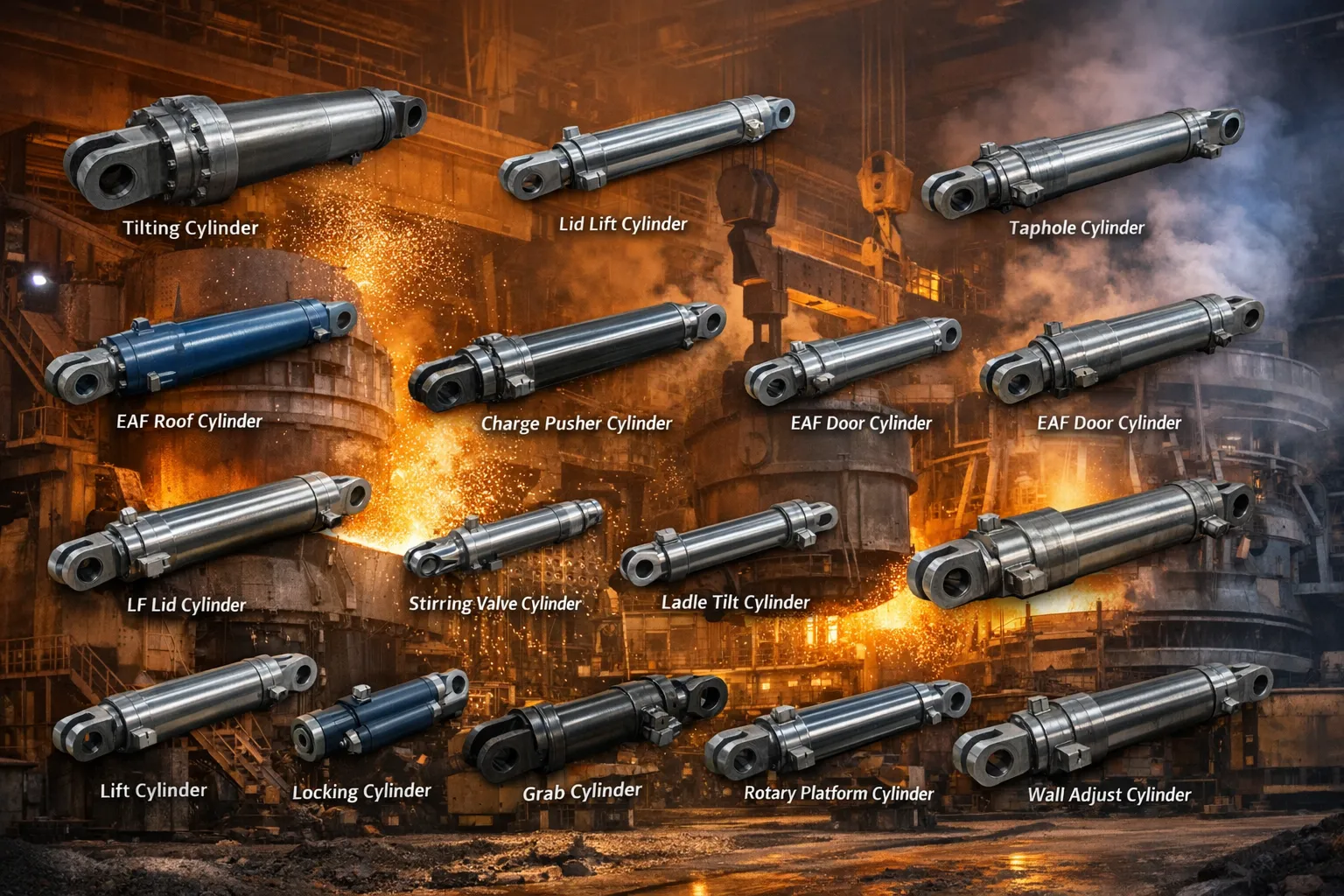
Seamless OEM Interchangeability for Global Steel Architectures
When a slag blocking mechanism jams or leaks due to severe rod pitting, the entire tapping process is delayed, and the steel batch risks irreversible chemical contamination. In these highly critical breakdown scenarios, plant maintenance engineers absolutely cannot tolerate the six-to-eight-month lead times routinely demanded by overseas original equipment manufacturers. For facilities urgently requiring high-quality components for rapidly fixing hydraulic cylinders, we provide dimensionally identical, heavily upgraded drop-in replacements that restore production lines instantly.
Regulatory notice: The industrial machinery brand names and corporate trademarks explicitly mentioned in this section remain the exclusive intellectual property of their respective corporate owners. We reference these specific entities strictly to assist B2B procurement professionals and metallurgical plant engineers in clearly identifying dimensional compatibility, stroke metrics, and functional form-factor matching. We assert absolutely no direct OEM affiliation.
Our advanced metallurgical engineering division routinely reverse-engineers and reliably manufactures perfect replacement hydraulic rams for slag stopping systems originally commissioned by globally recognized plant builders such as SMS Group, Danieli, Primetals Technologies, and Vesuvius, as well as replacing specific fluid power components from legacy brands like Bosch Rexroth and Parker Hannifin. By meticulously mapping the retracted pin-to-pin center length, the heavy trunnion or clevis dimensions, the total working stroke, and the specific metric fluid port threading, our massively upgraded units bolt seamlessly into your existing ladle architecture without any modifications. Your facility immediately gains the tremendous long-term operational advantage of our anti-pitting ceramic coating and Q345D welded construction at a highly competitive, factory-direct hydraulic cylinder price.
5 Core Technical Advantages Engineered Against Severe Slag
Surviving the intense chemical attack of molten slag and the kinetic shock of rapid actuation requires highly deliberate, uncompromising metallurgical engineering choices. Generic components will simply corrode, pit, and violently leak within weeks. We actively integrate the following five core technical engineering advantages into every single slag stopping hydraulic cylinder we manufacture:
1. Absolute Eradication of Pitting via Ceramic Spraying
The primary, most devastating failure mode in this application is the rapid chemical corrosion and pitting of the main rod. Molten slag contains highly aggressive sulfur and alkaline oxide compounds. When slag spatters onto standard hard chrome, the extreme heat causes the chrome to micro-crack, allowing the chemical agents to deeply reach the base steel, rusting and pitting it rapidly from the inside out. We highly recommend our advanced Ceramic Spraying technology. Applied via supersonic plasma deposition, the ceramic layer is chemically inert, thermally invulnerable, and completely devoid of micro-cracks. Slag simply cannot adhere to it, and corrosive gases cannot penetrate it, entirely eradicating the rod pitting failure mode.
2. High-Rigidity Q345D Welded Architecture
The high-velocity slag blocking action generates massive longitudinal kinetic shockwaves. Standard 1045 steel components or traditional tie-rod assemblies will easily fracture, stretch, or warp under this repetitive abuse. We exclusively forge our barrel bodies, base caps, and heavy mounting flanges from Q345D structural steel. This low-alloy steel provides exceptional yield strength and superior low-temperature impact toughness. Combined with our deep, automated submerged arc welding processes, it creates an unbreakable, monolithic structural envelope that effortlessly absorbs extreme actuation shocks.
3. Integral Metallic Slag Scraper System
Even with a dense ceramic-coated rod preventing pitting, semi-cooled chunks of slag can physically fall onto the extended cylinder rod during a chaotic pour. If these hardened, glass-like chunks are pulled into the front gland during the retraction stroke, they will instantly crush the primary fluid seals. To combat this, we integrate a heavy-duty, aggressively profiled metallic scraper ring ahead of the primary wipers. This solid bronze or hardened steel scraper acts as an unbreakable physical snowplow, violently shearing off hardened slag crusts and debris before they can ever reach the sensitive internal polymers.
4. Ultra-Low Friction & High-Temp Sealing Matrix
Actuating in mere milliseconds requires absolutely minimal internal drag, yet the internal seals must survive intense radiant heat directly radiating from the ladle. We utilize a highly specialized composite sealing architecture blending aerospace-grade Fluorocarbon (Viton) with custom PTFE (Teflon) glide rings. This advanced matrix guarantees an ultra-low friction coefficient on the hydraulic cylinder piston, completely eliminating stick-slip judder and ensuring lightning-fast response times, while remaining entirely immune to the thermal degradation that destroys standard polyurethane seals.
5. Fatigue Life Optimization via Digital FEA
Before a single piece of Q345D steel is ever cut on the factory floor, our engineering teams heavily utilize advanced Finite Element Analysis (FEA) software to digitally simulate the extreme hydraulic pressure spikes and mechanical stress concentrations unique to your specific LF gantry. By digitally identifying and actively reinforcing the structural blind spots—particularly around the fluid ports and heavy trunnion welds—we mathematically guarantee a heavily extended fatigue life, pushing massive overhauls years into the future.
Uncompromising Manufacturing Craftsmanship & Full Traceability
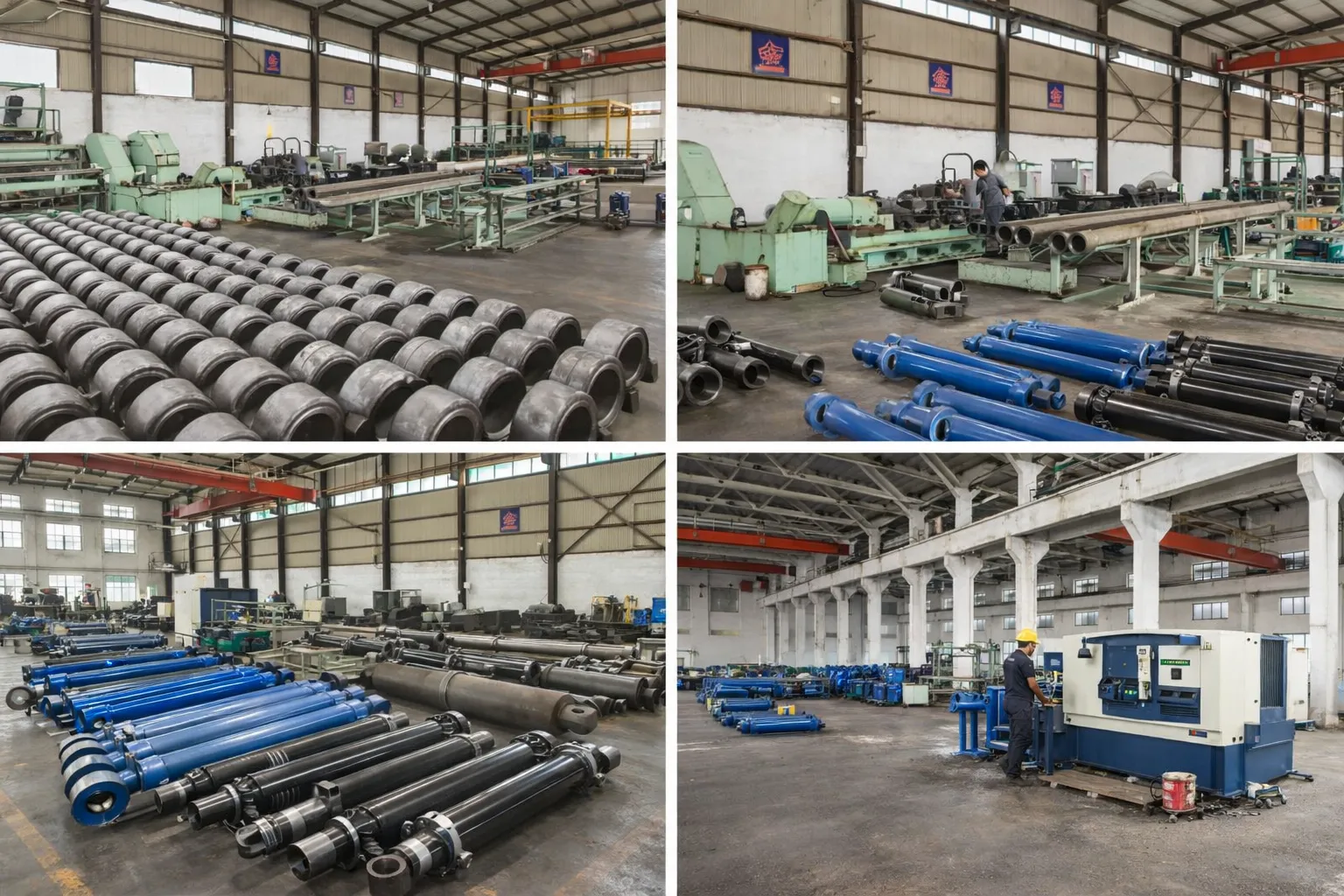
Deploying a vital component designed to manipulate molten steel requires an absolute, uncompromising rejection of cheap manufacturing shortcuts. As a highly integrated, global hydraulic cylinder manufacturer, our entire production cycle is housed strictly under one massive roof to maintain absolute quality control over every single operational variable. The manufacturing journey of our heavy-duty slag blockers begins rigorously with the procurement of certified Q345D steel billets. These raw materials immediately undergo strict ultrasonic testing (UT) and precise chemical spectroscopy to formally verify their structural integrity and confirm they possess the exact metallurgical purity required to withstand heavy industrial welding without fracturing.
The thick internal barrel is aggressively processed using specialized, high-pressure skiving and roller burnishing machinery to quickly achieve a flawless, mirror-like internal surface finish (typically Ra 0.2). This microscopic smoothness is paramount for ensuring the high-temperature PTFE seals do not experience any premature abrasion over millions of cycles. The critical application of the ceramic coating is a highly calibrated robotic process, immediately followed by diamond-grinding to perfectly ensure exact dimensional tolerances. Every structural weld on the heavy mounting flanges and heavy clevises is performed by globally certified technicians and subsequently 100% verified via Magnetic Particle Inspection (MPI) to detect any subsurface anomalies that could fracture under the violent impact of the slag blocking action. We consistently treat all our critical hydraulic cylinder components with this exact discipline.
Absolute quality validation culminates in our fully automated, high-pressure testing facility. Before any double acting hydraulic cylinder is carefully crated for international dispatch, it is securely bolted to a testing rig and subjected to a severe 150% static overload pressure hold test. This undeniably guarantees absolute seal integrity and confirms burst resistance under the most extreme dynamic pressure spikes conceivable. To ensure total B2B accountability and strict metallurgical traceability for our global EPC and direct steel plant clients, every single unit is permanently serialized and dispatched alongside a comprehensive digital dossier containing the raw material mill test reports, welding certifications, and final hydrostatic testing graphs.
Extensive Engineering Applications Across Heavy Industry
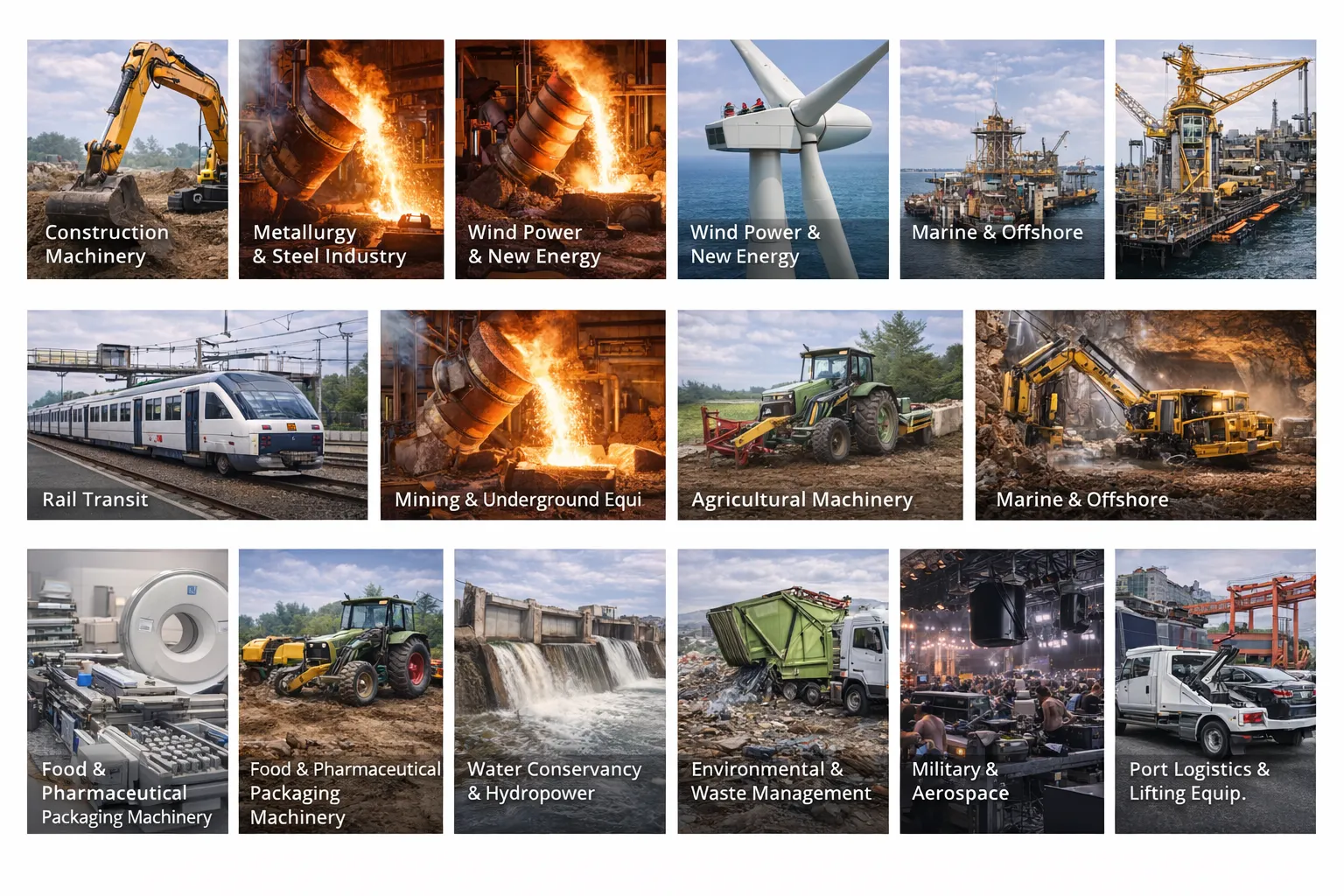
While the highly robust, ceramic-coated unit detailed thoroughly in this document is meticulously engineered to specifically defeat the severe pitting corrosion inherent in the ladle refining bay, the foundational principles of our deep designs—indestructible welded Q345D structures, aggressive scraper systems, and exceptional high-shock tolerance—are deeply trusted across multiple brutal industrial sectors where standard commercial hydraulic parts routinely and spectacularly fail.
- Metallurgical and Iron Industry: Beyond precision slag blocking, we passionately manufacture extreme-duty actuators for heavy continuous casting machines, huge walking beam reheating furnaces, and massive EAF roof lifting mechanisms. Explore our dedicated metallurgical and iron industry actuation solutions.
- Mining & Heavy Mineral Processing: High-impact, highly abrasive rock dust environments strictly require our aggressive metallic scraper technology. We expertly supply massive boom and bucket lift cylinders for heavy 400-ton mining excavators and giant haul trucks. Review our mining industry heavy equipment catalog.
- Construction Machinery Industry: Deep earthmoving and tunneling requires cylinders that will absolutely not bend under maximum bucket breakout forces. We manufacture highly critical actuation for deep piling rigs and massive crawler tractors. See our construction machinery industry engineering portfolio.
- Material Handling & Logistics: We provide deeply robust, high-cycle, large-bore lifting mechanisms (operating as a massive lift cylinder) for automated steel coil handling systems, immense shipyard straddle carriers, and heavy port container cranes.
Comparative Value: Commercial Equipment vs. Metallurgical Grade
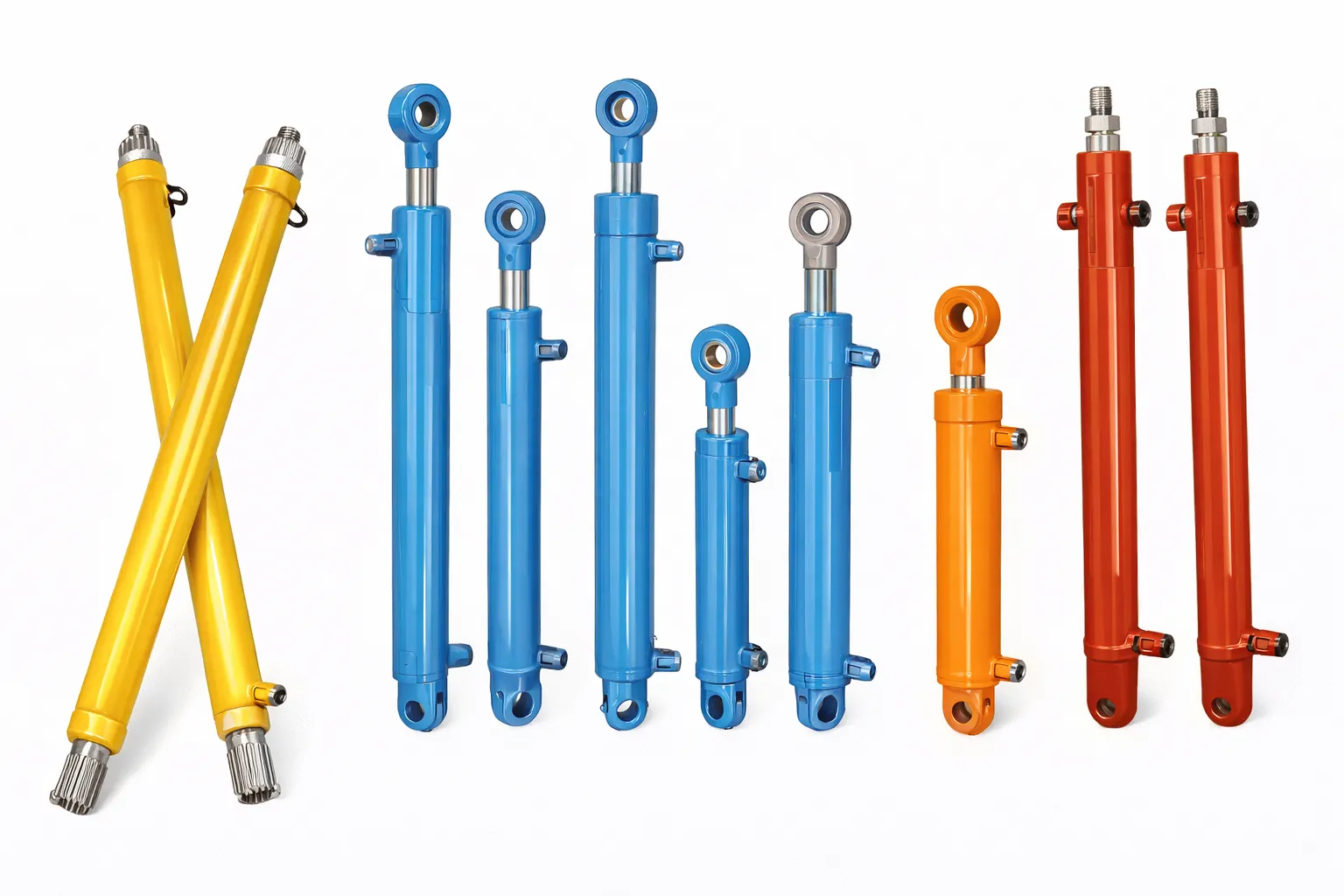
For procurement directors executing high-level B2B purchasing for a steel mill, analyzing the Total Cost of Ownership (TCO) over a multi-year span is absolutely critical. Specifying a cheap, standard commercial cylinder for a slag blocking arm simply guarantees disastrous maintenance costs and severe, unplanned production halts. The comparative table below clearly illustrates exactly why our customized metallurgical upgrade is a highly strategic, profit-protecting investment.
| Design Attribute | Standard Industrial Cylinder | Our Slag Stopping Cylinder |
|---|---|---|
| Rod Surface Defense | Basic Chrome Plating (Suffers rapid pitting corrosion and severe slag adhesion) | Plasma Sprayed Ceramic (Completely neutralizes pitting; molten slag falls cleanly off) |
| Contaminant Exclusion | Standard Polyurethane Wiper (Melts instantly from ambient radiant heat) | Heavy Metallic Scraper System (Physically shears away thick, crusted slag) |
| Structural Assembly | Basic Tie-rod design (Stretches and leaks heavily under constant thermal cycling) | Deep Welded Q345D architecture (Monolithic and totally unbreakable under heavy impact) |
| Sealing Friction Profile | Standard Nitrile (Causes heavy stick-slip judder during rapid dart deployment) | Ultra-low friction PTFE/Viton composite (Ensures lightning-fast, perfectly smooth action) |
| Operational TCO Expectation | Constant fluid bypass demanding highly frequent hydraulic cylinder repair | Extensive operational lifecycle, firmly securing continuous plant uptime and absolute steel purity |
Real-World Field Triumphs: 5 Verified Metallurgical Deployments
Advanced engineering theories are validated exclusively by their long-term survival on the dirty, high-heat factory floor. Our specialized heavy-duty fluid power solutions are actively protecting the steel purity of major primary facilities across South Korea, Taiwan, Japan, and Southeast Asia. Review these five strictly documented field applications definitively demonstrating our ability to permanently resolve critical production bottlenecks.
Case 1: Eradicating Slag Pitting in Pohang, South Korea
Client Profile & Issue: A major integrated primary steelmaker operating a high-output Ladle Refining station. They suffered continuous, catastrophic fluid leaks every two months because aggressive molten slag was splashing heavily onto the chrome rod, causing severe pitting corrosion that violently shredded the gland seals upon retraction.
Engagement Method: Their reliability engineering chief proactively discovered our specific technical research regarding anti-pitting ceramic coatings online and initiated direct contact via our engineering portal in early 2024.
Solution Executed: We engineered a highly specialized slag stopping cylinder utilizing our proprietary plasma-sprayed ceramic technology and an aggressive heavy metallic scraper ring. It dropped perfectly into their existing mechanical linkage without modification.
“The chemical resilience of the ceramic is exactly what we required. We installed the upgraded unit during our April 2024 shutdown, and there isn’t a single pit mark on the rod. The fluid bypass issue is entirely, permanently resolved.” — Mr. Kang, Reliability Manager (Nov 2025)
Case 2: Defeating High-Frequency Replacements in Kobe, Japan
Client Profile & Issue: A heavy specialty alloy plant where the standard OEM tie-rod cylinders were physically stretching and deforming under the extreme ambient heat of the ladle bay, causing constant end-cap fluid leaks and demanding full replacement every twelve weeks.
Engagement Method: The plant manager met our technical sales representatives at a specialized industrial heavy machinery exhibition in Tokyo focused specifically on mill optimization.
Solution Executed: We completely discarded the flawed tie-rod design and supplied a deeply welded Q345D heavy-duty double acting hydraulic cylinder. The monolithic structure remained entirely rigid despite the severe thermal cycling and massive mechanical loads.
“The welded Q345D architecture is incredibly robust. It has completely eliminated the structural stretching and leaking we constantly suffered with the old European units. It represents a massive reduction in our annual maintenance budget.” — Kenichi T., Maintenance Director (Feb 2026)
Case 3: Urgent Breakdown Resolution in Taichung, Taiwan
Client Profile & Issue: A heavy forging mill suffered a catastrophic failure when the threading on their main slag skimmer rod snapped off entirely due to violent kinetic fatigue, totally halting their pouring line. The original European manufacturer quoted an unacceptable 5-month lead time for a replacement.
Engagement Method: An emergency mechanical contractor specializing heavily in urgently fixing hydraulic cylinders contacted our rapid-response manufacturing division.
Solution Executed: Utilizing deeply pre-machined alloy forgings, we expertly reverse-engineered the OEM dimensions, applied our unique fatigue-optimized threading profile, and dispatched the complete replacement unit via express air freight in just 3 weeks.
“The unbelievable speed of manufacturing absolutely saved us immense capital in delayed delivery orders. The cylinder bolted right into the heavy linkage perfectly. Their engineered transition radiuses have completely solved the rod snapping issue forever.” — Chen W., Plant Manager (Dec 2025)
Case 4: Curing Stick-Slip Judder in Incheon, South Korea
Client Profile & Issue: A specialized secondary refining facility where the rapid deployment of the slag dart was severely hindered by aggressive stick-slip juddering in the hydraulic actuator, causing the dart to physically miss the taphole and allowing slag to aggressively contaminate the tundish.
Engagement Method: Their process engineering department submitted a detailed technical RFQ directly through our secured B2B quoting platform requesting a highly advanced low-friction fluid power solution.
Solution Executed: We swiftly supplied a heavy-duty unit perfectly machined with ultra-low friction PTFE composite sealing profiles on the hydraulic cylinder piston. This completely eradicated the high-friction spikes, ensuring lightning-fast, perfectly smooth dart deployment.
“The deployment speed and mechanical smoothness are simply incredible. The violent juddering is completely gone, and our steel purity numbers have increased significantly because the heavy slag dart seats perfectly every single time.” — Park S., Process Engineer (Oct 2025)
Case 5: Equipping a New EPC Project in Ha Tinh, Vietnam
Client Profile & Issue: A rapidly expanding industrial coastal steel complex actively constructing a brand new, highly automated secondary metallurgical tapping line. They required a fully certified suite of actuation systems capable of handling a massive slag skimming arm flawlessly under continuous operation.
Engagement Method: Their multinational EPC contractor heavily vetted our heavy industry catalog online and requested a comprehensive, plant-wide fluid power procurement bid.
Solution Executed: We successfully and flawlessly managed the complete manufacturing package, delivering highly robust ceramic-coated Q345D cylinders with full UT testing and 150% pressure test traceability, arriving well within the project’s critical path schedule.
“Their heavy manufacturing capacity is highly dependable and perfectly managed. Every single cylinder arrived heavily crated with impeccable documentation. Furthermore, their overall hydraulic cylinder price provided exceptional value compared to standard legacy Western brands.” — Nguyen V., EPC Procurement Manager (Jan 2026)
Expert B2B FAQ: Technical Sourcing Insights
Procuring heavy metallurgical equipment requires absolute technical clarity and supreme confidence. Below, our senior engineering team rigorously answers the most critical questions posed by procurement directors evaluating our fluid power solutions for severe slag environments.
1. Exactly how does the Ceramic Coating prevent pitting corrosion?
Pitting corrosion occurs when highly acidic molten slag chemically etches deep micro-craters into standard steel or chrome. Our plasma-sprayed ceramic layer is completely chemically inert and phenomenally dense. The acidic compounds in the molten slag simply cannot penetrate the ceramic matrix to attack the base metal. Furthermore, because it is inherently non-porous and highly heat resistant, molten spatter cools rapidly and falls off rather than welding itself to the surface, completely protecting the internal gland seals from being aggressively shredded.
2. Why do you uniquely utilize Q345D steel instead of standard carbon steel?
A slag stopping cylinder must physically drag heavy refractory blocks through highly dense, viscous slag, which creates immense lateral bending and twisting forces. Standard carbon steel can easily become brittle and fracture under the violent kinetic shock of plunging a heavy slag dart. Q345D is a highly specialized low-alloy structural steel renowned for its exceptional impact toughness and superior weldability, ensuring the heavily welded base caps and mounting flanges remain structurally monolithic over years of punishing service.
3. Can you manufacture an exact dimensional match for our existing OEM equipment?
Yes, absolutely. A significant, core portion of our industrial business involves precisely reverse-engineering aging or failed OEM units from legacy brands like Rexroth, Danieli, or Parker. If you provide the fundamental dimensions—such as retracted pin-to-pin length, heavy flange bolt patterns, and total stroke length—our heavy engineering team will build a perfectly matched, fully upgraded drop-in replacement that strictly requires zero mechanical modifications to your massive ladle structure.
4. How does the metallic scraper system differ from a standard polyurethane wiper?
Standard polyurethane wipers melt rapidly when exposed to the intense radiant heat directly above an open ladle. Furthermore, they are far too soft to dislodge cooled, crusted slag. We expertly install a heavy-duty brass or steel scraper ring at the very front of the packing gland. As the rod actively retracts, this unyielding metallic edge physically shears and violently chisels off any hardened slag, completely preventing that destructive debris from ever reaching the softer internal high-pressure seals.
5. What is the standard manufacturing lead time to deliver to South Korea?
For a fully custom, heavy-duty welded Q345D unit incorporating the highly advanced ceramic spraying process, standard production spans approximately 7 to 9 weeks. Because the East Asian steel corridor is our primary strategic market, sea freight to major ports like Busan, Gwangyang, or Incheon is highly efficient, usually taking only 4 to 6 days. For critical breakdown scenarios, we can rapidly leverage pre-machined internal stock to drastically expedite manufacturing to under 5 weeks.
6. Are your internal components compatible with water-glycol fire-resistant fluids?
Yes. Operating heavy machinery directly adjacent to molten steel mandates the strict use of non-flammable hydraulic fluids, primarily water-glycol (HFC) variants, to completely prevent disastrous fires if a hose bursts. We specifically formulate the Viton and PTFE composites on the hydraulic cylinder piston to ensure total chemical compatibility with HFC fluids, strictly preventing the seals from swelling, shrinking, or chemically degrading over time.
7. Does your factory produce a single acting hydraulic cylinder for other plant mechanisms?
Certainly. While the slag blocking arm heavily demands a heavily controlled double acting hydraulic cylinder for actively powering through crusted slag during the difficult retraction phase, we regularly manufacture severe-duty single acting hydraulic cylinder variants. These are heavily deployed in other areas of the mill, such as heavy scrap baling presses or massive vertical clamps where gravity or mechanical springs safely handle the retraction stroke, maintaining the same rigorous Q345D welded standards.
8. Is fixing hydraulic cylinders internally possible for these heavy-duty units?
Basic preventive maintenance, such as extracting the front gland to safely replace the main high-temp Viton seals or scraper rings, can easily be executed by your in-house mechanical team without fully detaching the heavy barrel from the structure. However, if the unit has suffered massive external structural trauma or requires deep barrel honing, executing comprehensive hydraulic cylinder repair should definitively be handled in a dedicated fluid power facility. Our ceramic designs specifically aim to push those major overhauls years into the future.
9. How competitive is your hydraulic cylinder price compared to Western OEMs?
Because we are a fully integrated heavy manufacturing plant producing all raw forgings, chroming, and final assembly strictly in-house, we entirely bypass the heavy markups associated with legacy European brands. Clients consistently find our hydraulic cylinder price to be 20% to 35% more advantageous, particularly because our base price prominently includes severe-duty metallurgical upgrades like welded Q345D steel and ceramic coatings that legacy OEMs charge as incredibly expensive premium add-ons.
10. Are quality test reports provided alongside the shipment?
Total transparency is absolutely mandatory for heavy equipment. Every single cylinder shipped includes a comprehensive digital quality dossier. This vital package contains the mill test reports (MTR) directly verifying the chemical composition of the Q345D steel, ultrasonic testing (UT) validation of the critical structural welds, and the final 150% static pressure testing graphs strictly confirming absolutely flawless fluid seal integrity.
Secure Absolute Steel Purity with Unbreakable Actuation
Do not allow catastrophic pitting corrosion, shredded seals, or unacceptable OEM lead times to violently contaminate your tundish and severely paralyze your Ladle Refining operations. Partner seamlessly with an expert hydraulic cylinder manufacturer dedicated entirely to surviving the severe chemical realities of the heavy metallurgical industry. Whether you urgently require a dimensional ceramic-coated drop-in replacement or are actively specifying components for a totally new tapping line, our massive engineering team is ready to deliver.
Forward your technical parameters, mechanical linkage drawings, or existing OEM part numbers to our engineering division today. We strictly guarantee a rigorous CAD compatibility assessment and a highly competitive commercial proposal within 24 hours.
Editor: Cxm