Stopper Rod Lifting Cylinder for Continuous Casting Machine
A highly advanced servo-hydraulic actuator engineered exclusively for absolute molten steel flow control. Eradicate dangerous servo drift, ensure flawless tundish flow regulation, and permanently secure your casting operations against extreme high-temperature structural degradation.
Product Overview: The Core of Molten Steel Flow Control
Within the uncompromising and highly volatile environment of modern heavy steel manufacturing, the continuous casting machine dictates the ultimate structural quality and yield of the semi-finished steel product. The transition of liquid metal from the tundish reservoir into the water-cooled copper mold is arguably the most sensitive phase of this entire metallurgical operation. To successfully prevent surface defects, massive slag entrapment, and disastrous liquid steel breakouts, the meniscus (the surface level of the molten steel in the mold) must be maintained with an astonishing physical accuracy of plus or minus one millimeter. The primary mechanical device responsible for physically throttling the high-temperature molten steel flow entering the submerged entry nozzle is the heavy refractory ceramic stopper rod. Controlling the exact vertical positioning of this heavy rod, making thousands of micro-adjustments per hour, is the exclusive responsibility of the stopper rod lifting cylinder.
Standard fluid power actuators will fail almost immediately in this highly specific application. The ambient atmospheric environment on the casting deck is relentlessly hostile, characterized by direct proximity to extreme radiant heat often exceeding 1500 degrees Celsius, splashing liquid metal, and thick clouds of airborne abrasive refractory dust. Furthermore, the mechanical task requires continuous, high-frequency, sub-millimeter servo adjustments. Any internal kinetic friction, stick-slip phenomena, or high-heat seal degradation directly leads to a highly destructive condition known as servo drift. When servo drift occurs, the physical mechanical linkage fails to instantly match the electronic command from the programmable logic controller (PLC), resulting in uncontrolled molten steel flow fluctuations. We have structured our entire manufacturing and engineering protocol specifically to conquer this exact failure mode, establishing ourselves as a globally trusted hydraulic cylinder manufacturer for critical metallurgical flow control applications.
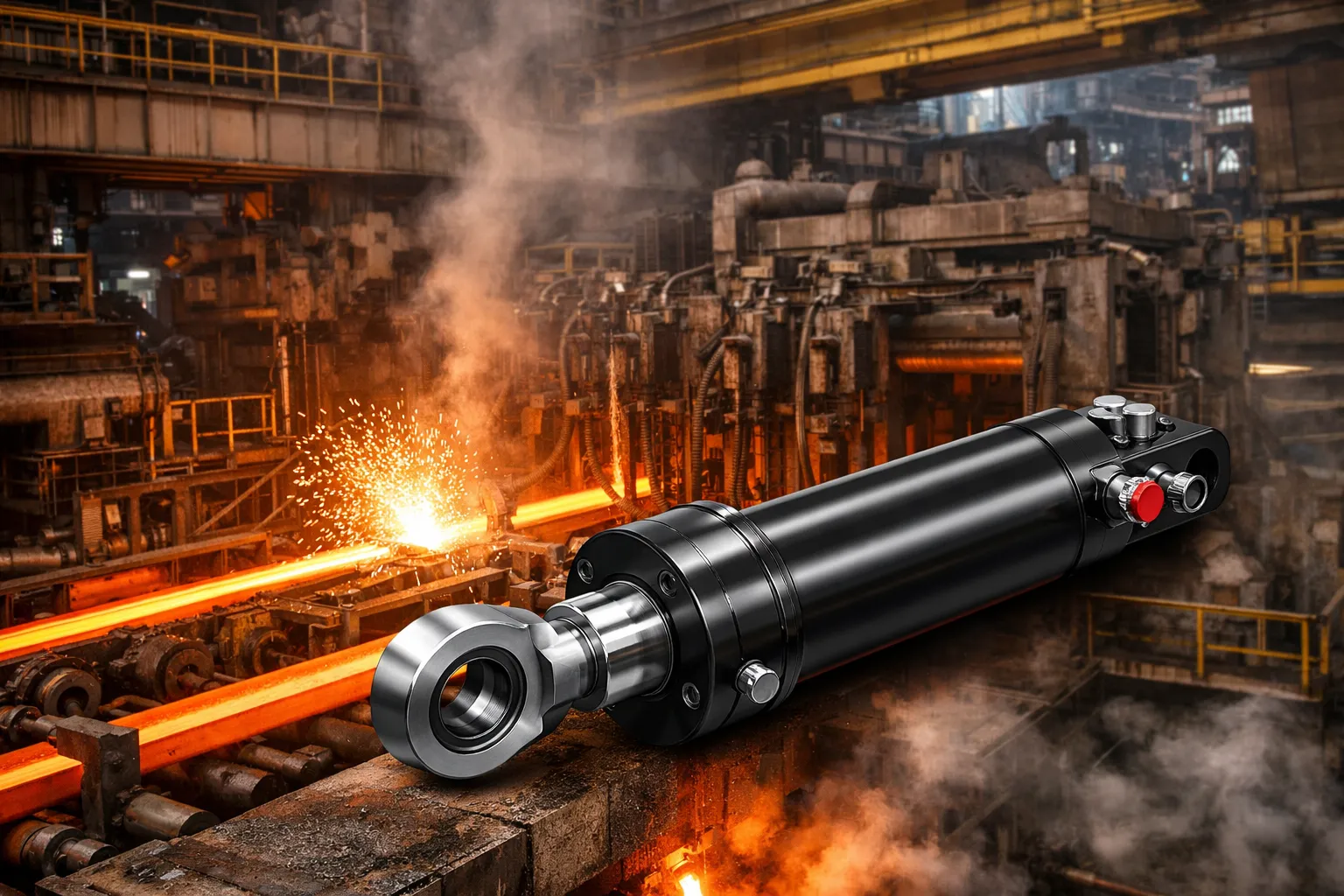
Our specialized stopper rod lifting hydraulic cylinder is not a basic linear pusher; it is a highly advanced, closed-loop servo mechanism. By strictly utilizing forged alloy steel construction, specialized low-friction sealing matrices, and deeply integrated high-precision feedback sensors, we provide steel producers with uncompromising flow regulation. Plant reliability engineers who upgrade their tundish cars with our advanced fluid power technology drastically reduce their slab rejection rates. When evaluating the total operational lifecycle value, the initial hydraulic cylinder price is rapidly offset by the complete elimination of servo drift-induced downtime, drastically fewer maintenance interventions, and the massive extension of highly safe, continuous casting sequences.
Comprehensive Technical Parameters and Specifications
Integrating precision fluid power into a closed-loop tundish flow control system requires exact dimensional matching and operational compatibility. Because continuous casting machines are massive, bespoke structures tailored to specific tonnage output capacities, generic off-the-shelf sizing is fundamentally inadequate. We custom-engineer stroke lengths, bore capacities, mounting trunnions, and sensor integrations to match the precise metallurgical output parameters of your specific casting deck. The comprehensive technical matrix below details the foundational specifications, action modes, and structural materials that define our premium servo-actuators.
| Engineering Specification | Configuration & Customization Details |
|---|---|
| Primary Industrial Sector | Metallurgical Manufacturing, Heavy Iron and Steel Processing |
| Target Equipment System | Continuous Casting Machine (Tundish Car Assembly) |
| Subsystem Implementation | Material Flow Control (Mold Meniscus Level Regulation) |
| Exact Component Name | Stopper rod lifting cylinder |
| Fluid Power Action Type | Double acting hydraulic cylinder for active bi-directional positioning |
| Internal Architecture | High-Frequency Servo Cylinder with strict clearance tolerances |
| Fabrication Method | Precision Welded and Stress-Relieved Construction |
| Base Material Matrix | High-Strength Alloy Steel (Vastly resists thermal deformation and warping) |
| Rod Surface Hardening | Micro-Polished Hard Chrome Plated (Anti-scoring, extreme low friction) |
| Environmental Profile | High-temperature molten steel flow proximity, heavy abrasive refractory dust |
| Primary Working Action | Continuous lifting control for dynamic liquid metal flow regulation |
| Targeted Critical Failure Avoided | Complete elimination of servo drift, positional lag, and seal melting |
| Mandatory Recommended Configuration | Deep internal high-precision feedback integration (LVDT sensors) |
Detailed Fluid Dynamics & Mechanical Working Principle
To comprehensively understand the advanced mechanical engineering housed within this critical component, one must examine the complex, closed-loop feedback architecture of the continuous caster’s material flow control system. A highly sensitive sensor (typically an advanced eddy-current array or a radioactive isotope level detector) constantly reads the exact height of the liquid steel inside the oscillating copper mold. This data is fed directly into a centralized programmable logic controller (PLC) thousands of times per second. If the molten steel level drops by even a fraction of a millimeter, the PLC instantly commands a highly specialized proportional servo valve to open, directing pressurized, highly filtered hydraulic fluid into the stopper rod lifting cylinder.
The fluid enters the cap end of the cylinder barrel, exerting immense force against the internal hydraulic cylinder piston. This action smoothly extends the chrome-plated rod upward, physically lifting the heavy ceramic stopper rod away from the tundish nozzle, thereby instantly increasing the volumetric flow of molten steel. Conversely, if the mold level is rising too fast and risks an overflow, fluid is routed forcefully into the rod end, actively powering the piston downward to choke the flow. Relying on gravity alone to plunge a blunt refractory rod into highly viscous, heavy liquid steel is mechanically impossible and extremely dangerous in metallurgical applications; therefore, a standard single acting hydraulic cylinder is entirely unsuitable. The absolute necessity for rapid, powerful downward closure during an emergency stop condition mandates the exclusive use of a heavy-duty double acting hydraulic cylinder.
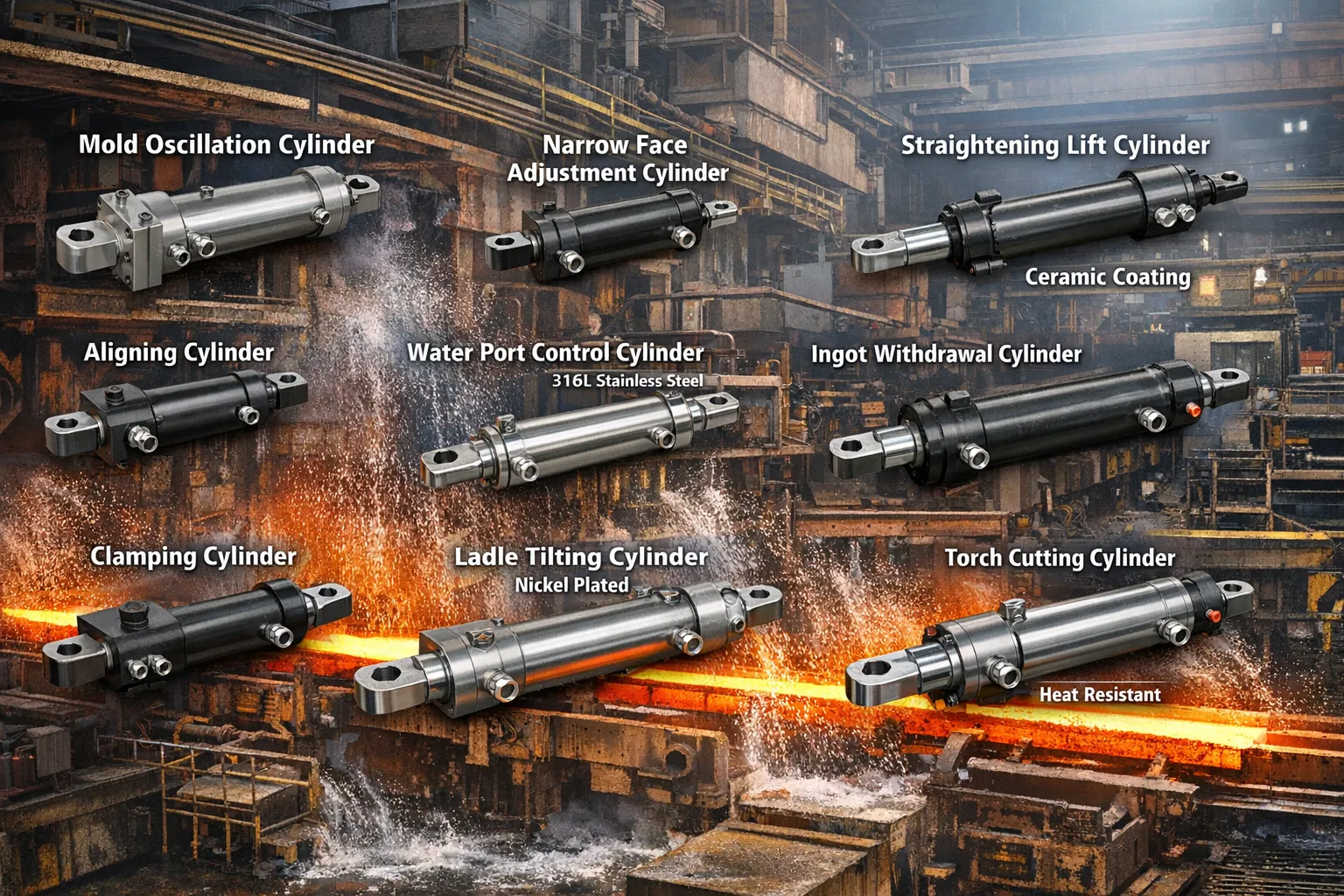
The true engineering challenge, however, lies in the physical response time and the elimination of kinetic hesitation. When the servo valve directs fluid, the hydraulic cylinder piston must move instantly without any initial sticking (static friction). Any hesitation causes a lag in flow adjustment, prompting the PLC to overcompensate, which creates a violent oscillation in the mold level known as servo drift. Our units completely bypass this by featuring an internally integrated Linear Variable Differential Transformer (LVDT). This high-precision feedback sensor physically monitors the exact position of the rod down to the micron, sending a continuous verification signal back to the PLC, ensuring the mechanical movement flawlessly and instantly matches the electronic command without any trace of delay or hysteresis.
Exact Drop-In Compatibility with Legacy OEM Machinery
In the fast-paced realm of heavy industry, long procurement lead times for critical replacement components often dictate extended, highly unprofitable maintenance shutdowns. Plant operators and procurement directors frequently struggle with the severe logistical delays and inflated pricing associated with sourcing original equipment directly from overseas legacy manufacturers. We completely eliminate this massive operational bottleneck by engineering exact dimensional drop-in replacements, providing heavily upgraded custom hydraulic rams that flawlessly match your existing structural footprints and manifold blocks.
(Engineering Notice: The subsequent mention of specific corporate machinery brands is provided strictly for technical reference, dimensional compatibility verification, and rapid component selection for B2B procurement managers. We firmly respect all international intellectual property, claim absolutely no trademark affiliation, and strictly manufacture entirely independent, highly optimized hydraulic parts.)
Our advanced technical department possesses extensive experience analyzing and reverse-engineering servo cylinders originally installed by global industry giants such as Moog, Bosch Rexroth, Parker Hannifin, Eaton Vickers, SMS Group, and Danieli. We flawlessly replicate the external mounting flanges, rod threading pitches, total stroke lengths, and exact LVDT electrical connector configurations. Your maintenance technicians receive a vastly superior stopper rod lifting cylinder that bolts directly into the tundish car mechanism without any structural bracket modifications or control system reprogramming, instantaneously upgrading your casting deck’s flow control reliability.
Five Uncompromising Core Technical Advantages
A standard fluid actuator simply cannot govern liquid steel. Transforming raw metal into a precise servo-instrument capable of operating endlessly in a continuous casting environment requires absolute mastery of materials science and internal tribology. Here are the five highly engineered advantages built into every metallurgical unit we produce:
1. Ultra-Low Friction Dynamic Sealing Technology
To entirely eradicate the destructive stick-slip phenomenon, we strictly utilize a specialized matrix of PTFE (Polytetrafluoroethylene) step seals paired deeply with bronze-infused guide bands. This advanced chemistry dramatically lowers the static breakaway friction, allowing the piston to react to micro-fluid injections instantly, facilitating perfectly smooth, stutter-free high-frequency lifting control adjustments essential for mold stability.
2. High-Rigidity Alloy Steel Barrel Construction
Standard carbon steel naturally expands and deforms under heavy radiant heat and rapid pressure pulsations, causing internal binding and critical clearance issues. We manufacture the heavy-walled barrels and massive structural mounts entirely from high-strength forged alloy steel. This guarantees extreme structural rigidity, preventing thermal distortion and ensuring perfect internal concentricity despite severe external temperature spikes.
3. Absolute High-Precision Feedback Integration
To actively detect and combat servo drift, an advanced LVDT (Linear Variable Differential Transformer) is deeply housed inside a gun-drilled, thermally insulated cavity within the heavy piston rod. This specialized architecture protects the sensitive electronics from external heat, splashing slag, and electromagnetic interference, providing the PLC with flawless, unbroken high-precision feedback regarding exact rod positioning.
4. Advanced Thermal Stability Architecture
Operating directly above the tundish exposes the equipment to massive, continuous heat radiation. All internal static and dynamic elastomeric components are strictly formulated from high-temperature Fluoroelastomers (FKM/Viton). Furthermore, the internal thermal clearances are mathematically pre-calculated to ensure smooth stroking exactly when the alloy steel reaches its maximum operational temperature during a long casting sequence.
5. Optimized Fatigue Life and Surface Defense Integrity
The continuous, rapid-fire adjustments requested by the PLC create massive internal cyclic fatigue, while abrasive dust attacks the exterior. We combat this by subjecting the piston rods to an ultra-thick layer of micro-cracked hard chrome plating, coupled directly with dual-lip metallic encasing scraper rings. This surface perfection aggressively shears off bonded slag, protecting the seals from premature shredding while maximizing the structural lifespan of all core hydraulic cylinder components.
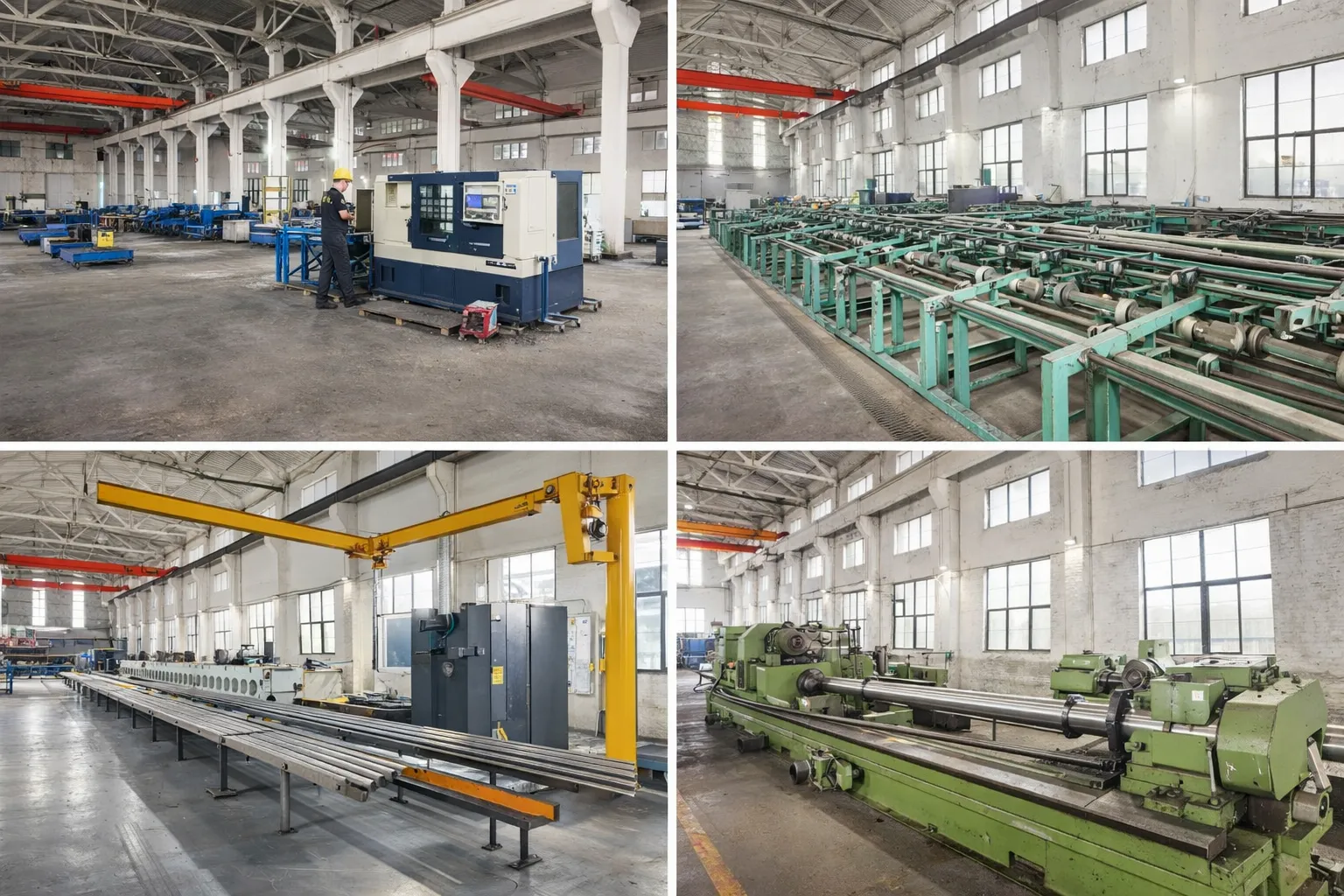
Autonomous Manufacturing and Strict Quality Control
Producing a servo-grade fluid power instrument requires systematically removing all variables from the heavy manufacturing equation. We operate a highly controlled, fully autonomous production facility. From the strict ultrasonic metallurgical validation of incoming high-strength alloy steel billets to the final high-temperature industrial coating, every phase is executed entirely in-house. This unbroken chain of manufacturing custody ensures zero sub-contracting errors can degrade the ultimate reliability of your stopper rod lifting cylinder.
Quality validation is absolutely uncompromising. Following deep-hole CNC machining and positive-pressure cleanroom assembly, 100% of our production line is routed to a specialized servo-testing bay. We subject every single unit to extreme hydrostatic pressure holding tests to guarantee absolute zero internal leakage past the PTFE seals. Furthermore, we conduct advanced dynamic friction analysis and plot rigorous servo response curves, ensuring the internal LVDT signal and the mechanical actuation synchronize perfectly without any trace of lag. Once validated, each cylinder receives a permanent laser-etched serial code, ensuring deep manufacturing traceability and vastly simplified spare parts procurement decades into the future.
Expansive Heavy Industry Applications
The advanced engineering protocols required to deliver high-speed, high-accuracy linear force in a thermally hostile environment translate into massive operational reliability benefits across multiple heavy industrial sectors far beyond the continuous casting deck.
- Metallurgical and Heavy Iron Industry: Beyond the caster’s flow control, these ultra-precise servo actuators are heavily deployed in electric arc furnace (EAF) electrode regulation columns, heavy ladle sliding gate controls, and high-speed rolling mill automated gauge control (AGC) adjustments.
- Mining and Mineral Extraction: The heavy alloy steel construction effortlessly absorbs the brutal shock loads of massive primary gyratory crushers, actively adjusting the mantle gap dynamically to optimize rock crushing sizes in high-dust, heavy-impact environments.
- Construction Machinery Industry: Automated grading equipment, large piling rigs, and specialized asphalt paving machines heavily utilize our precise double-acting feedback technology to maintain exact material thicknesses over highly uneven terrain.
- Specialized Production Systems: High-tonnage plastics and rubber injection molding machines depend heavily on our friction-free actuators to manage precise mold closure speeds. Automated material handling decks also utilize our advanced lift cylinder designs for rapid, automated heavy load positioning.
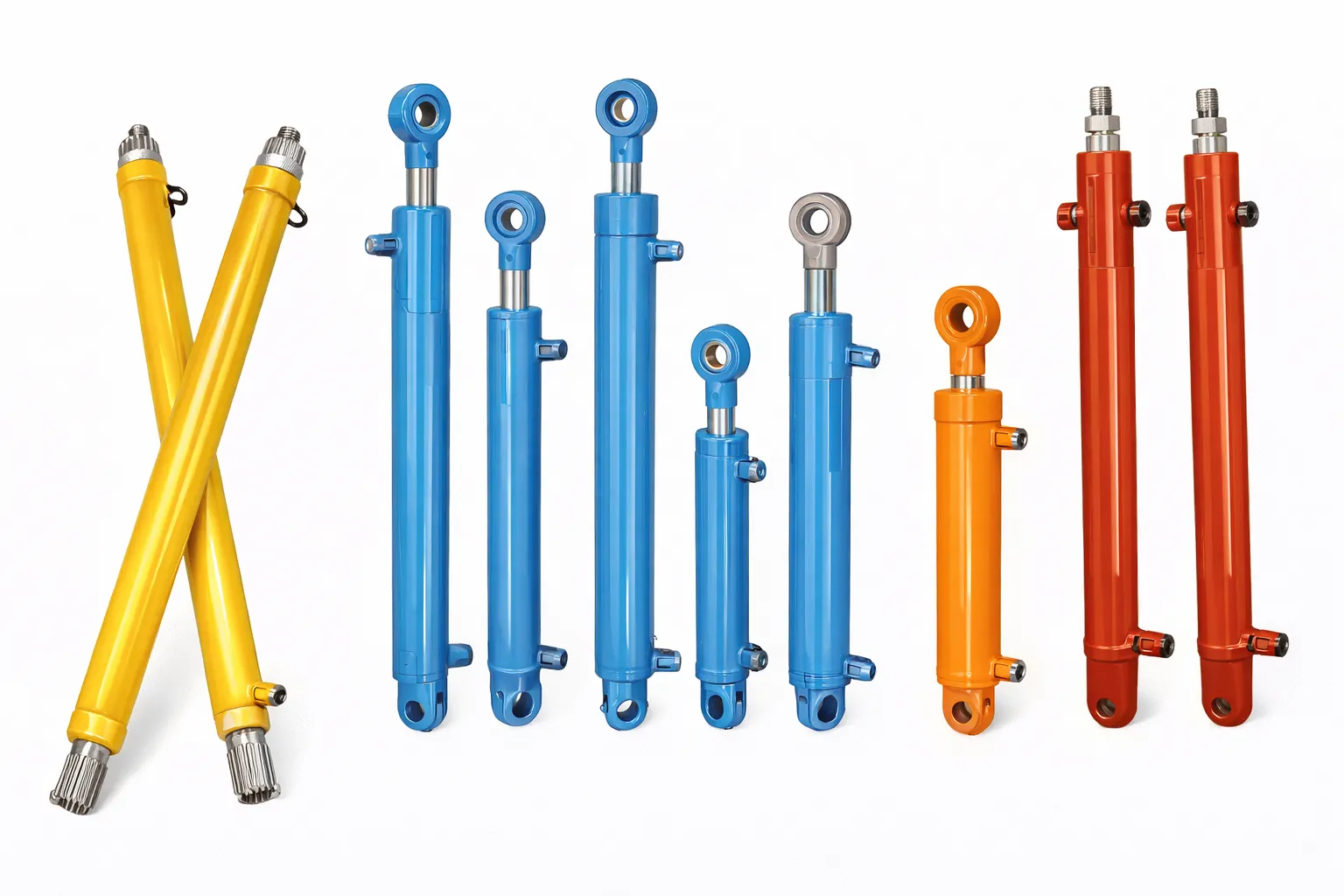
Comparative Matrix: Standard Cylinders vs. Servo-Grade Performance
Applying a standard industrial linear actuator to a highly sensitive tundish material flow system is a guaranteed path to severe production failure. The detailed analytical table below highlights the critical engineering discrepancies between standard commercial market offerings and our dedicated metallurgical servo-solution.
| Engineering Metric | Generic Industrial Cylinder | Our High-Performance Servo Cylinder |
|---|---|---|
| Dynamic Friction Profile | High static friction causing severe stick-slip jerking | Ultra-low friction PTFE seals ensure flawless micro-movements |
| Positional Feedback | None, relies on external limit switches or dead-reckoning | Deep internal LVDT provides continuous high-precision feedback |
| Thermal Tolerance | Standard NBR seals melt, leading to total internal pressure loss | High-temp Viton/FKM withstands heavy radiant heat |
| Flow Regulation Impact | Causes extreme servo drift and dangerous mold level waves | Delivers absolute mold level stability (+/- 1mm accuracy) |
| Structural Rigidity | Basic carbon steel warps under high temperature loads | Forged alloy steel completely rejects thermal deformation |
Documented East Asian Market Success Stories
Our specialized fluid power engineering actively underpins the massive production outputs of leading metallurgical facilities across the East Asian corridor. Review these detailed field implementations demonstrating our deep capability in diagnosing servo issues, executing complex fixing hydraulic cylinders operations, and drastically optimizing operational uptime.
1. Eradicating Servo Drift in Pohang, South Korea
Client Profile: A massive Tier-1 integrated steel works facility managing highly active continuous slab casters.
The Dilemma: Extreme heat was causing internal friction spikes and seal degradation in their legacy OEM cylinders. This induced aggressive servo drift; the stopper rod would jerk unpredictably, causing dangerous +/- 10mm mold level fluctuations and heavily entrapping slag into the steel, resulting in massive transverse cracking on the slabs.
Connection: Discovered our expertise through a highly targeted B2B web search for specialized metallurgical flow control upgrades.
The Landing: We supplied completely re-engineered actuators utilizing our ultra-low friction PTFE sealing matrix and internally integrated precision LVDTs.
“The transformation in our flow control was instantaneous. Commissioned in late 2024, our mold level stability improved from erratic swings to a flat +/- 1mm accuracy, entirely eliminating our slag defects. Our scrap rate dropped significantly by Q1 2025.” — Mr. Choi Y., Reliability Director.
2. Restoring Smooth Actuation in Kobe, Japan
Client Profile: A premium specialty alloy steel mill requiring uncompromising thermal and flow control for aerospace-grade steel production.
The Dilemma: Severe internal stick-slip friction in their tundish actuators caused the stopper rod to jerk aggressively rather than move smoothly, creating highly dangerous turbulence in the molten steel flow inside the mold.
Connection: Referred directly to us by a regional heavy industry automation consultant.
The Landing: We engineered a specialized stopper rod lifting cylinder utilizing ultra-honed alloy barrels and specialized bronze-filled guide bands, guaranteeing an instantaneously smooth kinetic response to servo valve commands.
“Their internal tribology is exceptional. Operating flawlessly since early 2025, we have restored perfectly smooth micro-actuation with zero kinetic hesitation.” — Kenji M., Lead Maintenance Engineer.
3. Optimizing Procurement in Kaohsiung, Taiwan
Client Profile: A highly competitive EAF continuous billet casting plant strictly controlling annual maintenance budgets.
The Dilemma: The heavily inflated hydraulic cylinder price and 6-month lead times commanded by European OEMs for replacement parts were crushing their annual procurement budget.
Connection: Sourced our engineering team online while extensively searching for custom drop-in hydraulic parts.
The Landing: Delivered dimensionally identical, fully upgraded alloy steel drop-in replacements that utilized identical mounting footprints and electrical connections, completely bypassing the massive brand markup.
“The integration was effortless, requiring zero bracket modifications. Installed in late 2025, we cut our procurement costs by 40% while drastically upgrading our thermal resistance.” — Lin C., Procurement Manager.
4. Defeating Abrasive Scoring in Rayong, Thailand
Client Profile: A heavy industrial plate mill operating a massive continuous bloom caster.
The Dilemma: Heavy airborne refractory powder and metallic scale constantly scored the piston rods of their generic cylinders, causing massive external fluid leaks and necessitating frequent, expensive hydraulic cylinder repair.
Connection: Met our technical engineers during a major heavy industry machinery exposition in Southeast Asia.
The Landing: Deployed specific heavy-duty units featuring vastly thickened hard chrome plating paired directly with our aggressive dual-lip metallic scraper rings.
“The new metallic scrapers effortlessly shear off the bonded slag before it enters the gland. After 14 months of operation spanning into 2026, the chrome rods remain completely unscratched.” — S. Chaiporn, Maintenance Manager.
5. Emergency Breakdown Resolution in Ho Chi Minh City, Vietnam
Client Profile: A rapidly expanding heavy structural steel casting plant.
The Dilemma: An aging OEM tundish flow actuator catastrophically failed mid-cast due to thermal warping, causing a complete halt of their primary casting deck. They desperately needed immediate expert fixing hydraulic cylinders capabilities to avoid a disastrous quarter loss.
Connection: Reached out urgently via our technical sales portal for emergency rapid manufacturing.
The Landing: We fast-tracked the reverse-engineering and production of completely new core alloy steel assemblies, delivering fully tested critical replacements via air freight.
“Their agile manufacturing response in early 2026 prevented a prolonged factory shutdown. We received fully tested units in just 3 weeks, saving us millions in lost production revenue.” — Nguyen V., Plant Director.
Critical Technical FAQ
When upgrading highly sensitive material flow control systems, establishing total technical clarity is mandatory. Review our most critical engineering and commercial inquiries below to assist your operational planning and risk mitigation strategies.
1. What is the root cause of destructive servo drift in generic cylinders?
2. How is the exact custom hydraulic cylinder price calculated for dimensional drop-ins?
3. Why does this application strictly demand a double acting hydraulic cylinder?
4. Can we rely on a standard single acting hydraulic cylinder for emergency tundish closure?
5. Are replacement hydraulic cylinder components readily available for long-term maintenance?
6. Can your facility execute comprehensive hydraulic cylinder repair on heavily heat-damaged OEM units?
7. Are your high-temperature elastomeric seals compatible with fire-resistant hydraulic fluids?
8. What is the typical lead time for manufacturing these specialized hydraulic parts?
Ready to Eliminate Servo Drift and Secure Your Casting Operations?
Do not allow erratic stick-slip friction, thermal seal melting, and dangerous servo drift to continuously dictate your metallurgical quality or cause highly hazardous breakouts on the casting deck. Evolve your tundish flow control by permanently integrating true, uncompromising servo-grade fluid power into your operations.
Whether you require advanced hydraulic cylinder solutions for an entirely new continuous caster build, or you desperately need rapid, dimensionally accurate drop-in replacements for failing legacy brands, our technical engineering department is fully prepared to execute.
Editor: Cxm