Thrust Balance Cylinder for Propulsion Bearings
Engineered for uncompromising stability in extreme marine environments. Delivering precise axial force compensation, unmatched durability, and advanced seal wear protection for your critical maritime operations.
Product Overview: The Core of Marine Propulsion Stability
Navigating the turbulent realities of the open ocean requires machinery that does much more than simply function; it demands equipment that actively protects your vessel’s structural integrity. At the mechanical heart of a reliable marine propulsion bearing system lies the thrust balance cylinder. Without this vital component, the immense and relentless forward and reverse forces generated by massive ship propellers would rapidly degrade the entire powertrain. The kinetic energy produced by the displacement of seawater translates into direct axial load on the thrust bearings. If this load is not perfectly neutralized, the friction and heat generated will result in catastrophic bearing failure, leading to stranded vessels and immense recovery costs.
When assessing the industrial value of a high-grade thrust balance hydraulic cylinder, the focus is squarely on risk mitigation, performance optimization, and operational continuity. In maritime logistics and offshore engineering, unplanned downtime is financially disastrous. We design our hydraulic cylinder units specifically for the highly demanding applications characterized by continuous seawater exposure and high-amplitude mechanical vibration. By precisely managing and balancing the axial loads, these cylinders safeguard the propulsion bearing block, drastically extending its service life and ensuring smooth, uninterrupted power transmission across oceans.
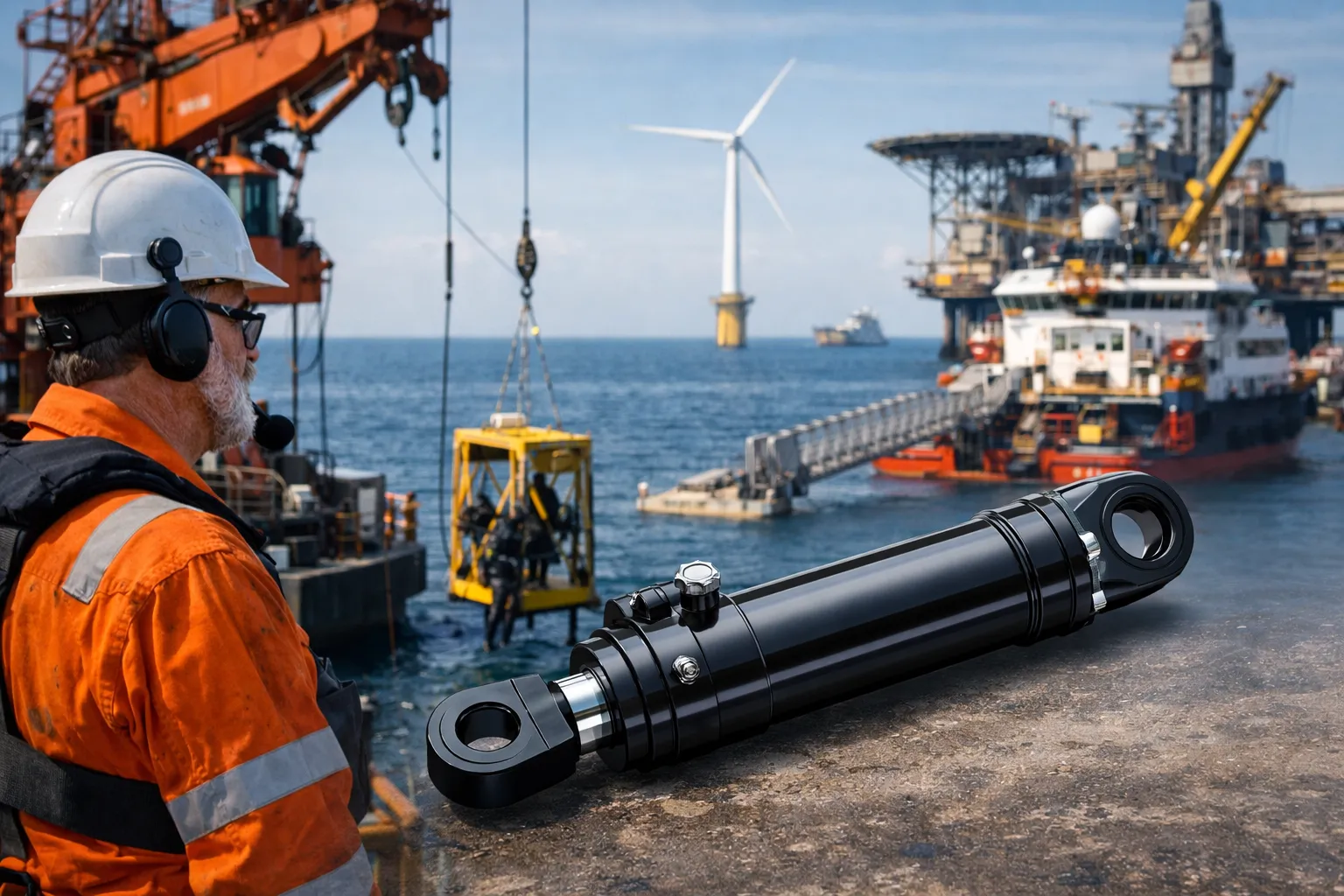
As a premier hydraulic cylinder manufacturer with deep-rooted industry presence, our unique positioning lies in our absolute refusal to compromise on material science or engineering precision. We recognize that the global maritime sector, particularly the thriving shipbuilding hubs in South Korea and the wider Asia-Pacific region, demands the absolute highest tier of engineering excellence. Whether you are overseeing a new vessel construction project or seeking robust hydraulic parts for routine fleet maintenance, our thrust balance units provide a customized, drop-in solution that consistently outperforms standard off-the-shelf alternatives. We focus intensely on combating the most notorious failure mode in this application: premature seal wear caused by constant micro-movements under extreme pressure.
Technical Parameters & Customization Envelope
The design and configuration of a marine-grade thrust balance cylinder must adhere strictly to the severe mechanical realities of its operating environment. Generic specifications are entirely insufficient when dealing with the dynamic forces of propulsion systems. Below is a comprehensive overview of the technical parameters and customization options for our thrust balance systems. Every specification can be fully optimized by our engineering team to integrate seamlessly with your existing propulsion bearing housing, ensuring peak performance and reliability under heavy loads.
| Parameter / Attribute | Standard Specification | Customization Range |
|---|---|---|
| Industry / Equipment Category | Marine & Offshore Sealing / Propulsion Bearings | Adaptable for Submarines, Dredgers, and Offshore Drilling Platforms |
| Subsystem / Action Target | Thrust Bearing System / Axial Force Compensation | Custom vibration damping profiles available for specific shaft speeds |
| Product Name & Action Method | Thrust Balance Cylinder / Double Acting | High-frequency proportional control integration |
| Structure & Manufacturing | Piston Cylinder / Welded Construction | Heavy-wall barrel options for extreme peak pressure containment |
| Material System | High-Strength Alloy Steel | Duplex stainless steel options available for highly corrosive subsea use |
| Surface Treatment | Heavy-Duty Nickel Plated | Ceramic composite coatings for supreme abrasive resistance |
| Environmental Grade | Seawater Immersion + High Vibration | Arctic low-temperature fluid adaptations down to -40 Celsius |
| Typical Failure Mode Handled | Seal Wear / Abrasive Damage | Upgraded multi-lip ultra-low friction PTFE seal kits |
The Working Principle: Mastering Axial Force Compensation
To truly appreciate the engineering value of this equipment, one must understand exactly how a double acting hydraulic cylinder operates within a ship’s propulsion bearing framework. When a vessel’s propeller turns, it displaces massive volumes of water, generating powerful forward or backward momentum. According to the fundamental laws of fluid dynamics and physics, this action creates an equal and opposite reaction—a severe axial thrust force that travels straight down the rigid propeller shaft toward the ship’s engine room.
The primary job of the thrust bearing is to absorb this load, transferring it directly to the hull. However, the bearing cannot manage these oscillating shockwaves alone without suffering extreme and rapid wear. This is precisely where the thrust balance cylinder enters the equation. Positioned integrally with the bearing block, usually in a highly stable radial array, this cylinder acts as an active, fluid-based shock absorber and load balancer. Because it is configured as a precise double acting hydraulic cylinder, hydraulic fluid can be instantaneously pressurized on both sides of the hydraulic cylinder piston.
As axial force pushes against the bearing, proportional control valves route pressurized hydraulic fluid into the appropriate chamber of the cylinder. The hydraulic cylinder piston extends or retracts with microscopic precision, exerting a calibrated counter-force that perfectly balances the propeller’s incoming thrust. This continuous process, known as dynamic axial force compensation, essentially floats the shaft in a state of dynamic equilibrium, removing the crushing physical load off the mechanical white-metal bearing pads. This equilibrium drastically reduces friction, minimizes heat generation, and fundamentally prevents the premature mechanical breakdowns that plague lesser-equipped vessels. The precision required here highlights exactly why investing in top-tier hydraulic cylinder components is an absolute necessity for maritime safety and fuel efficiency.
Seamless Brand Compatibility and Replacement
In the fast-paced world of ship maintenance, fleet management, and dry-dock repairs, procuring the exact replacement components quickly is a logistical necessity. Vessel operators frequently find themselves constrained by extremely long lead times and heavily inflated pricing structures from original equipment manufacturers (OEMs). We have meticulously engineered our thrust balance hydraulic cylinder series to serve as perfect dimensional and functional replacements for many industry-standard legacy units.
Whether your propulsion system currently utilizes equipment originally supplied by Bosch Rexroth, Parker Hannifin, Eaton Vickers, Danfoss, or Wärtsilä, our engineering team can perfectly match the exact mounting footprints, fluid port dimensions, and stroke lengths. (Please note: The mention of these specific brands is strictly for technical compatibility, fitment sizing, and ease of engineering selection for our clients. We are an independent hydraulic cylinder manufacturer and do not claim any affiliation with or endorsement by these trademarked entities.)
When facing the difficult choice between waiting months for OEM parts or extensively fixing hydraulic cylinders that are already severely pitted from salt corrosion, dropping in our premium-engineered, fully compatible replacement often proves to be the most technically sound and economically viable decision. This strategic upgrade drastically cuts your dry-dock turnaround times while providing a highly competitive hydraulic cylinder price, allowing your fleet to return to revenue-generating operations rapidly.
Core Technical Advantages
What elevates a standard fluid power actuator into a highly specialized marine-grade device? It is the obsessively refined engineering details. Below are the definitive technical advantages built into every thrust balance system we manufacture:
1. Ultra-Low Friction Sealing Technology
The most prominent failure mode in thrust bearings is seal wear due to continuous micro-oscillations. Standard rubber seals simply cannot survive this environment. We utilize advanced composite polymers and PTFE-blended multi-lip seals that drastically reduce the friction coefficient. This ensures that the hydraulic cylinder piston glides effortlessly, eliminating stick-slip phenomena and extending the life of the sealing system by up to 300% compared to conventional seals.
2. Exceptional Nickel Plating Defense
Marine environments are notoriously unforgiving. Airborne salt, direct seawater exposure, and high humidity destroy standard hard chrome rapidly. We utilize a heavy-duty nickel plating process on all exposed metallic surfaces. This superior surface treatment forms an impenetrable, non-porous barrier against corrosive elements, preventing pitting and subsequent catastrophic fluid leakage.
3. High-Rigidity Welded Alloy Structure
Vibration is the silent destroyer of marine mechanical systems. Unlike tie-rod designs that stretch and loosen under load, our welded structural design utilizes premium alloy steel, creating a monolithic-like strength. This rigid construction prevents cylinder body distortion, maintaining perfect concentricity even under maximum peak pressure loads.
4. Thermal Stability under Continuous Operation
Axial force compensation naturally generates heat within the hydraulic fluid due to continuous fluid shearing. We have optimized the internal fluid dynamics and porting geometries to allow for excellent heat dissipation. The materials chosen for both the body and the internal hydraulic parts retain their mechanical properties across a wide temperature spectrum.
5. Optimized Fatigue Life Engineering
Commercial vessels operate 24/7 for weeks at a time. The fatigue limits of our hydraulic rams are calculated using advanced finite element analysis (FEA). We identify and eliminate stress concentrators in the design phase, particularly around the mounting flanges and deep weld seams, guaranteeing a fatigue life that spans millions of heavy-duty cycles.
6. Precision Fluid Cushioning
Sudden surges in sea states can cause rapid, violent spikes in propeller thrust. Our thrust balance cylinders incorporate progressive internal cushioning at the stroke ends. This intelligent hydraulic dampening absorbs sudden shock loads smoothly, protecting both the cylinder structure and the ship’s broader mechanical bearing assembly from severe impact damage.
7. Instantaneous Dynamic Response
The internal porting and flow paths of our double acting hydraulic cylinder are aerodynamically smoothed to prevent fluid cavitation and turbulence. This highly refined fluid flow allows for instantaneous response times, ensuring the axial force is balanced the exact millisecond a load spike is detected by the control system.
8. Simplified Maintenance Architecture
When maintenance is eventually required during a scheduled dry-docking, the bolted or heavy-threaded gland design allows for rapid extraction of the hydraulic cylinder components. This thoughtful engineering saves valuable labor hours, streamlining the replacement of seal kits and internal guide rings.
Uncompromising Manufacturing Process & Quality Control
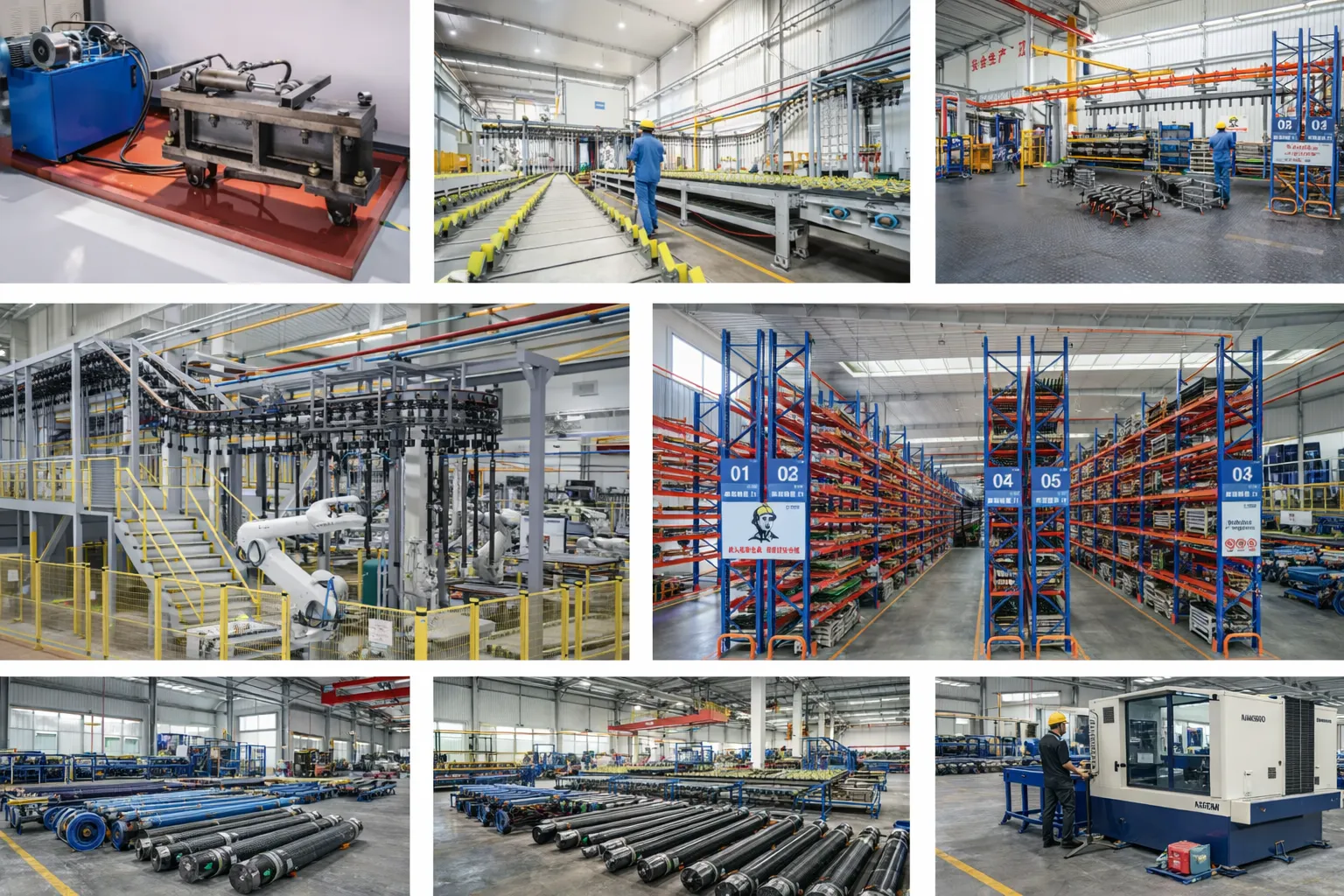
Great design is nothing without flawless, repeatable execution. Our manufacturing facility represents the pinnacle of modern hydraulic engineering and fabrication. We maintain complete, end-to-end control over the production process. From the moment the raw alloy steel billets arrive to the final assembly and painting of the hydraulic cylinder, every step is executed in-house. This complete vertical integration allows us to optimize the hydraulic cylinder price without ever sacrificing an ounce of quality or structural integrity.
The journey begins with precision CNC turning and milling, ensuring dimensional tolerances that are measured in microscopic increments. We employ automated submerged arc welding to ensure deep, consistent, and defect-free penetration on all vital structural joints. Because we are supplying critical marine infrastructure, having a vessel resort to emergency hydraulic cylinder repair while adrift at sea is a scenario we strive to eliminate entirely through our aggressive quality assurance programs.
Every single unit manufactured undergoes a mandatory 100% factory pressure test before dispatch. We simulate loads at 1.5 times the maximum rated working pressure to guarantee burst safety and absolute zero-leakage compliance. Structural welds are subjected to rigorous non-destructive testing (NDT), including ultrasonic testing (UT) and magnetic particle inspections (MPI). Furthermore, we ensure total material traceability; each thrust balance cylinder is stamped with a unique serial identifier, allowing us to trace the metallurgical origins of its steel and the specific batches of its seals. This level of meticulous certification is crucial for vessels operating under the strict classifications of marine societies in South Korea, Japan, Europe, and across the globe.
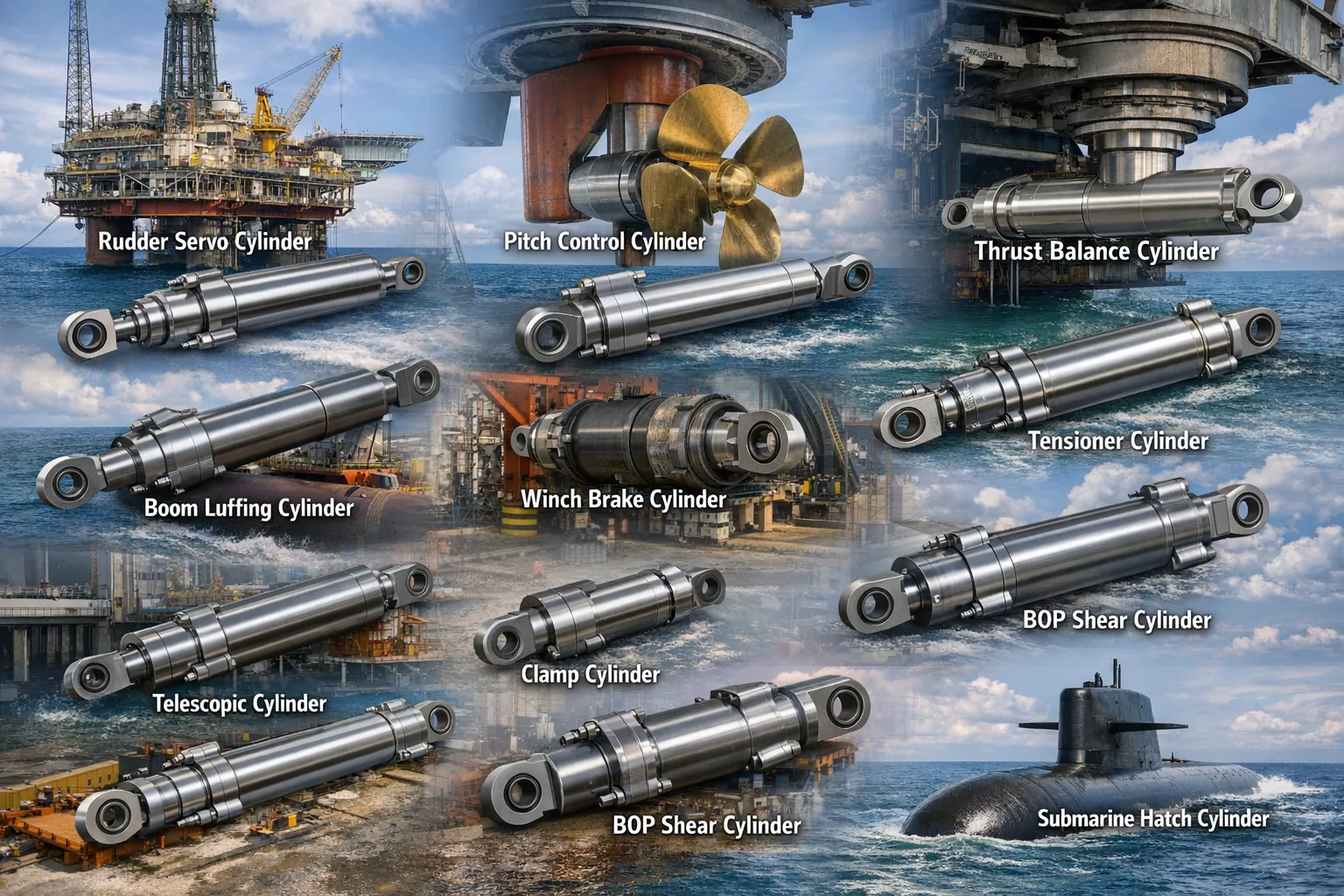
Broader Industry Applications
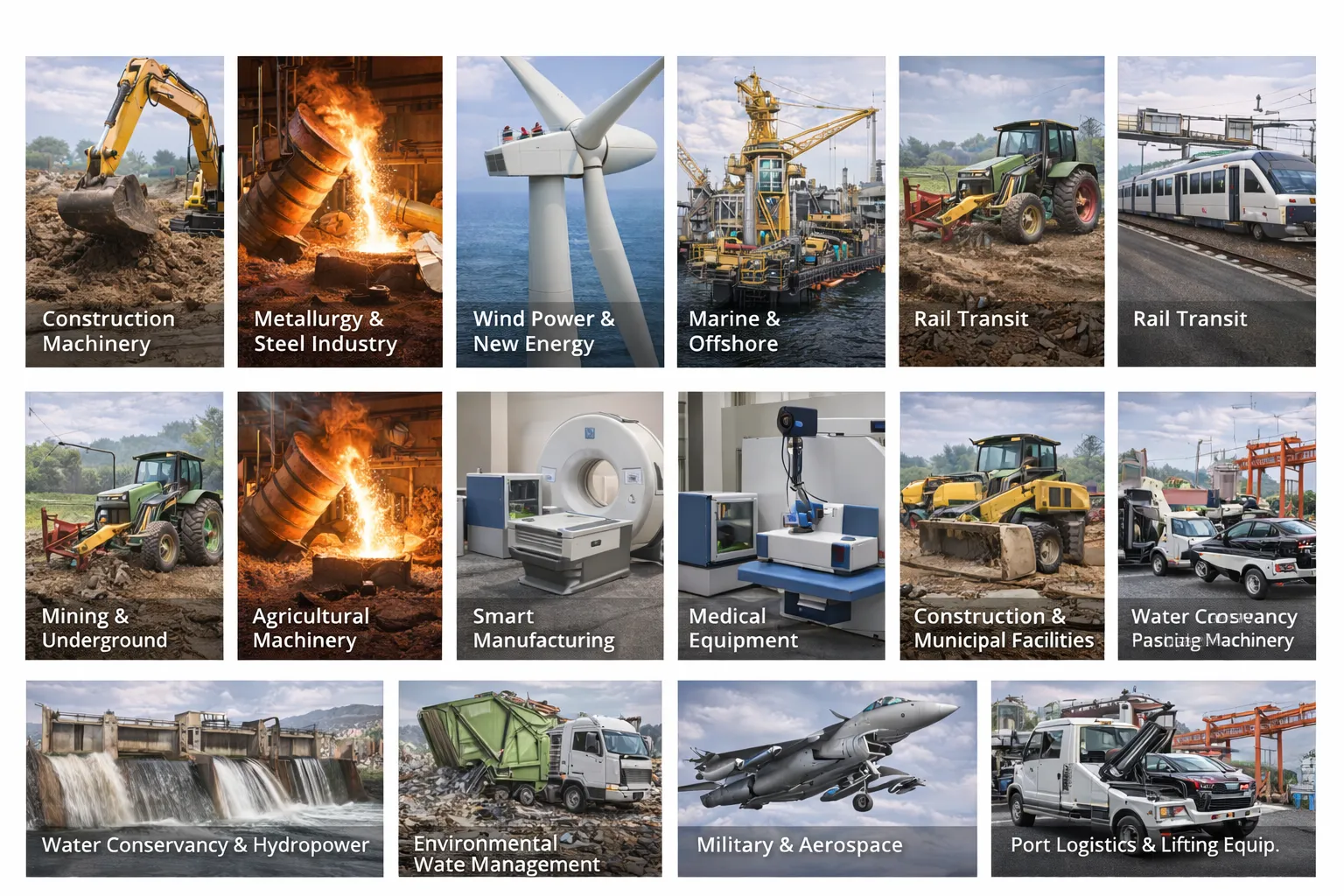
While the thrust balance hydraulic cylinder is intrinsically tied to marine propulsion, the robust engineering principles—exceptional corrosion resistance, extreme vibration tolerance, and precise axial load management—make this fluid power technology highly sought after across multiple heavy industrial sectors.
- Marine & Offshore Sealing: The primary application, stabilizing main propeller shafts, azimuth thrusters, and dynamic positioning systems on drillships.
- Metallurgical and Iron Industry: The intense radiant heat and heavy impact loads of steel continuous casting and rolling mills require hydraulic rams that will not distort under massive, continuous pressure.
- Mining Industry: Underground hoists and open-pit crushing equipment are subjected to severe shock loads and abrasive rock dust, demanding the superior sealing technology developed for our marine lines.
- Construction Machinery Industry: Large-scale excavators, heavy piling rigs, and tunnel boring machines (TBMs) utilize similar force compensation concepts to manage immense thrust forces against bedrock.
- Material Handling & Logistics: In heavy-duty port automation, a standard lift cylinder might buckle under extreme off-center loads. Our high-rigidity cylinders provide the necessary safety margins.
- New Energy & Environmental Protection: Utilized in offshore wind turbine pitch control systems, where equipment must endure hurricane-force winds and salt spray without failing.
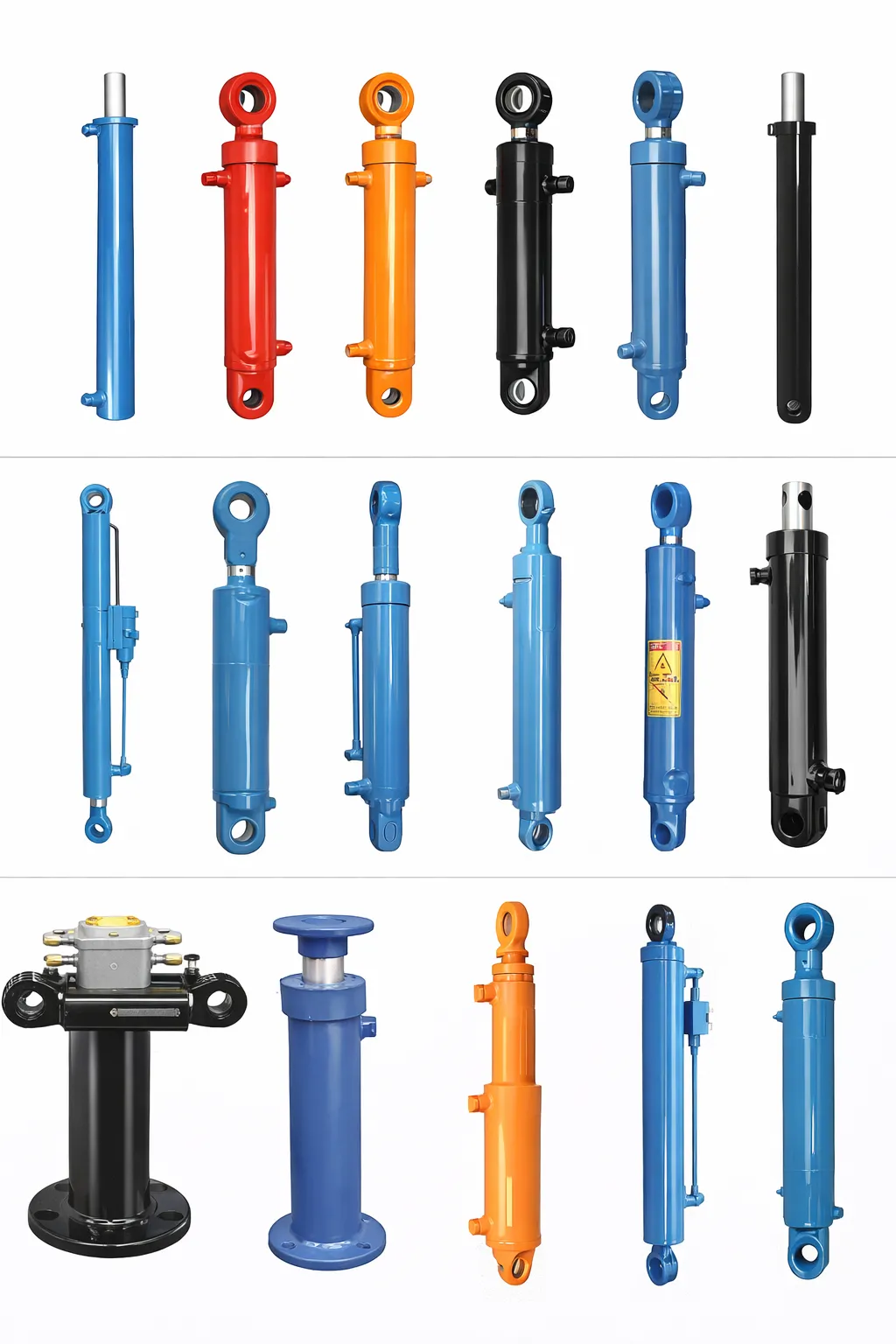
Comparative Analysis: Standard Hydraulic Rams vs. High-Performance Thrust Balance Cylinder
Procurement teams often weigh the initial capital expenditure against long-term operational costs. Understanding the stark mechanical differences between a generic industrial actuator and a purpose-built marine balance cylinder clarifies exactly why the latter is a vital investment rather than an expense.
| Evaluation Metric | Standard Hydraulic Rams | Our Thrust Balance Cylinder |
|---|---|---|
| Seal Longevity | Prone to rapid, destructive wear under high-frequency micro-movements. | Ultra-low friction PTFE blends actively resist frictional wear and heat. |
| Corrosion Resistance | Basic chrome plating, highly susceptible to seawater pitting and flaking. | Heavy-duty nickel plating tailored specifically for aggressive marine salinity. |
| Vibration Tolerance | Tie-rod or light standard designs stretch and loosen over time. | Fully welded alloy steel structure ensures unyielding, monolithic rigidity. |
| Total Cost of Ownership | Lower initial cost, but high frequency of replacement and vessel downtime. | Highly competitive hydraulic cylinder price with vastly lower maintenance overhead. |
| Precision Control | Adequate only for basic, slow linear pushing or pulling tasks. | Exceptional dynamic axial load balancing, floating the shaft seamlessly. |
Real-World Impact: B2B Engineering Case Studies
The true test of our fluid power equipment is out on the relentless open water. Here are several documented examples of how our engineered solutions have resolved complex mechanical challenges for key players, particularly within the highly competitive and demanding Asian maritime market.
Case 1: Eliminating Dry-Dock Delays for a Busan Shipyard
Location & Date: Busan, South Korea (October 2025)
The Challenge: A major commercial shipyard was constructing a new series of high-capacity freighters. Their legacy European supplier of OEM hydraulic rams was experiencing severe 8-month lead time delays, and the standard cylinders they had been using demonstrated unacceptable seal wear during initial harbor sea trials.
The Solution: The shipyard’s procurement director discovered our technical portal via organic search and reached out for an urgent consultation. Within 4 weeks, we manufactured and delivered custom-engineered, nickel-plated double acting thrust balance units that perfectly matched their existing housing footprints.
The Result: Not only did we deliver ahead of their revised schedule, but subsequent deep-sea trials showed a 0% leakage rate and perfect axial force compensation, saving the client massive potential late-delivery penalties.
“Their engineering team understood our vibration and salinity concerns immediately. The transition from our old brand to their upgraded cylinders was flawless, and the overall build quality is visibly superior. A highly reliable partner.” – Chief Marine Engineer, Busan
Case 2: Upgrading Offshore Platform Support Vessels
Location & Date: Ulsan, South Korea (May 2024)
The Challenge: Dynamic positioning thrusters on platform support vessels hold station for hours, meaning the propulsion systems are constantly adjusting. The original OEM thrust cylinders were failing every 14 months due to seal shredding, leading to exorbitant repair bills and unacceptable offshore downtime.
The Solution: We deployed our double acting hydraulic cylinders featuring ultra-low friction PTFE seal technology coupled with a high-rigidity welded alloy construction.
The Result: Maintenance intervals were successfully pushed from 14 months to over 48 months. The fleet management has since standardized on our cylinders for all future bearing refits.
“The reduction in operational expenditure has been remarkable. We no longer worry about thruster failure during critical platform resupply missions.” – Fleet Operations Director, Ulsan
Case 3: Revitalizing Heavy Duty Dredging Equipment
Location & Date: Incheon, South Korea (August 2025)
The Challenge: Dredging vessels suffer from immense, unpredictable shock loads hitting the propeller when navigating dense sediment and bedrock. The existing tie-rod cylinders were physically warping and blowing seals under the sudden strain.
The Solution: By utilizing advanced finite element analysis, we redesigned the cylinder body structure to a heavy-wall welded design and upgraded the hydraulic cylinder piston to handle sudden kinetic shock spikes. We also implemented custom fluid cushioning at the extreme stroke ends.
The Result: Cylinder warping was completely eliminated. The smooth, cushioned response drastically reduced the transfer of kinetic energy to the vessel’s hull, dramatically improving operator comfort and preventing secondary machinery failure.
Case 4: Specialized Marine Research Vessel
Location & Date: Pohang, South Korea (March 2026)
The Challenge: A high-tech research vessel required an extremely low acoustic signature to avoid interfering with sensitive sonar equipment. The stick-slip friction from their old cylinders was broadcasting noise directly into the water column.
The Solution: We provided cylinders with an ultra-smooth, mirror-honed internal barrel finish and specific hydrodynamic porting to eliminate any fluid turbulence and mechanical friction.
The Result: The acoustic emissions from the thrust block dropped below the detectable threshold of their instruments, ensuring perfectly quiet oceanographic data collection.
Frequently Asked Questions
We believe in absolute technical transparency. Below are the most common inquiries we receive from chief engineering managers, procurement officers, and fleet maintenance teams navigating complex fluid power upgrades.
What specifically makes your thrust balance hydraulic cylinder ideal for marine use?
Can I get custom stroke lengths and bore sizes for a double acting hydraulic cylinder?
How do you address seal wear, which is the most common failure mode?
What is the typical lead time for clients in South Korea and the Asia-Pacific region?
Do you supply individual hydraulic parts, or only complete cylinder assemblies?
How does your hydraulic cylinder price compare to purchasing directly from the OEM?
Is fixing hydraulic cylinders a better option than completely replacing them?
What makes a single acting hydraulic cylinder insufficient for this application?
Ready to Secure Your Marine Propulsion Reliability?
Do not allow an inferior, deteriorating component to compromise the safety and efficiency of your entire vessel. Connect with our marine fluid power engineering specialists today. We are fully prepared to review your bearing schematics, discuss your specific operational challenges, and deliver a tailored, drop-in thrust balance solution that guarantees long-term stability and cost savings.
Editor: Cxm