Tuyere Adjusting Cylinder for Blast Furnace
Precision-engineered with robust alloy steel, high-temperature chrome plating, and an active water-cooling protection jacket to execute exact micro-adjustments in extreme metallurgical heat.
Product Overview and Metallurgical Industrial Value
In the continuous and unforgiving architecture of modern integrated ironmaking, the blast furnace stands as the defining reactor of the entire plant. At the lower hearth section of this colossal structure lies the most mechanically and thermodynamically hostile sector: the tuyere zone. The tuyere stock assembly is responsible for injecting a continuous, high-velocity blast of atmospheric air, oxygen, and pulverized coal directly into the smelting zone at temperatures frequently exceeding 1200 degrees Celsius. The exact angular positioning, structural alignment, and penetration depth of these blowpipes dictate the precise formation of the combustion raceway. This raceway geometry directly controls the uniform distribution of ascending reducing gases, effectively determining the thermal stability, fuel consumption rates, and overall iron reduction efficiency of the entire operation. Maintaining absolute, millimeter-perfect control over this injection alignment is the highly demanding task assigned to the specialized tuyere adjusting cylinder.
Operating any fluid power actuator in the immediate vicinity of a blast furnace belly presents extreme engineering complexities. The ambient radiant heat flux is devastatingly high, and the local cast house atmosphere is heavily saturated with abrasive iron ore particulates, flying coke dust, and highly corrosive sulfurous gases. When standard commercial fluid power components are installed in this rigorous zone, they suffer rapid, predictable, and catastrophic failures. The most critical failure mode encountered is rod ablation. As the highly polished rod extends to perform a position micro-adjustment, the extreme localized heat and abrasive particulate scouring literally scorch and strip away standard commercial plating. This exposes the base metal to aggressive oxidation and pitting. Upon retraction, this ablated, jagged rod surface violently shreds the primary polymeric pressure seals, leading to immediate high-pressure fluid leaks near liquid iron—a severe fire and safety hazard. To directly counteract these specific metallurgical failure mechanisms, our engineering division has designed a specialized tuyere adjusting hydraulic cylinder engineered explicitly for uninterrupted survivability in this brutal environment.
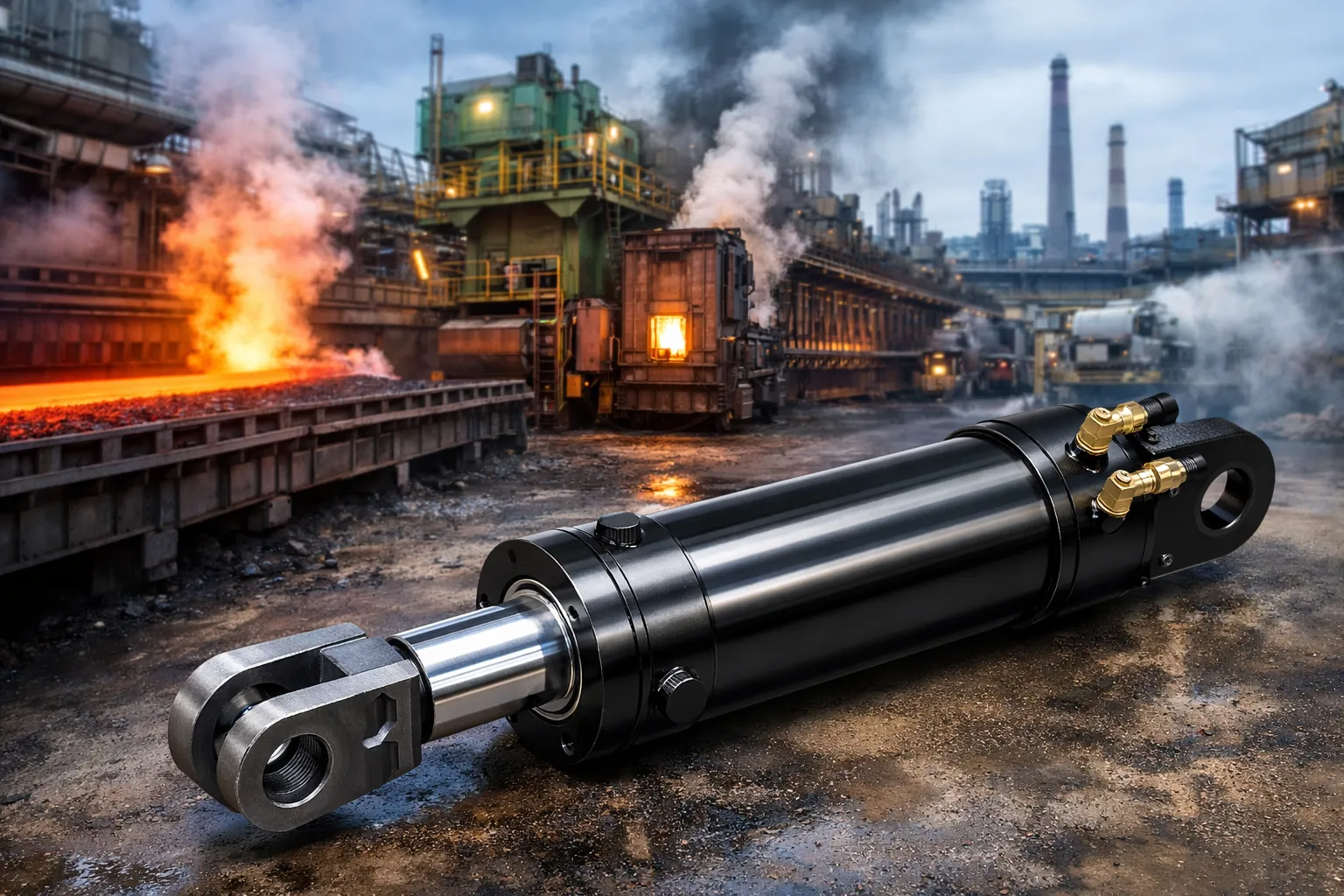
Our strategic market positioning focuses entirely on absolute thermal defense and unwavering structural resilience. By integrating specialized high-yield forged alloy steel, an advanced high-temperature resistant coating, and a proprietary active water-cooling protection jacket, our bespoke design actively prevents rod ablation and internal seal meltdown. Operating globally as an elite, dedicated hydraulic cylinder manufacturer, we do not simply provide off-the-shelf hydraulic cylinder replacements; we deliver highly specialized, robust infrastructural assets that directly reduce unscheduled furnace blow-downs. Upgrading your hot blast main platforms with our premium hydraulic oil cylinder ensures that your plant achieves peak fuel efficiency while drastically outperforming the initial procurement cost over a multi-year furnace campaign.
Technical Parameters and Customization Specifications
Because every blast furnace features a unique bustle pipe arrangement, proprietary tuyere stock geometry, and specific spatial mounting constraints on the cast house floor, our engineering division provides comprehensive dimensional customization based upon a highly proven, thermally resistant structural framework. The technical table below outlines the specific engineering parameters, structural material science, and protective configurations intrinsic to our heavy-duty ironmaking actuation systems.
| Engineering Parameter Focus | Specification Range and Material Details |
|---|---|
| Target Industrial Sector | Metallurgy / Heavy Ironmaking Industry |
| Equipment Category | Blast Furnace System |
| Subsystem Location | Tuyere Area and Hot Blast Blowpipe Assembly |
| Primary Product Designation | Tuyere adjusting cylinder |
| Fluid Action Mode | Double acting hydraulic cylinder for fully powered extension and forced retraction |
| Internal Architecture | Precision hydraulic cylinder piston optimized for extreme high-temperature fluid dynamics |
| Manufacturing Assembly | Heavy-duty fully welded structure (Eliminates vulnerable tie-rod thermal expansion leaks) |
| Base Material System | Forged Alloy Steel ensuring massive structural stability under elevated thermal loads |
| Surface Treatment Defense | Thick, high-temperature resistant Chrome Plating serving as a severe thermal and abrasive barrier |
| Environmental Condition Grade | Extreme Radiant High Temperature + Severe Slag and Dust Scouring |
| Dynamic Operational Feature | Exact tuyere position micro-adjustment to strictly optimize raceway aerodynamics |
| Primary Failure Mode Targeted | Rod ablation, thermal seal melting, internal fluid boiling, and structural warping |
| Mandatory Recommended Config | High-temperature resistant coating + Integrated active water cooling protection |
Operational Fluid Dynamics and Engineering Working Principle
To deeply appreciate the sheer necessity for such robust mechanical engineering, plant operators must meticulously examine the fluid dynamics and physical resistance required around the blast furnace hearth. The alignment mechanism operates firmly and exclusively as a high-pressure double acting hydraulic cylinder. In an environment where the heavy, refractory-lined blowpipe assembly must be indexed and moved against significant mechanical resistance, rigid piping connections, and the massive internal gas expansion forces of the furnace, a basic gravity-return or spring-loaded single acting hydraulic cylinder is entirely incapable of providing the necessary multi-directional positional authority. Both the extension push and the retraction pull must be forcefully and rigidly commanded by the central hydraulic power unit to ensure the exact seating of the tuyere into the copper furnace cooler.
When the blast furnace control operators determine that the hot blast angle or penetration depth requires optimization for fuel efficiency, high-pressure hydraulic fluid is rapidly routed into the heavy alloy steel barrel via high-resolution proportional directional valves. Acting directly against the large internal surface area of the precision hydraulic cylinder piston, this pressurized oil safely generates a massive linear thrust. This sheer force allows the mechanism to smoothly overcome the intense physical resistance of the heavily constructed tuyere stock, sliding it forward or backward by mere fractions of a millimeter. Because the tuyere adjusting hydraulic cylinder is mounted in an area subjected to immense, continuously fluctuating radiant heat, severe thermal expansion of the steel components is inevitable. Our specialized alloy steel construction geometrically accommodates this expansion without warping or binding, ensuring the internal bore remains perfectly cylindrical for the high-temperature seals to traverse without friction spikes.
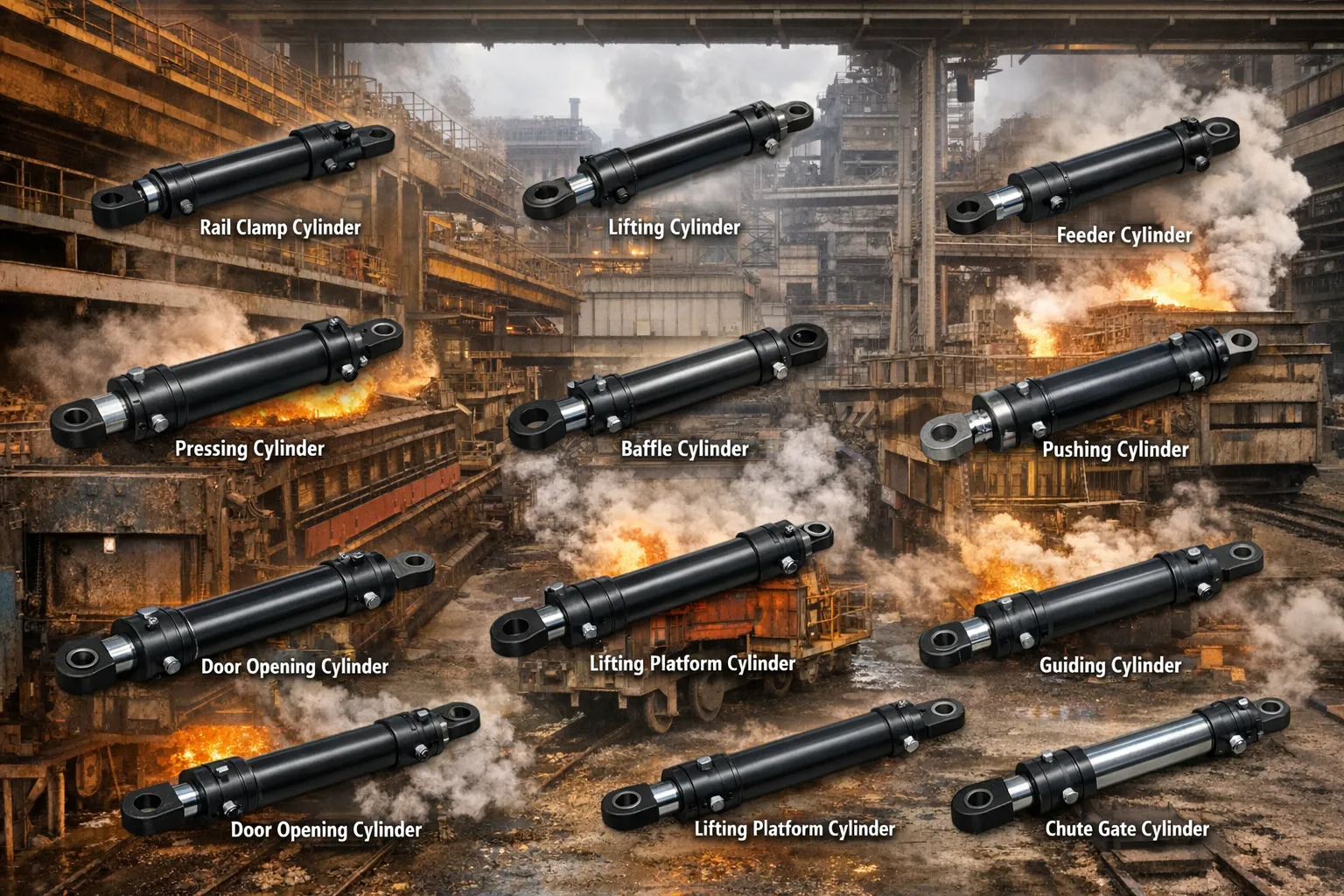
The absolute most critical phase of the continuous operation involves actively preventing rod ablation and internal seal deterioration. As the highly polished alloy rod extends toward the furnace body, it is violently exposed to blistering radiant heat and highly abrasive flying particulates. To structurally counteract this, our premium equipment configurations incorporate a specialized, integrated water-cooling protection jacket. A continuous, high-flow circuit of industrial chilled cooling water is circulated through an outer steel envelope surrounding the critical rod gland area and the front barrel of the cylinder. This active thermal management creates a powerful, localized cooling zone, physically lowering the temperature of the extended rod surface and the internal primary seals well below their degradation and melting thresholds. This harmonious integration of high-pressure fluid mechanics and active thermodynamic management is the ultimate engineering key to maintaining continuous, leak-free actuation in the blast furnace danger zone.
Seamless OEM Machinery Retrofitting and Global Brand Replacement
During a strictly scheduled blast furnace reline or an urgent, high-pressure maintenance stoppage, plant directors absolutely cannot afford the massive labor delays associated with cutting, modifying, and re-welding heavy structural steelwork to accommodate dimensionally incompatible aftermarket parts. Our advanced engineering department is fundamentally structured to precisely manufacture exact 1:1 dimensional drop-in replacements for failing legacy fluid power systems. We meticulously reverse-engineer and reproduce the mounting trunnion dimensions, clevis pin hole diameters, exact retracted stroke lengths, heavy metric fluid port threads, and water jacket connections of your existing ironmaking machinery. This exact dimensional accuracy guarantees that your mechanical maintenance fitters can install the new heavy-duty units rapidly without requiring dangerous cutting, on-site hot-work permits, or machinery modification on the busy, hazardous cast house floor.
Our highly durable, thermally protected metallurgical actuators are frequently specified by plant engineers to directly replace failing components initially supplied by major international commercial fluid power brands such as Bosch Rexroth, Parker Hannifin, Eaton Vickers, SMC, Moog, and Yuken. Please be clearly and explicitly advised that the mention of these specific corporate brand names is strictly for the purpose of technical sizing convenience, dimensional cross-referencing, and assisting plant reliability teams in rapid, error-free model selection. We operate proudly as a bespoke, independent manufacturing entity and hold no trademark affiliation with these brands. By partnering directly with our production facility, procurement teams easily bypass multi-tier international distributor markups to secure a highly competitive hydraulic cylinder price, while simultaneously upgrading the thermal resilience and anti-ablation defense of their core furnace machinery.
Eight Core Technical Advantages for Metallurgical Survival
Overcoming the relentless, deeply destructive forces of extreme radiant heat and aggressive particulate erosion requires a fundamental shift in standard fluid power design. We have thoughtfully engineered eight distinct proprietary advancements into every heavy-duty unit to guarantee unmatched survival in the blast furnace environment.
1. Active Water Cooling Protection Architecture
The absolute primary defense against catastrophic rod ablation and internal seal meltdown is active thermodynamic management. We seamlessly integrate a highly specialized water-cooling jacket directly into the cylinder head and front gland region. By continuously circulating plant cooling water through these precision-machined channels, we aggressively draw massive amounts of heat away from the rod and the critical internal fluid boundary. This effectively isolates the sensitive polymer seals from the 1200°C+ ambient radiant heat of the blowpipe, extending their functional lifespan exponentially and completely preventing the hydraulic fluid from boiling.
2. High-Temperature Resistant Chrome Plating
Standard commercial hard chrome will quickly blister, crack, and violently flake off when subjected to the extreme thermal cycling near a blast furnace, leading directly to irreversible rod ablation. We utilize an advanced, extra-thick micro-cracked chrome plating process directly over the polished alloy steel rod. This highly specialized surface treatment provides superior thermal barrier properties and extreme surface hardness, ensuring the rod remains glassy smooth and completely resists the erosive scouring of flying hot dust and minor liquid slag splashing.
3. Ultra-Low Friction High-Temp Sealing Technology
When making highly sensitive, millimeter-level tuyere position micro-adjustments to balance the furnace, the physical motion must be perfectly smooth. Standard rubber seals grip the hot barrel tightly, causing erratic “stick-slip” shuddering that ruins PLC positional accuracy. Furthermore, standard NBR rubber simply melts into a plastic state in this zone. We exclusively utilize aerospace-grade fluoroelastomers (FKM/Viton) paired tightly with ultra-low friction PTFE (Teflon) composite step seals. This bespoke material matrix guarantees jitter-free, highly precise linear actuation while remaining perfectly dimensionally stable under immense radiant thermal loads.
4. High-Rigidity Alloy Steel Welded Construction
Standard light-duty tie-rod cylinders are physically dangerous to utilize near a blast furnace; the long external bolts stretch unevenly under heavy mechanical shock and rapid thermal expansion, causing catastrophic high-pressure fluid blowouts at the end caps. Our heavy-duty systems feature a monolithic, 100% fully welded construction utilizing specialized high-yield alloy steel. We join the heavy end caps directly to the main barrel via deep-penetration robotic submerged arc welding. This robust, boltless architecture easily absorbs massive mechanical kinetic shock and fierce thermal expansion without yielding or leaking.
5. Advanced Fatigue Life and Thermal Stability Optimization
Through extensive computational Finite Element Analysis (FEA), we heavily optimize the physical geometry of the trunnion and clevis mounting brackets. By thickening the structural steel at critical high-stress junction points and ensuring highly smooth, calculated radii, we completely eliminate the sharp stress concentrations that lead to structural cracking under constant thermal cycling and mechanical fatigue, ensuring the unit serves reliably from the start of one furnace campaign to the end of the next.
6. Aggressive Metallic Scraper Defense System
The extended rod is constantly exposed to a blizzard of abrasive airborne iron dust, coke breeze, and slag particles. Upon the retraction stroke, standard polyurethane wipers allow this hardened dust to bypass the seal and enter the cylinder, immediately scoring the honed barrel. We install an aggressive tandem scraper system featuring a solid metallic primary scraping ring. This sharp metallic edge physically and violently shears baked-on slag and dust off the rod, while the secondary high-temp elastomer lip wipes away the microscopic remnants, keeping the internal hydraulic parts impeccably pure.
7. Chemical Compatibility with Fire-Resistant Fluids
Operating directly adjacent to liquid iron means standard mineral-based hydraulic oils pose a massive, unacceptable fire and explosion hazard in the rare event of a line rupture. We specifically engineer all internal dynamic clearances, seal elastomer compounds, and composite bearing materials to be fully chemically compatible with modern water-glycol (HFC) and synthetic ester (HFD) fire-resistant fluids, ensuring maximum plant safety regulations are easily met without degrading the hydraulic cylinder components.
8. Oversized Internal Load-Bearing Composite Bands
Because shifting the heavy, rigid tuyere blowpipes induces significant, unpredictable radial side loads on the rod, we machine extra-wide grooves into the heavy hydraulic cylinder piston and insert oversized, high-temperature composite bearing guide bands. These wide sacrificial rings perfectly absorb the severe off-axis loads, preventing the steel piston from ever touching the inner cylinder wall, thereby entirely eliminating internal metal-to-metal galling and scoring.
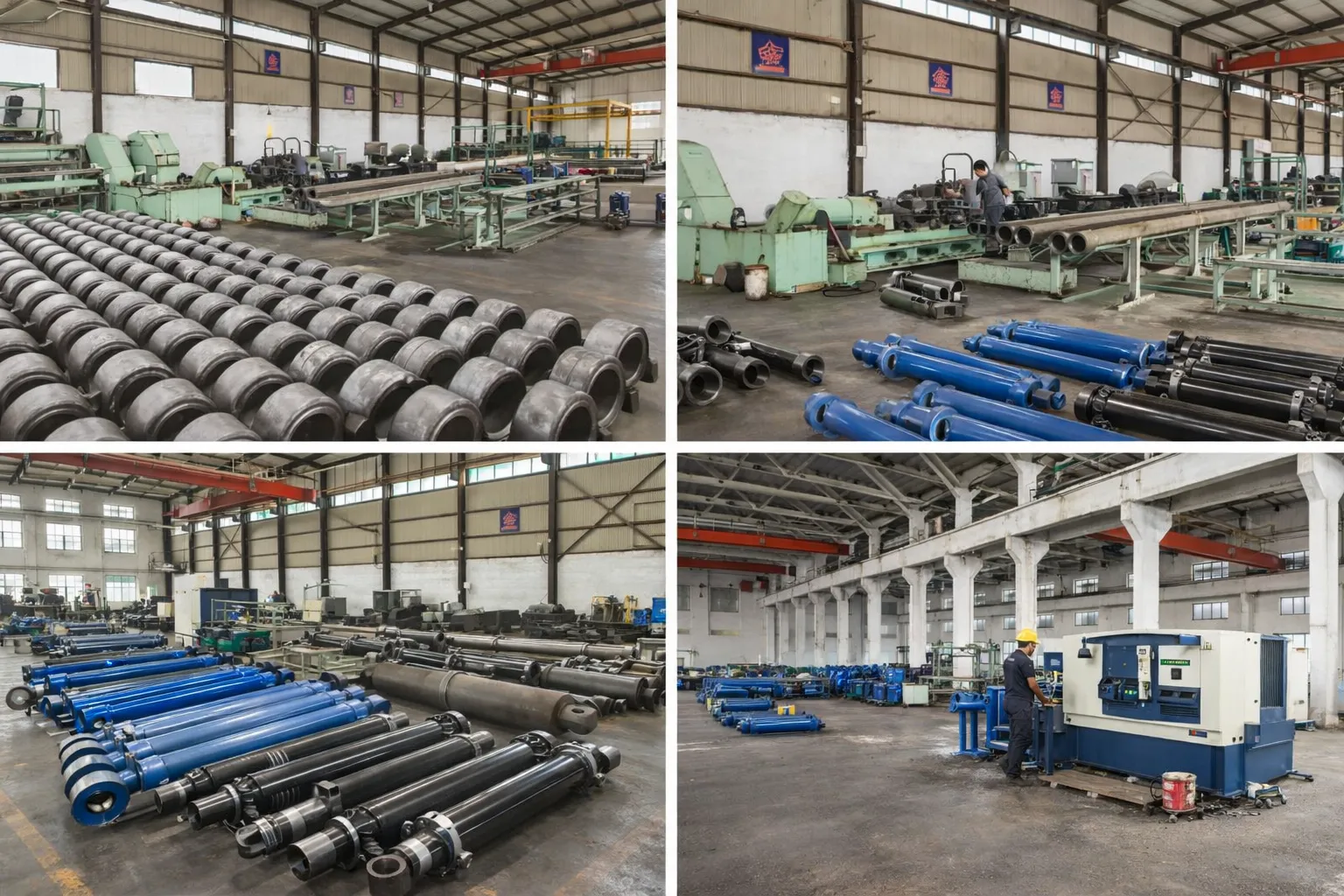
Precision Manufacturing Process and Absolute Quality Control
Manufacturing highly critical, extreme-environment fluid power components designed to sit inches from liquid iron requires uncompromising vertical control over the entire production lifecycle. We do not simply assemble pre-painted parts purchased from third-party vendors; we precision-machine every single element directly from raw forged alloy steel billets within our advanced facility. The internal bore of every heavy cylinder tube undergoes a specialized deep-hole boring and micro-skiving/roller-burnishing process, achieving an ultra-smooth, mirror-like internal surface finish (Ra < 0.2µm). This exceptional internal smoothness drastically reduces parasitic sliding friction against the primary PTFE seals, fundamentally preserving their sealing integrity over millions of micro-strokes. Our heavily automated multi-axis CNC turning centers mill all structural components, trunnions, and water-jacket fittings to exact micrometer tolerances.
Rigorous quality control is the unshakable foundation of our global reputation. Before any heavy-duty unit is authorized for heavy crating and international dispatch to your plant, it must pass a mandatory 100% factory hydrostatic test on our advanced digital diagnostic benches. We aggressively spike the internal fluid pressure to 1.5 times the maximum rated operational limit. The unit must hold this extreme pressure steadily, verifying absolutely zero internal fluid bypass across the piston seals and strictly zero external weeping at the primary rod gland and massive structural welds. Additionally, the integrated water-cooling jacket circuits are pressure-tested entirely independently to ensure perfect, impenetrable isolation from the high-pressure fluid chambers.
We proudly guarantee total lifecycle traceability for every metallurgical client. Each heavy-duty unit is permanently laser-etched with an immutable, unique traceability serial number tightly linked to our digital engineering archives. Years later, when your proactive plant maintenance department schedules routine downtime for fixing hydraulic cylinders, quoting this exact serial number allows our engineering team to instantly identify the original detailed build sheet and material certificates. We can rapidly dispatch the precisely matched high-temp FKM seal kits, specialized metallic scrapers, and replacement rods, transforming highly complex hydraulic cylinder repair into a remarkably fast, highly organized, and error-free procedure directly on site.
Broad Industrial Applications for Heavy-Duty Actuators
While heavily mathematically optimized specifically to conquer the thermal destruction and abrasive erosion of a blast furnace tuyere zone, this hyper-rugged, water-cooled structural architecture translates flawlessly to other severe industrial sectors where standard fluid power equipment repeatedly surrenders to the harsh environment.
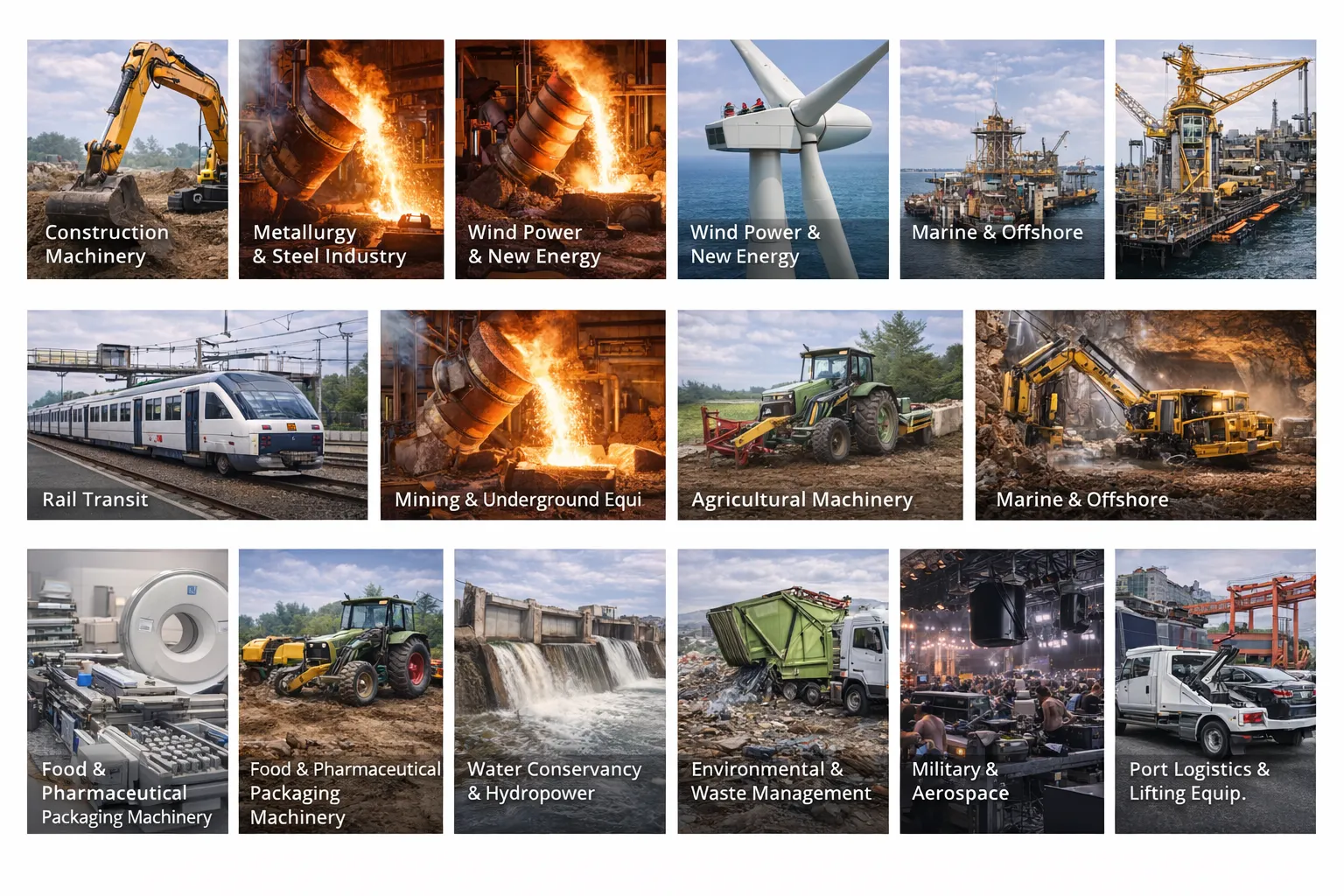
- Metallurgy and Heavy Steel Manufacturing: Dominating in applications requiring actuation near molten materials, including electric arc furnace (EAF) roof lifting, continuous casting line straighteners, and heavy ladle tilting mechanisms. Explore our full capabilities in the metallurgical and iron industry.
- Mining Industry and Bulk Excavation: Thriving in highly demanding environments thick with highly abrasive flying rock dust, making them ideal for driving massive primary jaw crushers and heavy apron feeders. View our mining industry solutions.
- Heavy Construction Machinery: Frequently specified as an ultra-reliable primary main boom actuator, articulation joint, or massive lift cylinder on high-tonnage mining excavators and heavy-duty earthmoving equipment. See our construction machinery industry portfolio.
- Plastics and Rubber Heavy Machinery: Providing the immense, unrelenting high-pressure clamping forces necessary for large-scale industrial injection molding presses without suffering severe thermal pressure decay over long hold cycles.
- Material Handling and Port Logistics: Powering heavy automated dock levelers, massive continuous bulk ship unloaders, and heavy transfer stations where uninterrupted 24/7 reliability in coastal areas is economically mandatory.
- New Energy and Special Environments: Employed as highly specialized hydraulic rams for offshore wind turbine installations and high-compression industrial waste compactors requiring supreme chemical and structural resilience.
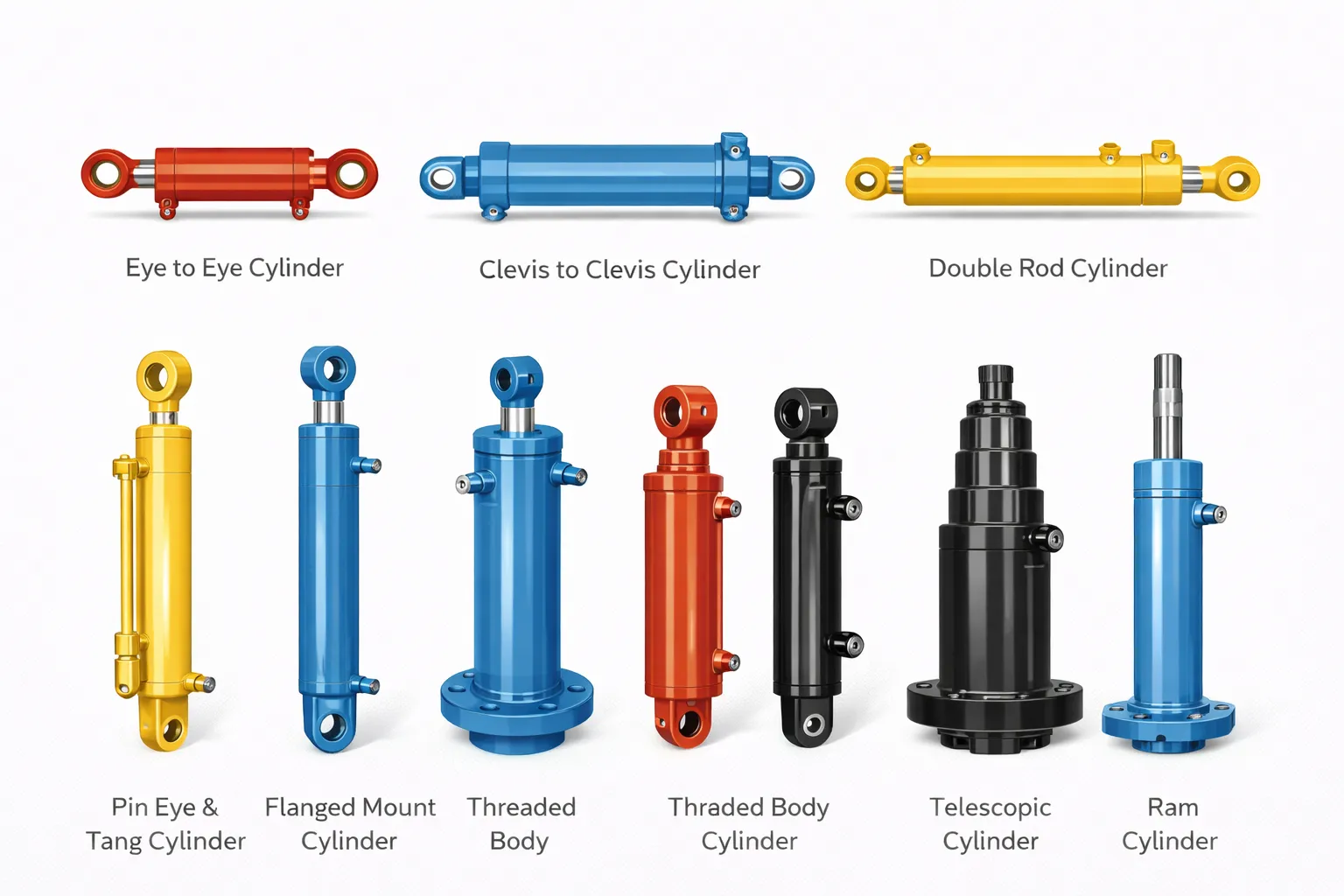
Comparative Analysis: Standard Commercial Actuators vs. Our Blast Furnace Design
Procuring heavy industrial fluid power components based solely on the lowest initial purchase price invariably leads to disastrous operational consequences when cheap parts fail, forcing an emergency blast furnace stoppage and massive clean-up operations. The detailed analytical table below outlines the massive technical disparities between sourcing a generic standard commercial unit versus strategically investing in our purpose-built metallurgical equipment.
| Core Engineering Feature | Ordinary Commercial Cylinder | Our High-Performance Tuyere Cylinder |
|---|---|---|
| Thermal Degradation Defense | No thermal management; internal seals and oil rapidly bake and boil in the high radiant heat | Active Water Cooling Protection jacket continuously chills the critical rod gland zone |
| Rod Ablation Prevention | Thin commercial chrome plating (Melts, blisters, and violently flakes off under 1200°C heat) | Advanced High-Temperature Chrome Plating providing superior thermal barrier properties |
| Sealing Performance & Control | Standard NBR rubber (Causes severe stick-slip shuddering and rapidly melts near the blowpipe) | Ultra-low friction PTFE/FKM step seals ensure perfectly smooth, precise PLC micro-adjustments |
| Physical Structural Assembly | Tie-rod bolting (External bolts stretch under rapid thermal expansion, causing heavy leaks) | 100% Fully Robotic Welded Alloy Steel Architecture (Impervious to thermal expansion stress) |
| Operational Lifespan | Extremely short; catastrophic thermal failure typically forces replacement every 2-4 months | Dramatically extended MTBF; reliably operates well beyond 18-24 months on the cast house floor |
Real Engineering Case Studies in South Korea and Surrounding Hubs
Our custom heavy-duty solutions are continuously and successfully deployed across major Asian industrial steel hubs, systematically solving extreme thermal and mechanical failures where standard equipment succumbs to the immense operational stress of ironmaking. Below are five detailed accounts of our engineering successes directly in the field:
Case 1: Eradicating Extreme Rod Ablation in Pohang, South Korea
Client Profile: A massive, world-class integrated iron and steel manufacturing complex operating multiple large-volume blast furnaces.
Application: Primary tuyere stock positioning assemblies on Blast Furnace #3.
The Challenge: In March 2024, their Lead Furnace Reliability Engineer contacted us after searching for specialized high-temperature fluid power solutions online. Their standard European OEM cylinders were failing disastrously every 2 months. The extreme radiant heat was causing rapid rod ablation; the chrome plating was blistering and flaking off, immediately destroying the wiper seals upon retraction and causing highly dangerous hydraulic oil leaks on the hot cast house floor.
The Solution & Result: We rapidly engineered a custom tuyere adjusting cylinder utilizing a fully integrated active water-cooling jacket and advanced high-temperature chrome plating. Installed in May 2024, the units have operated continuously for over 22 months with absolutely zero rod ablation, thermal blistering, or fluid loss.
“The thermal integrity of the water-cooled design is phenomenally strong. They precisely solved our absolute most critical mechanical breakdown point, saving us vast amounts of operational capital and avoiding highly dangerous oil fires near the hearth.” — Mr. Kang D.Y., Furnace Maintenance Director
Case 2: Curing Thermal Seal Meltdown and Stick-Slip in Gwangyang, South Korea
Client Profile: A major integrated ironmaking facility specifically supplying the regional premium automotive sector.
Application: Blowpipe adjustment mechanisms operating extremely close to the lower bustle pipe.
The Challenge: Reached out to our highly technical sales team in August 2024. Due to the intense ambient heat, the standard commercial NBR rubber seals in their existing cylinders were literally melting into a hard plastic within weeks, causing complete pressure loss. When operators tried to adjust the tuyere angle to optimize the blast, the cylinder would judder violently due to the damaged, gripping seals.
The Solution & Result: We supplied a specialized unit utilizing aerospace-grade FKM (Viton) and ultra-low friction PTFE composite step seals, heavily protected by our water jacket. The new heavy-duty cylinders now operate seamlessly, holding massive fluid pressure during the entire furnace campaign and allowing for perfectly smooth, micro-millimeter tuyere adjustments without any stick-slip juddering.
“Moving to the premium PTFE/FKM seal design was an absolute game-changer. The fluid boundary remains completely intact despite the intense heat, and the positioning motion is flawlessly smooth. Excellent metallurgical engineering.” — Park J.Y., Lead Hydraulic Engineer
Case 3: Rapid Emergency OEM Retrofit in Incheon, South Korea
Client Profile: An elite heavy industrial engineering firm servicing and upgrading massive steel plants regionally.
Application: Urgently upgrading the main tuyere adjustment systems of a medium-volume blast furnace during a strictly timed, unforgiving reline shutdown.
The Challenge: Emailed our engineering hotline urgently in October 2025. Their primary European OEM parts supplier suddenly faced massive unexpected shipping delays, directly jeopardizing a firmly scheduled 4-week furnace reline window. They desperately needed twelve specialized, water-cooled custom cylinders built to exact drop-in dimensions immediately to avoid crushing financial penalties.
The Solution & Result: Leveraging our massive raw material alloy steel inventory and running our 24/7 in-house CNC capabilities, we accurately reverse-engineered, machined, robotically welded, pressure-tested, and air-freighted all twelve units within exactly 21 days. The furnace integration team installed them flawlessly without modifying a single mounting pin or heavy hose fitting.
“Their ability to deliver highly complex, water-cooled metallurgical components so accurately under extreme time pressure literally saved our modernization contract. The dimensional accuracy was perfect. We will definitely use them again.” — Kim D.H., Engineering Project Director
Case 4: Solving Structural Tie-Rod Warping in Ulsan, South Korea
Client Profile: A highly specialized facility focusing on specialty alloys and heavy forging.
Application: Furnace air injection control mechanisms operating under highly fluctuating, asymmetrical thermal loads.
The Challenge: In January 2025, the facility was struggling with severe internal cylinder binding. The standard carbon steel tie-rod cylinders they originally utilized were physically expanding unevenly on one side due to the severe radiant heat, causing the barrel to warp and the piston to scrape aggressively against the barrel wall.
The Solution & Result: We rapidly transitioned them to our highly rigid, fully robotically welded design forged exclusively from specialized alloy steel. The boltless architecture handles thermal expansion perfectly uniformly. The binding issues were permanently resolved, extending the operational lifespan from a mere 2 months to over 18 months.
“Moving from basic carbon steel tie-rods to their heavy welded alloy design was an absolute structural revelation. The massive thermal integrity eliminated the warping entirely. They are now our exclusive supplier for hot-zone actuation.” — Lee W.C., Furnace Operations Manager
Case 5: Beating Airborne Slag Scouring in Kaohsiung, Taiwan
Client Profile: A massive coastal smelting facility operating older, highly abrasive blast furnace systems.
Application: Adjusting rams positioned directly under the primary pulverized coal injection lines.
The Challenge: Emailed our engineering hotline in May 2024. The brutal combination of intense radiant heat and heavy airborne pulverized coal dust and flying slag was acting like sandpaper, destroying standard rod surfaces and violently tearing out the soft polyurethane rod glands within eight weeks.
The Solution & Result: We deployed our aggressive high-temperature metallic tandem scraper system paired directly with our specialized high-temperature resistant rod coating. The metallic scrapers physically shield the internal PTFE seals from the coal dust. After comprehensive field trials spanning 18 months, the rods exhibit a pristine finish with absolutely zero abrasive scoring.
“We had sadly accepted severe abrasive rod scoring as a harsh financial reality of our older facility until we installed their coated units with metallic wipers. The particulate resistance is absolutely flawless.” — Lin Wei-Chen, Senior Facilities Manager
Frequently Asked Questions (FAQ)
To thoroughly assist elite procurement managers, reliability engineers, and plant directors in making highly informed, data-driven technical upgrades, we have detailed our comprehensive engineering responses to the most critical operational inquiries regarding our heavy-duty fluid power systems.
1. How exactly does your active water cooling system prevent rod ablation and seal failure?
2. What precise engineering dimensions do you require to generate a custom manufacturing quotation?
3. Can you seamlessly manufacture an exact 1:1 dimensional drop-in replacement for obsolete European brands?
4. Are your blast furnace actuators chemically compatible with modern fire-resistant hydraulic fluids?
5. What are your typical heavy manufacturing lead times for equipment delivery to South Korea?
6. Do you actively offer after-sales engineering support and critical spare parts for routine maintenance?
7. How does your exact pricing structure compare to continually acquiring standard commercial OEM parts?
Secure Your Blast Furnace Ironmaking Continuity Today
Do not allow catastrophic rod ablation, sudden seal melting, and highly dangerous high-pressure fire-resistant fluid leaks to dictate your blast furnace’s unscheduled maintenance downtime. Upgrade your critical tuyere adjustment mechanisms to a heavy-duty, water-cooled actuation system engineered explicitly for the brutal realities of the global ironmaking industry.
Partner directly with an elite industrial fluid power specialist today. Provide our senior technical division with your specific thermal parameters, operating pressures, or existing OEM part numbers, and we will rapidly deliver a comprehensive engineering assessment alongside a highly competitive commercial manufacturing quotation.
Editor: Cxm