Stainless Steel Valve Actuator Cylinder for Fixed Irrigation Systems
Full 304 stainless steel body, rod, and hardware with FKM (Viton) seals. Engineered to operate maintenance-free in the corrosive water environments that destroy carbon steel valve cylinders within months.
Carbon Steel Has No Place in an Irrigation Valve Pit. Here Is Why.
An irrigation main valve actuator cylinder spends its entire service life in the worst possible environment for carbon steel: standing water, cyclic wetting and drying, dissolved minerals, fertilizer residue in recirculated water, and in coastal or arid regions, elevated chloride concentrations that accelerate pitting corrosion at rates ten times faster than atmospheric exposure. A carbon steel hydraulic cylinder installed in an irrigation valve pit will show visible rust within weeks and functional corrosion failure within one to two seasons. The rod pits, the seals swell from water contamination, the body coating peels, and the entire unit becomes a maintenance liability that grows more expensive with each passing month.
This is not a seal quality problem or a coating problem. It is a material problem. No amount of chrome plating, epoxy coating, or special seal compounds can permanently protect carbon steel from the relentless wet corrosion of an irrigation valve environment. The only reliable solution is to build the entire cylinder from a material that does not corrode in water: stainless steel.
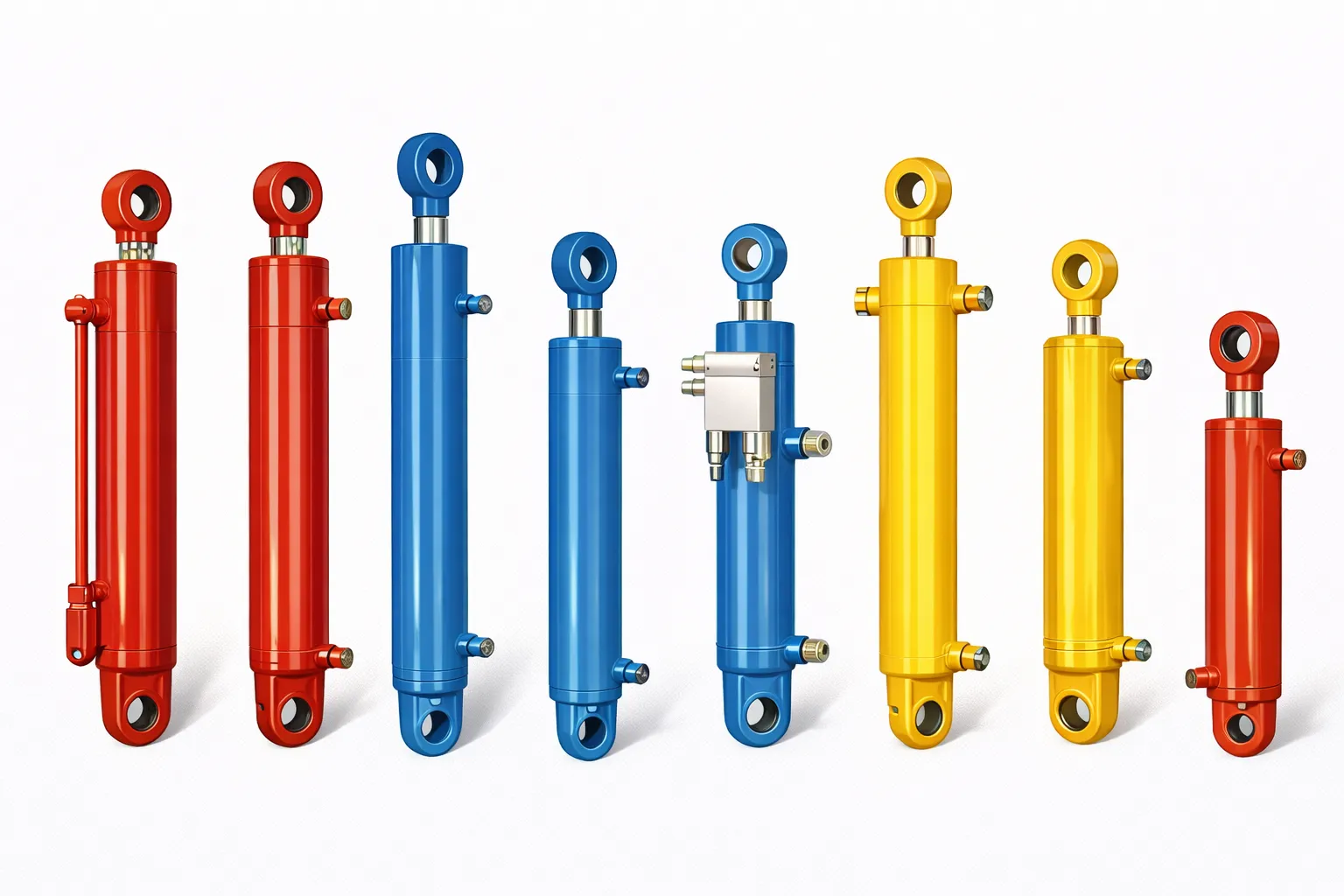
Our irrigation valve actuator cylinder is built entirely from 304 stainless steel: barrel, piston rod, end caps, port bosses, and all external hardware. The rod surface is polished to a mirror finish without chrome plating, because 304 stainless steel in the polished condition provides better corrosion resistance than chrome-plated carbon steel in wet environments. FKM (Viton) seals resist water absorption and the chemical compounds found in irrigation water, including dissolved fertilizers, pH-adjusted water, and chlorinated supply water. This is a double acting hydraulic cylinder that will not corrode, will not rust, and will not require the annual surface maintenance that every carbon steel alternative demands.
Water Quality and Corrosion: What Your Irrigation Source Does to Carbon Steel vs. Stainless Steel
Different water sources present different corrosion challenges. This reference table shows how common irrigation water types affect carbon steel and 304 stainless steel cylinder materials over a 5-year service period.
| Water Source | Corrosion Agents | Carbon Steel (5 yr) | 304 SS (5 yr) |
|---|---|---|---|
| Clean River / Canal | Dissolved O2, sediment | Heavy surface rust, rod pitting | No corrosion |
| Groundwell (Hard Water) | Ca/Mg salts, Fe, Mn | Scale + underscale pitting | Minor scale, no pitting |
| Fertigation (N-P-K) | Ammonium, phosphate, acidic pH | Aggressive pitting, seal swell | No corrosion |
| Brackish / Coastal Well | Chloride (500-5000 ppm) | Severe pitting, failure in 6-12 months | Mild surface stain, functional |
| Reclaimed Wastewater | Chlorine, ammonia, variable pH | Rapid general + pitting corrosion | No corrosion at normal concentrations |
In every water type listed above, 304 stainless steel provides a service life measured in decades rather than seasons. For brackish or high-chloride water above 1,000 ppm, we can upgrade to 316L stainless steel for additional chloride pitting resistance. But for the vast majority of irrigation water sources in Korea, Japan, and Southeast Asia, 304 SS provides more than adequate corrosion protection at a significantly lower cost than 316L.
How a Valve Actuator Cylinder Works in a Fixed Irrigation System
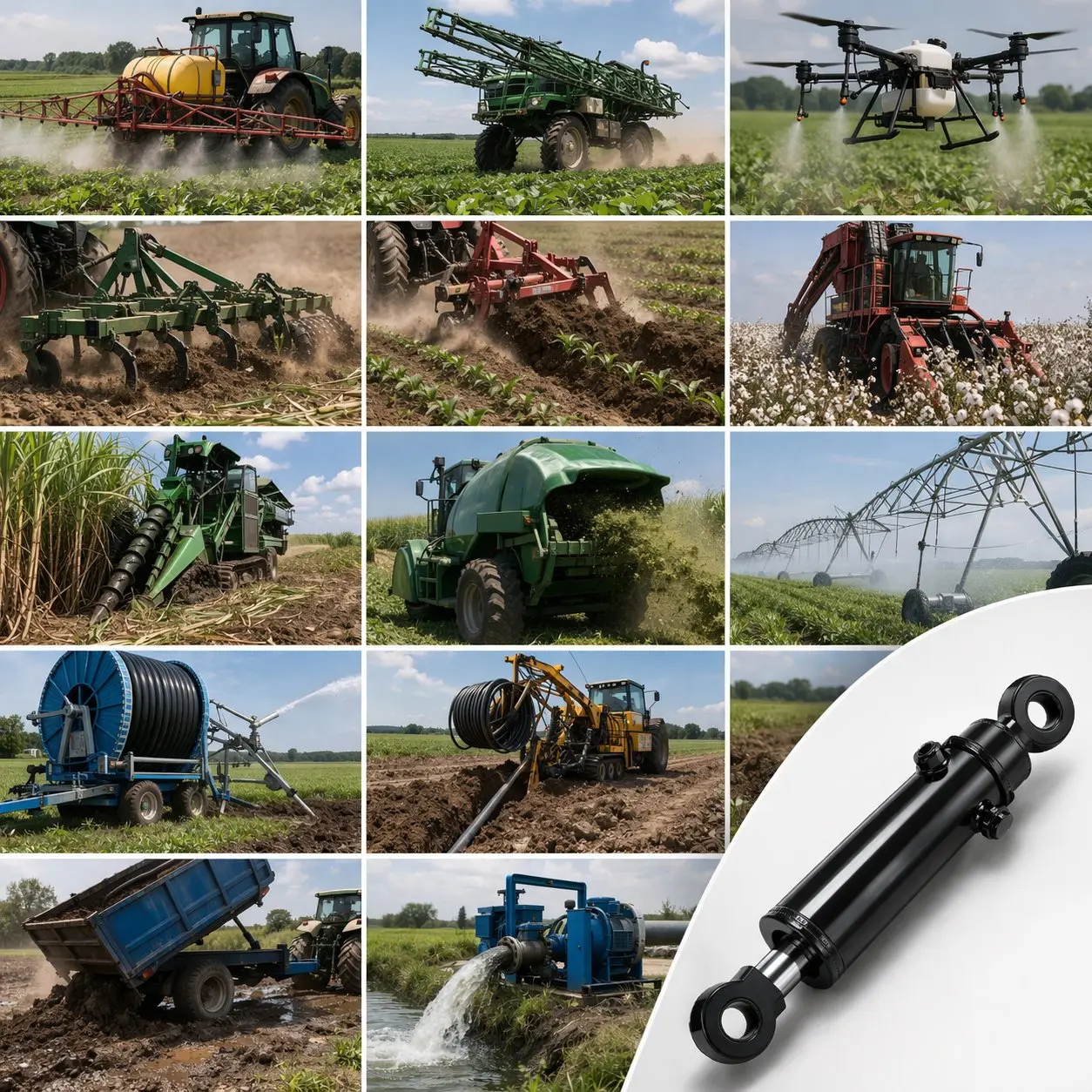
A fixed irrigation system uses main valves to control water flow from the pump station to individual field zones. Each main valve has an actuator that opens and closes the valve gate or butterfly disc. Hydraulic valve actuators use a small hydraulic cylinder connected to the valve stem through a linkage arm. Extending the cylinder rod opens the valve, and retracting it closes the valve. The cylinder must hold the valve in the open position against water pressure for the duration of the irrigation cycle, which may last 30 minutes to several hours depending on the system design.
The cylinder is typically mounted directly on the valve body or on a bracket adjacent to the valve in an underground pit or above-ground valve station. In either case, the cylinder is exposed to constant moisture from condensation, valve leakage drips, and occasional submersion during heavy rain or system overflow events. The water that contacts the cylinder is not clean tap water. It carries dissolved minerals, fertilizer chemicals (in fertigation systems), and in some regions, significant chloride content from brackish well sources.
The operating cycle is low-frequency: most irrigation valves open and close once or twice per day during the growing season, and may sit idle for months during the off-season. This means the cylinder spends most of its life simply sitting in a wet environment, which is precisely the condition that accelerates corrosion on carbon steel.
Technical Specifications
| Specification | Available Range |
|---|---|
| Bore Diameter | 25 mm – 63 mm |
| Rod Diameter | 14 mm – 36 mm |
| Stroke Length | 30 mm – 200 mm |
| Working Pressure | Up to 16 MPa (2,320 PSI) |
| Action Type | Double Acting |
| Structure | Small Welded Piston Cylinder (TIG Welded) |
| Body Material | AISI 304 Stainless Steel (316L optional for high-chloride) |
| Piston Rod | 304 SS, Mirror Polished (no chrome plating needed) |
| Body Finish | Passivated / Electropolished |
| Piston Seal | FKM (Viton) |
| Rod Seal | FKM (Viton) + PTFE Back-up |
| Dust Seal | FKM Wiper |
| Mounting | Clevis (SS), Pin Eye (SS), Flange, Custom |
| Port Thread | BSP / NPT (SS fittings recommended) |
| Operating Temperature | -20 C to +80 C |
| Environment Rating | Corrosive Water / Wet Immersion / Fertigation Chemical |
Six Design Features for Corrosion-Free Irrigation Valve Service
Full 304 Stainless Steel Construction
Barrel, rod, end caps, port bosses, and mounting hardware are all 304 SS. There is no carbon steel anywhere on the cylinder that can corrode. This eliminates the galvanic corrosion that occurs when dissimilar metals (stainless fittings on carbon steel body) contact each other in wet environments.
Mirror-Polished Rod Without Chrome
304 SS rod polished to Ra 0.1 or finer. In wet environments, polished stainless steel outperforms chrome-plated carbon steel because the passive oxide layer on stainless self-heals when scratched, while a scratch through chrome on carbon steel exposes base metal that corrodes rapidly. Eliminating the chrome layer also eliminates the risk of chrome adhesion failure in wet conditions.
FKM (Viton) Seals Throughout
All seals, including piston, rod, wiper, and O-rings, are FKM. Unlike NBR which absorbs water and swells over time, FKM maintains its dimensions and sealing properties even during prolonged immersion. FKM also resists the dissolved fertilizer chemicals and chlorine compounds found in fertigation and reclaimed wastewater irrigation systems.
TIG Welded for Corrosion-Resistant Joints
Stainless steel cylinder welds are performed by TIG (GTAW) process with matching 308L filler wire. TIG welding produces clean, spatter-free welds with minimal heat-affected zone sensitization, maintaining the corrosion resistance of the base material through the weld zone. MIG welding, which is standard for carbon steel cylinders, is not suitable for stainless steel irrigation applications because of the higher spatter and wider heat-affected zone.
Passivated Surface
After welding and machining, the complete cylinder is passivated in a nitric or citric acid solution. This process removes any free iron particles embedded in the surface during manufacturing and enhances the chromium oxide passive layer that provides stainless steel’s corrosion resistance. Passivation is the final step before seal assembly and is essential for maximizing corrosion protection in wet service.
Optional 316L Upgrade for High-Chloride Water
For irrigation systems using brackish well water or coastal groundwater with chloride levels above 1,000 ppm, we offer a full 316L stainless steel version. The molybdenum content in 316L provides significantly better resistance to chloride pitting than 304 SS, extending service life in the most aggressive water chemistries.
Application Scenarios
Fixed Sprinkler Irrigation Main Valves: The primary application. Gate, butterfly, and ball valves on fixed irrigation mains use hydraulic actuators to open and close remotely from a central control panel. The cylinder sits in a wet valve pit or exposed to weather year-round.
Drip Irrigation Zone Control Valves: Drip systems with multiple zones use control valves that open sequentially. The custom hydraulic cylinder actuators on these valves face the same wet corrosion environment as sprinkler main valves, often with the added chemical load of fertigation solutions.
Greenhouse Irrigation Valve Actuators: Greenhouse irrigation uses frequent valve cycling for precise watering schedules. The high humidity and chemical nutrient solutions in greenhouse environments make stainless steel construction particularly valuable.
Reclaimed Water Irrigation Systems: Treated wastewater used for irrigation contains residual chlorine, ammonia, and variable pH that accelerates carbon steel corrosion. Full stainless steel construction is the only practical material choice for these systems.
Aquaculture Water Control Valves: Fish farm water management systems use valve actuators exposed to nutrient-rich water with biological activity. The corrosion resistance and chemical inertness of stainless steel and FKM seals make our cylinder suitable for agricultural machinery hydraulic cylinder applications in aquaculture as well.
Manufacturing and Quality Control
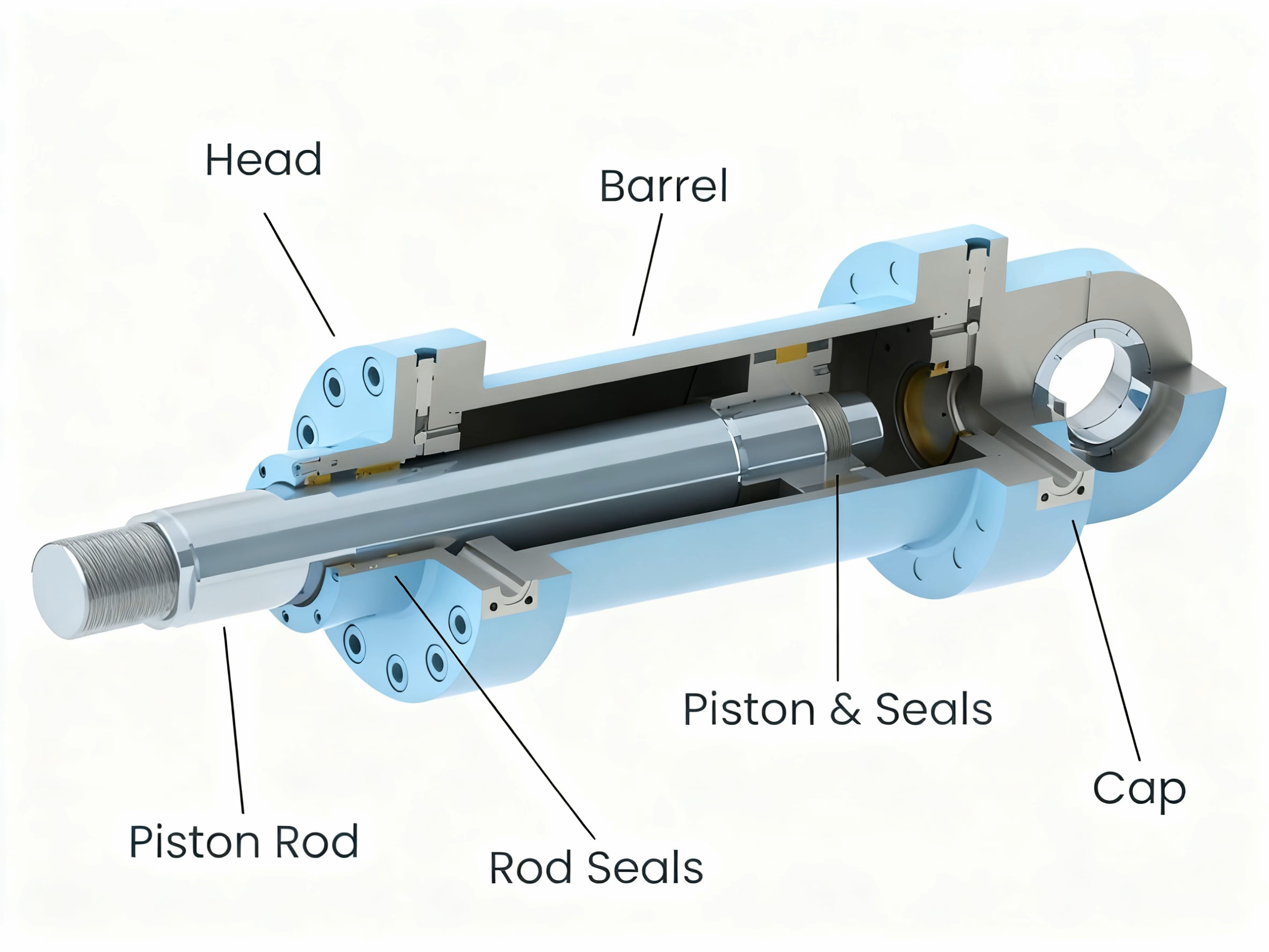
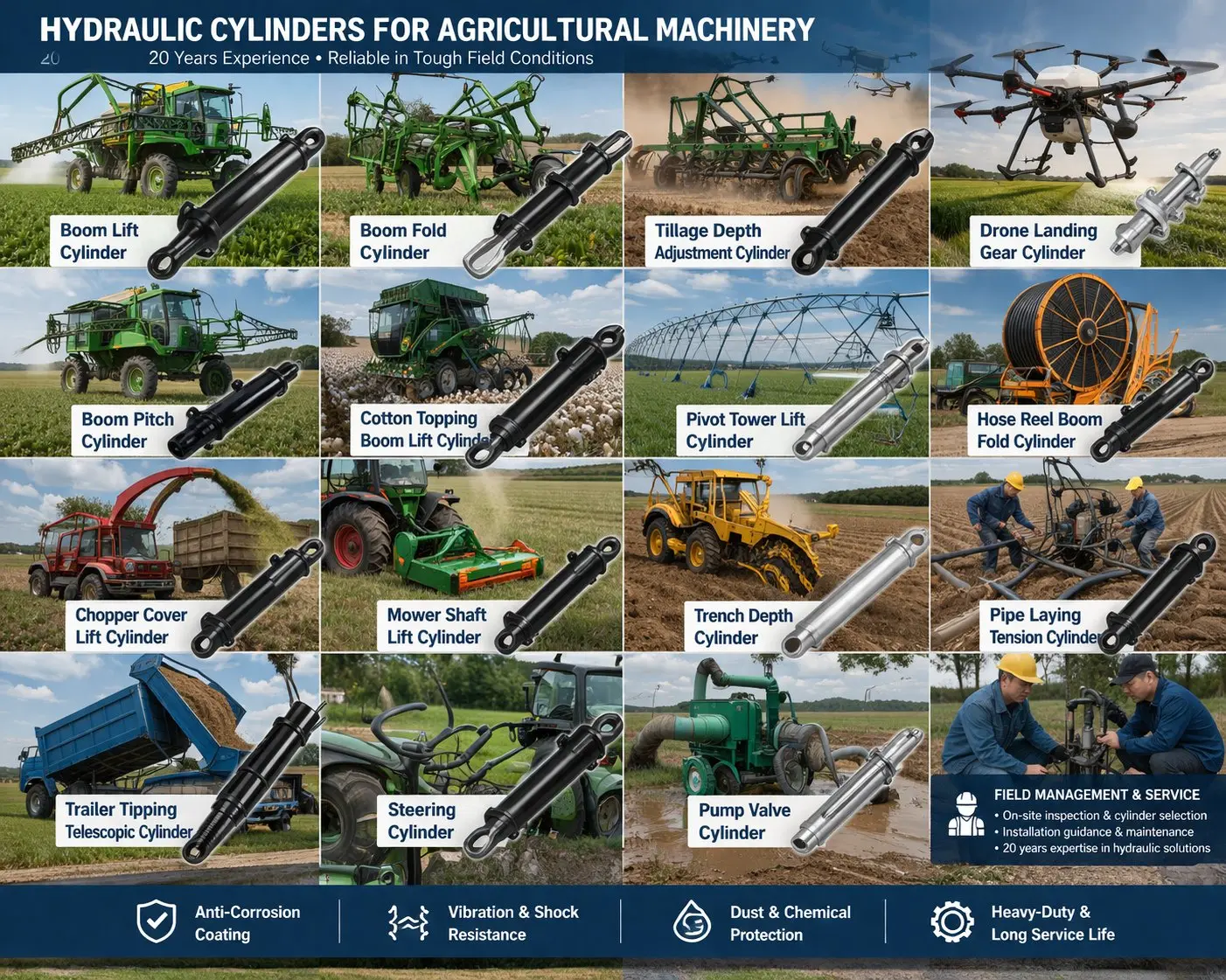
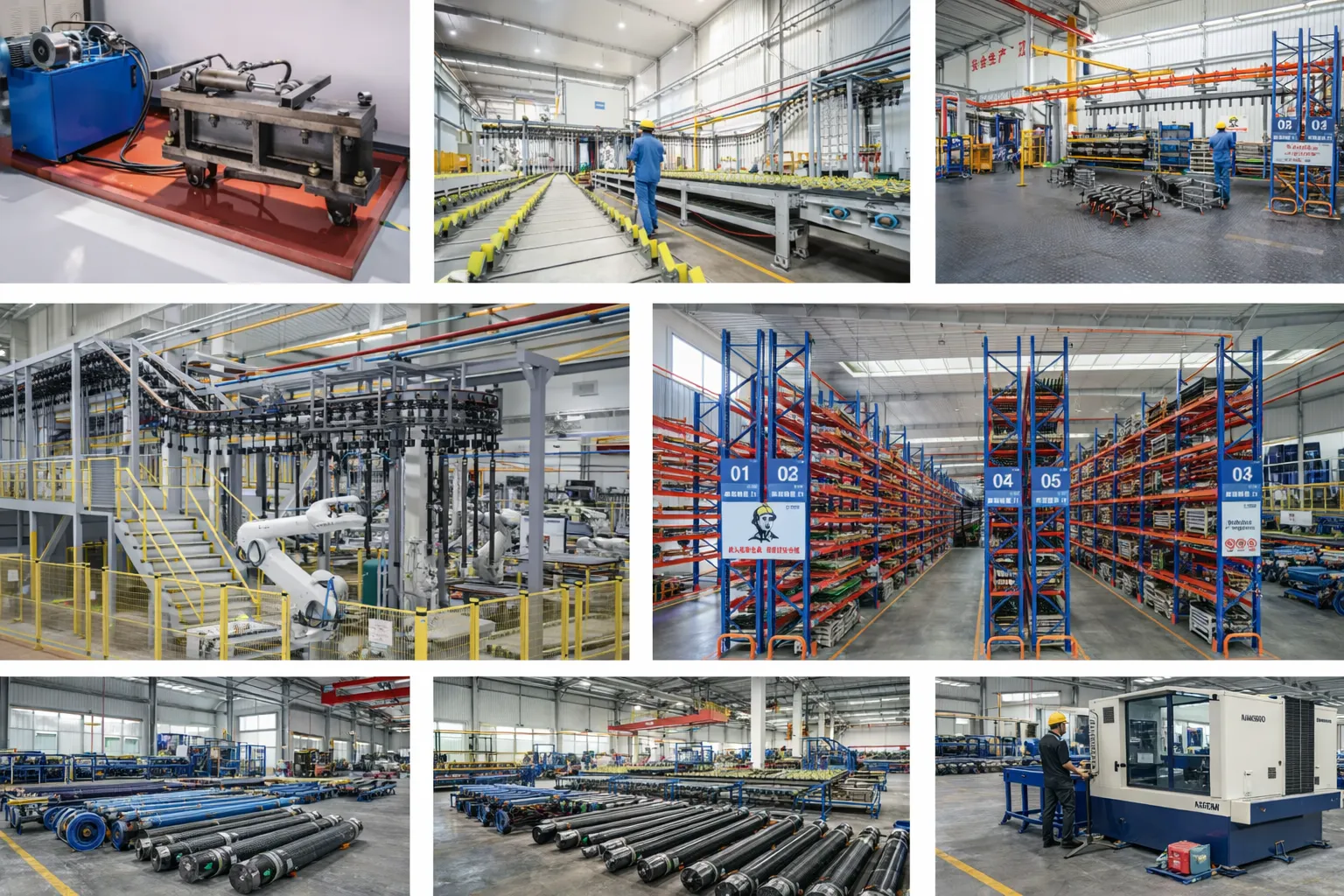
Stainless steel cylinder production requires dedicated tooling and separate processing areas to prevent carbon steel contamination. Our 304 SS cylinders are machined, welded, and assembled in a designated stainless steel production zone using tools and fixtures that never contact carbon steel. 304 SS tube and bar verified by spectrometer and PMI (Positive Material Identification) on every batch. Bores honed to Ra 0.2 using stainless-specific honing stones. Rods turned and polished to mirror finish (Ra 0.1). TIG welded with 308L filler by qualified stainless steel welders. Full passivation in citric acid solution after machining and welding. Clean-room assembly with FKM seals. 100% pressure tested at 1.5x rated pressure. Serial numbered with ten-year traceability. ISO 9001 certified. Material certificates with full chemical analysis and PMI confirmation included with every shipment.
Carbon Steel Cylinder vs. Our Stainless Steel Valve Cylinder
| Irrigation-Relevant Metric | Carbon Steel + Chrome | Our 304 SS Cylinder |
|---|---|---|
| Corrosion Resistance (River Water) | 1 – 2 seasons before pitting | 10+ years, no corrosion |
| Corrosion Resistance (Fertigation) | 6 – 12 months before failure | 10+ years, no corrosion |
| Seal Material | NBR (swells in water) | FKM (water + chemical resistant) |
| Rod Surface in Wet Conditions | Chrome chips, base metal corrodes | Self-healing passive layer |
| Annual Maintenance Required | Inspect, repaint, replace seals | None (inspect only) |
| Total Cost of Ownership (10 yr) | 3-5 replacements + annual maintenance | Single purchase, zero corrosion maintenance |
Customer Case Studies
Gimje City, Jeollabuk-do, South Korea
Customer: Large-scale rice irrigation district managing 3,200 hectares with centralized pump stations and automated valve control
How They Found Us: District engineer searched for “stainless steel hydraulic cylinder irrigation valve” in February 2025.
Results: Replaced 45 corroded carbon steel valve actuator cylinders with 304 SS units. After one full irrigation season, zero corrosion observed on any unit. Valve maintenance labor reduced by approximately 80% because the annual rust inspection and repainting cycle was eliminated.
“We used to send a crew to inspect and repaint every valve cylinder before each season. With stainless steel, there is nothing to repaint. The labor savings alone justified the upgrade within two years.” – Mr. Seo, District Engineer, October 2025
Haman County, Gyeongsangnam-do, South Korea
Customer: Greenhouse vegetable complex using fertigation through automated drip irrigation with zone valves
How They Found Us: Greenhouse manager contacted us after corrosion-related valve failures caused crop loss in two zones during the 2024 season. Inquiry December 2024.
Results: Replaced 28 valve actuator cylinders with 304 SS + FKM configuration. Through the full 2025 fertigation season (N-P-K solutions at pH 5.5 to 6.5), zero corrosion and zero seal issues. The greenhouse has not experienced a single valve failure since installation.
“Fertigation water at low pH destroyed our carbon steel cylinders in months. Stainless steel solved the problem permanently. We should have switched years ago.” – Mr. Han, Greenhouse Operations, August 2025
Shizuoka Prefecture, Japan
Customer: Tea plantation irrigation system integrator designing automated valve systems for high-value tea farms
How They Found Us: Found our website through a Google search for “304 stainless cylinder for irrigation valve” in March 2025.
Results: Specified our 304 SS cylinders for 3 new irrigation installations totaling 85 valve actuators. Client feedback after first growing season: zero maintenance required on any cylinder. Integrator has adopted our cylinder as standard specification for all future projects.
“Our reputation depends on maintenance-free installations. Stainless steel valve cylinders eliminate the weakest link in the system.” – Mr. Yamashita, System Design Director, November 2025
Nakhon Pathom Province, Thailand
Customer: Tropical fruit farm using reclaimed wastewater for irrigation of 200 hectares of dragon fruit and mango
How They Found Us: Contacted via website in October 2024.
Results: Reclaimed wastewater containing residual chlorine and ammonia destroyed carbon steel valve cylinders in under 6 months. Our 304 SS cylinders have been running 14 months with zero visible corrosion. The farm plans to replace all remaining carbon steel valve actuators with stainless steel.
“Reclaimed water saves us money on water costs but kills carbon steel equipment fast. Stainless cylinders are the only solution that works in this water.” – Mr. Prawit, Farm Engineer, December 2025
Antalya Province, Turkey
Customer: Greenhouse irrigation equipment manufacturer building automated valve systems for the Turkish protected agriculture sector
How They Found Us: Met at Growtech Eurasia exhibition, Antalya, November 2024.
Results: Turkish coastal greenhouse water often has 600 to 1,500 ppm chloride from brackish wells. Carbon steel valve cylinders failed within one season. Our 304 SS cylinders passed a 12-month field trial with zero corrosion in 1,200 ppm chloride water. Adopted as standard. Annual order is 500 units.
“Antalya well water is brackish. Every carbon steel component corrodes. Stainless steel is the only material that survives our water quality year after year.” – Mr. Erdogan, Product Director, June 2025
Frequently Asked Questions
Why not just use a coated carbon steel cylinder for irrigation?
When should I choose 316L instead of 304 stainless?
What bore size for an irrigation main valve actuator?
What is the lead time for stainless steel irrigation valve cylinders?
Water and Steel Do Not Mix. Stainless Steel and Water Work Together for Decades.
Share your valve type, water source, and chloride level. We will recommend the right stainless steel grade and deliver a quotation within 48 hours.
Editor: Cxm