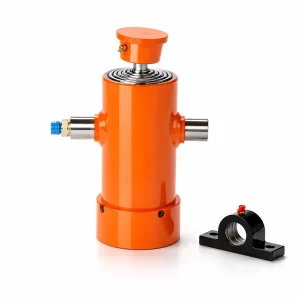
New Arrival Double Acting Dump Truck Telescopic Hydraulic Cylinder For Sale
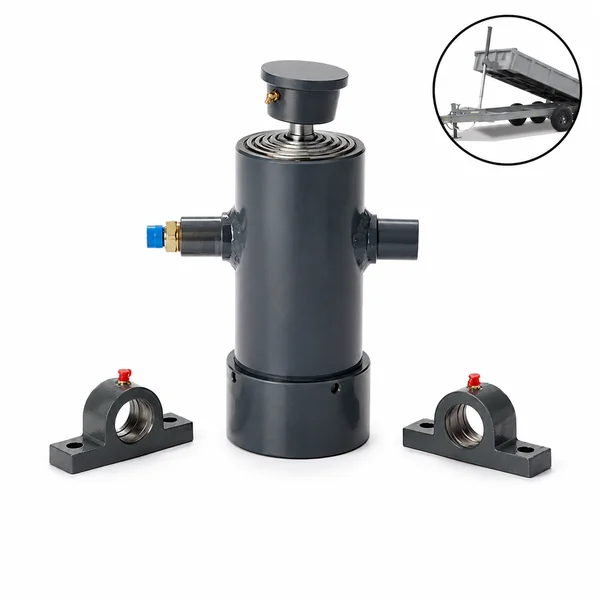
DOUBLE ACTING · DUMP TRUCK
Double Acting Telescopic
Hydraulic Cylinder
Dump Truck — System Integration
The double acting telescopic cylinder is one component in a hydraulic circuit. It cannot operate without the correct control valve, adequate pump flow, properly sized hoses, and a reservoir with sufficient fluid capacity. This page covers the complete system — everything that surrounds the cylinder and must be correctly specified for reliable bi-directional dump truck operation.
Many buyers focus entirely on the telescopic cylinder specification — bore, stroke, stage count — and overlook the hydraulic system that drives it. A correctly specified cylinder installed on an incorrectly specified hydraulic circuit will not perform as expected: too little pump flow makes the tipping speed unacceptably slow; the wrong valve type prevents retraction; undersized hoses create pressure drops that reduce force; and insufficient reservoir capacity causes overheating. This page provides the system integration knowledge needed to match the cylinder to the circuit.
Double Acting Dump Truck Cylinder — Customisation Parameters
| Acting Type | Double-acting (hydraulic extend + retract) |
| Bore / Rod / Stroke / Pin | 2–6″ / 1.125–4″ / 4–100″ / 0.5–2″ (all customisable) |
| Port Options | G / SAE / NPT / M — two ports |
| Body / Certification | Steel / ISO 9001 / 100% dual-circuit tested |
| Lead Time / Warranty | 25–35 days / 1 year |
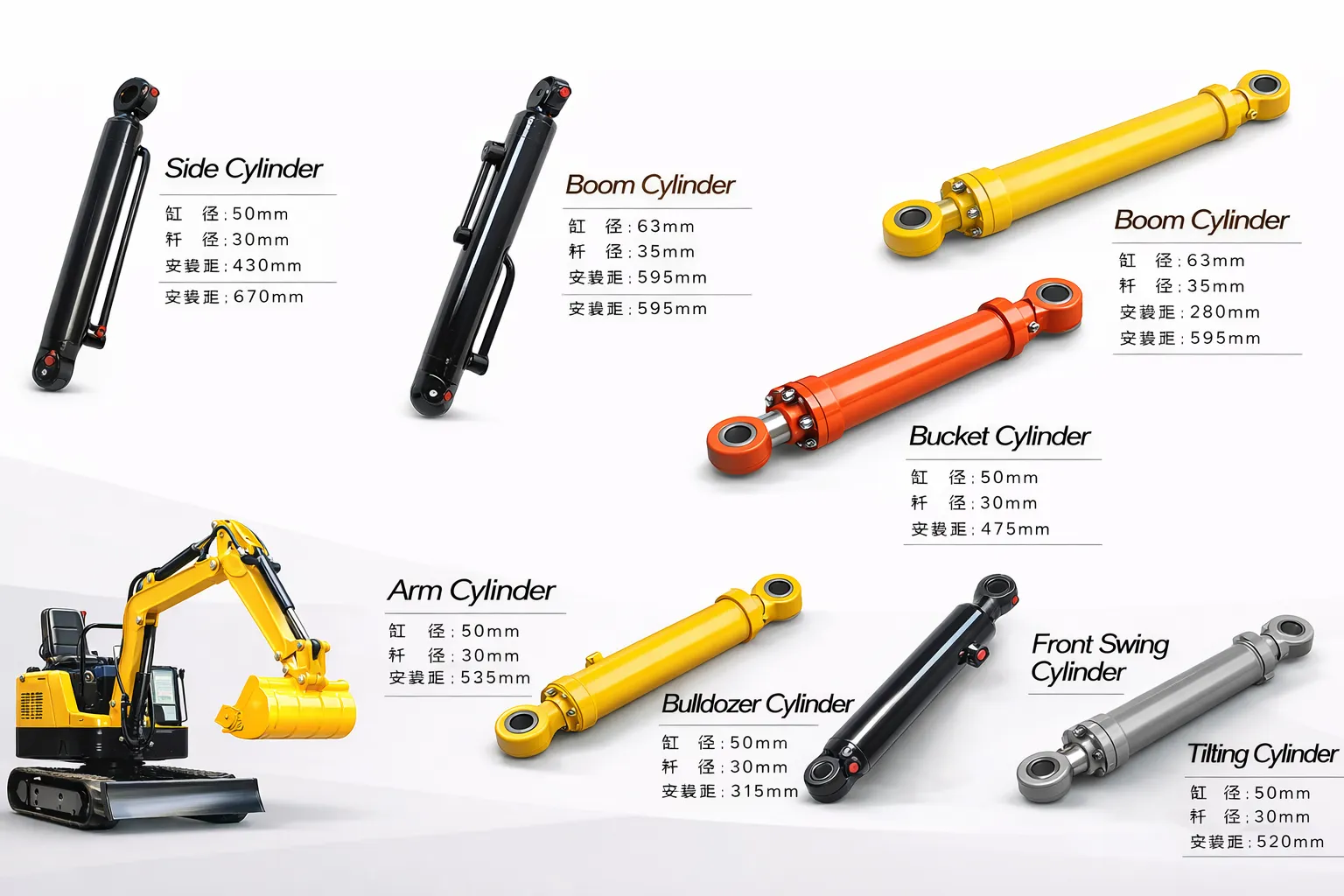
The Complete Hydraulic Circuit — Four Components That Must Match the Cylinder
A double-acting dump truck telescopic cylinder operates within a hydraulic circuit consisting of four key components beyond the cylinder itself. Each must be correctly specified — an error in any one component can prevent the entire system from working correctly.
1. Directional Control Valve
Double-acting requires a 4-way, 3-position (4/3) directional control valve. The three positions are: extend (pressure to extend port, return from retract port), retract (pressure to retract port, return from extend port), and neutral (both ports blocked or floating). Single-acting uses a simpler 3-way valve. If your truck currently has a 3-way valve and you are upgrading to a double-acting cylinder, the valve must be replaced or a second valve section added.
2. Hydraulic Pump
The pump must deliver sufficient flow (litres per minute) at adequate pressure (bar or PSI) to extend the cylinder at the desired tipping speed. Flow determines speed; pressure determines force. A larger bore cylinder requires more flow to extend at the same speed as a smaller bore. The pump pressure rating must exceed the system working pressure by a margin — typically the pump relief valve is set 10–15% above the cylinder's rated working pressure to ensure the cylinder operates at full force.
3. Hydraulic Hoses
Double-acting requires two hose lines — one for extend, one for retract. The hose internal diameter must be large enough to carry the pump flow without excessive pressure drop. Undersized hoses create friction losses that reduce the effective pressure at the cylinder — the dump body rises more slowly and with less force than the pump output should provide. The hose pressure rating must match or exceed the system relief valve setting. Both hoses must be correctly routed to avoid chafing, kinking, or contact with hot exhaust components.
4. Hydraulic Reservoir
The reservoir must hold enough hydraulic fluid to fill the cylinder at full extension plus maintain a minimum level above the pump suction port. A telescopic cylinder displaces a significant oil volume — a 4-inch bore, 4-stage cylinder at 80-inch stroke displaces approximately 6–8 litres. The reservoir must accommodate this volume swing without running dry on the extend stroke or overflowing on the retract stroke. Undersized reservoirs cause pump cavitation (air ingestion) on the extend stroke and fluid overheating due to insufficient cooling time.
Tipping Speed — How Pump Flow, Bore Size, and Stage Count Interact
The speed at which the dump body rises is determined by how quickly hydraulic fluid fills the cylinder — and this is a relationship between pump flow rate and cylinder bore area. Understanding this relationship helps you match the pump to the cylinder for the tipping speed your operation requires.
Extension speed = Flow ÷ Bore area
The extension speed of each stage equals the pump flow rate divided by the piston area of that stage. A larger bore has a larger piston area, so it extends more slowly at the same flow rate. The first stage (largest bore) extends the slowest; the last stage (smallest bore) extends the fastest. If the tipping speed is too slow, either increase the pump flow or reduce the bore (which also reduces force — a trade-off).
Retract speed = Flow ÷ Annular area
On the retract stroke, the flow fills the annular area (bore area minus rod area), which is smaller than the full bore area. This means the retract speed is faster than the extend speed at the same flow rate. On a dump truck, this translates to the body lowering faster than it rises — which is usually acceptable, but if the lowering speed must be controlled, a flow control valve on the retract circuit provides metering.
A 4-inch bore first stage has a piston area of approximately 81 cm². At 20 litres/minute pump flow (333 cm³/second), the first stage extends at approximately 333 ÷ 81 = 4.1 cm/second = 2.5 metres/minute. If a faster tipping speed is required, increase the pump displacement or use a smaller bore (which produces less force). This speed calculation applies to all telescopic hydraulic cylinders, not just dump truck configurations.
Valve Centre Position — Closed Centre vs Float Centre for Dump Truck Operation
The 4-way directional control valve has three positions: extend, retract, and centre (neutral). The behaviour of the centre position determines how the dump body behaves when the driver releases the control lever — and the wrong centre position choice can create a safety hazard.
Closed centre — body holds position
When the valve returns to centre, both cylinder ports are blocked — hydraulic fluid is trapped in both the extend and retract chambers. The dump body holds its current tipping angle. This is the standard choice for dump trucks where the driver needs to stop the body at a partial tipping angle (for metered discharge or inspection). The body will not move until the driver actively selects extend or retract.
Float centre — body free-falls under gravity
When the valve returns to centre, both ports are connected to the return line — fluid flows freely in and out of the cylinder. The dump body is free to move under gravity, which means it will lower by itself if it is above horizontal. Float centre is used when the driver wants the body to automatically lower to horizontal when the lever is released. This is convenient for rapid cycle operations but provides no holding capability — the body cannot be stopped at a partial angle.
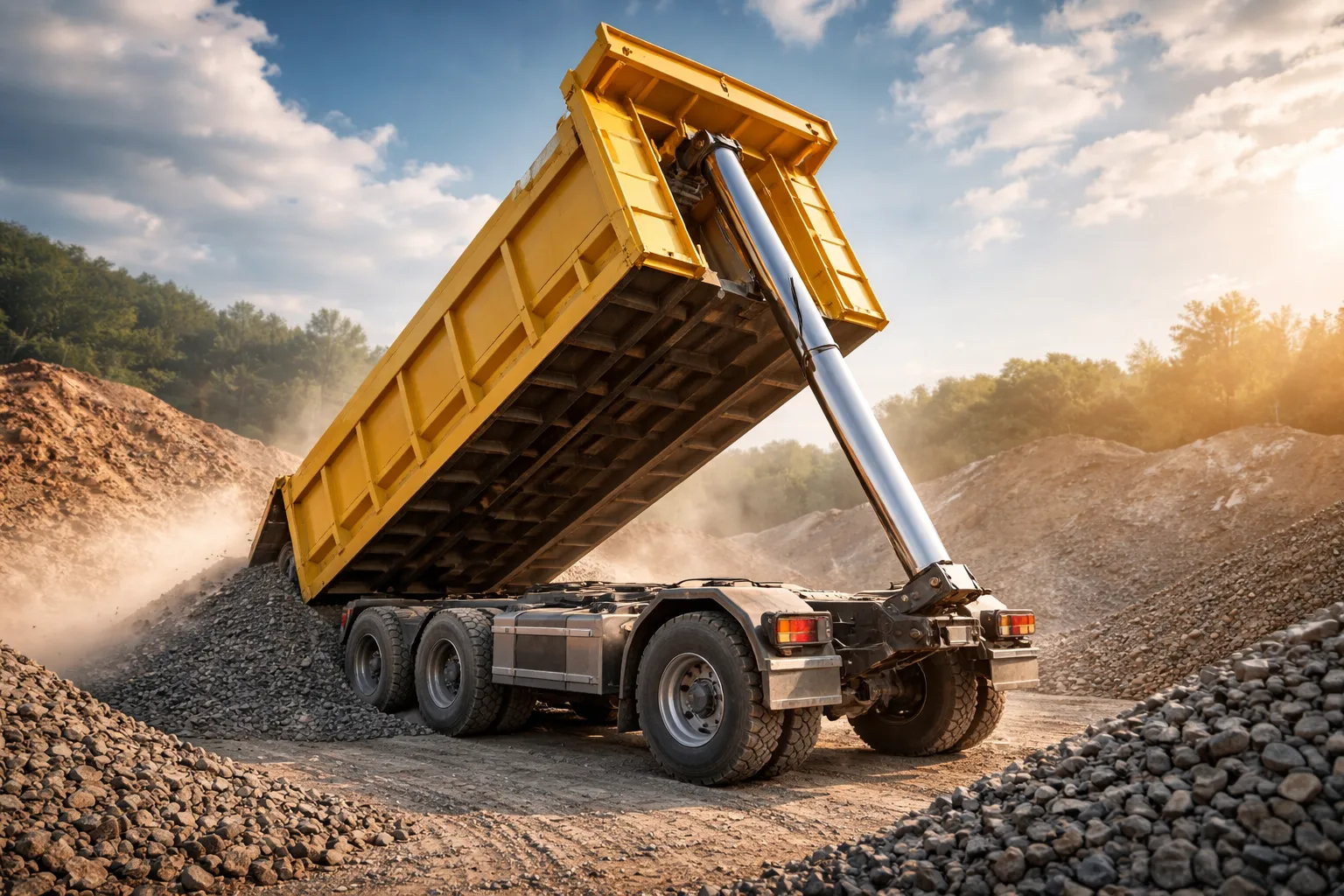
Never use float centre on a dump truck that may have personnel working under a raised dump body. Float centre allows the body to lower without warning if the valve shifts to neutral. Closed centre provides a hydraulic lock that holds the body in position. For maintenance access under a raised body, always use mechanical safety props in addition to the hydraulic hold — regardless of valve type.
OEM & ODM — Cylinder + System Specification Support
When you order a double-acting telescopic cylinder from Korea Ever-Power, the engineering team can also advise on the supporting hydraulic system components — valve type, pump flow requirements, hose sizing, and reservoir capacity. This system-level support is part of the manufacturer-direct relationship: the people who build the cylinder understand the system it operates in.
Hydraulic System Integration — FAQ
Field Reports
We design complete dump truck hydraulic systems — cylinder, valve, pump, reservoir, hoses, and controls. The Ever-Power engineering team provided the cylinder displacement data and port flow coefficients that we needed to model the circuit before ordering. This system-level technical support is rare from cylinder suppliers — most just provide bore and stroke. The double-acting 4-stage, 5-inch bore we ordered matched the circuit model precisely: the tipping speed on site was within 5% of our calculated prediction. 8 complete systems installed, all performing to specification.
Upgraded 3 dump trucks from single-acting to double-acting. The cylinder replacement was straightforward, but I underestimated the system changes needed: had to replace the 3-way valves with 4-way, add retract hose lines, and enlarge the reservoir on one truck that was running marginal oil capacity. Four stars because the total conversion cost was about 40% more than the cylinder price alone — the system components added up. The system integration guidance on this page would have helped me budget the complete conversion more accurately. The cylinders themselves are excellent — smooth bi-directional operation on all 3 trucks.
We specified closed-centre valves on our municipal dump trucks following the safety guidance — personnel occasionally work adjacent to raised dump bodies during salt loading in winter. The closed centre hydraulic lock holds the body securely at any angle. The Ever-Power double-acting cylinder paired with a Bosch-Rexroth 4/3 closed-centre valve provides exactly the behaviour we need: body stays where the operator puts it, no drift, no unintended lowering. The system integration information helped our specification engineer select the correct valve centre position before ordering.
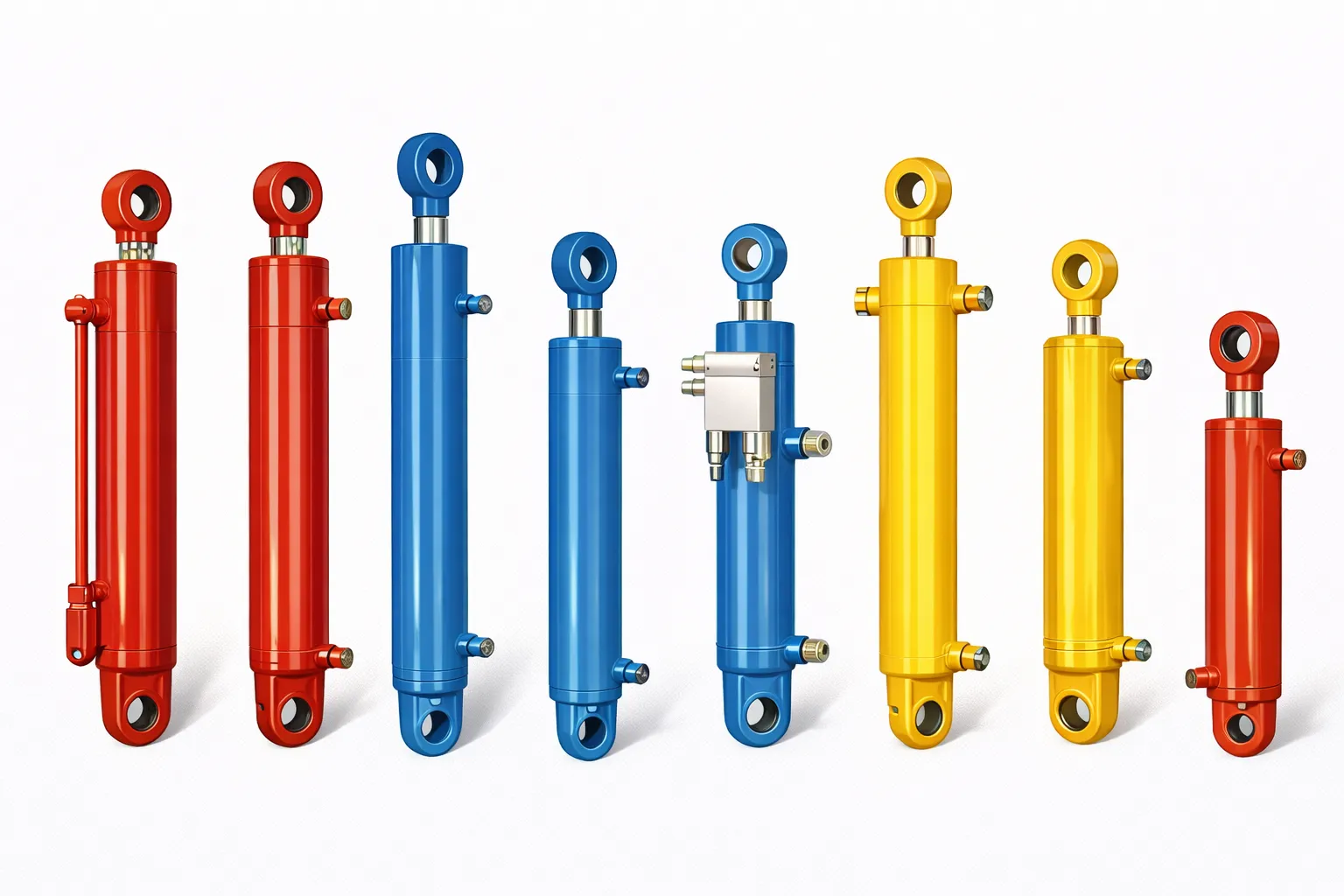
Other Hydraulic Cylinder Categories
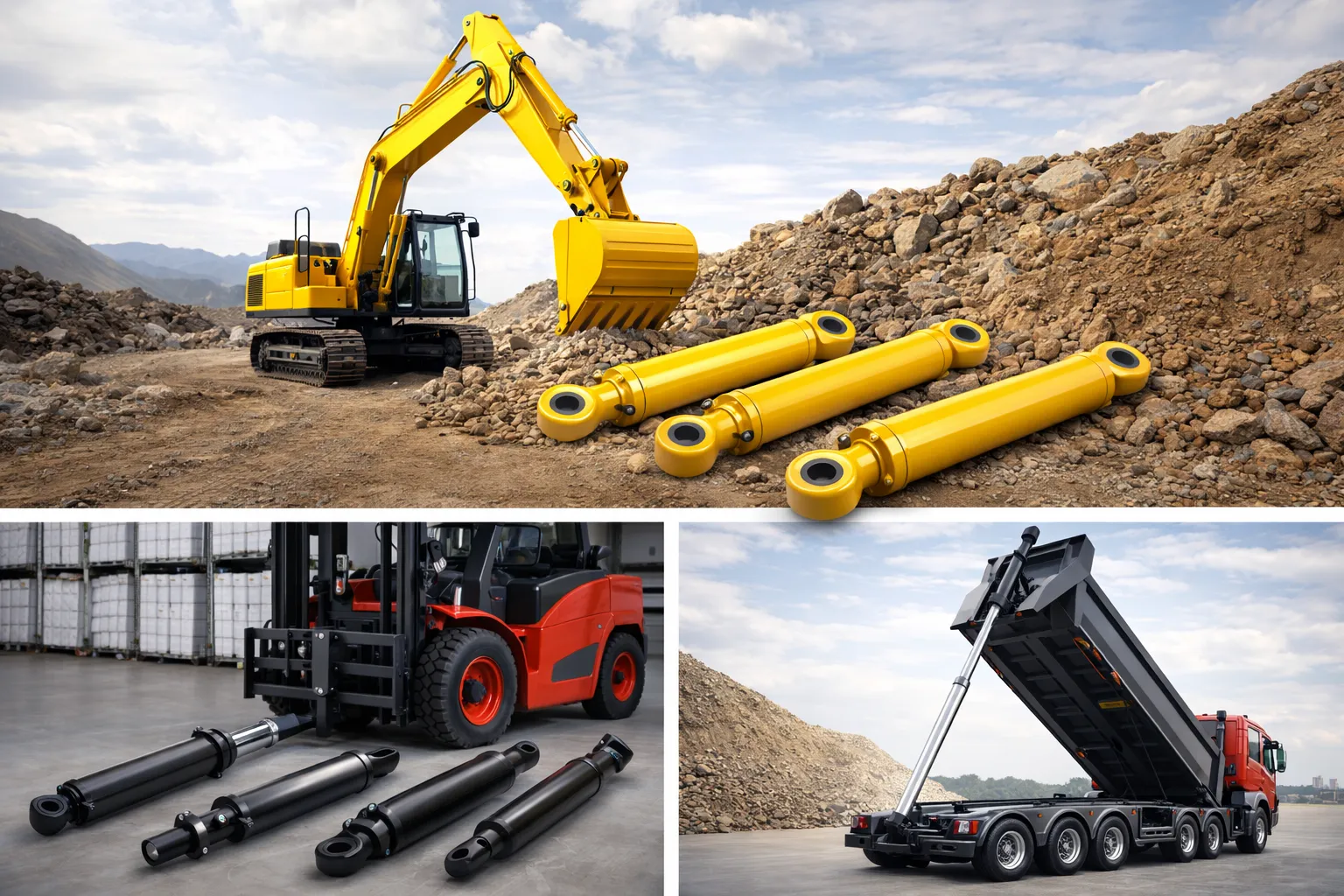
Additional information
| Editor | Cxm |
|---|
Related products
-
Guaranteed Quality Mini Dump Truck Hydraulic Cylinders
-
Competitive Price Telescopic Hydraulic Cylinder For Dump Trailer
-

Factory Direct Sale 2 Stage Small Hydraulic Cylinder
-
Quality Manufacturing 2 Stage Hydraulic Cylinder
-
Professional Craftsmanship Dump Truck 4 Stage Hydraulic Cylinder
-
Factory Provide 5 Stage Telescopic Hydraulic Cylinder For Sale
-
5 Stage Telescopic Dump Truck Hydraulic Cylinder — Maximum Compactness, Steel, Custom Bore 2–6 inch
-
2 Stage Small Hydraulic Cylinder — Multistage Telescopic, Steel, Custom Bore 2–6 inch