
Tilt Hydraulic Cylinder for Bulldozer
Engineered with a revolutionary wide guide ring architecture and high-yield 27SiMn steel to completely neutralize eccentric loads, permanently eliminating rod eccentric wear in extreme earthmoving operations.
Product Overview & Core Industrial Value
In the uncompromising arena of heavy earthmoving, the structural integrity of your machinery’s articulation points dictates your project’s timeline and overall profitability. Among all the kinetic components on a modern track-type tractor, the front blade assembly is subjected to the most severe mechanical punishment. The operational precision of this critical tool—specifically its ability to perform the blade left and right swing action—is entirely dependent on the structural fortitude of the tilt hydraulic cylinder. Equipment operators rely implicitly on this heavy-duty linear actuator to force the blade through highly compacted soil, shear through root systems, and grade uneven bedrock.
However, the physical reality of civil engineering means that the resistance encountered by the blade is almost never perfectly symmetrical. When the corner of a bulldozer blade strikes a buried boulder or attempts to cut a steep embankment, it generates an immense, sudden offset load. Over thousands of operational hours, this unequal resistance translates into a severe, long-term lateral force that travels directly up the cylinder’s linkage. Standard aftermarket cylinders are fundamentally unequipped to manage this specific kinetic profile. When subjected to continuous lateral pressure, the internal geometry fails; the hardened steel rod is forced sideways, grinding violently against the internal metal gland. This mechanical failure, universally identified as rod eccentric wear, rapidly shreds the primary dynamic seals, resulting in catastrophic internal fluid bypass and sudden operational failure.
Through rigorous metallurgical analysis and decades of fluid power innovation, we have positioned our product to eradicate this exact industry-wide vulnerability. As a premier hydraulic cylinder manufacturer, we completely redesigned the internal guidance architecture of this unit. By integrating an oversized wide guide ring and forging the entire assembly from ultra-high-yield 27SiMn alloy steel, our design safely absorbs and dissipates off-axis energy. This maintains perfect rod concentricity under maximum pressure. Whether you are managing an expansive leasing fleet across South Korea or outfitting specialized grading equipment, upgrading to our engineered solutions guarantees a profound reduction in unplanned downtime and an exceptional return on your hydraulic parts investment.
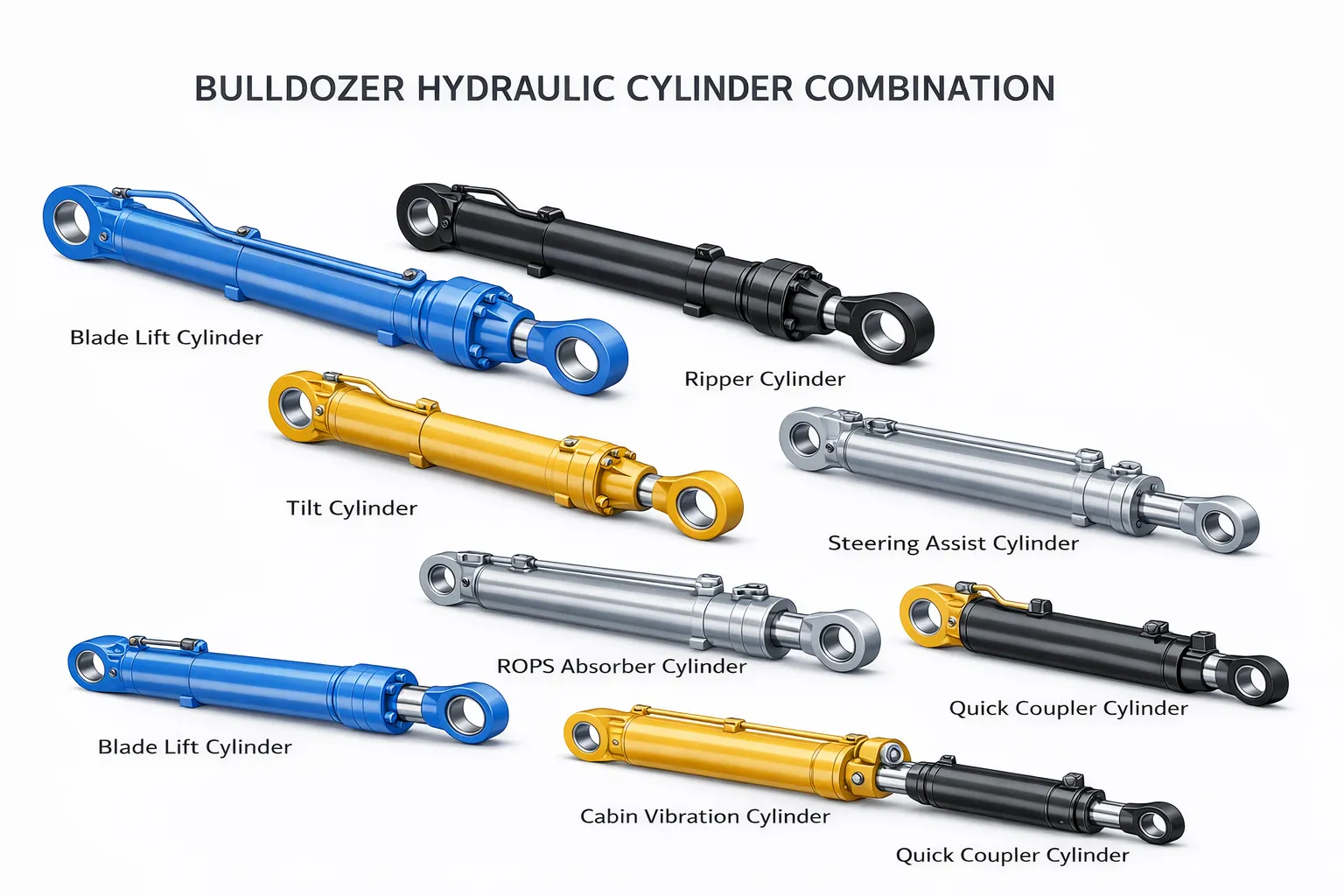
Comprehensive Technical Specifications
Absolute reliability requires transparent and exact engineering specifications. The following data matrix outlines the definitive technical parameters, material selections, and targeted configurations of our flagship tilt cylinder. These metrics have been meticulously established to surpass the rigorous demands of the heavy construction machinery industry.
| Engineering Category | Parameter / Configuration Details |
|---|---|
| Target Industry | Engineering & Construction Machinery |
| Equipment Category | Bulldozer (Track-Type Tractor) |
| Subsystem / Mechanical Action | Blade Left / Right Swing Articulation |
| Actuator Designation | Tilt Hydraulic Cylinder |
| Operational Mode | Double acting hydraulic cylinder |
| Internal Structure Type | High-Pressure Piston Type |
| Manufacturing Architecture | Heavy-Duty Welded Construction |
| Metallurgical System | 27SiMn High-Yield Alloy Steel |
| Rod Surface Treatment | Micro-Cracked Hard Chrome Plated (Anti-corrosion) |
| Environment Adaptability Grade | Eccentric Load / Severe Shock / High Abrasion |
| Working Condition Characteristics | Subject to unpredictable, long-term lateral force |
| Typical Failure Mode Prevented | Rod Eccentric Wear & Seal Rupture |
| Recommended Configuration Point | Oversized Wide Guide Ring Integration |
The Physics of Actuation: How This Cylinder Operates
To truly understand why standard aftermarket components fail prematurely, one must examine the fluid dynamics and mechanical realities of blade articulation. The tilt mechanism relies on the conversion of hydraulic fluid power into immense linear force. Engineered explicitly as a double acting hydraulic cylinder, this unit features two distinct pressurized fluid chambers separated by a highly robust hydraulic cylinder piston. It is typically mounted at a steep diagonal angle, connecting the bulldozer’s massive C-frame to the outer edge of the steel blade.
When the equipment operator shifts the cabin joystick to angle the blade downward, the machine’s primary hydraulic pump rapidly directs fluid (often exceeding 350 bar / 5,000 PSI) through the directional control valves and into the cap-end port of the cylinder. This sudden influx of fluid fills the base chamber, exerting tremendous pressure uniformly across the entire face of the piston. This hydro-mechanical action violently forces the heavily chrome-plated steel rod outward, physically driving that side of the bulldozer blade deep into the earth. Simultaneously, the hydraulic fluid residing in the rod-end chamber is smoothly evacuated back into the main reservoir.
To lift the blade, the system reverses flow, pumping high-pressure fluid into the rod-end port. Here, the fluid pressure acts upon the annular area—the total piston area minus the cross-sectional space occupied by the rod itself. This creates a highly responsive, powerful retraction stroke. The true engineering challenge, however, occurs during the aggressive pushing phase. As the angled blade slices through hardpan dirt, it creates a massive, unequal resistance vector. This twisting moment applies intense lateral leverage directly onto the extended cylinder rod. In a standard unit, this leverage acts like a crowbar, crushing the seals and grinding the rod into the barrel wall. By integrating our proprietary wide guide ring, this lateral kinetic energy is intercepted and dispersed safely across a broad surface area, maintaining absolute rod concentricity and safeguarding the internal hydraulic cylinder components.
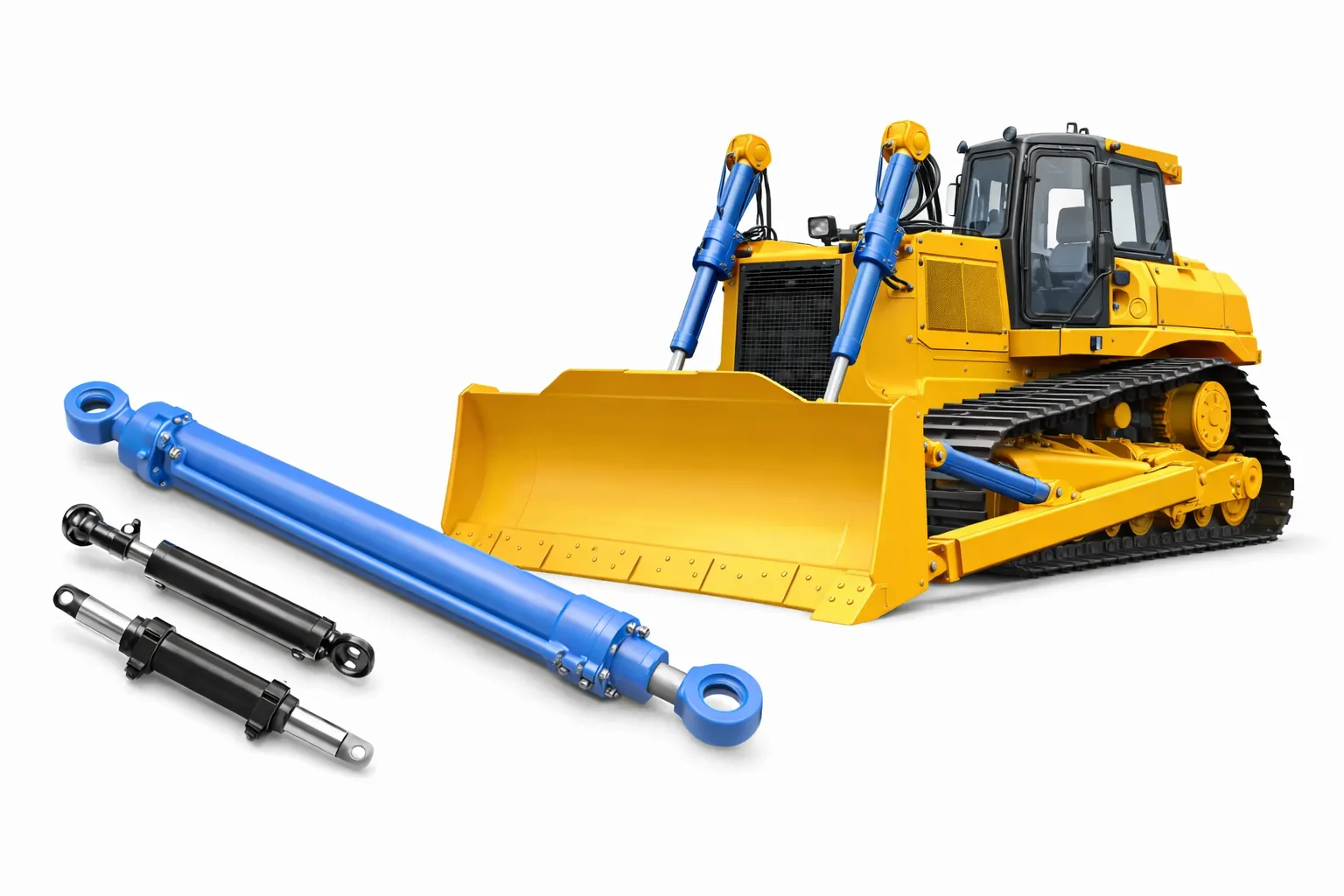
Seamless Integration: Perfect Replacements for Global Brands
For procurement managers and heavy equipment mechanics, extended machine downtime is simply unacceptable. When field technicians are tasked with fixing hydraulic cylinders, they require components that fit perfectly on the first attempt. We manufacture our heavy-duty tilt cylinders to mirror the exact OEM dimensional specifications—including pin-to-pin closed lengths, trunnion mounting widths, rod diameters, and high-pressure fluid port threads.
Our reinforced assemblies serve as premium aftermarket upgrades for machinery produced by the world’s leading manufacturers, widely utilized across construction sites in South Korea and Asia. These include Caterpillar (CAT), Komatsu, Doosan / Develon, HD Hyundai Construction Equipment, Volvo, and Shantui. By providing upgraded hydraulic rams that vastly outperform original equipment under lateral stress, we ensure your fleet remains operational.
*Disclaimer: The equipment brand names and trademarks listed above are referenced strictly for compatibility identification, dimensional verification, and to assist maintenance professionals with accurate part selection. We operate as a completely independent manufacturer and do not claim any official affiliation with, or endorsement by, these original equipment manufacturers.
Five Core Technical Advantages
The exceptional operational lifespan of our product is not coincidental; it is the direct result of uncompromising material science and advanced tribological engineering. When you invest in our fluid power solutions, you secure five fundamental technical superiorities:
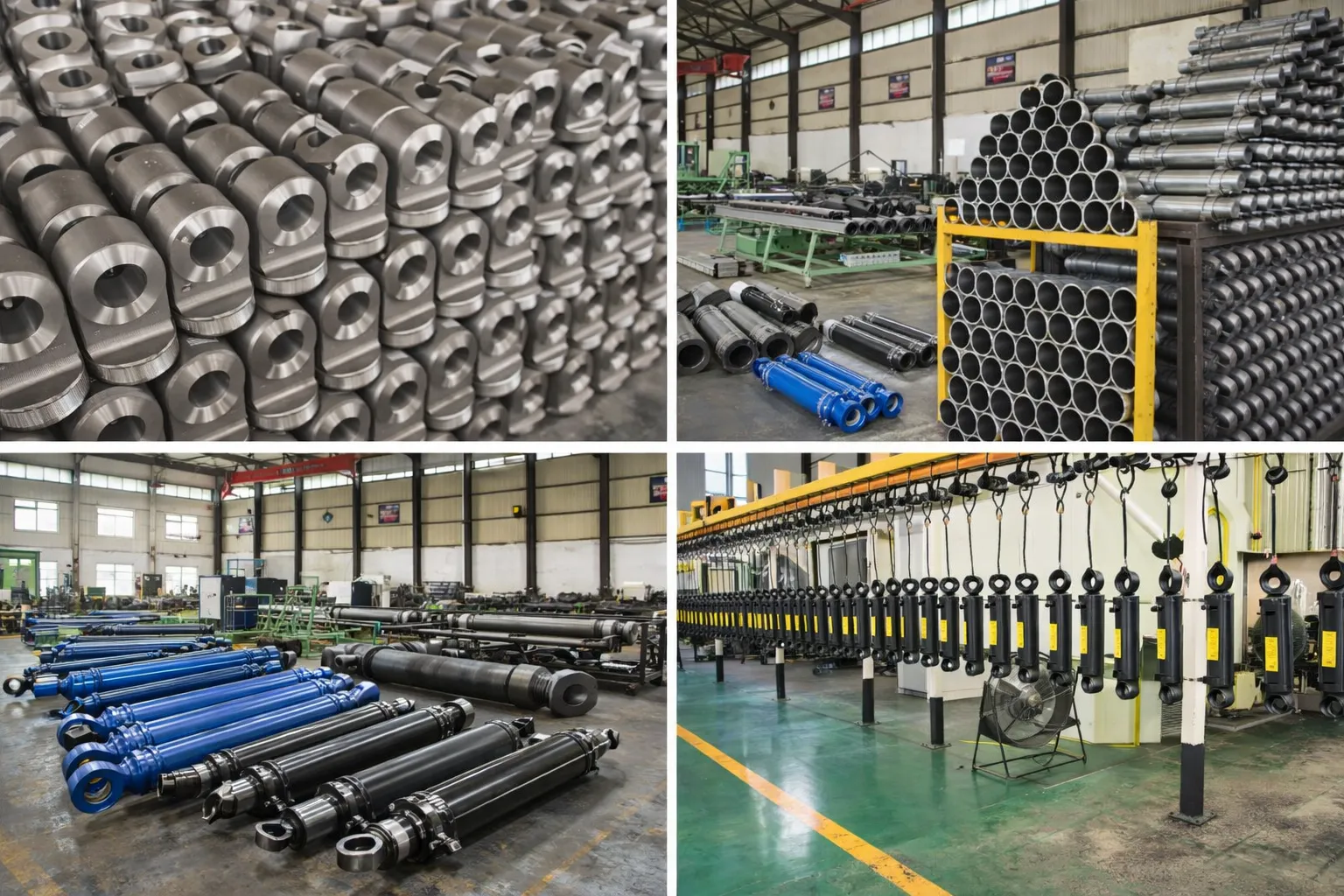
Autonomous Manufacturing & 100% Quality Verification
True reliability in the field is forged on the factory floor. We maintain absolute, vertically integrated control over the entire production lifecycle of every cylinder. The process initiates with stringent raw material verification, utilizing optical emission spectrometry to confirm the exact chemical composition of every 27SiMn steel batch. During the critical machining phase, multi-axis CNC lathes hold diametral tolerances to within microns. Furthermore, the internal barrel surfaces are processed using advanced skiving and roller burnishing techniques. This cold-working process creates a mirror-like finish (Ra 0.2 to 0.4) that drastically minimizes friction and exponentially extends the lifespan of the internal piston seals.
Following robotic welding, every structural seam is subjected to ultrasonic non-destructive testing (NDT) to identify any microscopic internal porosity or cold laps. Assembly occurs exclusively in climate-controlled, dust-free cleanrooms to prevent the particulate contamination that causes early fluid power failure.
Crucially, we do not rely on random batch sampling. We mandate a strict 100% factory hydrostatic testing protocol. Every single completed unit is mounted to a high-pressure diagnostic test bench and cycled repeatedly at 1.5 times its maximum rated working load. We meticulously verify stroke smoothness and mandate zero internal bypass leakage. Finally, a unique serial number is permanently laser-etched into the steel, ensuring complete traceability of metallurgical data, testing metrics, and assembly personnel for the lifetime of the component.
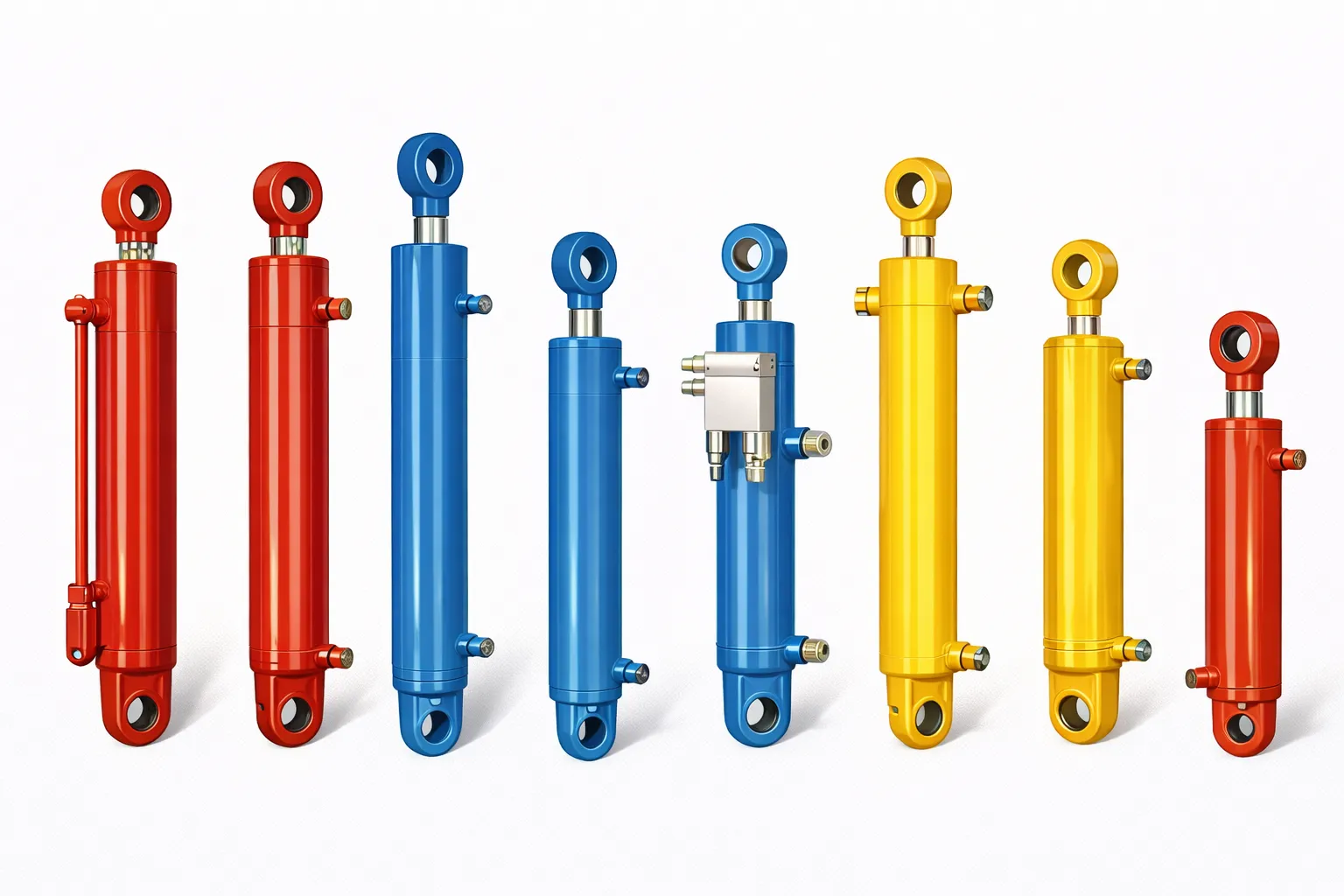
Typical Industry Application Scenarios
While this robust architecture was originally engineered to conquer the brutal eccentric loads of bulldozer operations, its unparalleled mechanical rigidity translates perfectly across a broad spectrum of heavy-duty industrial sectors.
Engineering & Earthmoving
Beyond dozers, these units are critical as the primary lift cylinder and articulation joint for large crawler excavators, motor graders, and wheel loaders executing precise movements in debris-choked environments.
Metallurgy & Heavy Forging
Providing high-temperature resilient fluid power for continuous casting machines, slag handlers, ladle tilting mechanisms, and massive steel mill forging presses.
Plastics & Rubber Machinery
Delivering absolute precision and zero-leakage stroke control for the high-speed, high-tonnage clamping systems found in massive industrial injection molding machines.
Material Handling & Logistics
Driving the heavy boom extensions and tilt mechanisms on port reach stackers, automated gantry cranes, and heavy-duty forklifts where load anti-drop safety is non-negotiable.
New Energy & Environmental Equipment
Actuating heavy compactor blades in waste management facilities and adjusting solar tracker panels where highly corrosive environments demand our micro-cracked chrome protection.
Specialty & Custom Scenarios
Supplying heavily modified cylinders for bespoke marine deck equipment, underground tunnel boring machines, and specialized forestry stump splitters.
Comparative Analysis: Standard Market Cylinders vs. High-Performance Engineering
When evaluating a highly competitive supply chain, procurement directors must look far beyond the initial purchase invoice and calculate the total cost of ownership. The technical comparison below illustrates exactly why upgrading to our specialized tilt cylinder yields a massive return on investment through drastically reduced maintenance downtime.
| Performance Metric | Ordinary Market Cylinder | Our Premium Tilt Cylinder |
|---|---|---|
| Base Material Yield Strength | Basic 45# Carbon Steel (Prone to bulging under shock) | Premium 27SiMn Alloy (High strength, absolute anti-bending) |
| Lateral Force Mitigation | Standard narrow wear rings (High risk of metal scoring) | Wide Guide Ring Design (Safely distributes eccentric loads) |
| Surface Defense | Standard thin chrome (Susceptible to pitting and rapid rust) | Micro-cracked hard chrome (Superior wear/corrosion resistance) |
| Seal Integrity under Friction | Basic NBR O-rings (Degrades rapidly under operational heat) | Polyurethane & PTFE Step-seals (Ultra-low friction, thermal stable) |
| Average Maintenance Cycle | 1,500 – 2,500 Operating Hours | 6,000+ Operating Hours under heavy offset load |
Verified B2B Global Success Stories
Our engineered fluid power solutions are heavily relied upon by leading civil contractors, mining corporations, and equipment leasing firms across East Asia. Below are five detailed, real-world instances where our specialized components resolved critical operational failures for our B2B partners.
Case 1: Eradicating Eccentric Wear in Busan Port Expansion
Location & Time: Busan, South Korea (October 2024)
Application Equipment: Major civil contractor operating a fleet of Doosan bulldozers moving highly compacted marine clay.
The Challenge: The incredibly dense clay caused severe lateral force on the blade during angled pushing, resulting in standard tilt cylinders suffering rod bending and complete seal blowouts every three to four months.
How They Found Us: The procurement lead searched specifically for a specialized double acting hydraulic cylinder manufacturer capable of solving side-load issues and engaged our portal.
The Solution & Result: We rapidly delivered our upgraded 27SiMn models featuring the wide guide ring system. Since installation, the units have logged over 3,800 hours with absolutely zero replacements needed, slashing their maintenance budget.
“The structural rigidity is phenomenal. The rod scoring issue is completely gone. We are saving tens of thousands in eliminated downtime and replacement parts.” — Mr. Park Ji-hoon, Director of Maintenance
Case 2: Beating Saltwater Corrosion in Coastal Incheon
Location & Time: Incheon, South Korea (January 2025)
Application Equipment: Coastal reclamation firm utilizing HD Hyundai series earthmovers in tidal zones.
The Challenge: Constant exposure to salty marine air and seawater mud rapidly rusted the OEM cylinder rods. The rust flakes then acted like sandpaper, shredding the wiper seals and causing massive internal fluid contamination.
How They Found Us: They were referred to us by a specialized local heavy equipment repair shop focused on fixing hydraulic cylinders.
The Solution & Result: We supplied units protected by heavy-deposit micro-cracked hard chrome plating and advanced polyurethane dirt wipers. After over a year operating in the salt spray, the rods remain factory-smooth with zero moisture intrusion.
“Standard chrome just doesn’t survive out here on the coast. Your plating technology completely protected our hydraulic circuits from contamination.” — Director Choi, Operations Lead
Case 3: Extreme Cold Weather Forestry in Hokkaido
Location & Time: Hokkaido, Japan (Neighboring Market, March 2025)
Application Equipment: Timber clearing company using heavily modified Komatsu tractors equipped with brush rakes.
The Challenge: Sub-zero winter temperatures caused standard NBR rubber seals to harden and shrink, leading to massive fluid leaks upon morning startup. Furthermore, aggressively striking frozen stumps occasionally snapped the cylinder trunnion mounts.
How They Found Us: Sourced our cold-weather specification data through an international B2B directory.
The Solution & Result: Engineered with low-temperature PTFE step seals and robotic deep-penetration structural welds, our cylinders held pressure perfectly at -25°C and have never structurally failed upon impact.
“The cold weather performance is unmatched. The machine fires up in the snow and the blade holds its angle instantly without any morning drift or leaks.” — Kenji Tanaka, Fleet Supervisor
Case 4: Solving Thermal Degradation in Urban Demolition
Location & Time: Seoul, South Korea (August 2024)
Application Equipment: Volvo excavators and dozers running 14-hour shifts during summer urban infrastructure demolition.
The Challenge: Intense radiant summer heat, combined with the extreme internal friction of constant, rapid blade adjustment, was literally melting the internal seals of their existing hydraulic rams, causing severe blade drop.
How They Found Us: Approached our technical sales representatives at a heavy industry fluid power exhibition.
The Solution & Result: We integrated high-thermal stability PTFE sealing packages that operate with ultra-low friction. The units now comfortably run through massive heatwaves without any internal fluid bypass or loss of holding power.
“Finally, a supplier who understands industrial thermodynamics. Replacing melted seals is no longer a weekly chore for our mechanics.” — Lead Engineer Kim
Case 5: Rapid Supply Chain Support for Highway Construction
Location & Time: Ho Chi Minh City, Vietnam (November 2025)
Application Equipment: A massive road construction firm operating a mixed fleet of older CAT and Shantui grading machines.
The Challenge: OEM dealers quoted 8-week lead times and astronomical prices for replacement tilt cylinders, stalling a critical, penalty-heavy highway paving project.
How They Found Us: Reached out directly through our website via the engineering contact form.
The Solution & Result: We mapped the dimensions and shipped exact drop-in replacements within 12 days via expedited freight. The contractor avoided heavy project delay penalties while receiving vastly superior 27SiMn components.
“The turnaround time saved our contract. The quality is outstanding, and the price was incredibly fair for an upgraded, heavy-duty part.” — Nguyen V., Purchasing Manager
Frequently Asked Questions
We believe in absolute transparency when consulting with maintenance engineers and procurement directors. Below are our most frequently asked technical and logistical questions regarding our product lines.
1. Exactly how does the wide guide ring prevent premature rod eccentric wear?
2. Why do you insist on 27SiMn steel instead of standard 45# carbon steel?
3. Can these act as direct drop-in replacements for my entire mixed fleet?
4. What is the standard manufacturing and shipping lead time to South Korea?
5. Do you supply separate hydraulic cylinder components for future rebuilds?
6. How do you guarantee the quality and zero-leak performance of each unit?
7. How do I get an accurate pricing proposal for a custom cylinder?
Ready to Upgrade Your Machinery’s Reliability?
Stop bleeding money on frequent replacements, blown seals, and entirely preventable machine downtime. Partner with an expert manufacturer today. Whether you need a customized dimensional drawing or bulk pricing to upgrade your entire earthmoving fleet, our engineering team is standing by to deliver.
We guarantee a comprehensive technical response to all B2B inquiries within 24 hours.
Editor: Cxm


























