Stack Clamping Cylinder for Fuel Cell Production
Engineered with pristine micro-polished stainless steel and an advanced servo-structure sealing system to deliver absolute micro-millimeter precision and zero-pollution pressing in high-end new energy cleanroom environments.
Product Overview & Core Industrial Value
The global transition toward a sustainable hydrogen economy has placed unprecedented demands on automated assembly environments, particularly within the specialized domain of Proton Exchange Membrane (PEM) and Solid Oxide Fuel Cell (SOFC) manufacturing. The core of any fuel cell power module is the stack itself—a highly delicate sequence of membrane electrode assemblies (MEAs), gas diffusion layers, and brittle graphite or thinly stamped metallic bipolar plates. To construct a functional energy block, these hundreds of individual layers must be compressed together with absolute uniformity inside a specialized stacking fixture. This critical mechanical compression phase is entirely dependent upon the precision, rigidity, and cleanliness of the stack clamping cylinder.
Standard fluid power actuation is fundamentally flawed for this application. In advanced manufacturing hubs across South Korea, Japan, and Taiwan, fuel cell assembly occurs within stringent ISO Class 5 cleanrooms. Conventional carbon steel actuators introduce catastrophic risks: paint flaking, microscopic rust particles, and most critically, hydraulic fluid micro-misting from the rod seals. A single airborne hydrocarbon droplet contaminating the electrocatalyst layer of a fuel cell membrane will instantly degrade its ionic conductivity, ruining the entire stack. Recognizing this massive vulnerability in the new energy sector, an elite hydraulic cylinder manufacturer must rethink the entire architectural philosophy of fluid power.
Our exclusive stack clamping hydraulic cylinder represents a radical departure from traditional industrial fluid power. We have engineered a highly specialized welded stainless steel piston cylinder that completely isolates the internal fluid medium from the external cleanroom environment. By utilizing advanced polished surface treatments and a proprietary seal + servo structure matrix, this actuator guarantees a frictionless, ultra-smooth extension profile while completely neutralizing the typical failure mode of seal pollution. The initial hydraulic cylinder price investment in this cleanroom-grade technology is rapidly offset by the total elimination of contaminated batches, ensuring your fuel cell production lines maintain maximum yield rates and uncompromising energetic consistency.
Technical Parameters & Customization Matrix
Fuel cell stacking fixtures require profound dimensional stability. A microscopic deviation in parallel clamping force can cause micro-fractures in the bipolar plates or result in unequal hydrogen gas sealing across the stack. Our engineering division meticulously customizes the fluid dynamics, internal geometries, and mounting interfaces of each unit to perfectly integrate with your specific automation infrastructure. The following table delineates the definitive specifications and adaptable ranges of our technology.
| Engineering Category | Specification Details & Adaptable Ranges |
|---|---|
| Industry Sector | New Energy / Hydrogen Economy & Fuel Cells |
| Device Category | Fuel Cell Production Automation Equipment |
| Subsystem / Action | Stacking Fixture / Stack Pressing |
| Actuator Designation | Stack clamping cylinder / Stack clamping hydraulic cylinder |
| Primary Action Mode | Double acting hydraulic cylinder (Powered bidirectional force control) |
| Architectural Structure | High-rigidity Piston Cylinder |
| Manufacturing Structure | Advanced automated precision Welded construction |
| Material System | Solid Stainless Steel (304 / 316L grades available) |
| Surface Machining Finish | Micro-Polishing (Ra less than 0.15 on rod and bore) |
| Environmental Grade | Clean + Anti-pollution ISO Class environments |
| Crucial Working Condition | Cell stack pressing (Requires absolutely parallel, sustained force) |
| Primary Failure Mode Prevented | Seal pollution (Oil micro-leaks) and load-induced stick-slip shudder |
| Recommended Configuration | Advanced Seal + Servo structure for micrometer closed-loop control |
Fluid Dynamics & Operational Working Principle
The assembly of a fuel cell stack is an exercise in extreme mechanical sensitivity. To press hundreds of alternating fragile plates and pliable membranes into a cohesive, gas-tight energy block without inducing stress fractures requires highly sophisticated fluid dynamic control. Our stack clamping cylinder operates in conjunction with a specialized servo-hydraulic power unit, receiving high-frequency command signals from the plant’s central Programmable Logic Controller (PLC).
During the initial engagement phase, ultra-filtered fluid is metered precisely into the blind end of the double acting hydraulic cylinder. Driven by proportional servo-valves, the fluid pushes against the polished hydraulic cylinder piston. Due to the integration of a low-friction servo structure—which utilizes specialized PTFE step seals and high-tolerance guide bands—the cylinder rod extends with zero static breakaway friction (stiction). This ensures that the heavy steel press platen makes contact with the top of the fuel cell stack flawlessly smoothly, without any sudden mechanical jolts that could misalign the carefully stacked components.
Once contact is established, the fluid power system transitions from velocity control to ultra-precise pressure control. The hydraulic cylinder slowly and relentlessly builds compressive force against the stack, monitored in real-time by external load cells and linear variable differential transformers (LVDTs). Because it is a double-acting system, fluid pressure on the annular (rod) side can be actively modulated against the blind side pressure to instantly dampen force overshoots. Once the exact required compression tonnage is reached, the internal hydraulic locks engage, holding the stack in perfect parallel compression for hours while the structural tie-rods are permanently fastened. Finally, fluid is pumped exclusively into the rod port, forcefully retracting the platen to release the completed fuel cell block. This powered retraction is far superior to relying on the mechanical return springs found in a basic single acting hydraulic cylinder.
Seamless Field Upgrades & Brand Replacement Compatibility
Many early-stage fuel cell production lines in East Asia were rapidly constructed using standard pneumatic or commercial-grade actuators supplied by major industrial conglomerates. As production scales up and quality control tolerances tighten, plant managers quickly realize these generic actuators cannot maintain the micro-precision or the absolute cleanroom standards required for high-yield MEA stacking. Paint flakes off, rust forms on exposed rods, and seals weep.
To facilitate rapid modernization without requiring extensive redesigns of your existing stacking fixtures, our engineering team has meticulously mapped the mounting footprints, bolt patterns, and fluid port configurations of the industry’s most common actuators. Consequently, our cleanroom-grade hydraulic rams and piston cylinders serve as perfect, direct drop-in upgrades for equivalent legacy models manufactured by brands such as SMC, Festo, Bosch Rexroth, Parker Hannifin, and Enerpac. (Please be advised: Reference to these external corporate trademarks is strictly for the purpose of dimensional cross-referencing, engineering compatibility, and assisting automation engineers in the selection process. We are a completely independent manufacturing entity and deeply respect all global intellectual property rights.) By supplying dimensionally identical, ultra-clean stainless steel replacements, we ensure that executing critical fixing hydraulic cylinders maintenance or orchestrating complete line retrofits is achieved with minimal production downtime.
8 Core Technical Advantages: Mastering Cleanroom Fluid Power
Transitioning fluid power into an ISO Class 5 cleanroom requires abandoning standard manufacturing paradigms. Our stack clamping hydraulic cylinder incorporates profound engineering enhancements designed specifically for the rigorous demands of new energy manufacturing:
-
1. Absolute Zero-Pollution Stainless Steel Architecture
Traditional painted carbon steel cylinders inherently shed microscopic paint flakes and rust particles during continuous operation, which instantly violate cleanroom protocols. We construct the entire pressure vessel, end caps, and rod from pure, unpainted stainless steel. This fundamentally eliminates particulate generation, ensuring the ambient air around your sensitive fuel cell membranes remains completely uncontaminated.
-
2. Proprietary Anti-Misting Seal Matrix
The most severe threat in fuel cell stacking is hydraulic oil bypass. Standard rod seals allow a microscopic film of oil to exit the cylinder, which vaporizes into the cleanroom air and destroys catalyst layers. We employ a highly advanced, multi-stage tandem sealing matrix featuring a specialized secondary vacuum-recovery lip. This configuration physically wipes the polished rod completely dry upon extension, ensuring zero hydrocarbon misting and maintaining the strict clean + anti-pollution environmental grade.
-
3. Ultra-Low Friction Servo Structure
Standard rubber seals grip the cylinder walls tightly, causing a sudden jerking motion (stick-slip) when pressure is first applied. This mechanical shock easily cracks delicate graphite bipolar plates. We integrate specialized PTFE (Teflon) composite step seals and extended bronze-filled polymer guide rings. This servo-structure design drastically lowers dynamic friction, allowing the stack clamping cylinder to execute incredibly slow, micro-millimeter creeping movements under multi-ton loads perfectly smoothly.
-
4. Micro-Polished Internal Tribology
To compliment the advanced polymer seals, the internal surfaces of our cylinders must be flawless. We subject the stainless steel rod and the internal honed bore to a rigorous mechanical polishing sequence, achieving a mirror-like surface roughness (Ra) of less than 0.15 micrometers. This exceptional finish minimizes abrasive wear on the internal hydraulic cylinder components, vastly extending the operational lifespan without requiring lubrication.
-
5. Unyielding Welded Rigidity for Parallel Pressing
Tie-rod cylinders can stretch minutely under maximum pressure, causing the press platen to tilt by a fraction of a degree. In fuel cell manufacturing, uneven pressure causes localized gas leaks in the final stack. Our heavy-walled, fully welded piston cylinder architecture eliminates structural elongation. The deep-penetration welds fuse the components into a monolithic block, ensuring the extension force remains absolutely rigid and perfectly parallel across the entire stroke.
-
6. Optimized Thermal and Volumetric Stability
Prolonged holding phases generate localized heat in standard fluid power systems, causing minute changes in fluid volume and subsequent pressure drops. Our internal valving and seal clearances are meticulously modeled to account for thermal expansion, ensuring that once the stack clamping hydraulic cylinder locks into position, the internal pressure remains absolute and unwavering throughout the entirety of the stack curing process.
-
7. Precision Sensor Integration Capabilities
For complete automated control, we can gun-drill the solid stainless steel rod to internally house high-resolution absolute linear position sensors. This protects the delicate sensors from the production environment while providing the PLC with exact feedback on the stack’s compression height down to the micron.
-
8. Modular Maintenance Architecture
Despite their longevity, we design these cylinders for real-world plant operations. The front gland utilizes a highly robust threaded design, allowing plant maintenance personnel to swiftly execute hydraulic cylinder repair and replace seal kits directly on the assembly line without needing to dismount the heavy cylinder barrel from the press fixture.
In-House Manufacturing Craftsmanship & Quality Control
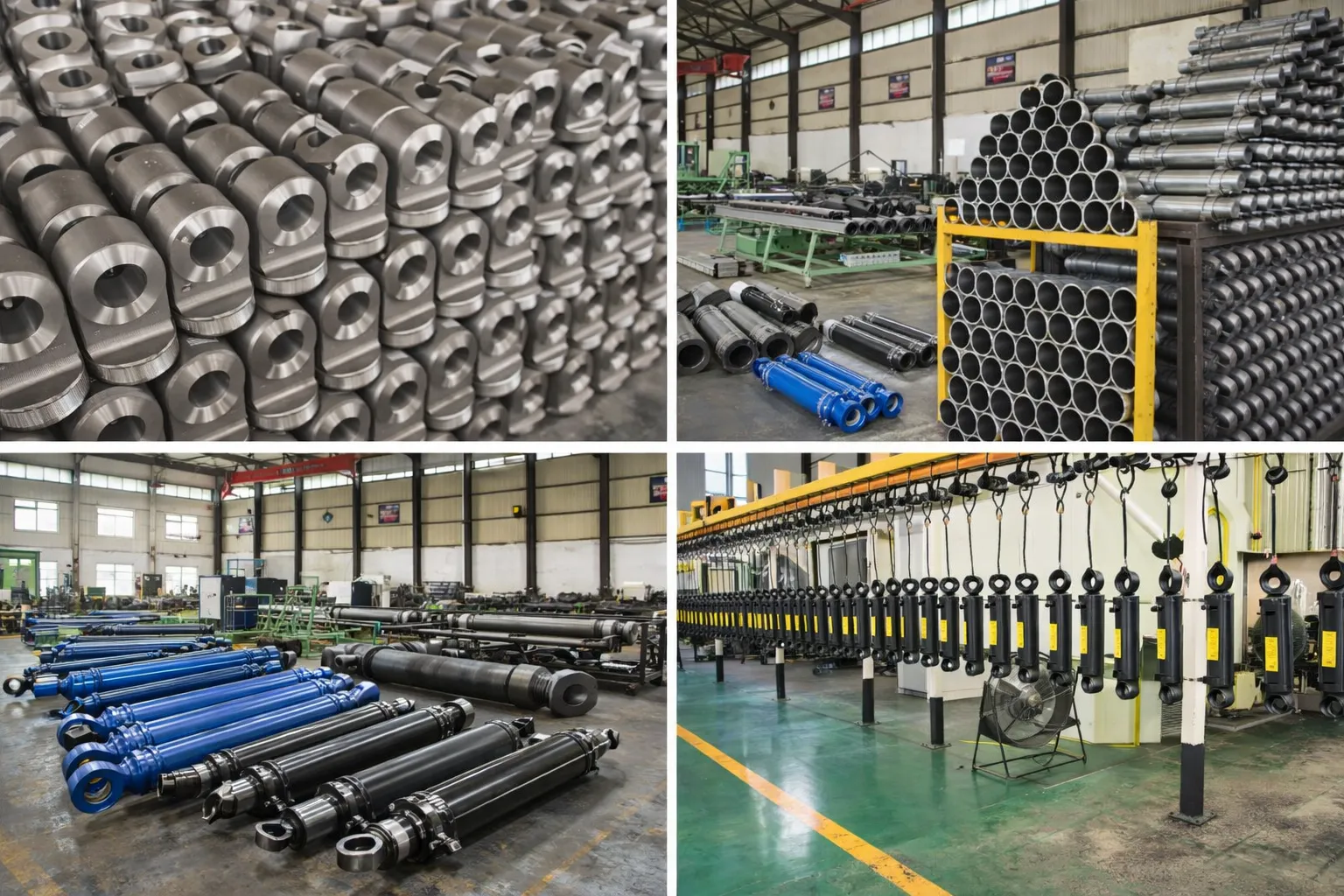
Producing cleanroom-certified fluid power requires an exceptionally sterile and highly controlled manufacturing environment. We do not outsource our critical fabrication. Every stage of production is executed within our own state-of-the-art facilities. Raw stainless steel billets are verified via spectrometer to ensure precise metallurgical composition before entering our multi-axis CNC turning centers. This guarantees that all dimensional tolerances surrounding the hydraulic cylinder piston are held to exacting aerospace-grade standards.
Crucially, the assembly of our new energy cylinders takes place in a dedicated positive-pressure cleanroom zone. Before final assembly, every internal component undergoes an intensive multi-stage ultrasonic cleaning process utilizing specialized solvent baths to remove all trace machining oils and microscopic metal swarf. This ensures that the internal cavity of the cylinder introduces zero particulate contamination into your hydraulic circuit.
To guarantee 100% reliability, zero-defect quality control is mandatory. Every completed stack clamping hydraulic cylinder undergoes a rigorous computerized testing protocol. We conduct ultra-slow dynamic friction tests, leak-down tests holding at 150% of the maximum rated pressure for extended durations, and high-frequency servo-response mapping. Each unit is laser-engraved with a distinct serial number, providing our B2B integration partners with comprehensive, immutable traceability for all material certificates and factory test data.
Cross-Industry Adaptability & Extreme Applications
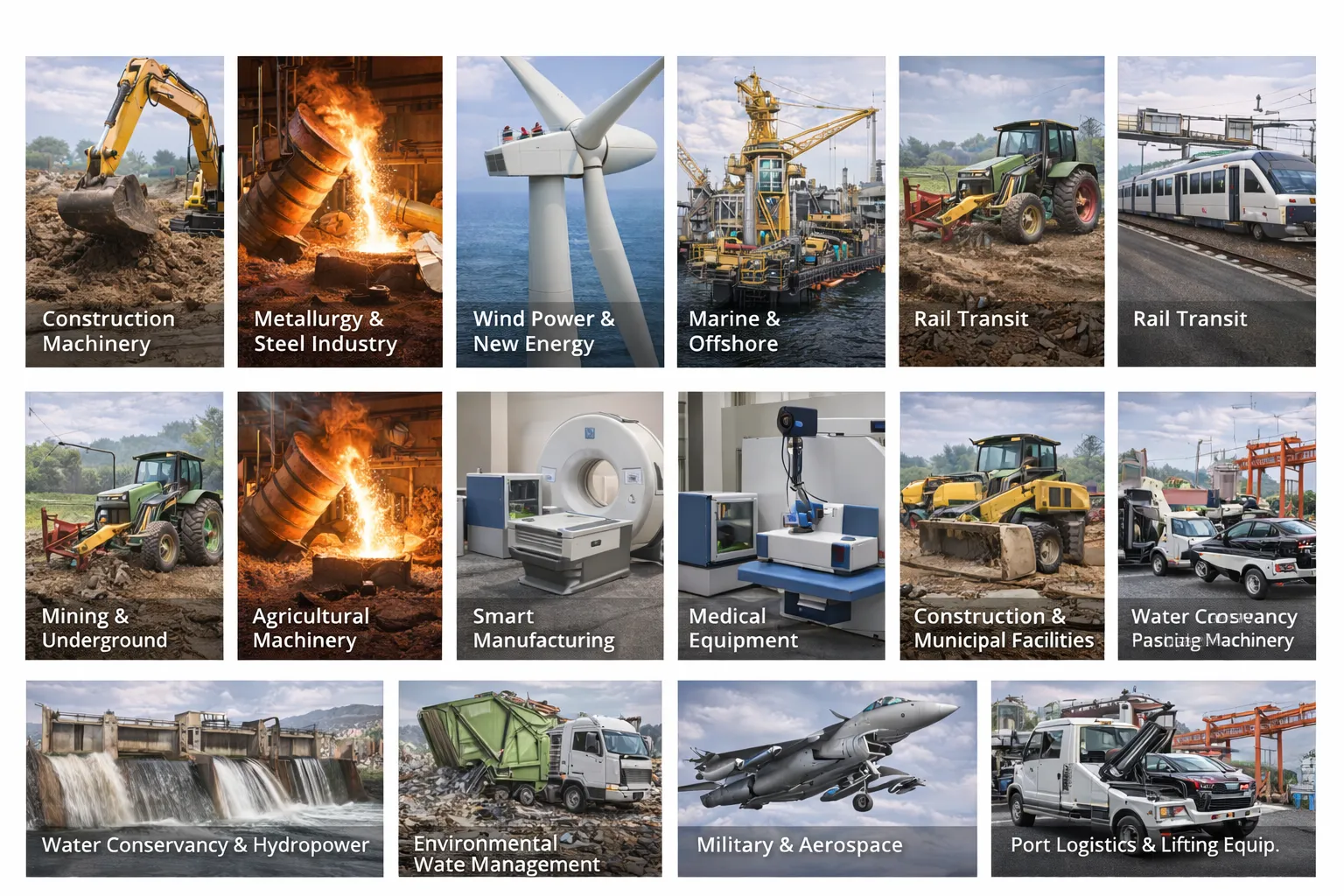
While meticulously developed for the extreme precision and cleanliness of the fuel cell manufacturing sector, the foundational engineering parameters—ultra-low friction, zero leakage, and immense structural rigidity—make our technology highly sought after across a multitude of heavy industrial disciplines. Our fluid power solutions provide critical reliability in the following sectors:
- Metallurgical and Iron Industry: Powering heavy continuous casting lines and electric arc furnace tilting mechanisms where radiant heat and highly abrasive metallic dust obliterate conventional seals.
- Mining Industry: Upgrading the operational lifespans of subterranean longwall shield supports and heavy ore crushers working in highly acidic, corrosive underground water environments.
- Construction Machinery Industry: Delivering massive, resilient force for tunnel boring machines, piling rigs, and extreme-load excavator arms operating relentlessly in highly abrasive dirt and mud.
- Plastics & Rubber Machinery: Providing high-speed, zero-leakage injection molding clamping mechanisms where cycle time and cleanliness are paramount to final product quality.
- Material Handling & Logistics: Enhancing the vertical lifting capacity and precision of heavy automated guided vehicles (AGVs) and heavy-duty logistics platforms with specialized lift cylinder systems and compact actuator blocks.
- Advanced Medical & Cleanroom: Supplying sterile, stainless actuators for automated pharmaceutical processing lines, highly regulated food-grade packaging facilities, and testing rigs requiring hydraulic parts with zero margin for error.
We invite you to discover our broader manufacturing capabilities by exploring our comprehensive Hydraulic Cylinder Product Portfolio.
Comparative Analysis: Standard Hydraulics vs. Cleanroom Servo Hydraulics
Integrating the correct fluid power architecture is the most critical decision in designing a new energy automated assembly line. Utilizing standard industrial components to save on upfront costs invariably leads to catastrophic financial losses through ruined product batches and extensive cleanroom decontamination procedures. The data table below explicitly highlights why our specialized solutions are non-negotiable.
| Critical Performance Metric | Standard Industrial Hydraulic Cylinder | Our Cleanroom Stack Clamping Cylinder |
|---|---|---|
| Cleanroom Compliance (Pollution) | High risk. Sheds paint, rust, and generates hydraulic oil mist during cycling. | Absolute Zero Pollution. Pure stainless steel with anti-misting secondary seals. |
| Dynamic Friction & Stick-Slip | High stiction. Causes sudden jolts that easily shatter fragile bipolar plates. | Ultra-low friction. Servo-structure enables perfectly smooth, micro-creeping movement. |
| Structural Rigidity under Load | Tie-rods stretch minutely, causing platen tilt and uneven stack compression. | Fully welded piston architecture remains completely rigid, ensuring parallel pressing. |
| Pressure Holding Stability | Prone to internal bleed-off over time, requiring constant re-pressurization. | Exceptional volumetric lock. Holds immense tonnage steadily for prolonged curing times. |
| Overall Production Yield Impact | Causes frequent batch rejections due to leaks or mechanical stack damage. | Maximizes ROI by ensuring perfect stack integrity and zero contamination events. |
Global Engineering Success: Real Case Studies in Asia
The true validation of our fluid power engineering is demonstrated on the high-stakes production lines of the world’s leading new energy corporations. Our extensive footprint across East Asia highlights our capability to solve highly complex, industry-specific automation crises.
Case Study 1: Eradicating Seal Pollution in a Hydrogen Gigafactory, Ulsan, South Korea
Client & Location: A premier South Korean automotive manufacturer expanding its flagship hydrogen fuel cell electric vehicle (FCEV) production facility (March 2024).
The Challenge: Within their ISO Class 5 cleanroom, the original carbon-steel pressing actuators were experiencing micro-leaks. A fine mist of hydraulic oil was dispersing during the high-speed retraction phase, invisibly settling onto the Membrane Electrode Assemblies (MEAs). This contamination severely degraded the proton conductivity of the stacks, resulting in a disastrous 18% rejection rate during end-of-line electrical testing.
Engagement & Solution: The facility’s lead automation engineer urgently contacted us after discovering our specialized background as a high-end hydraulic cylinder manufacturer. We rapidly engineered and delivered 40 units of our stainless steel stack clamping cylinders, heavily customized with our proprietary vacuum-recovery anti-misting rod seals.
The Result: Following the retrofit, airborne hydrocarbon particulate monitors registered absolute zero. The stack rejection rate plummeted from 18% to near zero, saving the corporation millions in scrapped catalyst materials.
“The transition to your stainless cleanroom cylinders saved our scaling timeline. The seal integrity is flawless, and the ambient environment remains utterly pristine. True expert engineering.” — Lee Min-ho, Senior Plant Process Engineer.
Case Study 2: Solving Mechanical Stick-Slip Fractures in Yokohama, Japan
Client & Location: A leading Japanese advanced materials R&D center developing ultra-thin stamped metallic bipolar plates for next-generation aviation fuel cells (September 2025).
The Challenge: The laboratory’s prototype stacking fixture relied on conventional pneumatic cylinders. Because air is highly compressible, the actuators suffered from severe stick-slip behavior. The press platen would jerk violently downward, causing micro-fractures in the ultra-thin bipolar plates before the final compression tonnage was even reached.
Engagement & Solution: The research director reached out to negotiate a robust fluid power upgrade. We supplied a highly precise double acting hydraulic cylinder equipped with our lowest-friction PTFE servo sealing structure, designed to integrate seamlessly with their new proportional hydraulic power unit.
The Result: The fluid incompressibility combined with our frictionless cylinder design allowed the press platen to creep downward at a perfectly smooth, controlled velocity of fractions of a millimeter per second. Breakage of the fragile plates was completely eradicated.
“The kinematic smoothness of this servo-structure is remarkable. We can now exert multi-ton forces with the touch of a feather. It has drastically accelerated our R&D prototyping.” — Dr. Hiroshi Tanaka, Lead Materials Scientist.
Case Study 3: Overcoming Structural Deflection for an Integrator in Cheonan, South Korea
Client & Location: A prominent B2B automation integrator specializing in turnkey assembly lines for stationary Solid Oxide Fuel Cells (SOFC) (January 2025).
The Challenge: The integrator’s automated presses required an immense, sustained holding force of over 30 tons to cure the SOFC stacks. The aluminum tie-rod cylinders they initially sourced physically stretched under the immense pressure. This structural deflection caused the press platen to tilt slightly, resulting in uneven gas seals across the fuel cell block.
Engagement & Solution: Experiencing massive warranty pushback from their end-users, the integrator contacted us for an urgent engineering consultation. We provided our heavy-wall, fully welded stack clamping hydraulic cylinders. The monolithic steel construction inherently neutralized any risk of structural elongation.
The Result: The customized cylinders bolted perfectly into their existing automation frames. The press force remained absolutely rigid and parallel across the entire stack surface, restoring the integrator’s reputation for high-quality machinery.
“Structural rigidity is paramount in stack compression. Your welded cylinders simply do not yield. Supplying this level of reliability has allowed us to confidently secure larger international contracts.” — Choi Ji-won, Chief Automation Architect.
Case Study 4: Upgrading Legacy Equipment for a Cleanroom in Hsinchu, Taiwan
Client & Location: A rapidly growing manufacturer of compact PEM fuel cells for drone and aerospace applications (May 2024).
The Challenge: The manufacturer needed to upgrade their existing clamping fixtures to strict cleanroom standards. However, the heavy steel framework was deeply integrated into their facility, and modifying it to accept non-standard actuators would have halted operations for months.
Engagement & Solution: They initiated talks regarding hydraulic cylinder price and custom dimensional footprints. We analyzed the legacy European cylinders they were using and manufactured exact 1:1 dimensional replicas using our stainless steel welded architecture, matching the exact pin-to-pin closed lengths, stroke, and port threads.
The Result: The maintenance team successfully swapped all the actuators over a single weekend without firing a single welding torch, instantly elevating the entire test rig to ISO cleanroom compliance.
“Your ability to drop cleanroom-grade stainless technology perfectly into our legacy footprint saved us an incredible amount of time and structural engineering costs. The upgrade was entirely seamless.” — Dr. Lin Chen-wei, Director of Mechanical Engineering.
Frequently Asked Questions (FAQ)
We believe in complete technical transparency to assist automation engineers and supply chain directors in making optimal integration decisions. Below are detailed responses to the most critical inquiries regarding our specialized cleanroom fluid power solutions.
1. How exactly do you guarantee the “Zero-Pollution” cleanroom standard for the stack clamping hydraulic cylinder?
The guarantee is structural and material. First, by utilizing pure, unpainted stainless steel, we eliminate the generation of rust or paint micro-particulates entirely. Secondly, we address fluid pollution by integrating a highly engineered tandem seal matrix on the rod gland. This includes a primary high-pressure dynamic seal, followed by a secondary vacuum-lip wiper that ensures the extending rod is physically stripped of all microscopic fluid film, preventing any hydrocarbon mist from vaporizing into the cleanroom atmosphere.
2. Can your cylinders interface directly with modern Proportional/Servo Hydraulic Power Units (HPUs)?
Absolutely. Our actuators are specifically designed to be the physical extension of high-end servo-hydraulic systems. Because we polish the internal bores to Ra less than 0.15 and utilize PTFE step seals, the static breakaway friction is virtually identical to the dynamic running friction. This allows your PLC and proportional valves to execute ultra-precise, high-frequency micro-adjustments without any lag or mechanical shudder.
3. What is the expected maintenance cycle, and how difficult is routine hydraulic cylinder repair?
In a typical cleanroom automated environment, our high-performance seals are rated for millions of continuous cycles before exhibiting wear. However, when preventative maintenance is eventually required, the process is streamlined. We utilize a highly modular, threaded gland design. This allows your technicians to quickly unscrew the front head, extract the hydraulic cylinder piston and rod, and perform rapid on-site hydraulic cylinder repair procedures without needing to detach the entire heavy barrel from the stacking fixture.
4. We are currently using standard aluminum pneumatic cylinders. Why is the higher hydraulic cylinder price justified here?
Pneumatic cylinders run on compressed air, which acts like a giant spring. It is impossible to achieve ultra-slow, perfectly rigid pressing speeds with air, leading to shattered bipolar plates and ruined fuel cells. Hydraulics utilize incompressible fluid, providing absolute kinematic control and massive parallel force in a much smaller dimensional footprint. The higher initial hydraulic cylinder price is exponentially justified by the total elimination of scrapped fuel cell batches and the immense increase in your final product’s quality.
5. Can you manufacture these cylinders with customized mounting flanges and custom stroke lengths?
Yes. We are not a rigid catalog supplier; we are a bespoke engineering partner. We routinely customize the exact stroke length, bore diameter to meet your required tonnage, and external mounting interfaces (such as robust front flanges, rear clevises, or specialized threaded rods) so that our actuators bolt flawlessly into your unique proprietary stacking fixture designs.
6. What are the shipping logistics and manufacturing lead times for clients in South Korea and Japan?
Because we perform 100% of the machining, welding, and cleanroom assembly in-house, we bypass major supply chain bottlenecks. Standard bespoke orders are typically tested and crated within 35 to 45 days. Ocean freight logistics across the sea to major industrial hubs like Busan, Ulsan, Yokohama, or Nagoya add only a few days of transit. We utilize specialized vacuum-sealed, moisture-proof crating to ensure the pristine stainless steel surfaces arrive in flawless condition.
7. Do you supply spare hydraulic parts and support fixing hydraulic cylinders globally?
Yes. We maintain detailed digital schematics for every custom serial number we produce. We can rapidly ship matched seal kits and replacement hydraulic cylinder components directly to your facility in South Korea, Japan, or anywhere globally. The threaded gland design ensures your on-site maintenance technicians can easily handle any necessary seal replacements or fixing hydraulic cylinders procedures.
8. How does this compare to standard hydraulic oil cylinder units used in common industrial presses?
A standard hydraulic oil cylinder uses painted steel and rubber seals designed for factories where minor oil weeping is acceptable. In a cleanroom, that same weepage is a critical hazard. Our cleanroom actuators use medical-grade stainless steel and dry-running polymer seals that guarantee zero environmental emissions while providing the exact same multi-ton pressing power.
Secure Your Production Yield with Cleanroom-Grade Hydraulics
Do not compromise the integrity of your advanced fuel cell assemblies with inferior, contaminating fluid power. Partner with an expert manufacturer to integrate flawlessly smooth, zero-pollution pressing automation. Connect with our engineering division today to discuss your specific tonnage requirements, cleanroom classifications, and custom dimensional footprints.
Editor: Cxm