Ballast Valve Cylinder For Submarine Equipment
Engineered exclusively utilizing titanium full structure marine engineering protocols. Delivering uncompromising mechanical thrust to regulate subsea ballast systems under constant seawater immersion, entirely eliminating the threat of catastrophic seal failure for the East Asian naval sector.
Product Overview: The Core of Subsea Buoyancy and Depth Regulation
Operating a vessel hundreds or thousands of meters below the ocean surface requires an absolute, flawless mastery of hydrostatic pressure and fluid displacement. In the highly classified and technologically demanding discipline of naval architecture, a submersible’s capacity to dive rapidly, hover at a specific depth, and safely surface is completely governed by its internal water management network. This critical infrastructure is universally known as the ballast system. Positioned at the exact mechanical epicenter of this life-critical network is the Ballast Valve Cylinder. This highly specialized, extreme-duty actuation device is solely responsible for generating the immense physical force required to push open and rigidly lock the massive Kingston valves and main vent grates against crushing deep-ocean counter-pressure.
Standard industrial fluid power equipment is fundamentally incapable of surviving in this specific subsea domain. The physical realities of deep-sea operation are merciless. Because these actuators are typically installed on the exterior of the primary pressure hull, they are subjected to relentless, permanent seawater immersion. This creates the perfect catalyst for rapid galvanic corrosion, marine bio-fouling, and aggressive chloride pitting on exposed metal surfaces. Furthermore, the immense ambient pressure of the ocean constantly attempts to force freezing saltwater past the dynamic wiper rings and into the clean hydraulic lines. This relentless external pressure gradient leads directly to the most dangerous, frequently encountered breakdown in maritime fluid power: catastrophic seal failure. Once the seals rupture, the submarine loses its ability to reliably actuate the flood valves, creating a potentially fatal scenario when adjusting ballast during an emergency dive or surface maneuver.
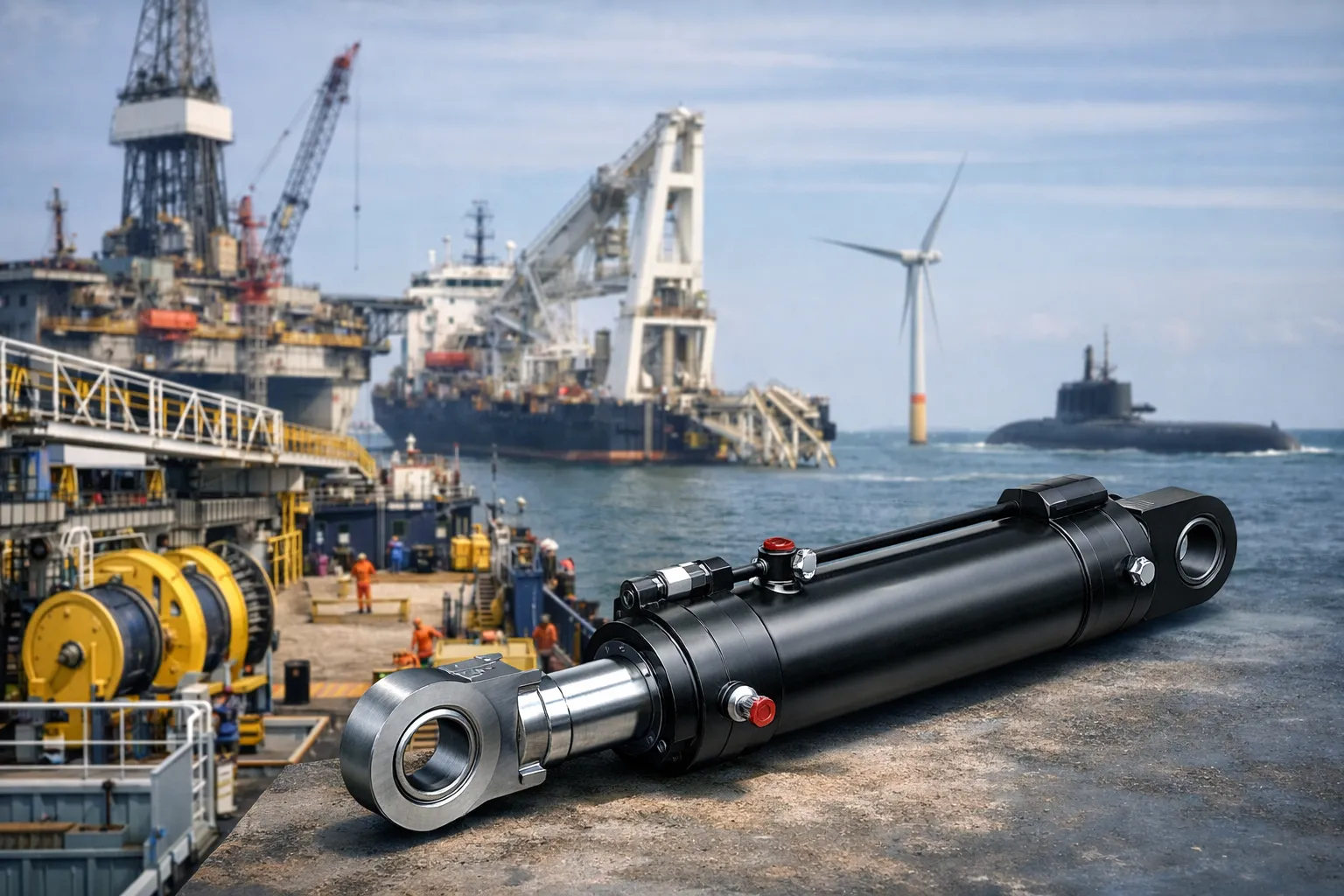
Recognizing these severe operational constraints, we have fundamentally re-engineered this component from the molecular level upwards. As an elite, globally recognized hydraulic cylinder manufacturer deeply integrated into the advanced shipbuilding and submarine maintenance hubs of South Korea, Japan, and the broader Asia-Pacific region, our unique industrial positioning lies in our uncompromising material science. We strictly enforce a titanium full structure marine engineering philosophy for our deep-water units. By utilizing heavy-walled 316L stainless steel, integrating titanium mounting interfaces, and heavily incorporating a flawless polished finish on the rods, we ensure zero-friction, zero-leak operation. Whether outfitting a newly commissioned attack submarine or executing complex MRO (Maintenance, Repair, and Overhaul) upgrades on civilian research vessels, deploying our precision-engineered hydraulic cylinder technology guarantees that your submarine equipment responds with instantaneous, fail-safe reliability every single time the command is given.
Comprehensive Technical Parameters and Exacting Specifications
Subsea architectural design demands exacting volumetric displacement and strict dimensional compliance. A rigid, generic catalog approach is highly detrimental to custom naval engineering. We precisely customize every single stroke length, bore diameter, operating pressure limit, and mounting flange metric to fit the exact mechanical load and confined spatial envelope of your specific submarine hull. The comprehensive table below delineates the foundational specifications and extensive engineering capabilities of our Ballast Valve Hydraulic Cylinder systems.
| Engineering Category | Specification Details | Subsea Operational Context |
|---|---|---|
| Target Industry | Titanium full structure marine engineering | Specifically developed for severe deep-ocean architectural integration and strict non-magnetic signature requirements. |
| Equipment Category | Submarine equipment | Fully applicable to naval defense vessels, deep-sea research submersibles, and large heavy-duty AUVs. |
| Subsystem & Action | Ballast system | Directly manages the rapid, high-pressure intake and expulsion of seawater for dynamic buoyancy control. |
| Nomenclature | Ballast Valve Cylinder | The primary mechanical muscle driving the main vent doors and heavy flood ports against ocean currents. |
| Action Mode | Double acting | Requires high-pressure forced hydraulic extension to open and forced retraction to lock valves securely closed. |
| Structure Type | Piston cylinder | Calculated surface area ratio designed to guarantee massive pulling force against crushing ambient water pressure. |
| Manufacturing Structure | Welded | Monolithic structural integrity utterly eliminates tie-rod elongation and end-cap leaks under violent hydrostatic shock. |
| Material System | 316L Stainless Steel | Provides exceptional, permanent, through-thickness resistance to chloride pitting and crevice corrosion in the deep ocean. |
| Surface Treatment | Polishing | Mirror-finish (Ra < 0.1μm) rods actively prevent microscopic seal abrasion and physically deter marine bio-fouling attachment. |
| Environmental Rating | Seawater immersion | Fully rated and hyperbaric-tested for permanent, uncovered external installation outside the primary pressure hull. |
| Working Condition | Adjusting ballast | High-frequency, precise stroke actuation requiring extreme reliability to maintain level, safe depth hovering. |
| Typical Failure Mode Solved | Seal failure | Neutralized completely via multi-stage wiper matrices and advanced pressure-compensated sealing housings. |
| Recommended Configuration | Marine engineering seal | Specialized FKM/HNBR elastomer stacks backed by heavy PEEK rings, completely impervious to cold saltwater pressure. |
Fluid Dynamics: The Subsea Operational Working Principle
To fully appreciate the advanced engineering behind the Ballast Valve Cylinder, one must understand the complex fluid mechanics occurring outside the pressure hull during a dive. When a submarine commander initiates a dive sequence, the massive vent valves at the top of the ballast tanks must open simultaneously. This crucial action allows trapped air to escape upwards, drawing dense, heavy seawater in through the flood ports at the bottom. This mechanical operation is driven entirely by highly pressurized hydraulic fluid directed from the vessel’s internal centralized hydraulic power unit (HPU).
Because the large external valves must overcome immense rushing water currents, hydrodynamic drag, and opposing pressure differentials, the actuator must be a heavily reinforced double acting hydraulic cylinder. When the dive officer signals the control panel, hydraulic fluid is rapidly pumped through hull-penetrating manifolds into the cap-end of the exterior cylinder. This pressurizes the hydraulic cylinder piston, generating an extreme linear force that physically drives the rod outward to throw open the heavy bronze or titanium vent valves. Conversely, to seal the tanks and “blow ballast” (forcing the water out with high-pressure compressed air to surface), the directional control valves reverse the flow. Fluid is routed to the rod-end port, powerfully retracting the polished 316L rod and pulling the main flood valve violently shut against the rushing water, mechanically locking it tight.
The defining engineering challenge during this operation is friction and “stiction” (static friction). If the cylinder rod stutters, binds, or jerks during the stroke due to saltwater corrosion or poor seal design, the massive valves will open unevenly, potentially causing severe cavitation, acoustic noise, or a dangerous asymmetrical dive angle. Our meticulous micro-polishing of the stainless steel rods to a true mirror finish, combined with advanced low-friction PTFE glide rings, ensures that every single stroke is exceptionally smooth and completely linear. This grants the pilot absolute, uninterrupted micro-metric control over the vessel’s depth and trim, while simultaneously protecting the internal hydraulic parts from wear.
Seamless OEM Brand Replacement for Major Shipyard Overhauls
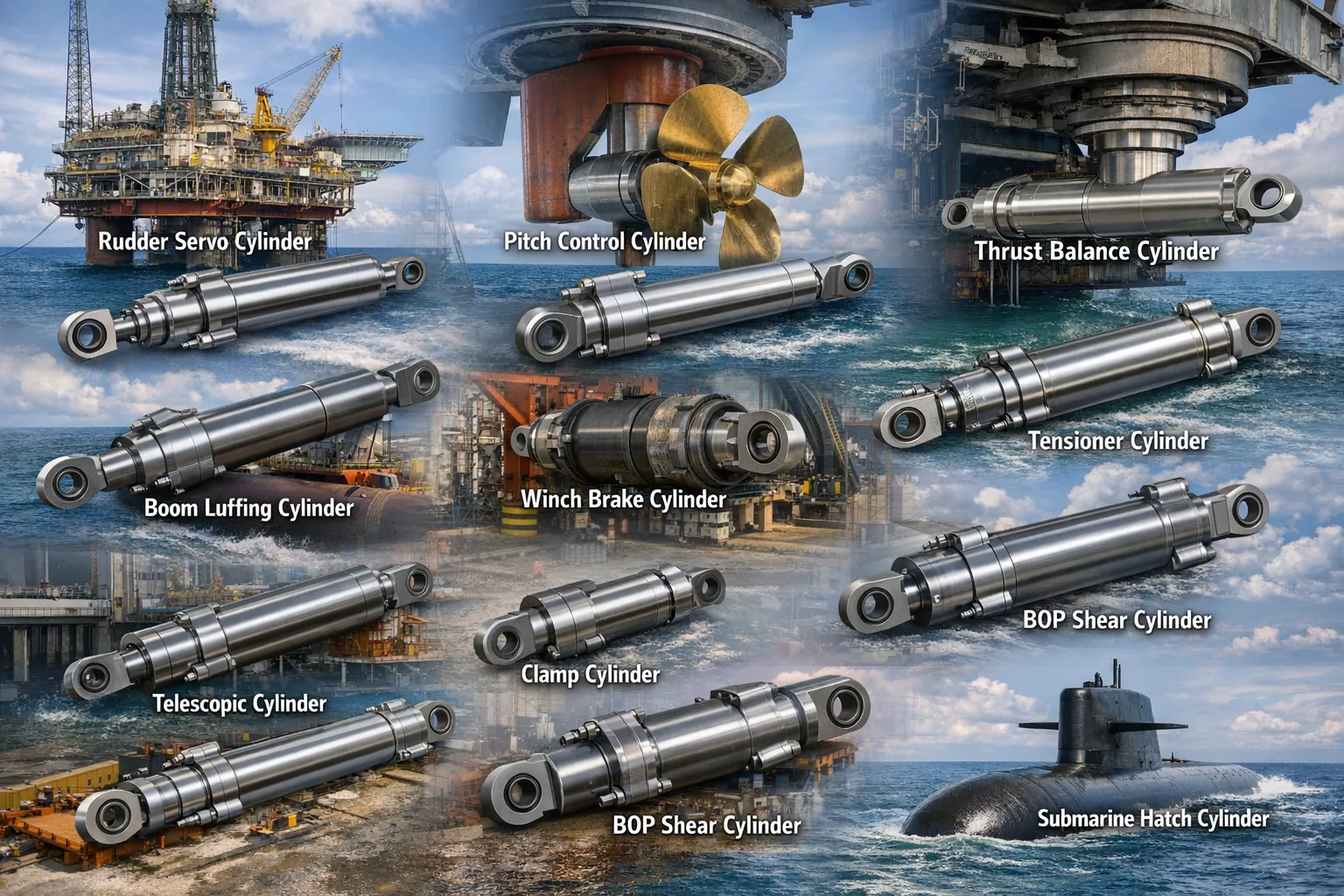
During major mid-life refits, emergency repairs, or Special Periodic Surveys (SPS) in prominent East Asian naval shipyards like those located in Busan, Okpo, or Yokosuka, extensive maintenance, repair, and overhaul (MRO) operations are conducted on the ballast systems. When subsea engineers discover severe galvanic pitting, barnacle encrustation, or catastrophic seal failure on the existing actuators, waiting extensively for legacy original equipment manufacturer (OEM) replacements from Europe or North America is completely unacceptable. The staggering dry-docking fees accumulate by the hour. We directly eliminate this critical supply chain bottleneck. By leveraging our agile, heavy-duty manufacturing infrastructure, we rapidly produce custom hydraulic cylinder components that serve as precise, dimensional drop-in replacements for major global fluid power brands.
We routinely engineer upgraded hydraulic rams that flawlessly replicate the exact pin-to-pin installation metrics, trunnion mounting widths, stroke lengths, and flange bolting patterns of units originally supplied by prominent companies such as Bosch Rexroth, Parker Hannifin, Eaton Vickers, MacTaggart Scott, and Wärtsilä. (Please Note: The explicit citation of these commercial brand names is utilized strictly to assist B2B naval architects, marine engineers, and procurement officers in identifying dimensional interchangeability and form-fit integration parameters during the vessel refit process. It does not signify any official corporate partnership, endorsement, or trademark infringement.)
Rather than continually spending the shipyard budget on fixing hydraulic cylinders that suffer from inherent design vulnerabilities in standard painted carbon steel, fleet managers can fundamentally upgrade their subsea infrastructure. By installing our 316L and titanium-integrated hydraulic parts, you resolve the root cause of the failure. This proactive upgrading strategy secures a vastly extended operational lifecycle and delivers a highly favorable return on investment when evaluating the overall hydraulic cylinder price versus the severe, unacceptable cost of an emergency dry-docking caused by a stuck valve requiring immediate hydraulic cylinder repair.
Defining Our Core Technical Engineering Advantages
Why do elite naval defense contractors, oceanographic research institutes, and lead mechanical engineers specify our fluid power solutions for their pressure-critical systems? The distinction lies entirely in our uncompromising approach to subsea material science, tribology, and structural reinforcement. Below are the definitive engineering advantages built into every actuation system we produce:
- 1. Advanced Marine Engineering Seal Matrix: At extreme depths, the external ambient hydrostatic pressure tries to force freezing saltwater past the wiper rings. This leads to internal fluid contamination and total system failure. We utilize redundant, cascaded lip seals manufactured from specialized FKM and HNBR elastomers, aggressively backed by heavy-duty PEEK anti-extrusion rings. This proprietary marine engineering seal configuration maintains an impenetrable fluid boundary, regardless of the operating depth or thermal shock.
- 2. 316L and Titanium Full Structure Integration: Standard carbon steel, even when heavily painted with marine epoxy, will eventually blister and rapidly corrode in a ballast tank environment. We construct the entire cylinder barrel and rod from premium 316L Stainless Steel. For ultra-critical weight-saving and non-magnetic applications, the mounting trunnions and head glands are precision-machined from marine-grade Grade 5 Titanium, completely eliminating galvanic corrosion vulnerabilities during constant seawater immersion.
- 3. Monolithic Welded Piston Cylinder Architecture: Conventional tie-rod cylinders are dangerously prone to longitudinal stretching under the intense hydraulic pressure spikes associated with rapid valve actuation, causing the end-caps to separate and leak. Our heavy-duty welded barrel construction creates a monolithic structural pressure vessel that powerfully resists the massive lateral and longitudinal stresses generated when valves violently slam shut against rushing water.
- 4. Micro-Metric Polishing for Zero Seal Wear: Even minor surface imperfections or salt crystal buildup on the rod will aggressively shred the dynamic seals over thousands of cycles. We employ multi-stage automated polishing techniques to achieve a true mirror-like surface finish (Ra < 0.1μm) on the rods. This polished surface dramatically reduces dynamic friction, eliminating heat generation, preventing salt adhesion, and vastly extending the fatigue life of the seal matrix.
- 5. Deep-Sea Thermal Gradient Stability: Ocean temperatures shift drastically from the warm, sunlit surface to the near-freezing abyssal plains. The specific metallurgy and seal compounds we select ensure that volumetric thermal contraction does not compromise seal compression. The actuator performs identically in tropical surface waters and the freezing depths of the Pacific Ocean, ensuring safe adjusting ballast maneuvers at any latitude.
Elite Autonomous Manufacturing and Subsea Quality Control
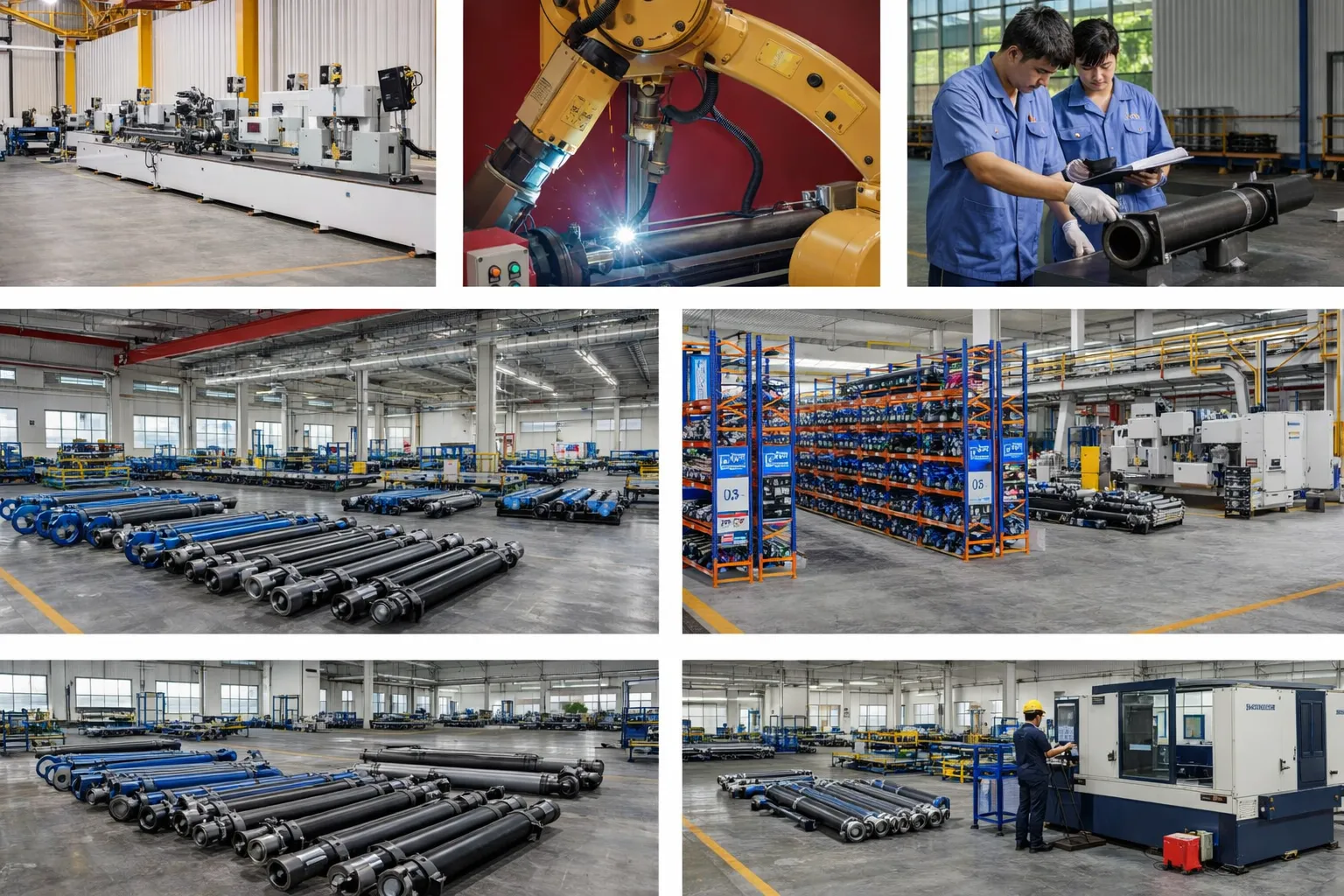
Absolute subsea reliability cannot be merely inspected into a final product; it must be intentionally manufactured into the molecular structure of the components from day one. As a premier, fully integrated hydraulic cylinder production facility, our entire manufacturing ecosystem operates under uncompromising ISO 9001 quality management systems and strict marine classification society protocols (such as ABS, DNV, and Lloyd’s Register). Every single phase of production, from the initial metallurgical procurement of the raw 316L billets to the final assembly of the marine engineering seal stacks in clean-room environments, is meticulously controlled within our advanced workshops. We do not outsource critical pressure-containing components.
The precision machining of high-strength stainless steel and titanium requires heavy-duty multi-axis CNC turning centers to maintain exact diametral clearances between the hydraulic cylinder piston and the honed barrel. The structural integrity of our welded designs is guaranteed through automated Tungsten Inert Gas (TIG) and submerged arc welding (SAW) processes performed in highly controlled, inert gas environments. Post-welding, every single structural seam is subjected to rigorous Non-Destructive Testing (NDT), utilizing both ultrasonic phased array inspection and liquid penetrant testing to ensure absolute freedom from subsurface porosity, slag inclusions, or micro-cracking.
Prior to global dispatch, 100% of our production output undergoes a grueling Factory Acceptance Test (FAT) protocol. The cylinders are mounted onto computerized test rigs and subjected to hydrostatic proof testing at 150% of their maximum rated working pressure, while simultaneously undergoing cycle testing to verify absolutely frictionless movement. We digitally monitor for microscopic pressure drops that would indicate fluid bypass. Each unit is permanently laser-etched with a unique serial number linking it directly to its specific Material Test Reports (MTRs) and quality inspection data, providing total traceability for naval architects and shipyard inspectors.
Cross-Industry Extreme Environment Applications
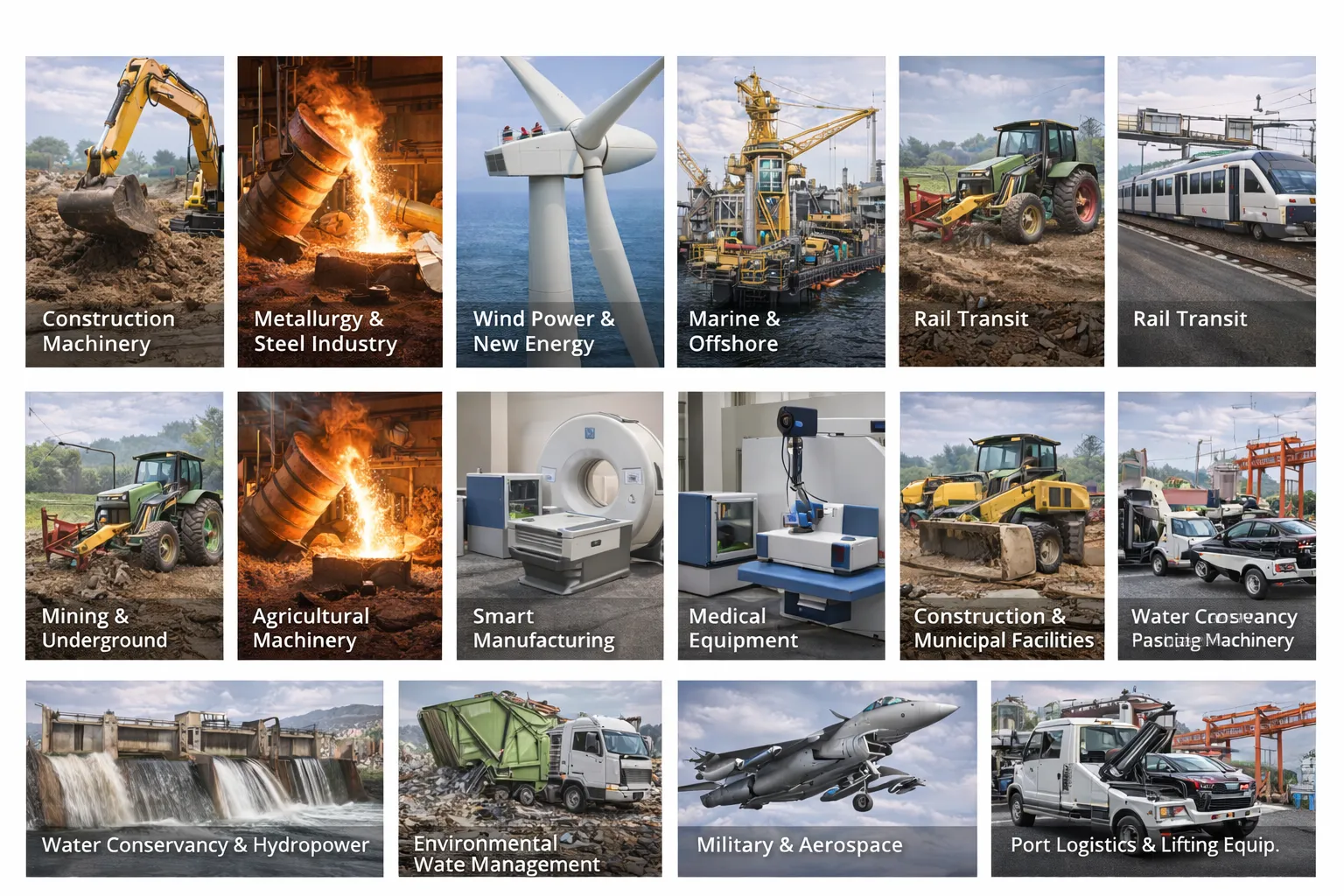
While the highly polished, 316L stainless steel actuator detailed here is explicitly optimized as a Ballast Valve Hydraulic Cylinder for submarine equipment, the foundational engineering DNA we have developed—absolute corrosion resistance, extreme high-pressure sealing, and robust welded structures—translates seamlessly to other punishing industrial sectors. The technology designed to survive the Mariana Trench provides massive reliability upgrades for heavy-duty terrestrial machinery operating in highly hostile environments. Our fluid power solutions empower numerous vital industries:
- Steel Production & Heavy Smelting: The exceptional thermal stability and robust seal compounds designed to resist subsea pressure differentials perfectly deflect the abrasive metallic scale, corrosive slag, and extreme radiant heat found in continuous casting lines and heavy forge manipulators. Explore our extreme heat solutions for the metallurgical and iron industry.
- Underground Excavation & Ore Extraction: Subterranean tunneling demands actuators that will not succumb to highly acidic groundwater, violent rock strikes, or abrasive quartz dust. The monolithic welded structures provide immense fracture toughness and corrosion resistance. Discover our rugged sub-surface designs for the mining industry.
- Heavy Civil Infrastructure & Bridge Building: Large-scale excavators, bridge-building launch gantries, and mobile crawler cranes require absolute, unyielding load-holding stability. Our specialized locking valves and ultra-smooth linear actuation serve as the ultimate, fail-safe lift cylinder for the construction machinery industry.
- Offshore Renewable Energy & Jack-Up Vessels: Wave energy converters, offshore wind turbine pitch controls, and heavy-lift vessel jacking systems utilize massive cylinders. The anti-corrosion 316L architectures and marine seals developed for submarines provide decades of zero-maintenance operation in salty, highly corrosive atmospheric splash zones.
Comparative Analysis: Standard Marine Cylinders vs. Our High-Performance Actuation
To assist B2B procurement teams, naval architects, and lead shipyard mechanics in their rigorous technical evaluation, the following table provides a transparent, direct comparative analysis between conventional commercial marine cylinders and our purpose-built submarine actuation systems.
| Performance Metric | Standard Commercial Marine Cylinder | Our Ballast Valve Cylinder |
|---|---|---|
| Corrosion Defense Strategy | Carbon Steel with Epoxy Paint (Highly vulnerable to scratching, blistering, and rapid galvanic corrosion in seawater). | Full 316L Stainless Steel and Titanium integration (Absolute, permanent immunity to chloride pitting). |
| Rod Surface Integrity | Standard Hard Chrome Plating (Prone to micro-cracking and sub-surface salt rust over time). | Micro-metric polished finish (Zero micro-cracks, actively repels salt adhesion and eliminates seal abrasion). |
| Dynamic Sealing Matrix | Standard Polyurethane U-cups (Deforms, extrudes, and allows saltwater intrusion under deepwater pressure). | Marine engineering seal stacks with FKM and PEEK backups (Prevents extrusion, absolute zero fluid bypass). |
| Architecture Type | Tie-rod construction (Actively stretches under shock, leading to end-cap separation and fluid leakage). | Monolithic welded construction (Unyielding structural integrity during violent valve slamming). |
| Maintenance Paradigm | Requires frequent, highly expensive dry-dock retrieval for rust removal and emergency seal replacement. | Engineered for extended, multi-year deployment across rigorous SPS cycles with zero intervention required. |
Proven Field Reliability: High-Stakes Real-World Case Studies
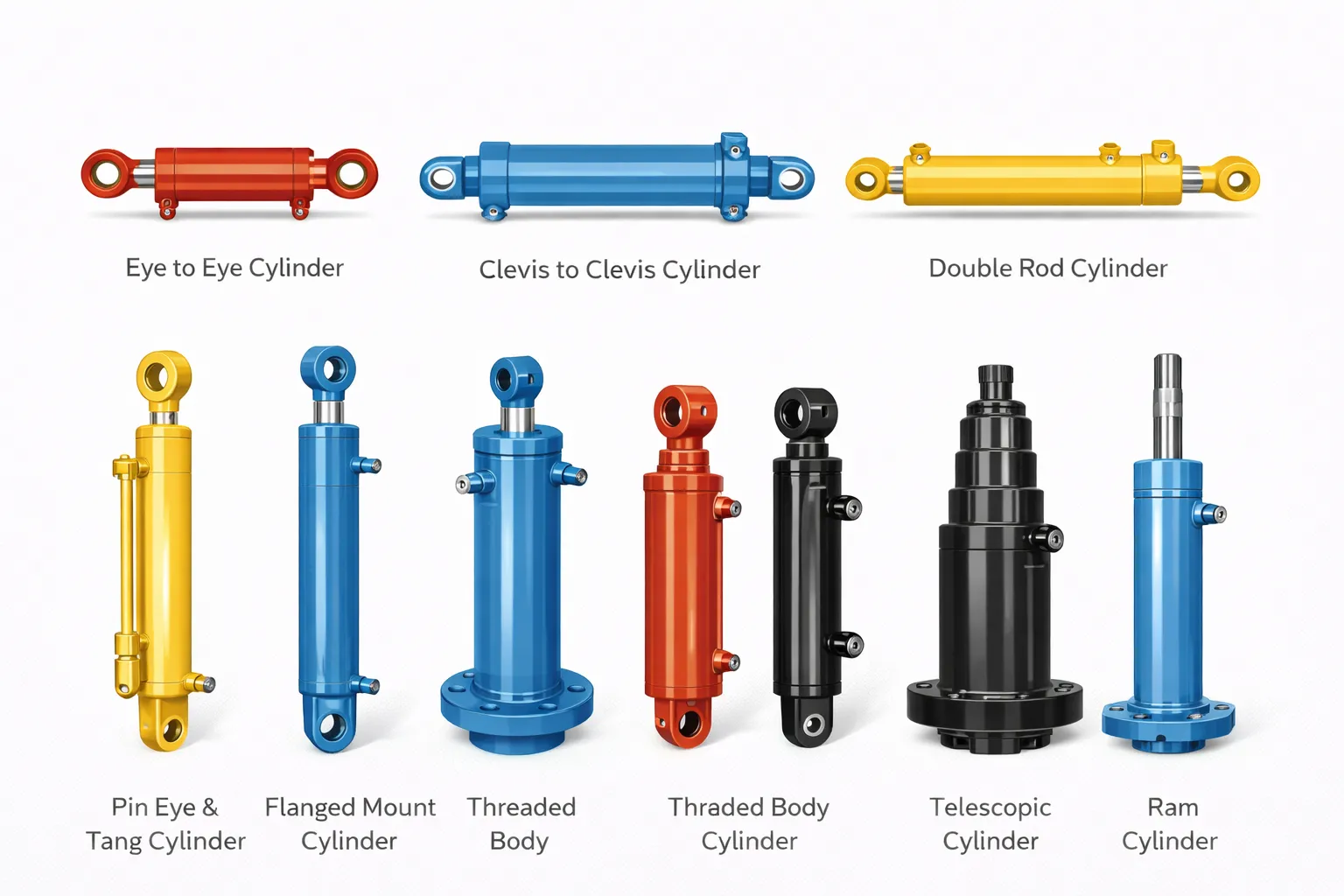
Rigorous engineering theory and advanced material science are validated exclusively through punishing real-world deployment. Our custom-engineered fluid power solutions consistently drive operational success across the globe, with a profoundly dominant and proven footprint in the advanced naval shipbuilding, submarine maintenance, and offshore energy hubs of South Korea, Japan, and Singapore. The following documented cases illustrate how our actuators resolve critical deep-sea bottlenecks for major operators.
Case Study 1: South Korean Naval Defense Submarine Fleet Refit
Location: Jinhae Naval Base, South Korea | Deployment Timeline: May 2024
The Operational Challenge: A prominent South Korean defense contractor responsible for the mid-life refit of a class of diesel-electric attack submarines discovered a critical vulnerability. The legacy OEM carbon-steel hydraulic rams used to actuate the main ballast tank flood valves were suffering from catastrophic seal failure. Continuous seawater immersion had severely pitted the chrome rods, which shredded the wiper seals upon retraction. High-pressure saltwater was contaminating the submarine’s central hydraulic lines, endangering the entire vessel’s ability to dive safely and reliably.
The Engineered Solution: The lead naval architect urgently contacted our engineering desk, seeking a permanent metallurgical upgrade to stop the endless cycle of expensive hydraulic cylinder repair. We rapidly manufactured a batch of heavily customized Ballast Valve Cylinders utilizing our polished 316L steel and titanium full structure marine engineering integration. We implemented our heavy-duty marine engineering seal matrix, specifically designed to reject abrasive salt crystals and withstand violent pressure spikes during emergency blow maneuvers.
The Outcome: Delivered in an expedited 8 weeks, the drop-in replacement units integrated perfectly with the submarine’s existing manifolds. Following deep-sea sea trials, the system demonstrated absolute zero leakage, entirely restoring the fleet’s buoyancy control integrity and saving the navy millions in future dry-docking costs.
“The transition to your polished 316L and titanium architecture completely eradicated our saltwater intrusion crisis. The ability to smoothly regulate ballast without fear of seal failure has restored immense confidence to the crew. Unparalleled fluid power engineering.” – Chief Naval Systems Engineer, Commander Lee S.H.
Case Study 2: Japanese Deep-Sea Research AUV (Autonomous Underwater Vehicle)
Location: Okinawa Trough, Japan | Deployment Timeline: November 2024
The Operational Challenge: An elite Japanese oceanographic research institute was finalizing the design of a next-generation autonomous underwater vehicle (AUV) capable of diving to 6,000 meters to map hydrothermal vents. They required incredibly precise, ultra-lightweight actuation to control the micro-ballast tanks for adjusting ballast and hovering. Standard industrial single acting hydraulic cylinder units exhibited too much mechanical friction (stiction) at near-freezing abyssal temperatures, causing the AUV to violently porpoise up and down instead of maintaining a steady survey depth.
The Engineered Solution: Following a technical consultation through our web portal, their design team requested a massive fluid dynamics upgrade. We replaced their single-acting units with highly customized, miniature double acting hydraulic cylinder units. We utilized ultra-polished rods and specialized low-friction PTFE guide bands designed specifically to operate smoothly in freezing temperatures without binding. By incorporating titanium into the cylinder heads, we maintained their strict vehicle buoyancy budget.
The Outcome: The AUV successfully completed its inaugural mapping mission. The double-acting force effortlessly overcame the hydrostatic pressure, providing the exact, micro-metric valving adjustments necessary to maintain perfect neutral buoyancy, allowing the vehicle to capture unprecedented high-definition sonar imagery of the seabed without hydraulic stutter.
“The low-friction performance of these components is precisely what our control algorithms required. The titanium construction kept our weight budget perfectly balanced. Brilliant fluid power engineering.” – Lead Robotics Engineer, Kenji M.
Case Study 3: Singaporean Subsea Trenching Equipment Reliability Upgrade
Location: Singapore Strait | Deployment Timeline: February 2025
The Operational Challenge: A global subsea engineering firm tasked with laying telecommunication cables utilized massive trenching ROVs equipped with variable ballast pontoons. They were constantly bleeding money and losing operational days by endlessly fixing hydraulic cylinders that blew their end-cap seals. The violent shock loads of the valves slamming shut caused the standard tie-rod cylinders to stretch, leaking hydraulic fluid into the ocean and allowing seawater in.
The Engineered Solution: Needing a massive structural upgrade, the procurement director contacted our engineering desk. We rapidly supplied heavily reinforced, welded Ballast Valve Hydraulic Cylinder structures. By discarding the tie-rods entirely and using deep-penetration automated welding to secure the heavy 316L end-caps, we created a monolithic pressure vessel capable of absorbing immense hydraulic shock without yielding.
The Outcome: The reinforced actuators have operated in the abrasive seabed environment for over 18 months without a single reported seal failure or structural leak, drastically reducing vessel standby time, eliminating environmental hazard risks, and significantly lowering maintenance costs.
“We needed brute strength combined with exact volumetric sealing. These welded units deliver on both fronts flawlessly. We no longer worry about environmental fluid leaks or blown caps. This is the best fluid power investment we have made for our ROV fleet.” – Fleet Operations Director, Lim D.W.
Engineering FAQ: B2B Procurement and Technical Insights
Procuring critical subsea equipment requires absolute technical clarity and trust. Below, our specialized fluid power engineering team addresses the most common and critical questions from naval architects, shipyard procurement managers, and marine engineers regarding our subsea systems.
Command the Depths with Unyielding Reliability
Do not allow substandard commercial components to dictate the safety, compliance, and reliability of your deep-sea operations. Upgrade your submarine’s buoyancy control systems with our highly engineered, 316L and titanium integrated Ballast Valve Cylinder. Experience the decisive advantage of zero-corrosion performance and eliminate costly, dangerous dry-dock seal replacements forever.
Editor: Cxm