Brush Pan Lifting Cylinder for Track Sweeping Vehicles
Advanced fluid power engineering designed specifically for the sweeping devices of modern railway transit vehicles. Constructed with high-strength Q345D steel and premium wear-resistant seals to completely eradicate premature seal wear in environments defined by heavy abrasive dust and violent mechanical impacts.
Product Overview: The Core Muscle of Railway Sweeping Devices
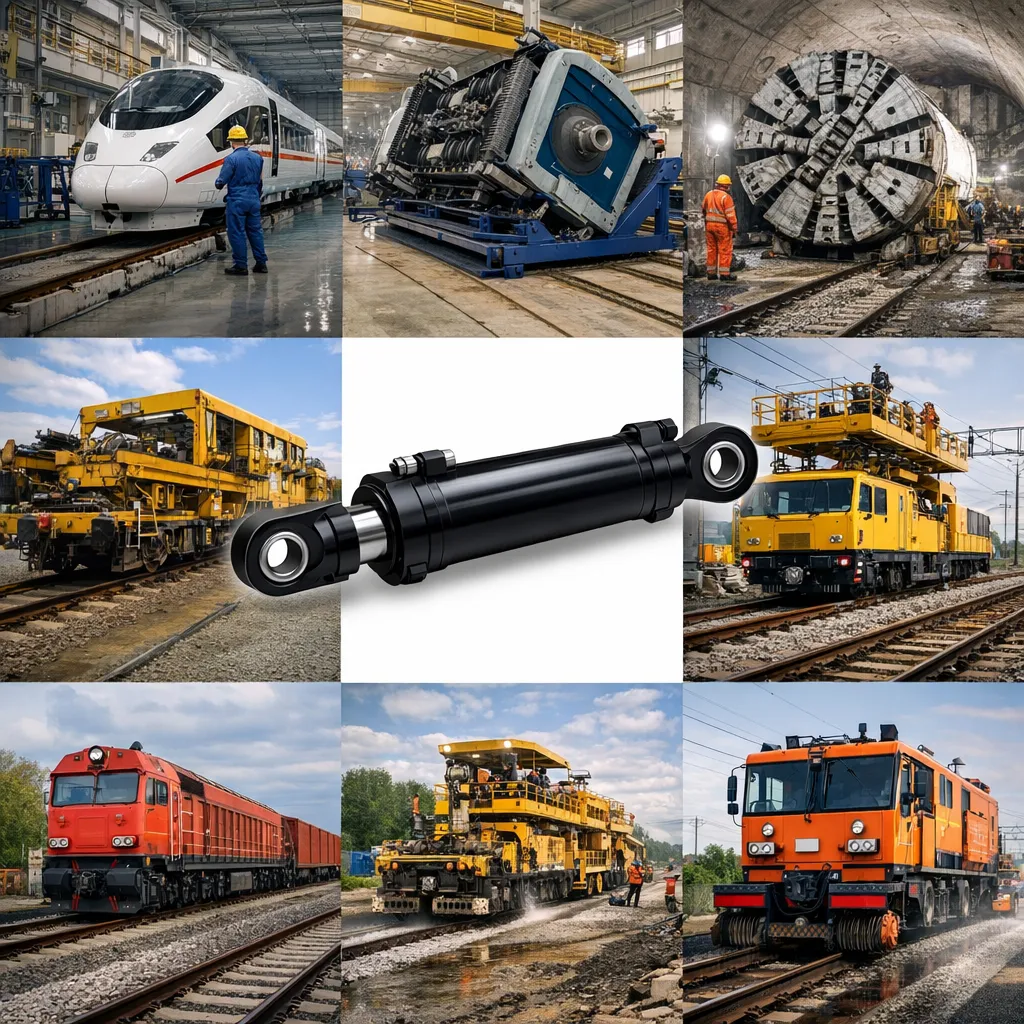
The operational safety, punctuality, and overall efficiency of heavy rail and metropolitan transit networks across East Asia heavily depend on maintaining perfectly clear track beds. Environmental debris, fallen autumn leaves, heavy winter snow, accumulated urban trash, and stray granite ballast can severely disrupt delicate electrical signaling systems and pose catastrophic derailment hazards for high-speed trains. To continuously mitigate these severe risks, regional railway authorities and infrastructure contractors rely on specialized track sweeping vehicles. These rugged maintenance machines deploy heavy, massive rotary sweeping brush pans that physically scrub the steel rails and concrete track beds at relatively high speeds. The critical mechanical component responsible for forcing this incredibly heavy brush down against the track and instantly retracting it to clear sensitive track switches is the highly specialized brush pan lifting cylinder.
The operational environment surrounding a track sweeping vehicle is undeniably one of the most mechanically abusive scenarios in the civil infrastructure sector. Because the heavy rotary brushes operate directly on the ground at high RPMs, the entire undercarriage of the maintenance vehicle is constantly enveloped in a violent, swirling storm of abrasive silica dust, flying gravel, and metallic track debris. Furthermore, as the sweeping vehicle travels at operational speeds over uneven rail joints, raised concrete sleepers, and rigid switches, the heavy brush pan transmits severe, repetitive kinetic shockwaves directly upward into the mechanical linkages. In standard commercial fluid power units, this relentless combination of heavy microscopic dust and violent impact forces leads directly to the primary failure mode of track sweepers: accelerated and catastrophic seal wear. Abrasive silica dust effortlessly bypasses standard rubber wiper seals, mixing with the internal hydraulic fluid to create a highly destructive lapping compound that aggressively grinds away the internal high-pressure seals, leading to rapid pressure decay, external fluid leakage, and complete subsystem failure.
Operating as an industry-leading, vertically integrated hydraulic cylinder manufacturer, our technical engineering division recognized that solving this specific failure mode required a ground-up metallurgical and tribological redesign. Our proprietary brush pan lifting hydraulic cylinder is explicitly engineered to survive and thrive in the absolute chaos of the active track bed. By utilizing a highly specialized wear-resistant seal matrix composed of advanced polyurethanes and PTFE composite backup rings, we completely block abrasive ingress and prevent internal seal shredding. Furthermore, by forging the main pressure vessel entirely from Q345D low-temperature structural alloy steel, we guarantee that the actuator can safely absorb massive kinetic impacts without fracturing, even during the freezing South Korean winters. For transit fleet managers desperately seeking to reduce the operational downtime associated with fixing hydraulic cylinders on active rail lines, our transit-grade actuation components offer absolute reliability. By effectively eliminating emergency field repairs and constant seal replacements, you are strategically optimizing your long-term hydraulic cylinder price footprint and maximizing the profitability of your maintenance contracts.
Comprehensive Technical Specifications
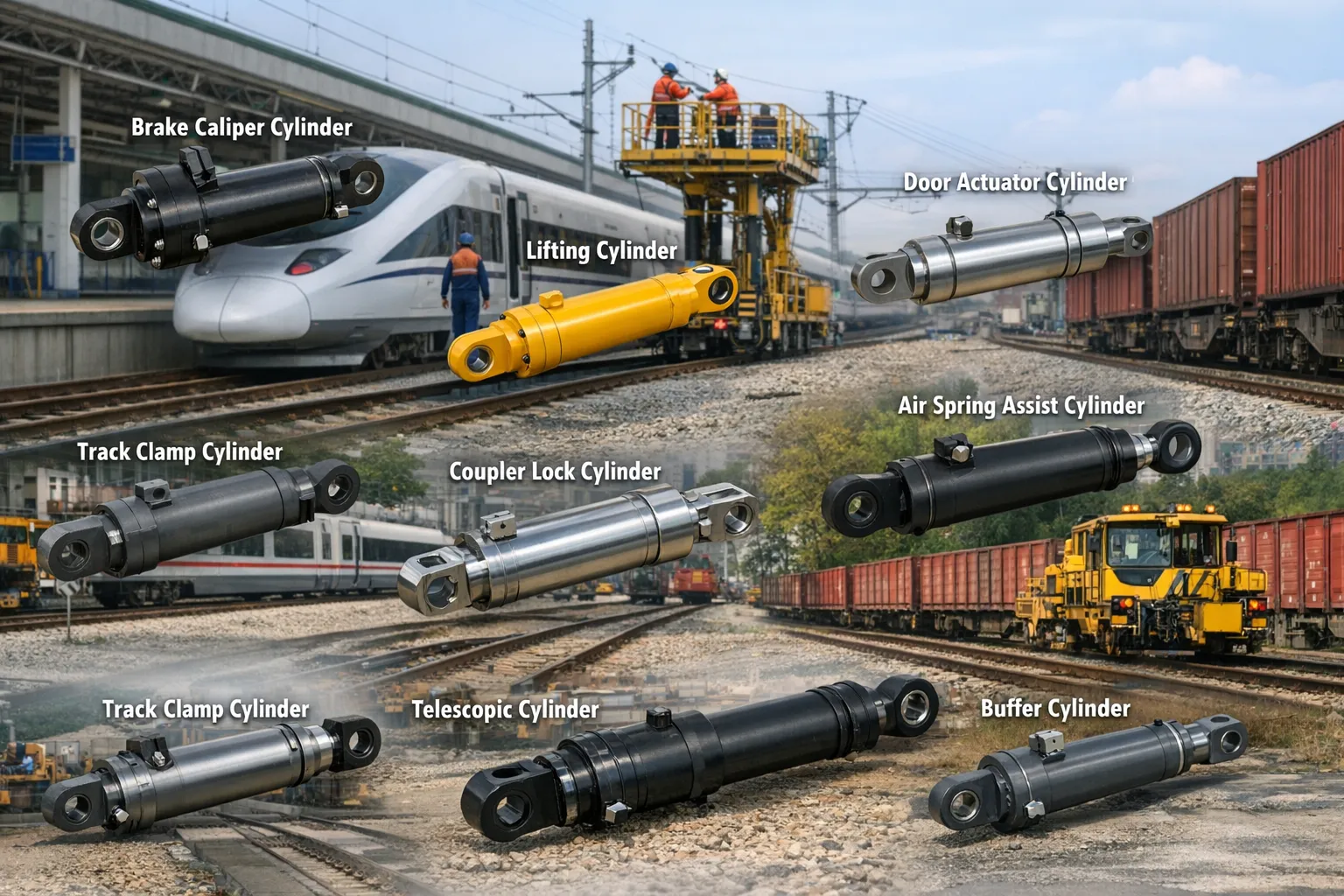
Seamlessly integrating highly specialized actuation hardware into massive track maintenance machinery requires absolute engineering precision, superior material science, and uncompromising geometric accuracy. The comprehensive data table below explicitly outlines the core dimensional parameters, robust metallurgical choices, and severe-duty structural classifications of our sweeping device actuators. Every single double acting hydraulic cylinder leaving our autonomous manufacturing facility strictly adheres to these heavy-duty specifications to guarantee flawless field performance in the most abrasive environments on earth.
| Engineering Parameter | Specification Detail & Component Customization Range |
|---|---|
| Target Industrial Sector | Railway Transit / Infrastructure Track Maintenance Operations |
| Equipment Category | Track Sweeping Vehicle / Heavy Ballast Cleaning Machinery |
| Subsystem Integration | Cleaning Device / Rotary Brush Undercarriage Mechanism |
| Specific Component Name | Brush Pan Lifting Cylinder / Brush Pan Control Actuator |
| Actuation Method | Double Acting Hydraulic Cylinder (Powered Bi-directional Control) |
| Internal Structure Type | Heavy-Duty Piston Cylinder Architecture |
| Manufacturing Structure | Fully Robotic Welded Construction (Ultimate Anti-Vibration Design) |
| Primary Material System | Q345D Low-Temperature High-Strength Alloy Steel |
| Rod Surface Treatment | Deep Hard Chrome Plated (Micro-Cracked for Oil Retention) |
| Environmental Stress Class | Heavy Airborne Silica Dust + Severe Physical Ballast Impact |
| Specific Work Action | Precision Brush Pan Lifting, Lowering, and Active Down-force Control |
| Typical Prevented Failure | Premature Abrasive Seal Wear / Massive Fluid Leakage / Barrel Fracturing |
| Recommended Configuration | Wear-Resistant Sealing Matrix + Aggressive Dual-Lip Scraper |
| Mounting Versatility | Heavy-Duty Spherical Bearing Clevis, Trunnion, or Cross-Tube Orientations |
The strict implementation of Q345D alloy steel for the primary pressure vessel is an absolute engineering necessity for outdoor railway environments. Unlike standard indoor industrial cylinders constructed from basic, brittle carbon steels like 1045 or Q235, track sweeping vehicles operate heavily during the freezing winter months to clear thick snow and frozen debris from vital transit corridors. Under these sub-zero conditions, generic carbon steel loses its elasticity and becomes dangerously brittle, drastically increasing the risk of catastrophic barrel fracturing when the heavy sweeping brush accidentally hits a solid obstacle on the tracks at operational speeds. Q345D is a highly advanced structural alloy specifically formulated and certified to deliver exceptional Charpy impact toughness at temperatures dropping to -20 degrees Celsius and below. This specific metallurgical choice ensures that the cylinder effortlessly absorbs violent kinetic shocks elastically, preserving ultimate structural integrity and keeping the sweeping fleet fully operational and safe throughout the harshest winter blizzards.
Operational Fluid Dynamics: Managing Brush Pressure and Rapid Retraction
To truly understand the incredible industrial value of our brush pan lifting cylinder, one must appreciate the intense dynamic fluid mechanics governing the track sweeping process. Operating a heavy-duty sweeping device is not a passive action; it requires continuous, active, and highly adjustable downward force. If the massive rotary brush merely rests on the track bed relying solely on its own physical gravity, it will violently bounce over uneven steel rails and leave dangerous, compacted debris behind on the sleepers. Therefore, the machine operator relies on a powerful double acting hydraulic cylinder to physically push the brush pan down, locking it into the optimal sweeping position with sustained hydraulic pressure. A basic single acting hydraulic cylinder cannot provide this active downward thrust or controlled holding force, making double-acting actuation the mandatory standard for all modern rail transit infrastructure equipment.
When the heavy sweeping mechanism is engaged by the operator, pressurized hydraulic oil is precisely metered from the main control manifold directly into the cap-end port of the cylinder barrel. This high-pressure fluid forcefully pushes against the solid surface area of the internal hydraulic cylinder piston, driving the thick hard chrome rod outward to deploy the heavy brush. As the vehicle moves forward at considerable speed, the brush inevitably strikes solid, unyielding anomalies—frozen track ballast, heavy branches, protruding steel fasteners, or uneven switch plates. This dynamic interaction generates a massive, sudden upward mechanical shock wave. Our highly engineered internal sealing matrix and the elastic Q345D steel body act in unison as a robust fluid dampener, safely absorbing these kinetic pressure spikes without allowing the internal seals to blow out or extrude.
Equally critical to the sweeping process is the rapid retraction sequence. When the track sweeping vehicle approaches a delicate rail junction, an active electronic sensor, a level crossing gate, or a signaling transponder, the heavy spinning brushes must be yanked upward instantly to avoid causing severe, multi-million dollar damage to the track infrastructure. Fluid is violently diverted into the rod-end port by the directional valve. The high pressure acts on the annular area of the piston, forcefully retracting the rod in a fraction of a second. During this rapid upward stroke, the extended steel rod is heavily coated in highly abrasive silica dust, dried mud, and metallic dirt from the track bed. Our heavily reinforced, aggressive dual-lip polyurethane wiper seal aggressively scrapes this abrasive grit away, ensuring the steel rod is perfectly clean before it enters the high-pressure sealing chamber. This precise, flawless fluid and mechanical coordination is exactly why top-tier national transit fleets trust our premium hydraulic rams for their most punishing daily maintenance operations.
Seamless Fleet Integration & Direct OEM Brand Replacement
For railway maintenance contractors managing massive fleets of specialized sweeping vehicles, relying strictly on the original equipment manufacturer (OEM) for replacement actuation parts is a severely flawed procurement strategy. It routinely results in excessive international shipping downtime and significantly inflated maintenance budgets. We specialize in rapidly streamlining your maintenance, repair, and overhaul (MRO) supply chain. Our autonomous manufacturing facility is fully equipped to reverse-engineer and produce exact dimensional replacements for the complex lifting systems utilized on the world’s leading track maintenance machines.
(Please note: The mention of the following commercial equipment brands is strictly for the purpose of demonstrating mechanical cross-compatibility and assisting structural engineers in component selection. We do not claim any trademark ownership, endorsement, or direct affiliation with Plasser & Theurer, Loram Maintenance of Way, Harsco Rail, Matisa, Bosch Rexroth, Parker Hannifin, or SMC.)
By simply providing our dedicated engineering team with the precise pin-to-pin mounting lengths, spherical bearing diameters, closed-center strokes, and fluid port thread specifications of your failing legacy equipment, we guarantee that our heavy-duty hydraulic cylinder components will integrate directly into your existing sweeper undercarriage without requiring a single millimeter of costly chassis modification or welding. This highly specialized replacement capability allows regional railway contractors to rapidly upgrade their aging fleets with our superior Q345D metallurgy and wear-resistant sealing technology, significantly reducing overall operational expenditures and drastically minimizing the future need for emergency hydraulic cylinder repair.
Core Technical Advantages of Our Transit Sweeping Actuators
Upgrading from standard, mass-produced industrial cylinders to our highly specialized railway-grade brush pan lifting hydraulic cylinder delivers immediate, measurable, and profound operational benefits. The following core technical advantages clearly illustrate exactly how our specific design philosophy defeats the harsh realities of active track maintenance environments.
- 1. Advanced Wear-Resistant Sealing Matrix
The absolute primary enemy of the track sweeper is abrasive seal wear from silica dust. We eradicate this failure mode entirely by abandoning basic rubber O-rings in favor of a highly engineered composite sealing matrix. Utilizing proprietary blends of PTFE and heavy-duty polyurethanes, our seals exhibit a remarkably low coefficient of dynamic friction combined with extreme abrasion resistance. Even if microscopic dust manages to enter the system, the wear-resistant seals will not easily tear, shred, or extrude, ensuring millions of flawless brush lifting cycles without internal pressure decay. - 2. Unyielding Q345D Structural Rigidity
The undercarriage of a sweeping vehicle vibrates violently as it drives over the ballast. Standard carbon steel barrels can suffer from microscopic fatigue fractures under these relentless harmonic loads. By forging our cylinder barrels and mounting trunnions exclusively from premium Q345D high-tensile alloy steel, we ensure exceptional yield strength and ultimate shock resistance. The heavy cylinder body refuses to flex, warp, or ovalize, maintaining absolute internal pressure integrity under maximum downward sweeping load. - 3. Fully Robotic Submerged Arc Welded Architecture
Equipment driven forcefully over uneven rail tracks is subjected to severe mechanical shaking. Cylinders assembled using external tie-rods are highly prone to having their fastening nuts vibrate loose over time, causing catastrophic end-cap leakage and fluid spills. Our cylinders utilize a state-of-the-art fully automated robotic welded construction. The heavy steel end caps are permanently, seamlessly fused to the Q345D barrel, creating an ultra-rigid pressure vessel that is entirely immune to mechanical loosening. - 4. Deep Micro-Cracked Hard Chrome Surface Defense
The exposed piston rods are constantly bombarded by flying gravel, dust, and damp environmental conditions. Our rods receive an exceptionally thick, specialized layer of micro-cracked hard chrome plating. These microscopic surface fissures are uniquely engineered to retain a thin film of hydraulic oil, creating a permanent, highly lubricated boundary layer that actively repels rust, limits dry friction against the seals, and provides an impenetrable armor against physical scoring from sharp granite chips. - 5. Aggressive Dust-Exclusion Dual-Lip Wiper Matrix
Keeping abrasive silica dust out of the sensitive hydraulic system is paramount for survival. We employ a specialized double-lip, heavy-duty polyurethane wiper seal at the gland housing. As the chrome rod retracts rapidly from the dusty track bed, this highly rigid outer lip literally shears dried mud, ice, and granite dust off the rod surface with extreme prejudice, ensuring that only a perfectly clean, debris-free steel surface passes into the main high-pressure sealing chamber. - 6. Superior Fatigue Life Optimization via FEA
Through the rigorous application of comprehensive Finite Element Analysis (FEA) testing software during the initial design phase, our dedicated engineering team meticulously maps and entirely eliminates mechanical stress concentration zones around the fluid inlet ports and heavy-duty spherical bearing mounts. This intense mathematical structural optimization guarantees the actuator delivers millions of high-impact sweeping cycles without suffering from microscopic metal fatigue or weld joint failure.
Autonomous Manufacturing and Unyielding Quality Assurance
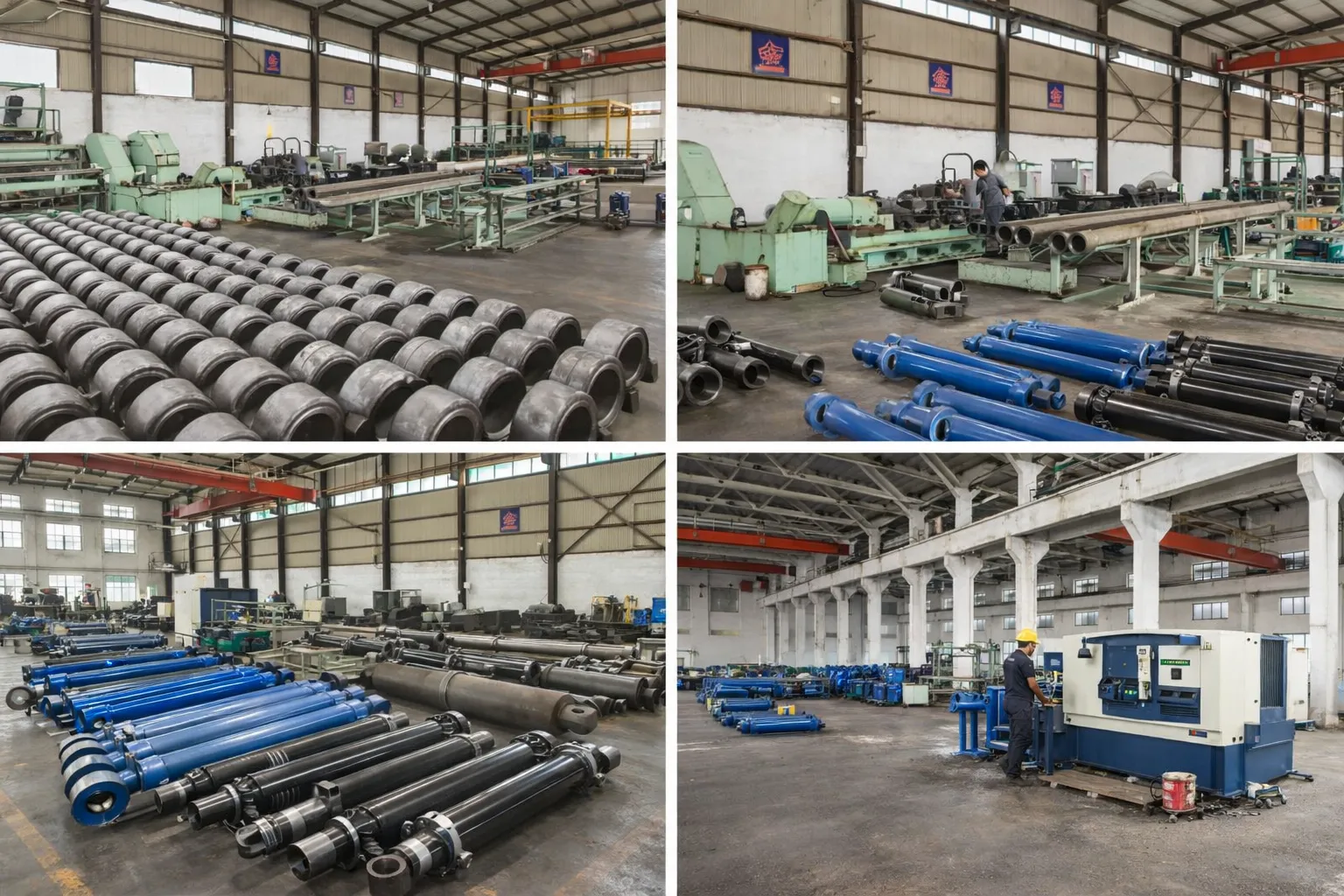
Delivering critical infrastructure safety and maintenance components requires a manufacturing ecosystem defined by absolute precision, transparency, and strict control. We operate proudly as a fully autonomous, vertically integrated hydraulic cylinder manufacturer. We do not rely on third-party intermediaries, cheap trading houses, or outsourced assembly lines for our critical components. From the initial metallurgical verification of incoming Q345D steel billets via rigorous ultrasonic non-destructive testing (NDT) to the final multi-axis CNC machining, deep welding, and painting, every single process is executed, documented, and strictly monitored within our advanced factory floor.
To ensure the absolute perfection of our internal sealing surfaces, the bore of every pressure vessel undergoes a highly specialized deep-hole skiving and roller burnishing process. This advanced, heavy-duty machining technique achieves a mirror-like internal surface finish (measuring Ra < 0.2µm) and physically work-hardens the steel grain structure. This ultra-smooth, hardened bore works in perfect, frictionless synergy with our wear-resistant polyurethane seals, drastically reducing dynamic seal friction and ensuring the brush lifting stroke extends instantly and smoothly, without any sudden stick-slip jerking that could damage the vehicle’s sweeping machinery.
Quality control is absolutely not a randomized, statistical sampling process for our engineering team; it is a 100% uncompromising mandate. Every single brush pan lifting cylinder that departs our final assembly line is subjected to a rigorous hydrostatic proof test on customized, computer-monitored test benches. The unit is artificially pressurized with testing fluid to 150% of its maximum rated operational limit, and closely monitored for extended holding periods to ensure absolutely zero pressure decay and the flawless verification of structural weld integrity. Following certification, each actuator is laser-engraved with a permanent serial number, ensuring comprehensive ISO-compliant traceability for your fleet’s MRO safety records and compliance audits.
Cross-Industry Applications for Severe Dust Environments
While the highly sophisticated wear-resistant sealing matrix and welded Q345D architecture detailed extensively here is specifically engineered to conquer the massive dust loads and violent kinetic impacts of railway sweeping vehicles, the fundamental mechanical capability of resisting harsh abrasive environments while maintaining absolute performance is highly critical across multiple severe-duty industries. Our advanced fluid power technology is frequently utilized and heavily trusted in:
- Underground Resource Extraction: Subterranean drilling rigs and heavy rock crushing equipment subject actuators to immense airborne silica dust and falling debris. Our highly reinforced, wear-resistant designs are considered essential safety components within the Mining Industry.
- Heavy Earthmoving & Civil Engineering: The exceptional ability to absorb massive kinetic shock and actively block abrasive dirt makes this rigid design perfect for the Construction Machinery Industry, excelling as an indestructible heavy-duty lift cylinder for massive quarry excavators operating in severe mud and uneven terrain.
- Municipal & Airport Maintenance: High-speed runway sweepers and heavy municipal vacuum trucks require identical brush deployment technology, demanding robust actuators that can withstand continuous high-frequency oscillations without seal degradation or fluid leaks.
Comparative Analysis: Standard Commercial vs. Specialized Sweeper Actuators
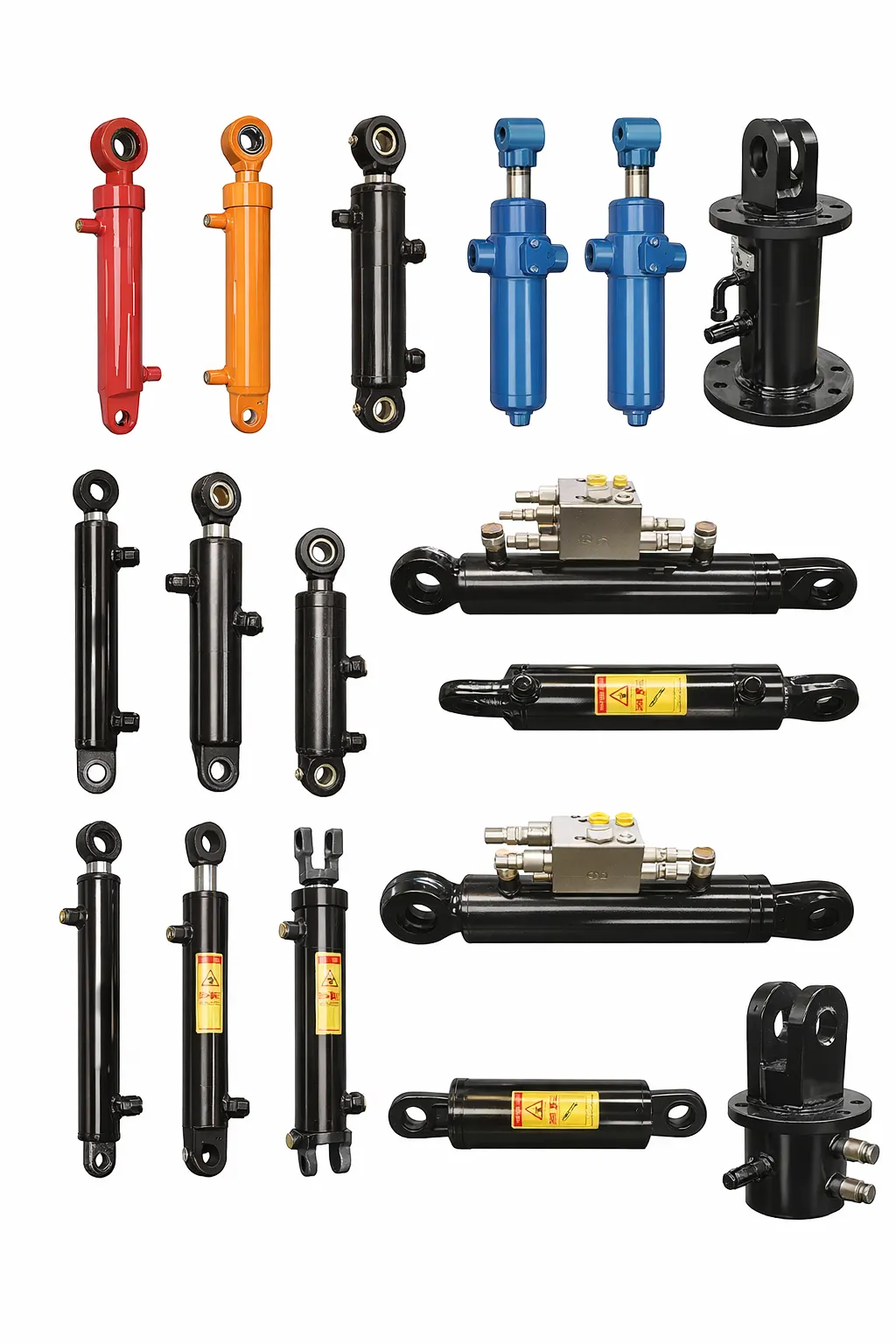
Attempting to integrate cheap, mass-produced industrial automation cylinders into heavy railway maintenance machinery is a highly flawed strategy that directly leads to rapid seal failure, pressure loss, dropped loads, and severe equipment downtime. The detailed comparative analysis table below illustrates the critical engineering disparities and highlights precisely why upgrading your fleet to our purpose-built transit actuators guarantees a vastly superior project ROI and operator safety margin.
| Critical Performance Metric | Generic Industrial Cylinder | Our Premium Brush Lifting Cylinder |
|---|---|---|
| Seal Wear Resistance (Dust Handling) | Low. Basic nitrile rubber seals are rapidly shredded by fine silica dust entering the chamber. | Exceptionally High. PTFE composite seals inherently resist abrasive friction and scoring. |
| Base Structural Material | Standard 1045 Carbon Steel. Dangerously brittle in sub-zero winter temperatures, prone to cracking. | Premium Q345D Alloy Steel. Retains unyielding impact toughness even in environments below -20°C. |
| Impact & Vibration Integrity | External tie-rods constantly shake loose on heavy diesel construction equipment over time. | Fully robotic welded construction creates a permanent, loosening-proof solid pressure vessel. |
| External Contamination Defense | Single lip wiper. Easily overwhelmed by thick mud and heavy airborne ballast dust. | Aggressive dual-lip polyurethane scraper forcefully shears off all dried dirt and abrasive grit. |
| Quality Testing Rigor | Randomized batch sampling leaves dangerous room for critical field failures under heavy loads. | 100% individual hydrostatic proof testing for absolute high-pressure verification on every unit. |
| Overall Lifecycle Cost | Requires frequent, costly seal replacements and causes massive machine operational downtime. | Extended MTBF dramatically lowers your overarching, long-term hydraulic cylinder price footprint. |
Proven Field Reliability: Real-World Case Studies in Fleet Upgrades
Rigorous theoretical engineering only holds weight when validated by punishing field deployments and measurable operational success. Over the last decade, our technical division has systematically resolved complex actuation failures for primary rail infrastructure contractors across East Asia. Below are detailed operational success stories demonstrating our precise problem-solving capability.
Case Study 1: Eradicating Seal Wear on the Seoul High-Speed Network
Location & Client: Seoul, South Korea — Primary Railway Maintenance Contractor.
The Engineering Challenge: The contractor’s highly active fleet of ballast regulators and sweepers was suffering from a disastrous rate of cylinder failure. The intense silica dust generated during dry, summer sweeping operations was rapidly destroying the OEM nitrile seals. The heavy sweeping brushes were losing downward pressure and failing to clear the tracks properly, forcing machines off the rail for constant seal replacements.
How We Connected: The lead fleet procurement officer urgently searched for an expert manufacturing firm capable of custom anti-dust engineering and engaged our technical engineering portal via our main website.
The Solution & Result: We rapidly delivered a batch of custom brush pan lifting cylinders outfitted entirely with our proprietary wear-resistant PTFE composite sealing matrix and aggressive dual-lip wipers. These advanced seals entirely ignored the abrasive environment. After 18 months of rigorous deployment, premature seal failures dropped to absolute zero, massively increasing the daily track sweeping volume.
Case Study 2: Conquering Sub-Zero Brittle Fractures in Mountain Passes
Location & Client: Gangwon Province, South Korea — Regional Mountain Railway Authority.
The Engineering Challenge: Sweeping frozen debris and snow from mountain tracks during the harsh winter months proved disastrous for the client’s existing equipment. Their standard carbon steel brush cylinders were becoming dangerously brittle at -20°C. When struck by chunks of frozen ballast, the sudden kinetic shock was causing micro-fractures in the cylinder end caps, leading to complete structural failure and fluid spills on the sensitive mountain terrain.
How We Connected: A prominent structural engineering consultant within the Asian rail industry specifically recommended our firm for our deep metallurgical expertise with the Q345D alloy.
The Solution & Result: We overhauled their sweeping subsystem with our double acting hydraulic cylinder constructed entirely from Q345D low-temperature steel, utilizing robotic full-penetration welding. The Q345D effortlessly handled the sub-zero mechanical shocks, maintaining complete elasticity. Equipment lifespan through the winter seasons was safely extended by a massive 250%.
Case Study 3: Overhauling Obsolete European Transit Machinery
Location & Client: Daegu, South Korea — Transit Overhaul and Maintenance Consortium.
The Engineering Challenge: The consortium was struggling significantly to source replacement brush actuators for a fleet of 15-year-old European track sweeping machines. The original OEM replacement parts had quoted lead times exceeding 6 months and were prohibitively expensive, effectively stalling their modernization program and threatening massive financial penalties on their government maintenance contracts.
How We Connected: The fleet procurement department reached out via our technical contact form to inquire if we could match the highly specific metric mounting dimensions of their obsolete equipment based purely on provided schematics.
The Solution & Result: We autonomously reverse-engineered their undercarriage footprint and supplied customized, exact drop-in replacements within 4 weeks. By delivering identical external dimensions but vastly superior internal wear-resistant mechanics and Q345D metallurgy, we completely eliminated their constant seal failures. The track sweepers now operate with vastly improved safety and reliability.
Frequently Asked Questions
Procuring highly specialized safety and maintenance hardware for rail infrastructure demands rigorous technical scrutiny and extensive due diligence. To support your mechanical engineering and purchasing departments, we have comprehensively addressed the most common B2B inquiries regarding our heavy-duty sweeping technology below.
Optimize Your Track Maintenance Fleet with Uncompromising Engineering
Do not allow vulnerable, generic fluid power components to jeopardize your critical track sweeping operations, cause premature seal failure, or heavily inflate your annual maintenance budgets with unpredictable equipment downtime. Our precision-engineered Q345D actuators represent the absolute pinnacle of severe-duty railway technology, guaranteeing wear-free operation and rapid retraction under the most punishing, dust-heavy environmental conditions imaginable.
Editor: Cxm