Climbing Cylinder for Wind Turbine Internal Platform
Engineered with proprietary high-life sealing technology and premium forged alloy steel to conquer the severe abrasive dust and persistent moisture of internal tower environments, ensuring absolute vertical stability and flawless personnel transport during critical wind energy maintenance.
Equipment Overview & Core Industrial Value Proposition
The structural evolution of modern wind power generation has resulted in onshore and offshore turbine towers that regularly exceed physical heights of 120 to 150 meters. At the absolute apex of these massive steel structures sits the nacelle, a highly complex enclosure housing the critical generator, gearbox, and drivetrain components. These complex mechanical systems require highly regulated, periodic internal maintenance, lubrication, and inspection. Transporting technical personnel, heavy diagnostic tooling, and replacement components up the sheer vertical length of the tower is an immense logistical and safety challenge. This vertical transportation relies entirely on the tower’s internal platform climbing equipment, a specialized service lift mechanism that systematically scales the internal structural guide rails. Operating at the absolute mechanical heart of this vital elevation system is the climbing cylinder. As a specifically engineered heavy-duty fluid power actuator, the climbing hydraulic cylinder provides the immense, highly controlled linear thrust necessary to safely hoist the internal platform against the relentless pull of gravity.
Operating inside a wind turbine tower is fundamentally different from a standard, climate-controlled industrial environment. The enclosed tubular space acts as a massive thermal chimney, drawing in external atmospheric humidity which rapidly condenses on the cold inner steel walls during temperature fluctuations. Furthermore, the continuous operation of the turbine’s internal mechanical yaw and rotor braking systems generates a pervasive, highly abrasive airborne particulate, heavily mixed with microscopic fiberglass fibers from the rotor blades. This unique combination of heavy particulate dust and persistent moisture creates a distinctly hostile operating environment for any exposed mechanical equipment. When standard commercial hydraulic parts are deployed in these service lifts, the damp, abrasive dust adheres to the extending cylinder rod. As the platform moves and the rod retracts, this gritty paste is dragged repeatedly through standard wiper seals, resulting in a devastating and rapid failure mode known across the fluid power industry as rod wear. Once the protective outer chrome layer is compromised, the primary internal pressure seals are quickly shredded, leading to critical fluid leakage, pressure drop, and a potential total loss of lifting capability.
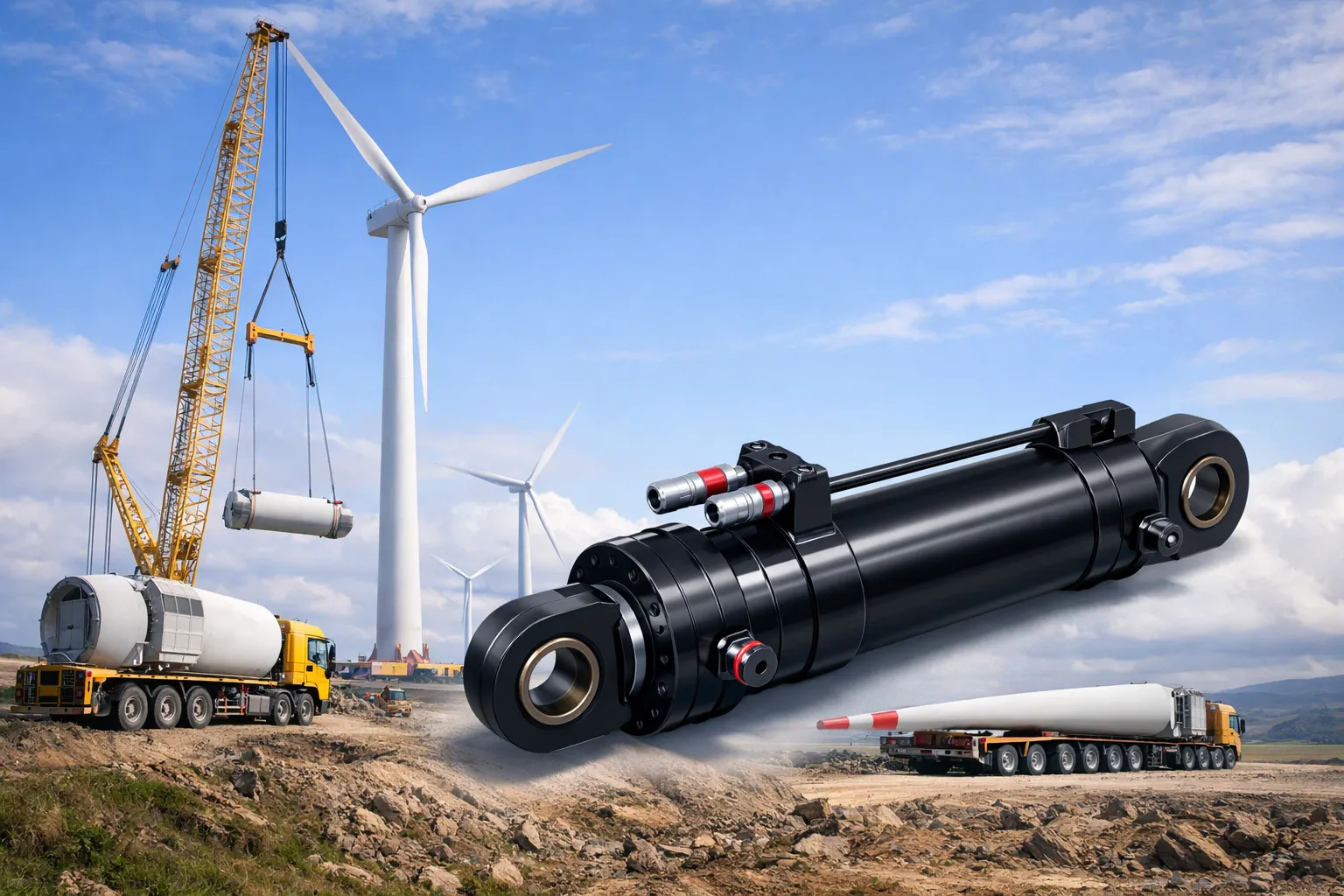
Recognizing the lethal safety risks associated with personnel platform failure at extreme altitudes, our specialized engineering division has meticulously re-architected the traditional lifting actuator. By forging our climbing cylinder from high-yield alloy steel and integrating an advanced high-lifespan sealing matrix designed specifically to reject wet abrasive dust, we have entirely eradicated the vulnerability to internal tower conditions. As a globally trusted and heavily vetted hydraulic cylinder manufacturer, we deliver uncompromising fluid power solutions that guarantee absolute zero-leakage performance, ensuring that your maintenance crews can ascend and descend with unshakeable confidence, shift after shift.
Technical Parameters & Wind Energy Specifications
Integrating high-pressure fluid power systems into the heavily constrained spatial envelope of an internal tower platform requires absolute dimensional precision and advanced metallurgical profiling. We maintain a vertically integrated, highly agile production facility that allows us to meticulously tailor the stroke length, bore diameter, and trunnion mounting configurations of our climbing hydraulic cylinder to exactly match your specific hoist architecture. The detailed matrix below outlines the stringent engineering parameters and the expansive customization envelope that define our specialized wind energy internal maintenance series.
| Engineering Variable | Target Specification Envelope | Operational Application Context & Benefit |
|---|---|---|
| Target Industry Sector | Wind Power | Optimized specifically for both onshore alpine installations and offshore multi-megawatt tower structures. |
| Equipment Category | Tower internal platform | Mounted directly within the vertical service lift or ladder-guided personnel hoisting basket assembly. |
| Subsystem Integration | Climbing equipment | Drives the mechanical step-jacking or continuous pulling motion along the inner structural rails. |
| Product Designation | Climbing cylinder | The primary, life-critical safety actuator responsible for the vertical transit of technical personnel. |
| Operating Action | Double acting hydraulic cylinder | Utilizes pressurized hydraulic fluid for both the forceful lifting phase and the actively controlled descent phase. |
| Internal Structure Type | Piston cylinder | Engineered to maximize the internal differential pressure area, easily generating multiple tons of raw lifting capacity. |
| Manufacturing Assembly | Welded construction | Creates a monolithic pressure vessel absolutely impervious to the high-frequency, continuous vibrations of the operating turbine. |
| Core Material System | Alloy steel | High-tensile forged alloy structure strictly prevents microscopic column buckling or bending when the rod is fully extended. |
| Surface Defense Treatment | Chrome plated | Thick, multi-pass hard chromium deposition provides extreme surface scratch resistance against abrasive internal dust. |
| Environmental Rating | Dust + Moisture | Specifically armored to operate and survive the highly abrasive, humid condensation common inside steel turbine towers. |
| Primary Working Condition | Internal maintenance inspection | Provides the unyielding elevation required for crews accessing the nacelle gearbox, yaw drives, and electrical arrays. |
| Targeted Failure Prevented | Rod wear | Completely halts the devastating metal-to-metal scoring caused by abrasive airborne brake dust mixing with condensation. |
| Recommended Configuration | High lifespan sealing | Utilizes advanced composite scraper tribology to guarantee years of zero-leakage operation without requiring premature replacement. |
Operational Mechanics: Precision Vertical Elevation and Active Descent
To comprehensively grasp the critical safety functions of a climbing cylinder, one must deeply analyze the complex mechanical orchestration occurring inside the service lift. The internal platform ascends the tower using a step-by-step sequential jacking mechanism or a heavily ratcheted friction-drive system. When the technicians press the ascent command on their control panel, the compact hydraulic power unit mounted on the platform pumps highly filtered fluid directly into the cap end (bottom chamber) of the cylinder barrel. Because this system is explicitly engineered as a double acting hydraulic cylinder, fluid is simultaneously allowed to exit the rod end in a highly controlled, metered manner. The immense internal fluid pressure acting against the heavy-duty hydraulic cylinder piston generates a massive upward linear force. The cylinder extends, pushing the upper chassis of the lift upward along the guide rails, where an automatic, spring-loaded mechanical latch securely engages the structural rail.
Once the upper latch is firmly locked into the tower framework, the operational fluid flow is rapidly reversed by the proportional directional control valves. Pressure is actively routed into the rod end, causing the cylinder to retract. As it retracts, it actively pulls the lower chassis of the platform up to meet the upper section, completing one full climbing stroke. This cycle repeats continually, smoothly and relentlessly driving the platform up the 100-meter vertical incline. The descent phase utilizes this exact same double-acting principle but in reverse order. By actively powering the cylinder in both directions, the descent is meticulously metered and hydraulically restricted. This completely prevents the terrifying shuddering, uncontrolled free-falls, or jerky drops that frequently plague inferior, single-acting pneumatic or basic gravity-return hydraulic lifting systems.
The paramount engineering challenge during these thousands of repeated cycles is maintaining a perfect hydraulic seal against the abrasive internal atmosphere. The ambient moisture inside the tower aggressively mixes with the fine carbon dust shed by the nacelle’s mechanical yaw brakes, coating the extending rod in a highly abrasive paste. Standard commercial wipers simply push this paste into the primary pressure seals, causing catastrophic rod wear and subsequent fluid leakage. Our climbing hydraulic cylinder successfully overcomes this fatal flaw by utilizing a heavy-duty, double-lipped polyurethane scraper working in tandem with the high-lifespan sealing matrix. This setup forcefully shears all abrasive contamination off the hard chrome plated rod before it can enter the internal pressure vessel, ensuring the lifting operation remains perfectly sealed, utterly smooth, and absolutely safe for the duration of the maintenance campaign.
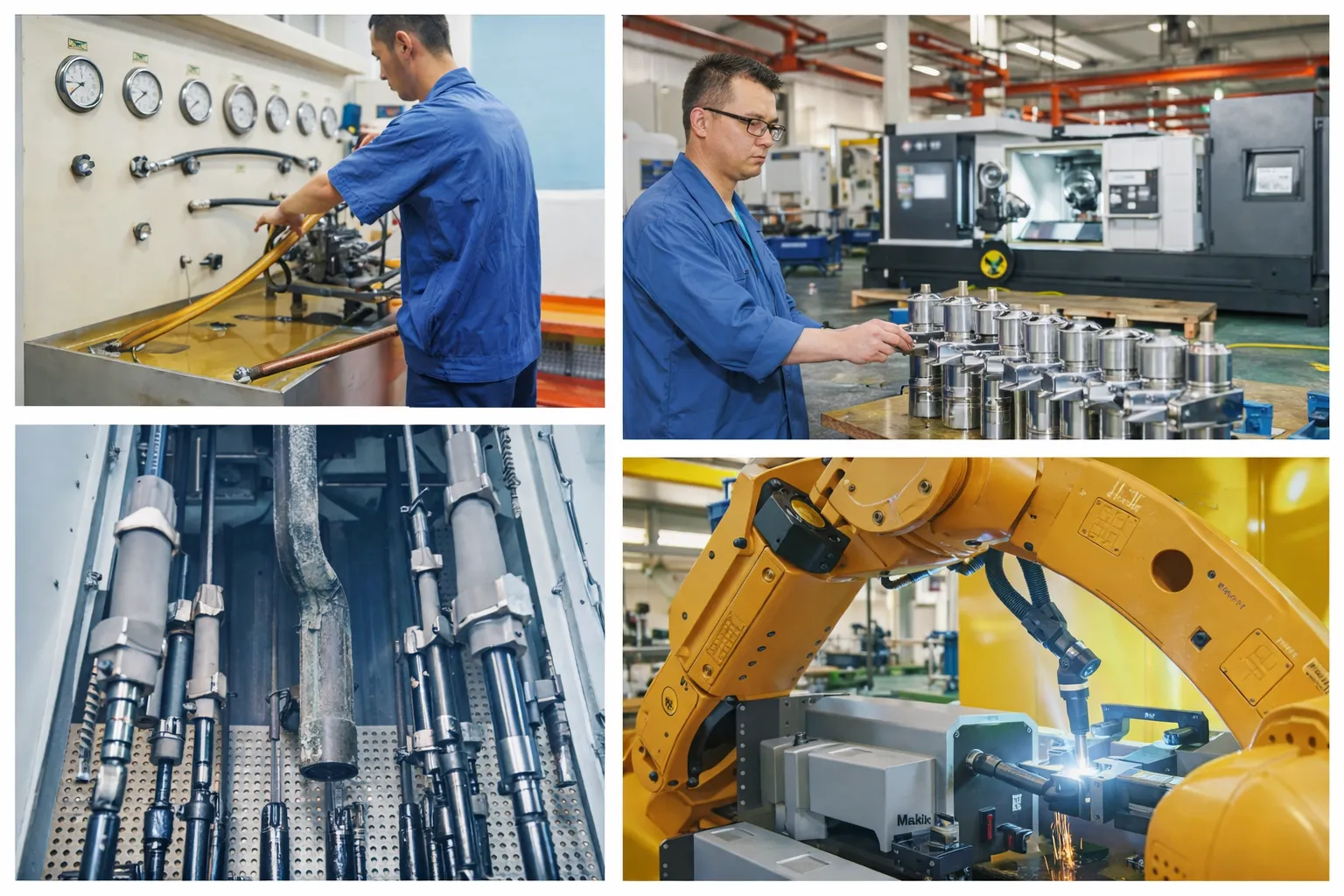
Flawless Direct Replacement for Industry-Leading Hoist Brands
Wind farm independent service providers (ISPs) and internal operations and maintenance (O&M) managers frequently face severe operational bottlenecks when internal service lifts fail. Procuring specialized replacement hydraulic cylinder components directly from European or North American original equipment manufacturers (OEMs) often involves staggering financial B2B markups and unacceptable multi-month shipping delays, leaving critical turbine nacelles completely inaccessible and severely impacting power generation revenue. To rapidly eliminate this costly downtime, our reverse-engineering division has carefully mapped the spatial envelopes and performance metrics of our lifting actuators to serve as flawless, drop-in replacements for the global leaders in wind turbine access equipment.
We heavily possess the advanced manufacturing capacity and engineering agility to supply custom climbing cylinder units that perfectly align with the pin-eye diameters, trunnion mounting brackets, stroke limits, and fluid port threads of service lifts originally built by industry titans such as Avanti Wind Systems, Hailo Wind Systems, PowerClimber Wind, Tractel, DualLift, and Asmus. When your field maintenance teams are tasked with fixing hydraulic cylinders within the confined space of the tower base, they can execute a rapid, direct hardware swap using our superior, dust-resistant units without requiring any dangerous hot-work, welding, or structural modifications to the platform chassis.
Disclaimer: The explicit identification of these specific third-party service lift brands is provided strictly for technical cross-referencing and to demonstrate dimensional structural compatibility for procurement officers. It does not imply any official partnership, endorsement, nor does it constitute trademark infringement against the respective global trademark holders. We independently engineer and manufacture our own highly optimized alternative fluid power solutions, offering an exceptionally competitive hydraulic cylinder price directly to the end-user.
Six Core Technical Advantages for Severe Tower Environments
Elevating a standard industrial cylinder into a life-critical vertical transportation device requires an uncompromising dedication to mechanical integrity, structural rigidity, and advanced tribology. Here are the six core engineering advantages that definitively establish the unparalleled reliability of our climbing hydraulic cylinder series:
1. High-Lifespan Sealing Matrix
This is our engineered solution to fluid leakage. Standard commercial rubber seals degrade rapidly under continuous, heavy-load lifting cycles. We utilize proprietary, PTFE-blended composite step seals supported by heavy-duty elastomeric energizers. This high-lifespan tribological design drastically reduces kinetic friction, ensuring millions of flawless strokes without permitting a single microscopic drop of internal fluid bypass.
2. Extreme Dust and Moisture Exclusion
To combat the abrasive combination of carbon brake dust and heavy condensation, we completely redesigned the cylinder gland. We deploy a specialized, highly aggressive double-lipped polyurethane scraper. This seal acts as an impenetrable physical barrier, forcefully shearing away the abrasive paste from the retracting rod and completely eliminating the root cause of rod wear and cylinder barrel scoring.
3. Heavy-Duty Hard Chrome Plating
The exposed rod is the most vulnerable component of any lifting actuator. We apply a deep, multi-pass hard chromium deposition layer that significantly exceeds standard industrial thickness protocols. This creates an incredibly hard, mirror-polished structural armor that shields the underlying alloy steel from both mechanical scratch damage and the aggressive, humid surface corrosion present inside the tower.
4. High-Rigidity Alloy Steel Architecture
When hoisting a platform loaded with multiple technicians and heavy gear, the cylinder acts as a vital load-bearing column. We forge our hydraulic rams from premium, high-yield alloy steel, rigorously heat-treated to ensure absolute structural rigidity. This completely prevents microscopic column buckling when the rod is fully extended under maximum operational payload.
5. Monolithic Welded Construction
The constant starting, stopping, and wind-induced swaying of the towering structure creates massive harmonic vibrations. Standard threaded tie-rod cylinders rapidly shake loose under these mechanical conditions, leading to dangerous seal blowouts. We utilize deep-penetration robotic welding to permanently fuse the cylinder base and end caps, creating a monolithic pressure vessel entirely immune to vibrational loosening.
6. Integrated Pilot-Operated Safety Valves
Directly flange-mounted onto the heavy steel barrel, these high-flow counterbalance and pilot-operated check valves act as the ultimate fail-safe mechanism. Should a flexible hydraulic pressure hose suddenly rupture, these valves instantly snap shut, hydraulically locking the lift cylinder in position and preventing the platform from dropping, ensuring absolute personnel safety.
Autonomous Manufacturing Process & Stringent Quality Control
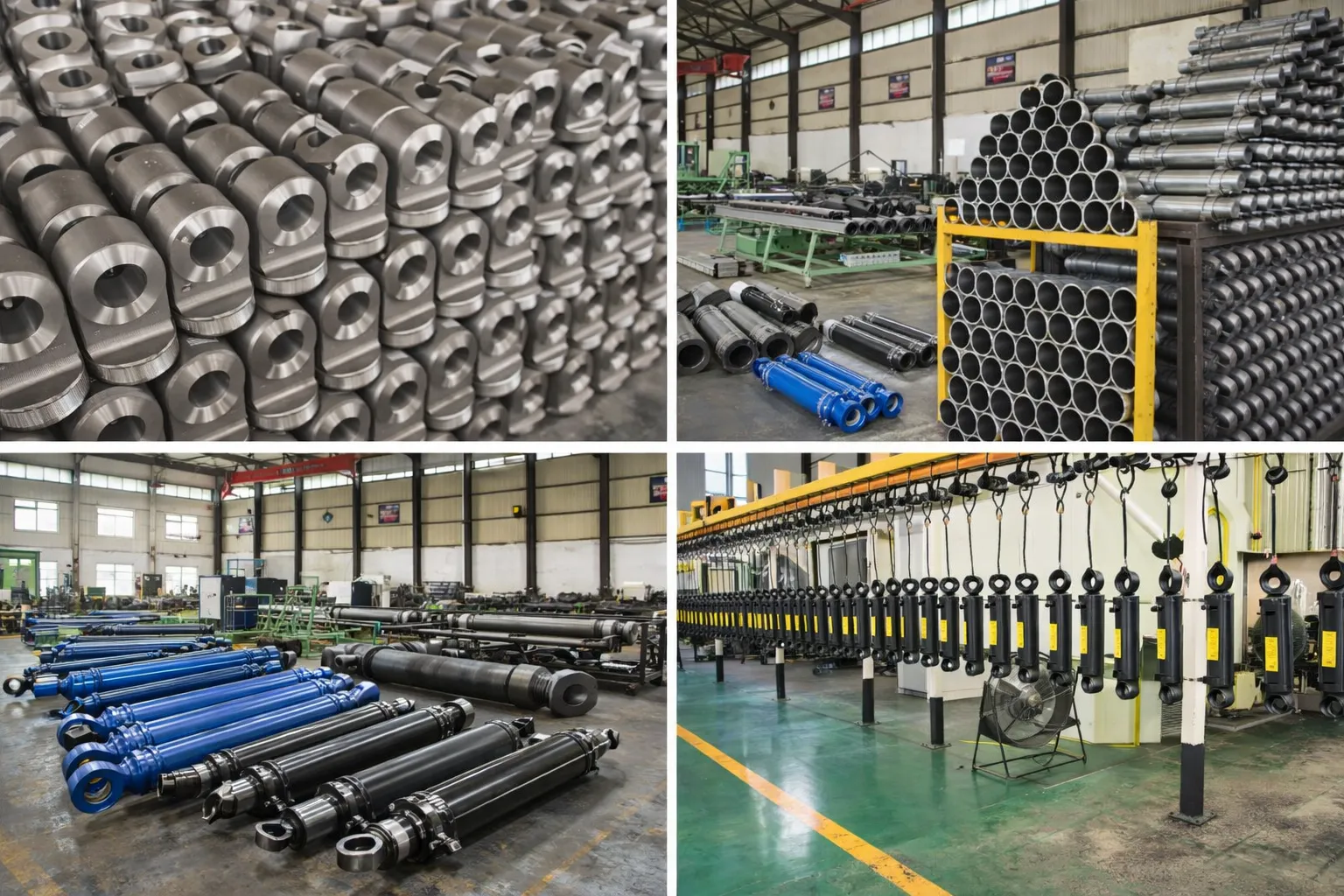
Producing mechanical equipment that suspends human lives requires a total refusal to compromise on manufacturing integrity. To guarantee zero-defect reliability, an elite hydraulic cylinder manufacturer must strictly govern every variable within the production pipeline. Our vertically integrated, state-of-the-art facility operates under highly stringent international ISO quality management systems, ensuring we never rely on third-party outsourced machining for critical components. The process commences with intense metallurgical validation; every batch of high-yield alloy steel undergoes ultrasonic non-destructive testing (NDT) to verify the absolute absence of internal voids, micro-fractures, or slag inclusions. Our heavy-tonnage multi-axis CNC turning centers and deep-hole boring machines subsequently carve the raw billets into precise hydraulic cylinder components, holding geometric tolerances to strict single-digit microns.
Following the precision micro-honing of the cylinder bore to a mirror finish and the application of the thick hard chrome plating, all components undergo highly agitated ultrasonic chemical cleaning to meet and exceed strict ISO 4406 fluid cleanliness standards. The final assembly of the climbing cylinder occurs exclusively within environmentally controlled, positively pressurized cleanrooms. This vital protocol ensures that no microscopic dust, airborne silica, or workshop particulate contaminates the delicate high-lifespan seals prior to the pressure vessel being permanently closed and welded.
The ultimate proof of our engineering dedication is our uncompromising 100 percent Factory Acceptance Testing (FAT) protocol. Every completed actuator is securely bolted into a massive automated heavy-duty hydraulic test rig. We subject the cylinders to grueling hydrostatic proof testing, elevating the internal pressure to 150 percent of the maximum rated working capacity to visually and electronically verify the absolute integrity of the structural welds and the high-lifespan sealing matrix. We meticulously monitor for microscopic internal fluid bypass using high-resolution digital flow meters. Once a cylinder successfully passes this rigorous gauntlet, it receives a laser-engraved serial number, establishing a permanent digital chain of traceability back to its original alloy steel heat reports, material certifications, and performance testing curves.
Broad Spectrum of Heavy Industry Applications
While the highly armored, dust-resistant architecture detailed above represents the ultimate safety solution for wind turbine service lifts, the foundational principles of extreme vertical thrust, zero fluid leakage, and environmental resistance translate perfectly across a multitude of heavy industrial sectors. Whenever a commercial operation demands safe, precise elevation in a hostile or abrasive environment, our fluid power engineering consistently delivers. Explore our highly versatile solutions within our comprehensive hydraulic cylinder product category.
- Metallurgical and Heavy Iron Processing: We forge extreme heat-resistant, high-tonnage actuators tailored for electric arc furnace tilting mechanisms, continuous casting lines, and automated steel rolling mills. Discover our robust portfolio for the metallurgical and iron industry.
- Earthmoving and Subterranean Extraction: High-impact, incredibly durable heavy-duty cylinders engineered specifically to absorb brutal shock loads, abrasive rock dust, and violent vibrations standard in the mining industry.
- Heavy Infrastructure and Building: Supplying the critical lifting force, boom extension capabilities, and precise steering control for massive mobile cranes and heavy excavators operating within the construction machinery industry.
- Maritime Logistics and Material Handling: Salt-resistant, high-cycle actuators powering automated ship-to-shore gantry crane spreaders, heavy straddle carriers, and maritime port lifting platforms.
- Plastics and Rubber Machinery: Rapid-cycling injection molding clamping cylinders designed to deliver immense, highly repeatable lock-up tonnage over millions of high-temperature cycles without leaking.
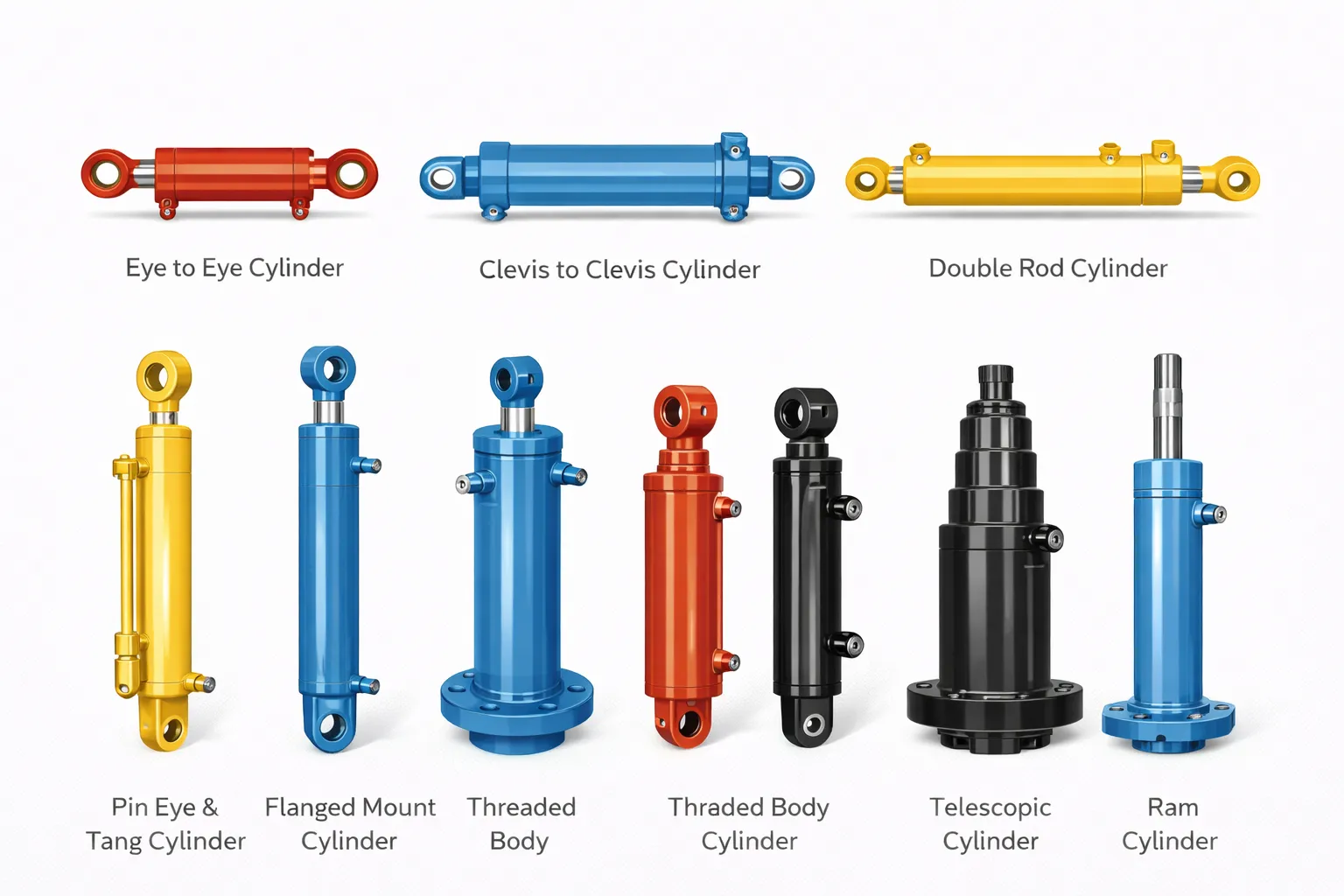
Comparative Analysis: Standard Actuators vs. Our High-Performance Climbing Cylinders
When procuring components for life-critical personnel lifts, focusing solely on the lowest initial hydraulic cylinder price is a dangerously short-sighted strategy. The true operational cost must definitively factor in turbine downtime, constant field repair dispatches, emergency nacelle access delays, and the catastrophic liability of a dropped platform. The comparative matrix below highlights exactly why investing in purpose-built engineering provides massive long-term financial and safety security.
| Engineering Dimension | Standard Market Lift Cylinder | Our High-Performance Climbing Cylinder |
|---|---|---|
| Dust and Moisture Defense | Basic single-lip rubber wiper; easily overwhelmed by abrasive brake dust and condensation, causing rapid rod scoring and severe seal failure. | Aggressive double-lipped polyurethane scraper; forcefully shears off abrasive paste, maintaining absolute fluid cleanliness and preventing rod wear. |
| Static Load Holding (Leakage) | Standard U-cup PU seals; frequently suffer from micro-bypass under prolonged static weight, causing the service lift to slowly drift downwards. | High-lifespan PTFE composite sealing matrix; guarantees absolute zero leakage, locking the elevated platform rigidly in place for safe maintenance. |
| Descent Control | Single-acting gravity return; often results in terrifying jerky movements, stuttering, or free-fall if the mechanical guide rails bind with grime. | Double-acting active retraction; forcefully powers the platform downward, ensuring millimeter-perfect, shudder-free, extremely safe descents. |
| Structural Integrity | Threaded tie-rod assembly; highly prone to stretching and vibrating loose due to the continuous harmonic oscillations of the operating turbine tower. | Deep-penetration welded construction; forms an indestructible, monolithic pressure vessel that easily shrugs off severe high-frequency turbine vibrations. |
| Rod Metallurgy | Standard commercial carbon steel; highly susceptible to micro-buckling under heavy, off-center payload shifts during the long vertical ascent. | Premium high-yield alloy steel; specifically forged and heavily heat-treated to maintain absolute column rigidity under maximum platform weight. |
Real-World Case Studies: Validating Safety and Reliability
Engineering specifications mean very little if they fail inside the dark, confined space of a tower. Over the past decade, we have heavily supplied the rapidly expanding wind energy operations and maintenance sectors across East Asia. The massive tower heights and severe humidity profiles in these regions demand the absolute pinnacle of fluid power resilience. Below are five documented case studies detailing how our heavy-duty solutions permanently resolved critical operational failures for major fleet operators.
Case 1: Eradicating Rod Wear in Dusty Environments – Jeju Island, South Korea
Client: Premier Wind Farm Independent Service Provider (ISP)
The Challenge: Utilizing a large fleet of older service lifts, the client was experiencing catastrophic cylinder failures. The high humidity inside the coastal towers mixed with heavy carbon brake dust from the nacelle, creating an abrasive paste that easily bypassed the standard OEM wipers. This heavily scored the alloy steel rod and destroyed the internal seals, resulting in platforms frequently getting stuck halfway up the tower.
How They Contacted Us: The maintenance director discovered our specialized equipment via a targeted online search for robust solutions regarding fixing hydraulic cylinders exposed to severe internal tower dust.
The Solution & Result: We custom-engineered a massive fleet retrofit utilizing our climbing cylinder equipped with the aggressive double-lipped scraper matrix and high-lifespan seals. Installed in early 2024, the lifts operated for over two years without a single instance of rod wear or seal bypass. Complete lift downtime dropped by an astonishing 90%.
“The brake dust here acts exactly like liquid sandpaper. It destroyed our OEM cylinders in months. Since upgrading to your high-lifespan design, we haven’t seen a single scratch on the rods. The safety of our men is totally assured.” — Mr. Kang, Director of Maintenance Operations (November 2025).
Case 2: Curing Frequent Leaks in Offshore Towers – Kyushu, Japan
Client: Leading Offshore Wind Energy O&M Contractor
The Challenge: Maintaining turbines 15 kilometers offshore meant that every service lift breakdown required highly expensive vessel chartering just to access the tower base. The original single-acting cylinders were leaking fluid onto the platform deck due to rapid seal degradation caused by the saline, humid air drawn up continuously through the tower foundation.
How They Contacted Us: Met our senior fluid power engineers at an international renewable energy exposition in Tokyo, urgently seeking a zero-leakage, high-reliability solution to drastically reduce vessel deployments.
The Solution & Result: We supplied replacement units featuring our heavily chrome-plated, double acting hydraulic cylinder design equipped with advanced PTFE composite seals. The new climbing systems provided a rock-solid, zero-leakage hydraulic seal. Unplanned offshore maintenance trips specifically dedicated to lift repairs were completely eliminated.
“Every time an internal lift leaked, it cost us thousands in vessel fees to go out and fix it. Your high-lifespan seals stopped the leaks permanently. It’s incredibly robust technology for the marine environment.” — T. Yamamoto, Chief Technical Officer (January 2026).
Case 3: Cost-Effective Fleet Modernization – Taichung, Taiwan
Client: Regional Wind Energy Logistics & Support Contractor
The Challenge: The company was losing significant revenue waiting on massive 6-month lead times for highly expensive OEM replacement cylinders from Europe to repair their older platform hoists. They desperately needed highly durable, precise drop-in replacement units to keep their maintenance schedules on track for the peak summer season.
How They Contacted Us: Reached out directly through our digital B2B platform, looking for a reliable manufacturing partner capable of bulk reverse-engineering.
The Solution & Result: Our engineering team rapidly mapped the dimensional footprint of their European lifts and supplied an initial fleet retrofit package within 5 weeks. By providing an extremely fair hydraulic cylinder price without compromising structural alloy integrity or chrome thickness, we slashed their annual maintenance procurement budget by 40% and completely unblocked their repair pipeline.
“Their ability to exactly match European OEM dimensions while vastly improving the dust-scraping seals is fantastic. Sourcing high-quality hydraulic parts from them is now highly cost-effective, and our platforms never sit broken.” — Lin Y., Fleet Procurement Manager (February 2026).
Case 4: Vibration-Resistant Reliability Upgrade – Binh Thuan Province, Vietnam
Client: Coastal Wind Farm Asset Management Group
The Challenge: The continuous harmonic vibrations of the operating wind turbines were causing the standard tie-rod cylinders on their internal lifts to constantly vibrate loose over time. This led to frequent structural failures and massive hydraulic oil spills on the platform deck, creating extreme slip hazards for the technicians.
How They Contacted Us: Reached out directly to our engineering desk looking for a permanent structural solution to completely eliminate the need for frequent internal tower repairs.
The Solution & Result: We replaced the flawed tie-rod models with our fully welded, monolithic alloy steel cylinders. The solid welded design was completely impervious to the jarring tower vibrations, entirely eliminating structural loosening and oil leaks during operation. Hydraulic cylinder repair call-outs for this specific issue dropped to nearly zero.
“The welded cylinders are built like solid blocks of steel. We haven’t had a single issue with them vibrating loose. It saves us countless hours on maintenance and stops the dangerous oil spills inside the tower entirely.” — Nguyen T., Operations Director (May 2025).
Case 5: High-Payload Rigidity – Yeongdeok, South Korea
Client: Wind Turbine Heavy Component Replacement Firm
The Challenge: When lifting multiple technicians alongside heavy gearbox replacement tools, the standard carbon steel cylinders were visibly bowing under the off-center payload. This elastic deformation was causing severe friction inside the barrel, leading to rapid seal failure and jerky, terrifying lifting performance.
How They Contacted Us: A direct referral from a major construction machinery firm that frequently utilized our high-strength forged equipment.
The Solution & Result: We rapidly delivered a package of custom climbing hydraulic cylinder units forged from premium high-yield alloy steel. The immense structural strength of the alloy ensured the rod remained perfectly straight under maximum operational tonnage, eliminating barrel friction and completely restoring smooth lifting performance.
“The rigidity of their alloy steel is unmatched. We can load the platform to maximum safe capacity and the cylinder rod doesn’t flex a millimeter. It gives our crews total confidence. A truly elite hydraulic cylinder manufacturer.” — Kim Y., Operations Lead (August 2025).
B2B Frequently Asked Questions (FAQ)
We thoroughly understand that sourcing life-critical elevation safety components requires exhaustive technical vetting from your engineering team. Below are highly detailed answers to the most frequent inquiries our engineering division receives from wind farm maintenance directors and procurement officers regarding internal tower actuation.
1. How exactly does your high-lifespan sealing technology prevent rod wear in dusty environments?
2. Can you engineer custom replacement cylinders for discontinued internal platform models?
3. What variables primarily influence the hydraulic cylinder price in a custom fleet order?
4. How does the double acting hydraulic cylinder improve safety over older single-acting designs?
5. Do you provide aftermarket seal kits to support our local depot mechanics?
6. What is the expected manufacturing lead time for customized units to South Korea or Japan?
Secure Your Internal Tower Climbing Operations Today
When human lives are suspended 120 meters high inside a dark, dusty steel turbine tower, structural failure and fluid leakage are simply not acceptable options. Do not trust generic commercial actuators to manage critical lifting operations in abrasive, hostile environments. As an elite hydraulic cylinder manufacturer, our engineering division is fully equipped to review your service lift schematics and supply the ultimate high-lifespan fluid power solution.
Contact Our Engineering Division
Guaranteed responsive B2B technical support. We rigorously analyze your heavy-lift specifications and typically deliver comprehensive technical proposals and highly competitive pricing within 24 hours.
Editor: Cxm