Crushing Cover Lift Cylinder for Straw Return Machinery
Engineered precisely for the brutal environment of agricultural crushing chambers. Operating in extreme high-dust and flying debris conditions requires unyielding mechanical defense. We utilize 27SiMn alloy steel, ultra-thick hard chrome plating, and aggressive debris scrapers to permanently eradicate rod scratching and internal seal failure.
Strategic Product Overview: Dominating Severe Agricultural Environments
In contemporary agronomy, crop residue management is an absolutely critical phase for maintaining soil health and preparing fertile seedbeds for the next planting cycle. Straw return machines, often classified as heavy-duty flail mowers or shredders, are sophisticated tillage implements dragged behind commercial tractors. They are designed to physically pulverize tough, leftover vegetation such as thick corn stalks, dense rice straw, or woody wheat stubble, blowing the shredded organic material evenly back onto the field to decompose into rich organic matter. The internal crushing chamber of this machinery is incredibly violent, housing a heavy steel drum equipped with high-speed flail knives rotating at thousands of revolutions per minute. To control the discharge trajectory, the spread width, and the exact size of the shredded material, the operator must dynamically adjust the heavy rear steel hood of the chamber. The critical component completely responsible for lifting, lowering, and holding this massive steel hood against continuous, intense vibration is the Crushing Cover Lift Cylinder.
From a fluid power engineering perspective, the immediate rear of a straw return machine represents the ultimate hostile environment. A standard commercial hydraulic cylinder is utterly defenseless when deployed in this high-kinetic zone. As the machine shreds dense crop residue, it continuously ejects a localized hurricane of highly abrasive silica dust, dry soil, and razor-sharp, splintered agricultural stalks directly at the exposed cylinder rod. Furthermore, the high-speed flails frequently strike hidden subterranean rocks, firing them out of the discharge chute like shrapnel. Standard rubber wiper seals are instantly overwhelmed by this barrage. When sharp flying debris impacts the soft 1045 carbon steel rod of a generic cylinder, it easily pierces the thin commercial chrome plating, creating microscopic pits and deep lengthwise scratches. When this heavily scratched rod is commanded to retract, it acts exactly like a coarse metal file, instantly tearing the internal hydraulic cylinder piston seals to pieces. This initiates a catastrophic cascade of damage, leading to massive hydraulic fluid leaks and an immediate loss of lifting pressure. Ultimately, the heavy crushing cover crashes shut, choking the implement, stalling the tractor, and forcing agricultural fleet mechanics to waste valuable harvest hours constantly fixing hydraulic cylinders in the middle of a dusty, unforgiving field.
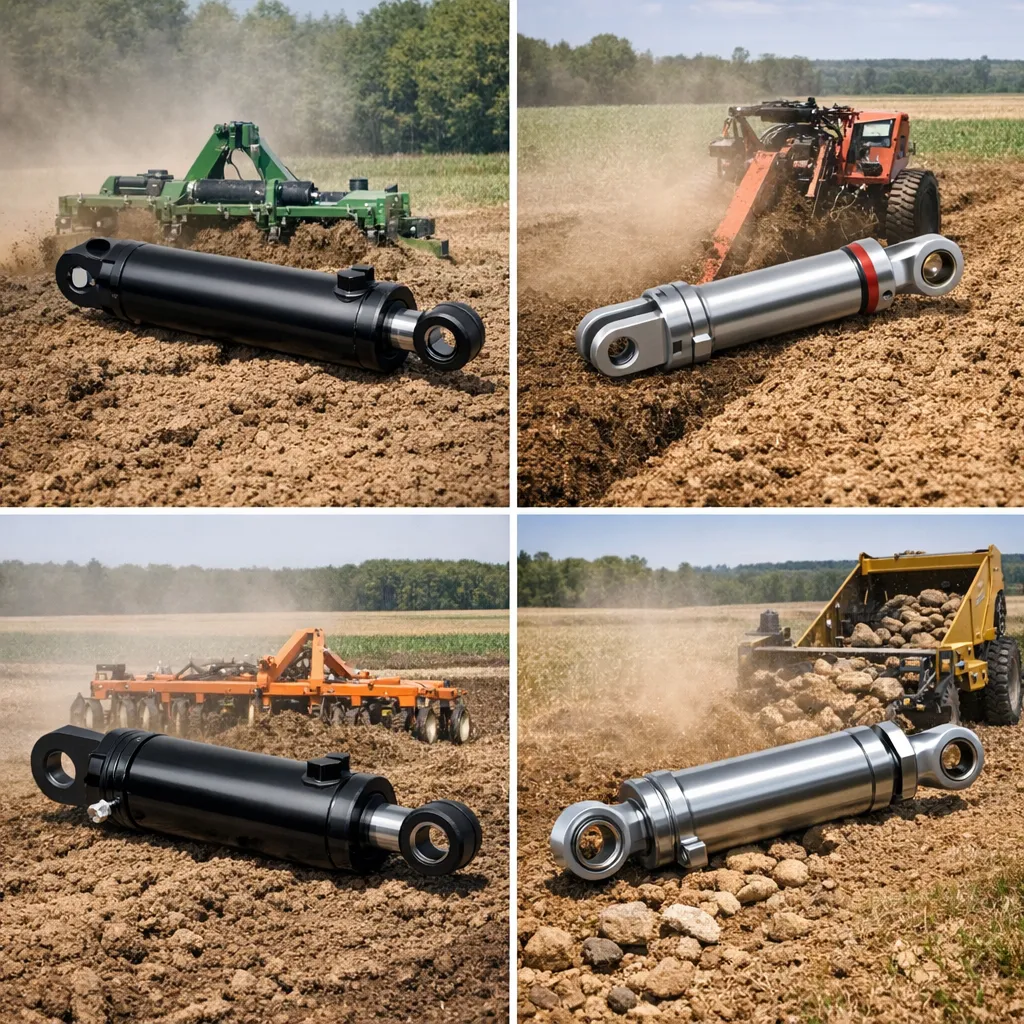
Recognizing this massive, industry-wide pain point, our specialized engineering facility has fundamentally re-designed the actuator architecture for this specific implement. Our advanced Crushing Cover Lift Hydraulic Cylinder is not a generic, off-the-shelf component; it is a purpose-built mechanical fortress designed for absolute survival. By upgrading the baseline structural metallurgy to high-yield 27SiMn alloy steel, applying an exceptionally thick layer of micro-cracked hard chrome, and integrating aggressive polyurethane debris scraper rings, we physically block the destruction before it can breach the pressure vessel. Relying on an experienced hydraulic cylinder manufacturer ensures your machinery continues to operate relentlessly. By upgrading to our heavily armored hydraulic parts, you maximize your daily acreage yield, drastically lower your fluid consumption, and keep your commercial fleet moving forward without expensive mechanical interruptions.
Comprehensive Engineering Specifications
Perfect mechanical integration into existing heavy tillage implements requires exact dimensional tolerancing combined with highly specific material science. The technical matrix below outlines the stringent baseline parameters and optimized structural configurations of our crushing chamber actuators. For procurement managers and fleet directors sourcing high-reliability components for diverse mobile equipment, we invite you to browse our complete category of hydraulic cylinder models to review our massive manufacturing scope.
Operational Fluid Dynamics: Managing the Violent Crushing Chamber
Thoroughly understanding the complex fluid mechanics governing this specific implement is crucial to recognizing exactly why standard commercial components fail so rapidly. The heavy steel cover of the straw return machine cannot simply rely on the force of gravity to hold it shut, nor can it use a weak mechanical spring tension to lift. The intense aerodynamic pressure, combined with the severe kinetic physical impacts generated by the internal high-speed flail knives, creates a massive, continuous outward force against the hood. Attempting to deploy a single acting hydraulic cylinder is an exercise in futility. If a single acting cylinder were utilized, the heavy hood would flutter violently, and if the hinge jammed with thick wet stalks, a gravity-return cylinder could not forcefully pull the hood closed. Therefore, the architecture demands that this unit operates strictly as a double acting hydraulic cylinder. This robust, powered fluid architecture utilizes high-pressure oil delivered directly from the tractor’s auxiliary spool valve to actively drive, meter, and securely lock the mechanical rod in both directions.
When the tractor operator encounters an incredibly dense patch of thick corn stalks or heavy, wet vegetation, they must rapidly open the rear chamber to prevent the implement from clogging and stalling the tractor. By shifting the cabin control lever, highly pressurized oil is rapidly routed into the cap-end (base) port of the cylinder. This fluid forcefully pushes against the internal face of the hydraulic cylinder piston, driving the solid steel rod outward. This powered extension overcomes the immense deadweight of the steel hood, safely and smoothly pivoting it upwards to increase the discharge opening. Conversely, if the operator is shredding lighter wheat stubble and needs a much finer, mulch-like cut to accelerate soil decomposition, they reverse the hydraulic fluid flow. The high-pressure fluid now enters the rod-end port, actively pulling the piston back while the cap-end fluid safely vents back to the tractor reservoir, forcing the heavy hood tightly downward to physically restrict the discharge path.
The true fluid power engineering challenge, however, lies in maintaining this chosen position without a millimeter of deviation. Once the operator releases the control lever to neutral, the hydraulic fluid is hydrostatically trapped inside the cylinder barrel. The lift cylinder must now transform into a solid steel locking strut, fighting against the violent, continuous impacts of thousands of shredded stalks and rocks hammering against the inside of the hood. If the rod was previously scratched by flying debris, the abrasive dust dragged inside the barrel will have quickly degraded the soft polyurethane piston seals. Under the intense hammering of the shredder, hydraulic oil will physically bypass these ruined seals, allowing the cylinder rod to slowly creep out. This implement drift completely ruins the consistency of the shredded biomass. Our high-end hydraulic parts rely on ultra-hard chrome plating and advanced mechanical scrapers to keep the rod flawlessly smooth, ensuring the internal seals maintain a perfect hydrostatic lock, regardless of how violently the machine shakes.
Seamless Aftermarket Upgrades for Global Fleet Maintenance
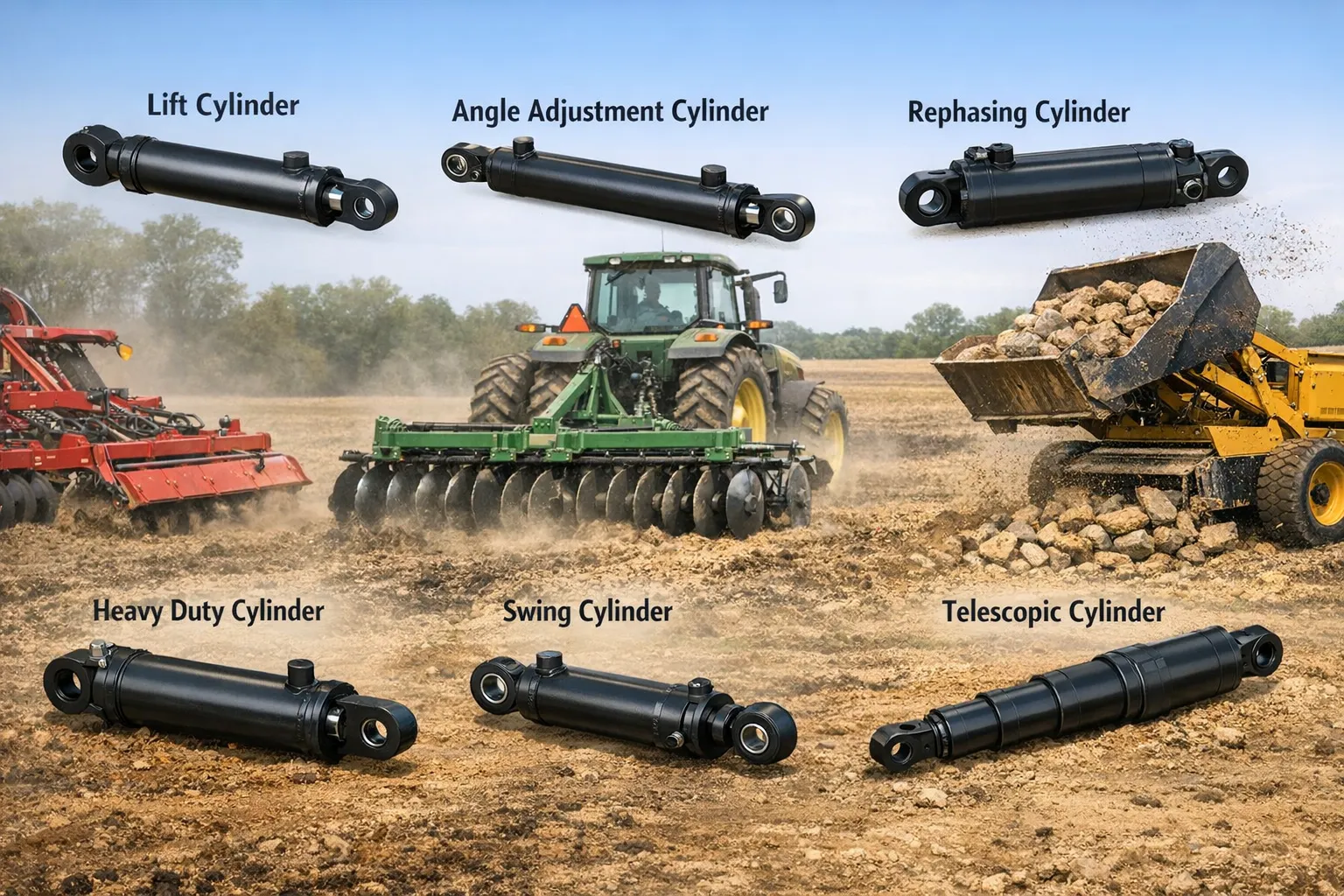
During the incredibly narrow, highly weather-dependent autumn harvest window, agricultural fleet managers cannot afford to park a high-horsepower tractor while waiting weeks for a fragile, overpriced factory original component to clear customs. We intentionally engineer our heavily fortified aftermarket hydraulic rams and lift models to act as rapid, dimensionally flawless mechanical upgrades for the industry’s most widely utilized straw return and flail mower implements. Our strict, automated manufacturing protocols guarantee that critical installation metrics—including exact closed pin-to-pin retracted lengths, precise stroke dimensions, heavy-duty rod eye diameters, and exact hydraulic port thread pitches—perfectly mirror your existing machinery, allowing fleet mechanics to execute the swap rapidly using standard field tools without modifying the implement.
We continuously output extreme-duty aftermarket replacements for complex shredding implements utilized with commercial tractors manufactured by global leaders such as Kubota, John Deere, Yanmar, New Holland, Case IH, and prominent South Korean brands highly utilized across the Asian market, including LS Mtron, TYM, and Daedong. (Please be fully advised: The inclusion of these specific original equipment manufacturer brand names is strictly intended to assist agricultural technicians and B2B procurement managers in safely cross-referencing dimensional compatibility. We operate strictly as an independent manufacturer of premium industrial hydraulic cylinder components and assert no trademark affiliation or corporate endorsement by these entities.)
By retrofitting your vulnerable factory components with our highly specialized, dust-defending actuators, you actively bypass inflated dealership parts pricing while permanently curing the systemic rod-scratching vulnerabilities inherent in standard commercial designs. This proactive machinery upgrade significantly optimizes your long-term hydraulic cylinder price metrics by entirely eliminating the frantic, recurring mid-season repair cycle.
Core Technological and Environmental Defenses
Surviving a continuous bombardment of sharp crop stalks and highly abrasive silica sand requires far more than basic component assembly. It demands targeted metallurgical upgrades and an obsessive engineering focus on contamination exclusion. The following technical pillars explicitly define why our Crushing Cover Lift Hydraulic Cylinder completely outlasts commercial alternatives in the dirtiest environments on earth:
1. Extra-Thick Hard Chrome Armor
Standard commercial cylinders utilize a very thin “flash” chrome plating that is instantly scratched and chipped by flying, splintered corn stalks. Once the chrome is compromised, it immediately destroys the seals. We mandate a strictly controlled, extra-thick layer (exceeding 30 microns) of micro-cracked hard chrome plating applied over an induction-hardened steel core. This creates an extreme surface hardness that acts as an impenetrable shield, deflecting sharp impacts and heavily resisting deep scratching.
2. Aggressive Debris Scraper Ring
The primary failure point of any fluid actuator in a shredder is dust ingress. A basic rubber wiper seal simply rolls over caked-on mud and silica sand, pulling it directly into the barrel. We engineer our cylinder glands with an aggressively profiled, heavy-duty polyurethane debris scraper. This stiff, dual-lip design acts like a rigid plastic blade, violently shearing away dried mud, sharp plant fibers, and fine silica dust before it can even touch the primary high-pressure fluid seals.
3. 27SiMn Alloy Steel Rigidity
Agricultural machinery frequently impacts large, hidden field rocks, sending massive kinetic shockwaves through the machine chassis. Standard 1045 carbon steel rods and barrels will readily dent or swell under these severe impacts, ruining the internal geometry. We exclusively utilize 27SiMn (Silicon-Manganese) alloy steel. This specialized metallurgy offers vastly superior yield strength, ensuring the rod remains perfectly straight and the barrel perfectly round, even under violent physical abuse.
4. Monolithic Welded Construction
The rear hood of a straw return machine vibrates intensely during continuous operation. Generic tie-rod cylinders will inevitably stretch their clamping bolts and vibrate loose, causing messy external oil leaks. Our heavy-duty architecture utilizes automated, deep-penetration submerged arc welding to permanently fuse the base caps and mounting clevises directly to the barrel. This creates a monolithic pressure vessel completely immune to high-frequency vibration and joint loosening.
5. Ultra-Low Friction Sealing Technology
Standard internal nitrile rubber seals degrade rapidly due to the high friction generated during continuous depth adjustments while the implement chatters. We outfit our precision-honed barrels with an advanced composite sealing matrix, integrating high-temperature polyurethanes and PTFE-bronze guide bands. This configuration delivers an ultra-low friction coefficient, drastically reducing internal heat generation and extending the thermal fatigue life of the entire fluid power system.
6. Physical Protective Boots (Optional)
For the absolute most extreme environments, where the density of flying abrasive material resembles an industrial sandblaster, we engineer custom mounting geometries to accept heavy-duty, accordion-style protective rubber bellows. This completely physical barrier entirely encases the chrome rod during extension, guaranteeing that no abrasive particle can ever make contact with the metallic surface, providing ultimate longevity for specialized contractors.
Autonomous Manufacturing and Exhaustive Quality Control
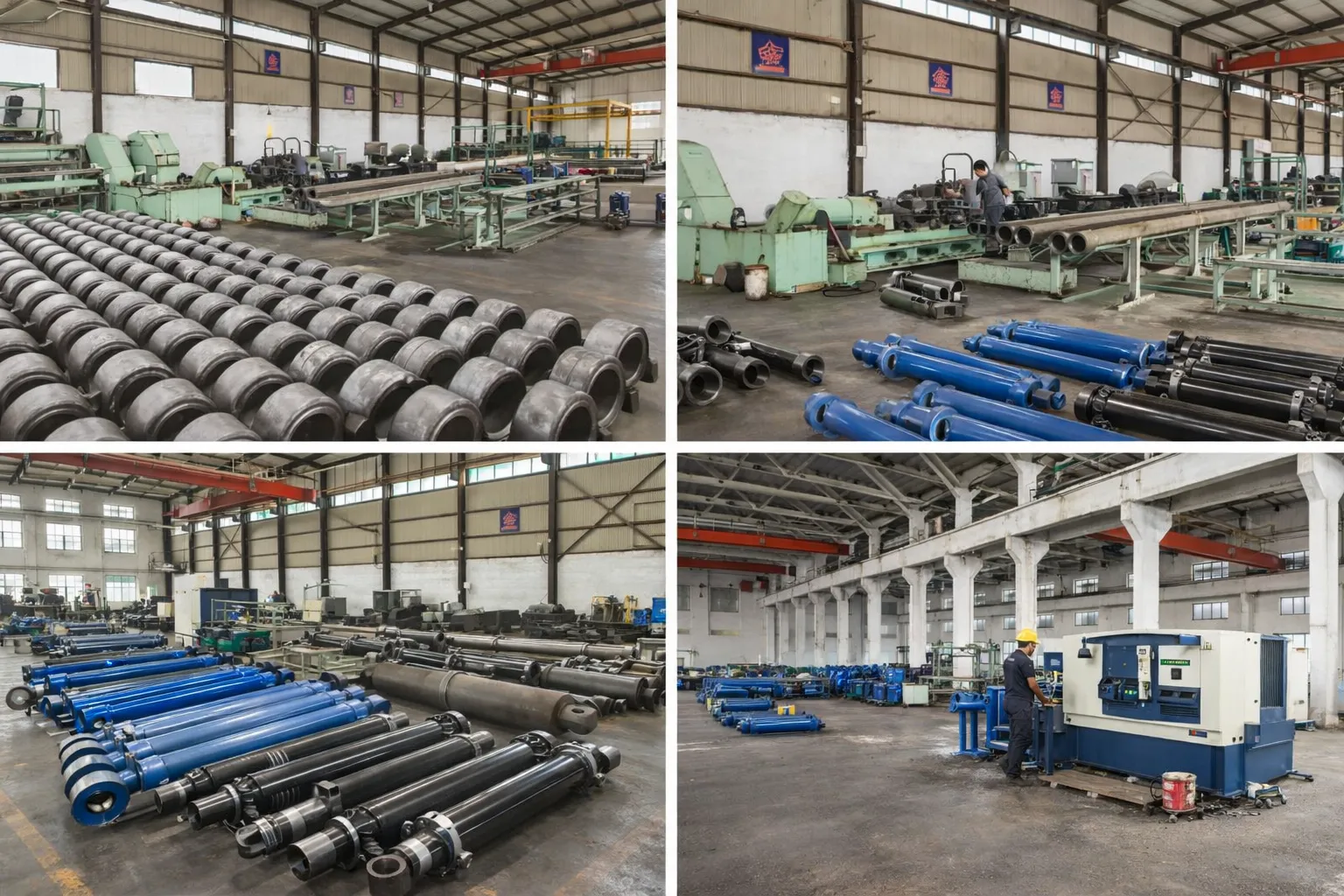
Uncompromising reliability in a high-dust environment cannot be achieved by simply assembling cheap, outsourced components; it must be systematically manufactured into the actuator from the raw material upwards. By operating a massively capitalized, vertically integrated factory, we maintain absolute sovereign control over the entire production lifecycle. When the raw 27SiMn steel billets arrive at our facility, they undergo immediate material spectrometry and ultrasonic non-destructive testing (NDT) to verify their exact chemical composition and detect any sub-surface metallurgical imperfections that could cause the barrel to rupture under intense pressure spikes.
The internal fluid architecture of our hydraulic oil cylinder is sculpted using highly advanced, multi-axis CNC turning and milling centers. This robotic automation allows us to consistently achieve incredibly tight diametrical tolerances on the seal grooves and gland housings. This mathematical precision guarantees that our heavy-duty scraper seals are compressed perfectly to aggressively exclude dust without inducing excessive thermal drag on the rod. The internal bore undergoes a multi-pass honing process to achieve a mirror-like finish (Ra 0.2-0.4μm), eliminating the micro-abrasions that destroy piston seals. Following the automated robotic welding phase, every critical structural seam undergoes secondary ultrasonic testing to confirm the total lack of internal weld porosity or slag inclusion.
Critically, before any Crushing Cover Lift Cylinder is cleared for global export, it must survive a brutal 100% factory pressure testing regimen. We mount each individual unit to highly calibrated hydraulic test benches and pressurize them to 1.5 times their maximum rated operational capacity. The most critical phase of this protocol is the static holding test: we mechanically lock the control valves and monitor the high-resolution digital gauges for an extended period. If the pressure drops by even a fraction of a bar, it definitively indicates microscopic fluid bypass across the piston, and the unit is instantly rejected and scrapped. Every passing cylinder is then permanently laser-etched with a unique alphanumeric serial number, providing absolute lifetime material traceability for our commercial B2B partners.
Cross-Industry Adaptability of Robust Fluid Power
While the external mounting geometry of this specific unit is intricately optimized for agricultural straw shredders, the underlying fluid power engineering—specifically the integration of ultra-thick hard chrome and aggressive debris scraper rings to defeat high-particulate environments—is universally demanded across severe-duty industrial landscapes globally.
- Heavy Earthmoving Operations: The exact same dust-exclusion sealing technology is absolutely essential for protecting the boom and bucket actuators of excavators operating within the construction machinery industry, preventing silica dust ingestion.
- Subterranean Material Extraction: The unyielding impact resistance provided by our reinforced 27SiMn welded structures makes our fluid power systems the premier choice for rock-crushing and material handling machinery utilized deep within the mining industry.
- Extreme Thermal Environments: The robust structural designs and high-temperature composite seals are frequently adapted for heavy equipment actuating furnace doors in the metallurgical and iron industry where airborne slag is present.
Comparative Analysis: Standard Commercial vs. High-Performance Dust Defense
Evaluating the true commercial value of an agricultural actuator requires looking far beyond the initial procurement invoice. Choosing a cheaper, generic cylinder inevitably leads to massive mid-season downtime, ruined crop shredding, and continuous expensive repair bills. The comparative matrix below definitively illustrates why upgrading to our specialized dust-exclusion components is a structurally and financially superior business decision.
Proven Global Field Performance: Case Studies
The theoretical excellence of utilizing ultra-thick chrome and high-durometer polyurethane scrapers is definitively proven every day in the mud, rock, and grueling realities of commercial farming. The following case studies detail how our fluid power solutions have systematically resolved chronic mechanical failures for major agricultural partners across Asia.
Case Study 1: Eradicating Seal Failure in High-Dust Korean Rice Paddies
Location & Client: Jeollabuk-do, South Korea — A large-scale regional agricultural cooperative operating a massive fleet of high-horsepower tractors equipped with heavy straw return machines.
The Challenge: During the dry, windy autumn harvest of 2024, the cooperative experienced a severe epidemic of hydraulic failures. The incredibly dry rice straw generated massive clouds of abrasive silica dust. This dust was bypassing the standard wiper seals on their OEM cylinders, acting exactly like grinding paste inside the barrels. The internal seals were shredded within 150 hours of operation, causing the heavy crushing hoods to crash down and choke the shredders with un-cut straw, leading to unacceptable fleet downtime.
Contact & Solution: The chief maintenance engineer discovered our specialized capabilities via an organic web search targeting solutions for “silica dust seal failure and hydraulic cylinder repair“. We rapidly manufactured and exported a fleet-wide retrofit batch of our upgraded Crushing Cover Lift Cylinders, explicitly outfitted with our aggressive polyurethane scrapers and extra-thick chrome rods.
The Result: After installation, the cooperative experienced zero seal failures across two consecutive, brutal harvesting seasons. Fluid leaks stopped entirely, allowing continuous, high-speed crop shredding without pausing for maintenance.
Case Study 2: Conquering Rod Scratches in Hokkaido, Japan
Location & Client: Hokkaido, Japan — An independent, large-scale commercial corn farming enterprise utilizing heavy European shredding implements.
The Challenge: Operating in highly abrasive, dry volcanic ash soil (Andosols) combined with the extraordinarily tough, thick stalks of field corn caused extremely rapid physical wear. The sharp, splintered corn stalks ejected by the flail knives acted like shrapnel, deeply scratching the thin factory chrome on their OEM rods. These sharp scratches then physically tore the internal seals apart every single week during the peak harvest phase.
Contact & Solution: The farm owner contacted us directly via our website portal seeking drastically tougher components. We provided our heavy-duty models featuring 35-micron micro-cracked hard chrome plating over a 27SiMn steel core, and custom-fitted heavy-duty accordion protective boots over the extended rods.
The Result: Rod scratching was completely eradicated. The machinery survived the entire harvest without a single scratched rod or leaking hydraulic port, ensuring the stalks were shredded perfectly to prepare for winter decomposition.
Case Study 3: Supplying a Premium Refurbishment Center in Taiwan
Location & Client: Taichung, Taiwan — A specialized agricultural implement refurbishment center rebuilding and upgrading heavy tillage machinery for the Southeast Asian tropical export market.
The Challenge: The center was struggling to source dependable actuators for the custom straw return machines they were exporting. The cheap, locally sourced cylinders lacked proper dust scrapers and featured thin chrome, leading to unacceptable warranty claims from end-users experiencing rapid seal failure in humid, muddy, and high-debris tropical environments.
Contact & Solution: Searching the global trade directory for a highly capable hydraulic cylinder manufacturer, their procurement officer connected with us. We established a robust long-term bulk-supply protocol, providing dimensionally perfect units featuring our polyurethane scrapers and thick hard chrome armor.
The Result: The refurbishment center drastically elevated the technical quality of their product line, virtually eliminating field warranty claims related to hydraulic leaks, thereby securing their reputation in the highly competitive export market.
Case Study 4: Rescuing Sugarcane Operations in the Mekong Delta
Location & Client: Mekong Delta, Vietnam — An independent manufacturer of custom tractor attachments facing severe blowback from local sugarcane farmers.
The Challenge: Sugarcane residue is incredibly fibrous and tough. When farmers used the manufacturer’s machines to mulch the fields, the long, tough fibers wrapped tightly around the exposed cylinder rods. As the cylinders retracted, these fibers physically ripped the cheap rubber wiper seals completely out of the gland housings, destroying the cylinders instantly and draining the hydraulic reservoir.
Contact & Solution: Desperate to save their business reputation, they reached out to our engineering team. We designed a custom shielded cylinder featuring our stiffest polyurethane scrapers, specifically formulated to act as a blade and slice through fibrous plant matter rather than snagging on it.
The Result: The new scrapers cut the sugarcane fibers cleanly off the rod. Warranty claims dropped to absolute zero, and the manufacturer successfully expanded their regional market share.
Frequently Asked Questions
We prioritize absolute engineering transparency. To assist agricultural fleet operators, OEM designers, and procurement managers in thoroughly qualifying our heavy-duty fluid power solutions, we have detailed comprehensive answers to the most common technical inquiries regarding our high-dust environment actuators.
1. Exactly why do the cylinders on my straw shredder start leaking so fast every single season?
The leakage is caused by a catastrophic failure chain initiated entirely by the environment. Flying, splintered crop stalks violently hit the extended cylinder rod, causing microscopic scratches in the thin commercial chrome. When the rod retracts, those sharp scratches act like a coarse file, tearing up the internal hydraulic cylinder piston seals. Additionally, basic rubber wiper seals cannot stop the intense silica dust, which mixes with the hydraulic fluid to form a grinding paste inside the barrel. We solve this permanently by applying 30+ micron thick hard chrome to stop the scratching entirely, and using stiff polyurethane scrapers to physically block the dust from entering the gland.
2. Are these lift units structurally compatible with single acting hydraulic systems?
No. Controlling a heavy steel hood against the intense aerodynamic pressure and physical impacts of high-speed shredding knives requires active, powered hydraulic force in both directions. A single acting hydraulic cylinder would lack the power to forcefully hold the hood down, allowing it to bounce uncontrollably. Therefore, these actuators are exclusively engineered as a double acting hydraulic cylinder, ensuring you have positive, rigid mechanical control over the chamber opening at all times without relying on gravity.
3. Why utilize 27SiMn alloy steel instead of standard structural 1045 carbon tubing?
Agricultural shredding equipment frequently encounters heavy, hidden subterranean field rocks. When a rock is thrown violently against the cylinder rod by the spinning flail, standard 1045 carbon steel will readily dent or bend. 27SiMn is a specialized high-strength low-alloy steel containing silicon and manganese. It possesses a significantly higher yield strength, allowing the barrel and rod to absorb violent kinetic impacts without deforming, permanently preventing the cylinder from jamming.
4. How does your factory-direct model justify the hydraulic cylinder price compared to cheap aftermarket options?
By partnering with us, you are conducting business directly with the originating manufacturing facility, entirely bypassing the heavy, compounded markups imposed by trading companies and regional tractor dealership networks. The price reflects direct-from-factory access to industrial-grade 27SiMn metallurgy, ultra-thick hard chrome, advanced polyurethane dust scrapers, and 100% factory pressure testing. This strategic investment drastically lowers your long-term total cost of ownership by entirely eliminating continuous mid-season replacement cycles and devastating machinery downtime.
5. Can you rapidly accommodate custom pin sizes and stroke lengths for unique shredder prototypes?
Yes. Custom mechanical engineering is a foundational aspect of our manufacturing operations. While we stock standard configurations that perfectly drop-in replace global OEM dimensions, our technical department can rapidly adjust the bore diameter, specific stroke length, closed pin-to-pin dimensions, and exact ear mount geometry to precisely match the mechanical kinematics of your specific implement frame design, ensuring perfect articulation.
6. What are the standard lead times for manufacturing and exporting a bulk order to South Korea or Japan?
By maintaining a robust, vertically integrated inventory of raw 27SiMn steel billets and pre-machined internal components, our standard manufacturing, robotic welding, and pressure testing cycles typically require 25 to 35 days for bulk agricultural orders. Subsequent ocean freight logistics to major destinations in South Korea, Japan, or Taiwan generally add an additional 5 to 10 days. We are highly accustomed to synchronizing our production schedules tightly with strict seasonal harvest schedules to ensure timely delivery.
7. Can our mechanics execute routine fixing hydraulic cylinders maintenance on these units at our own shop?
Absolutely. We deliberately engineer our equipment specifically for lifetime maintainability within commercial fleets. Because our cylinders utilize easily accessible, heavy-duty threaded glands rather than cheap welded-shut designs, routine internal inspection and seal replacement can be executed efficiently by your personnel using standard heavy shop tools. We provide comprehensive, exact-match OEM-grade replacement seal kits globally to support your maintenance intervals.
8. Are the optional protective rubber boots strictly necessary for standard farming operations?
While our thick hard chrome and aggressive scrapers provide exceptional defense for 90% of standard applications, if you are operating in exceptionally dry, sandy conditions (like volcanic ash soils) or shredding very thick, woody stalks that constantly bombard the cylinder with high-velocity fragments, the heavy-duty accordion boot provides an ultimate physical barrier. It completely encases the chrome rod during extension, ensuring absolute zero contact with abrasive particulates, maximizing the cylinder’s lifespan.
Secure Your Harvest and Eliminate Dust-Induced Failures
The efficiency of your crop residue management and the profitability of your harvest season should never be compromised by a leaking seal and a scratched rod. By upgrading your heavy tillage machinery with our heavily armored, dust-defending Crushing Cover Lift Cylinder, you definitively ensure that your implement will continue shredding flawlessly through the most aggressive dust clouds and the harshest field environments without suffering a catastrophic loss of hydraulic pressure.
Editor: Cxm