Direction Correction Cylinders for TBM
Precision engineered thrust and steering solutions for shield tunneling machines operating in extreme subterranean environments.
Product Overview & Industrial Value
In the demanding realm of underground excavation and tunneling, the integrity of your heavy equipment dictates the success of the entire project. The direction correction cylinder, often referred to as a steering or thrust hydraulic cylinder, serves as the critical navigational muscle of a Shield Tunneling Machine (TBM). Without flawless actuation, maintaining the precise tunneling trajectory becomes impossible, leading to catastrophic project delays and structural misalignments. We provide top-tier hydraulic solutions engineered specifically for these unforgiving conditions.
Our positioning as premier hydraulic cylinder manufacturers is built on decades of empirical data and metallurgical advancement. We do not simply assemble parts; we engineer highly integrated motion control systems. A standard hydraulic oil cylinder is entirely insufficient for the mud, high-impact vibrations, and immense continuous pressures found deep underground. Our highly specialized double acting hydraulic cylinder systems are designed to deliver unyielding force while offering the micro-millimeter precision required for continuous trajectory correction. By utilizing advanced alloy steels and proprietary sealing architectures, these cylinders ensure that the TBM’s posture system operates with absolute reliability, thereby extending the operational uptime of the entire tunnel boring operation.
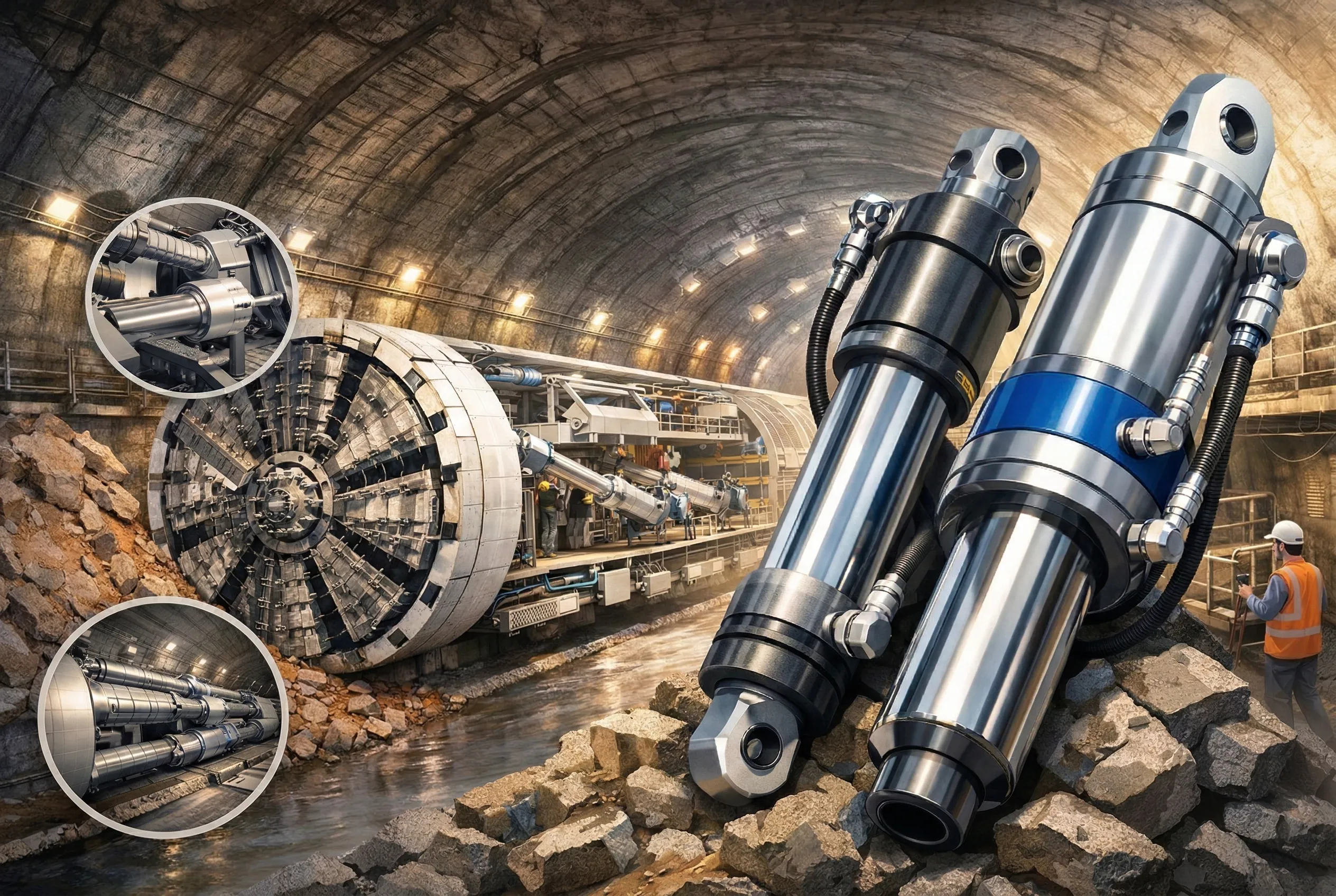
We understand that equipment failure in a tunnel shaft translates to astronomical financial losses. Therefore, our premium hydraulic cylinder series is purpose-built to eliminate the most common failure modes, such as rod slip and seal degradation, which plague inferior designs. By integrating cutting-edge magnetostrictive sensing technology directly into the core of the cylinder, we provide operators with real-time, high-fidelity spatial feedback, ensuring every movement is calculated, controlled, and executed perfectly.
Technical Parameters & Specifications
The operational parameters of a TBM posture system require exact specifications. The data below outlines the baseline capabilities and customizable ranges of our specialized cylinders, tailored to meet the rigorous demands of underground infrastructure development.
| Industry Focus | Equipment Category | Subsystem / Function | Component Designation |
|---|---|---|---|
| Construction Machinery | Shield Tunneling Machine / TBM | Posture Control System | Direction Correction Cylinder / Thrust Hydraulic Cylinder |
| Action Type | Structural Design | Manufacturing Method | Material Base |
|---|---|---|---|
| Double Acting Hydraulic Cylinder | Heavy-Duty Piston Type | High-Integrity Welded Construction | High-Strength Alloy Steel |
| Surface Treatment | Environmental Grade | Operational Characteristics | Typical Failure Mode to Prevent |
|---|---|---|---|
| Hard Chrome Plated (Anti-Corrosion) | Severe: Mud ingress + High Impact | Precise Posture & Trajectory Adjustment | Internal/External Slip & Seal Degradation |
Recommended Configuration Note: To guarantee absolute positional accuracy during continuous excavation, we strongly recommend the integration of our proprietary magnetostrictive sensing modules with every direction correction cylinder unit. This completely eliminates blind-spots in posture management.
Fundamental Working Principle
Understanding the internal dynamics of a thrust hydraulic cylinder provides insight into its indispensable role. In a typical shield tunneling machine, multiple cylinders are arrayed circumferentially around the rear of the shield body. These act against the newly installed concrete tunnel lining segments to propel the massive cutting wheel forward.
However, forward propulsion is only half the equation. The terrain deep underground is heterogeneous, consisting of varying rock densities, fault lines, and subterranean water pockets. As the cutter head encounters uneven resistance, the machine naturally drifts from its intended vector. This is where the direction correction cylinder functions as the ultimate navigational tool. Operated as a double acting hydraulic cylinder, fluid pressure can be applied to either side of the heavy-duty piston. By selectively extending or retracting specific cylinders in the array, the operator induces a calculated yaw or pitch into the shield body.
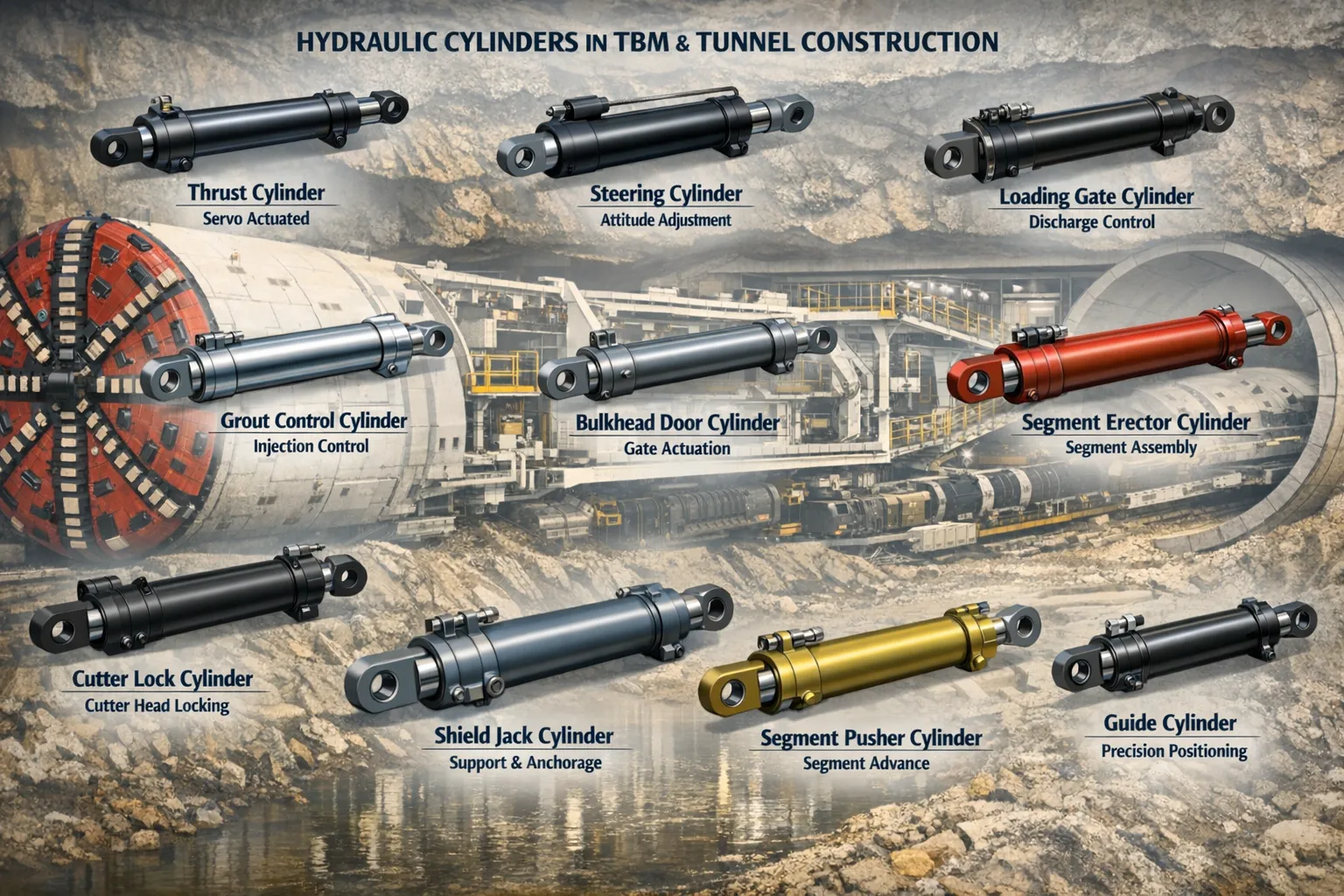
This differential thrust allows the machine to steer around obstacles or adhere to the tight curvature required by modern subway and drainage tunnel designs. The highly pressurized hydraulic oil enters through precision-machined ports, interacting with a specialized sealing matrix that prevents any micro-slip. A slip failure in this context would mean a loss of holding pressure, resulting in the shield deviating from its path. Our design ensures zero-drift load holding, converting hydraulic pressure into pure, perfectly vectored mechanical force.
Seamless Equipment Compatibility & Replacement
When dealing with heavy construction machinery, compatibility is paramount. Plant managers and procurement engineers cannot afford extensive modifications when swapping out critical hydraulic parts. Our direction correction cylinder assemblies are engineered with precise dimensional tolerances to serve as superior drop-in replacements for original equipment.
We routinely supply replacement cylinders that seamlessly integrate into the posture systems of globally recognized tunneling equipment. Note: The following brand names are mentioned strictly for the purpose of helping engineers verify compatibility and selection sizing, and do not imply any direct affiliation or trademark infringement:
- Herrenknecht AG Tunnel Boring Machines (EPB and Hard Rock variants)
- Robbins Company Main Beam and Crossover TBMs
- Komatsu / Robbins collaborative shield machines
- CRCHI (China Railway Construction Heavy Industry) systems
- Hitachi Zosen earth pressure balance shields
By upgrading your existing machinery with our cylinders, you are not merely replacing a worn part; you are actively extending the interval between required maintenance cycles and enhancing the machine’s overall directional agility.
5 Core Technical Advantages
What separates a standard hydraulic oil cylinder from a high-performance tunneling component? It is the rigorous application of advanced mechanical engineering and fluid dynamics. As veteran hydraulic cylinder manufacturers, we have identified and solved the five critical bottlenecks in subterranean hydraulic actuation:
- Ultra-Low Friction & Anti-Slip Sealing Architecture: Traditional seals suffer from “stick-slip” phenomena under heavy radial loads, making micro-adjustments jerky and inaccurate. We employ a proprietary composite polymer seal matrix with a specialized backup ring profile. This drastically reduces breakaway friction, ensuring smooth, linear actuation even when making millimeter-scale trajectory corrections, fully neutralizing the risk of cylinder slip.
- Exceptional Rigidity via Advanced Alloy Forging: A direction correction cylinder faces immense bending moments as the TBM shifts. We utilize deeply forged, high-strength alloy steel (such as 42CrMo or equivalent high-tensile grades) for both the barrel and the piston rod. This ensures absolute structural rigidity, preventing buckling or micro-deformation under peak shock loads.
- Superior Thermal Stability in Confined Spaces: Underground hydraulic systems operate in environments with poor heat dissipation. Our hydraulic fluid pathways and internal volumetric ratios are optimized by computational fluid dynamics (CFD) to minimize turbulence and heat generation. This thermal stability prevents seal degradation and maintains consistent fluid viscosity during 24/7 continuous operation.
- Mud, Rock, and Impact Resilient Surface Engineering: The external environment is hostile. Our piston rods undergo a heavy-duty, multi-layer hard chrome plating process, verified by extensive salt-spray and impact testing. Coupled with heavy-duty wiper seals and reinforced protective shrouds, our cylinders aggressively repel abrasive mud, silica dust, and corrosive groundwater.
- Intelligent Spatial Feedback Integration: Modern tunneling requires data. We seamlessly embed high-resolution magnetostrictive displacement sensors within the core of the double acting hydraulic cylinder. This provides the main control cabin with instantaneous, impervious feedback regarding the exact extension of every thrust and steering cylinder, allowing for automated, algorithmic posture control.
Uncompromising Manufacturing & Quality Control
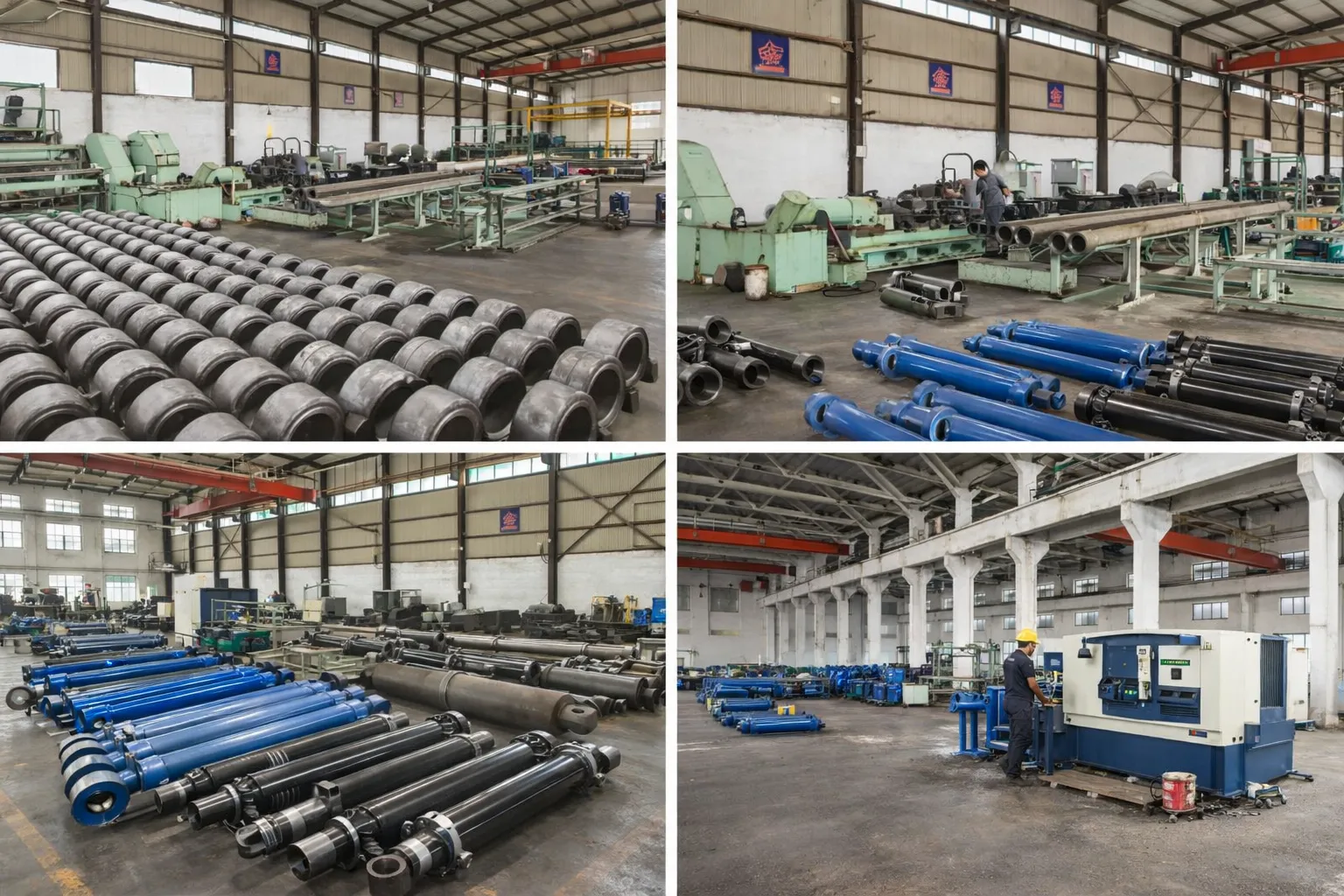
The reliability of a hydraulic cylinder is forged on the factory floor. Our manufacturing philosophy centers on absolute vertical integration. By keeping the entire production process—from raw material inspection to final dynamic testing—in-house, we maintain a level of quality control that third-party assemblers simply cannot match.
Our machining centers utilize multi-axis CNC lathes and deep-hole honing machines capable of achieving mirror-like internal finishes with micro-tolerances. This pristine internal geometry is crucial for the longevity of the piston seals. Furthermore, the welded construction of our heavy-duty cylinders utilizes robotic submerged arc welding, guaranteeing deep, flawless penetration and eliminating the micro-fissures that lead to fatigue failure under high-pressure cycling.
Quality assurance is not a final step; it is a continuous loop. Every single thrust hydraulic cylinder undergoes a rigorous 100% factory acceptance test (FAT). This includes high-pressure hydrostatic testing at 150% of the rated working pressure to verify structural integrity, followed by dynamic friction testing and low-pressure continuous actuation checks. Furthermore, we implement a comprehensive serialization protocol. Every component, from the base alloy heat number to the final assembly technician, is permanently recorded, providing total traceability and compliance with elite international engineering standards.
Expansive Industry Applications
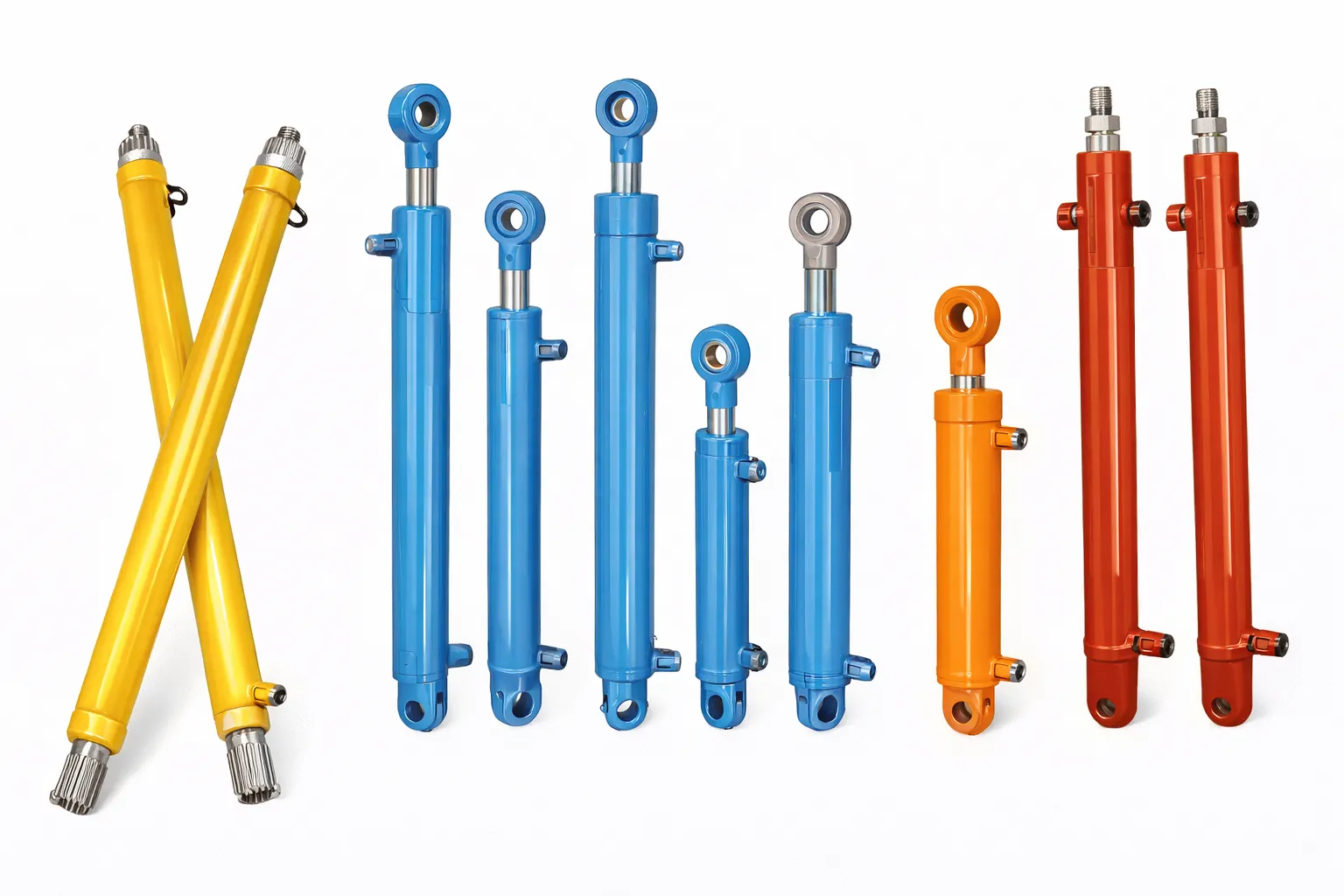
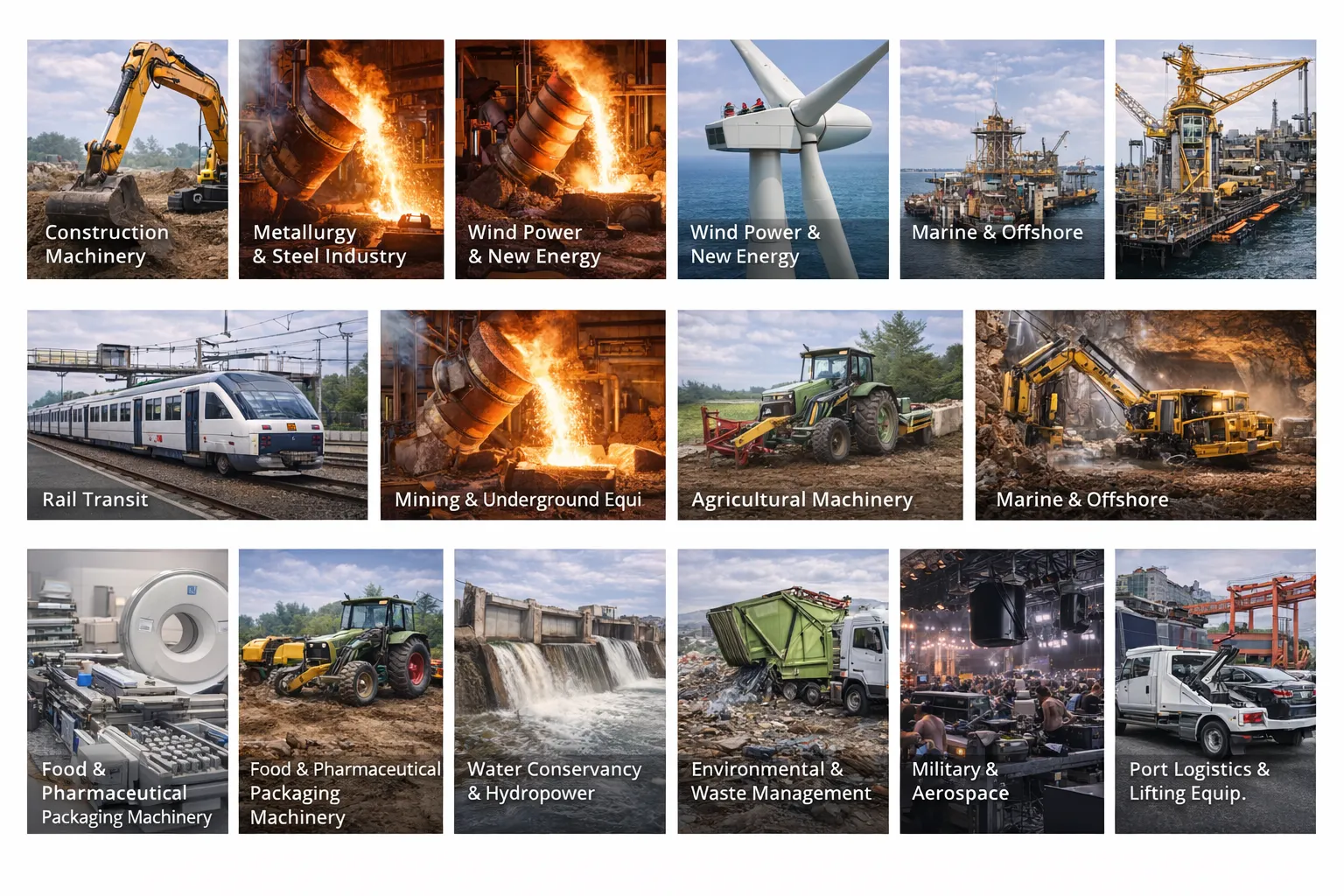
While the direction correction cylinder is the undisputed champion of the shield tunneling sector, the underlying engineering principles of our extreme-duty cylinders translate flawlessly across a multitude of heavy industries. Whenever massive force must be applied with uncompromising precision in a hostile environment, our hydraulic solutions excel.
- Heavy Construction & Mining: Beyond TBMs, our robust cylinders power the articulation and lifting mechanisms of heavy excavators, massive dump trucks, and continuous miners, thriving in abrasive, high-dust conditions.
- Metallurgy & Heavy Forging: In the heat and scale of steel mills, our thermally stabilized cylinders control ladle tilting, rolling mill gap adjustments, and continuous casting lines.
- Plastics & Rubber Machinery: Injection molding machines require immense clamping forces with zero deflection. Our high-rigidity cylinders provide the reliable locking pressure necessary for precise molding.
- Marine & Offshore Engineering: Utilizing specialized marine-grade coatings, our cylinders drive ship steering gears, deck cranes, and offshore platform jacking systems, resisting aggressive saltwater corrosion.
- Specialized & Custom Scenarios: From aerospace testing rigs to large-scale movable architectural structures, our engineering team routinely designs bespoke hydraulic actuators to meet highly unconventional load and spatial requirements.
Comparative Analysis: Standard vs. High-Performance
To truly understand the value proposition, one must compare a generic hydraulic oil cylinder with our specialized TBM posture control units. The differences in lifecycle costs and operational safety are stark.
| Performance Metric | Ordinary Hydraulic Cylinder | Our Specialized TBM Cylinder |
|---|---|---|
| Seal Integrity & Lifespan | Standard NBR/PU; prone to wear from mud ingress; frequent leaks. | Composite polymer matrix + heavy-duty wipers; exceptionally high resistance to abrasive mud. |
| Positional Accuracy | Subject to stick-slip at low speeds; manual measurement required. | Smooth, linear micro-movements; integrated magnetostrictive sensors for automated feedback. |
| Structural Rigidity | Standard steel tubing; susceptible to bending under severe lateral shock. | Forged alloy steel construction; engineered to withstand extreme peak impact loads without deformation. |
| Maintenance Interval | Requires frequent replacement or deep maintenance in harsh conditions. | Extended operational lifecycle; designed to complete entire tunnel segments without intervention. |
| Overall Project Impact | High risk of downtime leading to severe cost overruns and delays. | Guarantees continuous tunneling progress; maximizes ROI on heavy equipment capital. |
Global Success: Field-Verified Case Studies
Our commitment to engineering excellence is validated not in the laboratory, but in the grueling conditions of actual subterranean projects around the globe, with a strong presence in the demanding infrastructure markets of East Asia and beyond.
1. South Korea: Seoul Metropolitan Subway Extension
Client: Tier-1 Heavy Infrastructure Contractor
Application: Earth Pressure Balance (EPB) Shield TBM navigating dense granite and urban substructures.
Connection: The client’s procurement team contacted our engineers after struggling with premature seal failures on their existing thrust hydraulic cylinder arrays, which were causing unacceptable tunneling deviations. They reached out via our technical portal.
Result: We rapidly deployed a full set of custom-dimensioned direction correction cylinders. The heavy-duty rod plating and superior sealing eliminated the mud ingress problem. The TBM successfully broke through 3 weeks ahead of the revised schedule.
Client Evaluation: “The difference in posture stability was immediate. Since installing these units in October 2024, we have experienced zero slip events and maintained perfect alignment. The engineering support was exceptional.” – Chief Project Engineer.
2. Japan: Coastal Undersea Highway Tunnel
Client: Specialized Marine Tunneling Consortium
Application: Large diameter slurry shield facing extreme water pressure and corrosive conditions.
Connection: Introduced through an industrial equipment expo in Osaka, looking for specialized anti-corrosion hydraulic cylinder manufacturers.
Result: We supplied cylinders featuring triple-layer marine-grade chrome plating and specialized saltwater-resistant seals. The cylinders operated flawlessly under immense hydrostatic pressure, ensuring accurate steering through complex seabed topographies.
Client Evaluation: “The harsh saline environment destroyed our previous cylinders within months. Your customized double acting hydraulic cylinder solutions have run flawlessly for over a year without a single pressure drop.”
3. Vietnam: Ho Chi Minh City Urban Drainage Network
Client: Municipal Public Works Department
Application: Micro-tunneling and pipe jacking through soft, highly saturated clay.
Connection: Found our technical whitepapers through targeted web searches for resolving “TBM posture drift in soft soil.”
Result: The soft clay offered uneven resistance, causing continuous drift. Our cylinders, equipped with high-fidelity magnetostrictive sensors, allowed their automated systems to make micro-adjustments in real-time, holding the pipe strictly to the designed gradient.
Client Evaluation: “We were struggling with sinkage and misalignment. The precise feedback from these steering cylinders completely solved our trajectory issues. Outstanding product quality.”
4. Thailand: Bangkok Underground Power Cable Infrastructure
Client: National Power Grid Contractor
Application: Compact TBM navigating narrow urban corridors with tight turning radii.
Connection: Referred by a previous client who praised our rapid customization capabilities.
Result: Designed compact, high-force cylinders to fit within the severely restricted space of a small-diameter shield. The robust construction handled the sharp turning forces without any buckling or seal distortion.
Client Evaluation: “No other supplier could meet the dimensional constraints while maintaining the required thrust force. The cylinders fit perfectly and performed beyond expectations.”
5. Malaysia: Kuala Lumpur Mass Rapid Transit Line
Client: International Civil Engineering Joint Venture
Application: Variable density TBM operating in unpredictable karst limestone formations.
Connection: Direct inquiry through our website’s technical consultation form regarding extreme shock load resilience.
Result: The erratic limestone caused massive, sudden impact loads on the cutter head. Our deeply forged alloy steel cylinders absorbed these shocks flawlessly, preventing the catastrophic structural failures they had experienced with previous equipment.
Client Evaluation: “We hit a solid limestone pillar that sent a massive shockwave through the shield. Your cylinders held the pressure without blowing a single seal. These are the most resilient hydraulic parts we have ever used on a project.”
B2B Technical FAQ
We believe in transparent technical communication. Below are the most frequent inquiries we receive from procurement managers and field engineers.
What is the typical lead time for custom direction correction cylinders?
For standard TBM specifications, lead times generally range from 4 to 6 weeks. For highly customized engineering requirements involving specific sensor integration or unique stroke lengths, please allow 6 to 8 weeks to ensure rigorous design verification and factory acceptance testing.
Can these units directly replace components from European or Japanese TBM brands?
Yes. Our engineering team specializes in creating exact drop-in replacements for major global brands. By supplying us with the original part numbers or dimensional drawings, we can manufacture units that match all mounting interfaces while often upgrading the internal sealing and structural integrity.
How do you address the issue of hydraulic cylinder repair versus replacement?
While we design our cylinders for maximum longevity, extreme environments inevitably cause wear. We offer comprehensive fixing hydraulic cylinders protocols. However, in critical tunneling applications, we often recommend full replacement of heavily worn steering cylinders, as the cost of unexpected downtime far exceeds the hydraulic cylinder price of a new, factory-certified unit.
What measures are taken to prevent seal degradation from tunneling mud?
Our cylinders employ a multi-stage defense system. The first line is a highly durable polyurethane wiper seal that aggressively scrapes mud and debris from the retracting rod. Beneath that, redundant sealing elements protect the main pressure seals, combined with a hardened, chrome-plated rod surface that resists scoring from abrasive particles.
Do you supply the integrated position sensors, or must we source them separately?
We provide the complete, integrated solution. We source and install high-accuracy magnetostrictive sensors directly into the cylinder during the manufacturing process, ensuring they are perfectly calibrated and hermetically protected against the harsh external environment before shipping.
What factors influence the final hydraulic cylinder price?
The primary drivers are the bore and rod diameters, the required stroke length, the complexity of the integrated sensor technology, and the specific material and plating requirements mandated by the operational environment. We provide transparent, itemized quotations based on your precise engineering needs.
Ready to Optimize Your Tunneling Equipment?
Do not let inferior hydraulic parts jeopardize your critical infrastructure projects. Partner with a trusted manufacturer capable of delivering extreme-duty reliability and precision.
Editor: Cxm